
Introduction
Polish allergology faces many significant challenges in the context of health problems. One of the important problems is, for example, underdiagnosis of allergic diseases and the fact that allergic diseases, as diseases of civilization, affect an increasing number of people in different age groups. Data for bronchial asthma indicate that its diagnosis reaches only about 30%. Up to half of patients with diagnosis are treated not in accordance with the latest standards, which leads to reduced treatment effectiveness.
At the same time, access to modern therapies within existing or newly created drug programs is consistently developed in allergology. Although biological treatment is available and can significantly improve the quality of life of patients with allergic diseases, the question remains whether the current access and the number of treated patients are in line with modern standards. Undoubtedly, current environmental factors such as increased air pollution or the presence of allergens in the environment will pose another challenge for Polish allergology in the coming years. Therefore, the assessment of forecasts and directions of allergology development in Poland requires a comprehensive approach and cooperation of various health sectors in order to effectively manage the growing scale of the problem. An important element is also understanding and analysing the role of modern pharmacotherapy available within drug programs in allergology.
Aim
The aim of the presented work is: 1) to analyse the implementation of allergy services, taking into account: number of drug programs, value of contracts with the National Health Fund for conducting drug programs, number of patients in drug programs, queues of patients waiting for an allergology visit; 2) to identify directions for rationalization of medical care within drug programs in dermatology.
Material and methods
The following data analysis is based on publicly available information provided by the National Health Fund, the Ministry of Health, and the Central Statistical Office.
Monthly reports of the Provincial Branches of the National Health Fund contain data on the value of contracts with the National Health Fund. All analyses in the work were created based on the aggregation and analysis of monthly, semi-annual and annual reports published in the form of resolutions of the National Health Fund Council, which concern the adoption of periodic reports on the activities of the National Health Fund.
Additionally, announcements of the Minister of Health, published every two or currently every 3 months, were analysed, which contain descriptions of drug programs, access criteria and a list of reimbursed drugs.
The collected monthly data enabled the author to conduct the analyses that are the subject of this work.
Results
Number of drug programs in allergology
In the years 2020–2024, the total number of all drug programs increased year on year. In 2020, it were 100 programs and in 2024, there were as many as 133. The largest number of new drug programs, 12, were implemented in 2024 (Figure 1).
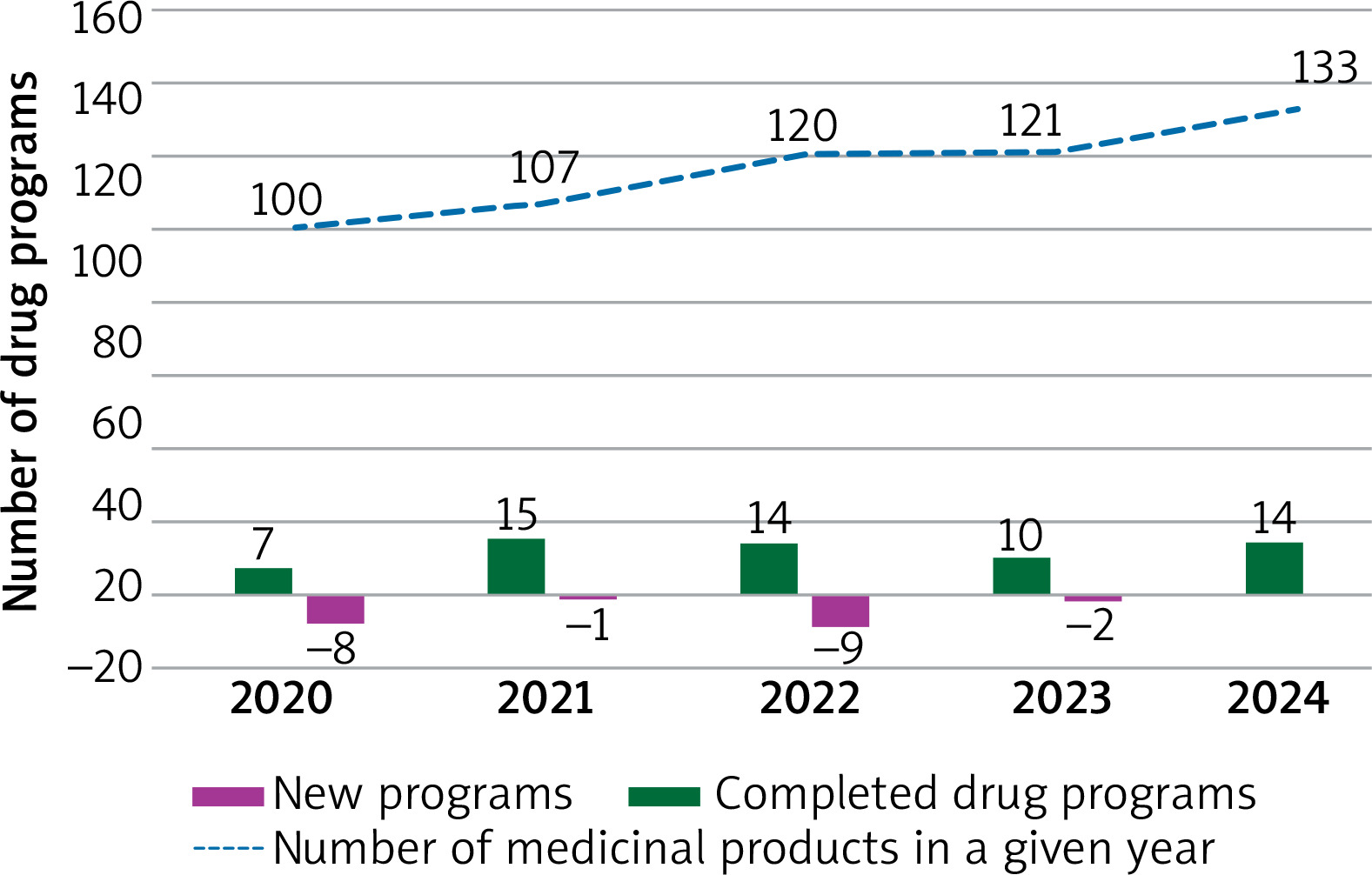
In Poland, allergists have implemented four drug programs. The first of them, B.44, was implemented in November 2012. The last one, B.124, was implemented in November 2021 (Table 1).
Table 1
Number of drug programs in allergology in 2020–2024
Value of contracts with the National Health Fund forconducting drug programs
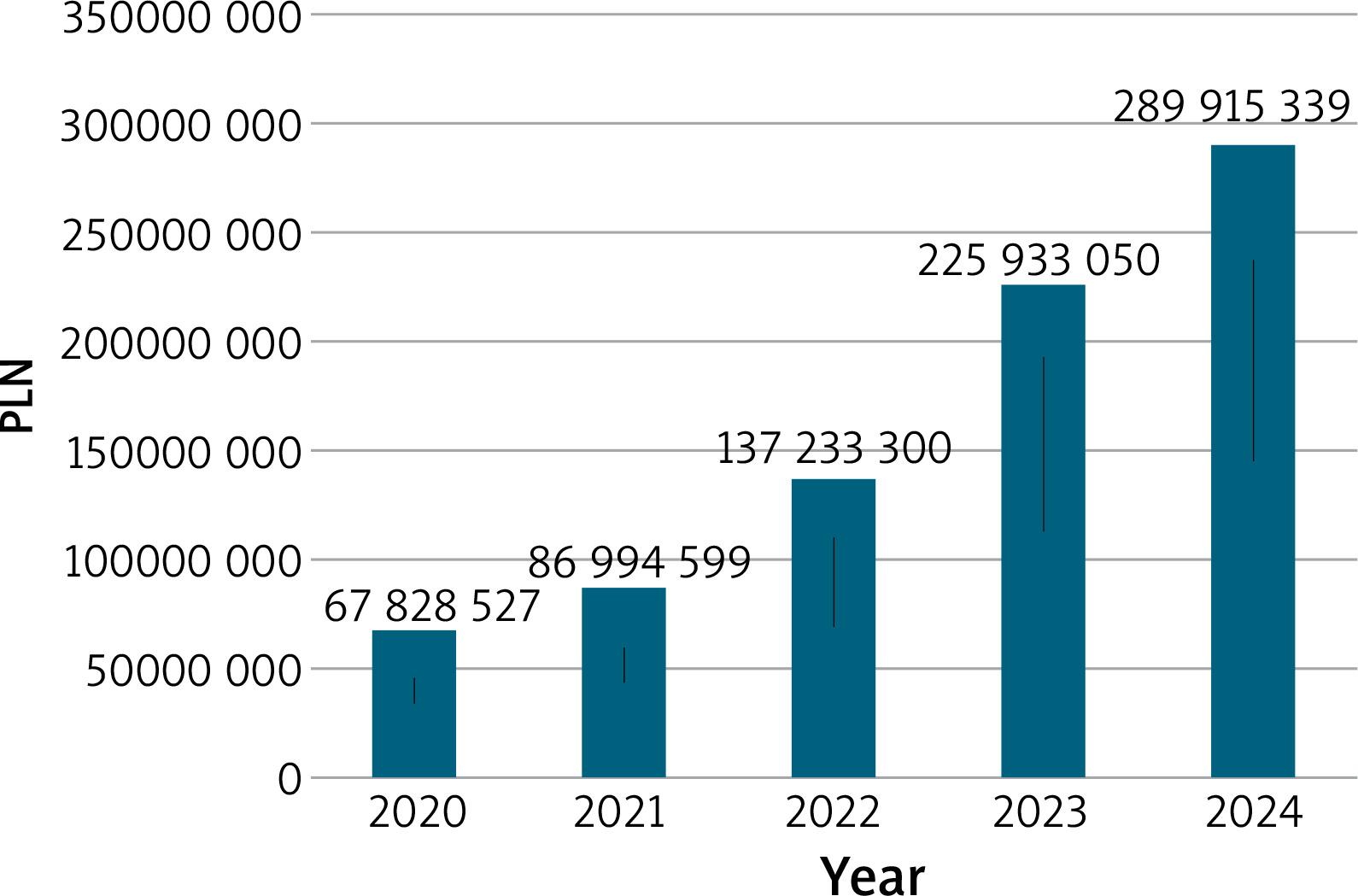
PLN 67,828,527 was allocated for the implementation of all allergology programs in 2020, while in 2024 it was as much as PLN 289,915,339. Data analysis shows that in the indicated period the value of contracts in allergology programs in Poland increased by over 327% (Figure 2).
B.44 Treatment of patients with severe asthma
The B.44 drug program was implemented by way of the Announcement of the Minister of Health on the list of reimbursed drugs, foodstuffs for particular nutritional uses and medical devices on 1st November 2012.
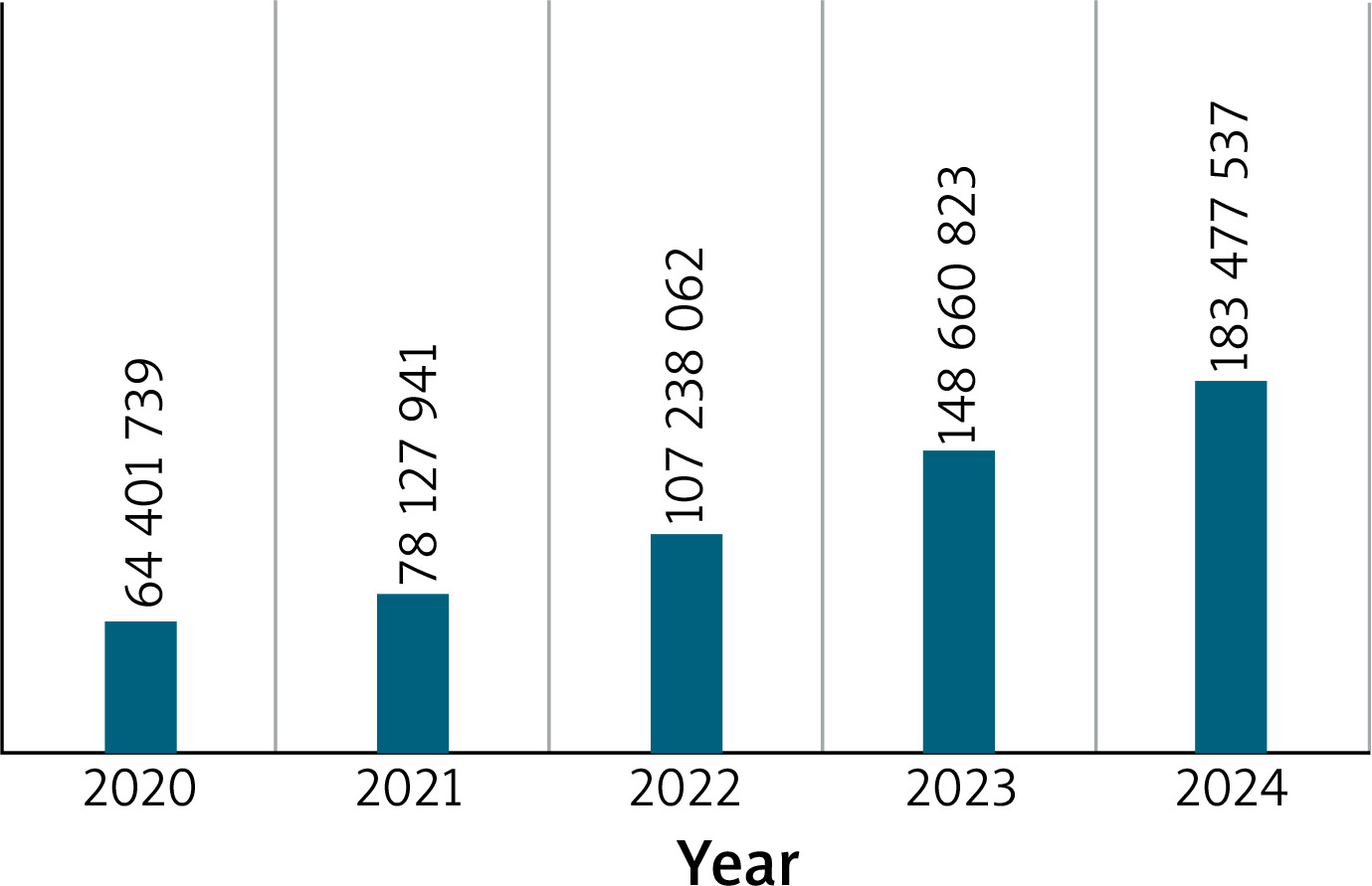
As in other drug programs, it is estimated that the process of announcing competitions for the implementation of the above program, selecting service providers and signing service agreements usually takes about 3 to 6 months. Therefore, the amount of financing provided in this drug program was increased consistently and ultimately amounted to PLN 64,401,739 in 2020. It is also worth noting the dynamics of the growth of the B.44 program, which increased in value by 184% to PLN 183,477,537 by 2024 (Figure 3).
B.107 Treatment of patients with chronic spontaneous urticaria
The B.107 drug program was implemented by way of the Announcement of the Minister of Health on the list of reimbursed drugs, foodstuffs for particular nutritional uses and medical devices on 1 January 2020.
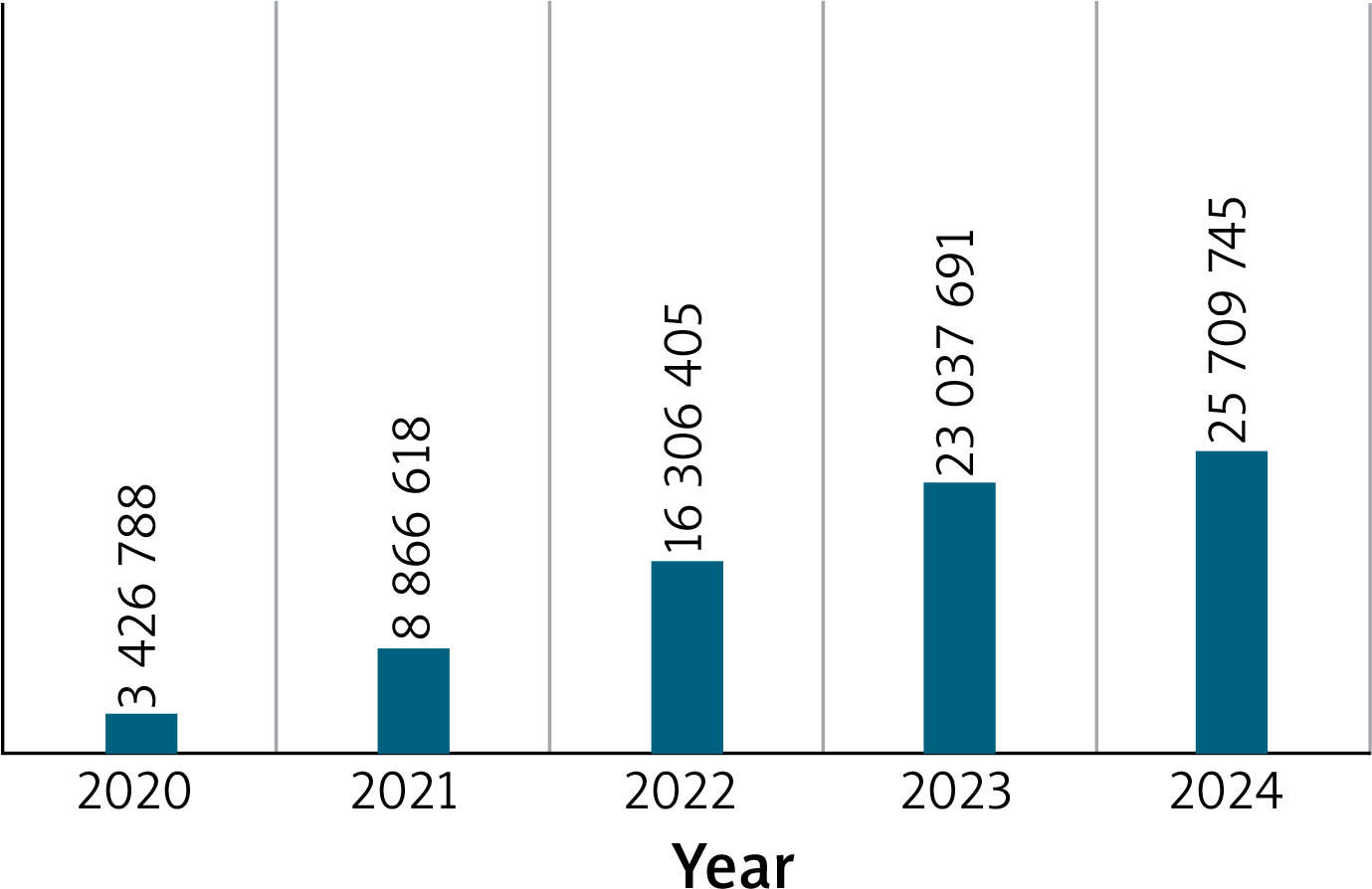
In the first year of operation, i.e. in 2020, the amount of financing provided under this drug program increased from month to month and ultimately amounted to PLN 3,426,788. It is worth noting that the B.107 program increased by over 650% in the indicated period to PLN 25,709,745 in 2024 (Figure 4).
B.122 Preventive treatment of patients with recurrent attacks of severe hereditary angioedema
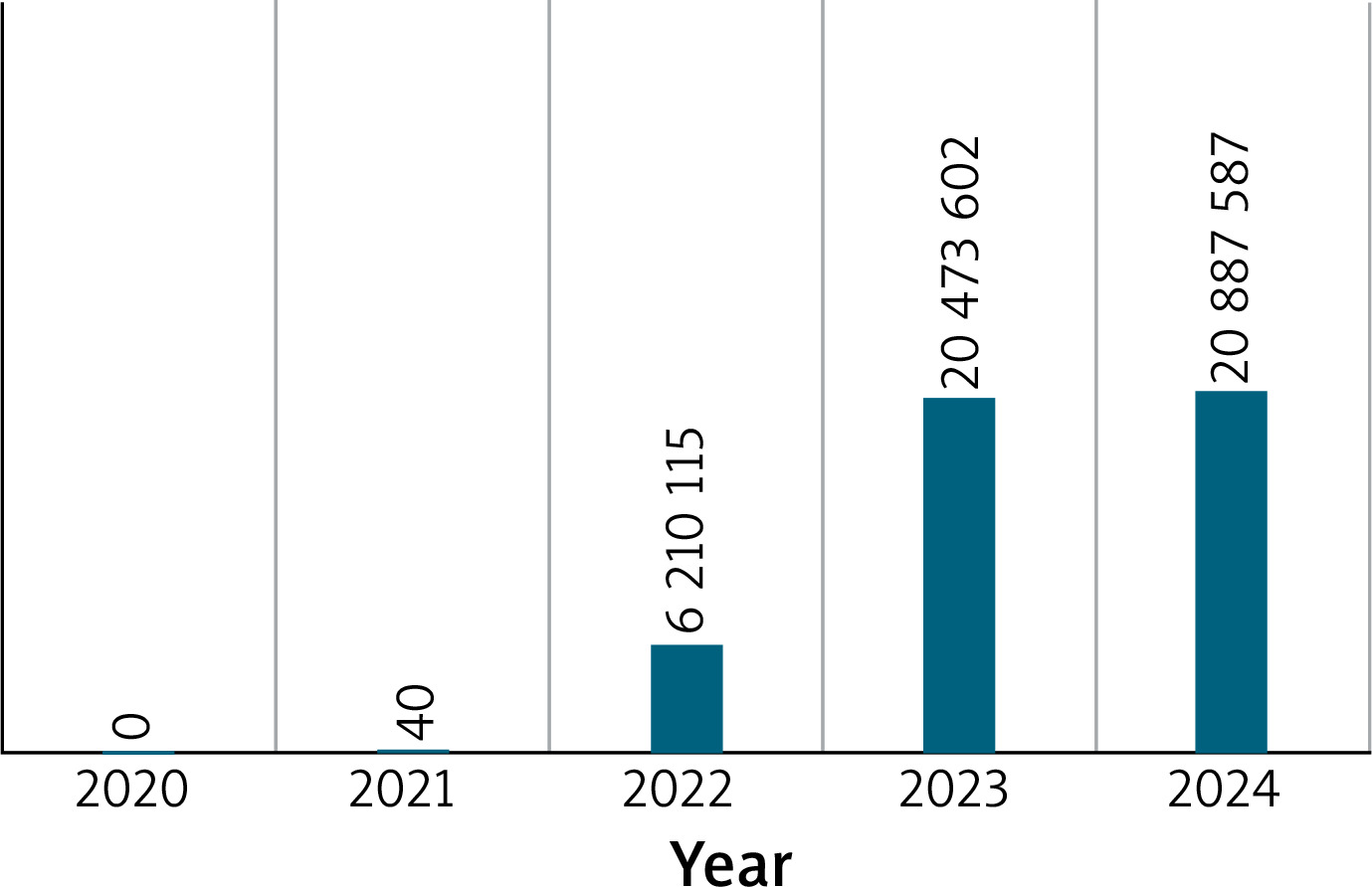
The B.122 drug program has been reimbursed since 1 September 2021. In 2021, its financing amounted to PLN 40. In 2024, it was PLN 20,887,587 (Figure 5).
B.124 Treatment of patients with atopic dermatitis
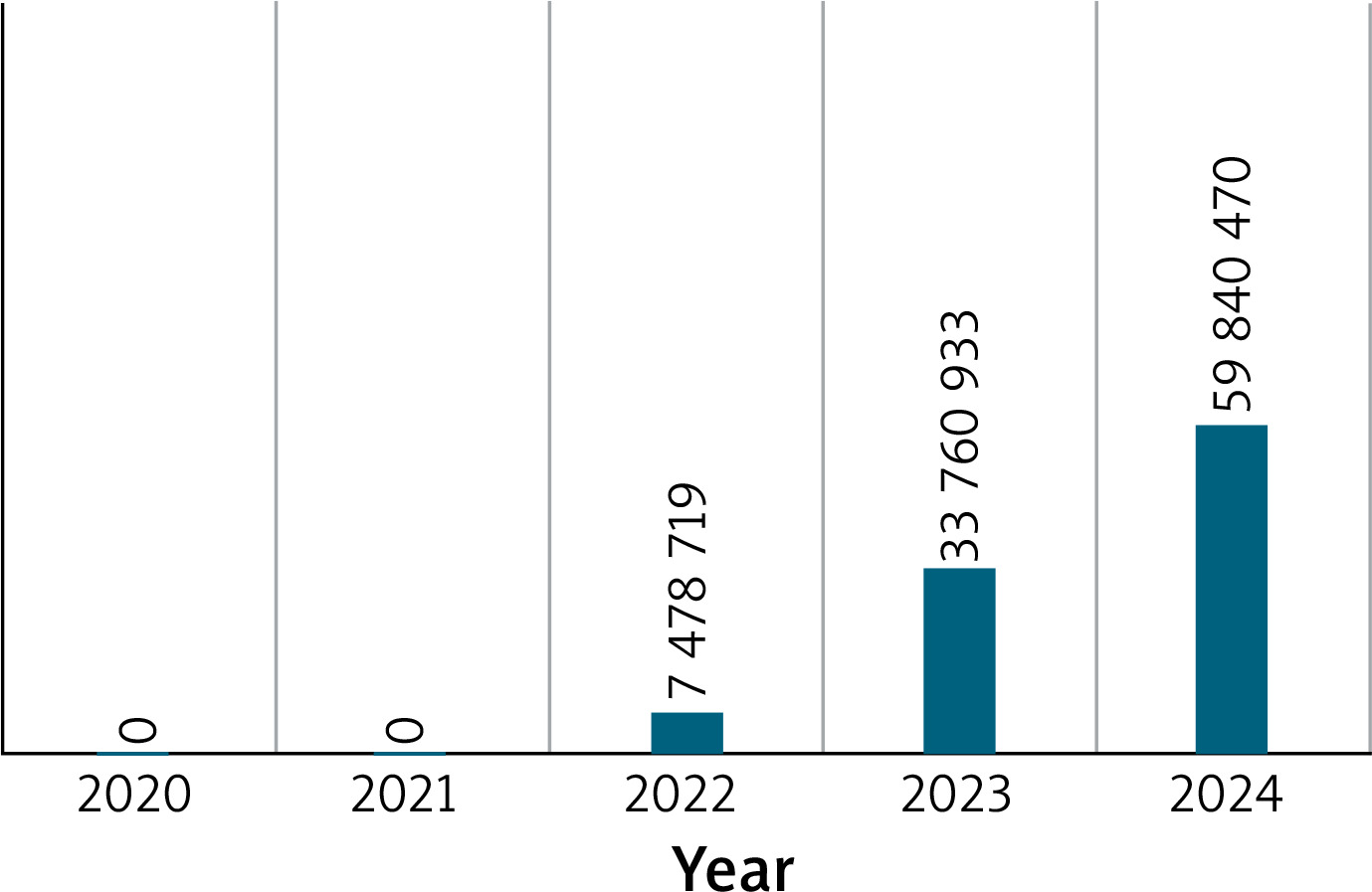
The B.124 drug program is the most recent program implemented by allergists. Its initial funding value in 2022 was PLN 7,478,719. In 2024, it increased to PLN 59,840,470 (Figure 6).
Number of patients in drug programs
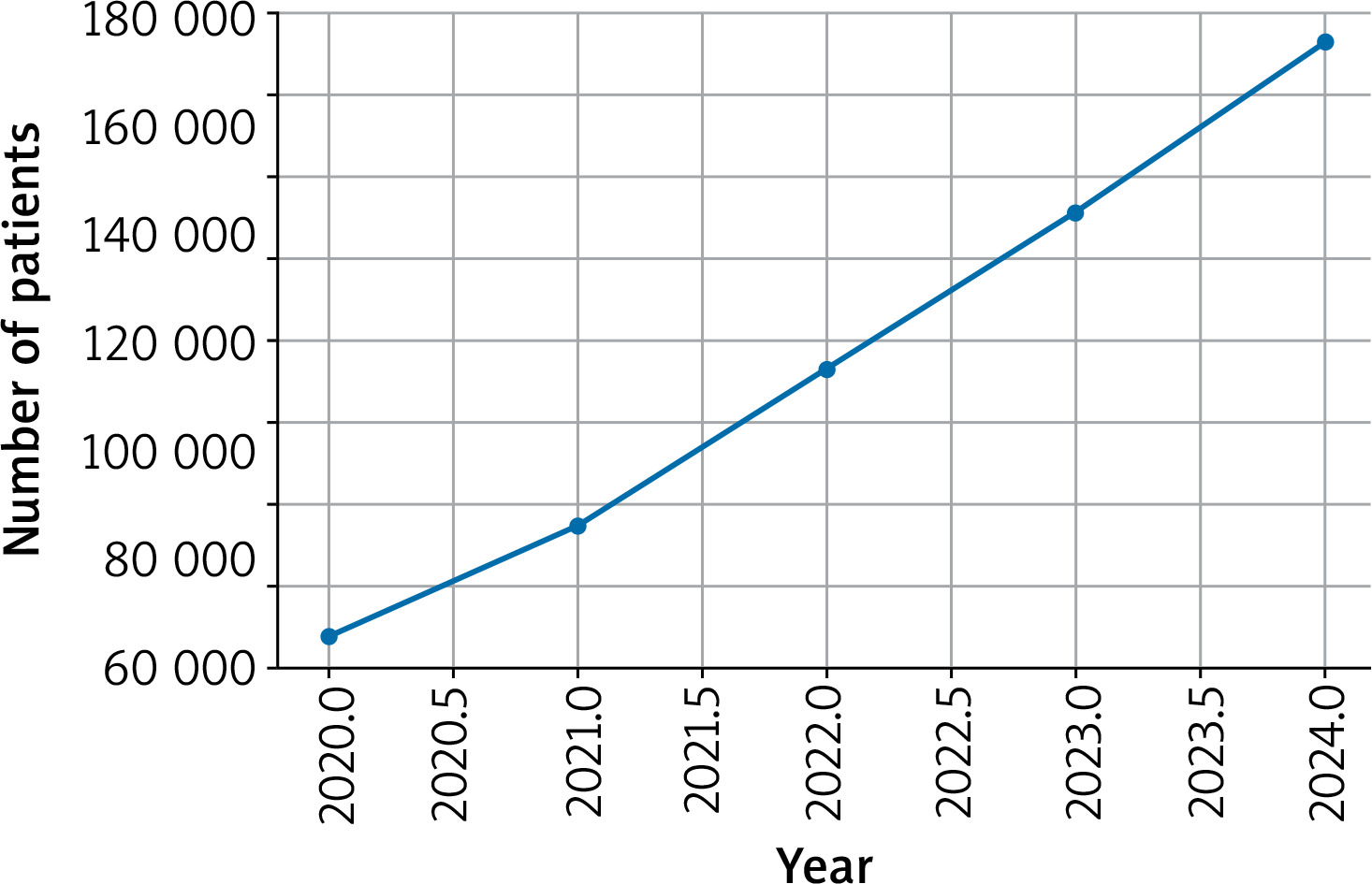
In 2020, 49,256 patients were treated in drug programs in Poland. In 2024, more than 191,077 patients were treated nationwide. Year over year, from several to several dozen thousand new patients were included in therapies available under drug programs. The largest increase in the number of patients in Poland was recorded in 2024. The number of patients increased by 40,732 compared to 2023 (Figure 7, Table 2).
Table 2
Annual increase in the number of patients treated in all drug programs in 2020–2024: author’s own study based on National Health Fund data
| Year | Number of patients | Annual growth |
|---|---|---|
| 2020 | 49,256 | – |
| 2021 | 75,432 | 26,176 |
| 2022 | 112,789 | 37,357 |
| 2023 | 150,345 | 37,556 |
| 2024 | 191,077 | 40,732 |
Figure 7
Number of patients treated in all drug programs in 2020–2024: author’s own study based on National Health Fund data
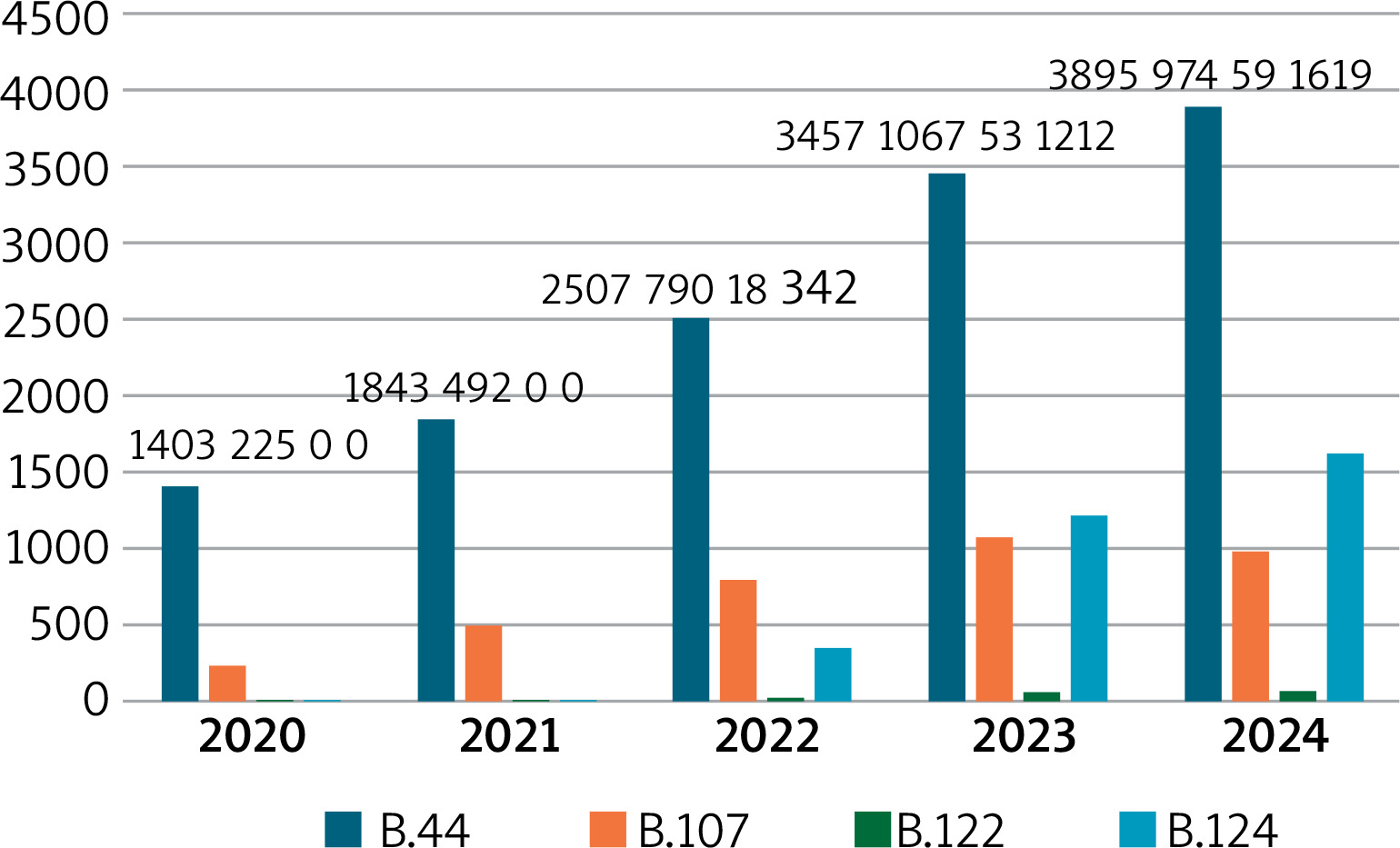
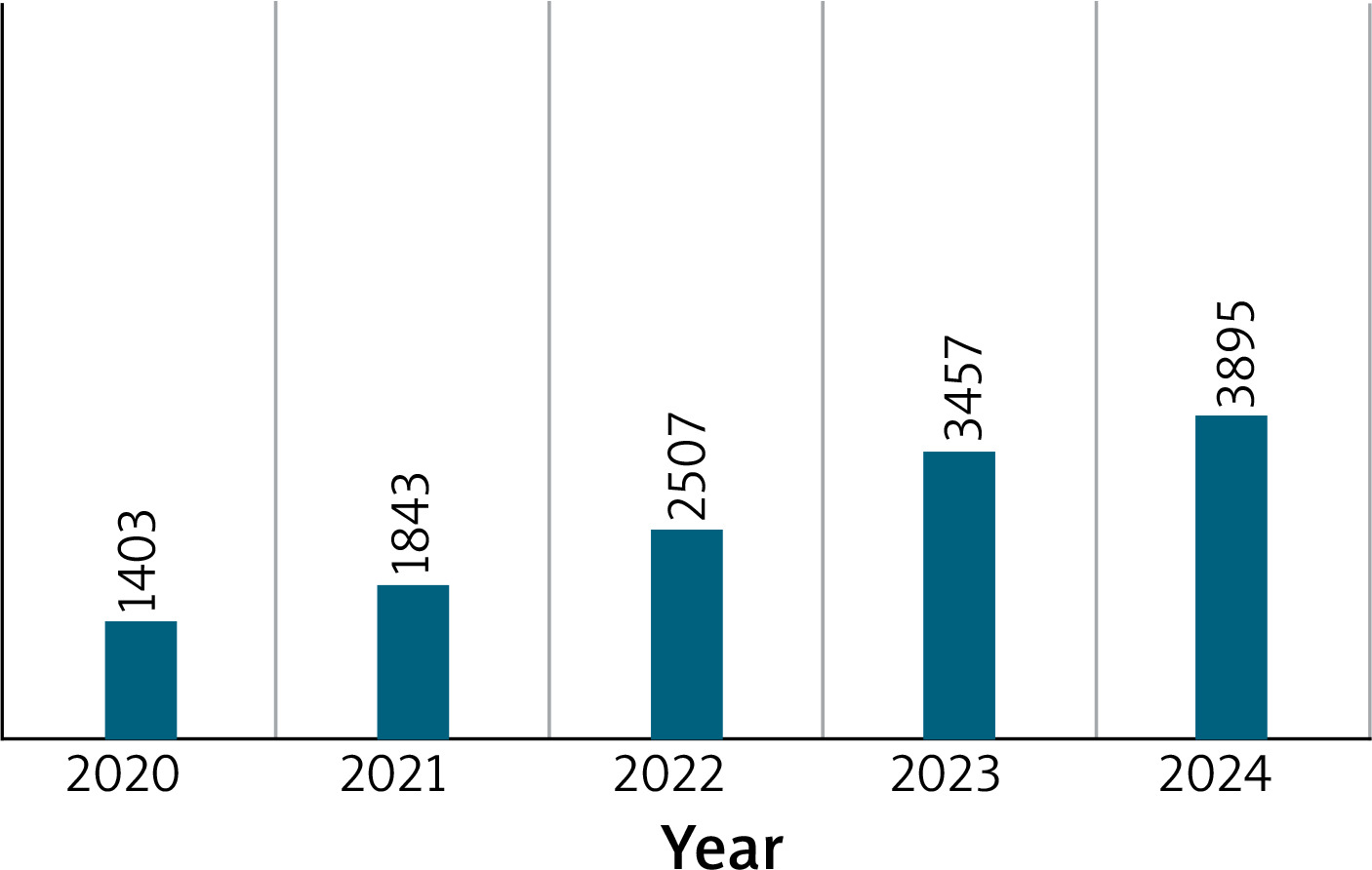
From the perspective of allergology, the largest drug program in terms of the number of patients treated is the B.44 drug program. In the first half of 2024, as many as 3,895 patients were treated in that program (Figure 8, Table 3).
Table 3
Number of patients in drug programs in allergology in 2020–2024
| Program | 2020 | 2021 | 2022 | 2023 | 2024 |
|---|---|---|---|---|---|
| B.44. | 1403 | 1843 | 2507 | 3457 | 3895 |
| B.107. | 225 | 492 | 790 | 1067 | 974 |
| B.122. | 0 | 0 | 18 | 53 | 59 |
| B.124. | 0 | 0 | 342 | 1212 | 1619 |
B.44 Treatment of patients with severe asthma
In 2020, 1,403 patients were covered by the B.44 drug program in accordance with the Resolution of the National Health Fund Council. In the first half of 2024, this number increased to 3,895 patients (Figure 9).
B.107 Treatment of patients with chronic spontaneous urticaria
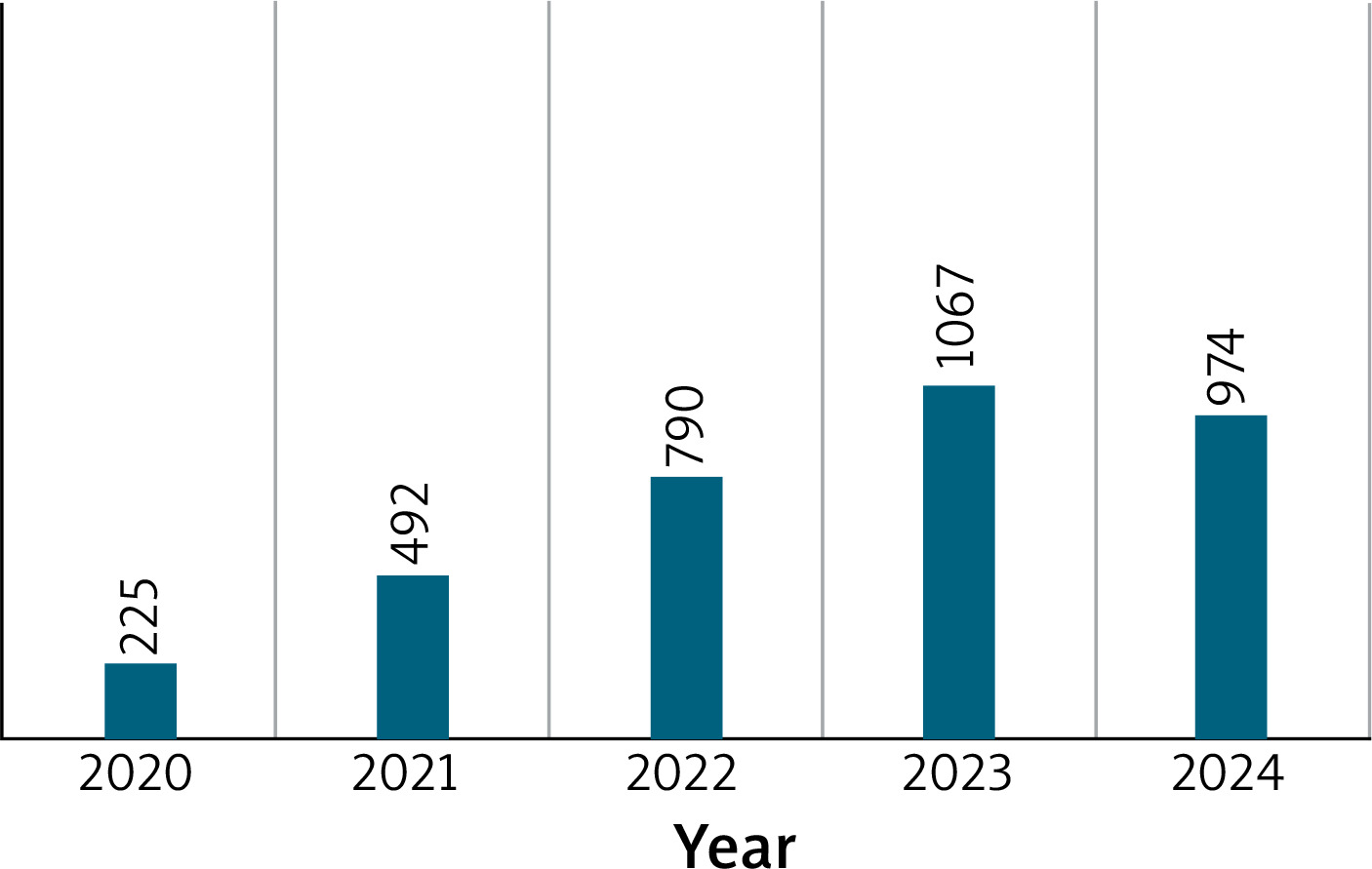
In the B.107 programme, the number of patients increased almost fourfold over the last 5 years, from 225 in 2020 to 974 in the first half of 2024 (Figure 10).
B.122 Preventive treatment of patients with recurrent attacks of severe hereditary angioedema
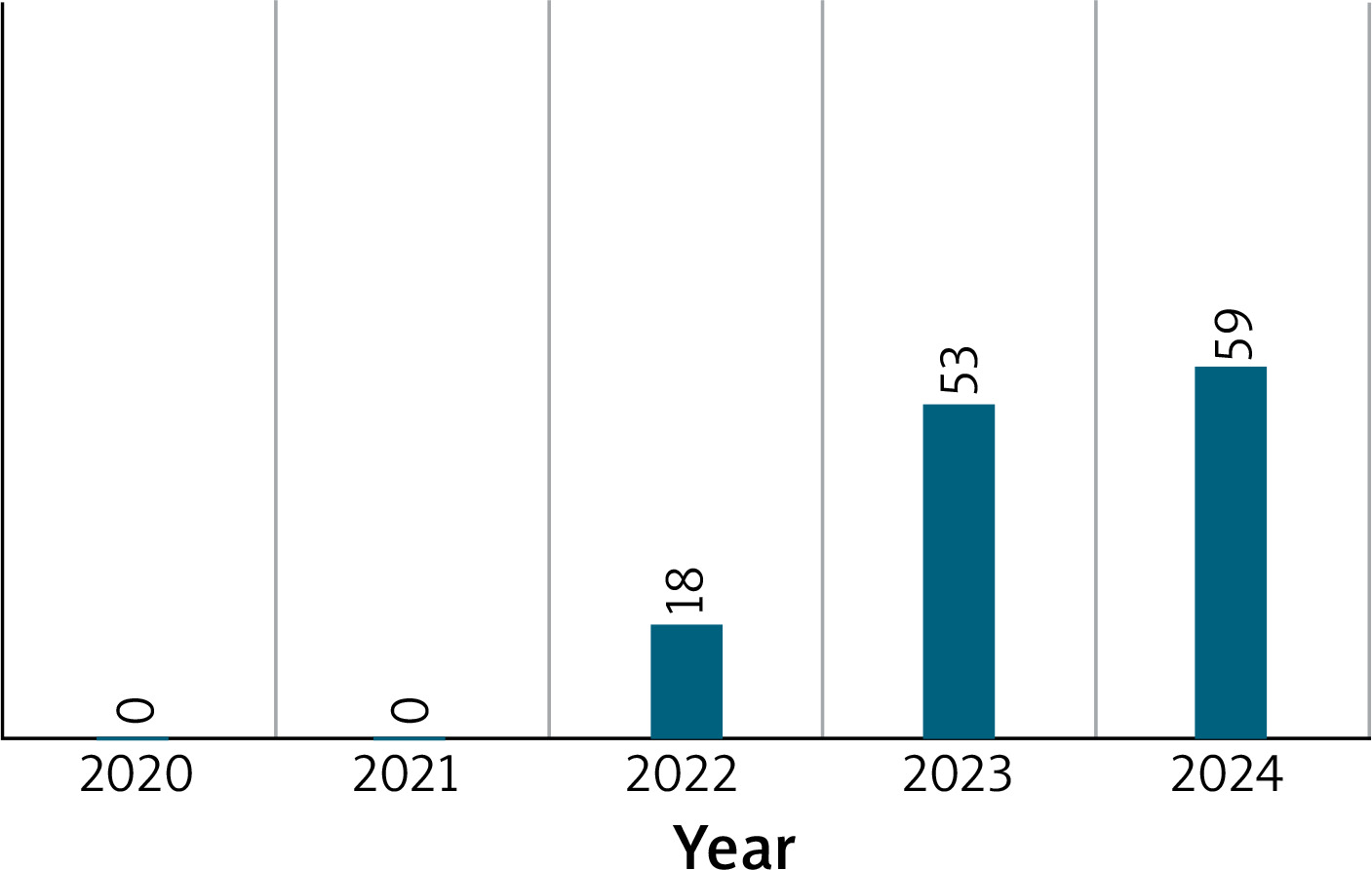
The B.122 drug program is the smallest program implemented in allergology. In the first half of 2024, only 59 patients were treated (Figure 11).
B.124 Treatment of patients with atopic dermatitis
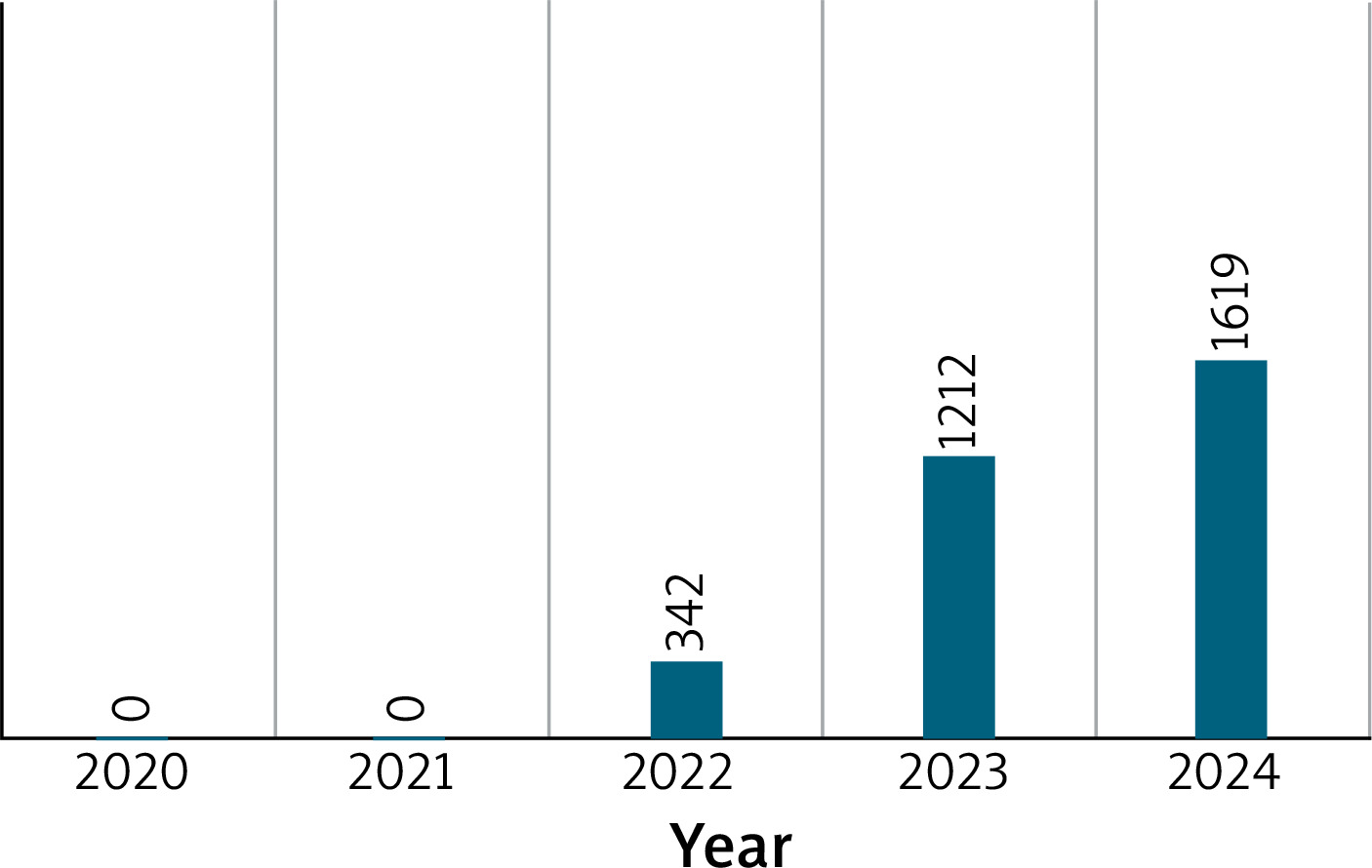
The B.124 drug program was highly anticipated by allergists, dermatologists, and paediatricians alike. The dynamics of patient growth are very high. In the first half of 2024, after almost 2 years of the drug program start, 1,619 patients were treated (Figure 12).
At the same time, data published by the National Health Fund clearly indicate that the queues of patients waiting for services in both urgent and stable cases have been growing over the years analysed. This shows that the waiting time for a visit in both outpatient and inpatient conditions is getting longer (Table 4).
Table 4
Number of people waiting for benefits at the end of a given calendar year in 2020–2024: author’s own study based on National Health Fund data
Discussion
The conclusions from the attached analysis indicate the dynamic development of drug programs in allergology in the years 2020–2024 [1–13]. This undoubtedly demonstrates a growing demand for specialist allergy treatment and the development of new therapeutic methods. An important element is the fact that new services are created, such as the B.124 program (atopic dermatitis) that allow for the introduction of modern therapeutic standards in response to medical needs and the development of new technologies. The value of contracts with the National Health Fund for conducting drug programs in allergology has increased significantly, which shows that investments in drug programs are a priority for the healthcare system. At the same time, the clinical experience of allergists confirms the validity and clinical effectiveness of this type of activities.
The number of patients covered by drug programs has also increased significantly, which is particularly visible in the B.44 program for the treatment of severe asthma. However, we must remember that some programs (such as B.44) can be implemented in both allergy and pulmonology centres due to the specificity and scale of the disease. The analysis of the value of contracts for individual drug programs shows that some programs, such as B.124 (Treatment of patients with atopic dermatitis), launched in 2022, are characterized by high dynamics of growth in the number of treated patients and the value of contracts, which suggests that such programs are effective and necessary. To sum up, the data included in the article indicate the development of drug programs in allergology, both in terms of the number of programs, the number of patients and the value of financing.
At the same time, it is reasonable to ask about the future, directions of development and the possibilities of allergy centres to provide this type of services. According to the announcements of the Ministry of Health, in accordance with the upcoming amendments to the Reimbursement Act, it will be possible to transfer some drug programs to outpatient specialist care (AOS) under the so-called fourth reimbursement path. The introduction of this path is aimed at increasing the availability of drugs for patients and improving the efficiency of the reimbursement system. It can also be a very interesting option for therapies used in allergy – allowing for increased access to treatment and reducing the burden and costs associated with providing services in inpatient conditions.
The dynamic development of allergology in recent years translates into new diagnostic and therapeutic possibilities. This is undoubtedly very important in the context of the increased number of diseases recorded in allergology. It is therefore satisfying that financial outlays and the development of drug programs go hand in hand with health needs.










