
Introduction
Atopic dermatitis (AD) is a chronic inflammatory skin disorder that affects skin barrier function. It is characterized by symptoms including pruritus, erythema, and eczematous lesions [1]. The pathophysiology of AD involves a complex interplay between genetic, immune, and environmental factors [2]. Central to its development are T-helper cell responses, particularly Th2-driven inflammation, which is associated with elevated levels of interleukins such as IL-4, IL-13, and IgE [3, 4].
Phosphodiesterase 4 (PDE4) is an enzyme that plays a pivotal role in regulating the inflammatory response. PDE4 breaks down cyclic adenosine monophosphate (cAMP), an important second messenger involved in the regulation of immune cells [5, 6]. In the context of AD, PDE4 plays a pivotal role in pathogenesis. The activation of PDE4 in immune cells results in the downregulation of cAMP levels, leading to an enhanced inflammatory response. This dysregulated inflammation is a hallmark of AD, contributing to the chronic and relapsing nature of the disease [7–9].
PDE4 inhibitors, such as apremilast, have been developed to selectively block PDE4 activity, thereby increasing cAMP levels and modulating the immune response. Clinical studies have shown that PDE4 inhibitors effectively alleviate clinical symptoms of AD patients [10–13].
Despite the growing use of PDE4 inhibitors in clinical practice, there remains considerable uncertainty regarding their overall efficacy and safety in adult AD patients. Randomised controlled trials (RCTs) have demonstrated varying results on the benefits and risks of PDE4 inhibition in AD, highlighting the need for a comprehensive synthesis of these studies.
Aim
In this study a systematic review and meta-analysis was conducted, aiming to provide a robust summary of the current evidence, offering valuable insights of PDE4 inhibitors in the treatment of adult AD.
Methods
Search for publications
Eight databases, including PubMed, Web of Science, Cochrane Library, Embase, Scopus, OVID, CNKI and SinoMed, were searched to collect publications. The search strategies were shown in (Supplementary material.
Criteria for publication selection
The inclusion criteria were as follows: (1) published studies on efficacy and safety of PDE4 inhibitor monotherapy in adult patients with atopic dermatitis (AD); (2) the patients were clinically diagnosed with AD; (3) the evaluation index of efficacy and safety was shown or could be extracted before and after treatment.
The exclusion criteria were as follows: (1) conference reports, case reports, reviews, commentary or animal studies; (2) overlapping data or duplicate published studies; (3) the data could not be obtained or calculated from the data shown in the publications; (4) the patients were under 18 years of age; (5) the biologic agents or other small-molecule targeted therapies were used with PDE4 inhibitors; (6) the type of study was a self-controlled study; and (7) the study focuses on particular skin lesions.
Two researchers (Boyang Zhou and Liyuan Sun) completed the selection of the publications. When there were disagreements, another researcher (Xiaoyang Wang) would check the publications and make the decisions.
Extraction of data
After the study was included, the following information was extracted: (1) study ID: author’s first name and year of publication; (2) diagnostic criteria of AD; (3) age of the patients; (4) severity of AD; (5) medicine in the study; (6) evaluation timepoint; (7) number of subjects of each group; and (8) evaluation index of efficacy and safety. Two researchers (Boyang Zhou and Liyuan Sun) conducted the extraction of the information. Another researcher (Xiaoyang Wang) would check the tables and make corrections if necessary.
Quality assessment
The assessment of the study quality was made using the Newcastle-Ottawa Scale (NOS) [14]. The NOS consists of scoring for selection, comparability and exposure, with a total score of 9. For a single study, the total score ≥ 6 was considered as high-quality. Two researchers (Boyang Zhou and Liyuan Sun) completed the assessment. When there were inconsistency, another researcher (Xiaoyang Wang) would re-assess the publication, and decided the final score after discussion with all researchers.
Statistical analysis
The fixed effects or random effects model was selected based on between-study heterogeneity which was evaluated through I2 test. When I2 > 50% and p-value < 0.10, the heterogeneity was significant, and the random effects model was selected. Otherwise, the fixed effects model was used. Sensitivity analysis was conducted by iteratively excluding each study to assess individual influence. Publication bias was evaluated through funnel plots if five or more studies were included in a comparison. All analysis and plot generation were performed using Review Manager 5.3. The protocol of this study was registered in PROSPERO, with CRD42025630356.
Results
Selection for inclusion of the publications
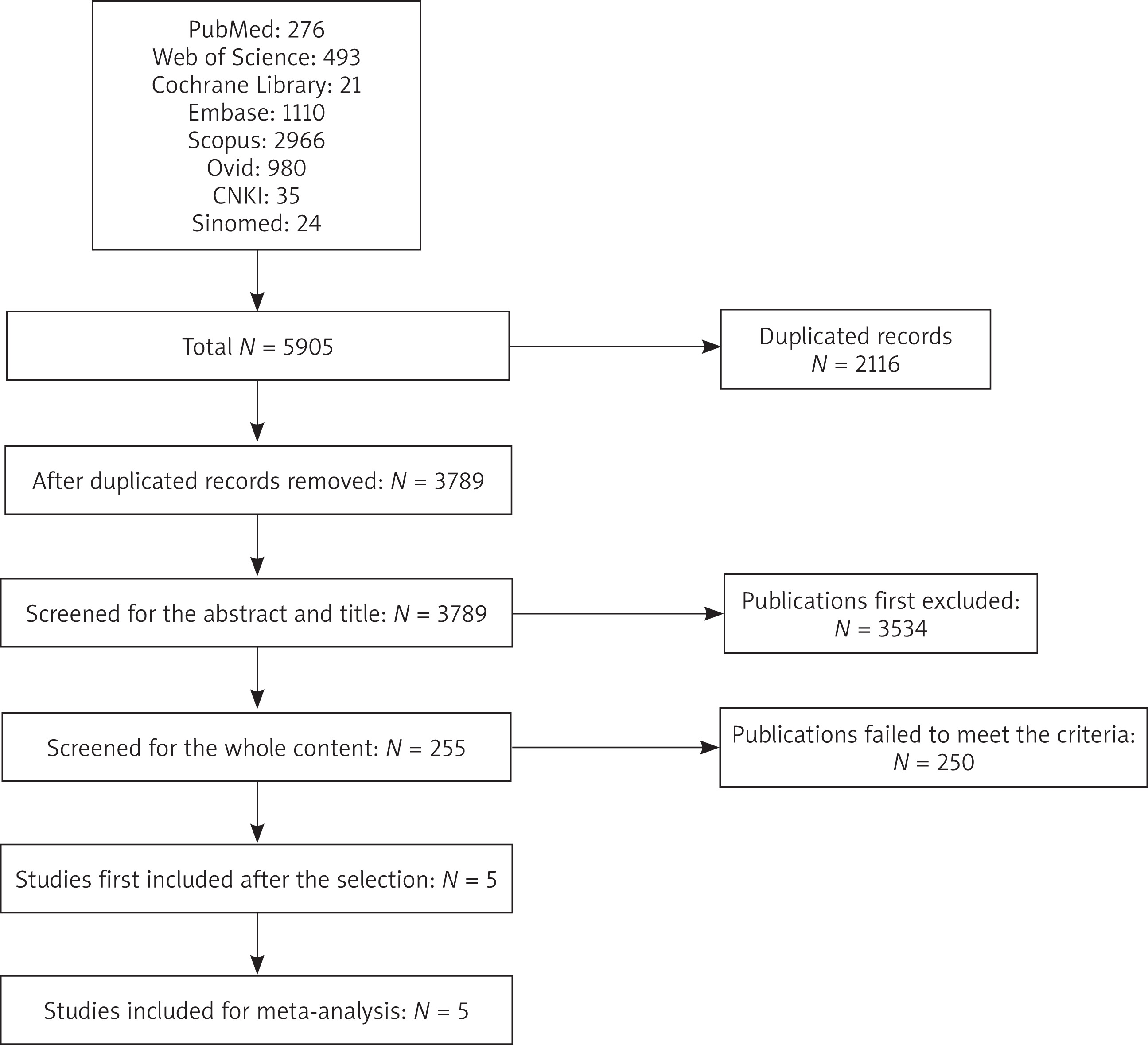
Initially, 5905 publications were obtained from 8 databases. Then, duplicated ones were removed, and 3789 publications were screened for the title and abstract. In this procedure, 255 publications were first included. Then the full articles were obtained and the whole contents were checked. Finally, a total of 5 studies were included for meta-analysis. The flowchart of the selection procedure is shown in Figure 1.
Main characteristics of studies
Five studies were included in this meta-analysis [15–19]. Three studies were on/focused on topical use of PDE4 inhibitors, including 0.01%, 0.03%, 0.10%, 0.20% E6005 and 2% crisaborole [15–17]. Two studies were on/focused on the oral use of PDE4 inhibitor apremilast, including 20 mg bid, 30 mg bid and 40 mg bid [18, 19]. Basic information is shown in (Supplementary material (Supplementary Tables S1 and S2).
Efficacy of topical use of PDE4 inhibitors
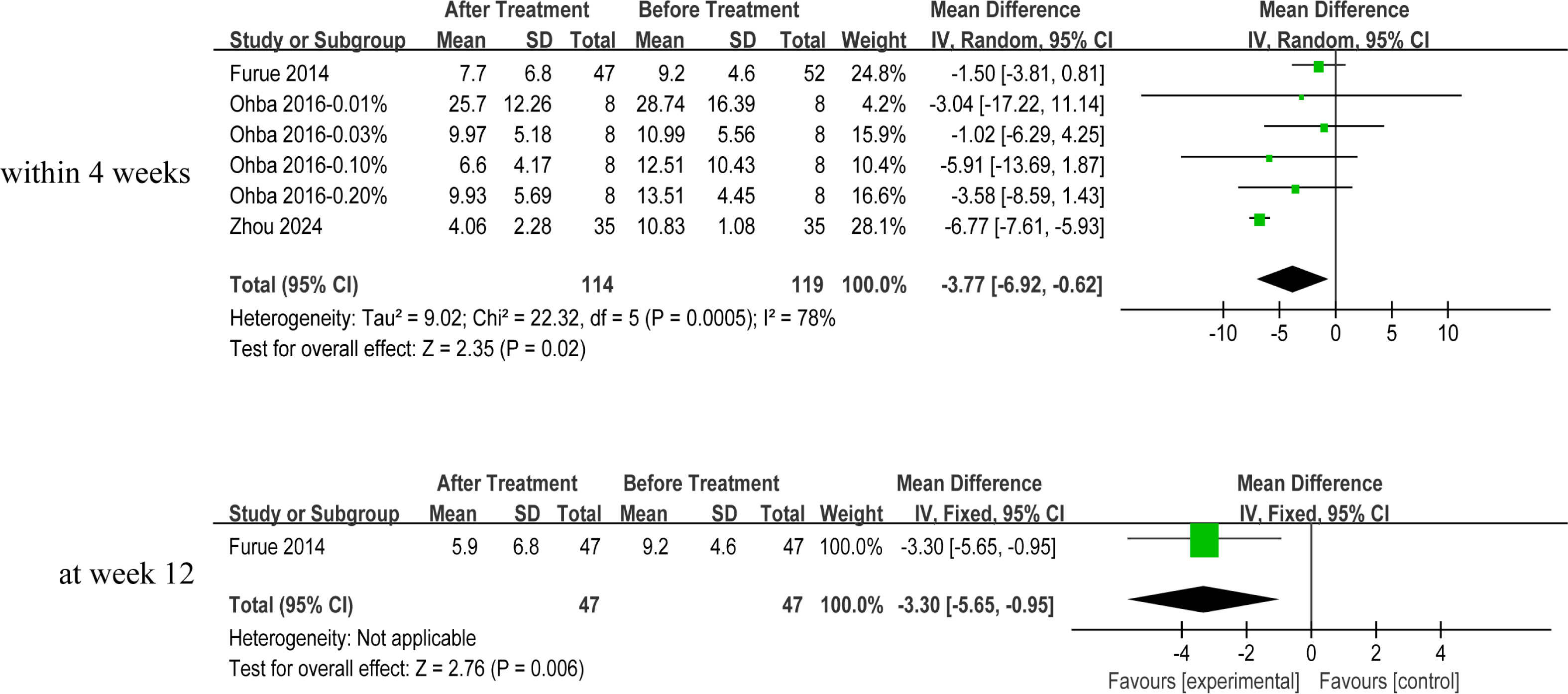
When topical PDE4 inhibitors were used within 4 weeks, the EASI score of patients decreased significantly, with MD = –3.77 [–6.92, –0.62] (p < 0.05). At week 12 after treatment, the EASI score of patients also decreased significantly, with MD = –3.30 [–5.65, –0.95] (p < 0.05). The results are shown in Figure 2.
When topical PDE4 inhibitors were used within 4 weeks, no significant changes were shown in mean percentage changes of EASI score (in (supplementary material).
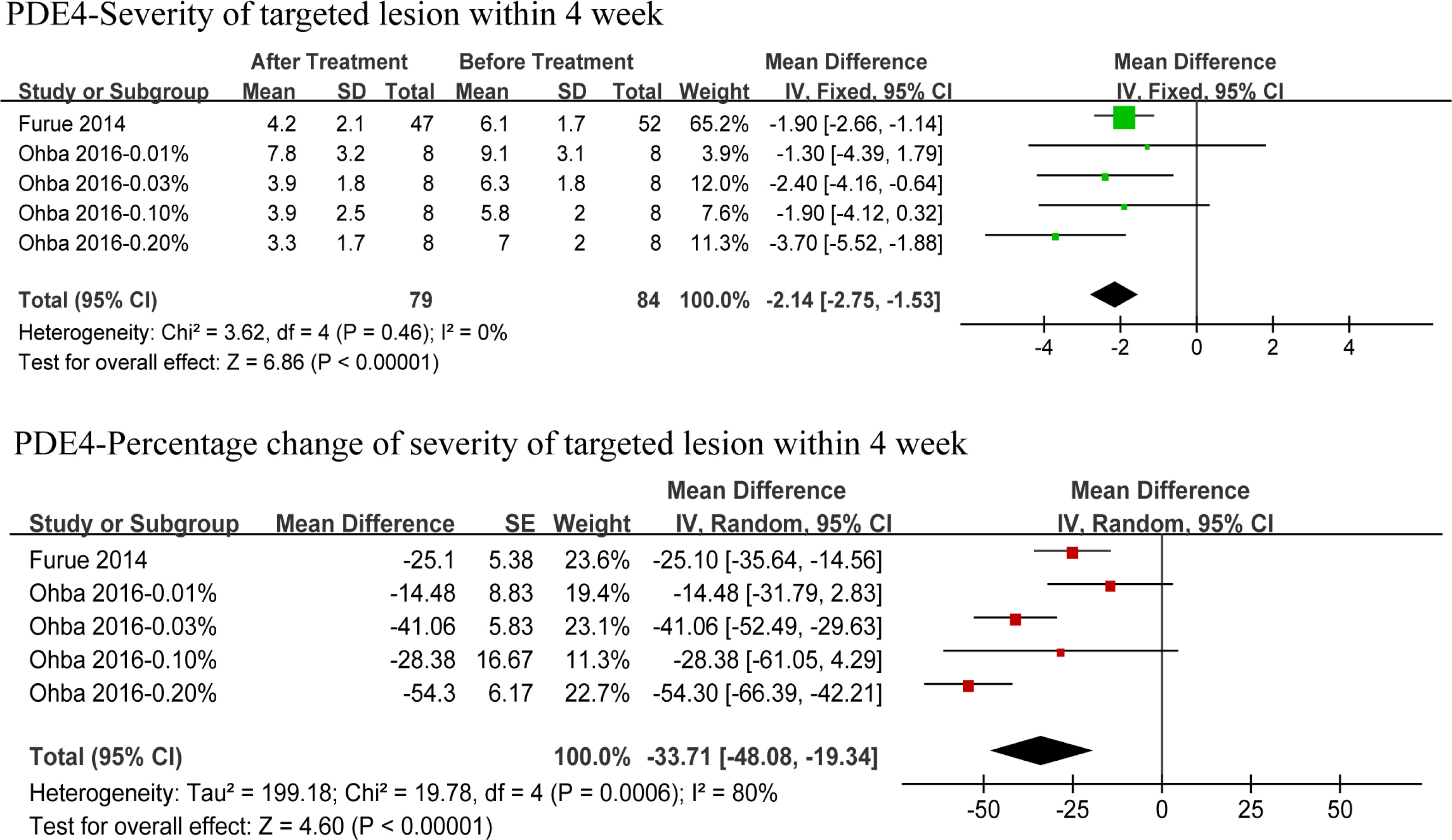
For the targeted lesions, the severity was evaluated within 4 weeks. After treatment, the severity of targeted lesions decreased significantly, with MD = –2.14 [–2.75, –1.53] (p < 0.05). Also, the percentage change of severity of targeted lesions decreased significantly, with MD = –33.71 [–48.08, –19.34] (p < 0.05). The results are shown in Figure 3.
Safety of topical use of PDE4 inhibitors
At week 4, compared with control subjects, patients with topical use of PDE4 inhibitors showed a lower risk of TEAE, with RR = 0.70 [0.51, 0.97] (p < 0.05). The result is shown in Figure 4.

Efficacy of oral use of PDE4 inhibitors
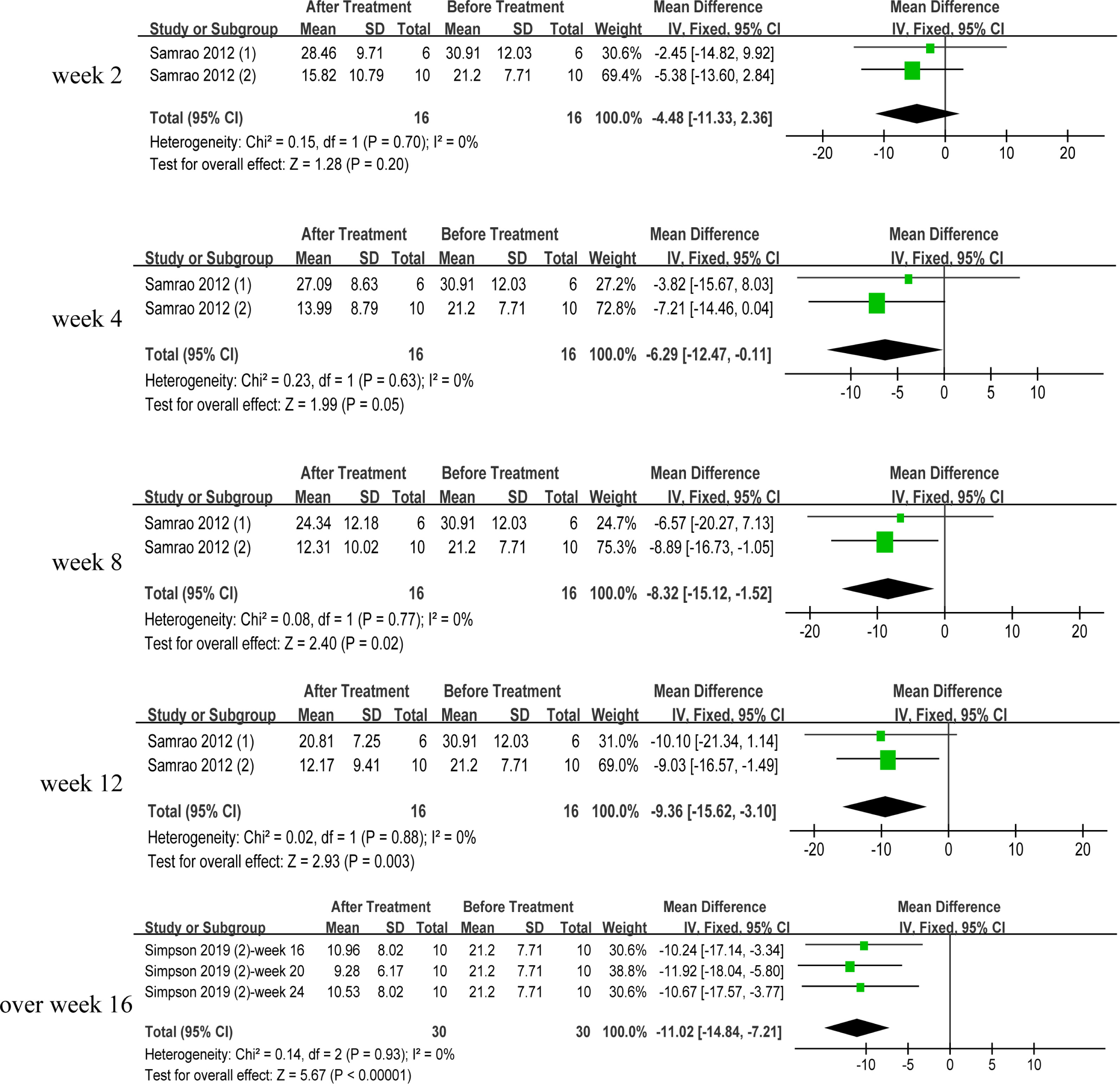
For patients with oral use of PDE4 inhibitors, at week 2 after treatment, no significant changes were shown in EASI score. At week 4, EASI score decreased, with MD = –6.29 [–12.47, –0.11] (p = 0.05). At week 8, EASI score decreased significantly, with MD = –8.32 [–15.12, –1.52] (p < 0.05). At week 12, EASI score also decreased significantly, with MD = –9.36 [–15.62, –3.10] (p < 0.05). When oral PDE4 inhibitors were used over 16 weeks, EASI score still decreased significantly, with MD = –11.02 [–14.84, –7.21] (p < 0.05). The results are shown in Figure 5.
At week 12 after treatment, there was a difference in mean percentage changes of EASI scores between patients with oral use of PDE4 inhibitors and control subjects, with MD = –17.72 [–32.07, –3.37] (p < 0.05). Also, the mean percentage change of EASI score in patients with oral use of PDE4 decreased significantly, with MD = –28.50 [–35.81, –21.19] (p < 0.05) (in (supplementary material).
Safety of oral use of PDE4 inhibitors
At week 12, compared with control subjects, patients with oral use of PDE4 inhibitors showed a higher risk of TEAE, with RR = 1.41 [1.13, 1.76] (p < 0.05). The result is shown in Figure 6.

Sensitivity analysis and evaluation of publication bias
For comparisons with over 3 studies included, sensitivity analysis showed that after excluding any single study, the pooled effect estimate (MD/RR) remained within the original confidence range, and the overall direction and statistical significance remained unchanged, indicating robust results. For comparisons with 5 or more studies included, publication bias was evaluated through the funnel plot. Each funnel plot demonstrated a symmetric distribution, indicating no significant publication bias.
Discussion
This study evaluated the efficacy and safety of PDE4 inhibitor monotherapy in adult patients with atopic dermatitis through systematic review and meta-analysis. Our meta-analysis found that both topical and oral PDE4 inhibitors provide clinically meaningful benefits for adult AD patients, albeit with distinct profiles. Topical PDE4 inhibitors significantly reduced EASI scores within 4 weeks and at 12 weeks and substantially improved targeted lesion severity and percentage change in lesion scores. Safety analysis indicated a lower risk of TEAEs compared to controls. Oral apremilast demonstrated increasing EASI reductions over time, from week 2 to 16. However, oral therapy was associated with a significantly higher risk of systemic TEAEs. Our meta-analysis found that PDE4 inhibitors could provide meaningful clinical benefits in adult AD patients.
PDE4 inhibitors modulate inflammatory responses by inhibiting cAMP hydrolysis, thereby elevating intracellular cAMP levels. This suppresses nuclear factor kappa B (NF-κB) and nuclear factor of activated T-cells signalling pathways, reducing key cytokines (IL-4, IL-13, IL-31) and restoring skin barrier function [20]. Previous studies showed optimistic efficacy of PDE4 inhibitors. Yang et al. [21] found that topical PDE4 inhibitors could improve target lesion severity and IGA scores of 0/1 in 32.0% of AD patients at week 4, and induce itch reduction within 24 h and 44.5% EASI-75 response at week 4. This study concluded that topical PDE4 inhibitor (crisaborole or AN2898) is an effective treatment for mild to moderate AD patients.
Saeki et al. [12] investigated the use of difamilast ointment in adult and paediatric patients with atopic dermatitis in the Japanese population, and found that sustained efficacy was shown over 52 weeks, with EASI-75 rates of 73.5% in paediatric and 55.4% in adult patients. During therapy, most of the patients experienced treatment-emergent adverse events, but most of which were mild or moderate. This study demonstrates that difamilast ointments are well tolerated and effective in Japanese adult and paediatric patients with AD. Apremilast is an oral PDE4 inhibitor. Simpson et al. [19] found that use of apremilast with 40 mg twice daily showed significant improvements in EASI index with mean percentage change from baseline of –31.6%. The INTEGUMENT-PED trial was conducted in paediatric patients using roflumilast 0.05% cream. The results demonstrated that once-daily roflumilast cream significantly improved signs and symptoms in children aged 2–5 years, with 39.4% reaching EASI-75 (20.6% in vehicle, p < 0.0001) [22].
The efficacy of PDE4 inhibitors can be attributed to their mechanism of modulating inflammatory responses by inhibiting cAMP hydrolysis. More importantly, the observed effect sizes in our analysis hold substantial clinical relevance. For instance, the reduction in the EASI score aligns with established consensus on the minimal clinically important difference for EASI, which is often considered to be a 50% improvement (EASI-50). This suggests that the improvements achieved with PDE4 inhibitor monotherapy are not only statistically significant but also meaningful from a patient perspective, particularly for managing mild-to-moderate AD. Our findings directly address a gap in the existing literature by providing a focused analysis on the adult AD population.
Previous systematic reviews have mainly focused on paediatric populations or combined data across age groups. Adult AD patients exhibit distinct pathophysiological characteristics, including a higher prevalence of chronic lichenified lesions, altered skin barrier function, and a greater burden of systemic comorbidities, which can influence drug efficacy and safety. By exclusively analysing adult cohorts, our study delivers a more precise and clinically relevant assessment of PDE4 inhibitors for this patient demographic, thereby enabling more targeted therapeutic decision-making. This meta-analysis has several limitations, including the heterogeneity in treatment durations across included studies. Besides, most studies focused on short-term outcomes, highlighting the need for longer-term efficacy and safety evaluations. Therefore, the choice of PDE4 inhibitor formulation should be tailored to the patient’s disease severity and risk tolerance: topical agents offer a favourable balance for mild-to-moderate disease, while oral agents, despite higher systemic adverse events, present a valuable option for more severe cases requiring cumulative efficacy.
Conclusions
This systematic review demonstrates that PDE4 inhibitor monotherapy provides clinically meaningful treatment for adult atopic dermatitis patients. Topical formulations demonstrate rapid symptomatic improvement and favourable tolerance. Oral administration exhibits cumulative efficacy for severe disease but requires careful risk-benefit assessment.










