Introduction
Atopic dermatitis (AD) is a complex, chronic, relapsing inflammatory skin disease characterized by structural defects in the skin barrier and persistent immune dysregulation. AD can affect all age groups, with epidemiological studies estimating a global prevalence of 15% to 20% in children and up to 10% in adults, representing a significant public health burden [1–3]. Patients typically experience intense, persistent pruritus accompanied by recurrent eczematous skin lesions. These clinical manifestations cause significant physical discomfort and frequently lead to comorbidities such as sleep disturbance, anxiety, and depression, thereby severely impairing patients’ overall quality of life. Historically, the clinical management of AD has relied primarily on basic skin care, topical corticosteroids (TCS), and systemic immunosuppressants [4–6]. However, for patients with moderate-to-severe AD, conventional therapies often yield insufficient efficacy or are associated with safety concerns such as skin atrophy, metabolic disorders, and immunosuppression. This situation has driven the continuous exploration of novel therapeutic approaches with greater specificity and improved safety profiles.
From a pathophysiological perspective, the pathogenesis of AD is highly heterogeneous, involving complex interactions between genetic susceptibility, environmental factors, skin barrier abnormalities, and immune system dysfunction. Immunologically, dysregulation centred on the overactivation of T-helper 2 (Th2) cells is considered a key mechanism. Cytokines secreted abundantly by Th2 cells, particularly interleukin-4 (IL-4) and interleukin-13 (IL-13), drive inflammatory cascades, enhance pruritus signalling, and further compromise epidermal barrier integrity, collectively contributing to the onset and progression of AD [7–9]. In recent years, following the clinical success of biologics like dupilumab, targeted therapies directed at specific inflammatory pathways and key cytokines have become a new trend in AD management. In this context, lebrikizumab, a high-affinity, humanized monoclonal antibody that specifically binds to and effectively inhibits IL-13 signalling, has shown promising therapeutic potential in numerous preclinical and clinical studies, offering a potential new effective treatment option for patients with moderate-to-severe AD [10–13]. Several foreign randomised controlled trials (RCTs) [14–24] have investigated the efficacy and safety of lebrikizumab in AD, with results indicating good efficacy and safety profiles.
This study aims to systematically search and synthesize relevant RCTs, employing meta-analysis to comprehensively evaluate the efficacy and safety of lebrikizumab compared to placebo for AD, with the goal of providing evidence-based guidance for clinical practice.
Methods
Inclusion and exclusion criteria
Study type
The literature included in this study were publicly published randomized controlled trials (RCTs), with the language limited to English.
Study subjects
Patients included in this study were all diagnosed with AD; no restrictions on race or nationality.
Interventions
Patients in the experimental group received lebrikizumab; patients in the control group received placebo. No restrictions on dosage.
Outcome measures
The primary outcome measure was the proportion of patients achieving at least a 75% improvement from baseline in the Eczema Area and Severity Index (EASI 75) at week 16. Secondary outcome measures included: the proportion of patients achieving at least a 90% improvement from baseline in EASI (EASI 90), the proportion achieving a validated Investigator Global Assessment score for AD (vIGA-AD) of 0 or 1 with a ≥ 2-point reduction, and the proportion achieving a ≥ 4-point improvement in the pruritus Numeric Rating Scale (NRS). Safety outcomes included the incidence of adverse events (AEs), serious adverse events (SAEs), nasopharyngitis, conjunctivitis, and headache.
Literature search strategy
Computerised searches were performed in PubMed and the Cochrane Library. English search terms included “lebrikizumab”, “atopic dermatitis”, and related terms. A combination of MeSH terms and free-text words was used, employing Boolean operators to formulate the search strategy. The reference lists of relevant articles were manually screened. The search timeframe was from database inception to December 2025.
Literature screening and data extraction
Two reviewers independently screened the literature based on inclusion and exclusion criteria. Disagreements were resolved through discussion or by consulting a third reviewer. Extracted data included: first author, publication year, number of patients, interventions, treatment duration, and outcome measures.
Quality assessment of included literature
The methodological quality of included studies was assessed using the bias risk assessment tool recommended in the Cochrane Handbook for Systematic Reviews of Interventions (Version 5.1.0). This tool evaluates: random sequence generation, allocation concealment, blinding of participants and personnel, blinding of outcome assessment, completeness of outcome data, selective reporting, and other potential sources of bias. Each item was judged as “low risk of bias”, “high risk of bias”, or “unclear risk of bias”.
Statistical analysis
Meta-analysis was performed using RevMan 5.4 software. Dichotomous variables were expressed as odds ratios (OR) with 95% confidence intervals (CI). Heterogeneity among studies was assessed using the Chi-squared test (χ2). If p < 0.1 and I2 > 50%, indicating statistical heterogeneity, a random-effects model was used after exploring the source of heterogeneity; otherwise, a fixed-effects model was applied. Sensitivity analysis was performed using the leave-one-out method. Publication bias was assessed using Egger’s test. The significance level was set at α = 0.05.
Results
Literature search results
The initial search yielded 18 relevant articles. After reviewing titles, abstracts, and full texts, 7 publications [14–20] comprising 7 RCTs were finally included. A total of 2168 patients were included, with 1517 in the experimental group and 651 in the control group. It should be noted that the trial population reported by Blauvelt [16] combined patients from the ADvocate1 Maintenance Primary Population (MPP) and the ADvocate2 modified Maintenance Primary Population (mMPP); therefore, these patients were not double-counted in the total sample size calculation. Basic characteristics of the included studies are shown in Table 1.
Table 1
Basic information of included studies
Quality assessment results of included studies
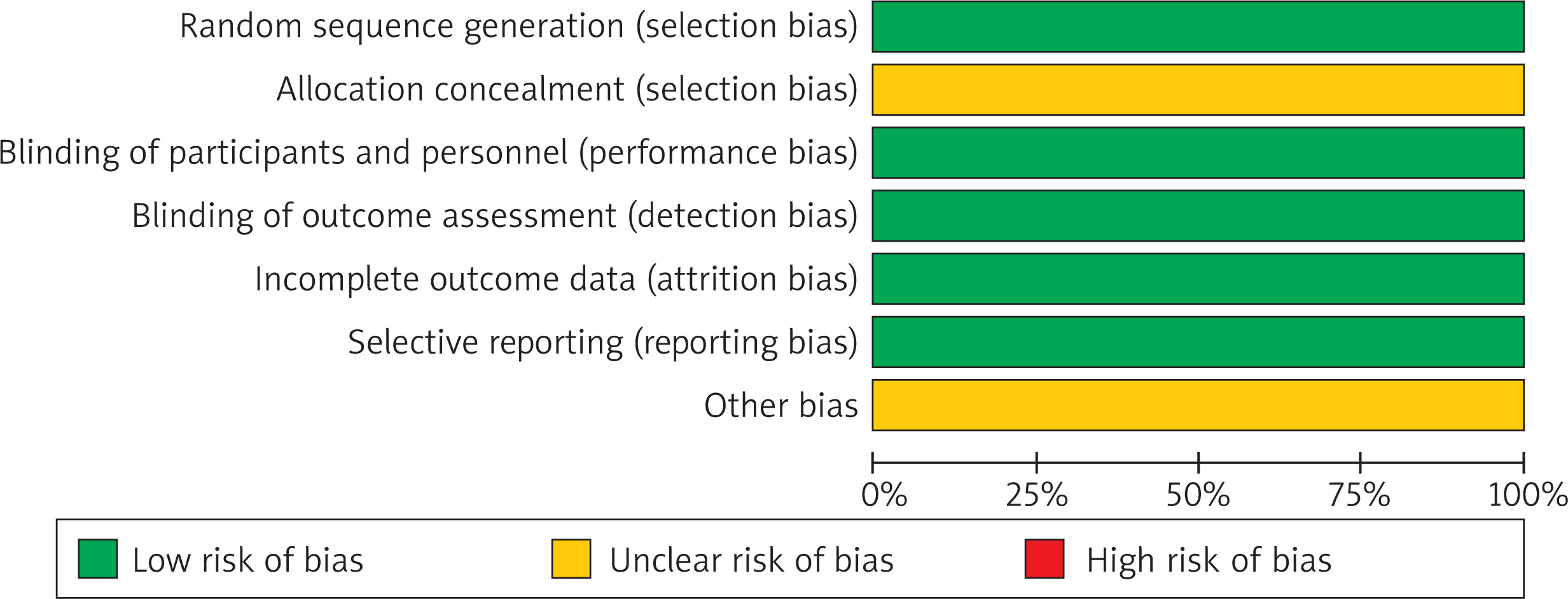
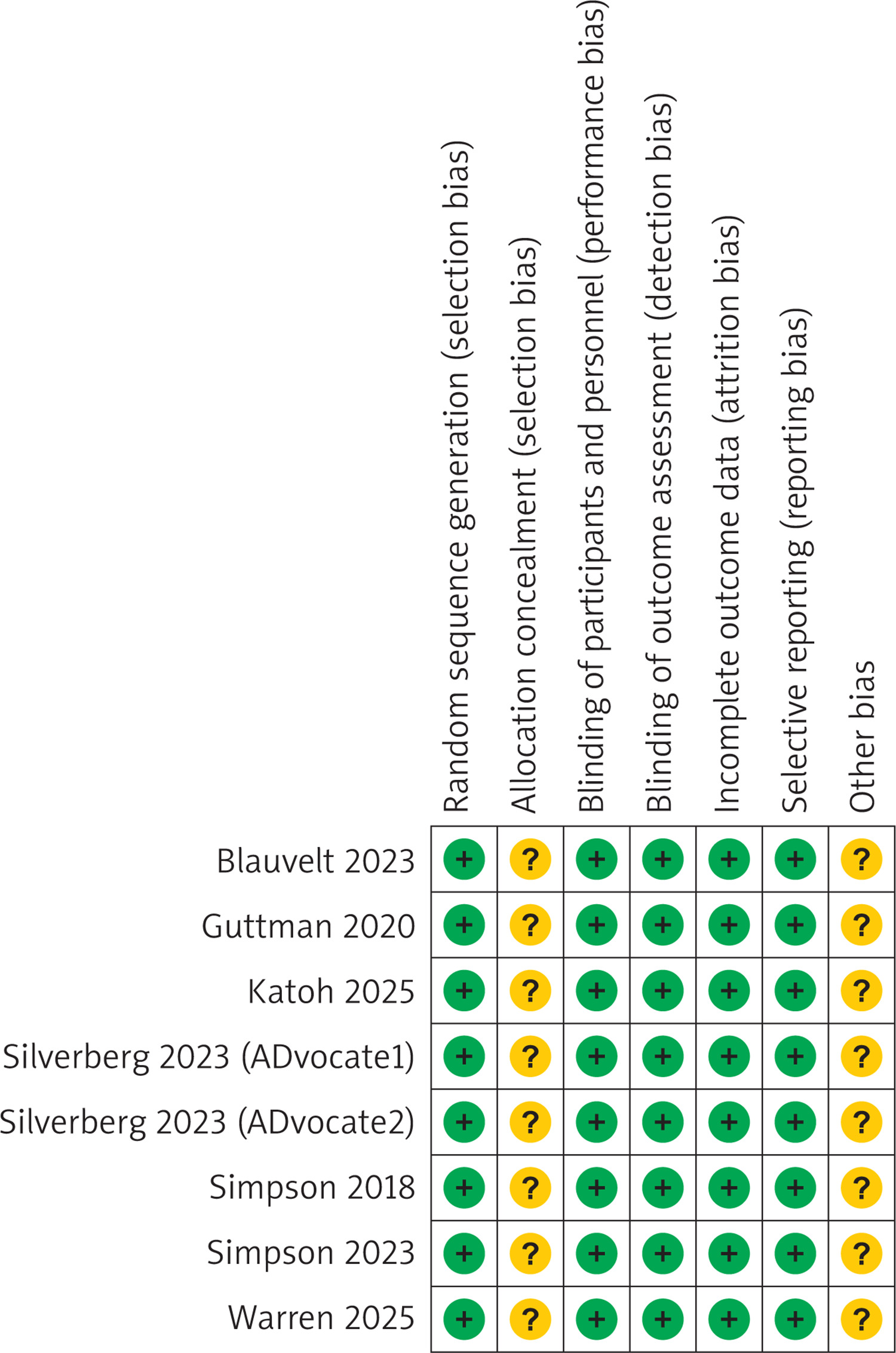
Seven publications comprising 7 RCTs were included. All studies reported using random allocation methods, blinding of participants and personnel, and blinding of outcome assessment. All studies had complete outcome data and were free of selective reporting. The risk of bias for allocation concealment and other potential biases was unclear in all studies. Results are shown in Figures 1 and 2.
Meta-analysis results
Primary endpoint
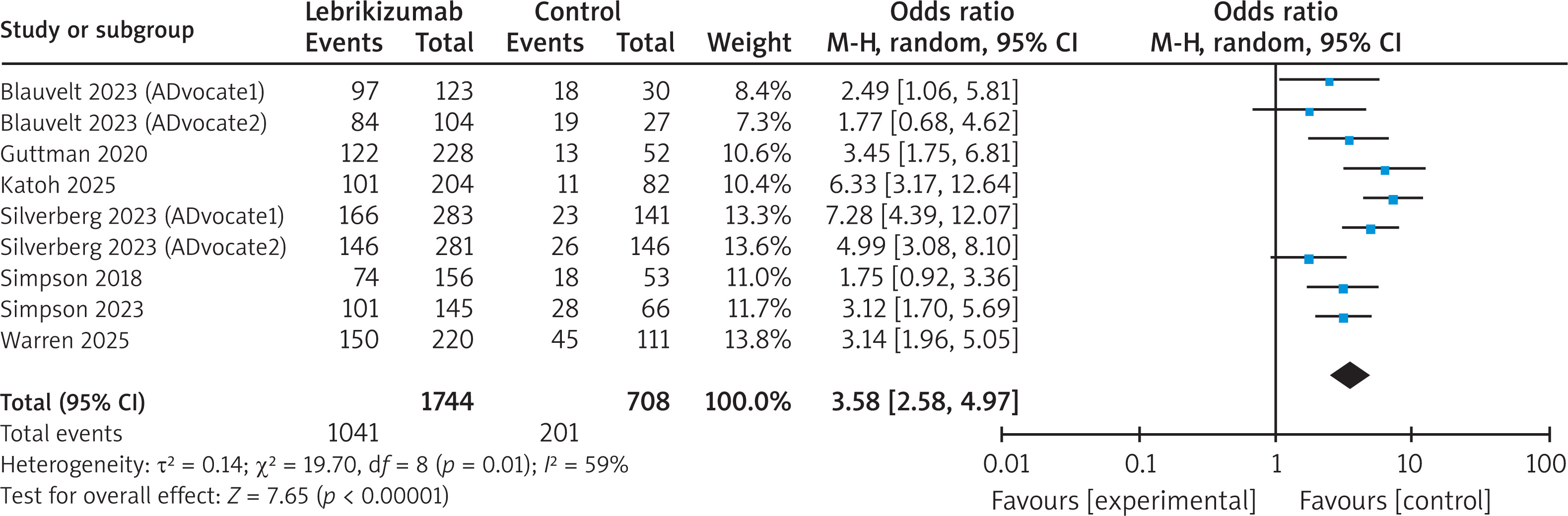
Seven RCTs reported EASI 75. There was heterogeneity among the studies (p = 0.01, I2 = 59%), so a random-effects model was used. The results showed that the EASI 75 rate was significantly higher in the experimental group compared to the control group (OR = 3.58, 95% CI (2.58, 4.97), p < 0.00001). The results are shown in Figure 3.
Secondary endpoints
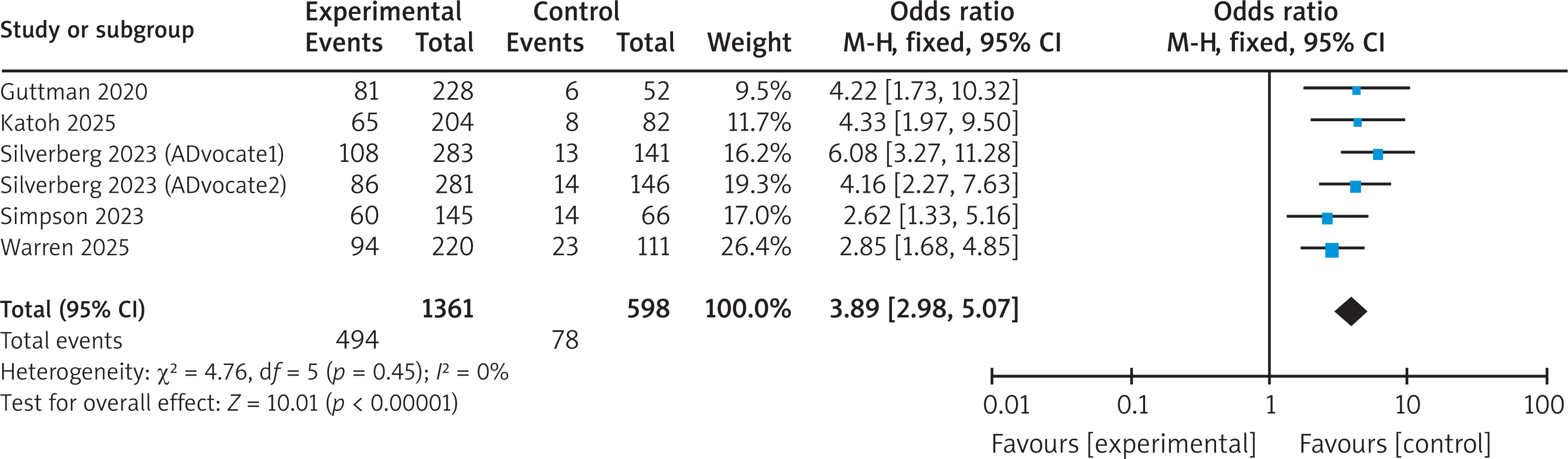
(1) EASI 90: Six RCTs reported EASI 90. No statistical heterogeneity was observed (p = 0.45, I2 = 0%), and a fixed-effects model was used. The EASI 90 rate was significantly higher in the experimental group (OR = 3.89, 95% CI (2.98, 5.07), p < 0.00001). The results are shown in Figure 4.
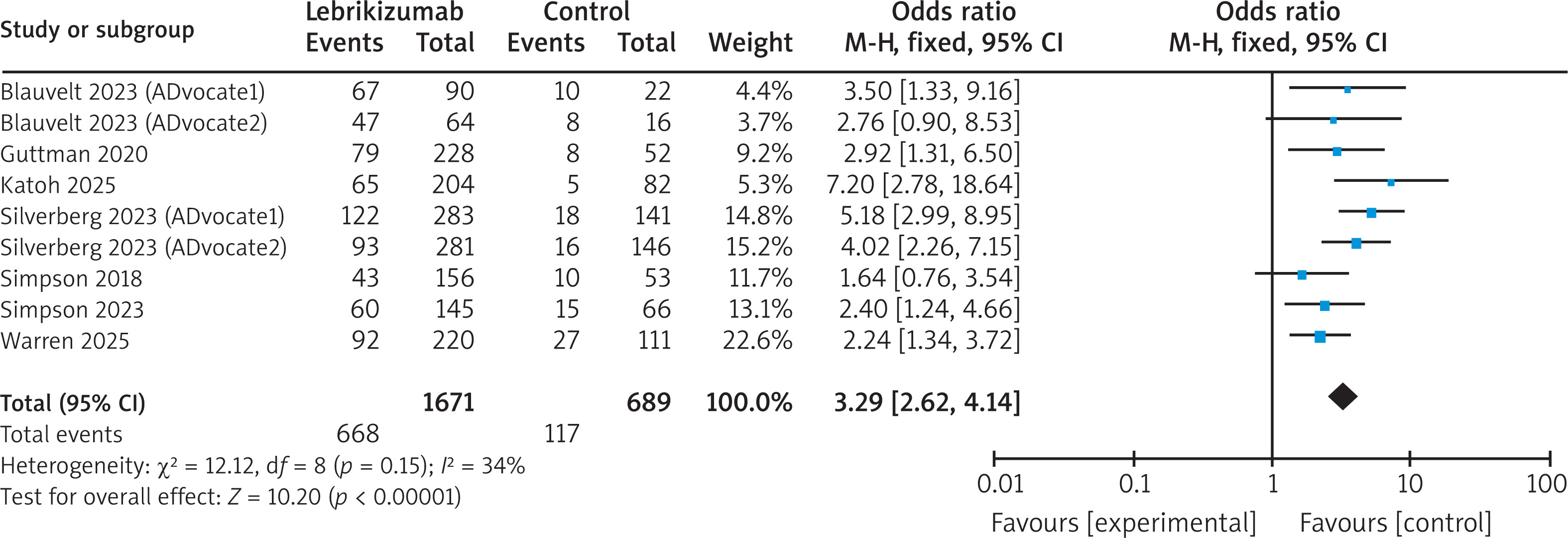
(2) vIGA-AD: Seven RCTs reported vIGA-AD. No statistical heterogeneity was observed (p = 0.15, I2 = 34%), and a fixed-effects model was used. The vIGA-AD response rate was significantly higher in the experimental group (OR = 3.29, 95% CI (2.62, 4.14), p < 0.00001). The results are shown in Figure 5.
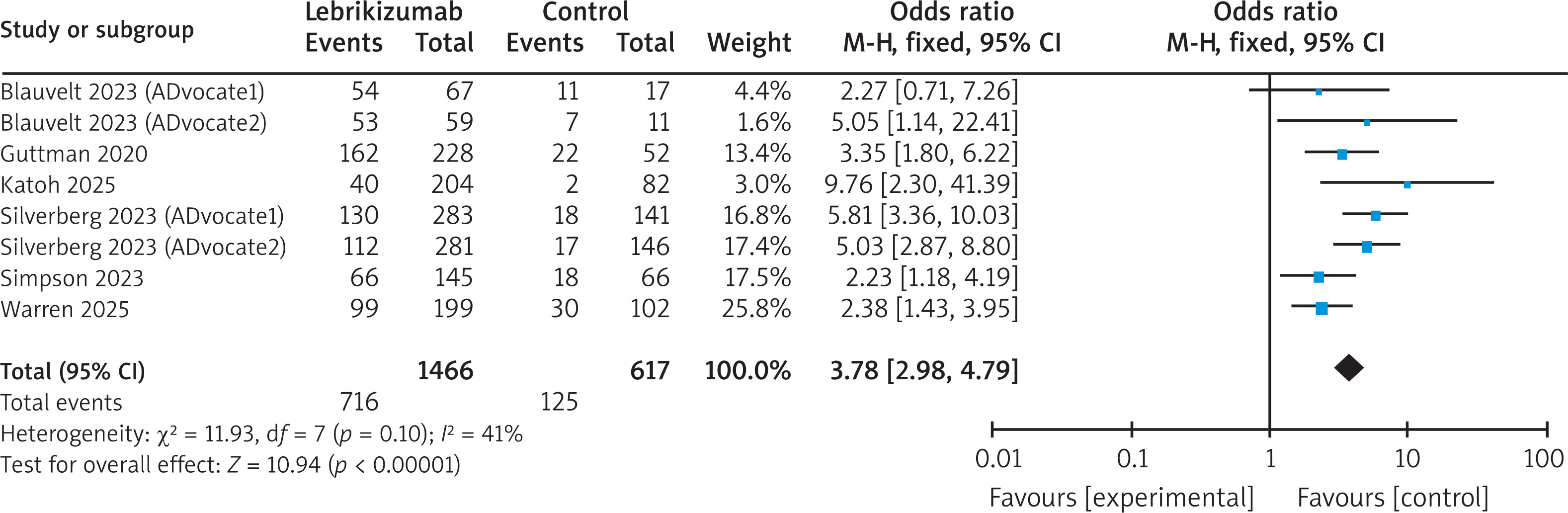
(3) NRS ≥ 4: Six RCTs reported NRS improvement ≥ 4. No statistical heterogeneity was observed (p = 0.10, I2 = 41%), and a fixed-effects model was used. The proportion of patients achieving NRS ≥ 4 improvement was significantly higher in the experimental group (OR = 3.78, 95% CI (2.98, 4.79), p < 0.00001). The results are shown in Figure 6.
Subgroup analysis
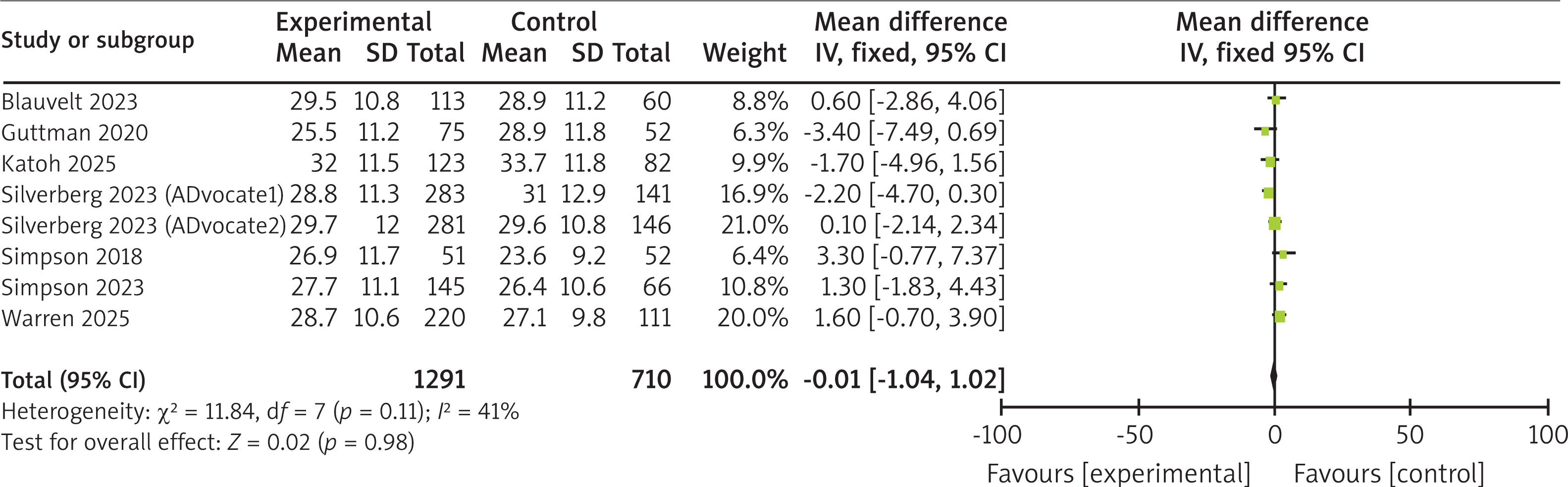
(1) Baseline severity: A meta-analysis of baseline disease severity (e.g., baseline EASI or IGA) across the 7 RCTs showed no statistically significant difference between the groups of patients enrolled in the different trials, with low heterogeneity (MD = –0.01, 95% CI (–1.04, 1.02), p = 0.98, I2 = 41%). The results are shown in Figure 7.
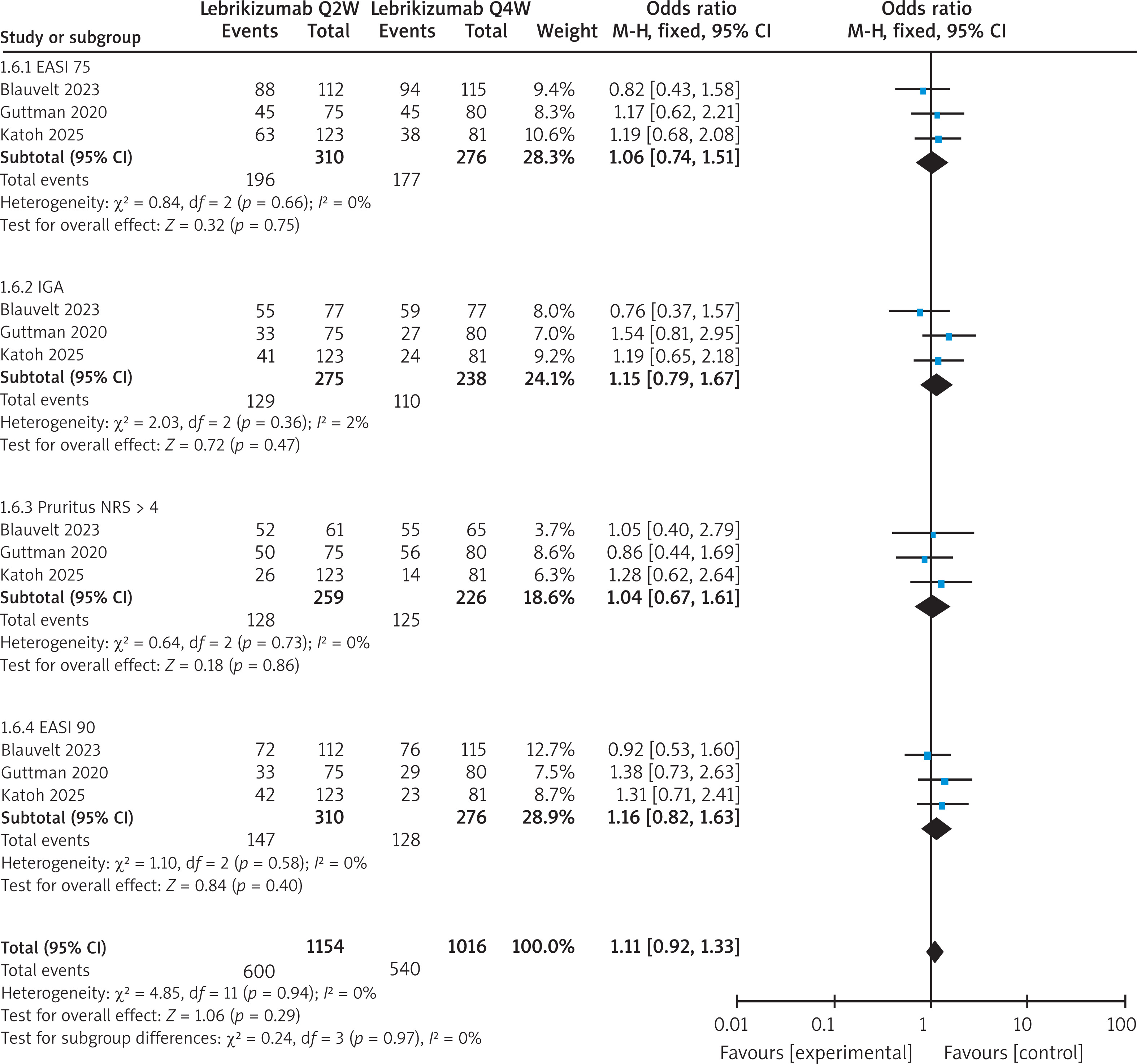
(2) Q2W vs. Q4W: Four RCTs reported results for both every-two-week (Q2W) and every-four-week (Q4W) lebrikizumab dosing regimens. No statistical heterogeneity was observed (p = 0.97, I2 = 0%), and a fixed-effects model was used. The analysis showed no statistically significant difference in treatment effect between the Q2W and Q4W groups. The results are shown in Figure 8.
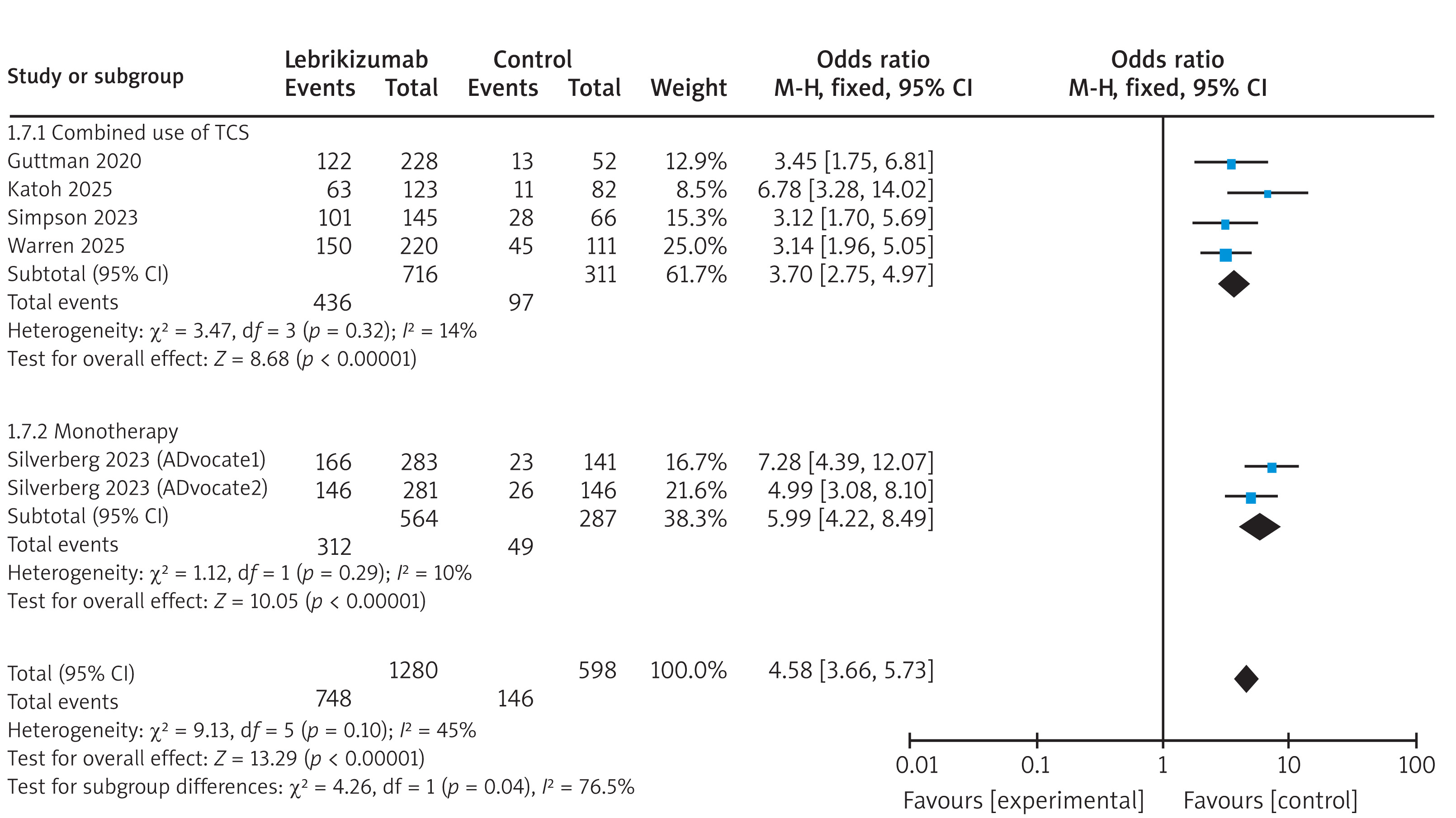
Concomitant TCS use vs. monotherapy: Subgroup analysis was performed based on whether lebrikizumab was used concomitantly with TCS or as monotherapy. Heterogeneity was low within the concomitant TCS group (p = 0.32, I2 = 14%) and the monotherapy group (p = 0.29, I2 = 10%). A fixed-effects model was used for the subgroup comparison. The results showed that lebrikizumab was significantly more effective than placebo in both concomitant TCS and monotherapy subgroups (Overall OR = 4.58, 95% CI (3.66, 5.73), p < 0.00001). Notably, the analysis revealed substantial between-subgroup heterogeneity (I2 = 76.5%), indicating that the use of concomitant TCS significantly modifies the treatment effect. The results are shown in Figure 9.
Safety outcomes
There were no statistically significant differences between the two groups in the incidence of overall adverse events, serious adverse events, nasopharyngitis, or headache (p > 0.05). However, the incidence of conjunctivitis was significantly higher in the lebrikizumab group compared to placebo (p < 0.0001). Results are shown in Table 2.
Table 2
Meta-analysis of safety indicators in the two groups of patients
Sensitivity analysis
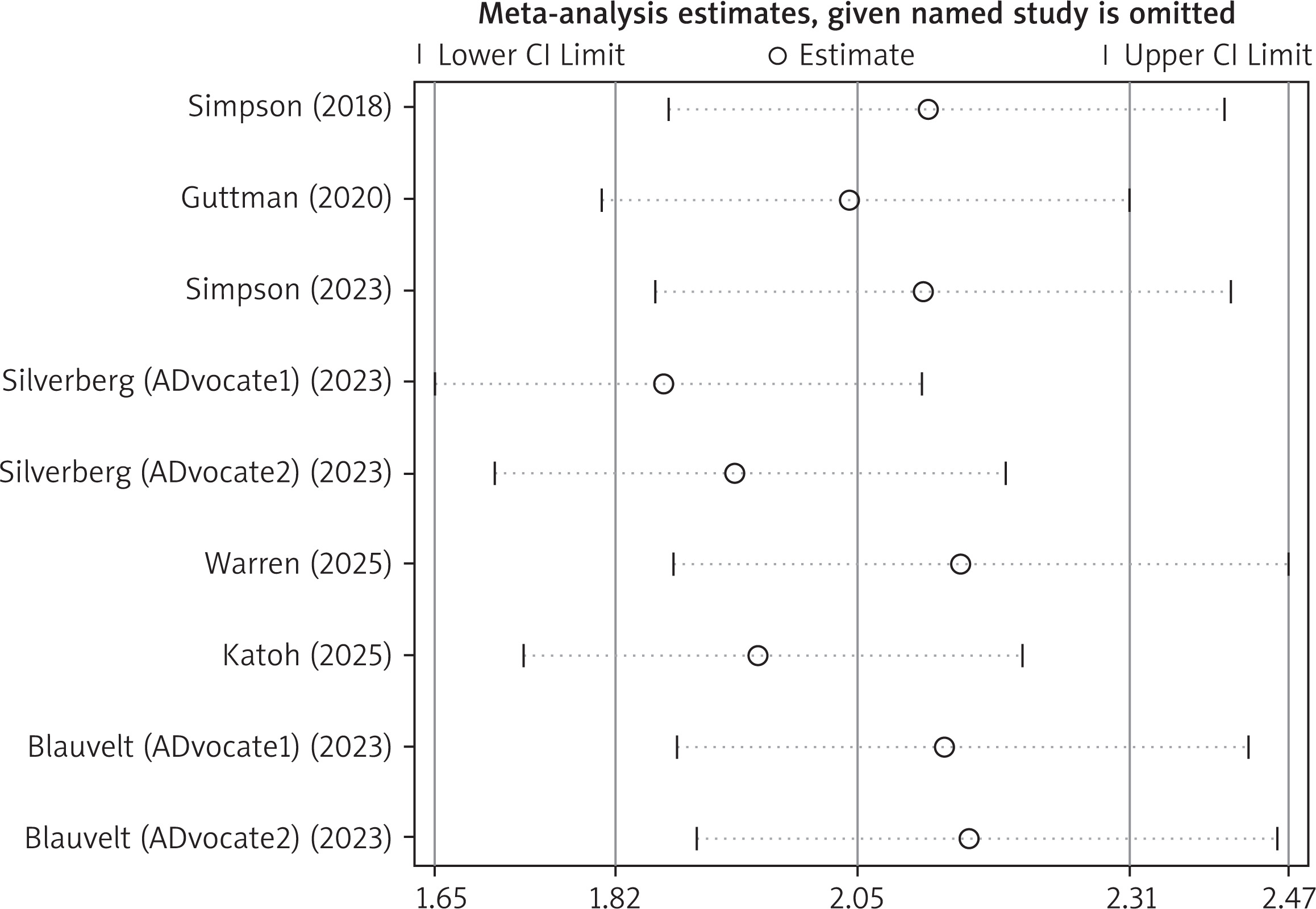
Sensitivity analysis, performed by sequentially omitting each study for the primary outcome (EASI 75), showed that the pooled effect size remained stable and statistically significant after each omission (p > 0.05 for comparison with the overall effect), indicating that the results of this meta-analysis are robust. The results are shown in Figure 10.
Publication bias analysis
Due to the relatively small number of included studies (n < 10), a funnel plot was not generated as its power would be too low for reliable interpretation. Egger’s test for the primary outcome yielded a p-value of 0.072, suggesting a low probability of publication bias. Results are shown in Table 3.
Discussion
Our analysis revealed that for the primary outcome, EASI 75, although the pooled effect demonstrated significant clinical benefit, there was substantial heterogeneity among the studies (I2 = 59%). This suggested the presence of systematic factors influencing the efficacy estimates. Therefore, we conducted subgroup analyses, which not only successfully explained and resolved the initial heterogeneity concerns but also profoundly illustrated the differentiated landscape of lebrikizumab’s efficacy. The key finding is that the subgroup analyses definitively identified the primary sources of heterogeneity: treatment regimen (with or without concomitant TCS) and dosage. Particularly, the subgroup analysis based on “concomitant TCS use” revealed that up to 76.5% of the between-study variance could be attributed to this factor. This strongly indicates that combination therapy with TCS and monotherapy represent two distinct intervention models with significantly different efficacy characteristics. Within this framework, heterogeneity within each subgroup was very low (concomitant TCS: I2 = 14%; monotherapy: I2 = 10%), confirming the high consistency of results among studies employing the same treatment strategy. Similarly, subgrouping by dosage reduced within-subgroup heterogeneity to 0%, establishing dosage as another key effect modifier. Baseline disease severity also contributed partially to the observed heterogeneity, but its influence was relatively minor. These findings have important clinical and research implications. First, they challenge the concept of a single “average efficacy” and emphasize the need for context-specific interpretation in clinical decision-making and evidence synthesis. Our data support that the efficacy of lebrikizumab must be defined within the specific context of dosage and whether it is used with or without TCS. For example, in patients with moderate-to-severe AD, the 300 mg monthly dose combined with TCS may exhibit a highly effective and stable efficacy profile, whereas its efficacy as monotherapy may follow a different trajectory. These scenarios should not be conflated. This provides clinicians with more precise treatment expectations, facilitating individualized patient care. Second, the significant efficacy difference between combination therapy and monotherapy suggests a potential synergistic effect between lebrikizumab and TCS, offering a valuable direction for exploring its pharmacological mechanisms and optimizing combination treatment strategies. The strength of this study lies in its rigorous subgroup analysis, which transformed initial high heterogeneity into a deeper understanding of the drivers of treatment effect. Of course, interpretation must acknowledge the inherent limitations of subgroup analyses as observational explorations. However, given that the subgroups were defined based on important clinical and trial design characteristics, and the evidence within subgroups is highly consistent, the conclusions are considered robust. Limitations of this study include: (1) the relatively small sample sizes of some included studies, which may introduce bias; (2) the short follow-up duration in some studies, with a lack of large-sample, long-term studies on efficacy and safety; (3) potential statistical heterogeneity inherent in meta-analyses and (4) the relatively small number of studies included in some subgroup analyses. Therefore, the conclusions drawn from this study require further validation through more large-sample, high-quality RCTs. In conclusion, this meta-analysis confirms that lebrikizumab is an effective biologic for the treatment of AD. However, its efficacy is significantly influenced by the treatment strategy (concomitant TCS use or not) and dosage. Future clinical practice guidelines and research designs should fully consider these factors to maximize therapeutic benefit. We suggest that clinical application should clearly define the treatment context for lebrikizumab and set realistic efficacy expectations accordingly.