
Introduction
Anaphylaxis is a severe, rapidly evolving hypersensitivity reaction that constitutes an immediate threat to life. Its clinical manifestations primarily involve the skin and mucous membranes, as well as the respiratory, cardiovascular, and gastrointestinal systems; however, cutaneous symptoms may be absent in up to 20% of cases [1]. Food is the most common trigger of anaphylaxis in children, accounting for approximately 70% of cases [2, 3]. In the majority of paediatric patients, anaphylaxis occurs outside healthcare settings, most frequently at home, in kindergartens, or at schools. Prompt recognition and immediate management are essential and include the intramuscular administration of adrenaline.
Aim
The aim of this study was to evaluate the management of anaphylaxis in children in the context of the 2024 recommendations of the Polish Paediatric Society [4].
Material and methods
A retrospective analysis was conducted on the medical records of children aged 6 months to 18 years who were hospitalized due to food-induced anaphylaxis (ICD-10 T78.0) at the Allergology and Pneumonology Department, Institute for Tuberculosis and Lung Diseases, Rabka-Zdroj, between 2020 and 2023. The main inclusion criteria for analysis were documented clinical symptoms of a food allergic reaction and documented therapeutic interventions.
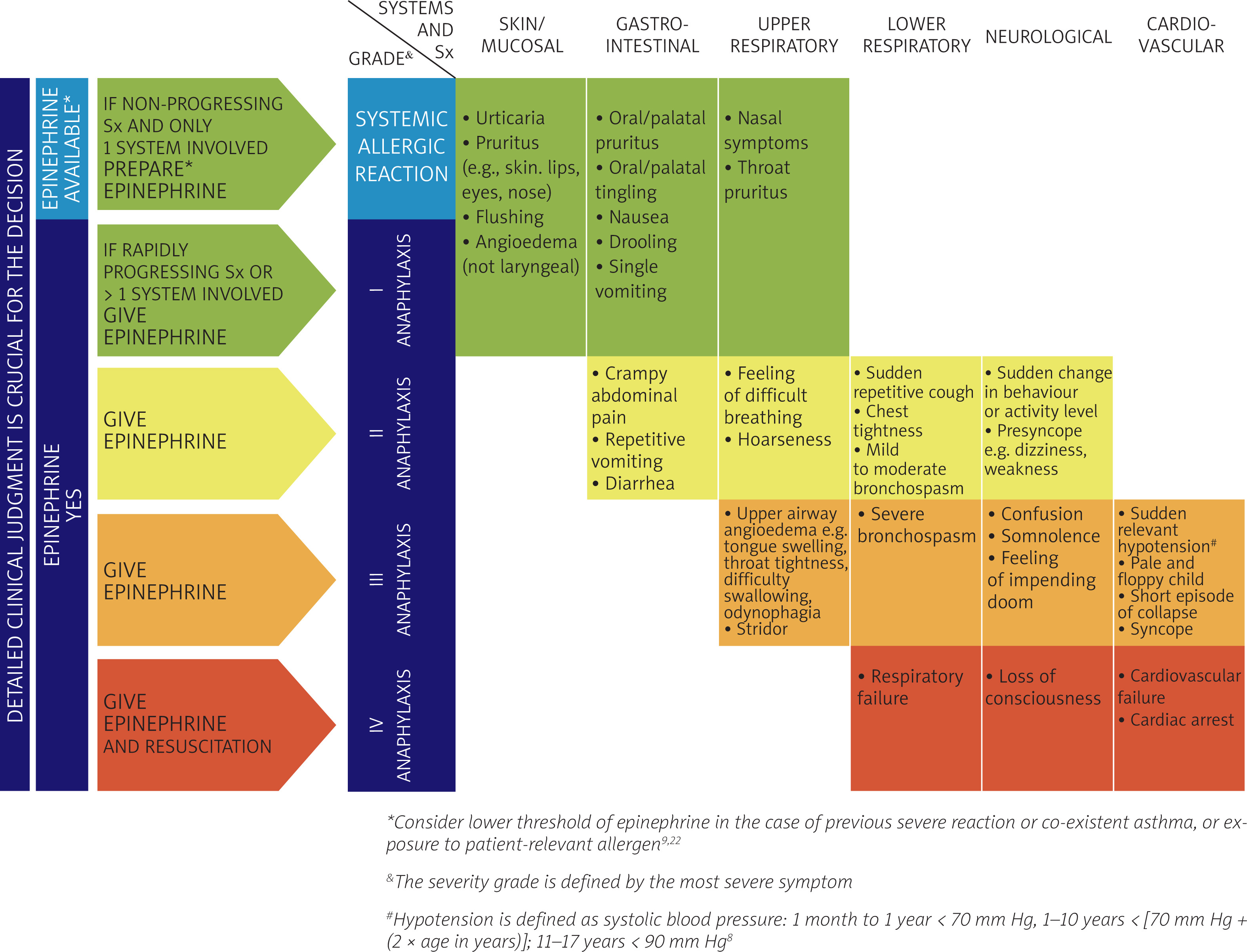
Reported clinical symptoms were classified according to the severity grading system proposed by Błażowski et al., which considers systemic allergic reactions (SAR) and four grades of anaphylaxis severity [4, 5] (Figure 1). SAR was defined as mild, non-progressive symptoms affecting only a single organ system (skin/mucous membranes, gastrointestinal tract, upper respiratory tract) [5]. Anaphylaxis was defined in accordance with World Allergy Organisation guidelines [6].
Figure 1
4-grade severity assessment scale of systemic allergic reaction and anaphylaxis according to Błażowski et al. [6]
The analysis of therapeutic interventions included the administration of adrenaline (A), antihistamines (AH), corticosteroids (CS), and other medications. Interventions were assessed across three domains: treatment initiated by caregivers/parents, prehospital care (Emergency Medical Services – EMS, Primary Health Care – PHC, Night Medical Services – NMS), and hospital care (Emergency Department – ED, hospital wards).
Results
Medical records of 615 children aged 6 months to 18 years were reviewed. Inclusion criteria were met for 260 immediate allergic reactions to food, occurring in 96 (36.9%) boys and 151 (58.1%) girls.
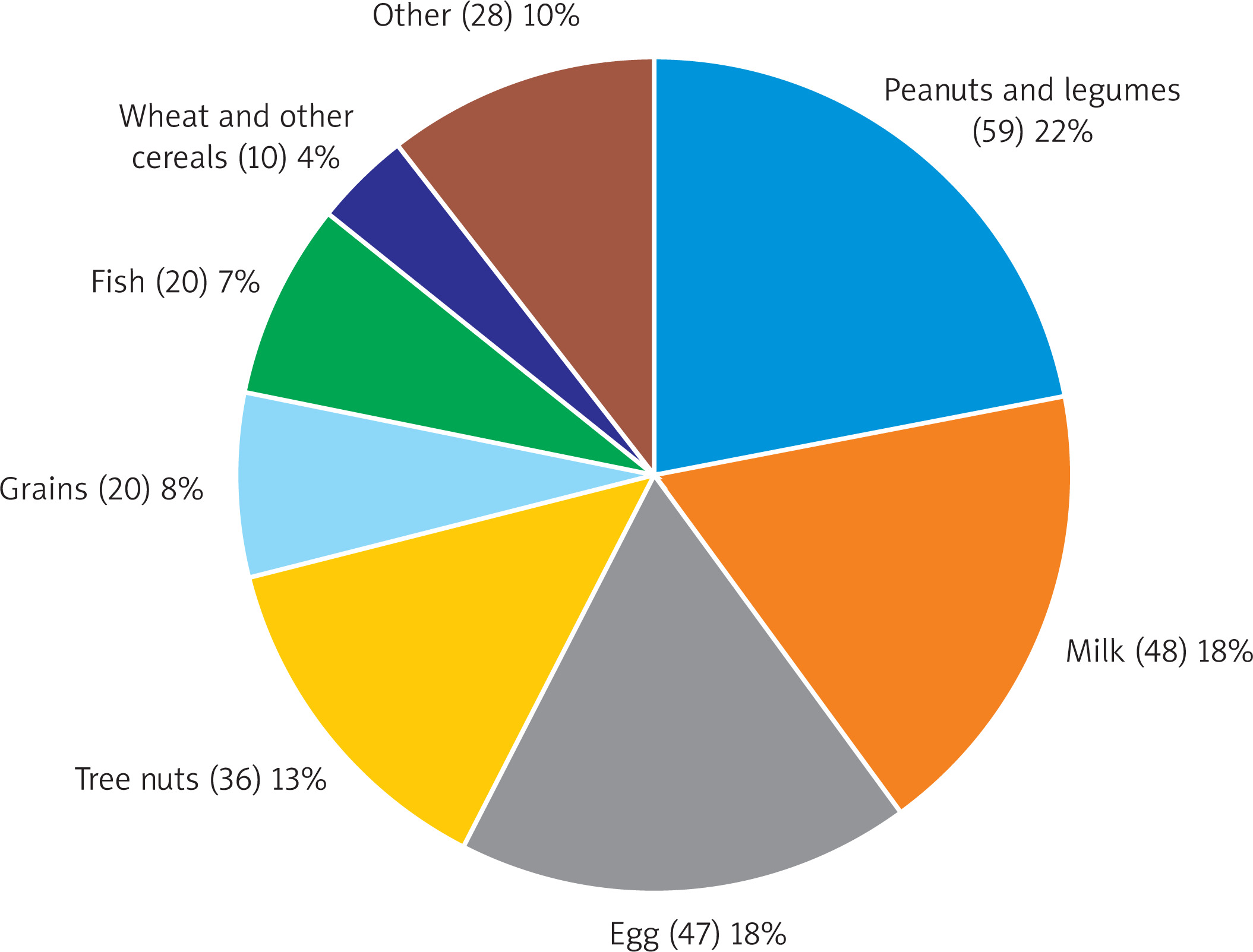
The distribution of triggering factors leading to anaphylaxis is shown in Figure 2. No relationship was found between the triggering factor and the therapeutic procedure.
The distribution of observed anaphylaxis symptoms, categorized by organ systems is shown in Figure 3.
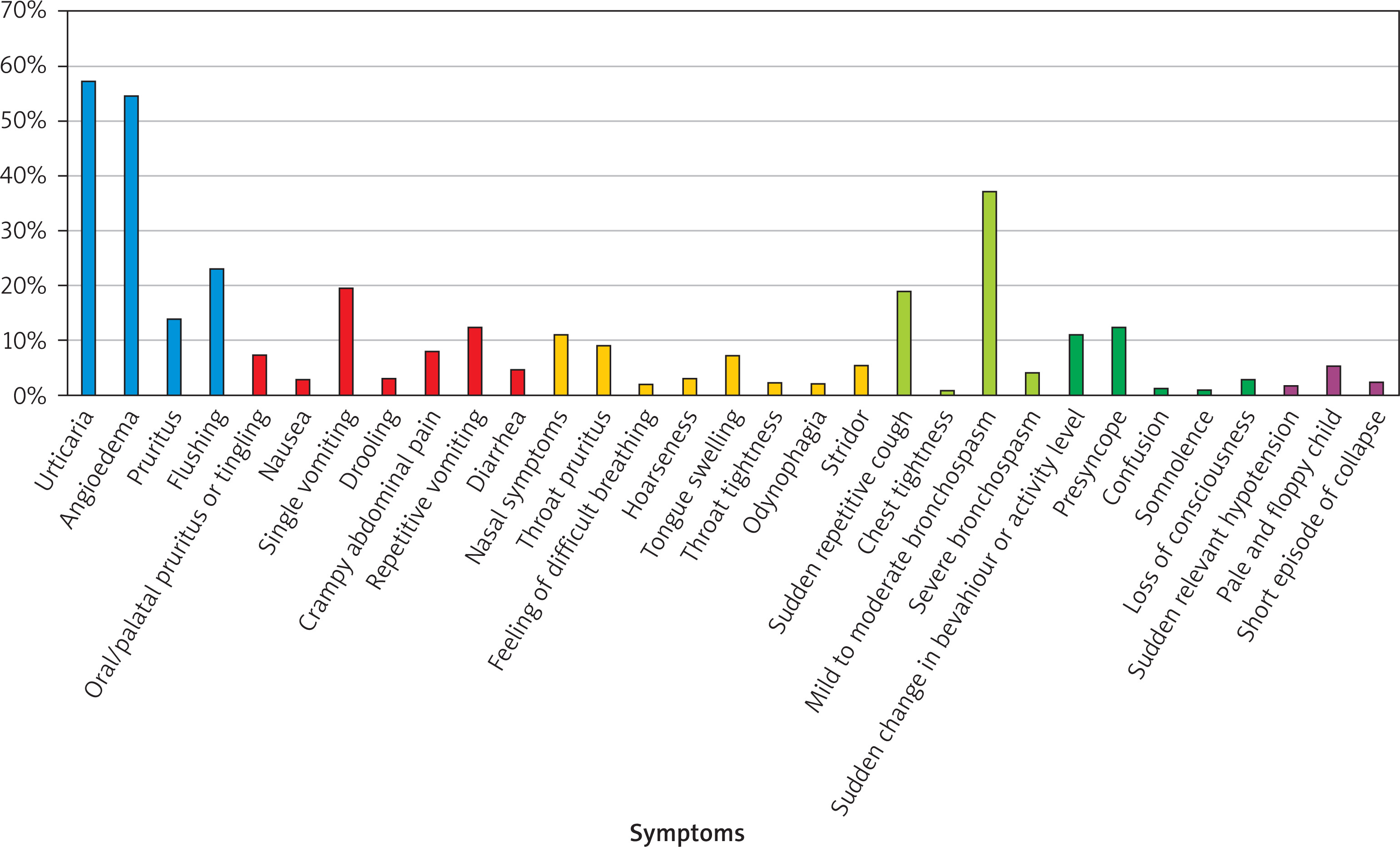
The symptoms (Figure 3) enabled assigning each patient to the severity grading system proposed by Błażowski et al. [4, 5]: SAR occurred in 21 (8%) cases, grade I anaphylaxis in 14 (5.4%), grade II in 126 (48.5%), grade III in 92 (35.4%), and grade IV in 7 (2.7%) cases.
Corticosteroids were administered in 166 (63.8%) cases, antihistamines in 149 (57.3%), and intramuscular adrenaline in 46 (17.7%) reactions. Treatment was conducted by parents/caregivers in 116 (44.6%) cases, in prehospital care in 101 (38.8%), and during hospitalization in 154 (59.2%).
The most frequently administered medications by parents were AH (72.4%), followed by CS (15.5%) and intramuscular adrenaline (6%). Other medications administered by parents included calcium preparations (8 cases), short-acting β2-agonists (SABA) (8 cases: in 6 cases with lower respiratory tract symptoms (LRTS), 2 with LTRS and upper respiratory tract symptoms (URTS)), nebulized budesonide (5 cases: in 1 case with URTS, 2 with LRTS, 2 with both URTS and LTRA), and, in isolated cases, leukotriene receptor antagonists (LTRA), intranasal corticosteroids (INCS), promethazine, and vitamin C.
In prehospital care, CS were most frequently administered (67.3%), followed by intramuscular adrenaline (17.8%) and AH (11.8%). Other medications included SABA (5 cases: in 2 cases with URTS, 3 with LRTS), nebulized budesonide (3 cases: in 1 case with URTS, 2 with LRTS), and in isolated cases, nebulized adrenaline, oxygen therapy, intravenous fluids, hydroxyzine, and calcium preparations (2 cases). In 1 case nebulization of adrenaline was administered.
During hospital care, CS were administered in 51.9% of cases, AH in 34.4%, and intramuscular adrenaline in 13.6%. Intravenous fluids were given in 18 (11.7%) cases – once in 1 case of SAR, in 10 cases of grade II, in 7 cases of grade III anaphylaxis. SABA in 11 (7.1%) cases (in 1 case with URTS, 8 cases with LRT, 2 with both URTS and LRT), nebulized budesonide in 6 (3.9%) cases (in 1 case with URTS and 4 with LRTS, 1 with both URTS and LRT), and oxygen therapy in 3 (1.9%) cases.
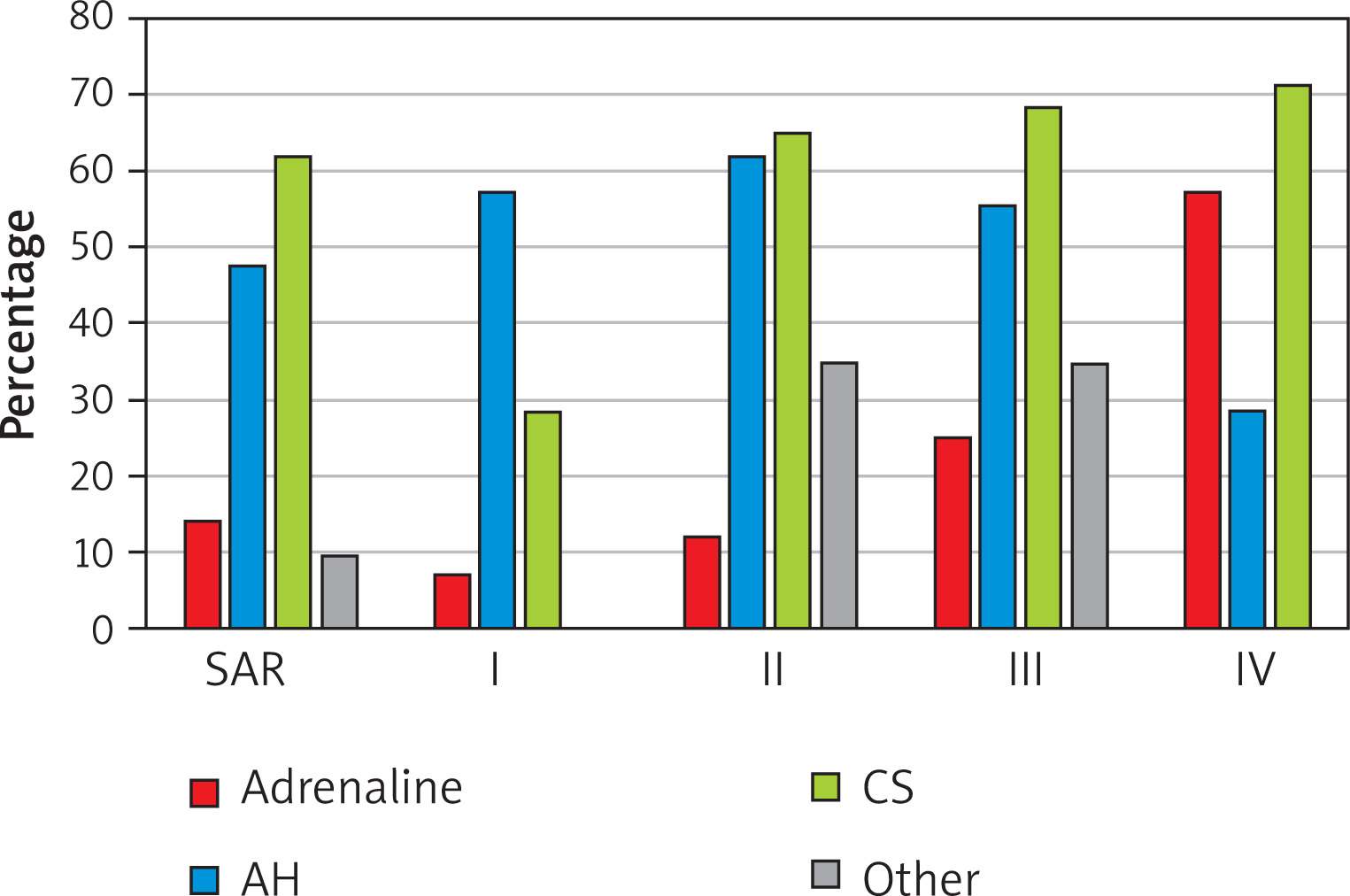
Intramuscular adrenaline was administered by parents in 7 cases, in prehospital care in 18 cases (including 1 case of double dosing), and during hospitalization in 21 cases. Adrenaline was administered in 14% of SAR cases, 7% of grade I, 12% of grade II, 25% of grade III, and 57% of grade IV anaphylaxis (Figure 4).
No medications were administered in 2 cases of grade I, 6 cases of grade II, and 5 cases of grade III anaphylaxis.
Discussion
Anaphylaxis, as a severe and potentially life-threatening hypersensitivity reaction, requires prompt recognition and appropriate therapeutic management. The Polish Paediatric Society published recommendations in 2024 emphasizing the critical importance of immediate intramuscular adrenaline administration in all grades of anaphylaxis [4].
To address the need for epidemiological data on severe allergic reactions, the NORA (Network for Online-Registration of Anaphylaxis) pilot project was launched in German-speaking countries (Germany, Austria, Switzerland) in 2007 [5]. Since 2011, the European Anaphylaxis Registry (EAR) has been operational, currently including data from 14 European countries (Austria, Bulgaria, France, Germany, Greece, Ireland, Italy, Poland, Spain, Romania, Croatia, the Netherlands, the United Kingdom, Switzerland) and Brazil [7, 8]. The registry aims to document anaphylactic reactions according to the Ring and Messmer scale in both children and adults. By March 2024, 16,988 patients were registered, with children accounting for approximately one-third of cases [9].
In paediatric populations, food is the most frequent trigger (70%), followed by Hymenoptera venom (16%) and drugs (5.2%) [9]. Detailed analysis indicates that 63% of food-induced anaphylaxis cases in children are caused by five major allergens: peanuts, cow’s milk, eggs, cashews, and walnuts [10]. Over the last decade, the proportion of reactions with “unknown causes” in EAR has decreased, largely due to molecular diagnostics and the discovery of previously unrecognised allergenic molecules [9].
Poland lacks a central registry of anaphylaxis cases, significantly limiting accurate epidemiological assessment and potentially underestimating incidence. Data from 2008–2015 indicate a clearly increasing trend in healthcare utilisation for anaphylaxis, with over 34% growth in reported cases from 2013–2015 [11]. Many patients experiencing anaphylactic shock do not seek further diagnostic or therapeutic care, particularly within the public healthcare system [12]. In 2015, almost half (46.5%) of patients receiving healthcare for anaphylaxis were hospitalized, 30% were treated in outpatient specialist care, 13.5% in primary care, and 10% by emergency medical services [13]. In the present study, 5% of reactions were untreated during the anaphylactic episode. While this may not have serious consequences for SAR or grade I anaphylaxis, such omissions in grade II–IV reactions pose a life-threatening risk.
Anaphylaxis develops rapidly and can simultaneously affect multiple organ systems. Due to the unpredictable clinical course, rapid recognition and severity assessment are crucial. Failure to recognise anaphylaxis results in inadequate treatment and lack of preventive guidance. Studies indicate that 50–83% of reactions meeting anaphylaxis criteria in emergency departments are not correctly identified [14, 15]. Italian studies in paediatric EDs additionally highlighted triage challenges, with nearly one-third of children with anaphylaxis assigned green or white priority codes, indicating inappropriate urgency [16]. Misdiagnosis often results from absent skin symptoms or misinterpretation of nonspecific signs (e.g., nausea, confusion, dyspnoea) and improper coding. In the study by Candela et al., only 1 in 3 children hospitalized in the ED was discharged with a diagnosis of anaphylaxis [16].
The Polish Paediatric Society guidelines emphasise that clinical evaluation, particularly respiratory and cardiovascular symptoms, is essential for diagnosis. Cutaneous symptoms such as urticaria, erythema, pruritus, or angioedema occur in 80–90% of children with anaphylaxis. Respiratory symptoms (stridor due to subglottic oedema, dyspnoea due to bronchial obstruction) occur in 60–70% of cases, and cardiovascular symptoms (hypotension, syncope) in 10–30% [17]. In some older children, skin symptoms may be absent [4]. EAR data on fatal and near-fatal cases indicate absence of skin symptoms in 45% of reactions [18].
Several diagnostic systems exist to assess anaphylaxis severity. The Ring and Messmer scale and Mueller scale are most commonly used, but concordance between the two is only ~70% [5]. Some scales omit central nervous system symptoms, which may be the first sign of reduced cerebral perfusion in infants and young children [5]. The visual severity grading system proposed by Błażowski et al. [5] is a practical clinical tool (Figure 1), developed based on analysis of hundreds of paediatric food-induced anaphylaxis episodes. The use of traffic light colours facilitates classification of clinical symptoms and rapid assessment of the life-threatening risk. The system was validated by Bouderbala et al. with 100% sensitivity and 93.1% specificity for anaphylaxis diagnosis [19].
The Polish Paediatric Society recommendations emphasise that while most food-induced reactions are mild or moderate, anaphylaxis can develop unpredictably. The clinical presentation is highly heterogeneous and depends on multiple factors, so uniform responses should not be expected [4]. In our study, the distribution of severity was: SAR – 8.1%, grade I – 5.3%, grade II – 48.5%, grade III – 35.4%, grade IV – 2.7%. The low frequency of SAR and grade I anaphylaxis is likely due to study methodology, as inclusion required ICD-10 T78.0 (anaphylactic shock due to food). SAR and grade I anaphylaxis are often classified as other/unspecified food reactions (T78.1) or angioedema (T78.3).
The above severity grading system [5] also recommends adrenaline administration in all grades of anaphylaxis. Adrenaline is the first-line treatment for anaphylaxis, reversing most pathophysiological mechanisms, and delayed administration increases the risk of severe reactions and biphasic events [20]. There are no absolute contraindications; it should be administered regardless of age, pregnancy, or comorbidities. Adrenaline has a very favourable safety profile [4]. Adverse effects, such as transient pallor, palpitations, or headache, are mild and related to its pharmacologic action. Serious adverse events (arrhythmias, myocardial infarction, pulmonary oedema, intracranial haemorrhage) are extremely rare and usually result from incorrect use (e.g., overdose, intravenous administration) [21]. Given the unpredictable course of anaphylaxis, adrenaline should be administered immediately after the first symptoms, regardless of severity or diagnostic uncertainty [4].
In our study, first-line medications used by parents were primarily oral antihistamines, followed by oral corticosteroids. These results are consistent with EAR data and the study by Tarczoń et al., conducted among 114 children hospitalized at the University Children’s Hospital in Krakow [22]. In both studies, non-medically trained caregivers administered medications in the following order: oral antihistamines (78% and 81.6%), oral corticosteroids (52% and 21.1%), and SABA (28% and 18.4%) [22]. Calcium preparations were used by parents comparably to SABA in our cohort. Additional medications were most often administered in grade II reactions (33.9%). Among all interventions, 45% lacked medical justification.
Based on EAR data analysing over 7,500 anaphylactic reactions, adrenaline was administered in 23.2% of cases. In the Tarczoń et al. study [22], adrenaline use was higher (42%), and data from another Polish centre reported 34.8% of children receiving adrenaline [22]. In that cohort, 34% had grade II and 65% grade III anaphylaxis (Ring and Messmer), with 47% caused by Hymenoptera venom and only 35% by food. Adrenaline use was similar across age groups and independent of Mueller severity [22].
In our study, adrenaline was administered in 17.7% of anaphylaxis cases: 7% in grade I, 12% in grade II, 25% in grade III, and 57% in grade IV. Notably, 43% of grade IV reactions did not receive adrenaline despite severe symptoms, indicating noncompliance with anaphylaxis management recommendations. Meanwhile, corticosteroids were administered in 70% of grade IV reactions. EAR data similarly report that adrenaline was given in only 67% of “near-death/fatal” anaphylaxis cases [23].
Expert guidelines recommend a second dose of adrenaline if there is no improvement after the first [4]. In Tarczoń et al., a second dose was administered in 4.4% of cases, and in EAR, in 10.5% [22, 23]. Meta-analysis of over 36,000 reactions indicates that a second dose is necessary in ~10% of cases [24]. In the present study, double dosing occurred in only 1 case.
According to the Polish Paediatric Society recommendations, in prehospital algorithms corticosteroids and antihistamines are not included in first-line anaphylaxis treatment. Similarly, Resuscitation Council UK does not recommend these drugs in the initial phase [14, 25]. Antihistamines are recommended only for reactions limited to the skin. In our study, 57% received AH and 63.8% CS. Tarczoń et al. similarly reported frequent use of AH (89.3%) and CS (83%), consistent with EAR data (76% and 82%) [22, 23]. Corticosteroids should not replace adrenaline, as they do not reduce reaction severity or prevent biphasic responses and may create false reassurance. In our study, CS were the first medications administered by caregivers in 15% of reactions but were the most commonly used drugs in prehospital and hospital care, increasing with reaction severity. Prehospital administration occurred in 70%, 67.5%, and 50% of grade II, III, and IV reactions, respectively; hospital administration occurred in 54%, 48%, and 33% of grade II, III, and IV reactions.
The Allergy Vigilance Network study reported hypotension in 21% of children under 2 years during anaphylaxis, significantly more than in preschool children [26]. In our study, intravenous fluid therapy was administered in only 8.5% of grade II–IV reactions. The Polish Paediatric Society recommends establishing at least one intravenous line and measuring blood pressure, heart rate, capillary refill time, and oxygen saturation in all systemic reactions [4].
In paediatric populations, anaphylaxis occurs most frequently at home (66%) and at schools or kindergartens (~5%) [27], highlighting the need for adrenaline auto-injectors (AAI). The Polish Paediatric Society guidelines emphasise training patients and caregivers in AAI administration and ensuring a prescription for at least one AAI before leaving a medical facility [4]. Studies by Lages Pereira et al. show high reported training rates among parents (88.7%) and children (80.8%) [28], but correct AAI technique was demonstrated by only 7.5–13% of participants. Our study did not analyse post-episode AAI provision. Tarczoń et al. reported that one-third of children received an AAI prescription at discharge, 10% from a primary care physician, and nearly half from an allergist [22].
A limitation of the present study is that it included only children with food-induced anaphylaxis, so results may not represent other anaphylaxis triggers. However, in paediatric populations, food remains the most common cause. Additionally, only ICD-10 T78.0 cases were analysed, which may underestimate the actual number of anaphylaxis cases. This study reflects the period prior to the 2024 Polish Paediatric Society recommendations and should be considered baseline data. Future studies could evaluate changes in clinical practice after guideline implementation.
Conclusions
Anaphylaxis remains a diagnostic and therapeutic challenge, particularly in paediatric populations. The present study demonstrates a concerning underuse of adrenaline and overuse of antihistamines and corticosteroids. The 2024 Polish Paediatric Society guidelines, including a practical severity grading system [4, 5], provide structured guidance for diagnosing and managing anaphylaxis in children. Increasing public and caregiver awareness is essential for prompt first aid and thorough allergological follow-up in all anaphylactic reactions.










