Introduction
Tattooing has been practiced globally for thousands of years, serving various cultural purposes including ritual, status display, aesthetics, and even medicinal functions. Techniques have evolved significantly across eras and regions, ranging from traditional methods – such as tapping ink-soaked bones or blades into the skin – to the use of modern tattoo machines with disposable needles.
Historically, tattoos have often symbolized group affiliation, but their popularity later expanded within criminal and subcultural environments [1]. In recent decades, however, tattoos have increasingly been regarded as a mainstream and widely accepted form of self-expression and body art. A 2019 study noted that younger generations, particularly those born after the 1980s, are significantly more likely to have tattoos compared to older cohorts [2]. While tattoos were once more common among men, recent data suggest a growing prevalence among women in countries such as the United States and Australia.
Simultaneously, academic attention has turned to the potential health risks associated with tattooing [3]. Studies have explored associations between body modifications like tattoos and certain risk-taking behaviours, including smoking, alcohol and drug use, engagement in extreme sports, possession of weapons, and sexual risk behaviours [4]. These associations may contribute to the social stigmatization of individuals with tattoos.
Despite the shift toward normalization, societal and professional perceptions of tattoos remain complex, particularly in formal settings such as healthcare. In clinical environments, visible tattoos on healthcare professionals may influence patients’ perceptions of competence, trustworthiness, and hygiene. Medical students, who are involved in both academic and clinical spheres, are uniquely positioned to observe and shape evolving attitudes toward tattoos in professional and everyday contexts.
Aim
This study aims to explore and analyse medical students’ perceptions of tattoos in both social and professional settings. By examining attitudes, beliefs, and experiences, this research aims to contribute to a broader understanding of how future healthcare professionals perceive body art, and how these perceptions may affect interpersonal and professional relationships.
Material and methods
The study was conducted between 15 December 2023, and 19 March 2024, among 331 medical students in Poland. Data was collected via an online questionnaire, which was distributed via email and social media platforms, primarily Facebook. A snowball sampling technique was employed [5] allowing each participant to share the survey link and invite others to participate.
Participation in the study was voluntary and anonymous. The research protocol was approved by the Bioethics Committee at the Wroclaw Medical University (Approval No. KB-177/2024). The study was conducted in accordance with the Declaration of Helsinki.
The questionnaire was developed by the authors based on previous literature on attitudes toward tattoos and professionalism in healthcare. The survey was hosted on the Google Forms and consisted of two sections. The first section collected sociodemographic data, including age, gender, and place of residence (categorised by city size). The second section contained questions regarding the presence and perception of tattoos in both professional and everyday contexts. Prior to distribution, the questionnaire was pilot tested to ensure clarity and comprehensibility of the questions. To minimise the risk of duplicate responses, participants were required to provide an e-mail address, and the survey was configured to allow only one response per participant. The e-mail addresses were used solely to verify unique submissions and were not linked to the survey responses.
Statistical analysis
Statistical analysis was conducted using Statistica software, version 13 (TIBCO Software Inc.). Descriptive statistics were used to present frequencies and percentages for categorical variables and measures of central tendency for continuous variables. The Chi-square test (χ2) was applied to assess associations between categorical variables, such as gender, tattoo ownership, and attitudes toward tattoos in medical and social contexts. Where appropriate, degrees of freedom and p-values were reported. A p-value of less than 0.05 was considered statistically significant.
Results
Sociodemographic data and tattoos in respondents
The study sample included 221 (67.6%) women and 101 (30.9%) men. Participants’ ages ranged from 18 to 32 years. The sociodemographic characteristics are presented in Table 1.
Table 1
Sociodemographic characteristics of participants
Among the respondents, 90 (27.3%) individuals reported having at least one tattoo, while 240 (72.7%) did not have any tattoos. Among students without tattoos, 60 (25.2%) expressed the intention to get one in the future.
Tattoos in everyday life and participants’ attitudes toward tattoos
Among tattooed individuals, 35 (39.3%) reported receiving negative comments about their tattoos in daily life. Additionally, 144 (44%) participants had witnessed discrimination against someone with tattoos.
A statistically significant association was found between gender and emotional responses to seeing individuals with tattoos (χ2 = 37.84, df = 4, p < 0.001). Female students more frequently reported positive feelings (26.7%) than male students (14.85%), while adverse reactions were more common among men (19.8%) than women (3.17%). The majority of respondents (67.58%) reported neutral feelings.
A significant association was also observed between having a tattoo and emotional response (χ2 = 43.82, df = 2, p < 0.001). Among tattooed participants, 47.19% reported positive feelings and none reported negative ones. In contrast, only 14.71% of non-tattooed participants expressed positive emotions, and 12.18% reported negative ones.
A total of 22 (6.7%) participants stated that they felt uncomfortable when being near someone with visible tattoos. A statistically significant association was found between gender and this discomfort (χ2 = 33.22, df = 4, p < 0.001). Among women, 93.67% reported no discomfort, compared to 76.24% of men. Notably, 15.84% of male students reported discomfort, whereas only 1.81% of females expressed the same.
A significant association was also observed between having a tattoo and discomfort in the presence of tattooed individuals (χ2 = 14.21, df = 2, p = 0.00082). Almost all tattooed respondents (98.88%) reported no discomfort, compared to 83.61% of those without tattoos. Negative feelings were reported exclusively by non-tattooed participants (9.24%).
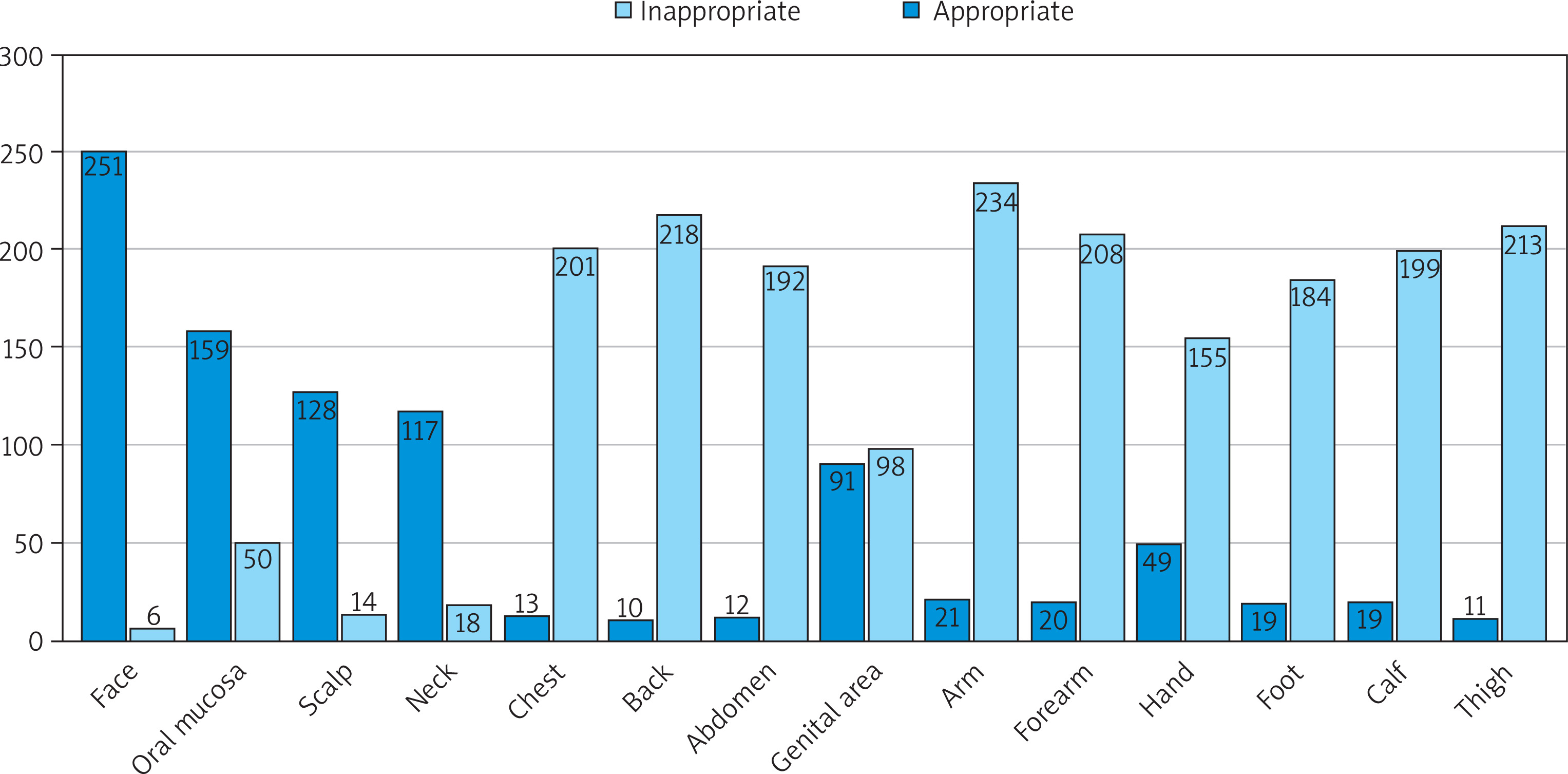
Regarding perceived factors influencing tattoo interpretation, 61% of respondents believed that gender does not impact the perception of tattoos. However, 89.3% agreed that the motif of a tattoo affects how a person is perceived (Figure 1). Additionally, 88.1% indicated that the location of a tattoo influences perception (Figure 2).
Figure 1
Participants’ attitudes toward different tattoo motifs. The most positively perceived motifs included floral (n = 238), nature (n = 226), and animal designs (n = 206), whereas patriotic symbols (n = 204) and religious symbols (n = 144) received the highest number of negative responses. Notably, motifs with anatomical (n = 147) and fantasy (n = 118) themes were also viewed positively
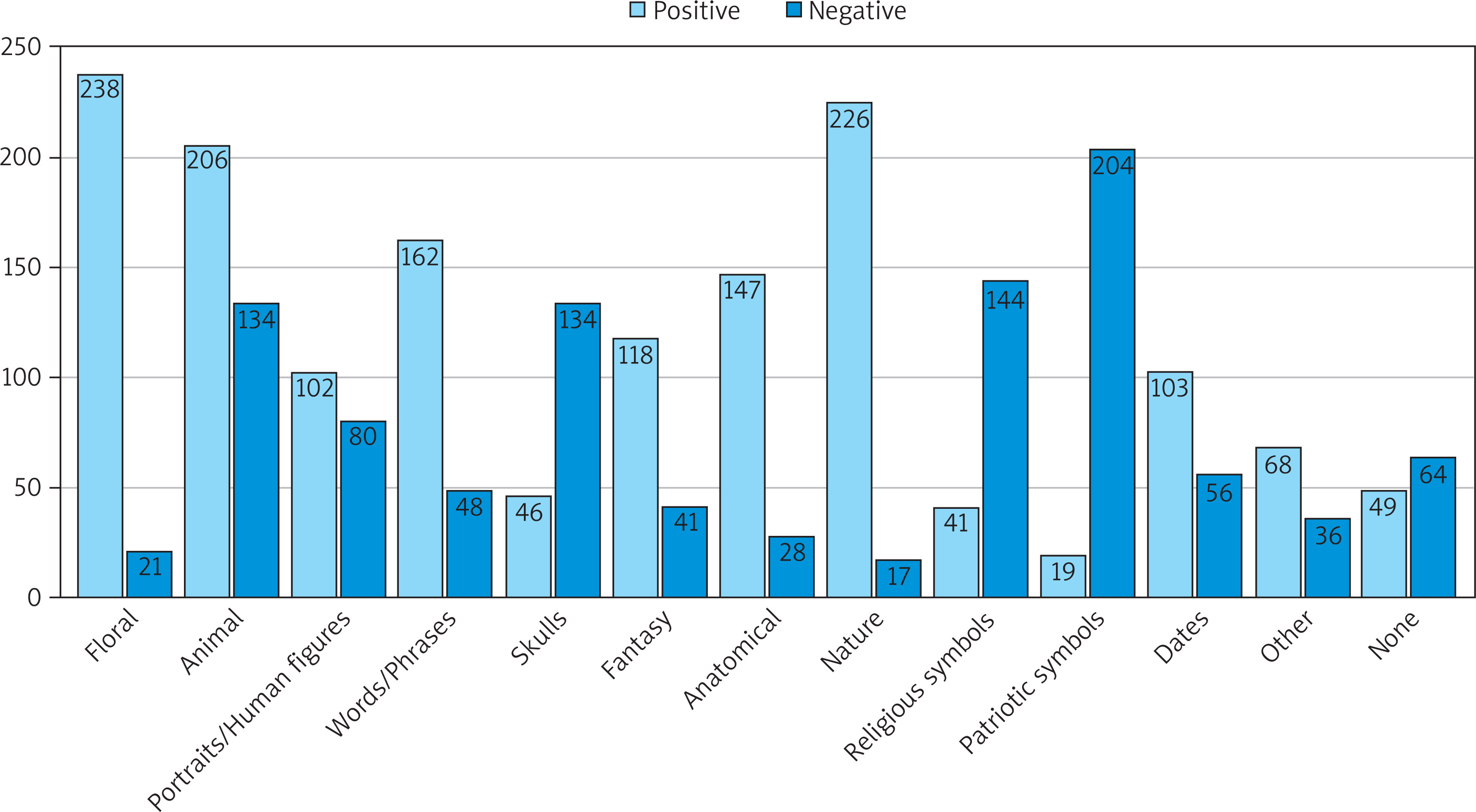
Figure 2
Participants’ opinions on the appropriateness of tattoo placement on different body areas among healthcare professionals. Tattoos on the face (n = 251), oral mucosa (n = 159), scalp (n = 128), and neck (n = 117) were most frequently deemed inappropriate. In contrast, tattoos on less visible areas such as the back (n = 218), thigh (n = 213), abdomen (n = 201), and arm (n = 234) were widely considered appropriate. Notably, views were mixed regarding tattoos in the genital area, where both appropriate (n = 98) and inappropriate (n = 91) responses were reported
A total of 43 (13.19%) respondents believed tattoos have a negative impact on health, 73 (22.3%) had no opinion, and 210 (64.42%) believed tattoos do not adversely affect health. A statistically significant association was found between gender and this belief (χ2 = 12.35, df = 4, p = 0.015), with women being less likely to view tattoos as harmful (8.64%) than men (23.76%). Having a tattoo was also significantly associated with this belief (χ2 = 32.20, df = 2, p < 0.001). Most tattooed respondents (88.76%) did not believe tattoos negatively affect health, compared to 55.27% of non-tattooed participants. Conversely, 17.30% of non-tattooed respondents believed tattoos were harmful, compared to just 2.25% of tattooed individuals.
Tattoos in the medical profession
Of the 327 participants, 174 (53.2%) believed that physical appearance is essential when choosing a physician. Moreover, 210 (64.2%) students felt that patients treat healthcare professionals with visible tattoos differently. Additionally, 154 (47.1%) participants believed tattoos reduce patient trust in healthcare professionals.
A statistically significant association was found between having a tattoo and the belief that tattooed professionals are treated differently by patients (χ2 = 7.68, df = 2, p = 0.0215). Among tattooed respondents, 56.82% agreed, compared to 67.23% of those without tattoos. Tattooed students were more likely to be undecided (22.73%) or to believe there is no difference (20.45%).
A total of 205 participants (62.7%) reported being under a healthcare professional’s care with visible tattoos. When asked about workplace discrimination, 25.4% believed that tattooed individuals are treated worse by employers, while 53.8% had no opinion. A significant association was observed between having a tattoo and this belief (χ2 = 7.70, df = 2, p = 0.021). Among non-tattooed participants, 45.38% believed that tattooed individuals are treated worse, compared to 29.21% of tattooed respondents.
However, no statistically significant association was found between having a tattoo and the belief that employers treat tattooed employees (χ2 = 3.36, df = 2, p = 0.187). Most respondents in both groups answered “I don’t know” (tattooed: 48.86%, non-tattooed: 55.88%).
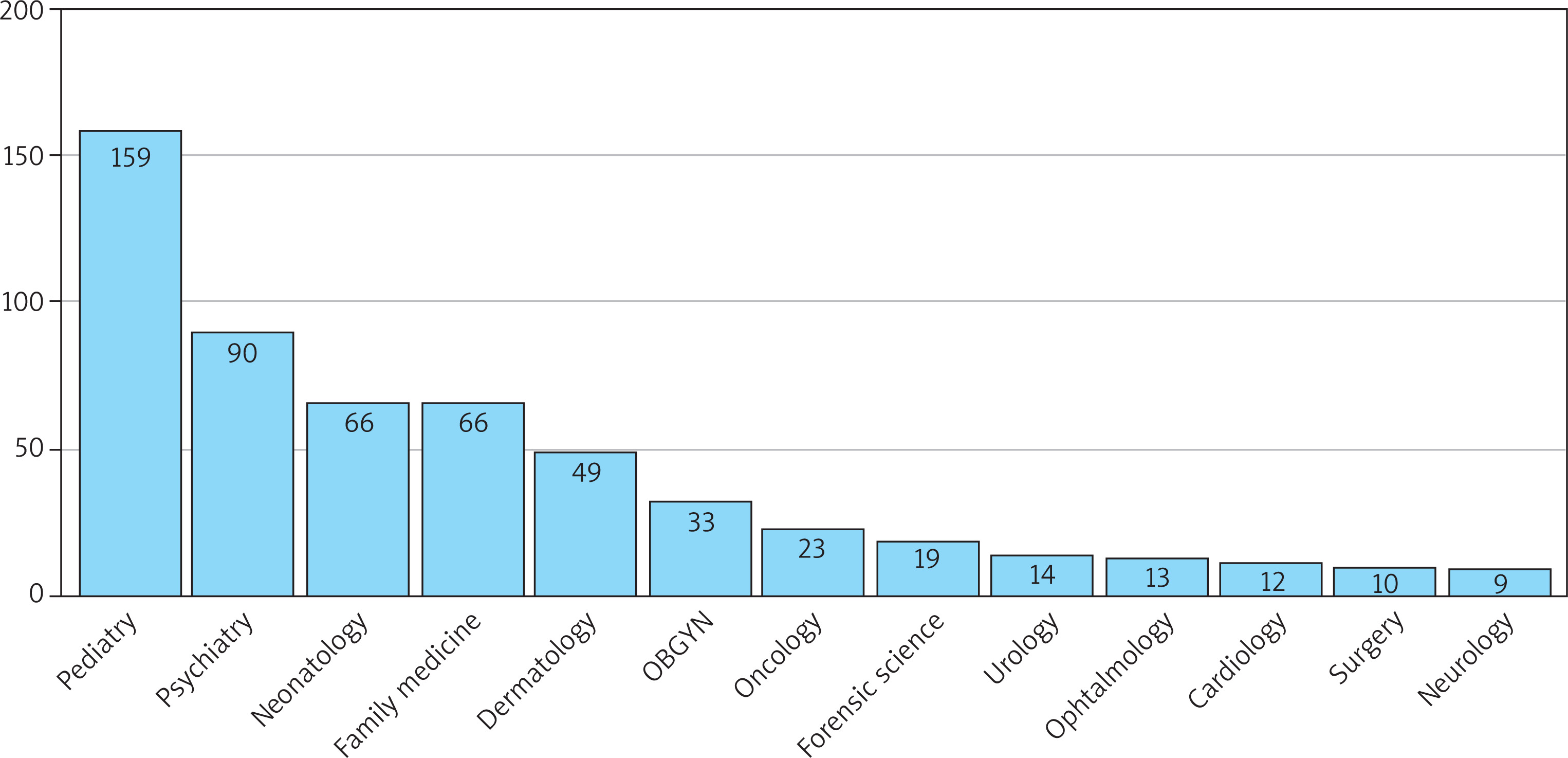
Only 14.1% of respondents believed healthcare professionals should not have tattoos in visible locations. An additional 13.1% supported tattoo regulations if the tattoos were visible, and 2.8% supported such regulations regardless of location. Another 26.2% had no opinion. Figure 3 presents the medical specialties in which, according to the respondents, having a visible tattoo is least acceptable.
Figure 3
The medical specialties in which, according to the respondents, having a visible tattoo is least acceptable. Respondents most frequently identified paediatrics (n = 159), psychiatry (n = 90), and neonatology (n = 66) as specialties where visible tattoos are least acceptable, potentially reflecting heightened expectations of professionalism or sensitivity in these patient populations. Conversely, fewer concerns were reported for specialties such as neurology (n = 9), surgery (n = 10), and cardiology (n = 12)
A statistically significant association was found between having a tattoo and opposition to visible tattoo restrictions (χ2 = 23.06, df = 2, p < 0.001). Among tattooed respondents, 94.32% opposed such regulations, compared to 69.33% of non-tattooed individuals. Support for restrictions was more common among the non-tattooed (18.91% vs. 1.14%).
A significant association was also found between having a tattoo and the belief that tattooed individuals are less responsible or more prone to addiction (χ2 = 18.43, df = 2, p < 0.001). Among tattooed respondents, 96.63% rejected this stereotype, compared to 75.95% of non-tattooed participants.
Finally, most participants reported no preference regarding whether to be treated by a physician with or without tattoos.
Discussion
Tattoos have become significantly more popular over the past decade and are now commonly regarded as a form of self-expression. Individuals may choose tattoos to commemorate important events, dates, or people, or simply for aesthetic or personal reasons. Historically, however, tattoos were often associated with marginalized groups, including prisoners and individuals with substance use disorders, and were rarely perceived as art. Given this historical context, it is essential to explore, through scientific data, how tattoos are perceived in contemporary society, especially in the context of specific professions, such as medicine.
Physicians are particularly relevant to this discussion, as their appearance may influence patients’ perceptions and trust, potentially affecting cooperation and treatment outcomes. Moreover, comfort among colleagues – doctors, nurses, and other healthcare professionals – is also vital.
Despite a decline in stigma, tattoos continue to evoke varied reactions. In our study, 27.2% of medical students reported having at least one tattoo, with the majority (84.3%) having fewer than five. Interestingly, 39.3% reported receiving negative comments about their tattoos. In contrast, research by Dickson et al. [6] indicates that only a minority experience stigma or discrimination. Although societal attitudes are becoming more accepting, individuals with tattoos are still often judged more negatively than those without, regardless of the assessor’s age or tattoo status of the assessing person [7].
Furthermore, 41.5% of respondents in our study expressed intentions to get tattoos in the future. This reflects increasing acceptance and popularity of body modification among younger adults, aligning with findings from Quaranta et al. [8] and Blázquez Abellán et al. [9], where 36.3% and 45.7% of students reported similar intentions. These results underscore the importance of considering the social implications of tattoos in clinical settings, such as comfort in the workplace, mutual respect, trust, and professionalism.
Similar to the findings in Blázquez Abellán et al. [9] study, our study suggests generally favourable attitudes toward tattoos among medical students. Most respondents (78.2%) believed tattoos should not be subject to workplace restrictions, and 75.8% reported no stigma related to tattoos among healthcare professionals. However, patients’ perspectives remain more conservative. In our cohort, 64.2% believed patients treat medical staff with visible tattoos differently, and 53.2% indicated that a physician’s appearance influences patient choice. While Zestcott et al. [10] reported that prejudiced respondents often view tattooed individuals as less competent, only 13.1% of our participants shared this belief, suggesting a shift in attitudes. In contrast, the findings of Cohen et al. [11] indicate that, in a real clinical setting, exposed body tattoos do not significantly affect patients’ assessments of a physician’s competence, professionalism, empathy, or trustworthiness. Generational changes may be contributing to this trend, as earlier studies reported more negative perceptions of tattooed individuals [12]. Additionally, Zestcott et al. [10] noted that implicit biases may not always result in explicit discriminatory behaviours. In our study, only 4% of participants viewed tattooed colleagues as less professional, showing an apparent reduction in stigmatization compared to a study by Westerfield et al. [13].
Concerns about professionalism appear more nuanced, with context playing a significant role. We found that almost 90% of respondents believed the tattoo’s motif and location significantly influenced its perception. These results align with Callaghan and McConville [14], which showed that facial tattoos were perceived as impairing professional communication and representing poor judgment. In our data, facial tattoos, oral mucosa, neck, and scalp evoked the most negative reactions. Tattoos with motifs such as nature, animals, or flowers were generally viewed positively, whereas skulls, religious or patriotic symbols generated the most negative impressions. This raises the broader question of how a physician’s identity should intersect with their professional role. Some argue these spheres should remain separate. Zestcott et al. [15] found that tattoos near the face prompted implicit bias, regardless of their content, which is consistent with our findings.
Our study identified paediatrics, neonatology, and psychiatry as the medical specialties in which visible tattoos were considered least acceptable. This aligns with findings by Johnson et al. [16], whose study demonstrated that participants preferred providers without visible tattoos or large piercings in a paediatric clinical setting, as such features were associated with reduced confidence in the provider’s capabilities.
Furthermore, 24.6% of respondents believed that gender plays a role in how tattooed individuals are perceived. In line with Dickson et al. [6] study, while tattooed men are often more socially accepted, women with tattoos tend to hide them more frequently. Research suggests that men with tattoos are perceived as more masculine, dominant, and even more likely to be chosen for dating or sexual encounters [17]. In contrast, women with tattoos may be viewed as more sexually promiscuous but less physically attractive. However, some exceptions exist; for example, women with tattoos are sometimes perceived as stronger and more independent compared to their non-tattooed counterparts. Other studies, in contrast, underline that tattooed female providers were judged as less professional than their male counterparts with similar tattoos [13].
Only 6.7% of our respondents reported discomfort in the presence of someone with visible tattoos, and 8.9% had negative feelings upon seeing visible body art. This supports the findings of Laskin et al. [18], where only a small proportion of elderly dental patients expressed discomfort with tattooed dentists. Generational change may explain this shift in perception.
Regarding health concerns, tattoos are initially open wounds and may serve as entry points for bacterial or viral infections, including HBV, HCV, and HIV [14, 19, 20]. Nevertheless, only 13.1% of our participants associated tattoos with potential health risks. This low awareness may reflect the general nature of the question, as many may be unfamiliar with rare complications such as allergic reactions, granulomas, or immune modulation [21, 22]. Supporting this finding, a study conducted among students in Tricity, Poland, demonstrated insufficient awareness regarding tattoo-related health risks – only 34% of non-medical students recognised the possibility of HCV transmission, and very few consulted healthcare professionals or medical literature prior to tattooing, highlighting a broader need for improved education on tattoo safety and complications [20].
From an occupational standpoint, 41% of respondents believed tattoos could make individuals less attractive to employers, and 25.3% thought tattooed employees are treated worse by employers. Ellis [21] emphasized the stigmatization of tattooed candidates, while Burgess and Clark [22] noted that contemporary, aesthetically appealing tattoos are increasingly indistinguishable from unmodified candidates and may be more positively received.
Finally, Paprocka-Lipińska et al. [23] found that medical students tend to be slightly more conservative than non-medical peers regarding visible tattoos. Nonetheless, our findings suggest that while stereotypes persist, they are weakening. As Callaghan and McConville [14] note, no student or faculty member in their study believed that medical professionals should be prohibited from having tattoos. Ongoing research into attitudes toward body art among medical professionals is essential, as such perceptions may influence patient-provider interactions and interprofessional relationships. Notably, Roggenkamp et al. [24] found that perceptions vary depending on the professional role of the tattooed individual.
This study has several limitations that should be considered when interpreting the results. Firstly, the study sample consisted primarily of students from the Wroclaw Medical University, representing a limited and non-generalisable subset of the broader population. Ethnic homogeneity within the sample further limits the applicability of findings to more diverse populations. Additionally, the sample included a disproportionate number of female participants, which may have influenced the overall trends observed. Lastly, the voluntary nature of participation may have introduced selection bias, potentially skewing the results.
Conclusions
The findings of this study indicate that tattoos, while increasingly normalised in the society, remain a subject of nuanced perceptions, especially within the context of the medical profession. Although most respondents did not associate tattoos with reduced hygiene, professionalism, or competence, a significant proportion still perceived visible tattoos – particularly those located in areas such as the face or hands – as inappropriate for healthcare workers. This suggests a lingering influence of social and cultural norms concerning body modification and professional appearance.
Tattooed individuals expressed more favourable attitudes toward tattoos in general and were less likely to view them as harmful or unprofessional. Conversely, participants without tattoos were more inclined to support restrictions on the visibility or content of tattoos in clinical practice. These divergent perceptions underscore the role of personal experience in shaping attitudes toward body art.
Notably, most respondents indicated no preference when choosing between a doctor with or without tattoos, suggesting that the presence of tattoos may not substantially influence patient trust or the therapeutic relationship, provided that the healthcare professional maintains high standards of care.
In light of evolving societal norms, healthcare institutions may consider developing inclusive policies that balance professional appearance with respect for individual expression while acknowledging patient expectations and cultural diversity.