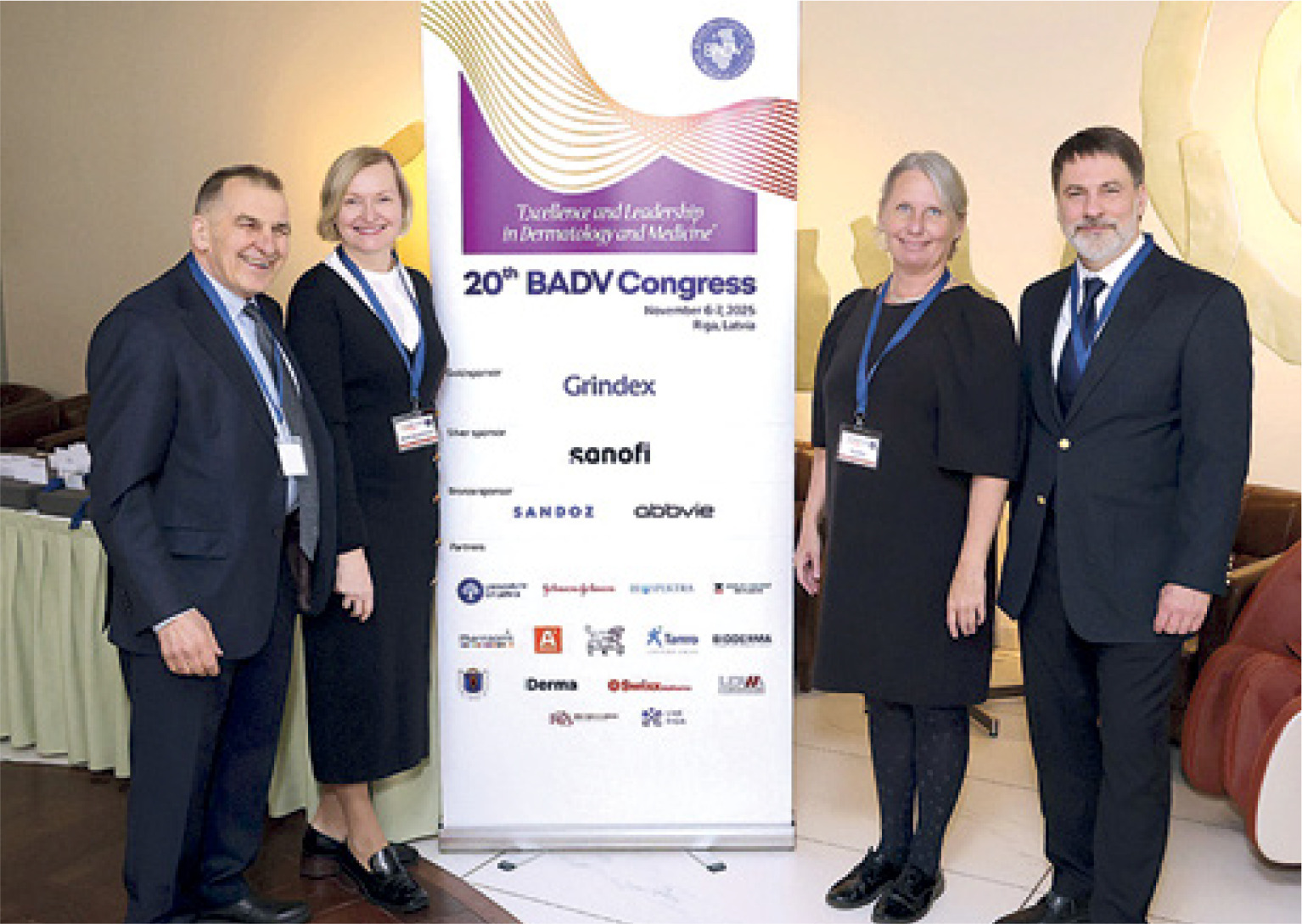
The 20th Congress of the Baltic Association of Dermatovenerologists (BADV) convened on November 6–7, 2025 in magnificent historic city of Riga, bringing together dermatology professors, residents, and medical students from around the world (figs. 1, 2). Congress President and BADV President Andris Y. Rubins welcomed attendees alongside other dignitaries: Līga Kozlovska from the Latvian Parliament, Ivars Kalviņš, President of the Latvian Academy of Sciences, Kirovs Lipmans, Chairman of the Council of JSC/AS Grindeks, Saulius Čaplinskas from the Lithuanian Parliament, and Skaidra Valiukevičienė, Chair of the 21st BADV Congress to be held in Lithuania in 2026 (fig. 3). The speakers represented Latvia, Lithuania, Estonia, the United States, Italy, the Netherlands, Taiwan, Romania, Germany, Switzerland, Poland, and Austria, delivering more than 40 lectures. Thanks to the main Gold Sponsor AS “Grindeks” and Silver Sponsor “Sanofi,” participants were also able to attend the congress remotely.
Figure 1
Congress participants gather after the opening lecture by Professor Chih Hung-Lee from Taiwan
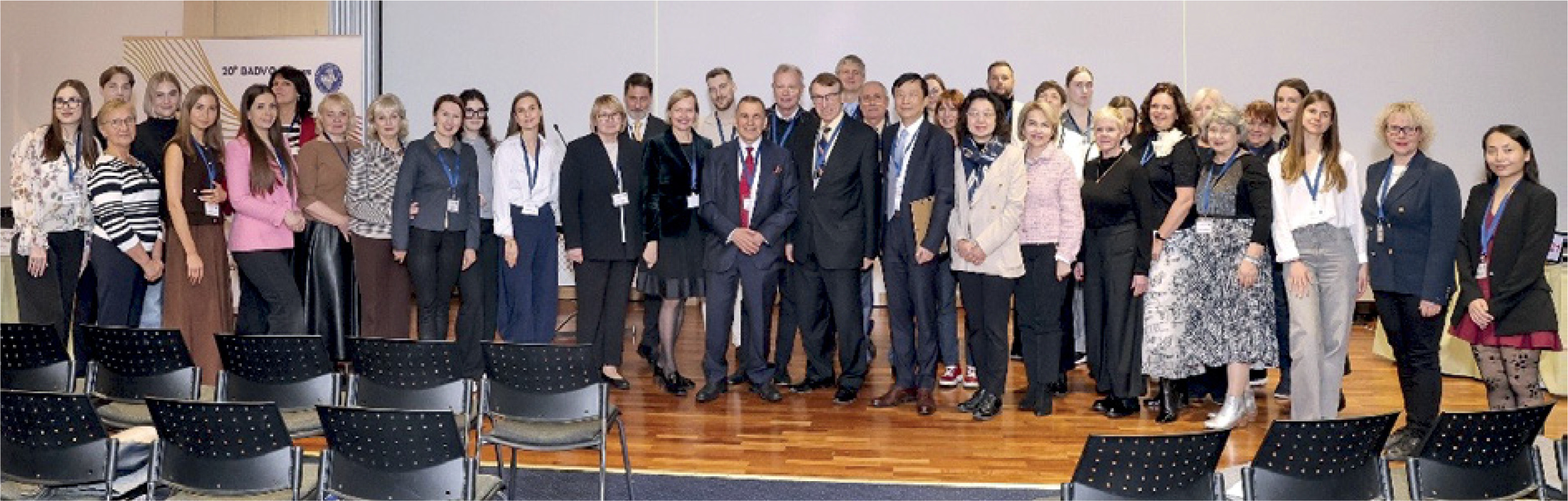
Figure 2
BADV President Prof. Andris Y. Rubins presents the BADV Honorary Member Diploma to Professor Chih Hung-Lee of Kaohsiung Chang Gung Memorial Hospital, Taiwan
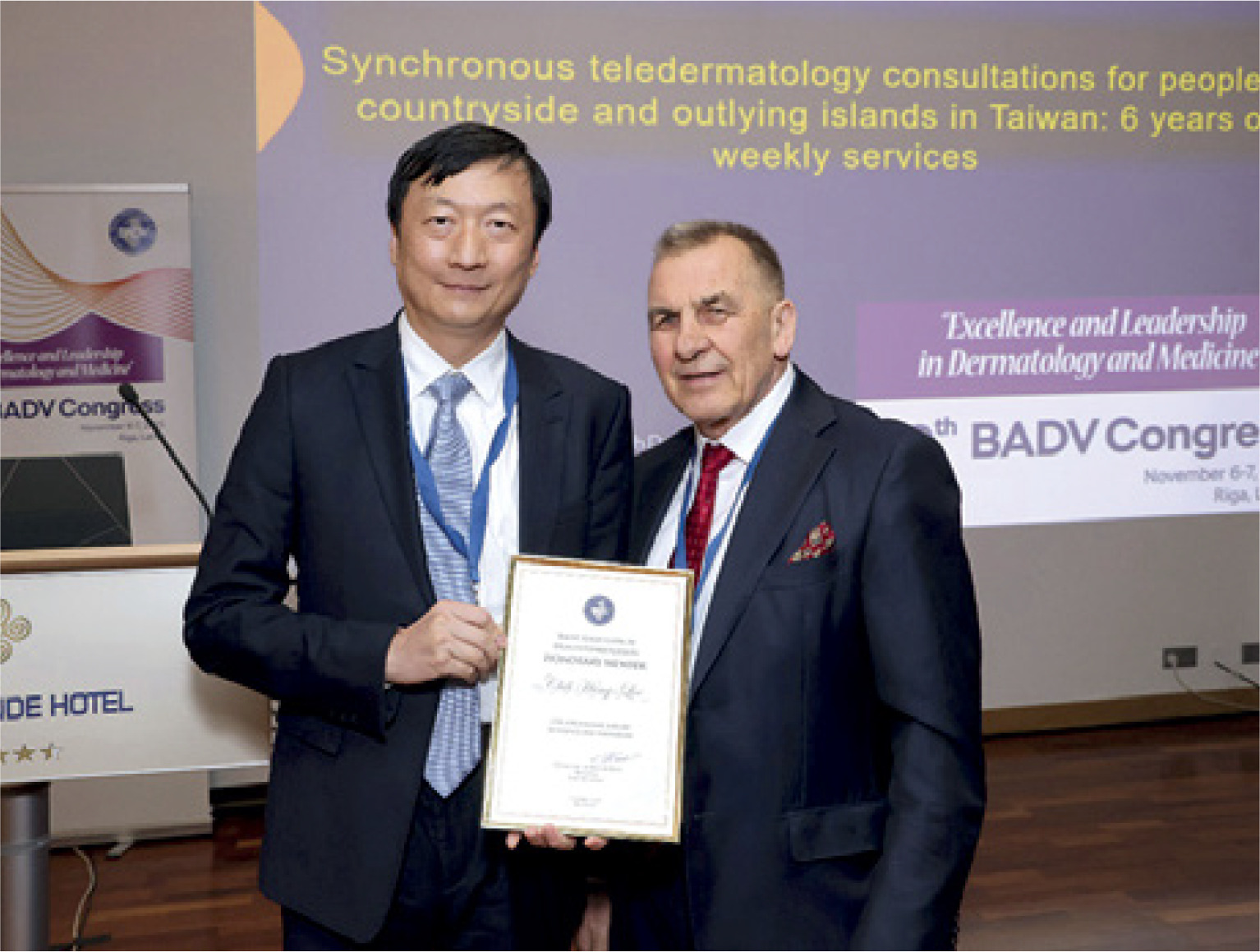
Figure 3
Leading dermatovenerology professors of the Baltic States. From the left: Prof. Andris Y. Rubins (Latvia), Prof. Skaidra Valiukevičienė (Lithuania), Kulli Kingo (Estonia), Prof. Silvestrs Rubins (Latvia)
The Scientific Committee Chair Silvestrs Rubins introduced the Congress opening lecture by Chih-Hung Lee (Taiwan), who presented 6 years of experience with synchronous teledermatology consultations for patients in rural areas and outlying islands of Taiwan, highlighting improved access to care. Plenary lectures began with Ilona Hartmane (Latvia), who discussed cutaneous sarcoidosis as a potential initial manifestation of systemic disease. Torello Lotti (Italy and Switzerland) reviewed the long COVID-19 syndrome, emphasizing its dermatologic manifestations. Klaus Eisendle (Austria) delineated non-surgical approaches to basal cell carcinomas, highlighting systemic treatment with Hedgehog pathway inhibitors such as vismodegib or sonidegib, programmed cell death protein 1 (PD-1) blockade, electrochemotherapy, and future combination therapies targeting both Hedgehog and PD-1 pathways.
Silvestrs Rubins (Latvia) discussed rare autoinflammatory urticarial syndromes, including Schnitzler syndrome, cryopyrin-associated periodic syndromes, adult-onset Still’s disease, and Gleich syndrome. Michael Gold (USA) highlighted intense pulsed light (IPL) therapy, originally developed to treat vascular lesions, as an effective modality for photorejuvenation due to its impact on photoaging and photodamage, with long-term annual treatments yielding favorable results. Kulli Kingo (Estonia) delineated three genetic loci associated with susceptibility to pityriasis rubra pilaris. Alena Soha, Inga Azina, Darja Arina Miskina, Maksims Zolovs, and Andris Y. Rubins (Latvia) provided translational and omics-based insights into HIV-associated skin diseases.
Additional plenary lectures were also exceptional. Igor Bartenjev (Slovenia) stressed the three-point checklist for recognition of malignant pigmented lesions: asymmetry (of color and structure in one or two perpendicular axes), atypical network (irregular pigment network with thick lines), and blue-white structures (including blue-white veil and regression structures). Axel zur Hausen (the Netherlands) demonstrated that Merkel cell carcinoma is associated with Merkel cell polyomavirus (MCPyV) in more than 80% of cases, with viral DNA integrated into tumor cells, and highlighted a 30-fold in patients with chronic lymphocytic leukemia. Robert A. Schwartz (USA) covered Kaposi’s sarcoma, emphasizing the immune reconstitution inflammatory syndrome. Skaidra Valiukevičienė (Lithuania) demonstrated that atopic dermatitis often presents with non-classical patterns in adults, including head-and-neck dermatitis or chronic hand eczema. In an additional lecture, she further emphasized that dupilumab provides rapid and sustained disease control in moderate-to-severe atopic dermatitis with a favorable safety profile.
Many additional presentations followed. Saulius Čaplinskas (Lithuania) discussed migration, HIV/AIDS, and health system leadership, noting that the war in Ukraine has resulted in a substantial influx of refugees into Baltic countries, with a consequent increase in infectious diseases, particularly HIV/AIDS. Mārcis Šepte, Silvestrs Rubins, and Andris Y. Rubins (Latvia) addressed contact dermatitis, highlighting the increasing prevalence of hand eczema in the post-COVID-19 era due to intensified hygiene practices. Marko Koželj and Igor Bartenjev (Slovenia) discussed treatment approaches to androgenetic alopecia. George-Sorin Tiplica (Romania) reviewed current management strategies for gonococcal infections. Silvestrs Rubins (Latvia) presented epidemiological data on sexually transmitted infections in Latvia, noting a decrease in HIV incidence since 2019, with a slight increase in syphilis and gonorrhea, while chlamydia remains the most prevalent STI. Neurosyphilis as a diagnostic challenge was presented by Vesta Kucinskiene, Gabriele Vengalyte, and Arūnas Petkevičius (Lithuania). Ocular cicatricial pemphigoid with absent immunopathologic findings was highlighted by Saule Jaskovikaite et al. Wiktoria Monika Piskorz (Poland) discussed rosacea management, including adjunctive therapies beyond pharmacologic treatment. The award-winning lecture was delivered by Madison Downs (USA), who with Kyleigh Brimmer and Camila K. Janniger presented artificial intelligence methodologies, including machine learning and deep learning, as emerging tools in dermatology, a field particularly suited for image-based analysis.
There were also high-quality virtual poster presentations. Madara Celmiņa and Tatjana Ļiņova (Latvia) highlighted dermatofibrosarcoma protuberans on the scalp utilizing a multimodal diagnostic approach. Luize Septe (Latvia) discussed adalimumab biosimilar therapy for moderate to severe psoriasis vulgaris. Madara Celmiņa and Egija Vasilišina (Latvia) showed a chronic herpetic ulcer in a patient with advanced Hodgkin lymphoma. Christopher G. Karim and Robert A. Schwartz (USA) highlighted the blue lunula, a possible marker of systemic disease. Beatrice Kolesinskaite, Kamilė Kalendraitė, Skaidra Valiukevičienė, Jurgita Makštienė (Lithuania), and Harald Gollnick (Germany) discussed linear morphea with systemic involvement mimicking connective tissue disease. Maya Jodidio, Robert A. Schwartz and W. Clark Lambert (USA) illustrated hidradenoma papilliferum and provided a histologic reappraisal with diagnostic pitfalls. Kamilė Meliešiūtė, Paulina Judzinskytė, Vėja Rimšaitė, and Arūnas Petkevičius (Lithuania) discussed a patient with lichenoid dermatitis associated with eosinophilic fasciitis. Sara Morgan, Rucha P. Janodia, Parmvir Singh, Darshan Vaidya and Robert A. Schwartz (USA) delineated an unusual case of segmental neurofibromatosis. Audrey Terrany, Ravi Chokshi, Edward S. Lee, David I. Suster, and Robert A. Schwartz (USA) highlighted a patient with bilateral plantar acral melanoma and nodal metastasis. Paulina Judzinskyte, Auguste Dubinskaite, Grinvydas Butrimas, Kamilija Briedė, Dalia Luksiene, Skaidra Valiukevičienė (Lithuania) presented rosacea prevalence in Lithuania in a population-based study. Notably, Maya Jodidio and Camila K. Janniger reviewed the dermatologic contributions of Maria Skłodowska-Curie, the only individual awarded Nobel Prizes in two scientific disciplines. Maya Jodidio and Robert A. Schwartz (USA) covered keloids and hypertrophic scars in Fitzpatrick skin types IV-VI, emphasizing current treatments and emerging therapies. Ugnė Tiškevičiūtė, Camilla Rumsevicius, and Dominyka Stragytė (Lithuania) updated concepts of pseudoxanthoma elasticum in an evaluation of comorbidities and specific gene expression. Evelina Malukaite, Agne Panaviene, Vesta Kucinskiene, and Edita Gasiuniene (Lithuania) described solar urticaria in a marathon runner with phototherapy achieving long-term remission. Mikeila Jazbutyte (Lithuania) discussed therapeutic approaches for inoperable basal cell carcinomas.
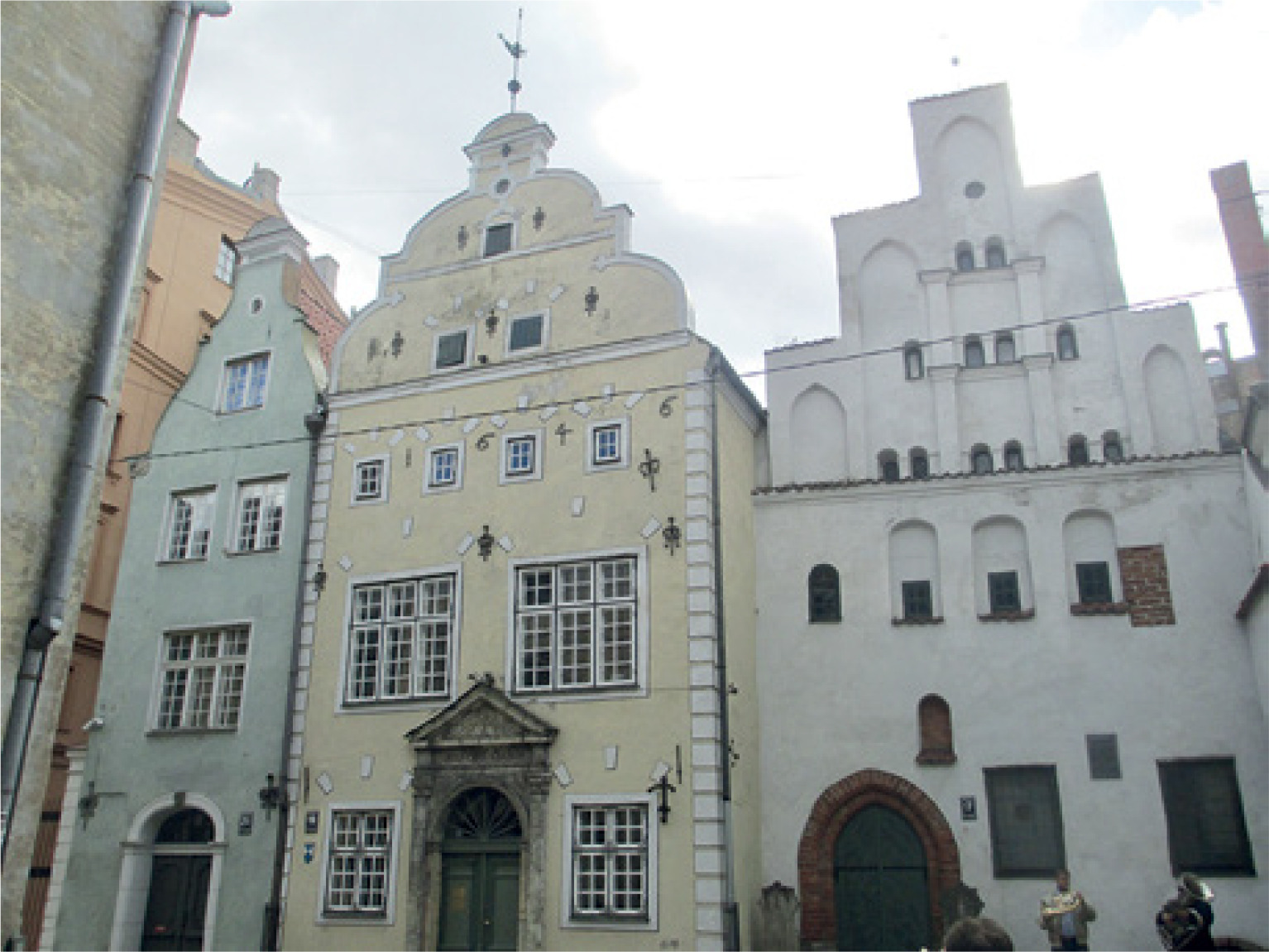
This significant international congress concluded with recognition of participants and fulfillment of the congress motto: Excellence and Leadership in Dermatology and Medicine. Andris Y. Rubins was congratulated for organizing international congresses in Riga since 1990, marking 35 years of exceptional contributions to dermatologic education (fig. 1). Professors Chih-Hung Lee and Saulius Čaplinskas were awarded BADV Honorary Membership Diplomas (fig. 2). Awards for the best presentations among young physicians were granted to participants from Latvia, Lithuania, the United States, and Slovenia. Attendees look forward to the 21st BADV Congress, scheduled for November 5–6, 2026, in Kaunas, Lithuania, and appreciated the historic beauty of Riga, including the famous Three Brothers (fig. 4).