Summary
This study investigated the association between the Fibrosis-4 index (Fib-4) and 30-day mortality in 1,535 patients hospitalized with acute heart failure (AHF) using data from the MIMIC-IV database. Patients were divided into survival and mortality groups, with the mortality group showing significantly higher Fib-4 values. Lasso regression and restricted cubic splines identified a positive, linear association between Fib-4 and mortality risk. After adjusting for confounders, multivariable logistic regression confirmed Fib-4 as an independent predictor of 30-day mortality (OR = 1.05, 95% CI: 1.02–1.09, p = 0.002). The area under the receiver operating characteristic curve was 0.665, with a cutoff value of 2.25. A dose-response relationship was observed across Fib-4 quartiles (p for trend = 0.009). Subgroup analyses yielded consistent findings. The results suggest that Fib-4 is a readily available, noninvasive marker that may aid in early risk stratification for patients with AHF.
Introduction
Acute heart failure (AHF), encompassing both new-onset and acutely decompensated chronic heart failure, carries a poor prognosis. Globally, over 600 million people are affected by heart failure, with rising prevalence due to aging populations and improved survival from other cardiovascular conditions. In China, the prevalence among adults aged ≥ 35 years is approximately 1.3%, translating to nearly 9 million patients. Despite therapeutic advances, short-term mortality remains high; contemporary studies report 30-day all-cause mortality rates ranging from 7% to 17% [1, 2].
Rapid recognition of pathophysiological changes in AHF is often challenging, making it difficult to identify high-risk patients and determine optimal timing of interventions [3]. Current multimodal monitoring plays a crucial role in the evaluation and treatment of AHF [4]. Traditional biomarkers such as troponin and natriuretic peptides (BNP and NT-proBNP) are widely used in clinical practice [4]. During hospitalisation and after discharge, various indicators (biochemical, haemodynamic, and clinical) have shown prognostic value [5]. Newer biomarkers, including microRNAs, osteopontin, galectin-3, ST2, and GDF-15, offer additional perspectives for risk evaluation [6]. Multivariate analysis and prognostic model development are often employed to account for the complex aetiology and multiple confounding factors in AHF [7].
Heart failure is strongly associated with liver fibrosis, as both conditions share multiple risk factors. The Fibrosis-4 index (Fib-4), calculated from age, aspartate aminotransferase (AST), alanine aminotransferase (ALT), and platelet count, has emerged as a simple, non-invasive marker of liver fibrosis. Recent studies have explored its prognostic role in various cardiovascular settings, including acute coronary syndrome and atrial fibrillation [8, 9]. However, its capacity to accurately assess mortality risk specifically in critically ill patients with AHF has not been fully evaluated.
Aim
The purpose of this study was to investigate the association between Fib-4 and 30-day all-cause mortality in intensive care unit (ICU) patients with AHF, using data from the MIMIC-IV database.
Material and methods
Source of data
This retrospective observational study used data from the MIMIC-IV database (Medical Information Mart for Intensive Care IV), which contains de-identified health records of patients admitted to the intensive care units (ICUs) of Beth Israel Deaconess Medical Centre between 2008 and 2019. The database includes vital signs, laboratory results, medications, and follow-up information. We obtained permission to use the database (record ID: 64547472). The MIMIC-IV database has been approved by the Institutional Review Boards of Beth Israel Deaconess Medical Centre and the Massachusetts Institute of Technology (protocol number 2001P000699). Because all data were de-identified and publicly available, this study was exempt from additional ethical approval.
Population selection criteria
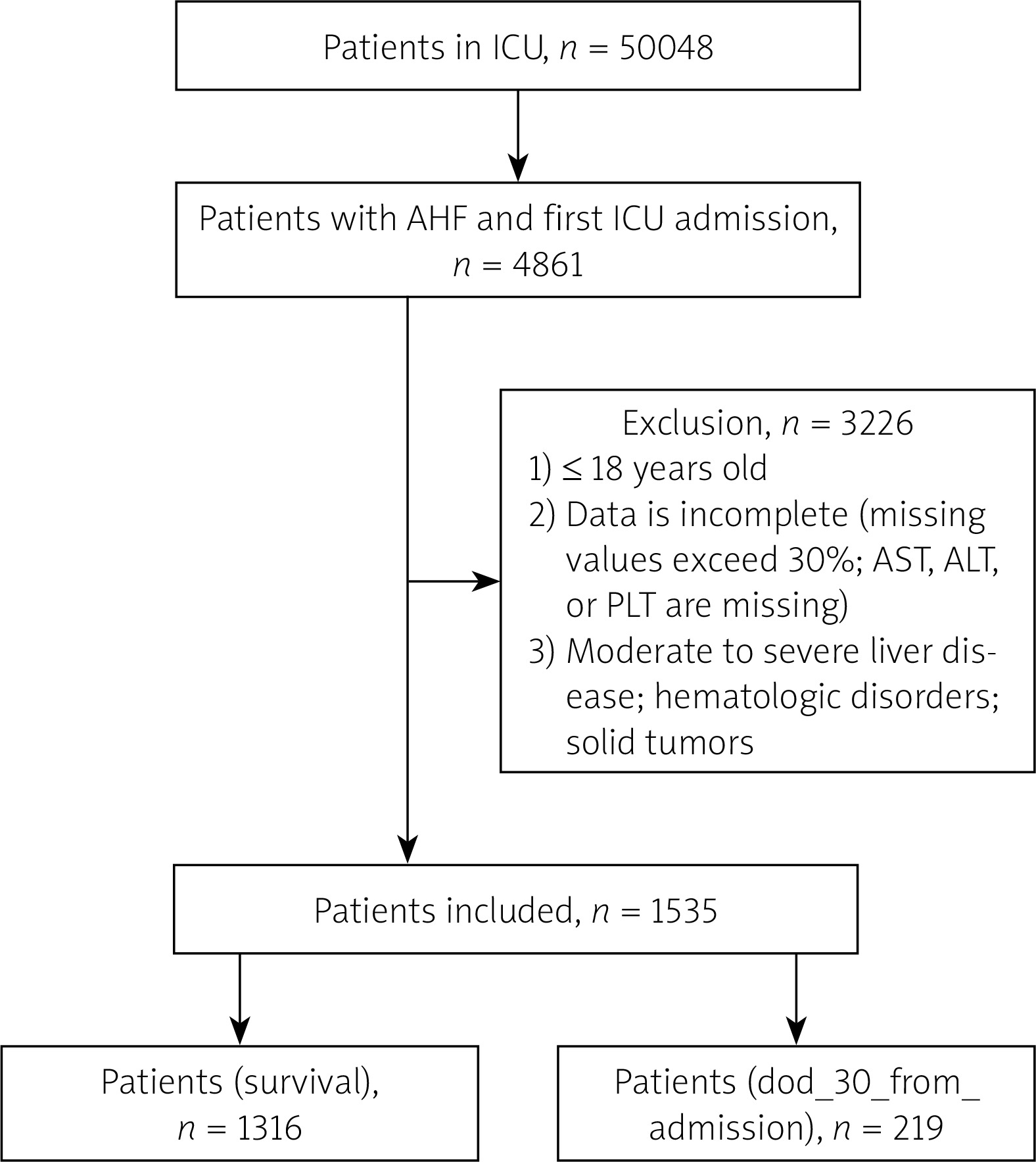
We enrolled all patients in the MIMIC-IV database with a diagnosis of AHF who were first admitted to the ICU (Figure 1). Diagnoses were identified using ICD-9 codes 428.0, 428.1, 428.2, 428.3, 428.4, and 428.9 or ICD-10 codes I50.1, I50.2, I50.3, I50.4, and I50.9, which were listed among the top three diagnoses in the sequence. Exclusion criteria were as follows: (1) age ≤ 18 years; (2) incomplete data (missing values > 30% of relevant clinical variables, or missing AST, ALT, or platelet count); (3) moderate to severe liver disease; (4) haematological disorders; and (5) solid tumours. The primary outcome was all-cause mortality within 30 days from hospital admission.
Data extraction
Structured Query Language (SQL) was used to extract relevant variables. Extracted variables included the following: demographic data (age, gender, smoking status, body mass index [BMI]), vital signs (heart rate, systolic blood pressure [SBP], diastolic blood pressure [DBP], mean arterial pressure [MBP]), laboratory parameters (pH, pO2, pCO2, white blood cell count [WBC], red blood cell count [RBC], red cell distribution width [RDW], platelet count, haemoglobin, haematocrit, mean corpuscular haemoglobin [MCH], mean corpuscular volume [MCV], bicarbonate, blood urea nitrogen [BUN], albumin, creatinine, chloride, anion gap, glucose, potassium, sodium, calcium, ALT, ALP, total bilirubin, lactate dehydrogenase [LDH], aspartate aminotransferase [AST], international normalised ratio [INR], NT-proBNP), comorbidities (atrial fibrillation [AF], coronary artery disease [CAD], cerebrovascular disease, hypertension, myocardial infarction, peripheral vascular disease, dementia, chronic pulmonary disease, mild liver disease), continuous renal replacement therapy (CRRT), Charlson Comorbidity Index, first-day SOFA score, ICU length of stay, CHA2DS2-VASc score, and Fib-4. All laboratory parameters were extracted from measurements taken within 24 h after ICU admission. For time-varying parameters (blood pressure, heart rate, pO2, pCO2), we extracted the minimum, maximum, and mean values during the first 24 h of ICU stay. Oxygen therapy was not adjusted for pO2 values, which is acknowledged as a limitation.
Definition of endpoint and Fib-4
The primary endpoint was defined as all-cause mortality occurring within 30 days from the date of hospital admission. The Fib-4 index was calculated using the formula: Fib-4 = (age [years] × AST [U/l])/(platelet count [109/l] × √ALT [U/l]) [10]. No unit conversion was applied; all components were used as directly measured.
Statistical analysis
Continuous variables were expressed as mean ± standard deviation (SD) for normally distributed data or median (interquartile range, IQR) for non-normally distributed data. Categorical variables were presented as frequencies and percentages. For baseline comparisons between survival and mortality groups, we used the independent samples t-test or Mann-Whitney U test for continuous variables, depending on normality, and the χ2 test for categorical variables. All reported p-values were two-sided, and p < 0.05 was considered statistically significant.
Handling of missing data: Patients with > 30% missing values across key clinical variables or missing AST, ALT, or platelet count were excluded based on the selection criteria. For the remaining patients, we first examined the proportion of missingness for each variable (Supplementary Table SI). Variables with < 5% missingness were imputed using the median of observed values. To assess the robustness of our findings, we performed two sensitivity analyses: (1) a complete-case analysis excluding any patient with missing data in any covariate included in Model 3; (2) multiple imputation by chained equations (MICE) with 10 imputed datasets. The results were consistent with the primary analysis (Supplementary Tables SII, SIII). Data preprocessing was conducted using the “glmnet” package. The outcome event was defined as a binary variable, and the model was fitted using 10-fold cross-validation for the regularisation parameter λ. The λ value within one standard error of the minimum error was chosen, and non-zero coefficient variables were ranked by importance.
To explore potential non-linear associations between Fib-4 and the outcome, a weighted restricted cubic spline (RCS) analysis with three knots was performed. Three multivariable logistic regression models were constructed: Model 1 was unadjusted; Model 2 was adjusted for INR, age, BUN, and potassium; Model 3 was fully adjusted for pO2 max, WBC, lymphocytes, BUN, calcium, glucose, anion gap, potassium, INR, ALP, CRRT, CK-MB, age, peripheral vascular disease, and CHA2DS2-VASc score. Of note, NT-proBNP and left ventricular ejection fraction (LVEF) were not included in the final models due to high missingness (NT-proBNP missing in 42% of the cohort) and unavailability of LVEF in the MIMIC-IV database, respectively. In a post hoc sensitivity analysis, we added NT-proBNP to Model 3 using multiple imputation; the effect estimate for Fib-4 remained similar (OR = 1.04, 95% CI: 1.00–1.08, p = 0.052), suggesting no substantial confounding. Fib-4 was analysed both as a continuous variable and as a categorical variable based on quartiles (Q1–Q4), with Q1 as the reference group. The predictive value of Fib-4 was evaluated using ROC curve analysis, with the area under the curve (AUC) as the primary metric. Subgroup analyses were conducted to examine effect modification by predefined factors (gender, AF, CAD, hypertension, creatinine level, haemoglobin level, and chronic obstructive pulmonary disease). All statistical tests were two-sided, and a p-value < 0.05 was considered statistically significant. Statistical analyses were performed using R software (version 4.2.0).
Missing data were handled as follows: patients with > 30% missing values across key clinical variables or missing AST, ALT, or platelet count were excluded based on the selection criteria. For the remaining patients, no further rows were deleted; instead, any remaining missing values in individual variables were imputed using the median of the observed values for that variable. Data preprocessing was conducted using the “glmnet” package. The outcome event was defined as a binary variable, and the model was fitted using 10-fold cross-validation for the regularisation parameter λ. The λ value within one standard error of the minimum error was chosen, and non-zero coefficient variables were ranked by importance.
To explore potential non-linear associations between Fib-4 and the outcome, a weighted restricted cubic spline (RCS) analysis with three knots was performed. Three multivariable logistic regression models were constructed: Model 1 was unadjusted; Model 2 was adjusted for INR, age, BUN, and potassium; and Model 3 was fully adjusted for pO2 max, WBC, lymphocytes, BUN, calcium, glucose, anion gap, potassium, INR, ALP, CRRT, CK-MB, age, peripheral vascular disease, and CHA2DS2-VASc score. Fib-4 was analysed both as a continuous variable and as a categorical variable based on quartiles (Q1–Q4), with Q1 as the reference group. The predictive value of Fib-4 was evaluated using ROC curve analysis, with the area under the curve (AUC) as the primary metric. Subgroup analyses were conducted to examine effect modification by predefined factors (gender, AF, CAD, hypertension, creatinine level, haemoglobin level, and chronic obstructive pulmonary disease). All statistical tests were two-sided, and a p-value < 0.05 was considered statistically significant. Statistical analyses were performed using R software (version 4.2.0).
Results
Baseline characteristics
This study analysed 1535 patients with AHF, of whom 219 (14.3%) died within 30 days of admission (Table I). Compared to survivors, non-survivors were significantly older, more often female, and had lower BMI (all p < 0.001). They also had lower blood pressure parameters, more adverse laboratory profiles (higher WBC, RDW, BUN, creatinine, anion gap, glucose, potassium, ALT, ALP, bilirubin, LDH, AST, INR, NT-proBNP, and Fib-4; lower RBC, platelet, haemoglobin, bicarbonate, and calcium), and higher comorbidity burden (myocardial infarction, AF, dementia, and higher Charlson Comorbidity Index and SOFA scores) (all p < 0.05). No significant differences were observed for smoking history, heart rate, haematocrit, MCH, MCV, chloride, sodium, mild liver disease, or chronic pulmonary disease (p > 0.05). A comparison of excluded versus included patients is provided in Supplementary Table SIV; excluded patients (n = 412) had slightly higher comorbidity burden but similar Fib-4 distribution. (Full details are presented in Table I).
Table I
Baseline characteristics of ICU patients with acute heart failure, stratified by 30-day all-cause mortality from hospital admission
[i] Data are presented as mean ± SD, median (IQR), or n (%). P-values from t-test, Mann-Whitney U test, or χ2 test. SMD – standardised mean difference; for skewed variables (), SMD estimated from median/IQR. BMI – body mass index, BUN – blood urea nitrogen, CRRT – continuous renal replacement therapy, Fib-4 – Fibrosis-4 index.
Lasso regression analysis
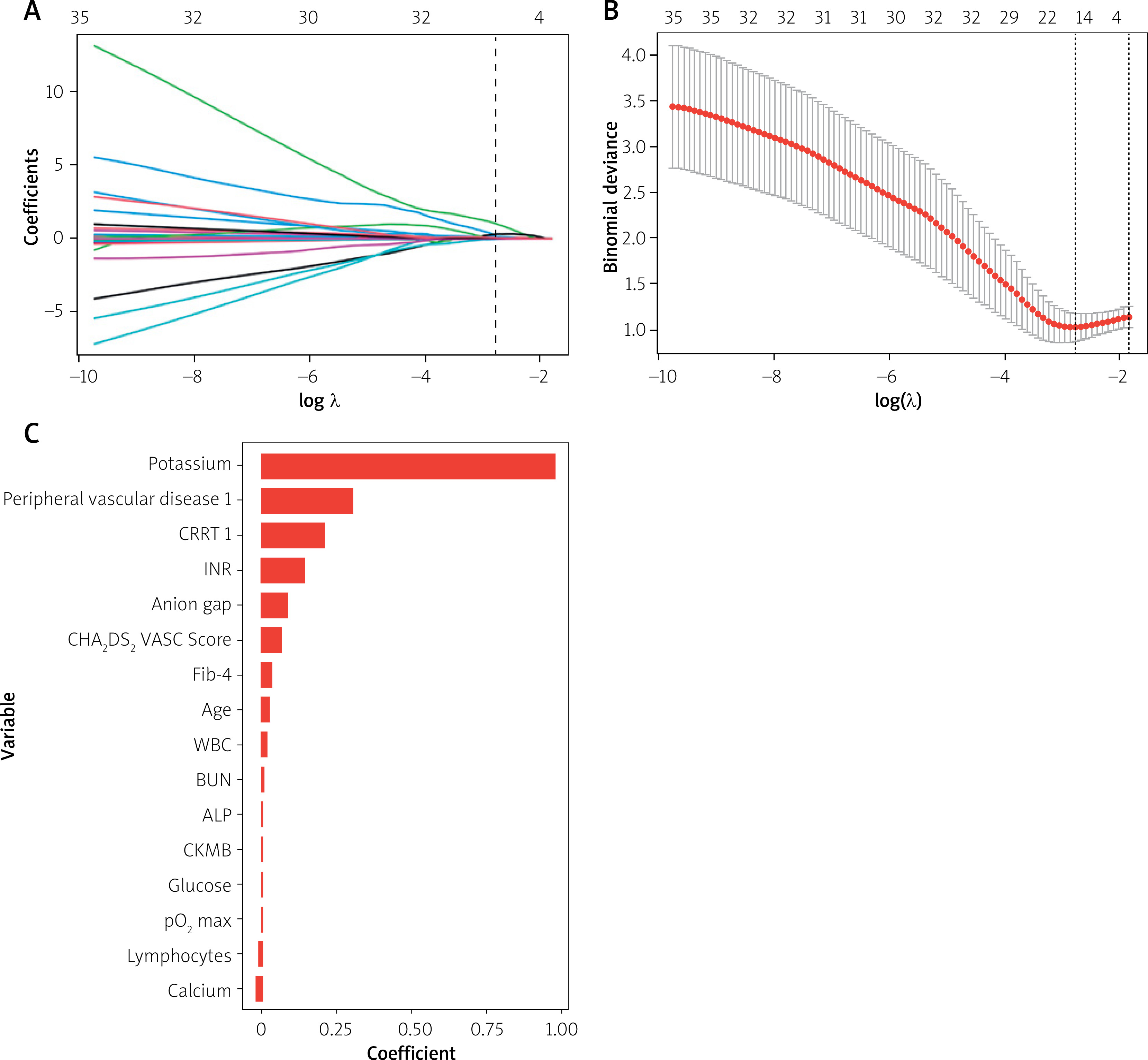
The initial model included 64 independent variables. Lasso regression with 10-fold cross-validation selected the optimal λ (log(λ) = –2.84) based on the minimum criteria (Figure 2 A). A coefficient profile plot was generated (Figure 2 B). Sixteen variables with non-zero coefficients were identified: pO2 max, WBC, lymphocytes, CK-MB, BUN, calcium, glucose, anion gap, potassium, INR, ALP, CRRT, age, peripheral vascular disease, Fib-4, and CHA2DS2-VASc score. These are ranked by absolute coefficient values in Figure 2 C.
RCS analysis
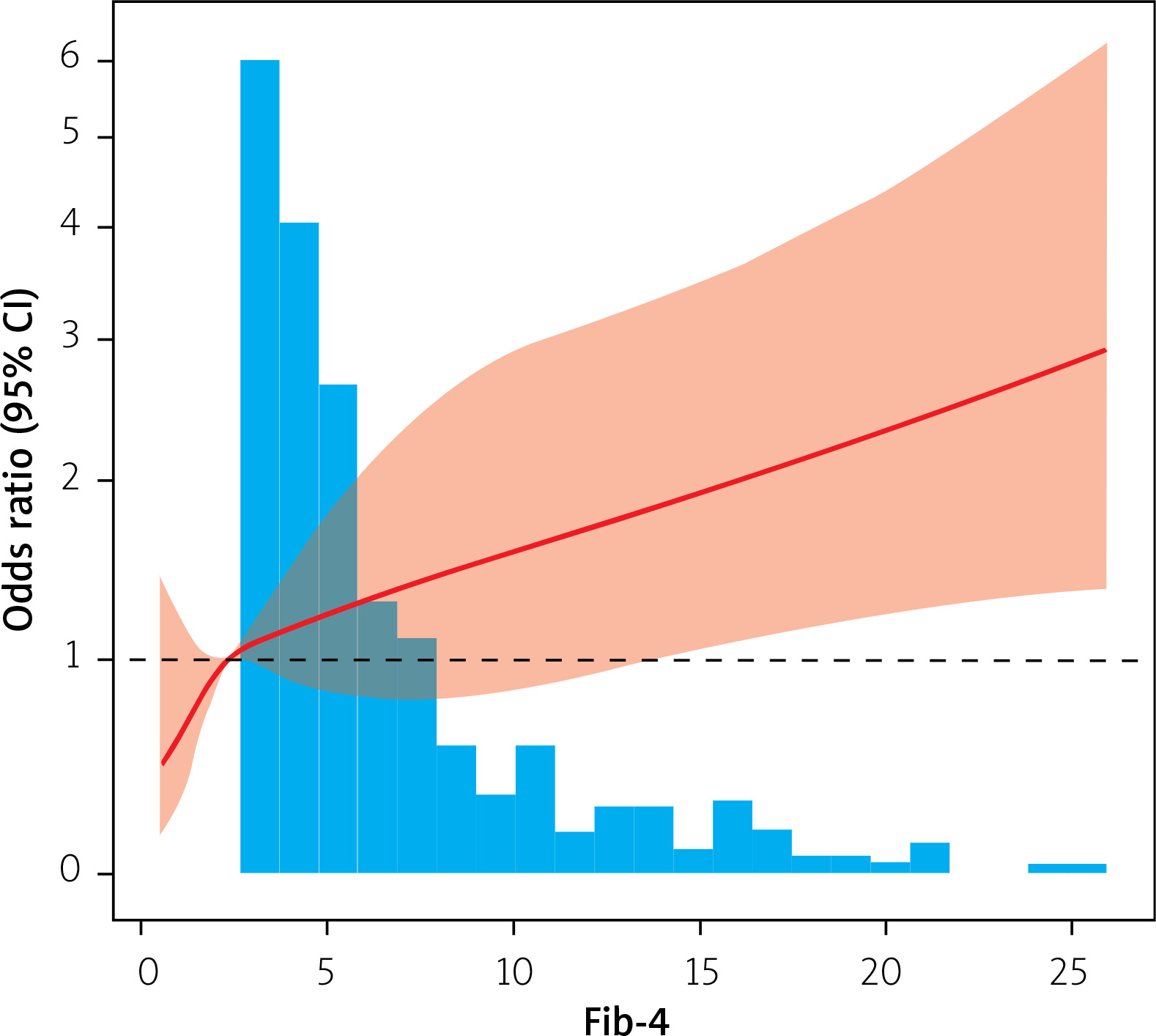
After adjusting for the 16 covariates identified by Lasso regression, the RCS curve showed a positive association between Fib-4 and 30-day mortality risk (p-overall = 0.006), with no significant non-linear relationship (p-nonlinear = 0.330). The inflection point was at 2.56 (Figure 3).
Multivariable logistic regression analysis
Table II presents the association between Fib-4 and 30-day mortality. As a continuous variable, each unit increase in Fib-4 was associated with increased mortality risk in all models (Model 1: OR = 1.10, 95% CI: 1.07–1.13, p < 0.001; Model 2: OR = 1.08, 95% CI: 1.05-1.11, p < 0.001; and Model 3: OR = 1.05, 95% CI: 1.02–1.09, p = 0.002). When analysed by quartiles, the highest quartile (Q4) had significantly higher risk than Q1 in Model 1 (OR = 4.72, p < 0.001), Model 2 (OR = 2.99, p < 0.001), and Model 3 (OR = 2.51, p = 0.007). The p for trend across quartiles was significant in all models (< 0.001, < 0.001, and 0.009, respectively), indicating a dose-response relationship.
Table II
Association between Fib-4 and 30-day all-cause mortality from hospital admission (logistic regression)
ROC analysis
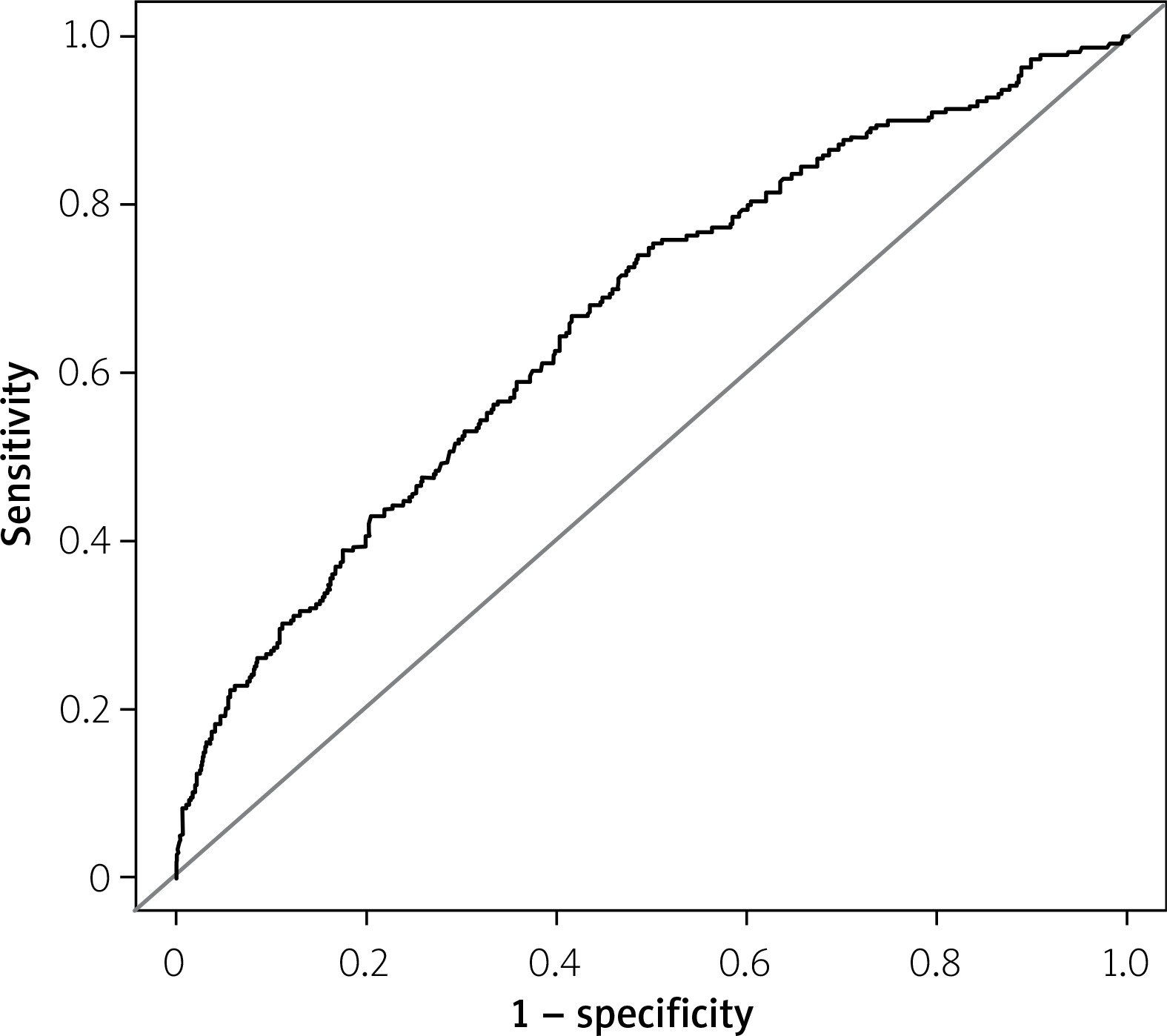
The AUC for Fib-4 in predicting 30-day mortality was 0.665 (95% CI: 0.627–0.703). The optimal cutoff value was 2.25, with a sensitivity of 74.0% and specificity of 51.4% (Figure 4).
Subgroup analysis
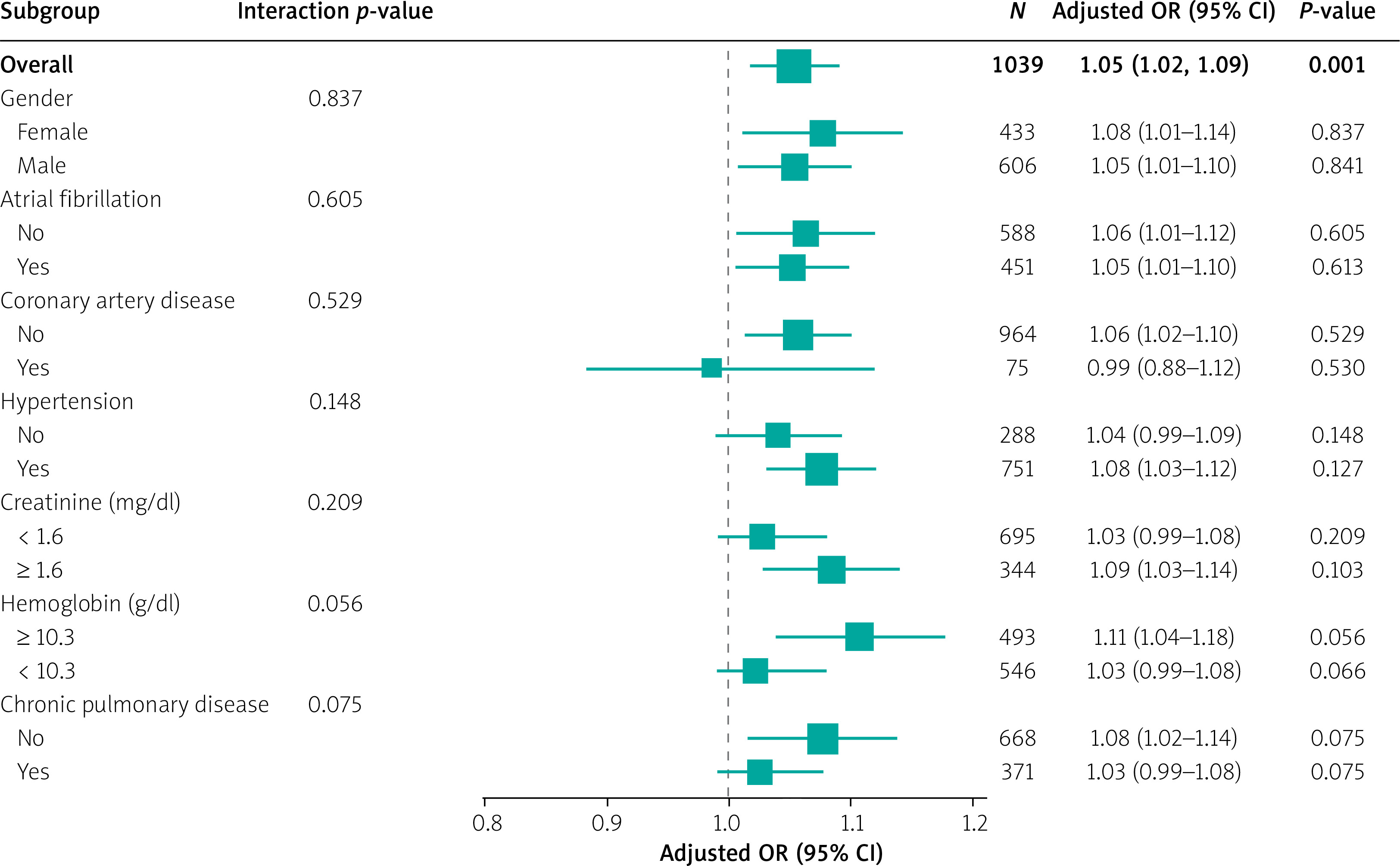
Subgroup analyses stratified by gender, AF, CAD, hypertension, creatinine level, haemoglobin level, and chronic obstructive pulmonary disease showed no significant interactions, and the direction of effect was consistently positive (all adjusted odds ratios > 1.0, although some did not reach statistical significance due to reduced sample size). The primary outcome was 30-day all-cause mortality from hospital admission, and the association remained stable across all subgroups (Figure 5). No effect modification was observed (all p for interaction > 0.05). Specifically, in the fully adjusted subgroup models, the ORs for Fib-4 (per unit increase) ranged from 1.02 to 1.08 across subgroups, with no point estimate below 1.0. Detailed subgroup estimates are presented in Figure 5.
Figure 5
Subgroup analysis for the association between Fib‑4 (per unit increase) and 30‑day all‑cause mortality from hospital admission. Adjusted for all covariates in Model 3. Symbols: squares represent odds ratios; horizontal lines represent 95% confidence intervals. All point estimates are above 1.0, with no significant interaction (p for interaction > 0.05 for all subgroups). All models were adjusted for pO2 max, WBC, lymphocytes, BUN, calcium, glucose, potassium, anion gap, INR, ALP, CRRT, CK-MB, and age
Discussion
Abnormal liver function is frequently observed in critically ill patients with AHF, typically resulting from rapid haemodynamic changes, including reduced cardiac output, inadequate tissue perfusion, and hepatic congestion [11]. Elevated central venous pressure increases hepatic venous pressure and perisinusoidal oedema, which can compress bile ducts and induce centrilobular hepatocyte necrosis [12]. Initially, this may manifest as elevated transaminase levels; with disease progression, it may lead to liver fibrosis and cirrhosis [13, 14]. Furthermore, portal hypertension secondary to increased central venous pressure can cause splenomegaly and hypersplenism, resulting in decreased platelet counts [15].
The gold standard for assessing liver fibrosis is liver biopsy, but this procedure is invasive and carries risks. Fib-4, derived from age, AST, ALT, and platelet count, offers a simple, rapid, and non-invasive alternative [16]. Recent studies have extended its utility beyond liver disease to cardiovascular prognostication. In critically ill patients with acute coronary syndrome, higher Fib-4 levels have been associated with increased mortality and major adverse cardiovascular events [8]. Similarly, in atrial fibrillation, Fib-4 predicts thromboembolic risk and all-cause death independently of conventional risk scores [9]. In heart failure with preserved ejection fraction, Fib-4 reflects right ventricular function and prognosis [17].
Maeda et al. found that Fib-4 reflects right-sided filling pressure in heart failure patients: higher scores indicate greater volume load and potentially worse prognosis [18]. Other research has demonstrated that Fib-4 is useful for early HF risk prediction and screening in specific populations (asymptomatic individuals, atrial fibrillation, acute coronary syndrome), helping clinicians stratify risk and personalise treatment [19–22]. However, the relationship between Fib-4 and early mortality specifically in critically ill AHF patients has remained unclear. Previous studies by Yoshihisa and Cao et al. showed that liver fibrosis markers, including Fib-4, are associated with all-cause mortality in heart failure with preserved ejection fraction [23, 24].
In this study of 1535 ICU patients with AHF, we found that non-survivors had higher Fib-4 scores, were older, and comprised a higher proportion of females. After adjusting for multiple confounders, Fib-4 remained an independent risk factor for 30-day mortality. The ROC analysis gave an AUC of 0.665, a cutoff of 2.25, sensitivity of 74%, and specificity of 51.4%. Patients in the highest Fib-4 quartile had significantly more endpoint events than those in the lowest quartile. These results indicate that Fib-4 is a modest but statistically significant independent predictor of early mortality in ICU patients with AHF.
Our findings are consistent with large cohort studies of hospitalised AHF patients, although those often combined Fib-4 with other liver fibrosis scores (e.g. MELD-XI) for risk stratification [25, 26]. The predictive value of Fib-4 may reflect its ability to capture organ congestion or haemodynamic status during hospitalisation [27]. Because Fib-4 can be easily calculated from routine laboratory data in any centre, it is practical for widespread clinical use, aiding in identifying high-risk patients and supporting clinical decision-making. Nevertheless, the modest AUC (0.665) suggests that Fib-4 alone is insufficient for accurate individual risk prediction and should be used in conjunction with other clinical parameters.
This study has several limitations. First, the retrospective design carries inherent risks of selection and information bias, despite our efforts to adjust for confounders. Second, the sample was drawn exclusively from ICU patients at a single centre (Beth Israel Deaconess Medical Centre) within the MIMIC-IV database, which may limit generalisability to non-ICU settings or other populations. Therefore, our findings apply specifically to critically ill AHF patients requiring ICU admission. Third, although we adjusted for numerous covariates, residual confounding from unmeasured variables (e.g. detailed medication history, socioeconomic status, oxygen therapy for pO2 measurements) cannot be excluded. Fourth, the Fib-4 index was calculated from admission measurements only; serial measurements during hospitalisation might provide additional prognostic information. Fifth, the primary outcome was 30-day all-cause mortality; we did not assess cause-specific mortality or longer-term outcomes. Sixth, the handling of missing data using median imputation, while common, may introduce bias; however, our sensitivity analyses using complete-case analysis and multiple imputation yielded consistent results (Supplementary materials). Seventh, we could not adjust for LVEF (unavailable in MIMIC-IV) and NT-proBNP (high missingness), two important prognostic factors in heart failure; a post hoc sensitivity analysis adding NT-proBNP did not materially alter the effect estimate, but residual confounding remains possible. Finally, external validation in independent, prospective, multi-centre cohorts is needed to confirm our findings.
Conclusions
In critically ill patients hospitalised with acute heart failure, the Fib-4 index is independently associated with 30-day all-cause mortality but provides only modest predictive discrimination (AUC = 0.665). This readily available, cost-effective marker may offer adjunctive information for early risk stratification, but its clinical utility should be interpreted with caution. Further prospective studies are warranted to validate these findings and to define optimal cutoffs in different clinical settings.