Introduction
Coronary artery disease (CAD), also known as coronary heart disease (CHD), is a cardiac condition induced by atherosclerosis of the coronary arteries. Atherosclerosis leads to stenosis or occlusion of the vascular lumen and subsequently triggers myocardial ischemia and hypoxia. It represents the most prevalent form of pathological changes of an organ induced by atherosclerosis. According to the World Health Organization (WHO), about 17 million patients die of cardiovascular diseases (CVDs) every year, with CAD contributing to a considerable proportion. The global annual incidence of CAD is high and generally ranges between 3% and 10% [1]. The prognosis of CAD is complicated and affected by multiple factors. Hence, it is imperative to enhance prevention and treatment strategies to improve the survival of patients.
The Fibrosis-4 index (FIB-4) is a non-invasive indicator used to assess the degree of liver fibrosis (LF) in patients with chronic liver disease. It is calculated as follows: FIB-4 = (patient age (years) × AST (U/l)) ÷ (platelet count (× 109/l) × square root of ALT (U/l)). This index is obtained by integrating the patient’s age, platelet count, alanine aminotransferase (ALT), and aspartate aminotransferase (AST) levels. Typically, the FIB-4 level is positively associated with the severity of fibrosis: a higher value suggests more severe fibrosis. Recently, the FIB-4 index has been increasingly explored in cardiovascular studies, and its association with cardiovascular disease has been reported, indicating its potential utility in risk assessment and prognosis for cardiovascular diseases [2].
Current studies demonstrate that the FIB-4 level shows a strong positive association with clinical outcomes of CAD. The study by Demirtola et al. (2025) [3] found a strong positive association of the FIB-4 index as a continuous variable with all-cause mortality (ACM) in CAD patients. The study by Cao et al. (2021) [4] suggested a positive association of FIB-4 level with adverse outcomes of CAD.
Therefore, this study aimed to systematically review existing evidence on the association of the FIB-4 index with CAD outcomes and clarify the direction and statistical significance of this relationship. This meta-analysis also sought to resolve inconsistencies across published studies and evaluate whether FIB-4 functions as a viable supplementary prognostic marker for CAD.
Methods
When conducting this meta-analysis, we strictly followed the Preferred Reporting Items for Systematic Reviews and Meta-Analyses (PRISMA) guidelines [5]. It has been registered in the International Prospective Register of Systematic Reviews (PROSPERO), with registration number CRD420251068846.
Literature search
On May 21, 2025, two researchers (Gao HX and Chai LJ) independently searched articles published in Web of Science, Cochrane, PubMed, and Embase. The search terms covered coronary artery disease and its related synonyms (CAD, CHD, acute coronary syndrome, acute coronary syndrome or ACS, myocardial infarction or MI, ST-elevation myocardial infarction or STEMI, non-ST-elevation myocardial infarction or NSTEMI), as well as Fibrosis-4 Index and its alternatives (FIB-4, liver fibrosis score). Boolean operators (AND, OR, NOT) were applied to combine subject headings and free-text terms. The references from included studies were searched manually, and the citations of relevant reviews were tracked, so as to avoid potential omissions.
Inclusion and exclusion criteria
The inclusion criteria were as follows: (i) patients with CAD; (ii) the FIB-4 index was used as the exposure variable, either as a continuous variable (hazard ratio per 1-unit increment of FIB-4) or categorical grouping variable (high/low FIB-4 subgroups); (iii) outcome measures included ACM, cardiovascular events, and cardiovascular death; and (iv) cohort studies.
The exclusion criteria were as follows: meta-analyses, reviews, animal studies, studies with non-compliant exposure, case reports, non-English publications, conference abstracts, studies with non-compliant diseases, studies of non-compliant types, studies with non-compliant objectives, guidelines, letters, and commentaries.
Literature screening
The articles were screened by two researchers (Gao HX and Chai LJ) independently in EndNote by reviewing the titles and abstracts. For potentially eligible articles, full texts were downloaded and checked. Disagreements (if any) were resolved by a third researcher (Meng XL).
Data extraction
Information was extracted by two researchers (Haoxuan Gao and Lujia Chai) using standardized forms, including: (i) general study information (first author, publication date, country/region, sample size); (ii) baseline patient characteristics (age, proportion of males, disease characteristics, left ventricular ejection fraction LVEF (%), history of percutaneous coronary intervention (PCI)); (iii) exposure-outcome association data (hazard ratio [HR] and 95% confidence interval [CI]); (iv) type of study design, follow-up duration, statistical methods (whether adjusted for confounders). Disagreements (if any) were resolved by a third researcher (Meng XL).
Quality assessment
Quality assessment of the studies was completed by two researchers (Gao HX and Chai LJ). By using the Newcastle-Ottawa Scale (NOS), the quality of cohort studies was assessed [6]. Scores were given for three dimensions: selection of study subjects (4 stars), exposure factor measurement (2 stars), and outcome follow-up (3 stars). All included studies scored ≥ 7 on the NOS, suggesting acceptable methodological quality.
Statistical analysis
Statistical analysis was performed using Stata 15.0 software. For outcomes, HRs and 95% CIs were extracted as effect sizes. By using a random-effects model, the effect sizes were pooled (DerSimonian-Laird method). Heterogeneity assessment was performed using the Q-test (p for heterogeneity < 0.1 denoting heterogeneity) and the I² statistic. I² < 50% denoted low heterogeneity, while I² > 50% denoted high heterogeneity. If the heterogeneity across the studies was low, a fixed-effects model may be employed instead. For categorical variables with very high heterogeneity (I² > 90%), we still applied the random-effects model per statistical guidelines, and further conducted subgroup and sensitivity analyses to verify the robustness of the results. Subgroup analyses by region and disease were carried out to examine the sources of heterogeneity. By re-pooling the effect sizes after eliminating individual studies one by one, the stability of results was assessed. Funnel plots and Egger’s test were combined to ascertain the publication bias, with p < 0.05 (two-tailed) reflecting statistical significance.
Results
Screening process
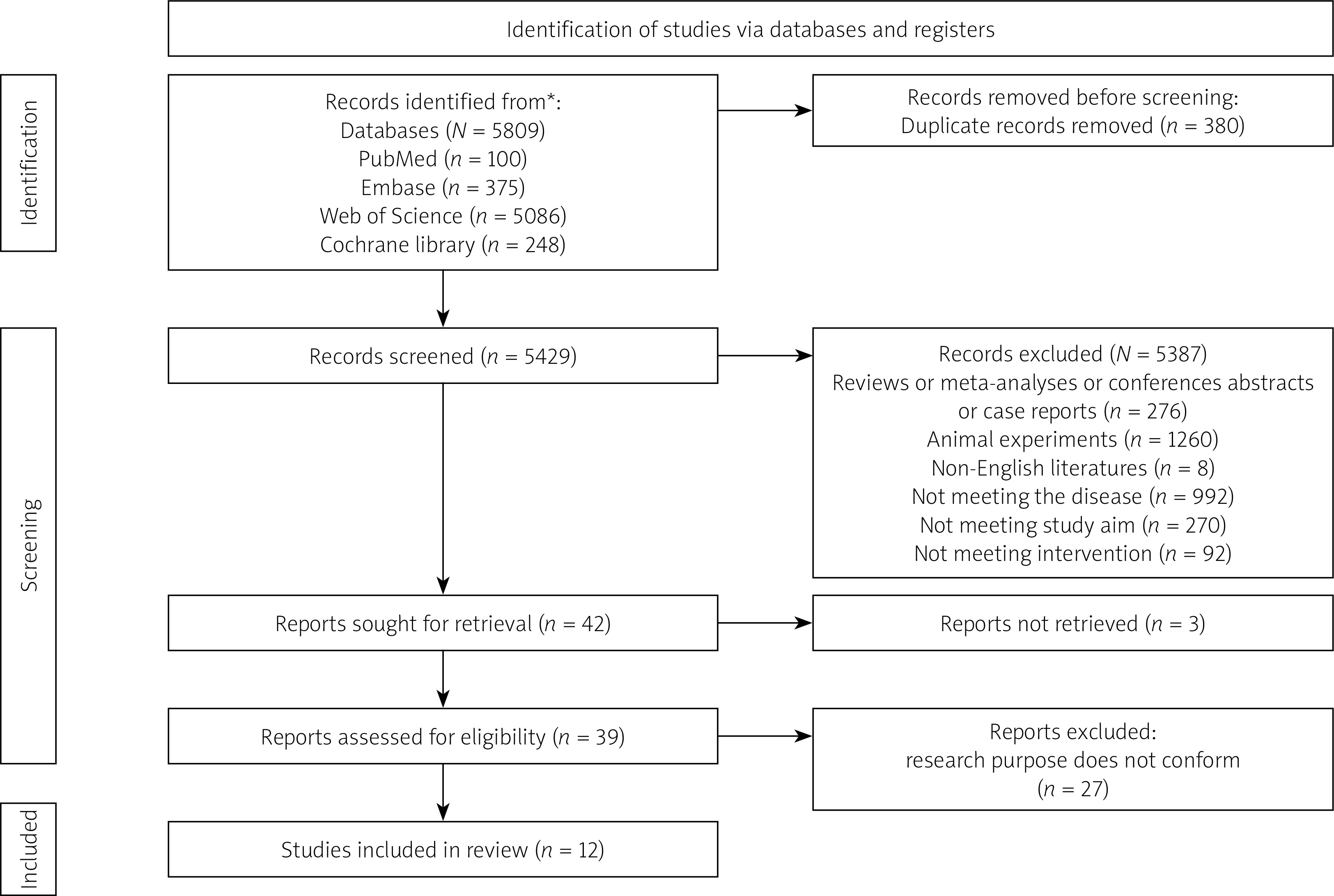
A total of 5,809 publications were retrieved. After removing 380 duplicate publications, the remaining 5,429 publications were screened. Two researchers reviewed the titles and abstracts of the publications independently. According to the eligibility criteria, 5,387 publications in total were considered ineligible and were therefore excluded.
The full texts of the remaining studies were downloaded by two researchers to determine eligible studies. The full texts of 3 studies were unavailable. Each full text was thoroughly reviewed and rigorously checked against the eligibility criteria. Among them, 27 articles were found ineligible and excluded because their study objectives did not align with the review. After disagreements in screening were resolved by a third party, 12 articles were ultimately included in the meta-analysis, as shown in Figure 1.
Literature characteristics
Finally, the meta-analysis included 12 publications in total [2–4, 7–15]. The included studies comprised 6 prospective cohort studies [3, 8–12] and 6 retrospective cohort studies [2, 4, 7, 13–15]. The articles were published in the period from 2020 to 2025, involving 31,817 CAD patients in total. The sample size ranged from 797 to 6,527 participants. Of the studies included, 9 were from Asia (7 from China [4, 9, 10, 12–15]; 1 from Japan [8]; 1 from Turkey [3]), 1 was from Europe (1 from Italy [11]), and 1 was an international multicenter study based on the ISCHEMIA trial [2]. The age of patients ranged from 43.6 to 84.9 years old. The proportion of males ranged from 50.7% to 79%. Six studies included patients with chronic coronary syndrome (CCS) [2, 7, 11, 13–15], and 6 studies included patients with MI [3, 4, 8–10, 12]. Among all studies, 4 included patients who underwent PCI [3, 8, 11, 12] and 8 included patients who did not undergo PCI [2, 4, 7, 9, 10, 13–15]. Outcomes were categorized as cardiovascular death, ACM, and major adverse cardiovascular events (MACEs). Details are listed in Table I.
Table I
Baseline data from included publications
[i] PCI – percutaneous coronary intervention, LVEF – left ventricular ejection fraction, MACEs – major adverse cardiovascular events (the outcome measures in the publications include a composite endpoint of cardiovascular death, myocardial infarction, stroke, and revascularization; specific definitions are provided in the Methods section).
Quality assessment
All 12 included studies achieved an NOS score of 7 stars or above, suggesting acceptable methodological quality. The evaluated NOS scores for all cohort studies are presented in Table II.
Table II
Cohort study assessment scale
Meta-analysis
All-cause mortality
Continuous variable analysis
A total of 4 studies reporting the association of FIB-4 level as a continuous variable with ACM [2, 3, 10, 15] were included. High heterogeneity existed across the studies (I² = 69.1%, p for heterogeneity < 0.001). Meta-analysis showed that each 1-unit increase in the FIB-4 index was associated with a 1.10-fold increase in the risk of ACM (HR = 1.10, 95% CI: 1.05–1.15, p for effect < 0.001). The results revealed a positive association of the FIB-4 index with the risk of ACM, as shown in Figure 2 A.
Figure 2
Forest plots of pooled hazard ratios for continuous FIB-4 index. Panels A–B show the overall association of the FIB-4 index with the risk of all-cause mortality, subgroup analysis stratified by region, subgroup analysis stratified by disease type, and the association of continuous FIB-4 level with cardiovascular mortality, respectively C–D show the overall association of the FIB-4 index with the risk of all-cause mortality, subgroup analysis stratified by region, subgroup analysis stratified by disease type, and the association of continuous FIB-4 level with cardiovascular mortality, respectively
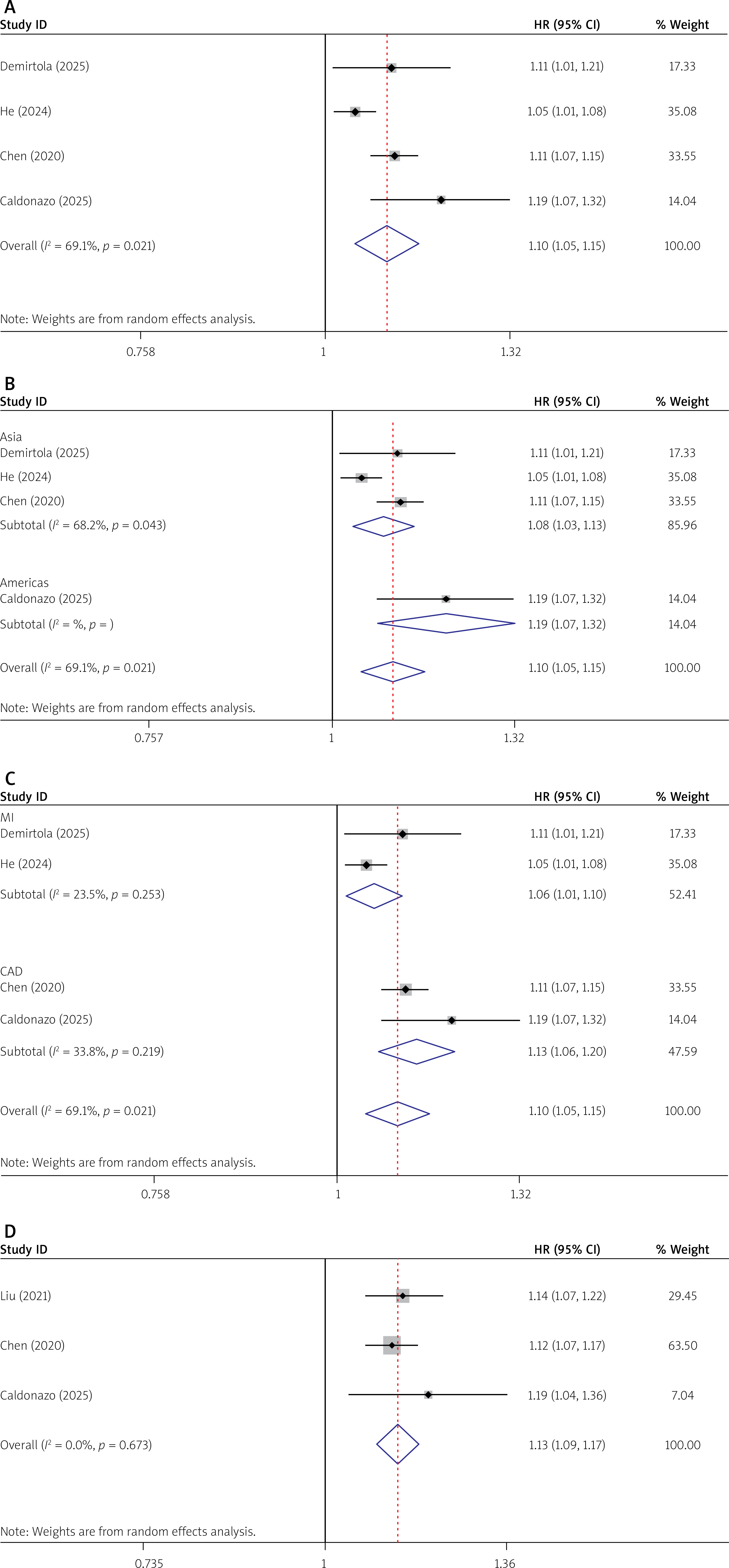
A subgroup analysis by region was conducted to explore the differences in the association of FIB-4 level, as a continuous variable, with the risk of ACM across populations from different regions. The Asia subgroup included 3 studies, demonstrating a statistically significant positive association between FIB-4 and ACM (HR = 1.08, 95% CI: 1.03–1.13, p for effect = 0.001). The Americas subgroup included only 1 study, indicating that FIB-4 level was associated with ACM in patients with CAD (HR = 1.19, 95% CI: 1.07–1.32, p for effect = 0.001), as depicted in Figure 2 B.
A subgroup analysis by disease was completed to examine the variations in the association of the FIB-4 index as a continuous variable with the likelihood of ACM across populations diagnosed with different diseases. The MI subgroup included 2 studies, which showed a statistically significant association of high FIB-4 scores with an elevated risk of ACM (HR = 1.06, 95% CI: 1.01–1.10, p for effect = 0.011). The CCS subgroup included 2 studies, revealing a strong statistical association of high FIB-4 scores with an elevated risk of ACM (HR = 1.13, 95% CI: 1.06–1.20, p for effect < 0.001). Cross-subgroup heterogeneity testing confirmed significant inter-subgroup heterogeneity (I² = 62.3%, p for interaction = 0.038) for disease type, while regional subgroup comparison showed no significant inter-subgroup heterogeneity (I² = 11.5%, p for interaction = 0.312). When FIB-4 was used as a continuous variable, disease type was associated with the likelihood of ACM, while the region factor was unrelated to ACM outcomes, as depicted in Figure 2 C.
Categorical variable analysis
A total of 6 studies [3, 7, 8, 11, 12, 15] analyzed FIB-4 as a categorical variable. Extreme heterogeneity was detected (I² = 92%, p for heterogeneity < 0.001) across included studies. We adopted the random-effects model to pool data. Compared with low FIB-4 levels, high FIB-4 levels were associated with a 2.32-fold higher risk of ACM (HR = 2.32, 95% CI: 1.41–3.82, p for effect < 0.001). Although the pooled result showed a consistent positive trend, the extreme heterogeneity should be interpreted cautiously, as depicted in Figure 3 A.
Figure 3
Forest plots of the association of categorical FIB-4 level with all-cause mortality. Panels A–B show the overall association of categorical FIB-4 level with all-cause mortality, subgroup analysis stratified by disease type, and subgroup analysis stratified by region, respectively Panel C show the overall association of categorical FIB-4 level with all-cause mortality, subgroup analysis stratified by disease type, and subgroup analysis stratified by region, respectively
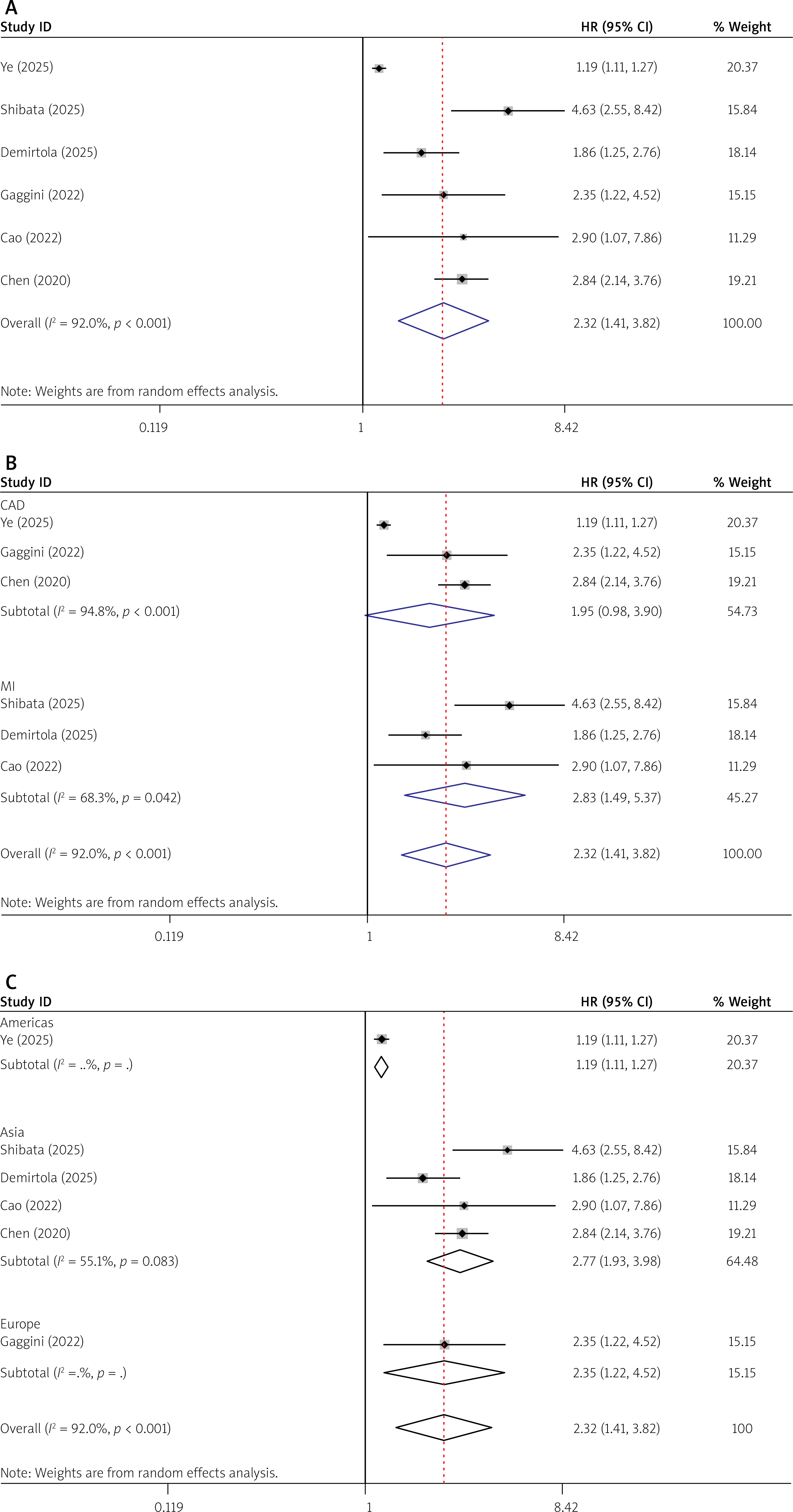
Based on the diagnostic criteria for diseases, the studies analyzed were sorted into two subgroups: CCS and MI. The CCS subgroup included 3 studies, showing no statistically significant association (HR = 1.95, 95% CI: 0.98–3.90, p for effect = 0.058). The MI subgroup included 3 studies, showing a statistically significant association, with an approximately 2.83-fold rise in the risk of ACM in MI patients (HR = 2.83, 95% CI: 1.49–5.37, p for effect = 0.001), as depicted in Figure 3 B.
A subgroup analysis by region was conducted. The Americas subgroup and the Europe subgroup each included 1 study, showing an association of FIB-4 level with ACM. The Asia subgroup included 4 studies. In Asian populations, high FIB-4 scores exhibited a strong statistical association with an increased risk of ACM (HR = 2.77, 95% CI: 1.93–3.98, p for effect < 0.001). Cross-subgroup heterogeneity testing showed no significant inter-subgroup heterogeneity for region (I² = 18.2%, p for interaction = 0.276) and disease type (I² = 24.1%, p for interaction = 0.221). The subgroup analysis indicated that region and disease type were not sources of heterogeneity, as depicted in Figure 3 C.
Cardiovascular death
Continuous variable
A total of 3 studies reporting the association of FIB-4 level as a continuous variable with cardiovascular mortality [2, 13, 15] were included. The results indicated a positive association of FIB-4 level with the risk of cardiovascular death, as the risk of cardiovascular death increased with each 1-unit increase of the FIB-4 index (HR = 1.13, 95% CI: 1.09–1.17, p for effect < 0.001), as shown in Figure 2 D.
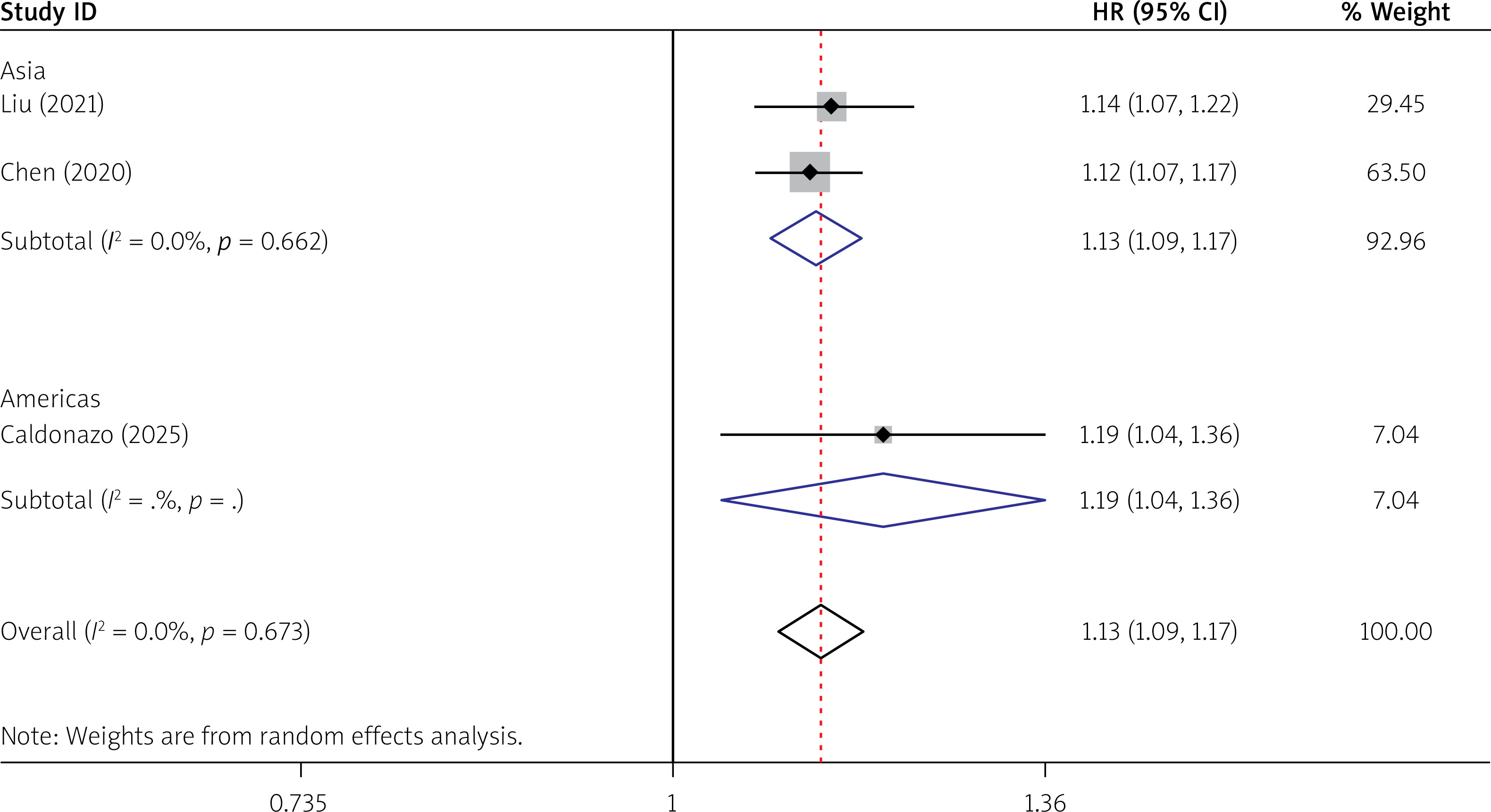
A subgroup analysis by region was conducted. The Asia subgroup included 2 studies, revealing a significant positive association between FIB-4 level and the risk of cardiovascular death in the Asian population (HR = 1.13, 95% CI: 1.09–1.17, p for effect < 0.001). The Americas subgroup included only 1 study, showing a positive association of FIB-4 level with cardiovascular death (HR = 1.19, 95% CI: 1.04–1.36, p for effect = 0.011). Cross-subgroup heterogeneity testing showed no significant inter-subgroup heterogeneity (I² = 0%, p for interaction = 0.415), as depicted in Figure 4. The subgroup analysis indicated that region was not a source of heterogeneity. Subgroup analysis by disease was not performed since all the 3 studies explored CCS.
Categorical variable
Four studies examining the association of FIB-4 level as a categorical variable with cardiovascular mortality [7, 10, 13, 15] were included. The results indicated a strong positive association between FIB-4 level and the risk of cardiovascular death in CCS patients (I² = 93.0%, p for heterogeneity < 0.001, HR = 1.55, 95% CI: 1.14–2.10, p for effect = 0.005). Results were directionally consistent but should be interpreted cautiously due to extreme heterogeneity, as shown in Figure 5 A.
Figure 5
Forest plots of the association of categorical FIB-4 level with cardiovascular death. Panels A–B show the overall association of categorical FIB-4 level with cardiovascular death, subgroup analysis stratified by region, and subgroup analysis stratified by disease type, respectively Panel C show the overall association of categorical FIB-4 level with cardiovascular death, subgroup analysis stratified by region, and subgroup analysis stratified by disease type, respectively
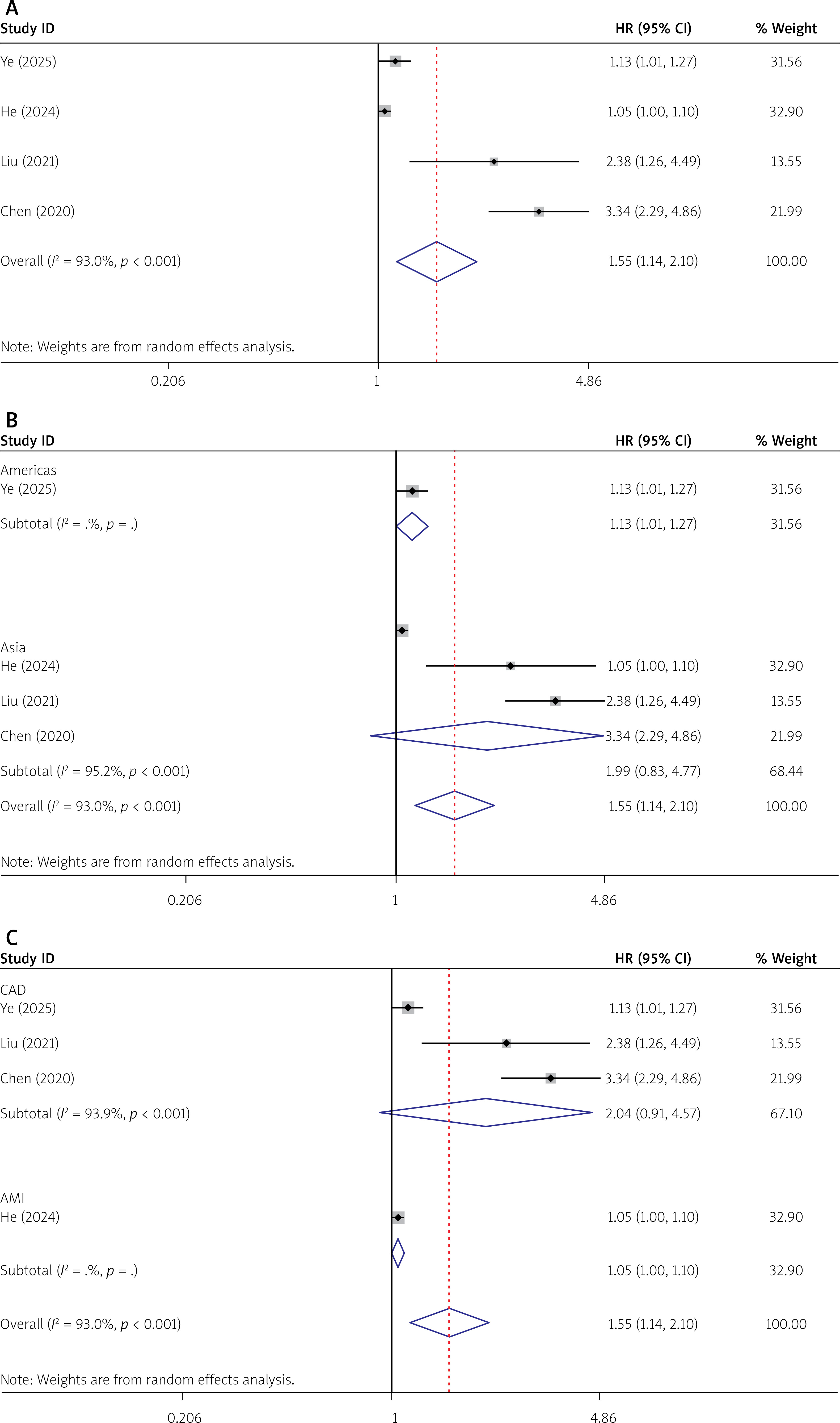
The studies were divided by region into the Americas subgroup and the Asia subgroup. The Americas subgroup included only 1 study, showing a positive association of FIB-4 level with the risk of cardiovascular death (HR = 1.13, 95% CI: 1.01–1.27, p for effect = 0.038). The Asia subgroup included 3 studies (p for heterogeneity < 0.001, HR = 1.99, 95% CI: 0.83–4.77, p for effect = 0.124), showing no statistically significant association of FIB-4 level with the risk of cardiovascular death, as depicted in Figure 5 B.
The included studies were divided into CCS and acute MI (AMI) subgroups based on disease type. The CCS subgroup included 3 studies, showing no statistically significant association of FIB-4 level with the risk of cardiovascular death (HR = 2.04, 95% CI: 0.91–4.57, p = 0.083). The AMI subgroup included only 1 study (HR = 1.05, 95% CI: 1.00–1.10, p = 0.036). Cross-subgroup heterogeneity testing showed no significant inter-subgroup heterogeneity for region (I² = 30.4%, p for interaction = 0.195) and disease type (I² = 27.8%, p for interaction = 0.210). The subgroup analysis suggested that neither region nor disease type was a source of heterogeneity, as depicted in Figure 5 C.
Major adverse cardiovascular events (MACEs)
Categorical variable
A total of 4 studies [4, 9, 13, 14] were included. High FIB-4 category was associated with increased risk of MACEs. The results revealed a significant positive association of the continuous change of FIB-4 level with MACEs (p for heterogeneity = 0.919, HR = 1.77, 95% CI: 1.45–2.15, p for effect < 0.001), as shown in Figure 6 A.
Figure 6
Forest plots of the association of categorical FIB-4 level with MACEs. Panels A–B show the overall association of categorical FIB-4 level with MACEs and subgroup analysis stratified by disease type, respectively
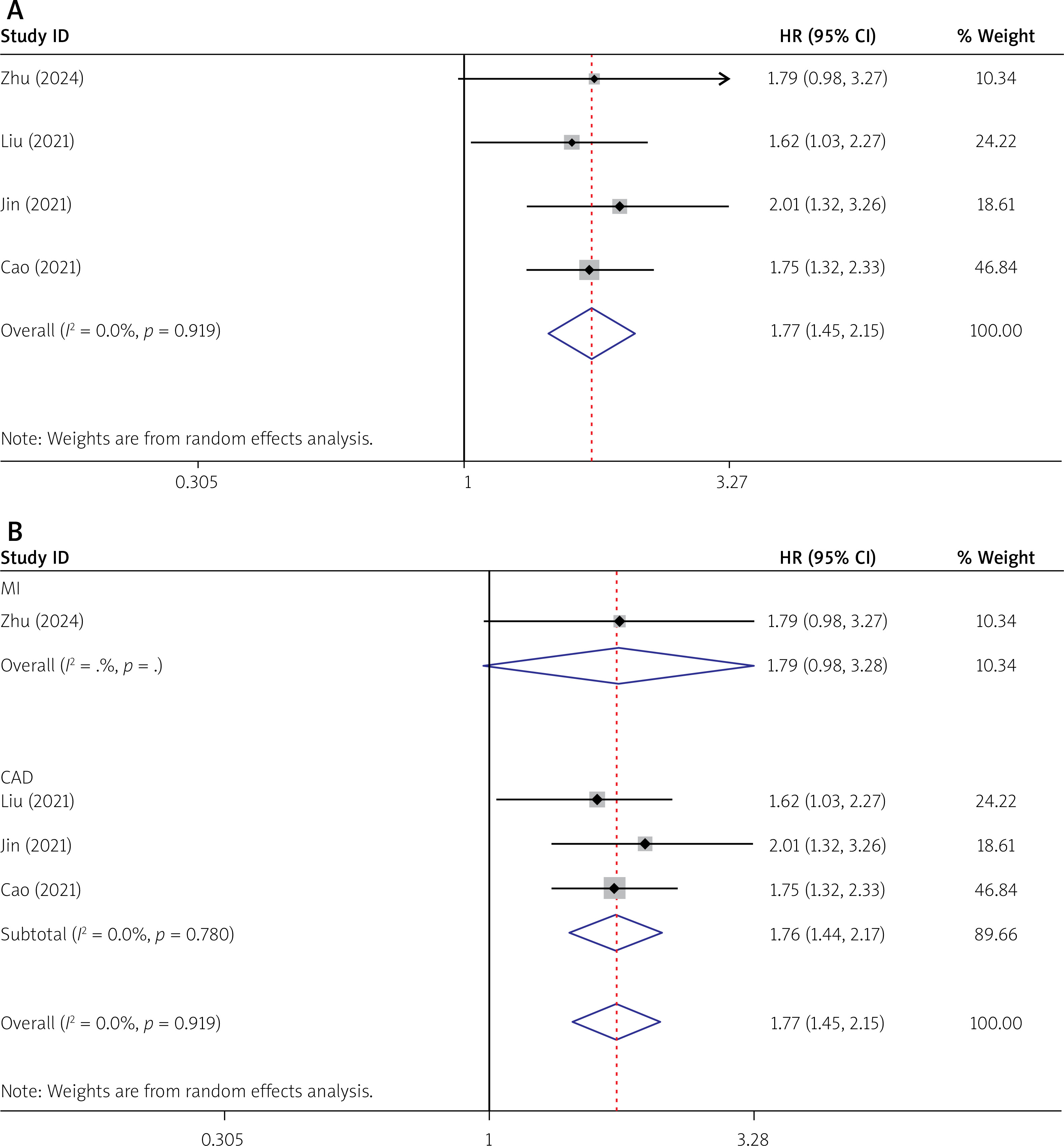
Based on the diagnostic criteria for diseases, the studies included in this review were sorted into two subgroups. The MI subgroup included 1 study, showing no statistically significant association of FIB-4 level with the risk of MACEs (HR = 1.79, 95% CI: 0.98–3.28, p for effect = 0.059). The CCS subgroup included 3 studies, showing a positive association of FIB-4 level with the risk of MACEs (HR = 1.76, 95% CI: 1.44–2.17, p for effect < 0.001). Cross-subgroup heterogeneity testing showed no significant inter-subgroup heterogeneity (I² = 0%, p for interaction = 0.523). The subgroup analysis indicated that disease type was not a source of heterogeneity, as depicted in Figure 6 B.
Sensitivity analysis and publication bias
Individual studies were excluded one by one to evaluate the stability of results. Then the effect sizes of the remaining studies were pooled again using the random-effects model. The results are presented in Figures 7–11. For Figures 7, 9, 10, and 11, Panel A shows the sensitivity analysis, and Panel B shows the funnel plot. In Figure 8, Panels A and C depict the sensitivity analysis, while Panels B and D display the funnel plots.
Figure 7
Sensitivity analysis of all-cause mortality with FIB-4 level as a continuous variable (A) and funnel plot (B)
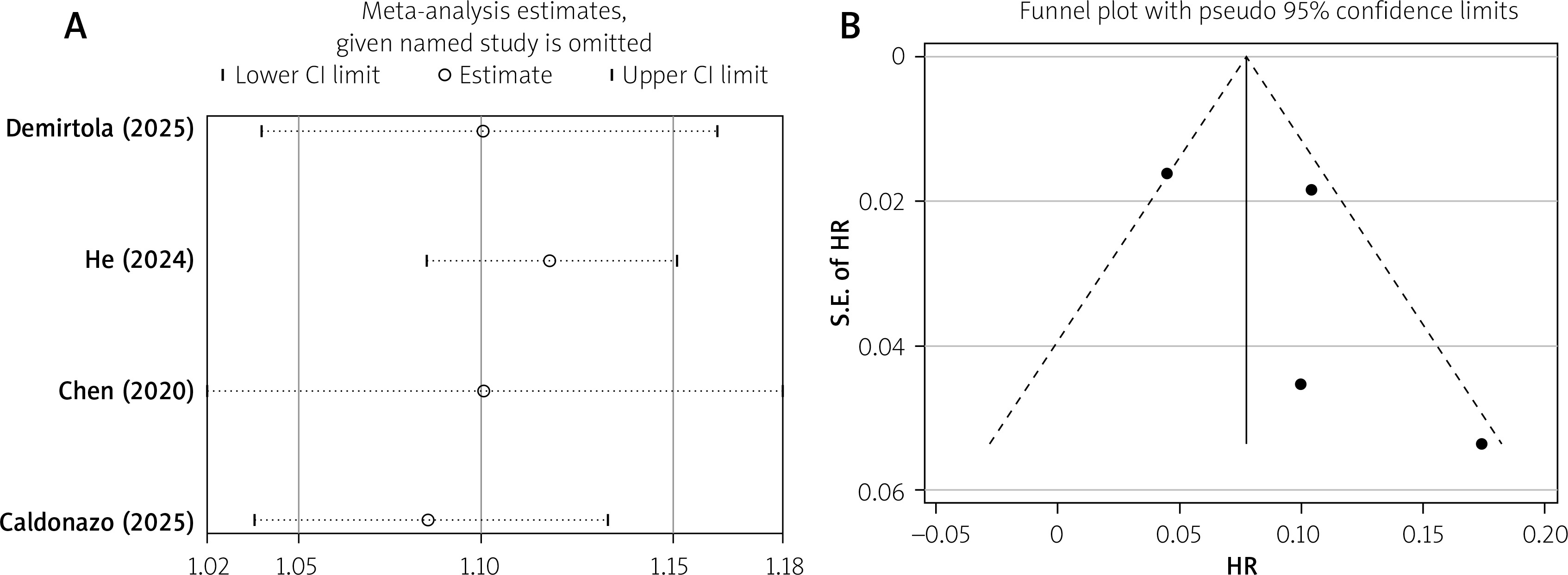
Figure 8
Sensitivity analysis of all-cause mortality with FIB-4 level as a categorical variable (A) and funnel plot (B)
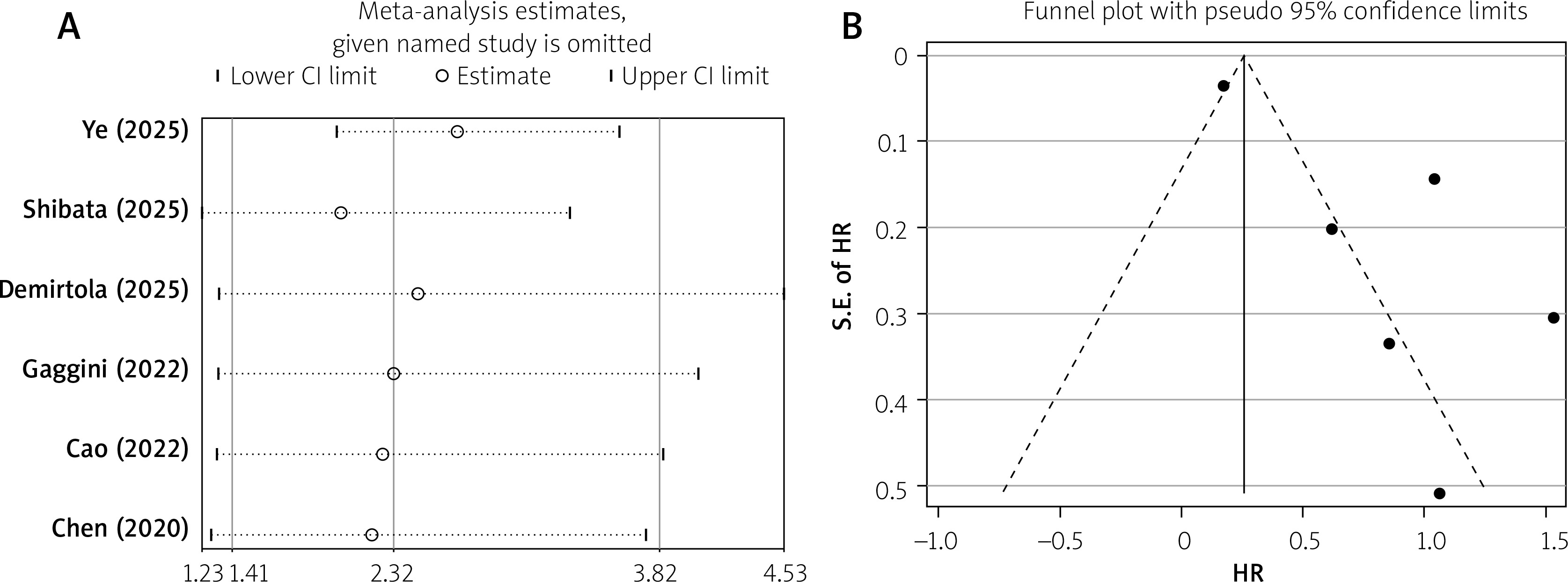
Figure 9
Sensitivity analysis of cardiovascular death with FIB-4 level as a continuous variable (A) and funnel plot (B)
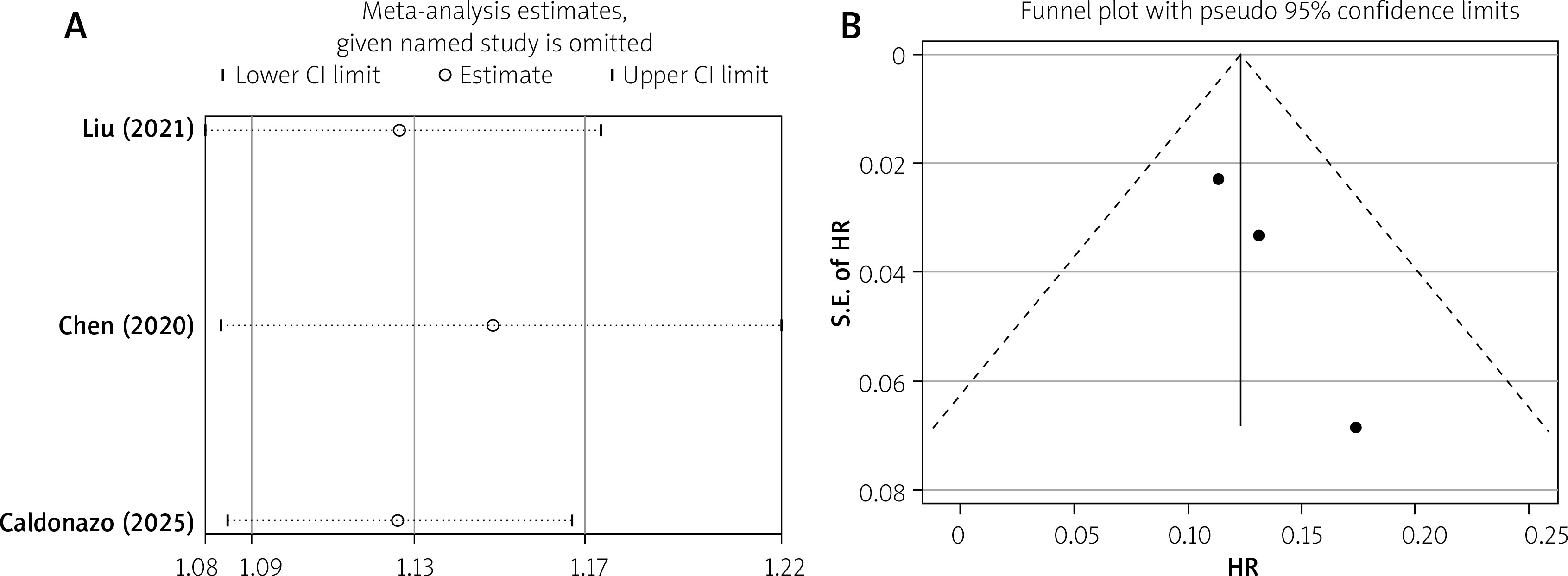
Figure 10
Sensitivity analysis of cardiovascular death with FIB-4 level as a categorical variable (A) and funnel plot (B)
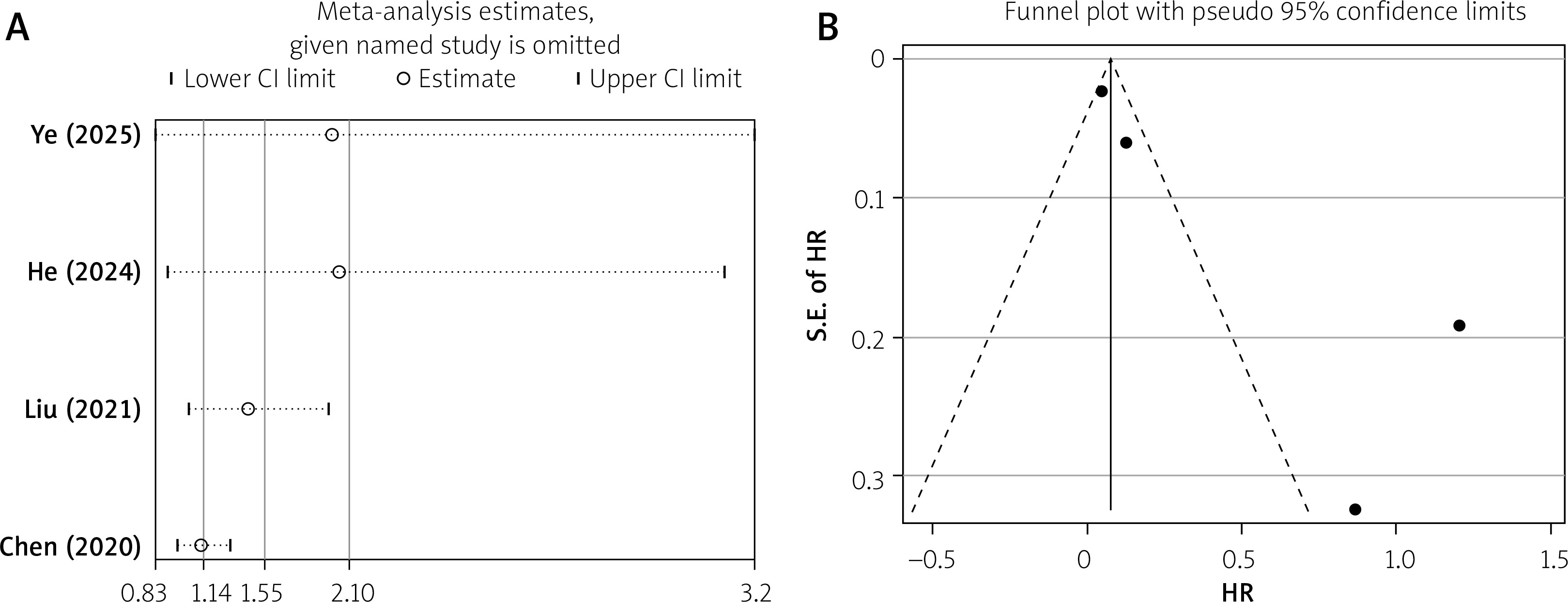
Figure 11
Sensitivity analysis of MACEs with FIB-4 level as a categorical variable (A) and funnel plot (B)
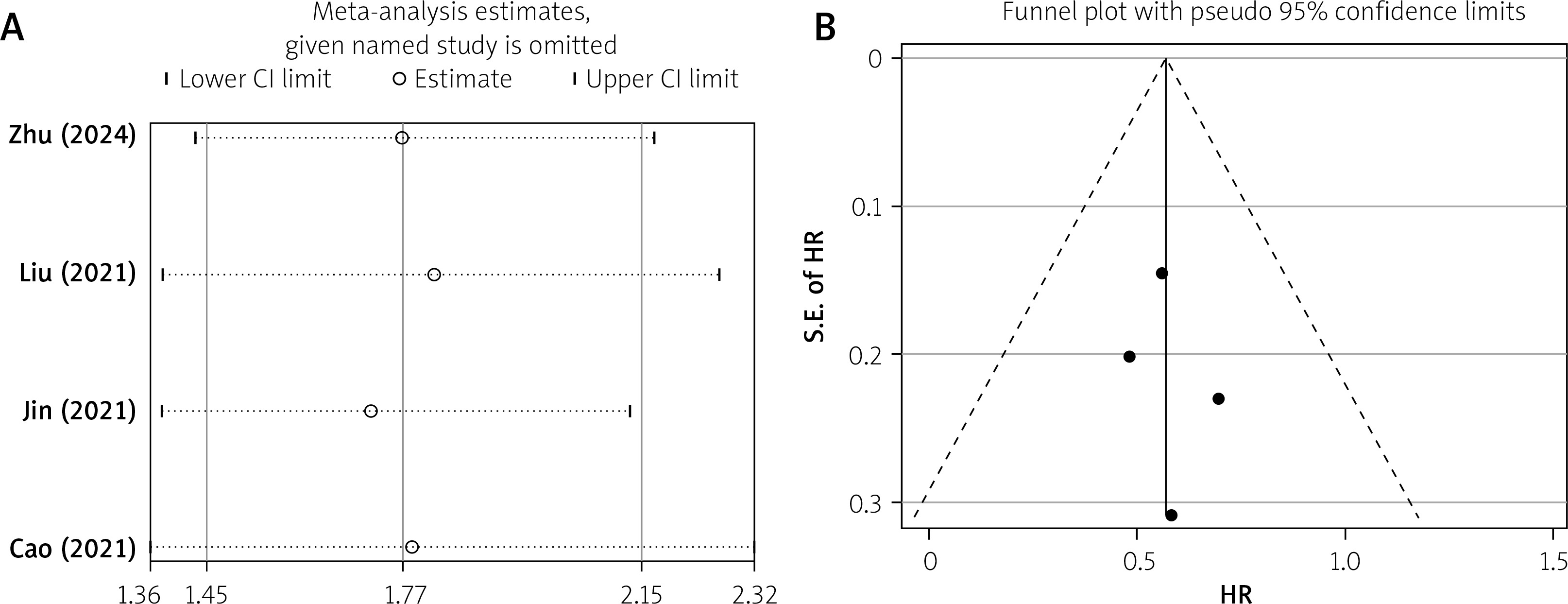
Egger’s test indicated that when the FIB-4 index was used as a continuous variable, there was no risk of publication bias for ACM (p = 0.353) or cardiovascular mortality (p = 0.062). When the FIB-4 index was used as a categorical variable, the risk of publication bias was present only for ACM (p = 0.031), while there was no risk of publication bias for cardiovascular mortality (p = 0.111) or MACEs (p = 0.710). Regarding the publication bias existing in ACM when the FIB-4 index was used as a categorical variable, the trim-and-fill method was applied. After trim and fill, the results remained statistically significant (p for effect = 0.002).
Discussion
The present study is a systematic meta-analysis focusing on the prognostic utility of FIB-4, an LF-related index, for CAD. It should be noted that, compared with the prior study [16], the current study specifically focuses on FIB-4’s prognostic utility for CAD and explores heterogeneity sources when FIB-4 is a continuous variable, unlike the prior study focusing on generalized cardiovascular disease. The meta-analysis included 12 articles involving 31,817 participants, revealing a positive association of the FIB-4 index with adverse outcomes of CAD. Notably, categorical variable analyses exhibited very high heterogeneity (I² > 90%) across studies. The main drivers of high heterogeneity included inconsistent FIB-4 cut-off values for stratification and variations in patient baseline characteristics, comorbidities, treatment strategies, and follow-up duration across studies. Despite the use of the random-effects model and the robustness verification of the results via sensitivity analysis, this high heterogeneity remains an important limitation. Pooled results are directionally consistent but should be interpreted cautiously. Subgroup analyses indicated that when FIB-4 served as a continuous variable, disease variability was a source of heterogeneity. Gaggini et al. [11] reported that elevated FIB-4 levels were associated with a marked increase in the mortality risk of CAD patients. Caldonazo et al. [2] observed that baseline FIB-4 was associated with the mortality risk of CAD patients, proposing the FIB-4 score as an important predictive index of mortality in CAD patients. These studies support our conclusion and enhance the credibility of our findings. A recent study compared the prognostic value of FIB-4 with the Synergy Between PCI with Taxus and Cardiac Surgery (SYNTAX) score and the Global Registry of Acute Coronary Events (GRACE) risk score in patients with acute coronary syndrome, which further validates the predictive capacity of FIB-4 for cardiovascular adverse events [17]. In addition, a recent study [18] supported the prognostic value of FIB-4 and NFS for cardiovascular events in both non-alcoholic fatty liver disease (NAFLD) and non-NAFLD populations, further validating our findings.
The association of FIB-4 with CAD prognosis involves complex, multidimensional mechanisms. An in-depth analysis from a pathophysiological perspective reveals a close association of the degree of LF, reflected by the FIB-4 level, with the outcomes of CAD, potentially mediated by inflammatory and metabolic pathways. LF is often accompanied by chronic inflammation. Inflammatory cytokines are extensively released into the circulatory system, thereby accelerating the progression of coronary atherosclerosis. Numerous studies have revealed a pivotal role of inflammatory cytokines (e.g., tumor necrosis factor-α [TNF-α] and interleukin-6 [IL-6]) in both LF and CVD. In CAD patients, an elevation of the FIB-4 level, indicating aggravation of LF, implies an imbalance of the inflammatory microenvironment within the body. This imbalance promotes a series of pathological changes, including vascular endothelial dysfunction, lipid deposition, and platelet aggregation, ultimately increasing the likelihood of MACEs. This aligns strongly with the positive association of FIB-4 level as a categorical variable with outcomes identified in this study. From a metabolic perspective, the fibrosis of the liver, which is a vital metabolic organ, may disrupt the normal metabolism of lipids, glucose, and other substances. A study [19] found that LF patients often exhibit abnormal lipid metabolism, manifested by the elevation of triglycerides and low-density lipoprotein cholesterol (LDL-C) levels and the decrease of high-density lipoprotein cholesterol (HDL-C) levels. The disorder of lipid metabolism promotes the formation and progression of atherosclerotic plaques. Concurrently, insulin resistance is also common in LF and CAD. Elevated FIB-4 levels may reflect worsened hepatic insulin resistance, which in turn affects the whole body glucose metabolism and further increases the risk of CVD [20]. Furthermore, the individual components of the FIB-4 index, such as AST, ALT, and platelet count, are themselves associated with CVD. Elevated AST and ALT indicate hepatocyte damage, which may be associated with systemic inflammation and oxidative stress. Oxidative stress can damage vascular endothelial cells and promote atherosclerosis. Platelets play a critical part in atherosclerosis and thrombosis; changes in platelet number may affect coagulation function and thrombotic tendency. A study indicated that a variety of bioactive substances released upon platelet activation facilitate vascular smooth muscle cells to proliferate and migrate, accelerating the progression of atherosclerosis [21].
This study identified a positive association of FIB-4 level as a categorical variable with outcomes of CAD, a finding of significant clinical importance. Our findings suggest that the FIB-4 index has potential supplementary value for clinical risk assessment in CAD patients. When used in combination with routine clinical indicators, it can help clinicians identify individuals at high risk of adverse events. However, although FIB-4 may have supplementary prognostic value, standardized thresholds and prospective validation are needed before clinical application.
This study identified an association of the FIB-4 index as a categorical variable with outcomes of CAD. However, it still has limitations. Significant heterogeneity exists among the 12 studies included. The sources of heterogeneity may include inconsistent clinical application standards, substantial variation in the definition of high FIB-4 score across studies, and cut-off values spanning multiple thresholds, such as 1.45 and 2.67. Subgroup analyses are not sufficiently in-depth. Although subgroup analysis by disease subtype (CCS and MI) was performed, subgroup analyses were not conducted by key variables such as patient age, comorbidities (for example, diabetes, non-alcoholic fatty liver disease), and follow-up duration. All 12 studies included are observational studies (cohort studies or retrospective analyses), lacking evidence from randomized controlled trials (RCTs). In observational studies, confounders cannot be fully controlled, potentially introducing bias in the association of FIB-4 level with outcomes. The included studies predominantly explore Asian populations, primarily Chinese. Data from other regions, such as Australia and Africa, are lacking, thereby limiting the external validity of the conclusion. The significant variations in the underlying diseases and treatment modalities among CAD patients across different studies may also contribute to inconsistent findings regarding the association of FIB-4 level with CAD outcomes. Publication bias may also exist in this study due to limitations in search strategies and database coverage.
The present study predominantly involved Asian (Chinese) populations, and the observational design made it difficult to infer causality. To address this limitation, multicenter, prospective cohort studies with large sample sizes are warranted. It is recommended to include a sample size of ≥ 10,000 patients, covering different regions (such as Europe, America, Africa), races, and disease subtypes (such as CCS and MI). A standardized follow-up protocol should be adopted to validate the stability of the association of FIB-4 level with outcomes. In this study, the cut-off values of the FIB-4 index were confounding, and the measuring time was not standardized. To address this issue, multicenter collaborative studies should be conducted in the future to establish standardized protocols and unify the testing and determination criteria for the FIB-4 index, thereby reducing heterogeneity among studies. Given the limited predictive power of a single index in the present study, future efforts should focus on developing and validating multi-marker collaborative prediction models incorporating FIB-4 to quantify individualized prognostic risk. Basic experiments and clinical studies are also needed to enable the FIB-4 index to assist clinicians in developing stratified intervention strategies.
Conclusions
This meta-analysis encompassed 12 studies involving 31,817 cases and revealed a strong positive association of FIB-4 level with adverse outcomes of CAD. This index can assist clinicians in refining risk stratification. However, standardized thresholds and prospective validation are required before FIB-4 is applied for clinical prognostic prediction.