The ORPKI database is endorsed by the Association of Cardiovascular Interventions of the Polish Cardiac Society (AISN PTK) and is operated by the Jagiellonian University Medical College, with currently 155 interventional cardiology centers in Poland actively reporting [1, 2].
According to the current analysis of the ORPKI database, in comparison to 2023, there was a substantial (2.5%) decrease in the total number of coronary angiography (CAG) procedures in Poland in 2024 [2]. There were 153,071 CAGs, which corresponds to 4083 per 1 million inhabitants per year in 2024. The distribution of primary diagnoses as indications for CAG was: 8% ST-elevation myocardial infarction (STEMI), 11% non-ST-elevation myocardial infarction (NSTEMI), 22% unstable angina (UA), 46% stable angina (SA), and 13% other. The radial approach was used in 92% of all CAG cases. Complications of CAG in 2024 were rare and corresponded to the rates reported in the previous year (Table I).
Table I
Complications of coronary angiography in Poland in 2024
| Parameter | % | In comparison to 2023 |
|---|---|---|
| Death | 0.16 | ↔ |
| Stroke | 0.02 | ↔ |
| Major bleeding at access site | 0.02 | ↔ |
| Sudden cardiac arrest | 0.10 | ↔ |
| Allergic reaction | 0.01 | ↔ |
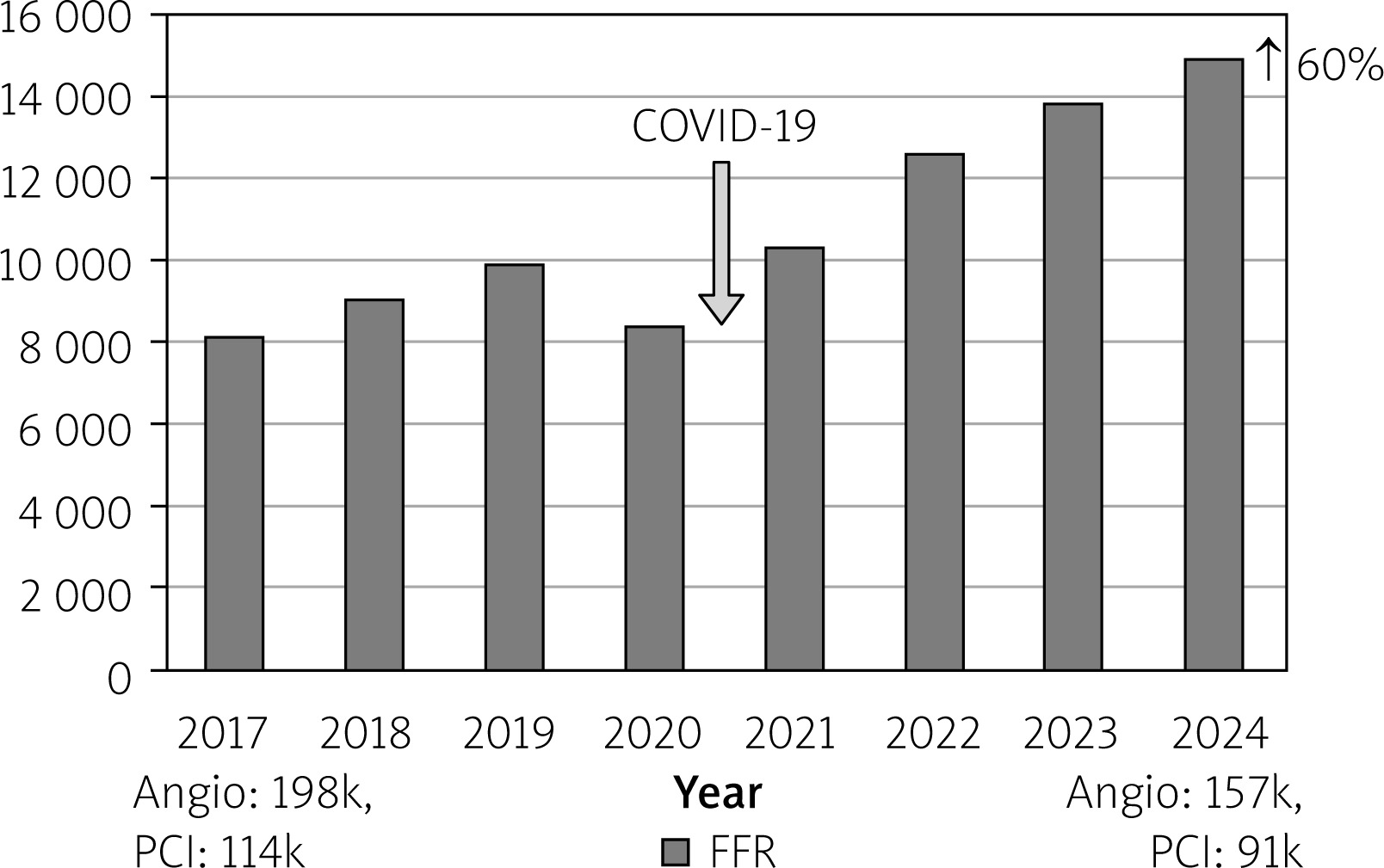
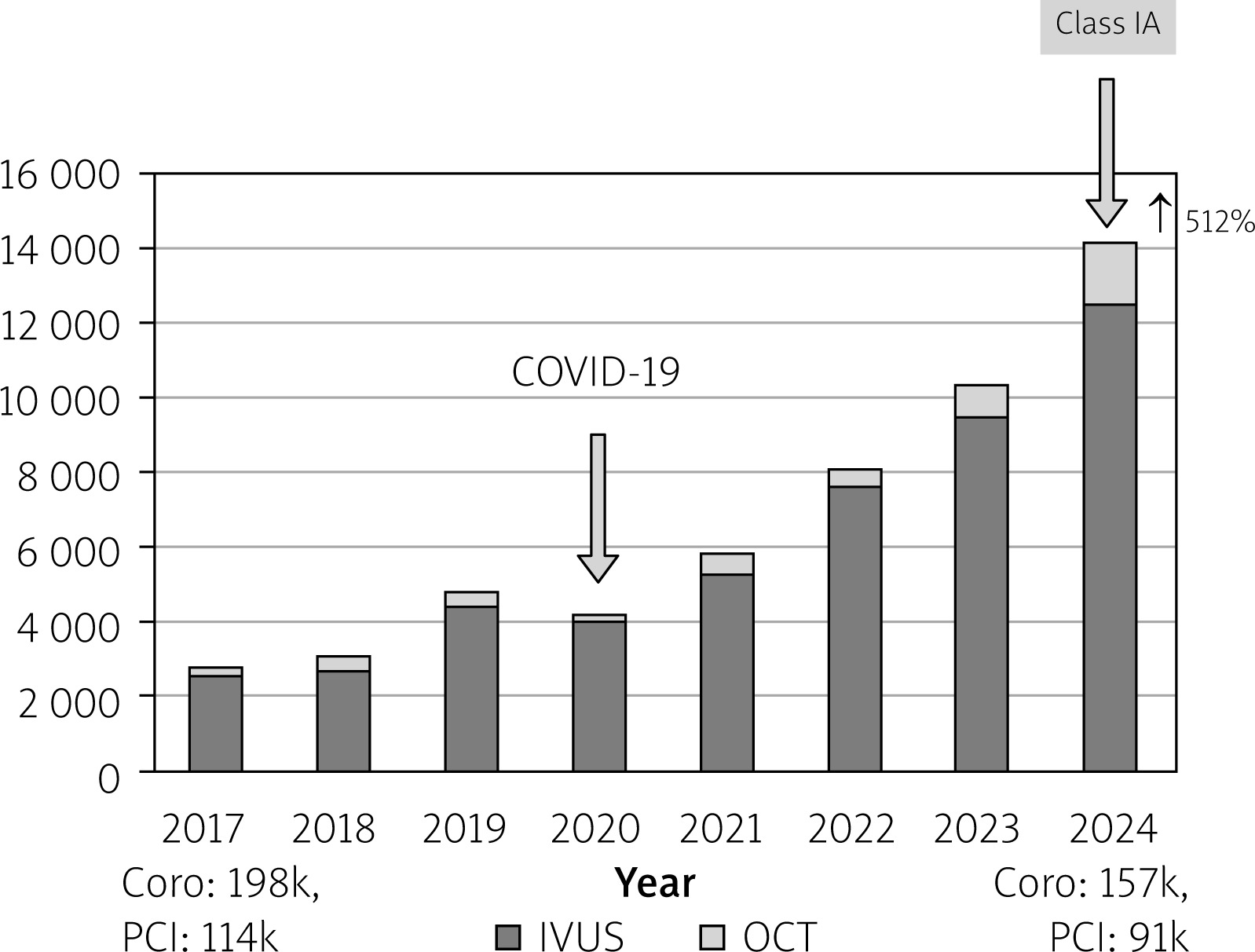
The total number of percutaneous coronary intervention (PCI) procedures was 87,614, which is 4% lower (2337 PCIs per 1 million inhabitants per year) than reported in the ORPKI database from 2023. The majority of the procedures were done in the setting of acute coronary syndromes (ACS): 33% acute myocardial infarction (16% STEMI and 17% NSTEMI), 21% unstable angina, 39% for stable angina, and the remaining 7% for other reasons. There were 14,714 PCIs in STEMI (a slight decrease as of 2023) and 14,949 in NSTEMI (a significant decrease). Drug-eluting stents (DES) are used in the majority of all PCI cases, which corresponds to > 99% of stents. Rotablation was used in 1804 procedures, which is an almost 3% increase in comparison to 2023 (2.1% of all PCIs). Aspiration thrombectomy was used in 1,353 STEMI (approx. 9.8% of all PCIs in STEMI) cases (a steep decline in comparison to 2023). We observed a similar use of ticagrelor as an adjunct pharmacotherapy both for STEMI (24%) and NSTEMI (21%), with the use of prasugrel less than 12% in either indication. In terms of complex procedures, the number of chronic total occlusion (CTO) procedures was 4244, approaching 5% of all PCIs, with final TIMI 3 flow achieved in 71% of cases. PCI complications are still rare; they are presented in Table II. Additional intracoronary assessment techniques were increasingly used in 2024, reflecting growing adoption of advanced imaging and physiology tools in both diagnostic and interventional procedures. The frequency and year-to-year changes in the use of FFR, IVUS, and OCT are presented in Table III.
Table II
Complications of percutaneous coronary interventions in Poland in 2024
Table III
Additional intracoronary assessment in 2024 during angiography and percutaneous coronary interventions (PCI)
| Variable | N | % of all angio and PCI | Change from % 2023 |
|---|---|---|---|
| FFR | 14915 | 8.4 | ↑ 8 |
| IVUS | 12540 | 7.1 | ↑ 32 |
| OCT | 1612 | 0.9 | ↑ 91 |
Structural interventions in recent years are becoming an important part of interventional cardiology in Poland. These procedures are mainly performed by certified interventional cardiologists in cooperation with cardiac surgeons. On-site cardiac surgery is legally required for transcatheter valvular interventions – including transcatheter aortic valve implantation (TAVI), transcatheter edge-to-edge repair (TEER), transcatheter mitral valve replacement (TMVR), transcatheter tricuspid valve replacement (TTVR) and transcatheter pulmonary valve replacement (TPVR) – as well as for left atrial appendage occlusion (LAAO) procedures.
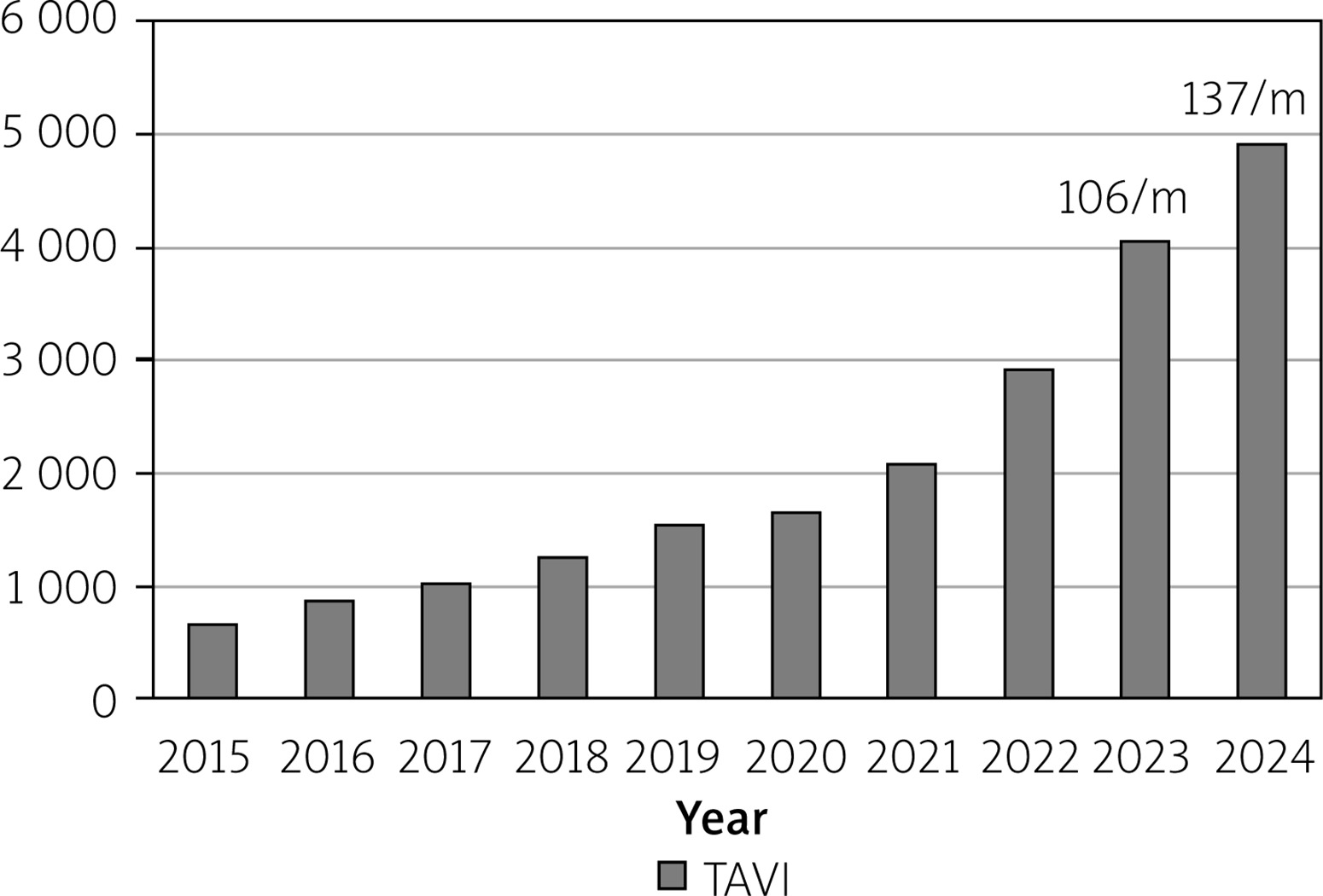
TAVI is the most common valvular procedure and was performed in 32 centers, with the total number of procedures equaling 4904, which represented a 21% increase compared to the previous year. This also means that the average number of TAVI per center in Poland in 2024 was 153, and in 9 centers the total number was greater than 200 per center. The majority of implanted bioprostheses were self-expanding (3485, 71%), with the remaining 29% balloon-expanding (1419). Although the number of TAVI procedures has steadily increased in recent years, it remains insufficient (129 TAVI per million inhabitants), compared with an estimated need of at least 11,000 procedures per year in the population aged 75 years and older. Transcatheter implantation of dedicated pulmonary prostheses and aortic bioprostheses was performed in 76 patients, representing a 69% increase as compared to 2023.
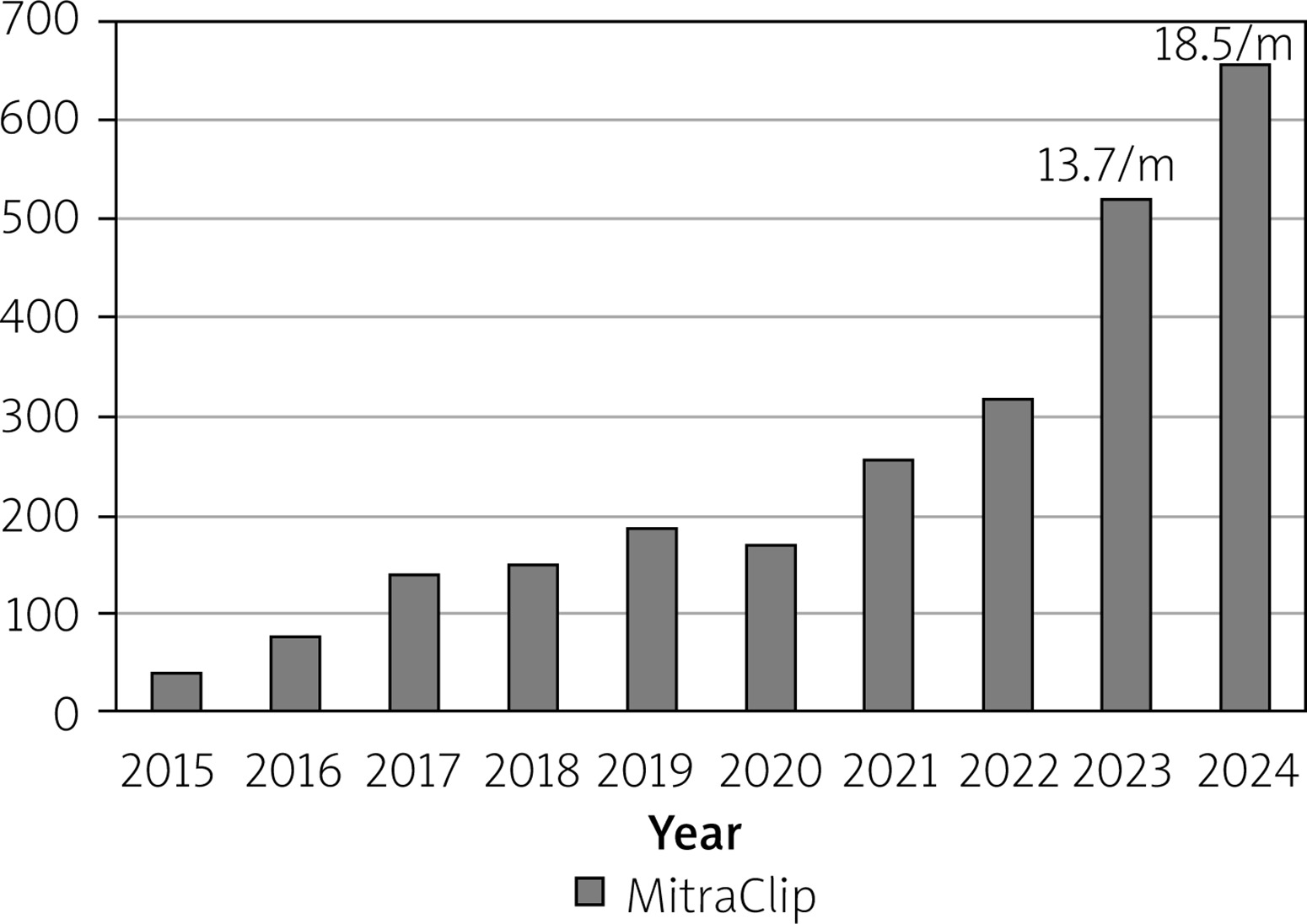
Transcatheter edge-to-edge interventions on the mitral (M-TEER) and tricuspid (T-TEER) valves were performed in 23 centers. The total number of M-TEER was 657, which constitutes a significant 26% increase compared to 2023 (520 in 16 centers). More importantly, there was a remarkable several-fold increase in T-TEER, with 225 procedures reported (35 interventions in 2023), a clear improvement thanks to introduction of the reimbursement system in effect from the beginning of 2024.
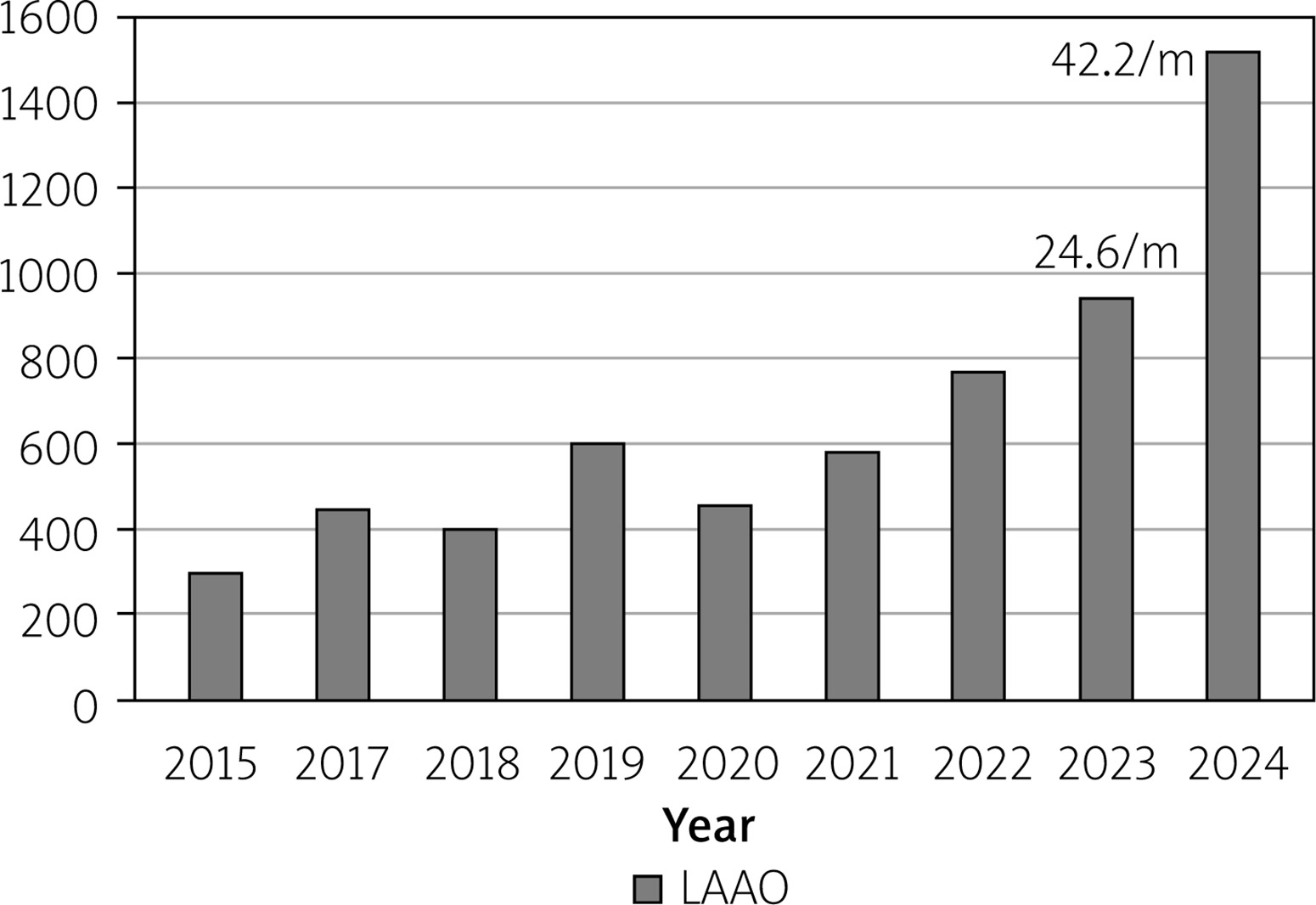
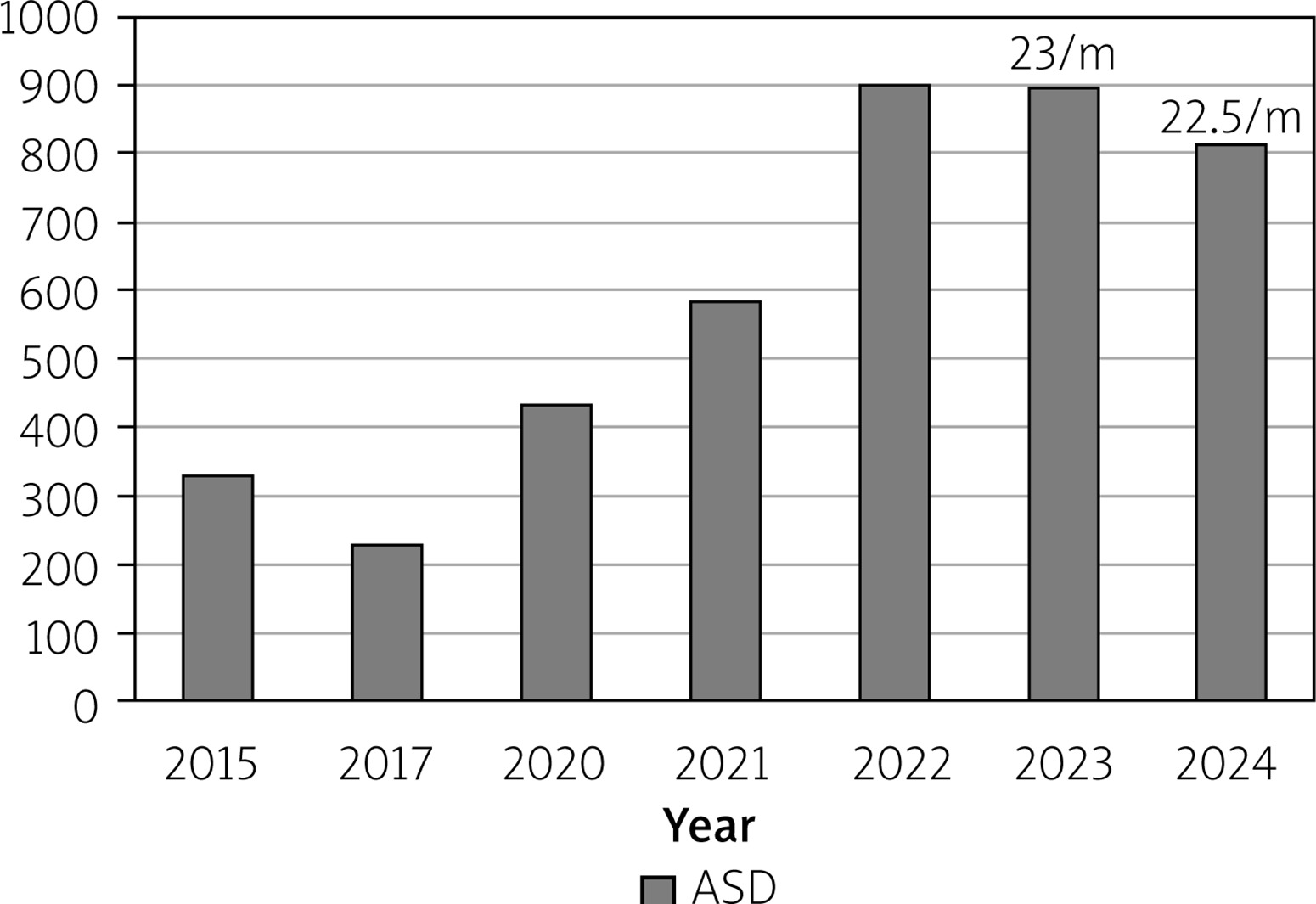
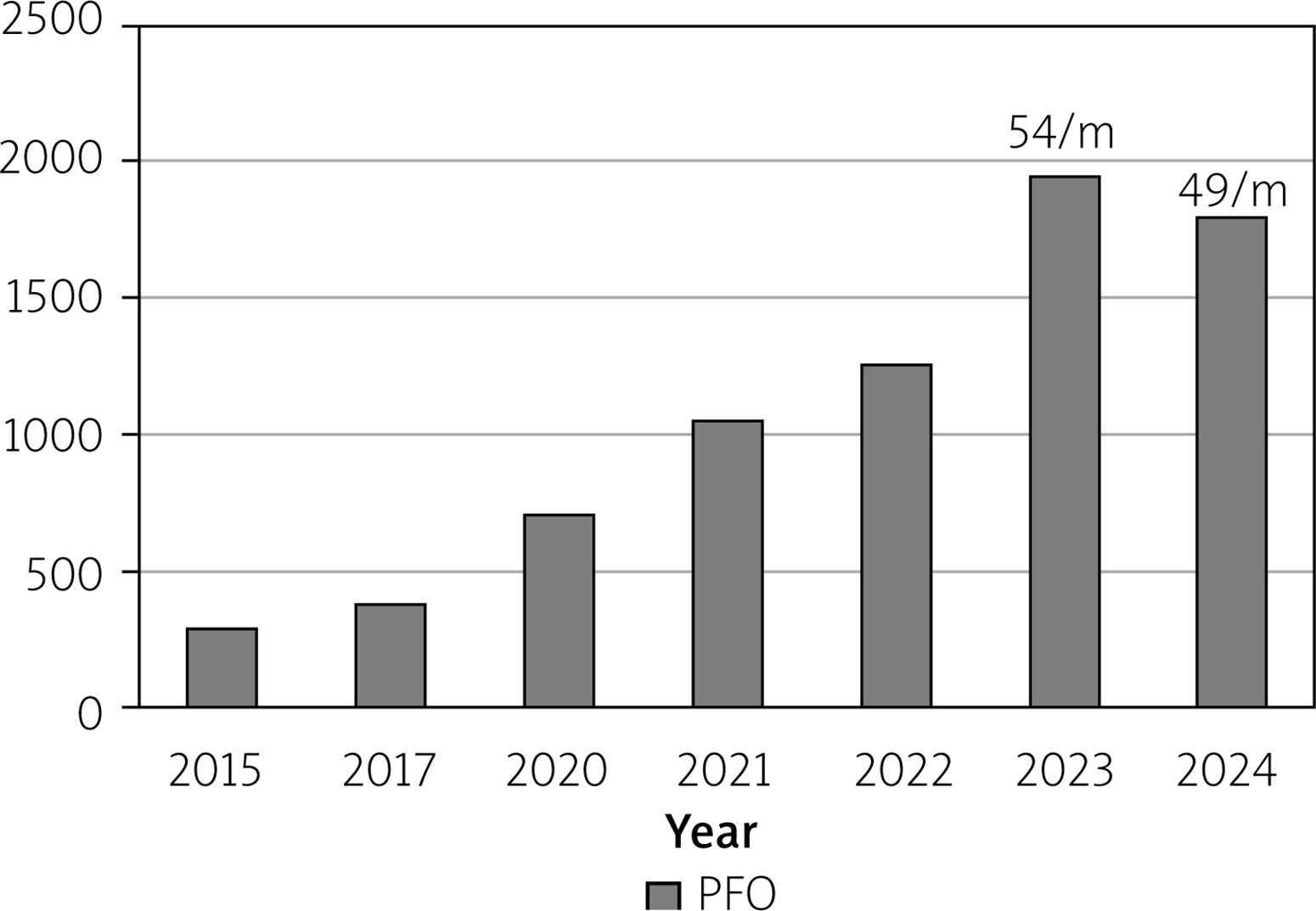
Interventional prevention of stroke by means of LAAO was also dynamically developing in Poland, with a total of 1519 procedures performed in 31 centers in 2024, representing a solid 63% increase. As regards secondary prevention of stroke in patients with persistent foramen ovale (PFO), 1792 procedures were performed. Also, 812 atrial septal defects (ASD) were closed via the transcatheter route (Figures 1–5).
The ORPKI database was the source material for 8 manuscripts published in PubMed in 2024 [2–4]. In summary, we have observed a decrease in both the absolute number of CAGs and PCIs but a staggering increase in use of imaging techniques such as IVUS and OCT (Figures 6, 7). The numbers of most of the structural procedures showed a significant increase in 2024.