
Introduction
Hepatitis B virus (HBV) and human immunodeficiency virus (HIV) are both bloodborne viruses transmitted primarily through sexual contact and parenteral exposure, leading to frequent coinfections in high-risk populations. Consequently, coinfection is relatively common, ranging between 5% and 20% worldwide, particularly in regions with high HBV endemicity such as sub-Saharan Africa. Epidemiological data indicate that approximately 7.8% of people living with HIV (PLWH) within sub-Saharan Africa have chronic HBV infection [1, 2]. This intersection of infections results in complex clinical interactions: HIV coinfection is associated with higher HBV DNA levels, faster progression to liver fibrosis, cirrhosis, and an increased risk of hepatocellular carcinoma (HCC) [3] (Table 1). Furthermore, higher levels of quantitative hepatitis B surface antigen (qHBsAg) and their more steady decline during antiretroviral therapy (ART) compared to HBV-monoinfection were observed [4, 5]. In parallel, HBV infection may be associated with persistent hepatic immune activation, even in individuals with virologically suppressed HIV infection [6].
Table 1
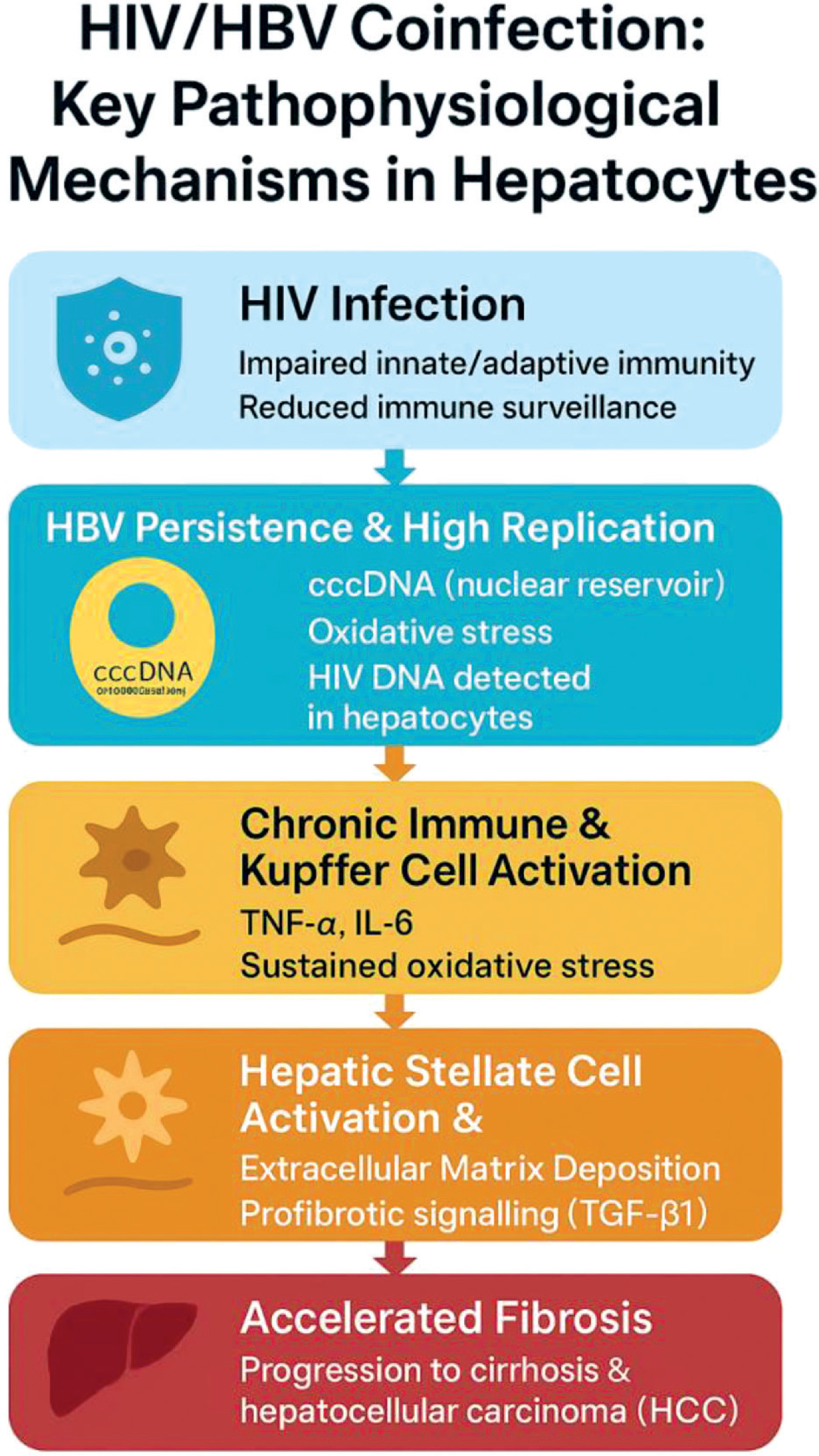
HIV/HBV coinfection exacerbates liver injury through multiple interacting pathways. HIV impairs innate and adaptive immune responses, promoting HBV replication and persistence. In hepatocytes, HBV forms covalently closed circular DNA (cccDNA), establishing a stable nuclear reservoir, whereas HIV DNA has also been detected in hepatocytes, suggesting possible interaction or a latent reservoir, although direct cellular infection and its clinical relevance remain under investigation. This dual infection triggers chronic immune activation, recruitment of Kupffer cells, and systemic immune dysregulation. The result is a pro-inflammatory, pro-fibrotic hepatic microenvironment characterized by enhanced activation of hepatic stellate cells, increased oxidative stress, and accelerated deposition of extracellular matrix, ultimately leading to fibrosis and, over time, cirrhosis and HCC [6] (Fig. 1).
Despite the widespread availability of combination ART, optimal HBV management in PLWH remains challenging. A particular concern is individuals without detectable hepatitis B surface antigen (HBsAg) but presence of other markers of HBV infection. Two distinct profiles are possible: isolated anti-HBc seropositivity and detectable HBV DNA (also called occult HBV infection – OBI). Whereas HBV-DNA positive patients have a higher risk of sequelae, isolated anti-HBc seropositivity carries a low but clinically relevant risk of HBV reactivation, especially during immunosuppression or after discontinuation of HBV-active agents such as tenofovir disoproxil fumarate (TDF) or tenofovir alafenamide (TAF) [7, 8]. The introduction and widespread use of long-acting injectable ART regimens (e.g., cabotegravir/rilpivirine), which lack HBV activity, add a new layer of complexity, particularly for individuals with resolved or occult HBV [8].
Importantly, recent advances in HBV vaccination have introduced new prevention strategies. Next-generation vaccines CpG adjuvant or tri-antigenic (pre-S/S) demonstrate enhanced immunogenicity and higher seroconversion rates than conventional recombinant vaccines. These are particularly promising for PLWH, including those previously classified as vaccine non-responders [9]. However, evidence for their efficacy in persons with profound immunosuppression, such as CD4 counts < 100 cells/μl, remains limited.
This review synthesizes current evidence on HBV management in PLWH, focusing on diagnostics, vaccination, ART selection, and clinical monitoring [9-15]. It aims to support evidence-based practice in a rapidly evolving therapeutic landscape.
Diagnostic principles
Systematic screening for HBV is a cornerstone of both initial and ongoing care for PLWH because of the specific diagnostic and therapeutic implications of HBV/HIV coinfection. At baseline, all PLWH should be tested for HBsAg, anti-HBs antibodies, and total anti-HBc, as recommended by international guidelines [16-18]. This serologic triad distinguishes between active infection, past exposure with or without immunity, successful vaccination, and serological profiles suggestive of occult HBV infection. All HBsAg-positive individuals should be tested for anti-HDV antibodies.
The prevalence of OBI, defined as detectable HBV DNA in the absence of HBsAg, is significantly higher among PLWH compared to HIV-negative individuals. Reported prevalence ranges from a few percent up to 20-45% [19-21], although estimations were usually based on small sample studies. This increased frequency is attributed to immunosuppression, altered immune control of HBV replication, and impaired seroconversion. Patients with isolated anti-HBc positivity are particularly at risk and should undergo HBV DNA testing, especially when considering antiretroviral regimens lacking HBV activity. HBV reactivation is most often reported during profound immunosuppression and may also present as hepatitis flares during immune reconstitution inflammatory syndrome (IRIS).
Given the risk of HBV reactivation, particularly when switching from an HBV-active regimen to one that lacks HBV activity (e.g., long-acting cabotegravir/rilpivirine or NRTI-sparing regimens), HBV DNA testing is recommended in all individuals with anti-HBc positivity before ART modification. In coinfected patients with detectable HBV DNA, management should follow chronic HBV treatment principles, regardless of HBsAg status [16].
HIV coinfection modifies the natural serologic course of HBV. Spontaneous clearance of HBsAg is less common, and the likelihood of HBeAg seroconversion is reduced compared with HIV-negative patients. Moreover, PLWH exhibit a delayed or absent anti-HBs response following natural infection or vaccination, particularly in individuals with low CD4+ counts or uncontrolled viremia, complicating interpretation of serologic markers and immune status [15, 22]. The dynamics of quantitative HBsAg can provide additional information during longitudinal follow-up, especially in patients undergoing anti-HBV therapy.
Non-invasive liver fibrosis assessment is a key component of the diagnostic approach to HBV/HIV coinfection. Transient elastography (vibration-controlled transient elastography – VCTE) and fibrosis scores such as the fibrosis-4 index (FIB-4) or aspartate aminotransferase-to-platelet ratio index (APRI) can guide management decisions [23]. VCTE offers superior prognostic accuracy compared with biochemical scores and should be prioritized when available [24]. Liver disease progression is typically accelerated in coinfection, often occurring despite effective viral suppression, underscoring the importance of baseline fibrosis evaluation. Liver biopsy may be considered in selected cases in which non-invasive methods yield inconclusive results or when there is clinical suspicion of additional liver pathology.
Novel biomarkers including serum HBV RNA and hepatitis B core-related antigen (HBcrAg) show promise for refining HBV staging and monitoring. However, investigation of their clinical utility in PLWH is ongoing. Interestingly, in a recent study analyzing HBsAg loss in PLWH, HBV-RNA exhibited high sensitivity but low specificity for HBsAg loss, while HBcrAg remained detectable in approximately 20% of persons with HBsAg loss and 50% of persons without HBsAg loss [25]. Until these assays are validated for routine use, they should not replace standard HBV markers in coinfected individuals.
Antiviral therapy and ART selection
First, it is worth noting that in both HBV monoinfection but especially in HBV/HIV coinfection, HBV transcription and translation persist despite viral suppression on ART, which may contribute to ongoing liver pathology [26]. Therefore, it is of upmost importance to induce the highest possible level of HBV-replication suppression.
The preferred antiretroviral backbone for HBV/HIV coinfected patients is based on tenofovir disoproxil fumarate (TDF) or tenofovir alafenamide (TAF), combined with either emtricitabine (FTC) or lamivudine (3TC) (Table 2). These combinations deliver potent activity against both viruses and offer a high genetic barrier to resistance [18]. TAF provides a more favorable renal and bone safety profile than TDF and is therefore preferred for patients with pre-existing renal dysfunction or low bone mineral density [16].
Table 2
Summary of nucleos(t)ide analogues with activity against HBV used in HBV/HIV coinfection
For patients who are intolerant to tenofovir, entecavir may be considered; however, its use should be limited to individuals with undetectable HIV RNA who are receiving a fully suppressive ART regimen. This caution is necessary, because entecavir exhibits weak anti-HIV activity in vitro and in vivo and may select for M184V mutations if used in the presence of uncontrolled HIV replication [27]. It should never be used as monotherapy in ART-naive or viremic patients. Lamivudine monotherapy for HBV infection should be avoided because of the rapid selection of resistance, most commonly the rtM204V/I mutations, which can lead to virologic breakthrough and hepatitis flares [18, 28].
Taking into account current knowledge, HBV-active ART must be continued indefinitely in all PLWH with positive HBsAg regardless of the stage of liver fibrosis or ALT normalization. The therapy should be continued at least until confirmed anti-HBsAg seroconversion, with repeated evaluation afterwards. Discontinuation of anti-HBV therapy increases the risk of HBV reactivation and hepatic injury, especially during immunosuppression or after ART simplification. The persistence of covalently closed circular DNA (cccDNA) within hepatocytes underlies the high relapse risk after therapy withdrawal [16-18].
Selection of an ART regimen should also incorporate an assessment of renal function, HBV treatment history, and resistance patterns, particularly in those with prior exposure to 3TC or FTC monotherapy. Multidisciplinary collaboration between infectious disease and hepatology specialists is recommended to optimize long-term outcomes.
Long-acting ART and risk of HBV reactivation
Long-acting injectable antiretroviral therapy (LAI-ART), particularly the cabotegravir and rilpivirine (CAB/RPV) regimen, represents a significant advance in the management of HIV infection, offering improved adherence and quality of life [29]. However, CAB/RPV lacks antiviral activity against HBV and is therefore not recommended as the sole antiretroviral regimen for individuals with active HBV infection, defined by persistent HBsAg positivity and/or detectable HBV DNA [17, 18].
For patients with serologic evidence of past HBV infection (anti-HBc-positive, HBsAg-negative), the safety of switching from an HBV-active oral regimen to CAB/RPV remains an area of active investigation. Case series and cohort studies have reported rare, transient episodes of HBV DNA detection after LAI-ART initiation, sometimes accompanied by biomarker fluctuations such as HBcrAg and quantitative anti-HBc. While most events were self-limiting and not associated with persistent hepatic inflammation, severe hepatitis flares have been documented, including one case requiring liver transplantation. These findings highlight the importance of thorough pre-switch assessment and close post-switch virological monitoring [8, 14, 30].
Monitoring
Routine monitoring is essential to optimize clinical outcomes and prevent liver-related complications in HIV/HBV coinfected individuals. For patients on HBV-active ART, HBV DNA should be assessed every 3-6 months until persistent virologic suppression is documented (typically defined as undetectable HBV DNA on two consecutive measurements), and then at least annually thereafter [17, 18]. In addition to HBV DNA, periodic assessment of HBsAg, HBeAg, and anti-HBe is recommended in HBeAg-positive individuals to evaluate therapeutic response, possible serologic conversion, and functional cure. Quantitative HBsAg (qHbsAg) should also be used (if available) to predict the likelihood of HBsAg loss. Declining levels of HBsAg over time have been associated with an increased probability of HBsAg seroclearance [16, 31].
Biochemical monitoring of alanine aminotransferase (ALT) and aspartate aminotransferase (AST) is essential and should be performed every 3-6 months, particularly during the first year after treatment initiation or ART modification, as well as during episodes of suspected hepatitis flare [16]. When transaminases levels are elevated, the differential diagnosis should include HBV reactivation, immune reconstitution inflammatory syndrome (IRIS), ART toxicity and coinfection with other hepatotropic viruses (at least HAV, HCV, HDV, HEV) and also metabolic syndrome with liver steatosis.
Noninvasive assessment of liver fibrosis using transient elastography (e.g., FibroScan) or validated serum-based markers (e.g., APRI, FIB-4) should be performed at baseline and repeated every 1-2 years to track disease progression [16]. In individuals with established advanced fibrosis or cirrhosis, HCC surveillance with hepatic ultrasound and serum α-fetoprotein (AFP) is indicated every 6 months in accordance with international guidelines [16, 32]. The role of novel markers of HCC, including PIVKA-II, needs to be evaluated in PLWH. Cross-sectional imaging (e.g., MRI) may be warranted if ultrasonographic findings are inconclusive or inapplicable (e.g., in cases of extreme obesity) [33].
Patients who are not receiving HBV-active ART, including those with isolated anti-HBc serology, should undergo careful monitoring for HBV DNA reactivation, especially in the context of ART switch to regimens without HBV activity. Recommended monitoring consist of ALT, HBsAg, and HBV DNA levels every 3-6 months, with the possibility of extending intervals based on case-to-case scenarios [16, 17]. Early identification of reactivation permits timely initiation of antiviral therapy and prevents liver injury.
Innovative virological markers such as HBV pregenomic RNA (pgRNA) and hepatitis B core-related antigen (HBcrAg) are promising tools for assessing residual cccDNA activity and refining risk stratification. HBV pgRNA may remain detectable even after HBsAg loss, and declining levels of pgRNA or HBcrAg have been associated with higher probability of subsequent seroclearance [34, 35]. Although assay standardization and validation in large trials are still lacking, these biomarkers may prove useful in identifying candidates for investigational therapies aimed at functional cure.
Monitoring should also encompass ART adherence, drug–drug interactions, and safety parameters. Renal and bone assessments are particularly important for patients receiving disoproxil tenofovir-based therapy; recommended follow-up includes serum creatinine, eGFR, serum phosphate, and urinalysis at 3-6-month intervals, with adjustment for comorbid conditions [17, 18].
Notably, in patients with chronic hepatitis B and preserved baseline renal function, long-term TDF therapy is associated with a low incidence of clinically relevant renal impairment, usually in the range below approximately 2-3% during the first year and around 1-2% per year thereafter [36]. In contrast, patients with HIV/HBV coinfection receiving TDF-containing antiretroviral therapy show a higher cumulative risk of renal function decline, with a gradual shift toward moderate reductions in estimated glomerular filtration rate over time (between 2 and 7%) and a small but clinically meaningful proportion requiring treatment discontinuation (< 3%) [37]. This excess risk likely reflects the combined impact of prolonged TDF exposure, HIV-related comorbidities, and concomitant antiretroviral agents rather than TDF alone, indicating that renal outcomes observed in HBV monoinfection cannot be directly extrapolated to the HIV/HBV-coinfected population. In this setting, alternative strategies include switching from TDF to TAF, which preserves antiviral efficacy against both HIV and HBV while offering a more favorable renal safety profile [38], or – when tenofovir cannot be used – combining entecavir with a fully suppressive antiretroviral regimen to avoid functional HBV monotherapy.
Finally, specific clinical scenarios require tailored strategies: (i) in pregnancy, maternal HBV DNA monitoring and neonatal immunoprophylaxis are mandatory [39]; (ii) in HBsAg-positive patients, HDV testing should be performed at least once, with intensified monitoring in those coinfected [17]; (iii) in individuals undergoing immunosuppressive therapy or chemotherapy, HBV reactivation monitoring (ALT, HBsAg, HBV DNA every 1-3 months) is critical if prophylactic antiviral therapy is not provided [16].
Vaccination
Historically, hepatitis B immunization in people living with HIV has been compromised by poor immunogenicity of the first-generation, single-antigen, aluminum-adjuvanted vaccines. Standard three-dose schedules of EngerixB or RecombivaxHB achieve seroprotection (defined as anti-HBs ≥ 10 mIU/ml) in as few as 34% of recipients with advanced immunosuppression. Intensified regimens such as double-dose or four-dose schedules can raise the response rate to 82% in selected subgroups with higher CD4 cell counts [40, 41]. These limitations have driven the development of two next-generation vaccines with markedly improved performance.
HepB-CpG (Heplisav-B) couples the conventional hepatitis B surface antigen with the Toll-like receptor 9 (TLR9) agonist adjuvant CpG1018 and is given as a two-dose regimen (0 and 1 month). In pivotal phase III trials it produced seroprotection rates > 90% after the second dose – significantly higher than Engerix B in every analyzed subgroup [42, 43]. A recent narrative review summarizing data in PLWH including vaccine-naïve and prior nonresponders reported seroprotection of 80-100% and no safety signal beyond mild local reactions [9].
PreHevbrio is a recombinant 3-antigen (S, preS1, preS2) vaccine administered in a three-dose schedule (0, 1, 6 months). In the PROTECT randomized trial, it achieved 91% seroprotection vs. 76.5% with Engerix-B (p < 0.001), with a more pronounced benefit in adults aged ≥ 45 years [44]. The CONSTANT lot-consistency study confirmed manufacturing reliability; seroprotection reached 90% after the second dose and ≥ 99% after the third dose [42]. Reactogenicity for both HepB-CpG and PreHevbrio was limited to transient injection-site pain; systemic and serious adverse event rates were comparable to those of EngerixB in the same trials [42-45].
Postvaccination monitoring is essential. Anti-HBs titers should be measured 4-8 weeks after the completion of any primary series [16]. PLWH with anti-HBs < 10 mIU/ml should be revaccinated until anti-HBs antibody titers reach ≥ 10 mIU/ml (or ≥ 100 mIU/ml, depending on national guidelines), preferably using a newer-generation hepatitis B vaccine, particularly in individuals with low CD4 counts [18]. Durable protection appears, on current evidence, to be high for HepB-CpG: PLWH cohorts summarized by McKoy et al. retained protective anti-HBs in > 90% of responders up to 24 weeks post-vaccination [9]. Long-term data beyond six months – and any durability data for PreHevbrio in PLWH – have not yet been published and remain an important research gap.
International societies focused on both HIV and HBV regularly issue recommendations that provide guidance HBV vaccination in PLWH. The 2023 EACS algorithm recommends vaccination of all HBs-Ag-negative PLWH lacking anti-HBs, irrespective of anti-HBc status [18]. The 2025 EASL HBV guideline likewise lists HepB-CpG and PreHevbrio as preferred adult vaccines in adults, including PLWH, and adds that immunocompromised persons should be considered optimally protected only when anti-HBs titers are > 100 IU/l; it therefore recommends periodic retesting (annually or every few years) and administration of a booster whenever titers fall below that threshold [16]. Table 3 summarizes the distinct features of available HBV vaccines.
Table 3
Summary of most commonly used HBV vaccines
| Vaccine | Antigen content | Schedule | Seroprotection in PLWH | Key advantages |
|---|---|---|---|---|
| Engerix-B | S | 3 or 4 doses (0-1-6 mo or 0-1-2-6 mo) | ~ 34% (standard) → ≤ 82% (double dose/4-dose) | Widely available, low cost |
| Heplisav-B | S + CpG-1018 | 2 doses (0-1 mo) | > 90% | Fast, highly immunogenic, convenient |
| PreHevbrio* | S + pre-S1 + pre-S2 | 3 doses (0-1-6 mo) | ≥ 91% | Broad antigenic coverage, strong response in older adults |
Summary and conclusions
HIV/HBV coinfection requires careful clinical management due to its distinct virologic, immunologic, and hepatic implications. The emergence of long-acting antiretroviral regimens lacking HBV activity underscores the critical need for thorough baseline HBV screening, including HBV DNA testing in anti-HBc positive individuals to prevent reactivation. Reactivation risk is further amplified during immunosuppression or after treatment simplification. Next-generation HBV vaccines have demonstrated superior immunogenicity in PLWH and should be preferred, particularly in prior non-responders. Lifelong HBV-active ART, vigilant laboratory monitoring, and individualized vaccination strategies remain cornerstones of care in this evolving therapeutic landscape.
Disclaimer
In the process of language editing, the ChatGPT model (OpenAI, GPT-4o models, o3) was used as an aid. No substantive part, resulting from empirical data, statistical analyses, literature review, or interpretation of results, was generated by AI. All content has been verified, approved, and is fully the responsibility of the authors. ChatGPT was not used to create, modify, or interpret research data, nor to generate citations.







