
Introduction
Advanced chronic liver disease (ACLD) is a leading global cause of morbidity and mortality, with acute decompensation (AD) and especially its subtype acute-on-chronic liver failure (ACLF) being major predictors of poor outcome [1, 2]. AD and ACLF are characterized by the sudden onset or worsening of preexisting symptoms termed decompensating events, which are frequently triggered by identifiable or unidentifiable insults [2, 3]. The most common decompensating events and triggers include ascites, jaundice, hepatic encephalopathy, bleeding, infections, excessive alcohol consumption, flares of viral or autoimmune hepatitis, and drug-induced liver injury [2-5]. Dysregulated immune response is the hallmark of AD/ACLF pathogenesis (hence the term immunopathogenesis); it has been recognized as the major determinant of prognosis and as a promising therapeutic target [6-8]. Despite advances in medical management, mortality rates remain high and are largely attributable to the deranged inflammatory cascade [9].
Given the high mortality rate of ACLF and the central pathogenetic role of immunity, there is a critical need for reliable and readily available immunological biomarkers that can predict disease severity and prognosis. The neutrophil-to-lymphocyte ratio (NLR), originally proposed as a rapid and simple marker of systemic inflammation and stress in critically ill patients [10], has recently emerged as a predictor of mortality in patients with AD of cirrhosis [11-14]. NLR reflects the balance between the pro-inflammatory effects of neutrophils and the regulatory functions of lymphocytes; elevated NLR has been associated with adverse outcomes in various conditions including cardiovascular disease, malignancy, and sepsis [15-18]. In liver disease, NLR has been shown to be increased in advanced stages and to predict mortality in cirrhosis, hepatocellular carcinoma, and ACLF [14-18].
In Europe, and particularly in Central Europe, alcohol is the predominant etiology underlying cirrhosis and AD/ACLF [19]. This epidemiological reality underscores the need to evaluate the role of NLR specifically in alcoholic liver disease (ALD), while also comparing it with viral and other etiologies.
In this study, we aimed to assess possible differences in the values and prognostic potential of NLR across viral, alcoholic, and other etiologies of AD/ACLF. We also investigated the evolution of NLR values during the first seven days of hospitalization and their associations with short-, mid-, and long-term mortality.
Material and methods
We interrogated our prospective cirrhosis registry RH7 (NCT04767945) for two domains: 1) the etiology of underlying chronic liver disease (CLD), which we categorized into three groups – viral, alcoholic, and other – and 2) the occurrence of AD with or without ACLF. The RH7 Registry has been prospectively enrolling consecutive consenting adults hospitalized with liver cirrhosis at the HEGITO Liver Unit (Department of Hepatology, Gastroenterology, and Liver Transplantation) of our regional academic hospital since 2014. The registry includes baseline demographics, anthropometric data, and core variables necessary for defining liver syndromes (etiology, model for end-stage liver disease [MELD], AD/ACLF, infections, frailty, etc.).
For the purposes of this study, we identified patients who met the following inclusion criteria: hospitalization for AD, and clearly documented etiology of cirrhosis as hepatitis B or C, ALD, or other causes (including autoimmune liver syndromes: autoimmune hepatitis [AIH], primary biliary cholangitis [PBC], primary sclerosing cholangitis [PSC], metabolic dysfunction-associated steatotic liver disease [MASLD], inborn errors of metabolism [Wilson’s disease, hereditary hemochromatosis], etc.). Patients with malignancies or terminal disease were excluded. AD was defined according to EF-CLIF criteria as the recent development of ascites, portal hypertension-related gastrointestinal hemorrhage, hepatic encephalopathy, infection, or any combination thereof, requiring hospitalization [9]. Additionally, an independent investigator (DŽ) reviewed the medical records of all eligible patients to verify the presence of acute decompensation based on predefined clinical criteria and to ensure protocol compliance.
NLR values were retrieved at admission (NLR-0) and on day seven of hospitalization (NLR-7). Survival outcomes were assessed at 30 days, 90 days, and 1 year, and associations with etiology as well as with NLR-0 and NLR-7 values were evaluated.
For statistical analysis, we used the R computing environment. Continuous variables were compared using the t-test or Mann-Whitney U test, while categorical variables were compared using the chi-square or Fisher’s exact test, as appropriate. Univariate Cox and logistic regression analyses were performed. Given the limited sample size in the viral subgroup, multivariate logistic regression was only applied to the overall cohort.
Receiver operating characteristic (ROC) curve analysis was performed to assess the prognostic performance of NLR at admission (NLR-0) and on day seven (NLR-7) for predicting 30-day and 90-day mortality. The area under the curve (AUC) was calculated, and optimal cut-off values were determined using the Youden index.
All procedures involving human participants were conducted in accordance with the ethical standards of the institutional and/or national research committee and with the 1964 Declaration of Helsinki and its later amendments, as well as the Principles of the Declaration of Istanbul. All patients provided written informed consent prior to enrollment in the RH7 registry, and the study protocol was approved by the local ethics committee on May 21, 2014.
Results
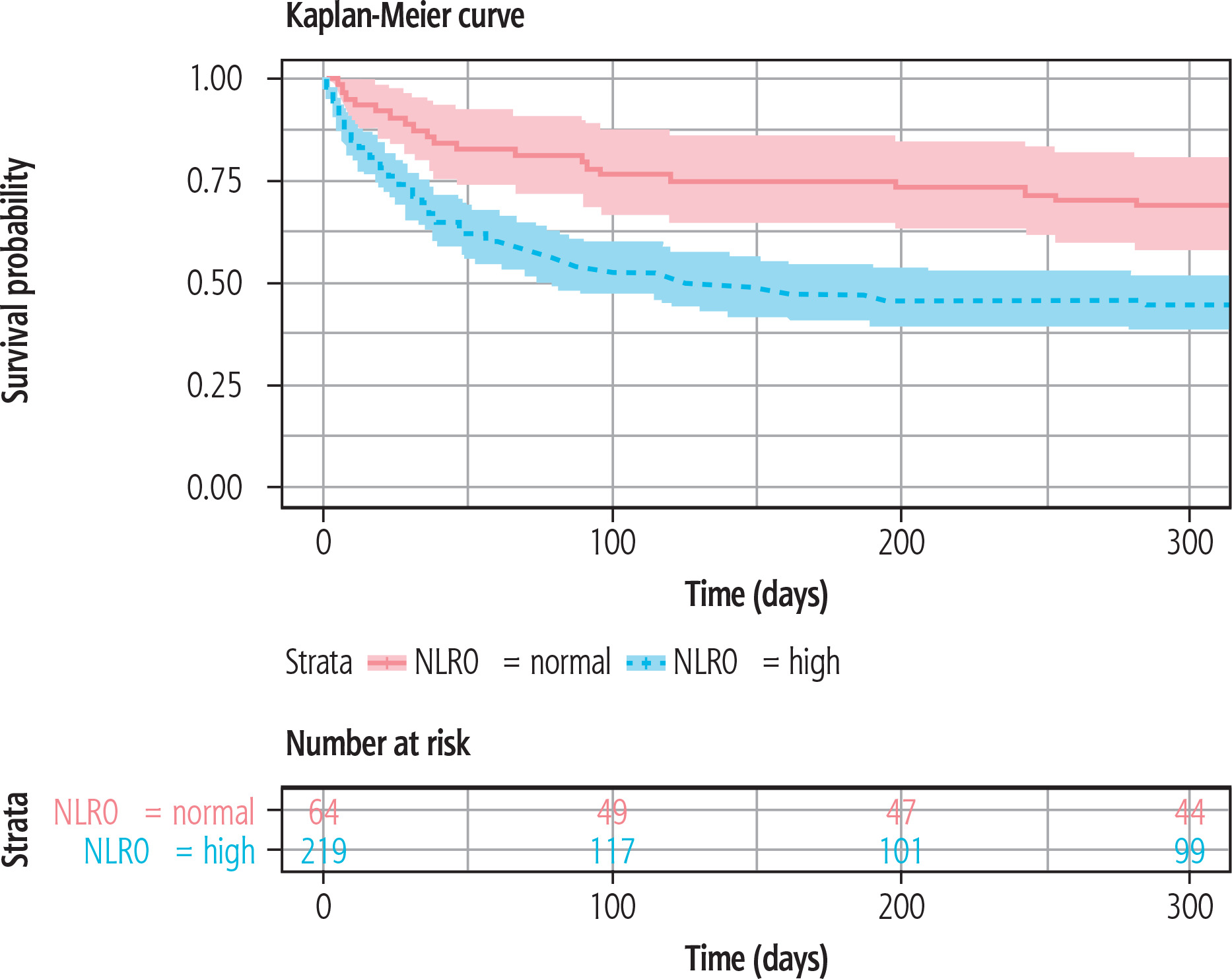
Among 1109 patients admitted to the hospital with liver cirrhosis and included in the RH7 registry, we identified 283 patients (25.5%) who met the criteria for AD. The most common etiology of ACLD preceding AD was ALD in 207 patients (73.1%), followed by the group of other etiologies in 54 patients (19.1%), and by viral hepatitis in 22 patients (7.8%). All patients had NLR measured at admission, and 186 patients had their NLR also measured at day 7 of hospital stay. Mean age of registrants was 51 years (22-79), and females represented 41% (116 patients). Elevated (above the upper limit of normal value, i.e. > 3) NLR-0 and NLR-7 values were observed in 219 (77.4%), and 138 patients (74.2%), respectively (Table 1), and their respective values did not significantly differ among the three etiological groups (Figs. 1 and 2). When considered as a continuous variable, although numerically lowest in viral etiology, NLR-0 and NLR-7 did not significantly differ among the three etiologies (Table 2, Figs. 1, 2, Supplementary Fig. 1). However, NLR-0 and NLR-7 values in the normal range were significantly more frequent in viral etiology (Table 2). NLR-0 and NLR-7 values were significantly lower in patients who survived as compared to those who died, and both survival and survival at any one of the three time points were more likely in patients with normal NLR-0 and NLR-7 values (Table 3, Figs. 3 and 4, Supplementary Fig. 2). Overall survival time and mortality at any of the selected time points (30 days, 90 days and 1 year) did not differ between the three etiologies (Table 2).
Table 1
Summary statistics of the cohort of acute decompensated cirrhosis and NLR
Table 2
Summary statistics of the cohort of patients with acute decompensated cirrhosis and NLR values at admission and on the 7th day of hospitalization, stratified by etiology of cirrhosis
Table 3
Overall 90-day survival and mortality based on NLR values at admission and on the 7th day of hospitalization, depending on the etiology of cirrhosis, age, and gender
Fig. 1
Neutrophil-to-lymphocyte ratio at admission (NLR-0) according to etiology of cirrhosis in patients with acute decompensation. Boxplots show median and interquartile range; dots represent outliers. Groups include alcohol-related liver disease (ALD), viral hepatitis, and other etiologies. NLR is a unitless ratio. No significant differences were observed between groups
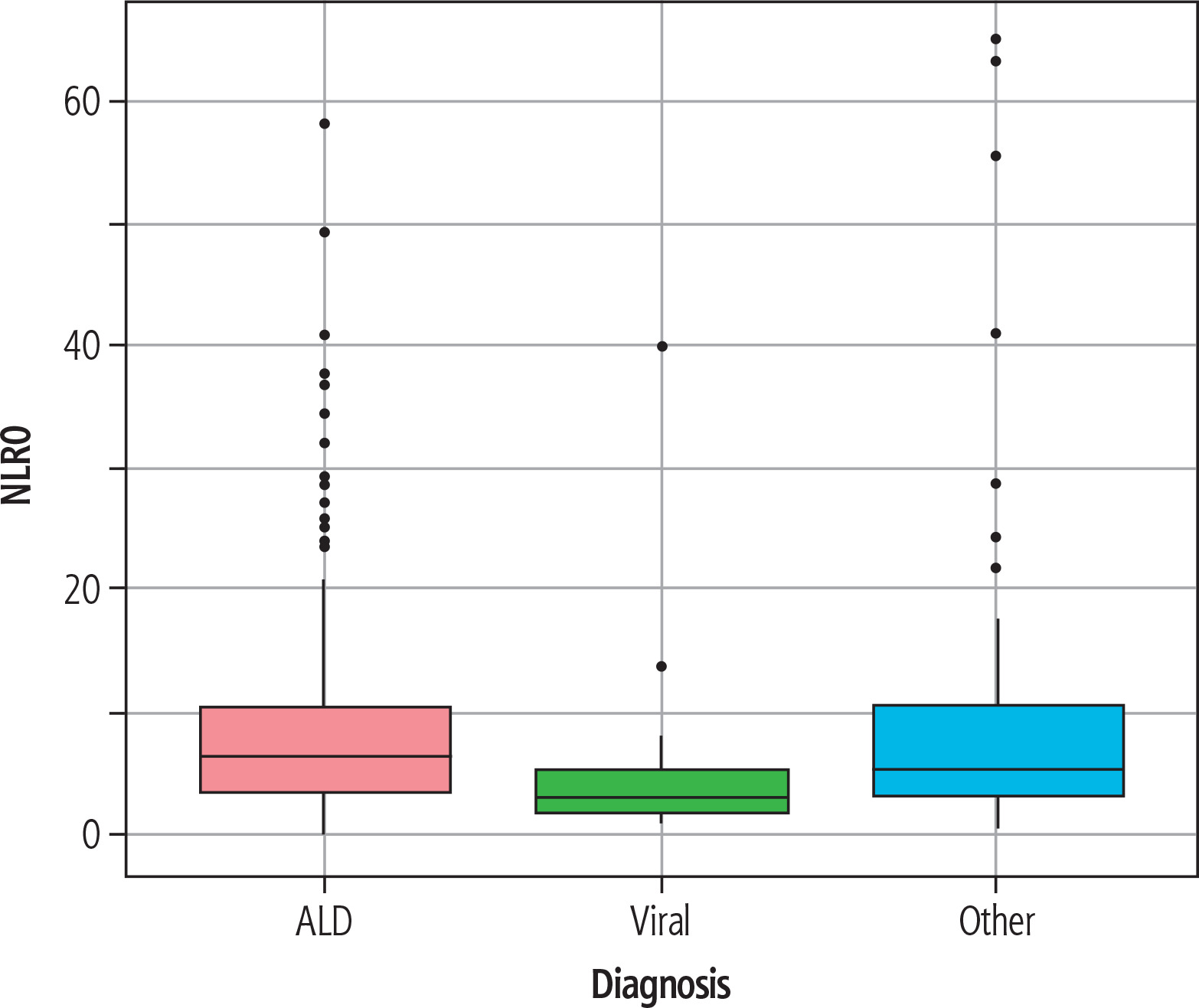
Fig. 2
Neutrophil-to-lymphocyte ratio on day 7 of hospitalization (NLR-7) according to etiology of cirrhosis in patients with acute decompensation. Boxplots show median and interquartile range; dots represent outliers. NLR is a unitless ratio. No significant differences were found among the groups
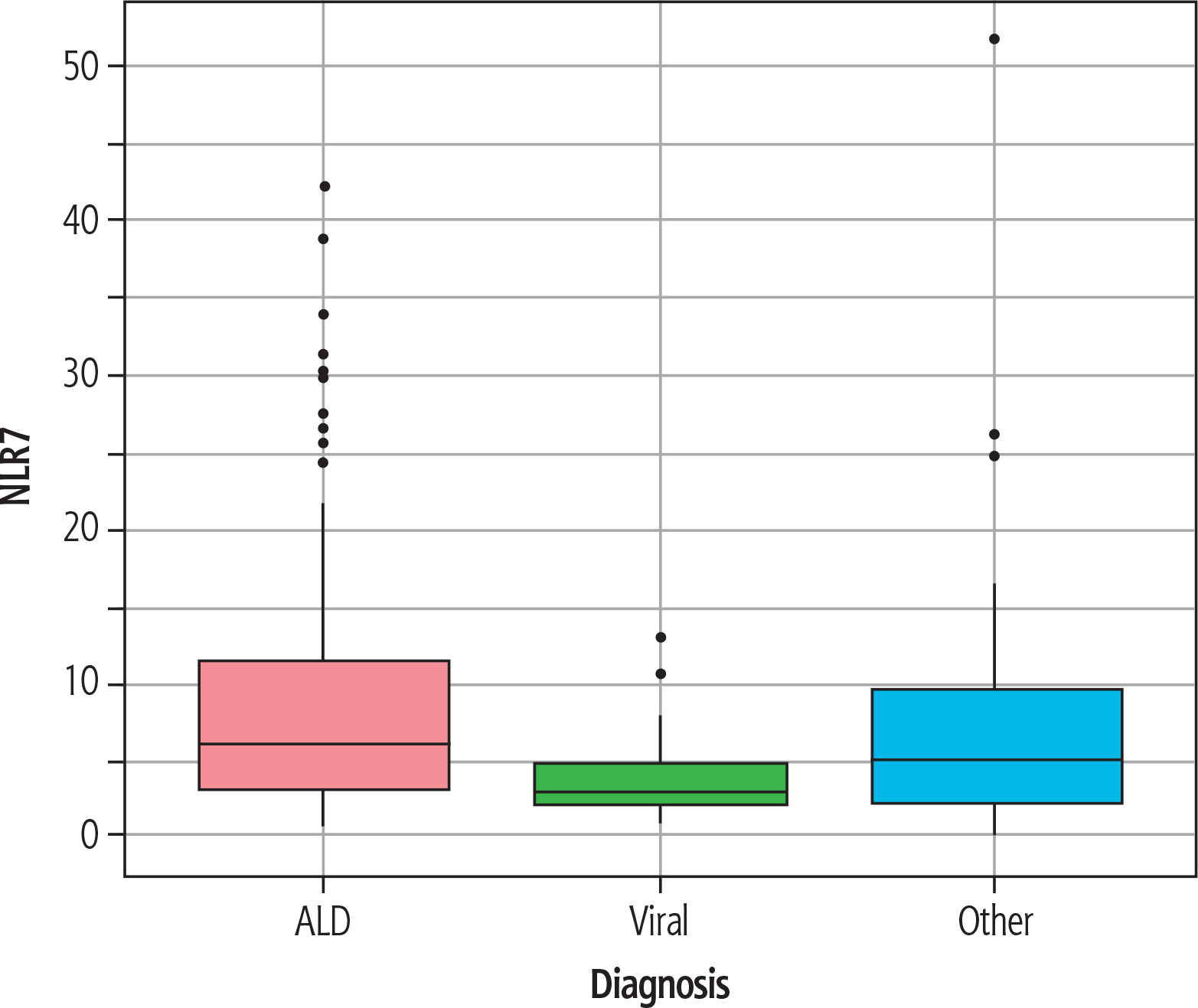
Fig. 3
90-day mortality according to neutrophil-to-lymphocyte ratio at admission (NLR-0) in different etiological groups. Bars represent mean NLR-0 values in survivors and non-survivors. P-values indicate differences between survivors and non-survivors within each etiology. NLR is a unitless ratio
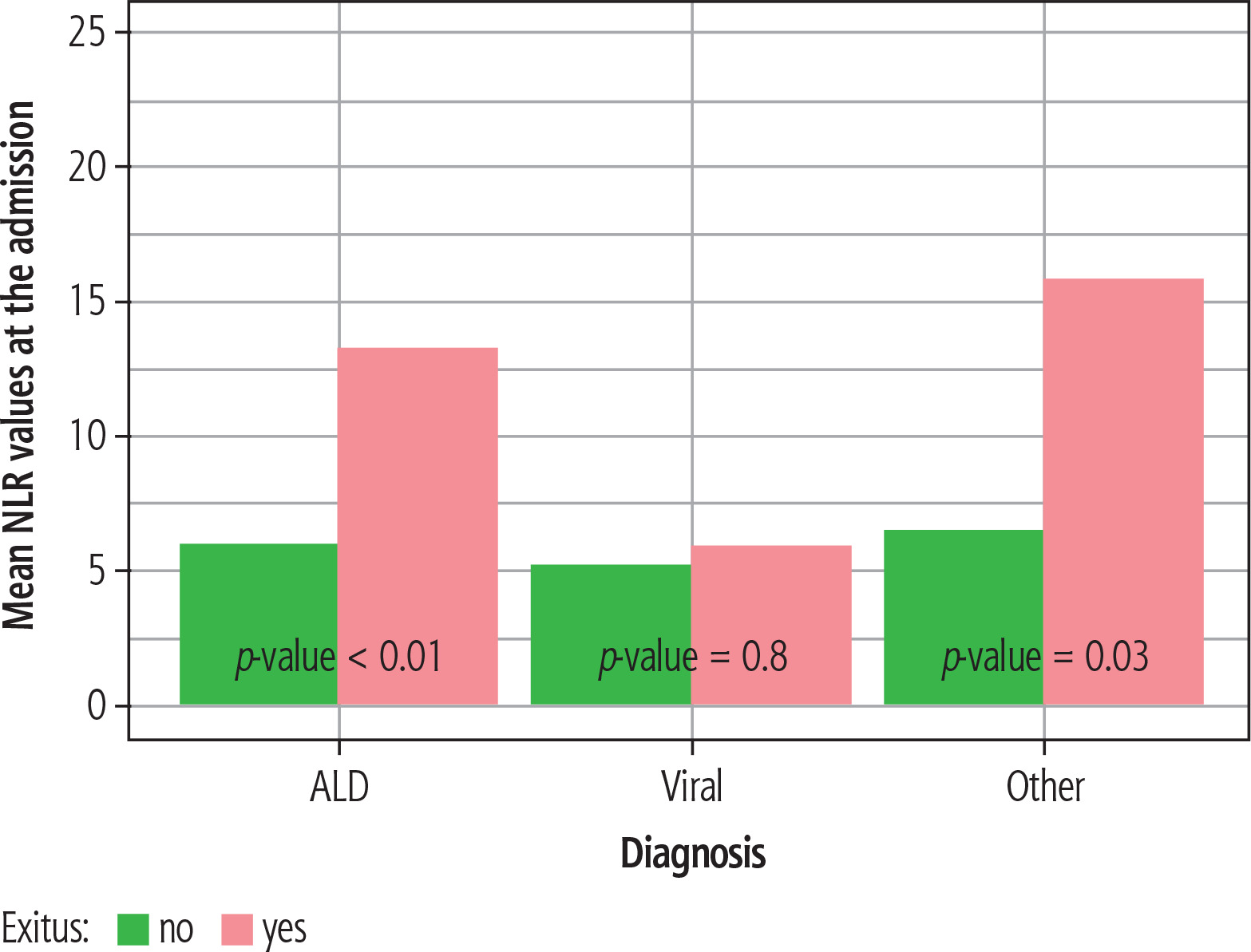
Fig. 4
Kaplan-Meier survival curves of patients with acute decompensation stratified by NLR at admission (NLR-0). Patients were divided into normal (1-3) and elevated (> 3) NLR groups. Survival probability is shown over time (days). Shaded areas represent 95% confidence intervals. The log-rank test was used for comparison (p = 0.002)
Overall, 166 patients (58.7%) had died as of January 2023; the mean survival time was 822 days. We then focused on evaluating 30-day, 90-day, and 1-year mortality rates based on NLR values at admission and on day 7 of hospitalization (Supplementary Figs. 3-7). Both the distribution of NLR values and their association with mortality closely mirrored the pattern seen in ALD (Figs. 1, 2). NLR was significantly lower in surviving patients in all the groups, both at admission and on the 7th day of hospitalization (Tables 3 and 4, Supplementary Table 1). The overall mortality rate did not differ between the etiologies, but was higher in the group with higher NLR-0 values: 11.005 vs. 6.138 (p < 0.01) and NLR-7: 10.515 vs. 5.148 (p < 0.01) (Supplementary Table 2). Thirty-day and 90-day mortality rates were also higher in the group with higher NLR-0 (NLR-0: 15.598 vs. 6.822 (p < 0.01), 13.347 vs. 6.055 (p < 0.01)), and NLR-7 (NLR-7: 13.784 vs. 6.283 (p < 0.01), 12.251 vs. 5.393 (p < 0.01)) (Table 3, Fig. 3, Supplementary Tables 3-5, Supplementary Figs. 3-6). In the univariate regressions, higher NLR values on admission were associated with higher probability of death for ALD and other etiologies, but not for viral etiology (Supplementary Tables 6-14). For viral etiology of AD, we even observed a negative numerical tendency (lower NLR, higher probability of death). For the NLR-7, in viral etiology we observed an inverse association of NLR with death as compared to NLR-0: for the viral group, the coefficients became positive and were numerically higher than in the ALD and other etiological groups. In the ALD and other etiological groups, the association between NLR-7 and mortality remained positive. Due to the small sample size of patients with viral etiology, we only provide multivariate logistic regression for the overall sample; NLR-0 was an independent predictor of 30-day mortality (p = 0.046), while NLR-7 was an independent predictor of mortality at any of the three time points (p < 0.001) (Table 5).
Table 4
Assessment of overall, 30-day, 90-day, and one-year mortality rates between patients with normal and elevated NLR values upon admission, stratified by age, gender, and etiology of cirrhosis
Table 5
Multivariable logistic regression analysis of predictors of mortality at 30 days, 90 days, and 1 year in patients with acute decompensation. Odds ratios with 95% confidence intervals are shown for NLR at admission (NLR-0), NLR at day 7 (NLR-7), age (years), sex, and etiology. NLR is a unitless ratio
To further explore the potentially distinct inflammatory phenotype of the viral subgroup, additional descriptive comparisons and correlation analyses were performed. Patients with viral etiology demonstrated lower mean NLR values at admission (NLR-0: 5.5) and on day 7 (NLR-7: 4.5) compared to alcoholic (NLR-0: 8.9, NLR-7: 8.9) and other etiologies (NLR-0: 11, NLR-7: 8). Leukocyte count differed significantly among etiological groups (p < 0.01), with lower values observed in viral patients (8) compared to ALD (12) and other etiologies (8.2). Within the viral subgroup, NLR-7 showed a strong positive correlation with leukocyte count (p < 0.001) and C-reactive protein (p < 0.01). These associations appeared more pronounced than in the other etiological groups, supporting the possibility of a distinct inflammatory pattern in viral cirrhosis.
To assess the potential influence of bacterial infection at admission on NLR values, patients were additionally stratified according to the precipitating trigger (acute alcoholic hepatitis, infection, or other causes). There were no significant differences in NLR-0 or NLR-7 among these subgroups. Mean NLR values were comparable between patients with infection-triggered decompensation and those with other precipitants. These findings suggest that baseline infection status did not significantly influence NLR levels in our cohort.
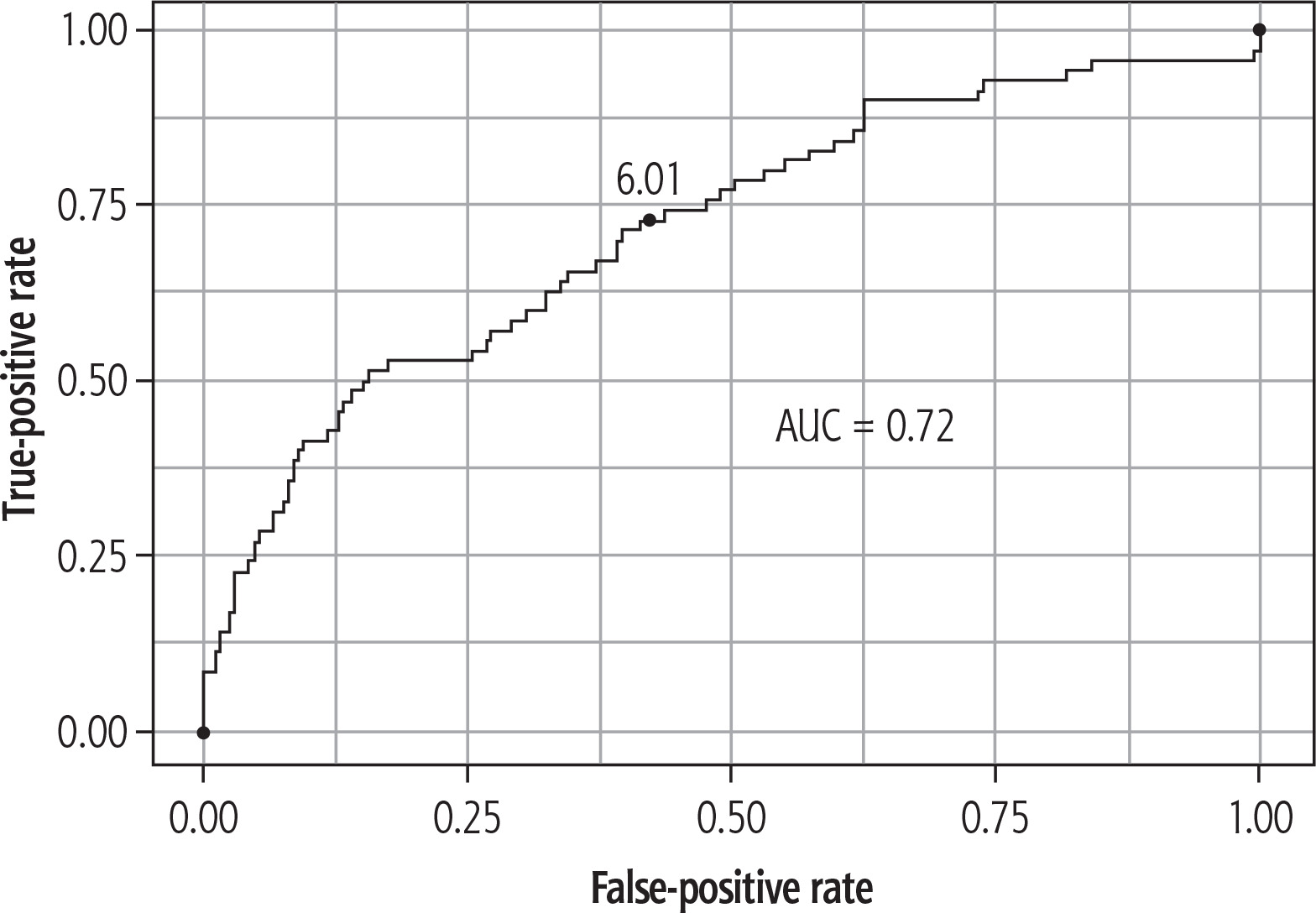
Receiver operating characteristic (ROC) curve analysis was performed to further evaluate the prognostic performance of NLR. For 30-day mortality, the area under the curve (AUC) was 0.72 for NLR-0, with an optimal cut-off value of 6.01, and 0.73 for NLR-7, with an optimal cut-off value of 5.12. For 90-day mortality, the AUC was 0.71 for NLR-0 and 0.72 for NLR-7, with identical respective cut-off values (6.01 for NLR-0 and 5.12 for NLR-7). These findings indicate acceptable discriminative ability, with slightly stronger performance observed for NLR-7. ROC curves for 30-day mortality are shown in Figure 5.
Fig. 5
Receiver operating characteristic (ROC) curve of neutrophil-to-lymphocyte ratio at admission (NLR-0) for predicting 30-day mortality. The area under the curve (AUC) was 0.72, with an optimal cut-off value of 6.01
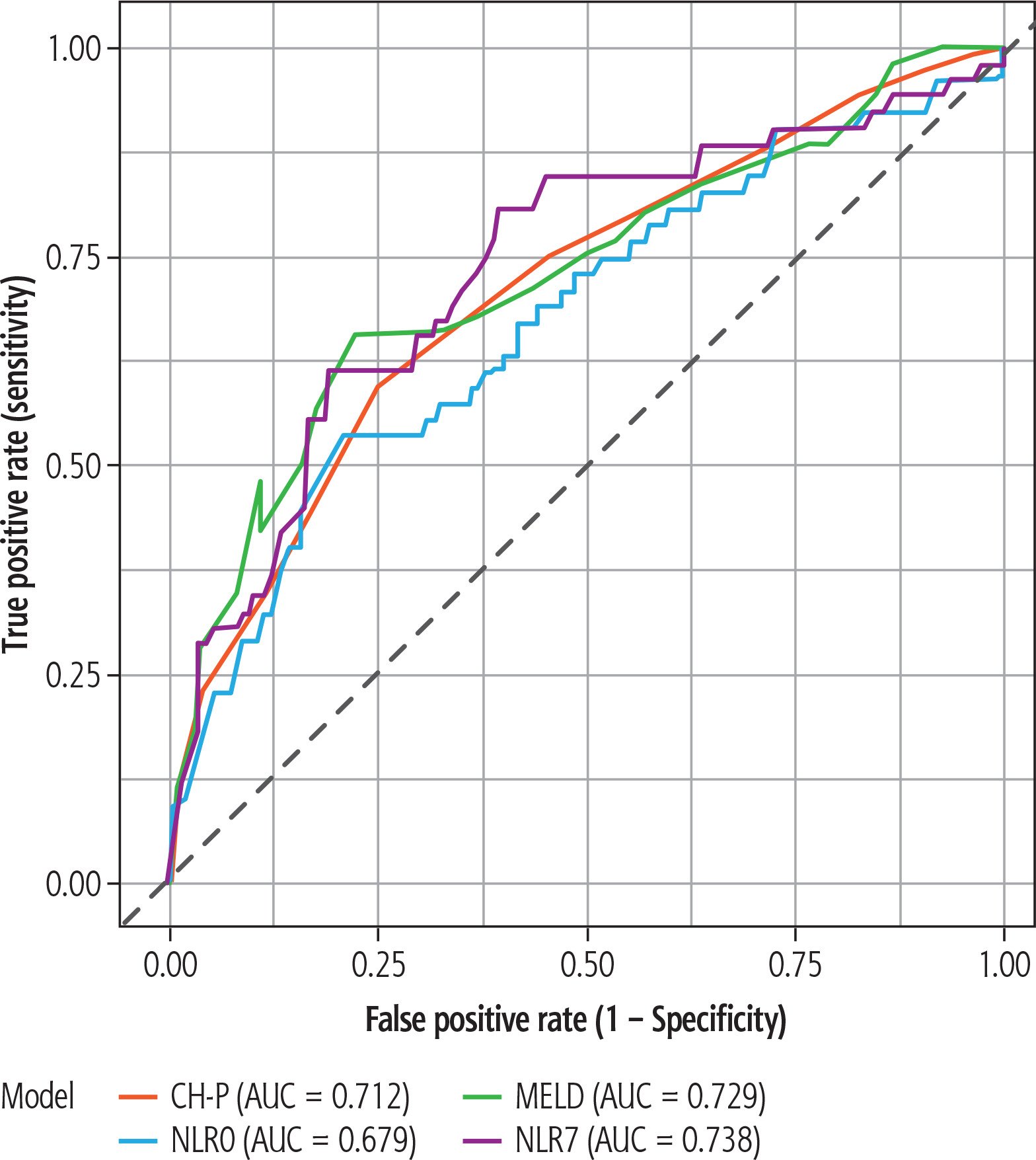
To compare the prognostic performance of NLR with conventional liver severity scores, ROC curve analysis was additionally performed for MELD and Child-Pugh scores.
For 30-day mortality, the AUC was 0.738 for NLR-7, 0.729 for MELD, and 0.712 for Child-Pugh score. No statistically significant differences were observed between NLR-7 and the traditional scoring systems (p = 0.880 for MELD and p = 0.660 for Child-Pugh) (Fig. 6). For 90-day mortality, the AUC values were 0.720 for NLR-7, 0.716 for MELD, and 0.671 for Child-Pugh score, again without significant differences. For 1-year mortality, NLR-7 showed an AUC of 0.696, compared to 0.684 for MELD and 0.657 for Child-Pugh score. Although NLR-7 demonstrated numerically higher discriminative ability, differences did not reach statistical significance at the 5% level.
Discussion
NLR as a marker of systemic inflammation and prognosis in AD
The neutrophil-to-lymphocyte ratio has become one of the most extensively studied inflammatory biomarkers in hepatology. Its strength lies in its simplicity – it is derived from a routine differential blood count, making it inexpensive, widely accessible, and rapidly applicable in clinical practice [10]. NLR reflects systemic inflammation, which, if dysregulated, represents a key pathogenetic mechanism and prognostic marker of AD and ACLF [6-8]. The dysregulated immune response, displaying either hyperinflammation or immune paralysis (or a combination of both), is equally common across all the etiological groups, but it may vary in its intensity and dynamics [6, 7]. Our cohort of 283 patients from the RH7 registry demonstrates that elevated NLR is highly prevalent in AD: at admission (NLR-0), elevated values were present in 77.4% (219/283) and on day 7 (NLR-7) in 74.2% (138/186). These findings support the concept that systemic inflammation is an integral component of AD/ACLF regardless of the trigger. Similarly, in the PREDICT study [3], most patients exhibited elevated inflammatory markers, underscoring that NLR efficiently and universally captures this domain. Supplementary Figures 4 and 5 additionally present mean NLR values in survivors vs. non-survivors across the major etiological categories, providing broader clinical context for the NLR-based analyses.
Predominance of alcohol-associated etiology and specific findings in AD-ALD
The most striking findings of our study relate to ALD, which accounted for 73.1% (207/283) of AD cases. This high proportion reflects the Central European reality, where alcohol remains the leading cause of ACLD as well as the most frequent trigger of AD [19, 20]. In the ALD group, elevated NLR-0 values were observed in 80.2% of patients (Table 2, Fig. 1). This high prevalence is biologically plausible: alcohol promotes neutrophil activation, endotoxemia, bacterial translocation, and cytokine overproduction, resulting in the typical picture of “sterile inflammation” [19]. Notably, in our cohort, acute alcoholic hepatitis (AAH) was identified as the precipitating event in 155 of 207 patients (74.9%) within the ALD subgroup. Furthermore, 120 of these cases (57.9% of ALD patients) fulfilled clinical and laboratory criteria compatible with severe alcoholic hepatitis (SAH), a phenotype marked by intense systemic inflammation. Given the well-established immunopathological profile of SAH, characterized by neutrophilic predominance and cytokine dysregulation, it is plausible that this subset substantially contributed to the high NLR values observed in the ALD cohort. Although we did not isolate SAH patients as a separate analytic group due to the retrospective design and absence of protocolized diagnostic confirmation, these findings suggest that the inflammatory burden inherent to SAH may be a key determinant of the elevated NLR and associated poor outcomes in this population. A more detailed stratified analysis of AAH and SAH subtypes, including outcome assessment according to severity grading, is currently ongoing within our registry and will be addressed in a separate dedicated study.
In our cohort, NLR in ALD correlated strongly with mortality – values were significantly higher in non-survivors compared with survivors (Fig. 3; p < 0.01). These results are consistent with previous studies confirming the prognostic value of NLR in alcohol-associated hepatitis. Abu Omar et al. reported that elevated NLR significantly predicted 90-day mortality in patients with SAH [21]. Similarly, findings from the STOPAH trial suggested that baseline NLR might predict response to corticosteroid therapy – patients with NLR between 5 and 8 showed benefit, while those with NLR > 8 had higher risks of infection and renal complications [22]. Our results reinforce these observations: most ALD patients in our cohort had very high NLR values, potentially contributing to the poor outcomes seen in this group and highlighting the potential utility of NLR as a stratification tool for clinical decision-making. For more granular analysis of the relationship between NLR and prognosis of sub-phenotypes of ALD (i.e., ALD-ACLD with, or without AH, SAH, and ACLF, respectively), it is necessary to enroll more patients in the ongoing study.
Viral etiology – distinct NLR behavior
In contrast to ALD, elevated NLR-0 was present in only 50% of patients with viral cirrhosis (HBV/HCV) as compared to the remaining two etiological classes (Table 2; p < 0.01 vs. ALD and other). Normal NLR values were significantly more frequent in the viral group (Fig. 2). This finding suggests that the inflammatory phenotype of viral cirrhosis may differ even in the setting of superposed AD, potentially indicating a less pronounced baseline systemic inflammation. Our additional descriptive and correlation analyses further support this observation, demonstrating lower mean NLR values and leukocyte counts in viral patients, together with a strong association between NLR-7 and inflammatory markers within this subgroup. Although our subgroup was limited (n = 22), this trend aligns with findings from Asian studies showing that while NLR is a significant prognostic marker in HBV-ACLF, its distribution and optimal cut-off values differ from those typically seen in ALD. Zhang et al. [12] demonstrated that elevated NLR predicted early mortality in HBV-related decompensated cirrhosis. Similarly, Liu et al. [13] confirmed that NLR was an independent predictor of short-term prognosis in patients with HBV-ACLF. In another study, Sun et al. [23] proposed an NLR-based model stratifying patients into low, intermediate, and high mortality risk groups based on distinct NLR ranges (< 3.10, 3.10-4.78, > 4.78). These findings support the need to interpret NLR within the etiological and geographic context of liver disease.
Other etiologies – convergence of inflammatory phenotype
In the “other” group (19.1%, n = 54), which included MASLD and cryptogenic cirrhosis, autoimmune syndromes including PSC, PBC, and AIH, and rare metabolic diseases such as hereditary hemochromatosis and Wilson’s disease, elevated NLR-0 values were observed in 77.8% of cases (Table 2), a proportion very similar to that observed in the ALD group. Both the distribution of NLR values and their association with mortality closely mirrored the pattern seen in ALD (Figs. 1 and 2). These findings suggest that once acute decompensation develops, the underlying etiology becomes less decisive in shaping the inflammatory profile. Instead, advanced cirrhosis appears to converge toward a similar systemic inflammatory state, characterized by elevated NLR in the majority of patients. This concept is consistent with the notion that systemic inflammation is a key driver of AD and ACLF across etiologies, and that immunopathophysiological distinctions between disease origins become less pronounced in the decompensated stage [8].
Dynamics of NLR during hospitalization
Another important finding of our study is the stability of NLR during the first days of hospitalization. We found no significant differences between NLR-0 and NLR-7 (Table 3; p = NS). NLR values remained elevated in the majority of patients, confirming the “viscosity” of this biomarker. This phenomenon suggests that NLR reflects longer-term immune dysregulation rather than short-term changes during the acute phase. Accordingly, it may be more suitable for baseline risk stratification and prognostication rather than for dynamic monitoring of therapeutic response. Of importance therefore, the dynamic first week of ACLF and the prognostic significance of the delta ACLF over this period are not reflected in the dynamics of NLR, which might have pathophysiological and therapeutic consequences [24].
Although baseline NLR (NLR-0) and day-7 NLR (NLR-7) values were not significantly different, their prognostic implications were not identical. NLR measured at admission likely reflects the acute inflammatory and stress response associated with clinical decompensation, hospitalization, and frequently concomitant bacterial infection. Thus, NLR-0 appears to be more closely related to short-term outcomes, particularly early mortality.
In contrast, NLR assessed on day 7 may better represent the persistence of systemic inflammation and inadequate immune recovery during the early course of hospitalization. Persistent elevation of NLR over time may indicate ongoing dysregulated inflammatory activity rather than a transient acute insult. Sustained systemic inflammation has been implicated in immune dysfunction, progression of organ failure, and adverse mid-term and long-term outcomes in patients with advanced chronic liver disease and ACLF.
Therefore, while a single baseline measurement captures the acute phase of disease, follow-up assessment of NLR may provide additional prognostic information by identifying patients with persistent inflammatory activation, which appears to be more strongly associated with 90-day and 1-year mortality.
This relative stability of NLR over the first week of hospitalization is consistent with the concept of early immune trajectory in AD and ACLF, where an initial hyperinflammatory phase may be followed by persistent immune dysregulation rather than rapid normalization of inflammatory parameters. Despite potential clinical improvement or therapeutic interventions, systemic immune activation may persist beyond the initial acute insult. As NLR reflects both neutrophil activation and relative lymphopenia, it may capture this sustained inflammatory state rather than short-term clinical fluctuations, which could explain its relative stability during early hospitalization.
Importantly, NLR values did not significantly differ between infection-triggered and non-infectious decompensation in our cohort, suggesting that the prognostic association of NLR is not solely driven by bacterial infection.
Clinical implications and future research
Our results clearly demonstrate that NLR has clinical value in patients with AD, particularly in the context of ALD. It is inexpensive, readily available, and independently predicts mortality alongside established prognostic tools (Table 4). In our cohort, the discriminative performance of NLR-7 was comparable to established liver severity scores, including MELD and Child-Pugh, across short-, mid-, and long-term mortality. Importantly, no statistically significant differences were observed between the AUC values of NLR-7 and these conventional scoring systems. These findings suggest that this simple inflammatory marker may provide prognostic information similar to more complex composite models routinely used in clinical practice.
In regions where ALD is the predominant etiology, NLR may serve as a valuable adjunct to scoring systems such as MELD and CLIF-C, enabling rapid risk stratification, more personalized care, and early identification of high-risk patients with the need to intensify therapy or recognize treatment futility. In viral cirrhosis, our findings suggest a distinct inflammatory profile characterized by lower NLR values. However, the sample size was limited, and further validation in larger cohorts from HBV/HCV-endemic areas is needed to clarify the prognostic utility and optimal cut-offs of NLR in this subgroup.
For other etiologies – such as autoimmune, metabolic, and cryptogenic cirrhosis – NLR exhibited similar patterns to ALD, supporting the hypothesis that advanced chronic liver disease may lead to a convergent inflammatory phenotype regardless of initial cause.
Looking ahead, future research should explore the potential of NLR not only as a prognostic marker but also as a tool to monitor response to immunomodulatory treatments. As the immunopathogenesis of AD and ACLF continues to be elucidated, biomarkers such as NLR could contribute to the development of targeted therapeutic strategies and personalized treatment algorithms.
Limitations of the study
Limitations of our study include its single-center design and the limited number of patients in specific subgroups, which precluded stratified analyses of SAH and ACLF grades. Furthermore, while AAH was identified as a trigger in a substantial proportion of ALD cases, we did not systematically classify or analyze severity grades of AAH hepatitis. Similarly, ACLF stages were not delineated in detail. Despite these limitations, the consistency of our findings with established pathophysiological mechanisms and external studies supports the robustness of our conclusions. Future multicenter studies with larger and more granularly characterized cohorts are needed to validate these observations for a more personalized applicability.







