Introduction
Hereditary angioedema (HAE) is a rare genetic disorder characterized by recurrent episodes of non-pruritic, non-pitting subcutaneous or submucosal edema involving the skin, gastrointestinal tract, and upper airways. The disease is primarily caused by quantitative (type I) or functional (type II) deficiency of C1 esterase inhibitor (C1-INH), resulting in dysregulation of the plasma contact system, uncontrolled activation of factor XII and plasma kallikrein, and excessive generation of bradykinin, the principal mediator responsible for increased vascular permeability. In contrast to histamine-mediated angioedema, HAE does not respond to antihistamines, corticosteroids, or epinephrine, making early recognition and disease-specific treatment essential. The estimated prevalence of HAE ranges from approximately 1 in 30,000 to 1 in 80,000 individuals worldwide, although the true prevalence is likely underestimated because of delayed diagnosis and underrecognition, particularly in patients without a positive family history. Contemporary classification also includes hereditary angioedema with normal C1-INH, associated with pathogenic variants affecting proteins involved in the kallikrein-kinin pathway, including factor XII, plasminogen, angiopoietin-1, kininogen-1, and myoferlin [1–5].
Over the past two decades, the therapeutic landscape of HAE has changed profoundly. The introduction of plasma-derived and recombinant C1-INH concentrates, plasma kallikrein inhibitors, and the bradykinin B2 receptor antagonist icatibant has substantially reduced attack frequency and severity, improved health-related quality of life, and markedly decreased mortality associated with laryngeal edema. Consequently, many patients with HAE now achieve a near-normal life expectancy and increasingly develop age-related comorbidities, including coronary artery disease, hypertension, atrial fibrillation, and heart failure. This epidemiological shift has led to a growing number of patients with HAE being referred for invasive cardiovascular procedures, including coronary angiography and percutaneous coronary intervention (PCI) [1, 2, 6–10].
Although coronary angiography and PCI are minimally invasive procedures, several procedural factors – including vascular puncture, endothelial injury, tissue manipulation, procedural pain, psychological stress, and, when required, airway instrumentation – may activate the kallikrein-kinin pathway and precipitate bradykinin-mediated angioedema attacks in susceptible individuals. While the overall procedural risk is presumed to be lower than that associated with major surgery, potentially life-threatening upper airway edema remains a critical concern. At the same time, urgent coronary revascularization, particularly in patients presenting with acute coronary syndromes, must never be delayed because of concerns related to HAE. These competing priorities create unique clinical challenges for interventional cardiologists, anesthesiologists, and allergy specialists involved in the perioperative care of these patients [1, 3, 11–13].
Despite significant advances in both HAE management and contemporary interventional cardiology, evidence specifically addressing the periprocedural management of patients with HAE undergoing coronary angiography and PCI remains scarce. Current clinical practice is largely based on international HAE guidelines, perioperative recommendations, expert opinion, and isolated case reports, while dedicated cardiovascular recommendations are lacking.
The aim of this narrative review is to summarize the current evidence regarding the pathophysiology, risk assessment, prophylactic strategies, and periprocedural management of patients with HAE undergoing coronary angiography and PCI, and to provide practical recommendations for clinicians working in catheterization laboratories.
Methods
This narrative review was conducted to summarize the available evidence regarding the periprocedural management of patients with HAE undergoing coronary angiography and PCI. The review was designed in accordance with the principles of the Scale for the Assessment of Narrative Review Articles (SANRA), with particular emphasis on transparent literature selection and critical appraisal of the available evidence.
A comprehensive literature search was performed using the PubMed/Medline, Embase, and Scopus databases from database inception to January 31, 2026. The search strategy combined Medical Subject Headings (MeSH) and free-text terms related to hereditary angioedema and invasive cardiovascular procedures, including hereditary angioedema, HAE, C1 esterase inhibitor deficiency, coronary angiography, percutaneous coronary intervention, PCI, cardiac catheterization, acute coronary syndrome, myocardial infarction, perioperative management, short-term prophylaxis, airway management, and anesthesia. The reference lists of relevant articles, international guidelines, and key review papers were manually screened to identify additional publications [1–3, 6, 11].
Eligible publications included international clinical practice guidelines, consensus statements, randomized clinical trials, observational studies, systematic reviews, narrative reviews, case series, and case reports published in English. Owing to the limited availability of studies specifically addressing coronary angiography and PCI in patients with HAE, evidence from related fields, including perioperative medicine, anesthesiology, cardiac surgery, otolaryngology, dentistry, and allergy/immunology, was also considered when clinically relevant [1–3, 7–10].
Studies focusing exclusively on acquired angioedema, conference abstracts lacking sufficient methodological or clinical detail, duplicate publications, and articles published in languages other than English were excluded. Given the scarcity of cardiovascular-specific evidence, a formal systematic review or meta-analysis was not feasible. Therefore, the available evidence was synthesized narratively, with particular emphasis on contemporary international guidelines, pathophysiological rationale, and clinically relevant recommendations applicable to invasive cardiology practice [1–3, 6, 10, 11].
Pathophysiological considerations relevant to invasive cardiology
The hallmark of HAE is dysregulation of the contact activation system resulting from quantitative or functional deficiency of C1 esterase inhibitor (C1-INH). Loss of C1-INH activity permits uncontrolled activation of factor XII and plasma kallikrein, ultimately leading to excessive generation of bradykinin, the principal mediator responsible for increased vascular permeability and tissue edema. Unlike histamine-mediated angioedema, bradykinin-mediated swelling does not respond to conventional anti-allergic therapies, including antihistamines, glucocorticoids, or epinephrine, highlighting the importance of disease-specific therapeutic strategies [1–4].
From the perspective of invasive cardiology, several aspects of coronary angiography and PCI may theoretically contribute to activation of the kallikrein–kinin pathway and precipitate angioedema attacks. Vascular puncture, endothelial injury, tissue manipulation, procedural pain, and psychological stress have all been recognized as potential triggers of contact system activation in susceptible individuals [1, 3, 10]. Furthermore, procedures involving airway instrumentation, including endotracheal intubation, transesophageal echocardiography, bronchoscopy, or emergency surgical conversion of catheter-based interventions, may increase the risk of upper airway edema through local tissue trauma and inflammatory activation [3, 10, 13].
Although direct evidence specifically evaluating the incidence of HAE attacks during coronary angiography and PCI remains scarce, observations from perioperative and surgical settings indicate that mechanical tissue injury can serve as an important trigger for bradykinin-mediated angioedema [3]. The magnitude of this risk appears to be influenced by individual disease characteristics, including previous laryngeal involvement, attack frequency, overall disease control, and a history of procedure-related exacerbations. Patients with prior upper airway attacks may represent a particularly vulnerable subgroup, because even limited edema progression can rapidly compromise airway patency and become life-threatening [1, 3, 8].
Importantly, contemporary coronary interventions are generally less invasive than many surgical procedures traditionally associated with increased HAE risk. Coronary angiography and PCI are commonly performed under local anesthesia, require relatively limited tissue disruption, and are associated with short procedural duration. These characteristics may partially mitigate the likelihood of procedure-related attacks. Nevertheless, because severe bradykinin-mediated angioedema may occur unpredictably, careful risk assessment, procedural planning, and immediate availability of on-demand therapy remain essential components of safe cardiovascular care in patients with HAE [1, 3, 9].
Management of acute coronary syndromes
Patients with HAE may present with the full spectrum of acute coronary syndromes (ACS), including unstable angina, non-ST-segment elevation myocardial infarction (NSTEMI), and ST-segment elevation myocardial infarction (STEMI). In such situations, the presence of HAE should not alter established cardiovascular treatment pathways or delay time-sensitive reperfusion strategies. Prompt coronary revascularization remains the cornerstone of ACS management and should be performed according to contemporary international guideline recommendations [6, 14–16].
For patients presenting with STEMI, primary PCI should be pursued without delay whenever available within recommended timeframes. Similarly, patients with high-risk NSTEMI should undergo an early invasive strategy based on standard risk stratification criteria. Antiplatelet therapy, anticoagulation, and secondary prevention measures should be administered according to current cardiovascular guidelines, as there is no evidence that HAE itself necessitates modification of established ACS treatment algorithms [1–3, 6].
Although urgent coronary intervention should not be postponed because of concerns regarding HAE, awareness of the underlying diagnosis remains essential. The catheterization laboratory team should be informed of the patient’s condition before the procedure whenever feasible, allowing appropriate preparation for potential HAE-related complications. Particular attention should be directed toward patients with a history of laryngeal edema, previous procedure-triggered attacks, or anticipated need for airway manipulation. In these circumstances, immediate availability of on-demand therapy and preparedness for emergency airway management represent important adjuncts to standard cardiovascular care [1, 3, 10, 13].
The optimal management strategy therefore combines strict adherence to evidence-based ACS treatment pathways with proactive measures aimed at minimizing the risk of procedure-related angioedema. Such an approach ensures that potentially life-saving coronary reperfusion is not compromised while maintaining an appropriate level of preparedness for rare but potentially severe HAE-related complications.
Antithrombotic therapy in patients with hereditary angioedema undergoing coronary angiography and PCI
Antithrombotic therapy is a fundamental component of contemporary management of patients undergoing coronary angiography and PCI. However, data regarding potential interactions between antithrombotic agents and HAE remain limited. Importantly, the pathophysiology of HAE is driven by dysregulation of the kallikrein–kinin system and excessive bradykinin generation rather than platelet activation or conventional coagulation pathways [1–3].
Currently, there is no evidence that aspirin, P2Y12 receptor inhibitors (clopidogrel, prasugrel, or ticagrelor), or dual antiplatelet therapy (DAPT) increase the frequency or severity of HAE attacks. Consequently, standard guideline-directed antiplatelet therapy should not be modified solely because of a diagnosis of HAE and should be administered according to contemporary recommendations for acute coronary syndromes and PCI [6, 7].
Similarly, no clinically significant association has been established between anticoagulant therapy and increased HAE activity. Although experimental studies suggest interactions between coagulation and contact activation pathways, available clinical evidence does not indicate an increased risk of angioedema associated with unfractionated heparin, low-molecular-weight heparins, vitamin K antagonists, or direct oral anticoagulants (DOACs) in patients with HAE [1, 3, 13]. Therefore, anticoagulant treatment should be guided by standard cardiovascular indications rather than concerns regarding HAE exacerbation.
Evidence regarding glycoprotein IIb/IIIa inhibitors is particularly scarce. Nevertheless, no data currently suggest that abciximab, eptifibatide, or tirofiban directly influences bradykinin production or triggers HAE attacks. Their use should therefore be reserved for established cardiovascular indications and follow current guideline recommendations [6].
From a practical perspective, the principal procedural risk in patients with HAE is related not to antithrombotic therapy itself but to vascular injury, tissue trauma, procedural stress, and potential airway manipulation, all of which may precipitate bradykinin-mediated angioedema attacks. Accordingly, standard antithrombotic strategies recommended for coronary angiography, PCI, and acute coronary syndromes should generally be maintained, while ensuring adequate preparedness for the recognition and prompt treatment of procedure-related angioedema [1, 3, 6, 7].
Periprocedural management of patients with HAE undergoing coronary angiography and PCI
Comprehensive preprocedural assessment is the cornerstone of safe invasive management in patients with HAE undergoing coronary angiography or PCI. Whenever the clinical situation permits, evaluation should include confirmation of the HAE subtype, disease activity, attack frequency and severity, history of laryngeal involvement, previous procedure-related attacks, current long-term prophylaxis, and the availability of on-demand treatment. Particular attention should be paid to patients with prior upper airway edema, as they appear to be at increased risk of severe procedure-related complications and may require a more cautious periprocedural strategy [1, 3, 5, 9].
Preprocedural evaluation should also identify potential triggers of contact system activation during the planned intervention. Vascular puncture, tissue trauma, procedural pain, emotional stress, and, most importantly, airway manipulation are recognized precipitants of bradykinin-mediated angioedema attacks [1, 3, 10]. Consequently, assessment of the anticipated procedural complexity and the likelihood of endotracheal intubation, deep sedation, transesophageal echocardiography, or emergency conversion to cardiac surgery should form an integral part of preprocedural planning.
Risk stratification should be individualized and based on both disease-related and procedure-related factors. Patients with previous laryngeal attacks, uncontrolled disease, frequent exacerbations despite prophylaxis, or a history of procedure-triggered angioedema should generally be considered at higher risk. In elective cases, consultation with an allergist or immunologist experienced in HAE management may facilitate optimization of prophylactic treatment and perioperative planning [1, 3, 9] (Figure 1).
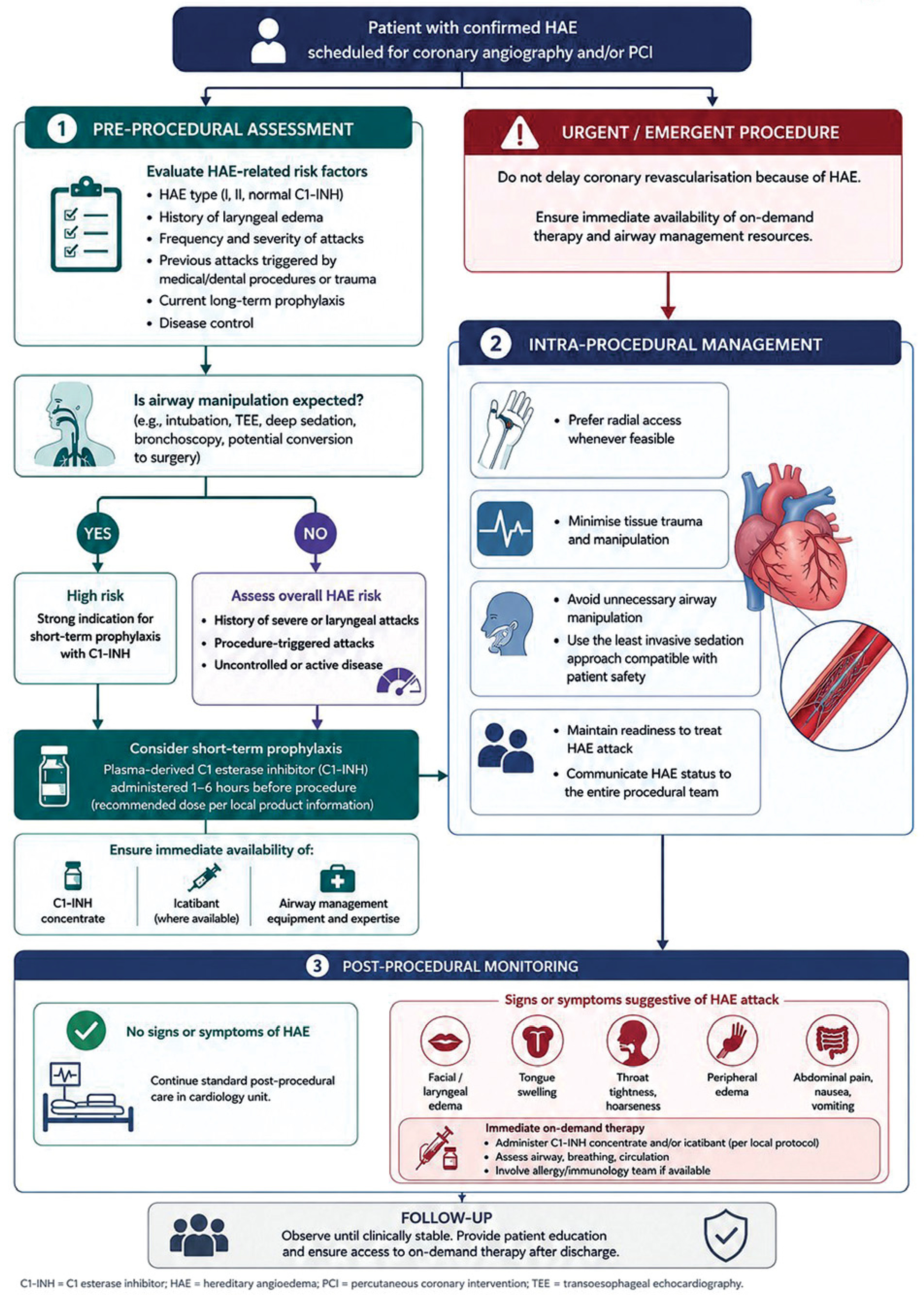
Short-term prophylaxis and emergency preparedness
Current international guidelines support considering short-term prophylaxis before procedures associated with significant tissue trauma or airway manipulation [1, 3]. In patients with C1-INH-deficient HAE (type I or II), plasma-derived C1-INH remains the preferred prophylactic option and is generally administered within several hours before the planned intervention according to local protocols and product-specific recommendations. In patients with HAE with normal C1-INH, evidence supporting specific periprocedural prophylactic strategies is more limited, and management should therefore be individualized according to the underlying subtype, previous treatment response, disease phenotype, and procedural risk, preferably in consultation with an HAE-experienced specialist [1, 3, 10, 17] (Table I).
Table I
HAE-specific therapies relevant to invasive cardiology
| Therapy | Clinical role | Periprocedural relevance |
|---|---|---|
| Plasma-derived C1-inhibitor | Short-term prophylaxis and acute treatment | Preferred option before high-risk procedures |
| Recombinant C1-inhibitor | Acute treatment | Alternative rescue therapy |
| Icatibant1 | On-demand treatment | Recommended on-demand option for acute HAE |
| Sebetralstat | On-demand treatment | Oral on-demand option for acute HAE attacks; availability may vary |
| Lanadelumab2 | Long-term prophylaxis | Background disease control |
| Berotralstat3 | Long-term prophylaxis | Reduces attack frequency but not intended for acute use |
| Garadacimab | Long-term prophylaxis | May reduce baseline attack risk; not intended for acute attack treatment |
| Donidalorsen | Long-term prophylaxis | May reduce baseline attack risk; not intended for acute attack treatment |
| Fresh frozen plasma | Rescue option | Consider only when specific therapy unavailable |
The 2025 WAO Guidelines reinforce that plasma-derived C1 esterase inhibitor (pdC1-INH) remains the preferred first-line option for short-term prophylaxis before procedures associated with tissue trauma or airway manipulation. Importantly, the decision to administer short-term prophylaxis should be individualized according to the patient’s disease activity, previous procedure-related attacks, current long-term prophylaxis, and anticipated procedural risk. The updated recommendations also emphasize that effective long-term prophylaxis does not eliminate the need for immediate availability of on-demand therapy during invasive procedures [18].
The decision to administer short-term prophylaxis should be individualized, taking into account the patient’s disease phenotype, previous response to therapy, current disease control, procedural invasiveness, and the anticipated need for airway instrumentation. In patients with a complete response to effective long-term prophylaxis, additional short-term prophylaxis is generally not necessary. However, short-term prophylaxis may still be considered for particularly high-risk procedures or circumstances, based on the patient’s disease phenotype, previous procedure-related attacks, current disease control, procedural characteristics, and anticipated need for airway manipulation. Regardless of whether short-term prophylaxis is administered, effective on-demand therapy should remain immediately available throughout the periprocedural period [1, 3, 5, 14].
Irrespective of the prophylactic strategy, every catheterization laboratory performing coronary angiography or PCI in patients with HAE should ensure immediate access to on-demand treatment. Plasma-derived or recombinant C1-INH concentrates and icatibant should be readily available whenever feasible, together with personnel experienced in the recognition and management of bradykinin-mediated angioedema. Equipment and expertise for advanced airway management should also be immediately accessible, as delayed treatment remains the principal determinant of adverse outcomes in patients developing upper airway edema [1, 3, 10, 13].
Intraprocedural considerations
Although evidence specific to invasive cardiology is lacking, several procedural measures may theoretically reduce the risk of HAE-related complications. Because tissue injury is a recognized trigger of contact system activation, every effort should be made to minimize procedural trauma by limiting the number of vascular punctures, avoiding unnecessary catheter exchanges, achieving meticulous vascular hemostasis, and reducing overall procedural duration whenever clinically feasible [1, 3].
A transradial-first strategy appears particularly attractive in this setting. In the general PCI population, transradial access is associated with lower rates of vascular and bleeding complications compared with transfemoral access and has become the preferred vascular approach in contemporary ESC guidelines and contemporary interventional practice. Although these benefits have not been specifically evaluated in patients with HAE, minimizing local tissue injury provides a strong pathophysiological rationale for preferential use of radial access whenever technically feasible [6–9, 15] (Table II).
Table II
Practical recommendations for management of patients with hereditary angioedema undergoing coronary angiography and PCI
Whenever possible, coronary angiography and PCI should be performed under local anesthesia with minimal or moderate conscious sedation, thereby avoiding unnecessary airway manipulation. Endotracheal intubation should be reserved for established clinical indications rather than performed routinely, as upper airway instrumentation represents one of the best-recognized triggers of HAE attacks [1, 3, 8]. For patients at increased risk of airway compromise, early involvement of an experienced anesthesiologist is advisable, and a predefined airway management strategy should be established before the procedure. Close communication among interventional cardiologists, anesthesiologists, nursing staff, and allergy/immunology specialists is essential to ensure prompt recognition and treatment of HAE-related complications.
Postprocedural monitoring and management of acute attacks
Because HAE attacks may occur several hours after tissue injury, careful postprocedural observation is recommended even after an uncomplicated intervention [1, 3]. The duration of monitoring should be individualized according to the patient’s baseline disease severity, procedural complexity, and the presence of known risk factors, particularly previous laryngeal involvement or airway manipulation during the procedure. Clinicians should remain alert to early manifestations of angioedema, including facial or tongue swelling, throat tightness, hoarseness, dysphagia, abdominal pain, nausea, vomiting, or otherwise unexplained respiratory symptoms.
Early recognition and prompt treatment are critical, as delayed intervention may result in rapid progression of upper airway edema. In patients with suspected bradykinin-mediated angioedema, disease-specific therapy should be administered without delay in accordance with institutional protocols. Recommended treatment includes plasma-derived or recombinant C1-INH concentrates or the bradykinin B2 receptor antagonist icatibant, depending on local availability and established treatment pathways [1, 3, 13, 17]. Simultaneously, continuous assessment of airway patency, respiratory function, and hemodynamic status is mandatory, and early involvement of anesthesiology and allergy/immunology specialists should be considered whenever airway compromise is suspected.
Importantly, clinicians should recognize that antihistamines, corticosteroids, and epinephrine, although frequently administered in cases of histamine-mediated angioedema, do not target the underlying pathophysiology of HAE and should not delay initiation of disease-specific therapy [1–3]. In the periprocedural setting, rapid access to targeted treatment combined with timely airway protection remains the cornerstone of successful management and is likely to have a greater impact on outcomes than any single prophylactic intervention.
Discussion
The growing availability of effective targeted therapies has substantially improved the prognosis and life expectancy of patients with HAE, resulting in an increasing prevalence of age-related cardiovascular diseases within this population [1, 2, 5]. Consequently, interventional cardiologists are increasingly likely to encounter patients with HAE requiring diagnostic coronary angiography or PCI. Despite this evolving clinical scenario, evidence specifically addressing the management of HAE during invasive coronary procedures remains extremely limited. Most currently available recommendations are extrapolated from perioperative experience in surgical, dental, otolaryngological, and anesthesiology settings rather than from dedicated cardiovascular studies [1, 3, 10, 13].
In the context of coronary angiography and PCI, the most clinically relevant challenge is not the theoretical possibility of an HAE attack itself, but the rapid recognition of angioedema when several alternative causes of swelling or respiratory compromise may be present. In particular, HAE may be confused with histamine-mediated hypersensitivity, iodinated contrast media reactions, or antiplatelet drug hypersensitivity. Distinguishing these conditions is clinically important because their mechanisms, expected clinical course, and acute treatment differ substantially.
One of the most relevant practical considerations is vascular access strategy. Although no studies have directly compared transradial and transfemoral approaches in patients with HAE, the radial-first strategy appears theoretically advantageous. Transradial access is associated with lower rates of vascular complications, reduced bleeding risk, and less tissue trauma than femoral access in the general PCI population [6–9]. Because local tissue trauma represents a recognized trigger for HAE attacks, minimizing procedural injury may be particularly important in this patient group. While this rationale is largely based on pathophysiological considerations rather than direct evidence, a radial-first approach appears reasonable whenever technically feasible.
Airway management represents another critical aspect of procedural planning. Upper airway trauma is one of the best-established triggers of potentially life-threatening HAE attacks [1, 3, 10]. Fortunately, the majority of coronary angiography and PCI procedures can be performed without endotracheal intubation or deep sedation. Nevertheless, airway-related risk should not be underestimated, particularly in patients with a history of laryngeal edema, poorly controlled disease, or an anticipated need for general anesthesia. In such circumstances, multidisciplinary planning involving cardiologists, anesthesiologists, and allergy/immunology specialists is advisable. The availability of on-demand therapy and immediate access to advanced airway management resources should be considered essential components of procedural preparedness.
The publication of the 2025 WAO Guidelines represents an important evolution in the management of hereditary angioedema by shifting therapeutic goals from simple reduction of attack frequency toward complete disease control using a treat-to-target strategy. The guidelines additionally emphasize shared decision-making, patient-reported outcomes, and individualized therapeutic planning based on disease activity, previous attack history, treatment availability, and patient preferences. Although coronary angiography and PCI are not specifically addressed, these principles provide a framework for individualized periprocedural risk assessment, tailored use of short-term prophylaxis, multidisciplinary collaboration, and ensuring access to effective on-demand therapy. Consequently, the practical management strategy proposed in the present review is consistent with the contemporary WAO recommendations [18].
Another important issue concerns the management of acute coronary syndromes. Patients with STEMI or high-risk NSTEMI require rapid coronary reperfusion, and any delay is associated with worse cardiovascular outcomes [6, 16]. Therefore, concerns regarding HAE should never postpone guideline-directed invasive treatment. Instead, the optimal approach involves simultaneous preparation for potential HAE-related complications while maintaining established reperfusion timelines. This principle is consistent with contemporary HAE recommendations emphasizing risk mitigation rather than avoidance of medically necessary procedures [1, 3].
The use of antithrombotic therapy in patients with HAE deserves particular consideration. Available evidence does not indicate that aspirin, P2Y12 receptor inhibitors, anticoagulants, or glycoprotein IIb/IIIa inhibitors increase the frequency of HAE attacks [1–3]. Consequently, antithrombotic and antiplatelet treatment should follow standard cardiovascular guidelines.
The thrombotic safety of C1-INH replacement therapy also deserves consideration in this setting. Reported thrombotic events are rare, and no coronary-specific safety signal has been identified; therefore, C1-INH should be used when clinically indicated.
Differentiating HAE attacks from hypersensitivity reactions
An important practical challenge during coronary angiography and PCI is distinguishing a HAE attack from other causes of acute facial or tongue swelling, dyspnea, hypotension, or airway symptoms. In the catheterization laboratory, the differential diagnosis includes bradykinin-mediated HAE, iodinated contrast media hypersensitivity or anaphylaxis, other drug reactions, sedation- or anesthesia-related complications, hematoma or bleeding, and acute cardiopulmonary deterioration (Table III).
Table III
Differential diagnosis of acute swelling and respiratory symptoms during or after coronary angiography/PCI
HAE is primarily a bradykinin-mediated disorder and classically presents with recurrent, non-pruritic, non-pitting swelling without urticaria. Attacks may involve the extremities, face, gastrointestinal tract, or upper airway and typically evolve over several hours rather than appearing immediately after exposure to a specific agent. Abdominal pain, nausea, vomiting, a history of recurrent similar episodes, a positive family history, previous laryngeal attacks, and the absence of wheals or pruritus should increase suspicion for HAE. Lack of clinical response to antihistamines, glucocorticoids, or epinephrine may further support a bradykinin-mediated mechanism, although treatment response alone should not be used as the sole diagnostic criterion. The 2025 WAO Guidelines emphasize that HAE should be considered in patients with recurrent angioedema, including those with concomitant urticaria or a history of exposure to medications known to cause angioedema [18].
In contrast, histamine-mediated angioedema and anaphylaxis are commonly characterized by rapid onset following exposure to a trigger and may be accompanied by urticaria, pruritus, flushing, bronchospasm, gastrointestinal symptoms, or cardiovascular instability. Importantly, anaphylaxis is a clinical emergency, and intramuscular epinephrine remains the first-line treatment when anaphylaxis is suspected. A known diagnosis of HAE should therefore not lead clinicians to withhold epinephrine when the clinical presentation is compatible with anaphylaxis [19].
Immediate reactions to iodinated contrast media may also overlap clinically with HAE. Contrast media hypersensitivity can present with urticaria, pruritus, facial or laryngeal edema, bronchospasm, or hypotension, usually in close temporal association with contrast administration. In patients with suspected contrast hypersensitivity, the acute reaction should be managed according to its clinical severity, while subsequent allergy assessment may be required to identify the culprit agent and guide future contrast selection. Importantly, most immediate contrast media reactions are classified as hypersensitivity or allergy-like reactions and are not necessarily IgE-mediated [20].
A further diagnostic challenge concerns aspirin and other antiplatelet agents. Aspirin hypersensitivity may manifest as urticaria and/or angioedema and can also produce respiratory symptoms or, rarely, anaphylaxis. Unlike HAE, aspirin hypersensitivity is a drug-related hypersensitivity syndrome and should be evaluated on the basis of the temporal relationship with drug exposure, previous reactions to aspirin or other non-steroidal anti-inflammatory drugs, and the clinical phenotype. When aspirin hypersensitivity is suspected in a patient requiring PCI, the cardiovascular indication for antiplatelet therapy should not simply be abandoned. Depending on the clinical setting and severity of the previous reaction, specialist assessment, low-dose aspirin challenge, or desensitization may be considered. In an emergency setting, alternative antiplatelet strategies may be required when aspirin cannot be administered immediately [21].
Therefore, in a patient with HAE who develops swelling or respiratory symptoms during or after coronary intervention, clinicians should consider both mechanisms rather than automatically attributing symptoms to HAE. The presence of urticaria or pruritus, rapid onset after a defined exposure, bronchospasm, or cardiovascular collapse should raise suspicion for a histamine-mediated reaction or anaphylaxis, whereas recurrent non-pruritic swelling, abdominal symptoms, absence of urticaria, a history of laryngeal attacks, and poor response to conventional anti-allergic therapy favor bradykinin-mediated HAE. When the diagnosis remains uncertain in an acutely unstable patient, treatment should be guided by the most immediately life-threatening clinical syndrome while HAE-specific therapy is made promptly available.
An additional consideration in cardiovascular practice is the use of medications affecting bradykinin metabolism. Angiotensin-converting enzyme inhibitors are widely prescribed after myocardial infarction and in patients with heart failure; however, they are also recognized causes of bradykinin-mediated angioedema. Although ACE inhibitor-induced angioedema and hereditary angioedema are distinct clinical entities, both involve dysregulation of bradykinin pathways. ACE inhibitors should generally be avoided in patients with HAE because of their established association with bradykinin-mediated angioedema. When renin–angiotensin system blockade is clinically indicated, an appropriate alternative, usually an angiotensin II receptor blocker (ARB), should be considered based on the individual cardiovascular indication and patient risk profile. Further studies are needed to clarify the optimal use of renin–angiotensin–aldosterone system inhibitors in this population.
Optimal outcomes require close collaboration between interventional cardiologists, anesthesiologists, allergists/immunologists, intensive care specialists, and catheterization laboratory nursing staff. For elective procedures, an individualized periprocedural plan should be established before admission whenever possible.
The most significant limitation of current knowledge is the absence of prospective studies evaluating cardiovascular procedures in patients with HAE. No dedicated registries, observational cohorts, or randomized studies have specifically assessed procedural risk, prophylactic strategies, or long-term outcomes following coronary angiography and PCI. As a result, many recommendations rely on expert opinion and extrapolation from non-cardiac settings. Establishment of multicenter registries capturing procedural characteristics, prophylactic interventions, and clinical outcomes would substantially strengthen the evidence base and facilitate the development of more precise recommendations.
Despite these limitations, currently available evidence supports a pragmatic approach centered on individualized risk assessment, consideration of short-term prophylaxis in selected high-risk patients, minimization of procedural trauma, avoidance of unnecessary airway manipulation, and immediate availability of on-demand therapy. Such a strategy may facilitate the safe performance of invasive coronary procedures in patients with HAE while maintaining adherence to contemporary cardiovascular standards of care (Table IV).
Table IV
Cardiovascular evidence relevant to hereditary angioedema
Future perspectives
The therapeutic landscape of hereditary angioedema has evolved substantially over the past decade, with the introduction of highly effective long-term prophylactic strategies, including subcutaneous C1-INH replacement therapy, lanadelumab, and oral kallikrein inhibition. As the use of these therapies becomes more widespread, the incidence of procedure-related attacks may further decline, potentially altering current approaches to periprocedural risk assessment and prophylaxis. However, the impact of contemporary long-term prophylactic therapies on outcomes of invasive cardiovascular procedures remains largely unexplored.
Future research should focus on the establishment of prospective multicenter registries specifically capturing patients with HAE undergoing coronary angiography, PCI, and other catheter-based cardiovascular interventions. Such registries could provide valuable information regarding procedural safety, predictors of periprocedural attacks, effectiveness of short-term prophylaxis, and optimal postprocedural monitoring strategies. Additional research is also needed to determine whether specific procedural characteristics, including vascular access site selection, procedural complexity, or the use of conscious sedation versus general anesthesia, influence the risk of bradykinin-mediated complications. Improved understanding of these factors would facilitate the development of evidence-based recommendations and more individualized management strategies for this unique patient population. The proposed algorithm summarizes preprocedural risk assessment, indications for short-term prophylaxis, intraprocedural management strategies, postprocedural monitoring, and treatment of suspected HAE attacks.
Limitations of available evidence
Several limitations should be acknowledged when interpreting the recommendations presented in this review. First, dedicated studies evaluating the safety and outcomes of coronary angiography and PCI in patients with hereditary angioedema are currently lacking. Most available evidence is derived from perioperative experience in surgical, anesthesiology, dental, and otolaryngological settings, limiting direct extrapolation to invasive cardiology practice. Second, no prospective registries or comparative studies have evaluated the effectiveness of specific prophylactic strategies before coronary interventions, and the relative benefits of radial versus femoral access remain speculative. Third, the impact of contemporary long-term prophylactic therapies, including lanadelumab and berotralstat, on periprocedural risk has not been systematically investigated. Consequently, many recommendations rely on expert consensus and pathophysiological rationale rather than high-level clinical evidence. These knowledge gaps underscore the need for prospective observational studies and multicenter collaborative research initiatives.
Conclusions
Hereditary angioedema should not preclude patients from undergoing coronary angiography or PCI. Successful periprocedural management relies on careful risk assessment, consideration of short-term prophylaxis in selected high-risk patients, immediate availability of rescue therapy, minimization of airway manipulation and tissue trauma, and coordinated multidisciplinary care. Importantly, HAE must never delay urgent coronary revascularization. Implementation of standardized protocols in catheterization laboratories may improve safety and procedural outcomes in this unique patient population.