Summary
Patients with reduced left ventricular ejection fraction represent a high-risk subgroup undergoing transcatheter aortic valve implantation for whom simple preprocedural risk markers remain limited. In this single-centre cohort, elevated preprocedural neutrophil percentage-to-albumin ratio (NPAR) was associated with both in-hospital and overall mortality after limited multivariable adjustment and with reduced long-term survival. NPAR is inexpensive and routinely available and may serve as an adjunctive marker for identifying patients at increased risk, pending external validation.
Introduction
Transcatheter aortic valve implantation (TAVI) has emerged as a well-established alternative to surgical aortic valve replacement across the full spectrum of surgical risk in patients with severe symptomatic aortic stenosis [1–4]. Among patients referred for TAVI, reduced left ventricular ejection fraction (LVEF < 50%) represents a frequent and clinically important finding, affecting approximately one-third of those with severe aortic stenosis [1, 5]. This impairment in systolic function may develop as a direct consequence of the chronic pressure overload imposed by severe aortic stenosis, which drives progressive LV hypertrophy, myocardial fibrosis, and ultimately progressive systolic dysfunction, or may reflect underlying cardiomyopathy or concomitant coronary artery disease [6]. Regardless of its etiology, reduced LVEF carries significant prognostic implications in patients undergoing TAVI, with several studies reporting higher rates of in-hospital and overall mortality compared to those with preserved systolic function, highlighting the importance of identifying effective preprocedural risk markers in this challenging population [7, 8]. Despite this recognised vulnerability, patients with reduced LVEF have received relatively limited attention in biomarker-based risk stratification studies, and simple, readily available tools to refine preprocedural risk assessment in this subgroup remain limited.
In this vulnerable population, procedural success and conventional surgical risk scores alone do not fully capture the complexity of perioperative and long-term risk. Beyond conventional anatomical and haemodynamic considerations, inflammatory burden and nutritional status may substantially influence prognosis. Systemic inflammation and malnutrition are frequently encountered in elderly patients with advanced valvular disease and multiple comorbidities, and have been independently associated with adverse outcomes both in heart failure and in patients undergoing TAVI [9–11]. These observations have prompted growing interest in simple, readily available composite markers that simultaneously reflect inflammatory burden and nutritional reserve.
Among recently proposed biomarkers, the neutrophil percentage-to-albumin ratio (NPAR) has gained interest as an easily obtainable indicator integrating systemic inflammation and nutritional impairment. In patients with heart failure, elevated NPAR has been independently associated with increased short- and long-term all-cause mortality [12, 13]. More recently, NPAR has been shown to independently predict 2-year all-cause mortality in patients undergoing TAVI, suggesting its potential as a preprocedural prognostic marker in this setting [14].
However, its association with in-hospital mortality, a critical early endpoint reflecting immediate procedural and periprocedural risk, has not been evaluated in the TAVI population, nor has its prognostic value been specifically examined in the high-risk subgroup of patients with reduced ejection fraction.
Aim
We aimed to examine the prognostic significance of preprocedural NPAR for in-hospital and overall mortality in patients with reduced LVEF undergoing TAVI.
Material and methods
Study design and population
A retrospective analysis was performed on consecutive patients who received TAVI at a tertiary referral centre between June 2020 and January 2026. Patients with symptomatic severe aortic stenosis were considered eligible when treated with TAVI if baseline left ventricular ejection fraction was below 50% and complete preprocedural laboratory measurements were available. Patients with active infection, malignancy, hematologic disease, chronic liver disease, or immunosuppressive treatment were excluded. Following application of the eligibility criteria, 169 patients were included in the final analysis.
Data collection
Retrospective data collection was based on electronic hospital records and structured follow-up documentation. Baseline demographic characteristics, cardiovascular comorbidities, echocardiographic findings, and laboratory parameters were systematically recorded. Standard transthoracic echocardiography was performed on commercially available platforms, with left ventricular ejection fraction quantified by the biplane Simpson method per current guideline specifications. Preprocedural echocardiographic parameters, such as left ventricular ejection fraction, aortic valve area, and systolic pulmonary artery pressure, were available for all study participants. Laboratory analyses were based on blood samples obtained within 24 h before the procedure and included complete blood count, routine biochemical parameters, and inflammatory markers. The diagnosis of AKI was established in accordance with the Kidney Disease: Improving Global Outcomes (KDIGO) criteria.
NPAR calculation
Neutrophil percentage and serum albumin measurements were obtained from the same blood sample within 24 h before the procedure, and the NPAR was calculated as the neutrophil percentage (%) × 100 divided by the serum albumin concentration (g/dl), as previously described [14].
TAVI procedure
All cases were discussed by a multidisciplinary heart team, and TAVI was preferred because of elevated surgical risk. Procedures were performed via the transfemoral approach. Anaesthesia strategy, prosthesis selection, and valve sizing were determined individually based on clinical characteristics, imaging assessment before the procedure, and manufacturer instructions. Balloon predilation and postdilation were performed when deemed necessary by the operator. Percutaneous closure devices and temporary pacing support were used as clinically indicated, and postprocedural management followed current guideline recommendations.
Clinical endpoints and definitions
The study evaluated two primary endpoints: in-hospital mortality after TAVI and overall mortality throughout the follow-up period. Overall mortality was defined as all-cause mortality occurring during follow-up.
Statistical analysis
Statistical analyses were performed using Jamovi (version 2.7.4; The Jamovi Project, Sydney, Australia) and R software (version 4.3.2; R Foundation for Statistical Computing, Vienna, Austria). The ggplot, Hmisc, and rms libraries were applied for specific statistical procedures and graphical presentations. Continuous variables were expressed as mean ± standard deviation or median with interquartile range according to their distributional properties, and categorical variables were summarized as frequencies and percentages. The Shapiro–Wilk test was applied to evaluate normality. Between-group differences for continuous variables were assessed using Student’s t-test or the Mann–Whitney U test, and categorical variables were compared using the χ2 test or Fisher’s exact test, as appropriate. For p-values > 0.05, values are reported to two decimal places. Tricuspid annular plane systolic excursion (TAPSE) was analysed and reported in millimetres (per 1 mm increase).
ROC curve analyses were conducted to establish the most appropriate NPAR cutoff points for predicting in-hospital and overall mortality outcomes. Patients were subsequently stratified according to the identified cutoff value, and baseline demographic, clinical, echocardiographic, and laboratory characteristics were compared across the study groups.
To determine independent predictors of in-hospital mortality, univariable and multivariable logistic regression analyses were constructed, with results presented as odds ratios (ORs) and corresponding 95% confidence intervals (CIs). To limit overfitting in the context of 17 in-hospital events, covariate inclusion was deliberately restricted and two separate multivariable logistic regression models were built: Model 1 comprised NPAR and CKD, while Model 2 comprised NPAR and preprocedural TAPSE. Both models were informed by univariable significance, clinical plausibility, and low collinearity with NPAR constituents. For overall mortality, two analogous multivariable Cox regression models were developed using three covariates each, applying the same selection criteria: Model 1 incorporated NPAR, CKD, and LVEF, and Model 2 incorporated NPAR, creatinine, and TAPSE. Patients were stratified according to the selected NPAR threshold for time-to-event analysis, and cumulative survival distributions were compared by log-rank testing. Probability values were interpreted as statistically meaningful when the two-sided p level was < 0.05.
Results
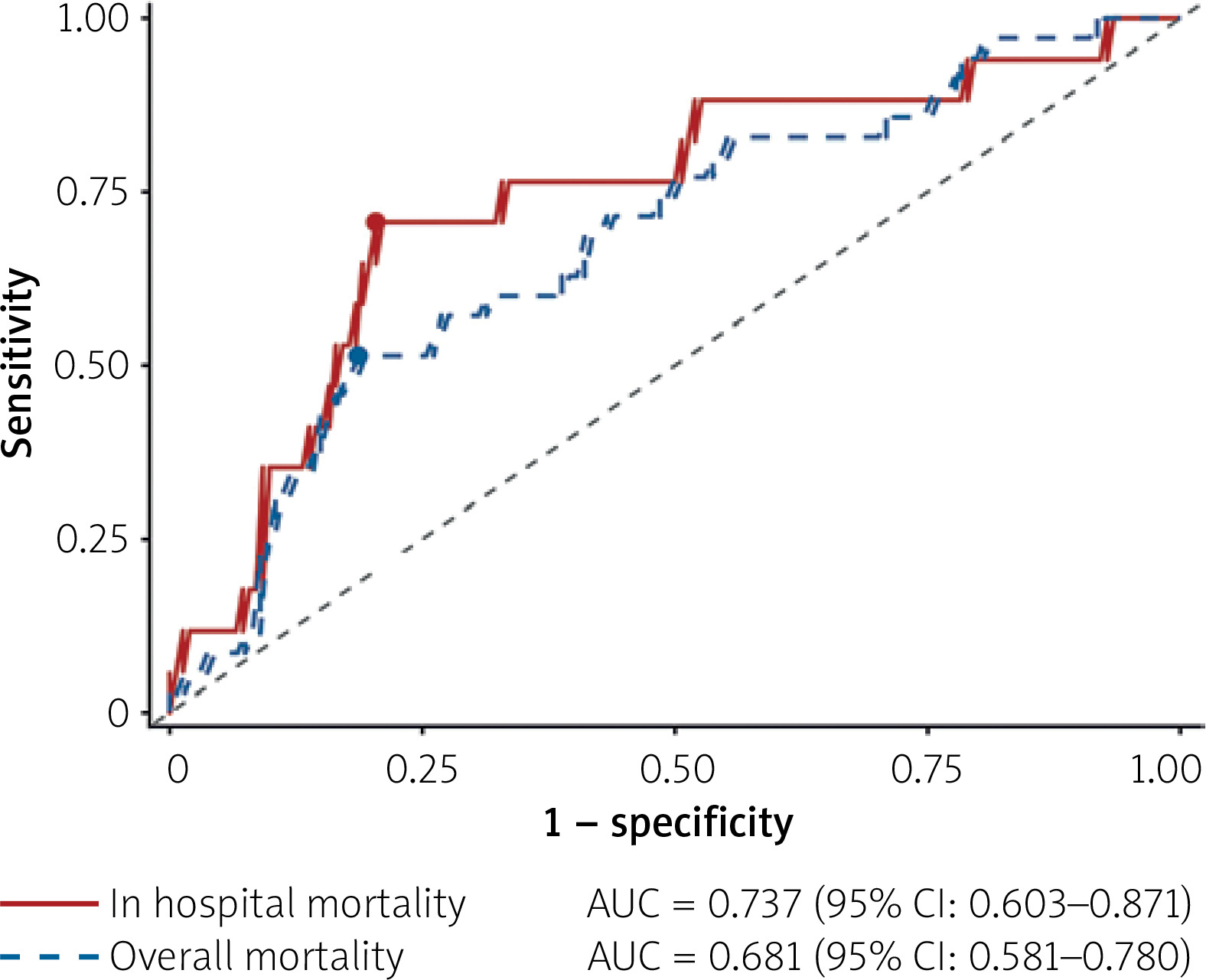
The discriminatory capacity of NPAR was evaluated by ROC curve analysis for both endpoints. For in-hospital mortality, an AUC of 0.737 (95% CI: 0.603–0.871) was obtained, with an optimal cutoff of 20.74 yielding 70.6% sensitivity and 79.6% specificity. The same threshold applied to overall mortality yielded an AUC of 0.681 (95% CI: 0.581–0.780), with a sensitivity of 51.4% and specificity of 81.3% (Figure 1).
Figure 1
ROC curve analysis illustrating the performance of NPAR for predicting in-hospital and overall mortality following TAVI in patients with reduced ejection fraction
Based on the identified NPAR threshold of 20.74, the study population was divided into two groups. Patients with an NPAR ≤ 20.74 were assigned to the lower NPAR group, whereas those with an NPAR > 20.74 were classified into the higher NPAR group. Baseline characteristics, pre- and postprocedural echocardiographic parameters, and clinical outcomes of the groups are presented in Table I. Of the total study population (n = 169), 43 (25.4%) patients were in the higher NPAR group and 126 (74.6%) patients were in the lower NPAR group. Compared with the low NPAR group, patients in the high NPAR group were older and carried a greater burden of chronic kidney disease, with markedly higher rates of both in-hospital and overall mortality (p = 0.028, p = 0.020, p < 0.001, and p < 0.001, respectively). Preprocedural PASP was also elevated in this group (p = 0.008), whereas preprocedural TAPSE, postprocedural LVEF, and postprocedural TAPSE were each significantly lower (p = 0.009, p = 0.004, and p < 0.001, respectively). No between-group differences reached statistical significance for the remaining clinical, echocardiographic, or laboratory variables.
Table I
Baseline characteristics, pre- and postprocedural echocardiographic parameters, and outcomes according to NPAR groups
[i] NPAR – neutrophil percentage-to-albumin ratio, CAD – coronary artery disease, CKD – chronic kidney disease, CVD – cerebrovascular disease, COPD – chronic obstructive pulmonary disease, AVA – aortic valve area, LVEF – left ventricular ejection fraction, LVEDD – left ventricular end-diastolic diameter, LVESD – left ventricular end-systolic diameter, PASP – pulmonary artery systolic pressure, TAPSE – tricuspid annular plane systolic excursion, LFLGAS – low-flow low-gradient aortic stenosis.
Pre- and postprocedural laboratory parameters stratified by NPAR levels are summarized in Table II. Compared with the lower NPAR group, patients in the higher NPAR group exhibited significantly increased white blood cell (WBC) and neutrophil counts, along with elevated serum creatinine, aspartate aminotransferase (AST), alanine aminotransferase (ALT), B-type natriuretic peptide (BNP), and C-reactive protein (CRP) concentrations, as well as higher postprocedural creatinine and BNP levels (p < 0.001, p < 0.001, p = 0.010, p = 0.002, p = 0.005, p = 0.015, p < 0.001, p = 0.008, and p < 0.001, respectively). Conversely, haemoglobin, lymphocyte counts, and serum albumin levels were significantly reduced in the higher NPAR group (p < 0.001 for all). In addition, the occurrence of acute kidney injury was markedly more frequent among patients with higher NPAR (p = 0.002). No statistically significant differences were detected between groups regarding platelet count, monocyte count, total bilirubin levels, or postprocedural platelet count.
Table II
Pre- and postoperative laboratory parameters
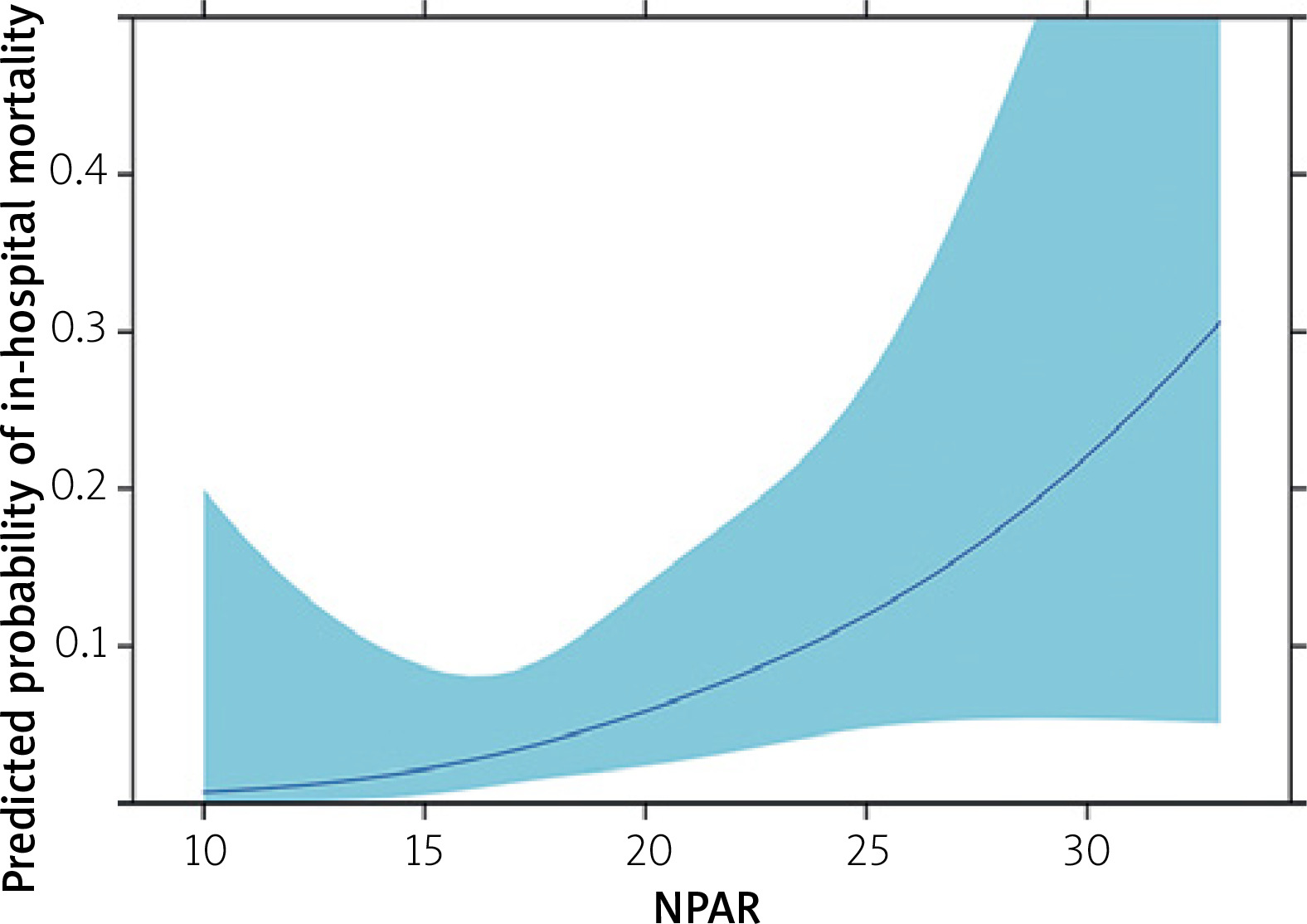
Logistic regression analyses were conducted to determine independent predictors of in-hospital mortality. On univariable screening, CKD, TAPSE, haemoglobin, NPAR, neutrophil count, CRP, and LVEF each demonstrated a significant association with the outcome. After multivariable adjustment, CKD (OR = 4.18, 95% CI: 1.40–12.50; p = 0.010) and NPAR (OR = 1.18, 95% CI: 1.04–1.34; p = 0.009) remained significant in the multivariable model (Model 1, Table III). In a second multivariable model incorporating NPAR and TAPSE, both variables remained significant after mutual adjustment (NPAR: OR = 1.17, 95% CI: 1.03–1.32, p = 0.015; TAPSE: OR = 0.85, 95% CI: 0.73–0.99, p = 0.037) (Model 2, Table III). On restricted cubic spline analysis, the adjusted relationship between preprocedural NPAR and in-hospital mortality appeared broadly monotonic across most of the observed range, and the test for non-linearity was not statistically significant (p = 0.78). However, given the limited number of events (n = 17), the analysis was underpowered to detect more subtle departures from linearity. The wider confidence intervals at the lower end of the NPAR distribution likely reflect data sparsity rather than a true protective effect. Therefore, the cut-off value of 20.74 was used pragmatically for descriptive group stratification and should not be interpreted as a biological or pathophysiological threshold (Figure 2).
Table III
Univariable and multivariable logistic regression analyses of in-hospital mortality
Figure 2
Restricted cubic spline plot illustrating the adjusted relationship between preprocedural NPAR levels and the risk of in-hospital mortality after accounting for CKD
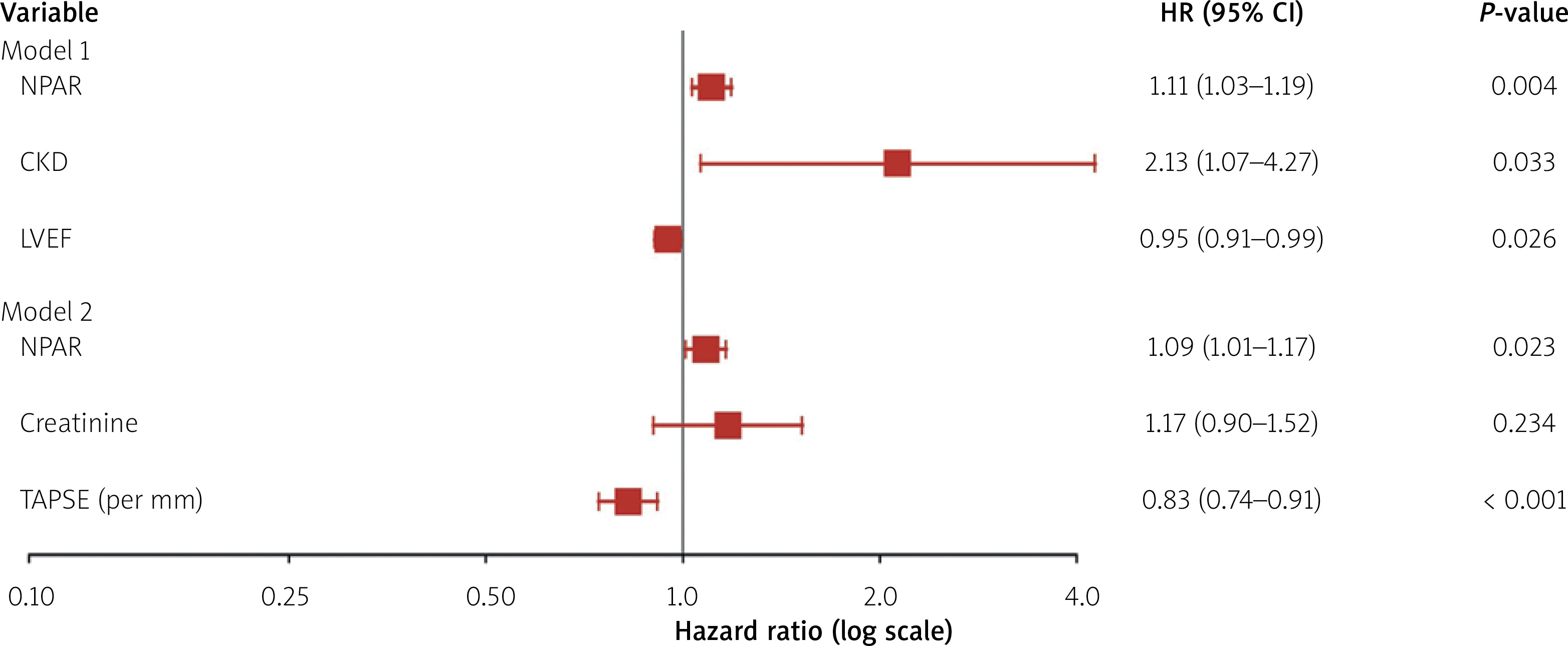
Forest plot analyses of the multivariable Cox regression models demonstrated that NPAR remained associated with overall mortality in both Model 1 and Model 2, together with CKD and LVEF in Model 1 and TAPSE in Model 2 (Table IV and Figure 3).
Table IV
Univariable and multivariable Cox regression analyses for overall mortality
Figure 3
Forest plot illustrating multivariable Cox regression analyses for determinants of overall mortality following TAVI in patients with reduced left ventricular ejection fraction
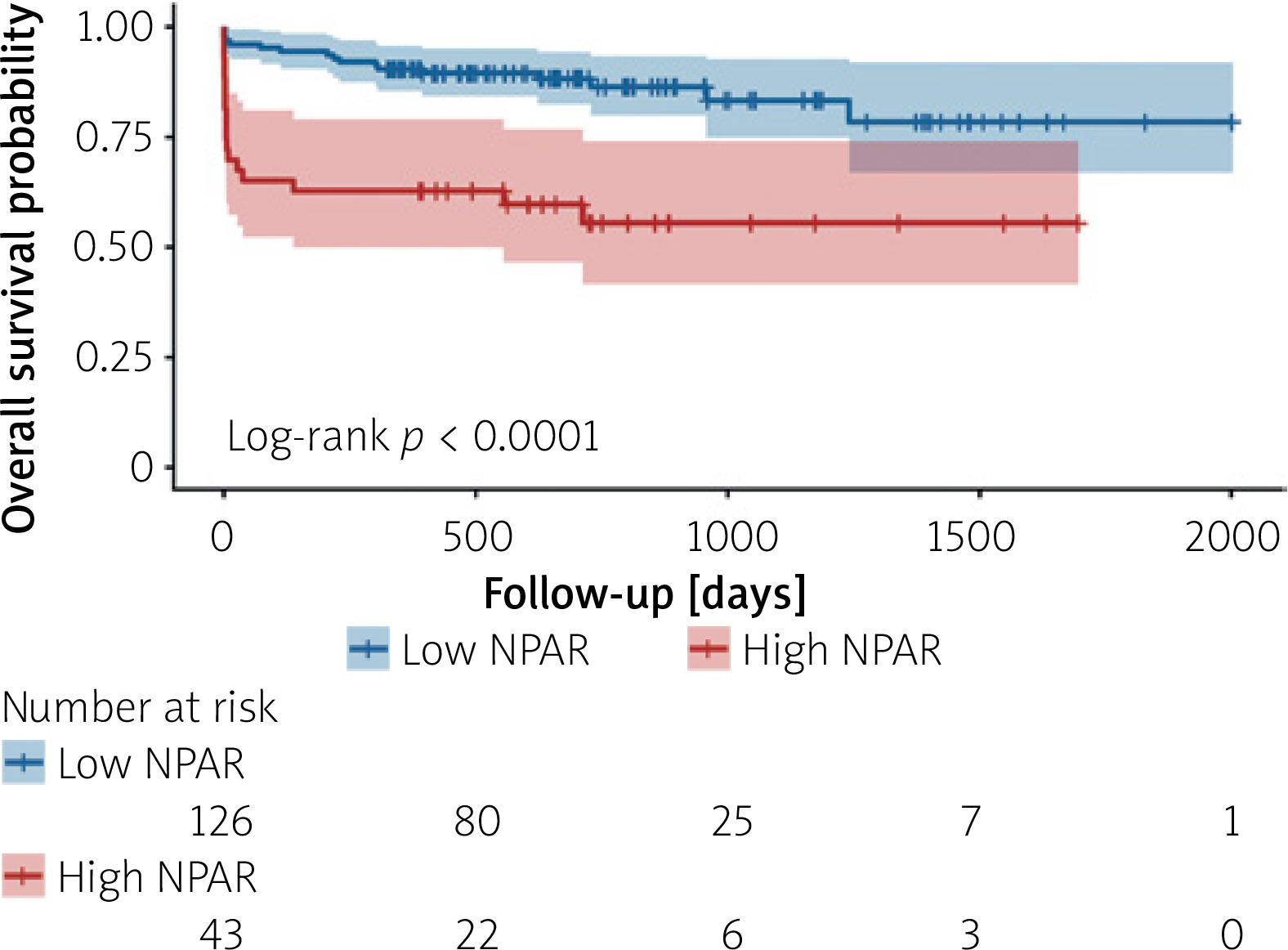
Kaplan-Meier survival analysis demonstrated significantly lower overall survival in patients with high NPAR values compared with those with low NPAR values (log-rank p < 0.0001) (Figure 4).
Discussion
In this cohort of TAVI recipients with reduced ejection fraction, elevated preprocedural NPAR was associated with both in-hospital and overall mortality after limited multivariable adjustment, with Kaplan–Meier analysis showing markedly worse survival in the high-NPAR group. To our knowledge, the association with in-hospital mortality represents a novel finding in this setting. Chronic kidney disease was associated with both early and long-term mortality, while lower LVEF and impaired right ventricular systolic function were each associated with overall mortality. Taken together, these results support a potential role for NPAR as an accessible adjunctive tool for preprocedural risk assessment in patients with reduced systolic function undergoing TAVI.
The adverse prognostic pattern observed with elevated NPAR in the present cohort aligns with earlier evidence from heart failure populations, in which systemic inflammation and malnutrition are major determinants of prognosis. Malnutrition has been reported in nearly half of patients with heart failure and is independently associated with increased mortality risk [15, 16]. Similarly, Wu et al. and Hu et al. demonstrated independent associations between elevated NPAR and adverse outcomes in patients with chronic heart failure [12, 13]. The consistency of these findings with our results is biologically plausible, as patients with elevated NPAR in our cohort also exhibited higher rates of chronic kidney disease and acute kidney injury together with higher BNP, CRP, and pulmonary artery systolic pressure levels and impaired right ventricular systolic function. These findings suggest that elevated NPAR may reflect the combined burden of inflammation, congestion, renal dysfunction, and impaired nutritional status in patients with reduced ejection fraction undergoing TAVI.
The prognostic significance of NPAR in the TAVI setting was previously established by Aslan et al., who reported that elevated preprocedural NPAR independently predicted 2-year all-cause mortality [14]. The present study extends these observations in two noteworthy respects. First, we report, for the first time in this setting, an association between preprocedural NPAR and in-hospital mortality after TAVI that persisted after adjustment for available covariates, an early endpoint predominantly determined by periprocedural complications, acute haemodynamic instability, and systemic inflammatory burden rather than the severity of valvular disease alone. Although restricted cubic spline analysis did not demonstrate statistically significant nonlinearity, this finding should be interpreted cautiously given the limited number of events. The identified cutoff was used for risk stratification and should not be interpreted as a biological threshold. Second, by focusing exclusively on patients with reduced ejection fraction, we address a high-risk subgroup defined by advanced myocardial dysfunction that has received limited attention in prior NPAR research. The reproducibility of NPAR’s prognostic relevance across both in-hospital and overall endpoints in this particularly vulnerable population further supports its potential utility as a preprocedural risk marker in routine clinical practice.
The mechanistic rationale underlying NPAR’s prognostic utility stems from the two distinct yet interrelated biological pathways it simultaneously captures. Elevated neutrophil levels indicate heightened systemic inflammation and immune dysregulation, both of which contribute to endothelial injury, oxidative stress, and adverse cardiac remodelling in patients with advanced cardiovascular disease [17]. Conversely, hypoalbuminaemia reflects not only impaired nutritional status but also the chronic inflammatory and catabolic state commonly observed in heart failure and frail elderly patients [15, 18]. Previous studies have also demonstrated an independent association between low preprocedural albumin levels and mortality after TAVI [19]. By integrating inflammatory activation and nutritional reserve into a single index, NPAR may provide a more comprehensive reflection of biological vulnerability than either parameter alone in patients undergoing TAVI with reduced systolic function.
Beyond NPAR, our multivariable analyses identified several clinical and functional parameters independently associated with mortality. Chronic kidney disease remained significant in adjusted models for both in-hospital and overall mortality, consistent with the well-recognized association between renal impairment and poorer outcomes following TAVI. In a large multicentre cohort, Allende et al. demonstrated that advanced CKD independently predicted both early and late mortality after TAVI [20]. Notably, when continuous creatinine was substituted for CKD in the overall mortality model, it failed to reach significance, suggesting that the dichotomous CKD construct more effectively captures the cumulative structural and functional renal burden relevant to prognosis in this population. Lower LVEF was also associated with long-term mortality in adjusted analysis, reflecting the prognostic implications of reduced systolic function. Reduced TAPSE was associated with mortality in both the in-hospital and overall models, consistent with growing evidence supporting the prognostic role of right ventricular dysfunction after TAVI irrespective of left ventricular function [21]. The numerically low effect estimate observed for TAPSE should be interpreted in the context of its relatively narrow physiological range and the fact that the association was modelled per 1-mm increment. While the effect estimate per 1-unit increase in NPAR may appear limited at first glance, the relatively elevated numerical distribution of NPAR values makes such increments clinically meaningful. In this context, each 5-unit rise corresponded to more than a twofold increase in in-hospital mortality risk and an approximately 1.5- to 1.7-fold increase in overall mortality risk. Collectively, these observations point to an intricate relationship among systemic inflammatory burden, impaired renal function, and biventricular dysfunction as key determinants of adverse outcomes in this population.
Preprocedural NPAR could serve as a clinically accessible marker for identifying adverse risk profiles in patients with reduced ejection fraction treated with TAVI. Derived entirely from routinely obtained laboratory parameters, NPAR can be calculated without additional cost or specialized testing, making it readily applicable in clinical practice. In the present cohort, an NPAR threshold of 20.74 yielded acceptable discriminatory performance for in-hospital mortality and modest-to-acceptable discrimination for overall mortality, consistent with the multifactorial nature of long-term outcomes in this population. Although NPAR is not intended to replace established risk models or comprehensive preprocedural evaluation, its simplicity and accessibility suggest a potential role as an adjunctive screening tool to identify patients at heightened early and long-term risk prior to the procedure.
The present study carries several inherent limitations. First, its retrospective single-centre design restricts the broader applicability of the findings and cannot fully exclude residual confounding, notwithstanding multivariable adjustment. Second, the relatively small sample size and the limited number of in-hospital events (n = 17) resulted in an events-per-variable ratio of approximately 8.5 in the multivariable logistic regression models, falling below the conventional threshold of 10; however, simulation studies suggest that reliable estimates can be obtained at lower EPV values when effect sizes are sufficiently large, as observed in the present study [22]. Furthermore, the independent contribution of NPAR beyond other correlated inflammatory and nutritional biomarkers was not formally assessed. Third, validated perioperative risk instruments, including the STS score and EuroSCORE II, were not consistently documented across the study population, precluding a formal comparison of NPAR’s predictive performance against established TAVI risk stratification tools. Fourth, preprocedural NPAR was measured on a single occasion, and longitudinal assessments capturing fluctuations in inflammatory or nutritional status throughout the follow-up period were not available. Fifth, formal frailty assessment and standardized nutritional evaluation were not routinely performed, and procedural variables including contrast volume, vascular complications, and bleeding events were not comprehensively incorporated into the analyses. In addition, cause-specific mortality data were unavailable, and all-cause mortality was therefore used as the primary outcome measure. Sixth, as the study population was derived from a single ethnic cohort, the applicability of the identified NPAR threshold to other populations may be limited and requires validation across diverse demographic groups. Finally, the NPAR threshold was identified through ROC analysis applied to the same cohort subsequently used for stratified comparisons, an approach that carries inherent risk of optimistic bias. Formal internal validation procedures, including bootstrapping, were not undertaken, and prospective external validation in independent cohorts will be required before this cutoff can be adopted in routine practice.
Conclusions
The present findings suggest that preprocedural NPAR is associated with both in-hospital and overall mortality, independent of the covariates examined, in patients with reduced ejection fraction treated with TAVI. As an inexpensive and readily calculable composite of systemic inflammatory burden and nutritional reserve, NPAR may complement existing tools for preprocedural risk stratification in this vulnerable population. Chronic kidney disease, reduced left ventricular systolic function, and right ventricular dysfunction were additionally associated with adverse outcomes in adjusted models, underscoring the multidimensional nature of perioperative risk in patients with reduced ejection fraction undergoing TAVI. Prospective multicentre validation is warranted to further evaluate the prognostic utility of NPAR within contemporary risk assessment frameworks for TAVI.