Kardiochirurgia i Torakochirurgia Polska

Full text

3/2026 vol. 23
Original paper

Association of preoperative anemia and blood transfusion with long-term survival after coronary artery bypass grafting

  1. Department of Cardiac Surgery, Zbigniew Religa Heart Center “Medinet”, Nowa Sol, Poland

  2. Department of Cardiac Surgery and Interventional Cardiology, Faculty of Medicine and Medical Sciences, University of Zielona Gora, Poland

  3. Doctoral School of Exact and Technical Sciences, University of Zielona Gora, Poland

  4. Department of Cardiac Surgery, Sana Heart Center Cottbus, Cottbus, Germany

Kardiochirurgia i Torakochirurgia Polska 2026; 23 (3): 203-212

Data publikacji online: 2026/10/12
Article file
Association of preoperative (1).pdf

Introduction

Coronary artery bypass grafting (CABG) remains the gold standard for treating multivessel coronary artery disease (CAD), providing established long-term survival benefits in appropriate patients [1]. Despite surgical advancements, preoperative anemia remains a prevalent clinical challenge, affecting up to 54% of cardiac surgery candidates [2]. Anemia is a well-documented risk factor for perioperative morbidity, including acute kidney injury (AKI), stroke, and increased mortality [2–4]. The latest 2024 EACTS/EACTAIC guidelines emphasize that anemia must be recognized as a serious medical condition requiring proactive optimization through the “first pillar” of patient blood management (PBM) [1, 5].

While anemia is a well-established driver of increased mortality, stroke, and acute kidney injury, the long-term impact of perioperative blood transfusions remains a subject of investigation. The scientific literature presents conflicting evidence. Some previous reports suggest that allogeneic packed red blood cell (pRBC) transfusion is an independent predictor of decreased long-term survival due to adverse effects such as immunomodulation and transfusion-related lung injury [1, 6]. Conversely, other studies argue that when clinical need is met and baseline risks are adequately adjusted, justified transfusions do not inherently worsen late survival [2, 4, 7, 8]. This lack of consensus in clinical data complicates the implementation of standardized protocols.

Aim

We aimed in this study to evaluate the associations of preoperative anemia and perioperative pRBC transfusion with long-term survival after isolated CABG.

Material and methods

Study design and population

This observational, retrospective study was designed according to STROBE guidelines (Strengthening the Reporting of Observational Studies in Epidemiology) [9]. Between November 2014 and December 2020, 1458 patients undergoing primary isolated CABG were included in this retrospective analysis at Zbigniew Religa Heart Center “Medinet” Nowa Sol, Poland. We used prospectively collected data from the surgical database. The data were collected and reported in accordance with Polish National Registry of Cardiac Surgery Procedures database (KROK registry) which is mandatory for every cardiac surgery department in Poland. The database captures detailed information on preoperative, intraoperative, and postoperative in-hospital variables for all patients undergoing any cardiac surgery procedure. In addition to the above, we retrieved surgical protocols and discharge notes for each patient from the surgical database. Figure 1 represents a flow chart of the patients included in the study. Follow-up data were retrieved from the Polish National Registry of Cardiac Surgery Procedures database (KROK registry) which is connected to the National Health Care registry of the Ministry of Health of the Republic of Poland, which stores and analyzes all health-related data. Follow-up continued until May 2024.
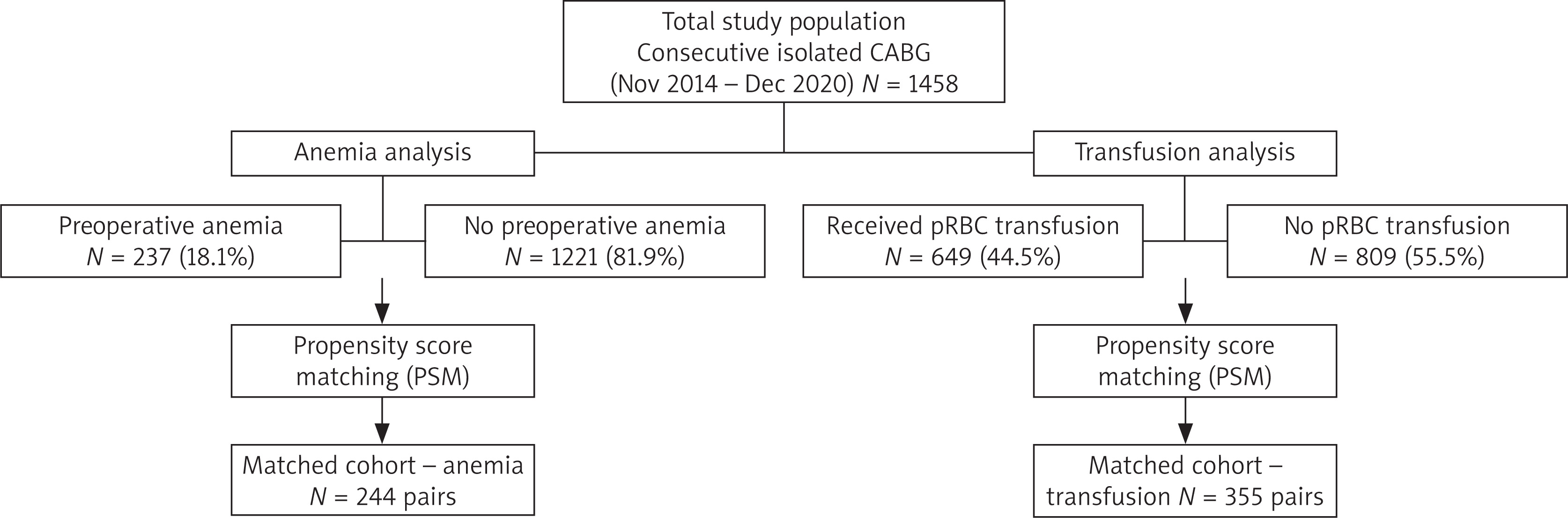
Figure 1

Study flowchart. STrengthening the Reporting of OBservational studies in Epidemiology (STROBE) flow diagram detailing selection of patients within each group using propensity score matching (PSM) for anemia and blood transfusion analyses

/f/fulltexts/KiTP/58774/KITP-23-3-58774-g001_min.jpg

Definitions and study endpoints

Preoperative anemia was defined according to the World Health Organization criteria as a hemoglobin (Hb) level below 12 g/dl for females and 13 g/dl for males [10]. Mild anemia was specifically categorized as Hb 11–11.9 g/dl for females and 11.0–12.9 g/dl for males. Blood transfusion was defined as the perioperative administration of at least one unit of allogeneic pRBC based on clinical indication. The primary endpoint was long-term all-cause mortality. All-cause mortality is considered as an objective and unbiased endpoint for comparative studies [11].

Statistical analysis

Continuous variables were expressed as means and standard deviations (SDs), while categorical variables were expressed as numbers and percentages; moreover, continuous variables normality was tested using the Shapiro-Wilk test. For continuous data, Student’s t-test was used for between-group comparisons, while categorical variables were compared using the Pearson χ2 test.

In order to reduce the impact of confounders inherent to any observational studies, propensity score (PS) matching was applied. Propensity scores were generated from a multivariable logistic regression model based on preoperative, operative, and postoperative variables as mentioned in Tables 1 and 2. Two separate propensity matched analysis were performed, with patients matched 1 : 1 using a caliper matching method without replacement with a caliper width of 0.2 standard deviations of the logit of the PS. The balance of the covariates was tested using the standardized mean difference (SMD). A standardized mean difference of ≤ 0.1 was considered indicative of adequate covariate balance (Table 1). Matched data were analyzed using procedures for matched analyses [12–17]. A Cox proportional hazard model stratified by matched pair was used. The hazard ratios (HRs) and corresponding 95% confidence intervals (95% CI) were reported. A p-value < 0.05 in a two-tailed test was considered statistically significant. Survival was estimated using the Kaplan-Meier method. Figures 2 and 3 show the comparison of covariate balance before and after matching. All variables achieved a balance threshold of < 0.1 after matching.

Table 1

Baseline, operative, and postoperative characteristics of patients – anemia group

FactorBefore matchingAfter matching
No preoperative anemia (n = 1194)Preoperative anemia (n = 264)P-valueSMDNo preoperative anemia (n = 244)Preoperative anemia (n = 244)P-valueSMD
Baseline characteristics
 Age [years]64.95 ±8.1367.36 ±7.66< 0.0010.30567.47 ±8.3067.07 ±7.700.570.051
 Female298 (25.0)45 (17.0)0.0060.19541 (16.8)44 (18.0)0.810.032
 BMI [kg/m2]28.72 ±4.4227.77 ±4.470.0020.21427.80 ±4.0927.91 ±4.480.770.026
 Obesity425(35.6)68(25.8)0.0020.21562 (25.4)66(27.0)0.750.037
 NYHA III-IV113 (9.5)28 (10.6)0.560.03821 (8.6)24 (9.8)0.750.043
 Diabetes430 (36.0)100 (37.9)0.570.03984 (34.4)90 (36.9)0.630.051
 Diabetes on insulin180 (15.1)49 (18.6)0.160.09337 (15.2)44 (18.0)0.460.077
 Dyslipidemia472 (39.5)96 (36.4)0.360.06582 (33.6)85 (34.8)0.840.026
 Hypertension1139 (95.4)248 (93.9)0.340.065229 (93.9)229 (93.9)> 0.99< 0.001
 Active smoker293 (24.5)60 (22.7)0.570.04352 (21.3)58 (23.8)0.580.059
 CLD76 (6.4)22 (8.3)0.270.07519 (7.8)18 (7.4)> 0.990.015
 PVD129 (10.8)57 (21.6)< 0.0010.29637 (15.2)48 (19.7)0.230.119
 History of CAEs15 (1.3)9 (3.4)0.0270.1434 (1.6)5 (2.0)> 0.990.030
 History of MI647 (54.2)171 (64.8)0.0020.217148 (60.7)157 (64.3)0.450.076
 Previous PCI325 (27.2)65 (24.6)0.390.05969 (28.3)62 (25.4)0.540.065
 AF35 (2.9)24 (9.1)< 0.0010.26115 (6.1)16 (6.6)> 0.990.017
 EF (%)51.22 ±9.8848.42 ±10.92< 0.0010.26949.40 ±10.5048.73 ±11.130.490.061
 EF < 40 (%)220 (18.4)69 (26.1)0.0060.18656 (23.0)61 (25.0)0.670.048
 Moderate RI648 (54.3)147 (55.7)0.680.028133 (54.5)136 (55.7)0.850.025
 Severe RI109 (9.1)45 (17.0)< 0.0010.23634 (13.9)38 (15.6)0.700.046
 Dialysis8 (0.7)9 (3.4)0.0010.1954 (1.6)5 (2.0)> 0.990.030
 LM disease473 (39.6)111 (42.0)0.480.049101 (41.4)102 (41.8)> 0.990.008
 Urgent/emergent670 (56.1)170 (64.4)0.0160.170149 (61.1)155 (63.5)0.640.051
 Preoperative cardiogenic shock3 (0.3)3 (1.1)0.0770.1072 (0.8)2 (0.8)> 0.99< 0.001
Operative characteristics
 Number of grafts2.31 ±0.822.33 ±0.920.710.0242.33 ±0.912.33 ±0.920.960.004
 OPCAB934 (78.2)193 (73.1)0.070.119180 (73.8)182 (74.6)0.910.019
 SITA200 (16.8)53 (20.1)0.200.08650 (20.5)48 (19.7)0.910.020
 SITA + SVG622 (52.1)150 (56.8)0.170.095138 (56.6)139 (57.0)> 0.990.008
 MAG342 (28.6)54 (20.5)0.0070.19152 (21.3)51 (20.9)> 0.990.010
 BITA265 (22.2)46 (17.4)42 (17.2)43 (17.6)
 RA77 (6.4)8 (3.0)10 (4.1)8 (3.3)
 Trainee321 (26.9)62 (23.5)0.280.07852 (21.3)57 (23.4)0.660.049
 VG30 (2.5)7 (2.7)0.830.0094 (1.6)6 (2.5)0.750.058
Postoperative characteristics
 DSWI30 (2.5)15 (5.7)0.0160.1609 (3.7)12 (4.9)0.650.061
 pRBC transfusion469 (39.3)180 (68.2)< 0.0010.606166 (68.0)160 (65.6)0.630.052
 pRBC units (n)1.32 (2.29)3.07 (5.02)< 0.0010.4472.68 (3.27)2.57 (2.97)0.710.033
 Postop IABP8 (0.7)5 (1.9)0.0690.1095 (2.0)4 (1.6)> 0.990.030
 Postop MI45 (3.8)14 (5.3)0.290.07413 (5.3)13 (5.3)> 0.99< 0.001
 Re-thoracotomy58 (4.9)16 (6.1)0.430.05315 (6.1)14 (5.7)> 0.990.017
 Stroke14 (1.2)4 (1.5)0.550.0302 (0.8)3 (1.2)> 0.990.041
Postoperative medication
 β-blockers1098 (92.0)231 (87.5)0.0300.147217 (88.9)217 (88.9)> 0.99< 0.001
 CCB239 (20.0)51 (19.3)0.860.01849 (20.1)46 (18.9)0.810.031
 DAPT211(17.7)39 (14.8)0.280.07937 (15.2)39 (16.0)0.900.023
 OACs60 (5.0)29 (11.0)0.0010.22123 (9.4)21 (8.6)0.870.029
 RAASI687 (57.5)141 (53.4)0.240.083137 (56.1)133 (54.5)0.780.033
 Statins1079 (90.4)222 (84.1)0.0040.189202 (82.8)206 (84.4)0.710.044

[i] Data are expressed as mean ± standard deviation or n (%). SMD – standardized mean difference, BMI – body mass index, NYHA – New York Heart Association, CLD – chronic lung disease, PVD – peripheral vascular disease, CAEs – cerebral adverse events, MI – myocardial infarction, PCI – percutaneous coronary intervention, AF – atrial fibrillation, EF – ejection fraction, RI – renal impairment, IABP – intra-aortic balloon pump, CCB – calcium channel blockers, DAPT – dual antiplatelet therapy, OACs – oral anticoagulants, RAASI – renin-angiotensin-aldosterone system inhibitors, LM – left main, OPCAB – off-pump coronary artery bypass grafting, SITA – single internal thoracic artery, SVG – saphenous vein grafts, MAG – multiple arterial grafts, BITA – bilateral internal thoracic arteries, RA – radial artery, VG – venous graft, DSWI – deep sternal wound infection, pRBC – packed red blood cells.

Table 2

Baseline, operative, and postoperative characteristics of patients – transfusion group

FactorBefore matchingAfter matching
No transfusion (n = 809)Transfusion (n = 649)P-valueSMDNo transfusion (n = 355)Transfusion (n = 355)P-valueSMD
Baseline characteristics
 Age [years]64.04 ±7.7167.06 ±8.26< 0.0010.37866.02 ±7.4165.93 ±8.390.880.011
 Female125 (15.5)218 (33.6)< 0.0010.43192 (25.9)91 (25.6)> 0.990.006
 BMI [kg/m2]29.01 ±4.4827.97 ±4.33< 0.0010.23628.07 ±3.9828.11 ±4.450.890.010
 Obesity300 (37.1)193 (29.7)0.0040.156107 (30.1)112 (31.5)0.740.030
 NYHA III–IV64 (7.9)77 (11.9)0.0120.13339 (11.0)32 (9.0)0.450.066
 Diabetes297 (36.7)233 (35.9)0.780.017120 (33.8)115 (32.4)0.750.030
 Diabetes on insulin128 (15.8)101 (15.6)0.940.00749 (13.8)47 (13.2)0.910.016
 Dyslipidemia316 (39.1)252 (38.8)0.950.005140 (39.4)120 (33.8)0.130.117
 Hypertension765 (94.6)622 (95.8)0.270.060339 (95.5)341 (96.1)0.850.028
 Active smoker221 (27.3)132 (20.3)0.0020.16486 (24.2)88 (24.8)0.930.013
 CLD46 (5.7)52 (8.0)0.090.09226 (7.3)28 (7.9)0.880.021
 PVD105 (13.0)81 (12.5)0.810.01549 (13.8)52 (14.6)0.830.024
 History of CAEs16 (2.0)8 (1.2)0.300.0594 (1.1)3 (0.8)> 0.990.029
 History of MI445 (55.0)373 (57.5)0.360.050198 (55.8)193 (54.4)0.760.028
 Previous PCI220 (27.2)170 (26.2)0.670.023101 (28.5)93 (26.2)0.550.051
 AF28 (3.5)31 (4.8)0.220.06614 (3.9)14 (3.9)> 0.99< 0.001
 EF (%)51.01 ±9.6250.34 ±10.730.200.06750.58 ±9.5950.59±10.010.990.001
 EF < 40 (%)149 ±18.4140 ±21.60.140.07972 ±20.367 ±18.90.700.036
 Moderate RI441 (54.5)354 (54.5)> 0.990.001203 (57.2)215 (60.6)0.400.069
 Severe RI47 (5.8)107 (16.5)< 0.0010.34428 (7.9)29 (8.2)> 0.990.010
 Dialysis2 (0.2)15 (2.3)< 0.0010.1841 (0.3)2 (0.6)> 0.990.043
 LM disease311 (38.4)273 (42.1)0.160.074157 (44.2)143 (40.3)0.320.080
 Urgent/emergent427 (52.8)413 (63.6)< 0.0010.221209 (58.9)212 (59.7)0.870.017
 Preoperative cardiogenic shock2 (0.2)4 (0.6)0.410.0561 (0.3)2 (0.6)> 0.990.043
 Preoperative anemia84 (10.4)180 (27.7)< 0.0010.45368 (19.2)66 (18.6)0.920.014
Operative characteristics
 Number of grafts2.15 ±0.822.52 ±0.82< 0.0010.4472.36 ±0.802.39 ±0.830.640.034
 OPCAB711 (87.9)416 (64.1)< 0.0010.580272 (76.6)286 (80.6)0.230.096
 SITA188 (23.2)65 (10.0)< 0.0010.36151 (14.4)50 (14.1)> 0.990.008
 SITA + SVG374 (46.2)398 (61.3)< 0.0010.306194 (54.6)197 (55.5)0.880.017
 MAG235 (29.0)161 (24.8)0.0760.096103 (29.0)101 (28.5)0.930.012
 BITA181 (22.4)130 (20.0)74 (20.8)88 (24.8)0.240.094
 RA54 (6.7)31 (4.8)29 (8.2)13 (3.7)
 Trainee171 (21.1)212 (32.7)< 0.0010.26298 (27.6)98 (27.6)> 0.99< 0.001
 VG12 (1.5)25 (3.9)0.0070.1477 (2.0)7 (2.0)> 0.99< 0.001
Postoperative characteristics
 DSWI14 (1.7)31 (4.8)0.0010.17212 (3.4)11 (3.1)> 0.990.016
 Postoperative IABP1 (0.1)12 (1.8)< 0.0010.1751 (0.3)2 (0.6)> 0.990.043
 Postoperative MI23 (2.8)36 (5.5)0.0110.13513 (3.7)10 (2.8)0.670.048
 Re-thoracotomy7 (0.9)67 (10.3)< 0.0010.4217 (2.0)7 (2.0)> 0.99< 0.001
 Stroke3 (0.4)15 (2.3)0.0010.1693 (0.8)4 (1.1)> 0.990.029
Postoperative medication
 β-blockers763 (94.3)566 (87.2)< 0.0010.247327 (92.1)323 (91.0)0.680.041
 CCB165 (20.4)125 (19.3)0.590.02871 (20.0)75 (21.1)0.780.028
 DAPT154 (19.0)96 (14.8)0.0360.11367 (18.9)68 (19.2)> 0.990.007
 OACs45 (5.6)44 (6.8)0.370.05122 (6.2)21 (5.9)> 0.990.012
 RAASI509 (62.9)319 (49.2)< 0.0010.280196 (55.2)192 (54.1)0.820.023
 Statins754 (93.2)547 (84.3)< 0.0010.285319 (89.9)318 (89.6)> 0.990.009

[i] Data are expressed as mean ± standard deviation or-n (%). SMD – standardized mean difference, BMI – body mass index, NYHA – New York Heart Association, CLD – chronic lung disease, PVD – peripheral vascular disease, CAEs – cerebral adverse events, MI – myocardial infarction,-PCI – percutaneous coronary intervention, AF – atrial fibrillation, EF – ejection fraction, RI – renal impairment, IABP – intra-aortic balloon pump, CCB – calcium channels blockers, DAPT – dual antiplatelet therapy, OACs – oral anticoagulants, RAASI – renin angiotensin aldosterone system inhibitors, LM – left main, HGB – hemoglobin, OPCAB – off-pump coronary artery bypass grafting, SITA – single internal thoracic artery, SVG – saphenous vein grafts, MAG – multiple arterial grafts, BITA – bilateral internal thoracic arteries, RA – radial artery, VG – venous graft, DSWI – deep sternal wound infection.
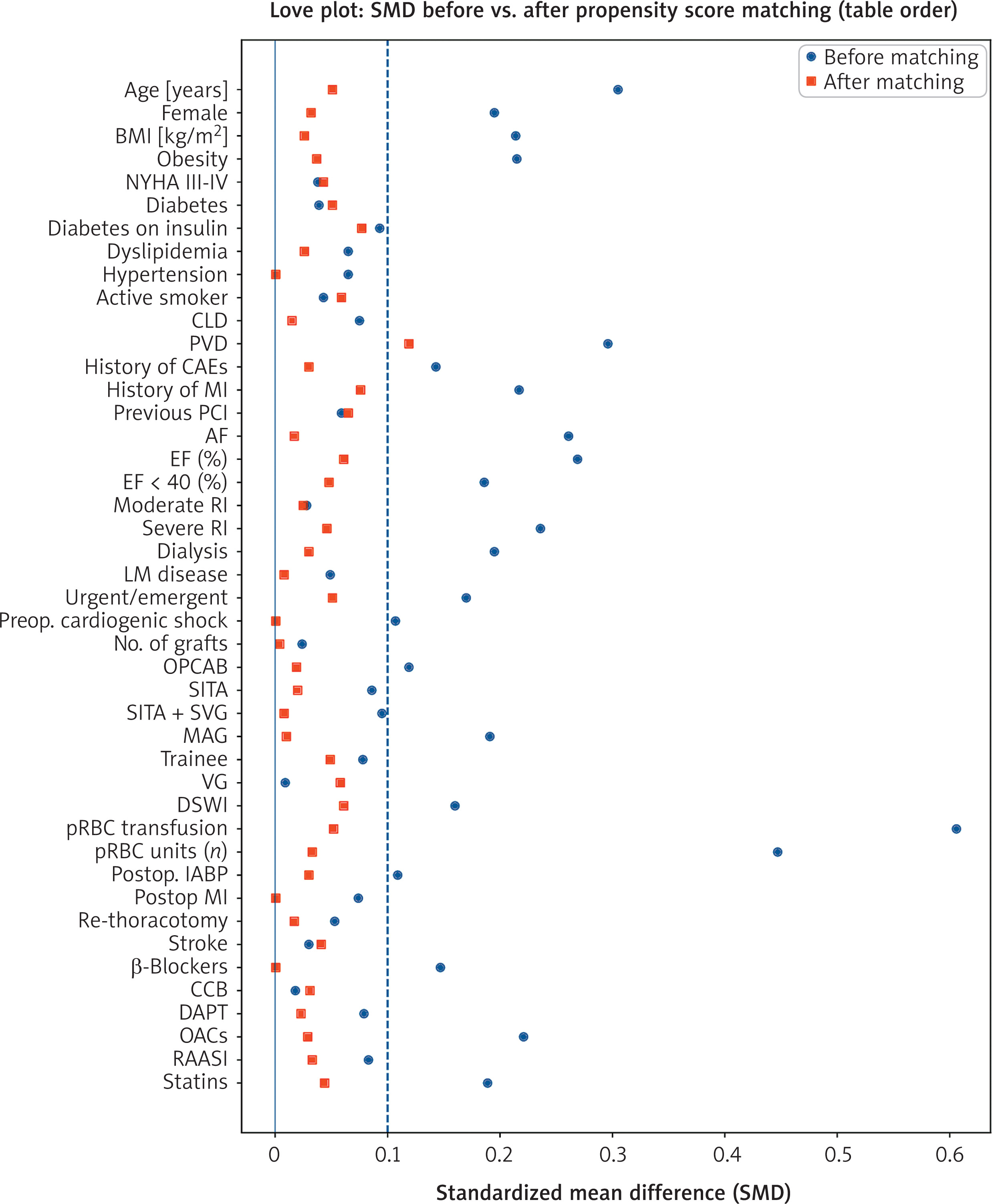
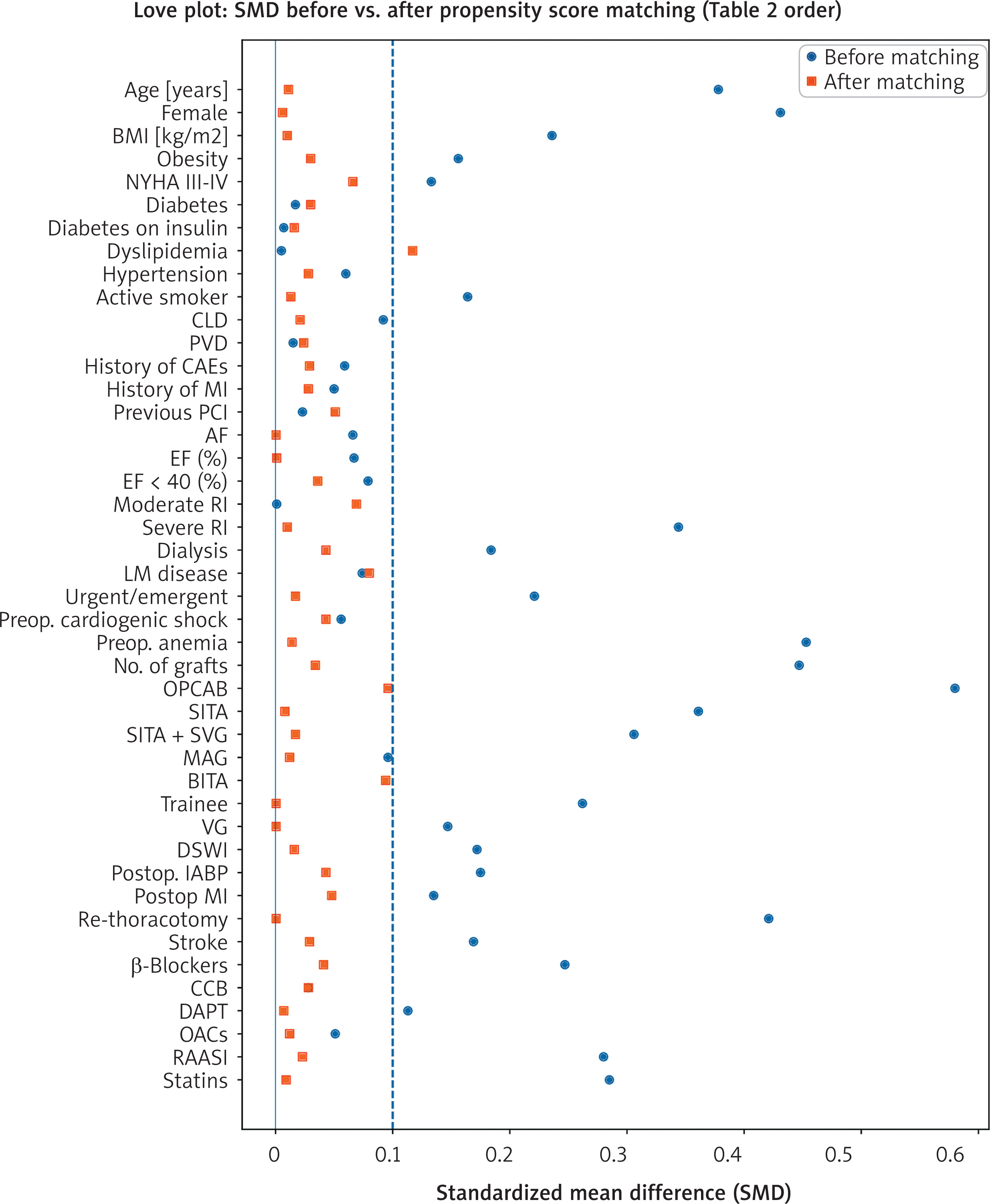
Figure 2

Standardized mean difference (SMD) Love plot analysis for perioperative anemia. Comparison of covariate balance before and after matching. All variables achieved a balance threshold of < 0.1 after matching

/f/fulltexts/KiTP/58774/KITP-23-3-58774-g002_min.jpg
Figure 3

Standardized mean difference (SMD) Love plot analysis for blood transfusion. Comparison of covariate balance before and after matching. All variables achieved a balance threshold of < 0.1 after matching

/f/fulltexts/KiTP/58774/KITP-23-3-58774-g003_min.jpg

Statistical analysis

All the statistical analyses were carried out in R (R Core Team (2021). R: A language and environment for statistical computing. R Foundation for Statistical Computing, Vienna, Austria. URL https://www.R-project.org/). Matching was performed using the ‘MatchIt’ and ‘Optmatch’ packages.

Results

Impact of preoperative anemia

In the total cohort of 1458 patients, preoperative anemia was identified in 264 (18.1%) cases, with 79.1% of these patients presenting with mild anemia. Before matching, the anemic group exhibited a significantly higher risk profile: patients were older, more likely to have peripheral vascular disease, atrial fibrillation, and severe renal impairment (defined as an estimated glomerular filtration rate (eGFR) of less than 50 ml/min/1.73 m2). Additionally, anemic patients more frequently required urgent or emergent surgery, had a higher incidence of postoperative deep sternal wound infection (DSWI), and were more likely to receive perioperative pRBC transfusions. Propensity score matching (PSM) generated 244 well-balanced pairs, with substantial reduction in baseline differences between groups (SMD ≤ 0.1 for most variables). The median follow-up period was 5.42 years (IQR: 3.82–7.27). In the matched analysis, preoperative anemia was associated with lower long-term survival (HR stratified on matched pairs: 1.56; 95% CI: 1.04–2.33; p = 0.029) (Figure 4).
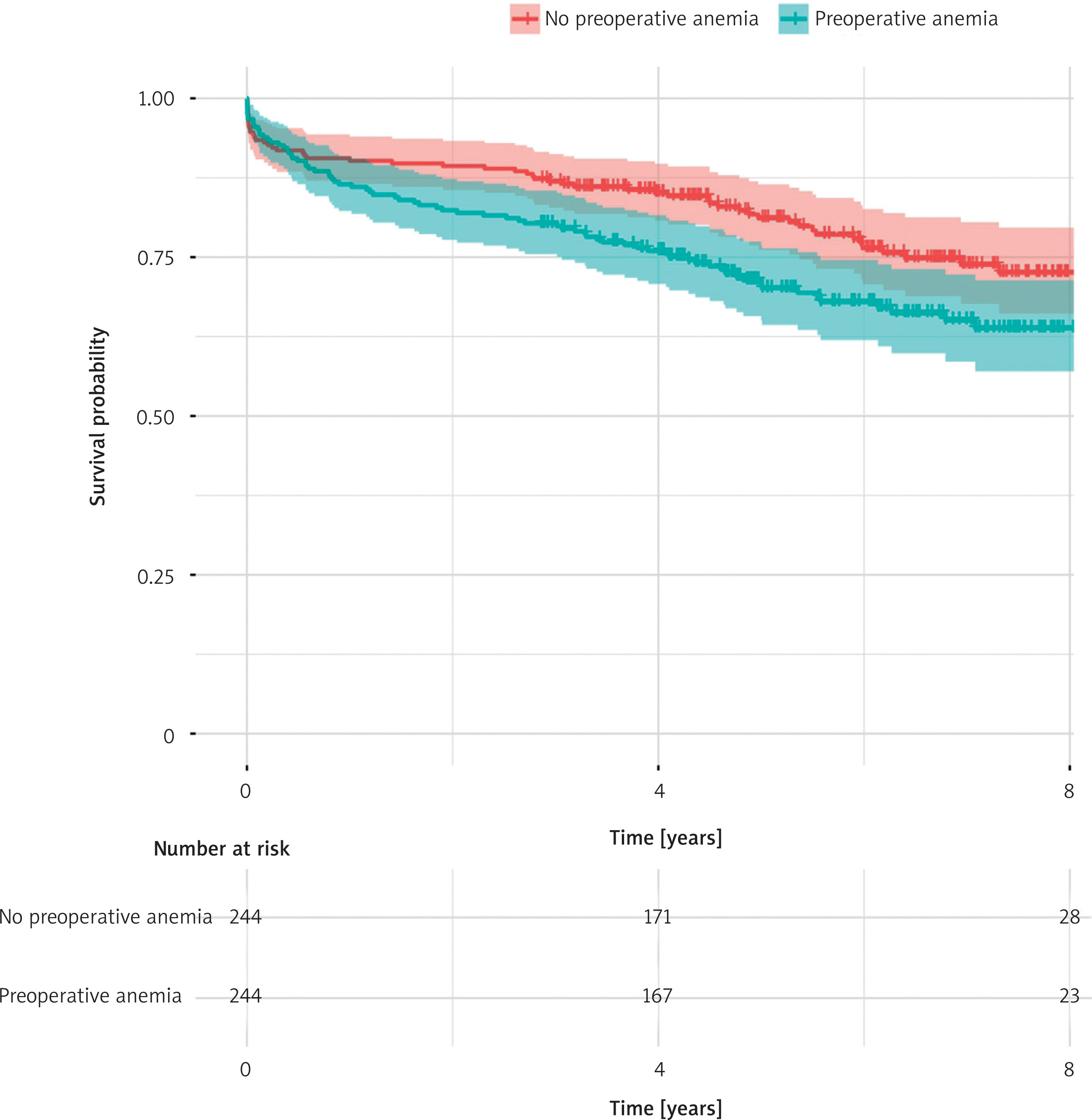
Figure 4

Survival curves for preoperative anemia. Kaplan-Meier survival analysis comparing propensity-matched patients with preoperative anemia and non-anemic controls

/f/fulltexts/KiTP/58774/KITP-23-3-58774-g004_min.jpg

Impact of transfusion

Regarding blood management, 649 (44.5%) patients received at least one unit of perioperative pRBC transfusion. In the unmatched population, transfused patients were significantly older, more likely to be female, and had a higher prevalence of NYHA class III-IV, severe renal impairment, and preoperative anemia. Operatively, the transfusion group received more grafts and was less frequently managed with off-pump techniques. Postoperatively, these patients showed higher rates of re-thoracotomy, stroke and DSWI. After propensity score matching, 355 pairs were selected, achieving good comparability across all baseline and operative characteristics (SMD ≤ 0.1). In this matched analysis, perioperative pRBC transfusion did not significantly impact long-term survival compared to the non-transfused group (HR stratified on matched pairs: 0.92; 95% CI: 0.63–1.35; p = 0.70) (Figure 5).
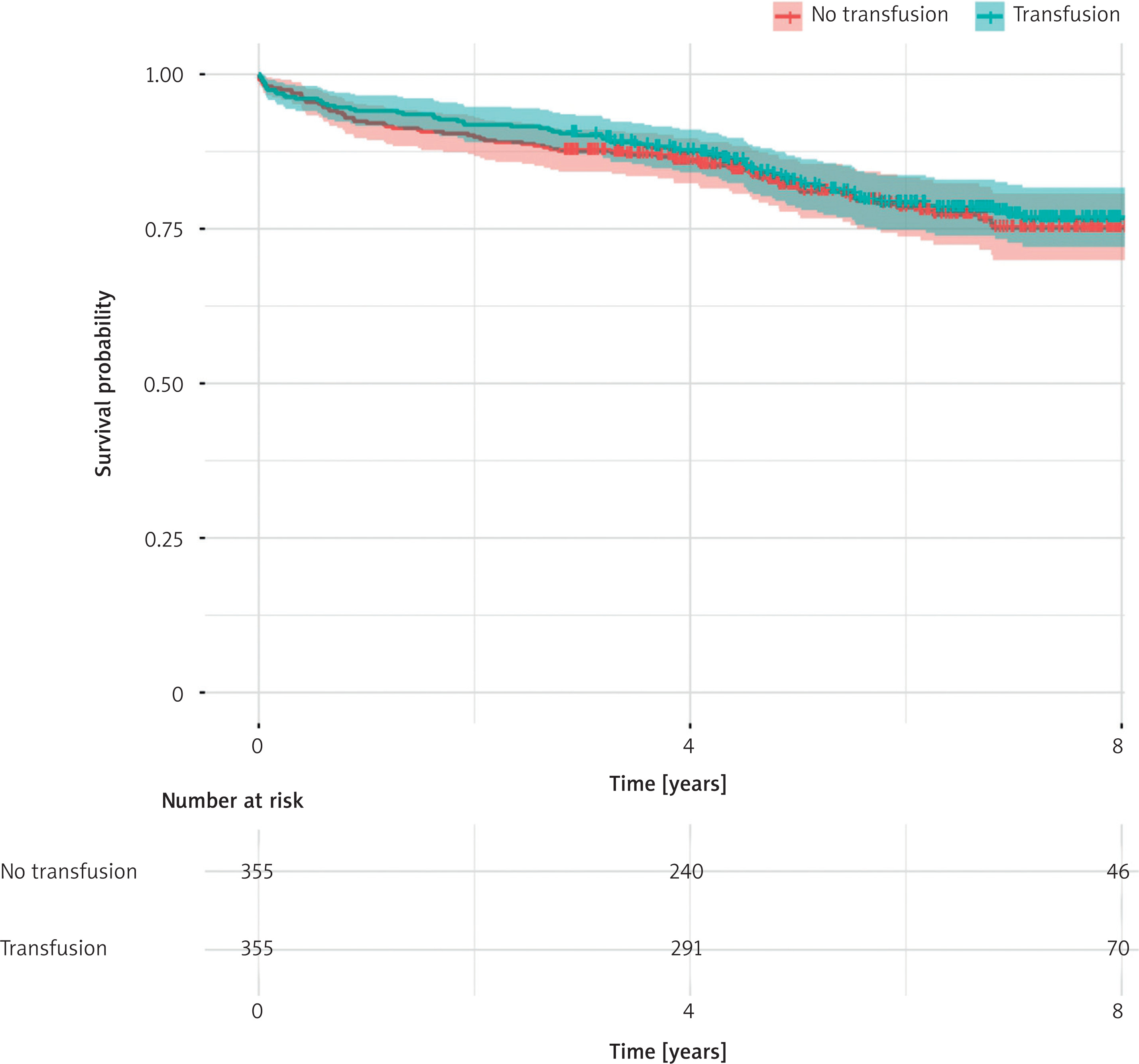
Figure 5

Survival curves for blood transfusion. Kaplan-Meier survival analysis comparing propensity-matched patients who received pRBC transfusion and those who did not

/f/fulltexts/KiTP/58774/KITP-23-3-58774-g005_min.jpg

Discussion

Our results demonstrate that preoperative anemia is more strongly associated with long-term mortality after CABG than perioperative blood transfusion [2, 4]. This is consistent with the possibility that anemic patients have reduced physiological reserve, making them more vulnerable to the inflammatory stress and hemodilutional effects of cardiopulmonary bypass [2, 18]. These findings are consistent with previous evidence, including large-scale meta-analyses, which report that even mild anemia is associated with a 2.5- to 2.7-fold increase in mortality risk [3, 8, 19]. In our cohort, nearly 80% of anemic patients presented with mild anemia, yet their long-term survival was significantly impaired, suggesting that even mild preoperative anemia may be clinically relevant in patients undergoing cardiac surgery [2, 19].

The 2024 EACTS/EACTAIC Guidelines on Patient Blood Management (PBM) categorize anemia not merely as a laboratory finding, but as a serious clinical condition that must be optimized before elective surgery [1]. Our study is consistent with the rationale underlying the “first pillar” of PBM, which advocates for early screening and treatment of anemia [1, 18]. The guidelines recommend that screening should occur at least 3 to 4 weeks prior to surgery to allow sufficient time for therapeutic interventions [1, 5]. This is crucial, because absolute or functional iron deficiency affects up to 50% of this population, and its presence, even without overt anemia, has been linked to impaired recovery of left ventricular function and increased transfusion requirements [20, 21].

The debate regarding the relative contribution of anemia versus transfusion to poor outcomes is central to contemporary cardiac surgery. While historical data often suggested that blood products were the primary cause of morbidity, our propensity-matched analysis did not demonstrate a significant association between perioperative pRBC transfusion and long-term survival [2, 7]. This suggests that the detrimental effects attributed to transfusion in older studies may have been partly confounded by the underlying severity of the patient’s illness [2, 8]. Furthermore, implementing comprehensive PBM protocols has been shown to reduce blood utilization without compromising patient safety or long-term survival [22, 23].

Therapeutic optimization, particularly through the use of intravenous (IV) iron, remains a cornerstone of preoperative care. Meta-analyses show that IV iron significantly increases preoperative hemoglobin levels and reduces the likelihood of requiring allogeneic blood [24, 25]. Modern formulations allow for rapid replenishment of iron stores, which may be advantageous over oral iron when the preoperative interval is short [1, 5, 25]. Our findings support greater emphasis on proactive preoperative haematological optimization rather than relying solely on transfusion to address perioperative anemia, aligning with recommendations in current international guidelines [1, 23].

The limitations of our findings include the retrospective, single-center design of the study. Crucially, we did not evaluate the impact of preoperative iron stores (ferritin and transferrin saturation) or the specific administration of iron therapy, which are important components of modern PBM strategies [2, 21, 25]. Furthermore, while PSM was used to minimize selection bias, potential unmeasured confounders inherent to retrospective clinical data may still influence the survival outcomes observed.

Conclusions

Preoperative anemia associated with lower long-term survival in patients undergoing CABG. In contrast, perioperative blood transfusion was not significantly associated with long-term survival after PSM. These findings highlight the potential prognostic importance of preoperative anemia and support the importance of preoperative hematological optimization in patients undergoing CABG.


Ethical approval

The study was approved by the Institutional Review Board at University of Zielona Gora (RCM-CM-KBUZ.001.01.2026), Poland. The requirement for individual informed consent for anonymous data analysis was waived by the Committee.

Disclosures

The authors report no conflict of interest.

References

1 

Casselman FPA, Lance MD, Ahmed A, Ascari A, Blanco-Morillo J, Bolliger D, Eid M, Erdoes G, Haumann RG, Jeppsson A, van der Merwe HJ, Ortmann E, Petricevic M, Weltert LP, Milojevic M; EACTS/EACTAIC/EBCP Scientific Document Group. 2024 EACTS/EACTAIC Guidelines on Patient Blood Management in Adult Cardiac Surgery. Eur J Cardiothorac Surg 2024; 67: 1–55.

2 

Frei L, Gogniat AL, Buser A, Bolliger D. Anemia and iron deficiency in cardiac surgery patients: prevalence, implications, and therapeutic considerations. J Clin Med 2025; 14: 8261.

3 

Padmanabhan H, Siau K, Curtis J, Ng A, Menon S, Luckraz H, Brookes MJ. Preoperative anemia and outcomes in cardiovascular surgery: systematic review and meta-analysis. Ann Thorac Surg 2019; 108: 1840–1848.

4 

Schwann TA, Vekstein AM, Kim TY. Anemia, transfusion, and late CABG survival. Ann Thorac Surg 2023; 115: 759–770.

5 

Corwin HL, Shander A, Speiss B, Muńoz M, Faraoni D, Calcaterra D, Welsby I, Ozawa S, Arnofsky A, Goldweit RS, Tibi P. Management of perioperative iron deficiency in cardiac surgery: a modified RAND Delphi Study. Ann Thorac Surg 2022; 113: 316–323.

6 

De Faria LB, Mejia OV, Miana LA, Ferreira Lisboa LA, Manuel V, Jatene MB, Jatene FB. Anemia and Cardiac Surgery. Braz J Cardiovasc Surg 2021; 36: 165–171.

7 

Mufti H, Alsharm F, Bahawi M, Almazmumi M, Alshaikh Y, Abushouk A, Algarni A, Jamalallail S, Almohammadi M. The association between preoperative anemia, blood transfusion need, and postoperative complications in adult cardiac surgery. J Cardiothorac Surg 2023; 18: 10.

8 

Ranucci M, Di Dedda U, Castelvecchio S, Menicanti L, Frigiola A, Pelissero G; Surgical and Clinical Outcome Research (SCORE) Group. Impact of preoperative anemia on outcome in adult cardiac surgery: a propensity-matched analysis. Ann Thorac Surg 2012; 94: 1134–1142.

9 

Vandenbroucke JP, von Elm E, Altman DG, Gøtzsche PC, Mulrow CD, Pocock SJ, Poole C, Schlesselman JJ, Egger M; STROBE Initiative. Strengthening the Reporting of Observational Studies in Epidemiology (STROBE): explanation and elaboration. Int J Surg 2014; 12: 1500–1524.

10 

WHO. Haemoglobin concentrations for the diagnosis of anaemia and assessment of severity 2011. Available from: https://apps.who.int/iris/handle/10665/85839.

11 

Lauer MS, Blackstone EH, Young JB, Topol EJ. Cause of death in clinical research: time for a reassessment? J Am Coll Cardiol 1999; 34: 618–620.

12 

Austin PC. Propensity-score matching in the cardiovascular surgery literature from 2004 to 2006: a systematic review and suggestions for improvement. J Thorac Cardiovasc Surg 2007; 134: 1128–1135.

13 

Benedetto U, Head SJ, Angelini GD, Blackstone EH. Statistical primer: propensity score matching and its alternatives. EurJ Cardiothorac Surg 2018; 53: 1112–1117.

14 

Austin PC. Optimal caliper widths for propensity-score matching when estimating differences in means and differences in proportions in observational studies. Pharm Statist 2011; 10: 150–161.

15 

Austin PC. Statistical criteria for selecting the optimal number of untreated subjects matched to each treated subject when using many-to-one matching on the propensity score. Am J Epidemiol 2010; 172: 1092–1097.

16 

Austin PC. A tutorial and case study in propensity score analysis: an application to estimate the effect of in-hospital smoking cessation counseling on mortality. Multivariate Behav Res 2011; 46: 119–151.

17 

Collins GS, Le Manach Y. Comparing treatment effects between propensity scores and randomized controlled trials: improving conduct and reporting. Eur Heart J 2012; 33: 1867–1869.

18 

Kloeser R, Buser A, Bolliger D. Treatment strategies in anemic patients before cardiac surgery. J Cardiothorac Vasc Anesth 2023; 37: 266–275.

19 

Khalaji A, Ajam A, Sheikhy A, Behnoush AH, Fallahzadeh A, Bagheri J, Mansourian S, Momtahen S, Masoudkabir F, Hosseini K. Mortality across the spectrum of hemoglobin level in patients undergoing surgical coronary revascularization. Clin Cardiol 2023; 46: 535–542.

20 

Nan Y, Tiemuerniyazi X, Song Y, Chen L, Yang Z, Zhang S, Feng W. Iron deficiency might impair the recovery of left ventricular function after surgical revascularization in diabetic patients. Rev Cardiovasc Med 2023; 24: 209.

21 

Hubert M, Gaudroit B, Biedermann S, Gouezec H, Sylvestre E, Bouzille G, Verhoye JP, Flecher E, Ecoffey C. Impact of preoperative iron deficiency on blood transfusion in elective cardiac surgery. J Cardiothorac Vasc Anesth 2019; 33: 2141–2150.

22 

Akhrass R, Bakaeen FG, Akras Z, Houghtaling PL, Soltesz EG, Gillinov AM, Svensson LG. Primary isolated CABG restrictive blood transfusion protocol reduces transfusions and length of stay. J Card Surg 2020; 35: 2506–2511.

23 

Czarnecka J, Neuschwander A, Aujoulat T, Balmier A, Belcour D, Boulanger B, Bourgain C, Caron M, Kiss G, Larghi M, Lebard C, Mellano V, Larson J, Megroian B, Lefrançois A, Fox S Pollet A, Bourgoin P, Biland G, Braunberger E, Maccio G, Delmas B. Red Blood Cell Transfusion Requirements Before and After Implementation of a Perioperative Patient Blood Management Program in Adult Patients Undergoing Cardiac Surgery. A Before and After Observational Study. J Cardiothorac Vasc Anesth 2024; 38: 73–79.

24 

Liu HM, Tang XS, Yu H, Yu H. The efficacy of intravenous iron for treatment of anemia before cardiac surgery: an updated systematic review and meta-analysis. J Cardiothorac Surg 2023; 18: 16.

25 

Gupta S, Panchal P, Gilotra K, Wilfred AM, Hou W, Siegal D, Whitlock RP, Belley-Cote EP. Intravenous iron therapy for patients with preoperative iron deficiency or anaemia undergoing cardiac surgery. Interact CardioVasc Thorac Surg 2020; 31: 141–151.

Copyright: © 2026 Polish Society of Cardiothoracic Surgeons (Polskie Towarzystwo KardioTorakochirurgów) and the editors of the Polish Journal of Cardio-Thoracic Surgery (Kardiochirurgia i Torakochirurgia Polska). This is an Open Access article distributed under the terms of the Creative Commons Attribution-NonCommercial-ShareAlike 4.0 International (CC BY-NC-SA 4.0) License (http://creativecommons.org/licenses/by-nc-sa/4.0/), allowing third parties to copy and redistribute the material in any medium or format and to remix, transform, and build upon the material, provided the original work is properly cited and states its license.
Share
without publication fees