Electrical storm (ES) is a life-threatening emergency condition associated with high morbidity and mortality. The clinical consensus statement emphasizes multidisciplinary heart-team (MDHT) management [1]. In selected patients, a comprehensive approach may include ventricular tachycardia (VT) ablation with epicardial access, left ventricular support, and sympathetic denervation [2, 3]. The STAR study demonstrated that percutaneous stellate ganglion block (PSGB) is an effective treatment for ES in patients with all types of VTs/ventricular fibrillation (VFs), but its predictive role in guiding cardiac sympathetic denervation (CSD) remains unclear [4].
A 42-year-old female patient presented with refractory ES with recurrences of VTs/VFs (> 70 implantable cardioverter defibrillator [ICD] interventions during the first day of hospitalization). Her medical history included DDDR-ICD implantation for secondary prevention due to recurrent symptomatic sustained VT with superior axis right bundle branch-like morphology, and minimally invasive mitral valve replacement (MVR) due to Barlow’s disease, along with left atrial appendage (LAA) and patent foramen ovale closure with endocardial sutures in another center. Two years after MVR, the patient experienced recurrences of ES, symptomatic fast VT/VF, and paroxysmal atrial fibrillation (PAF), with non-inducible VT during urgent electrophysiological study. However, several PVCs morphologies and clinical VT morphology suggested epicardial origin. Amiodarone therapy led to a 2-year arrhythmia-free period. Then, ES recurred without modifiable triggers. Despite extensive non-invasive therapy, only continuous lignocaine infusion (20 mg/h) suppressed VT. Re-appearance of salvos of monomorphic non-sustained VTs and sustained VTs was documented twice within the 2–4 hours of a break in lignocaine infusion. Device interrogation showed that all episodes began with monomorphic VT, and ATP attempts often degenerated into fast VT/VF requiring shocks. ECG indicated a likely epicardial VT origin in the posteroinferior wall. The patient was referred from the local tertiary center for experienced electrophysiology (EP) Heart Team consultation. Following MDHT evaluation, the patient was deemed eligible for a hybrid procedure with potential thoracoscopic CSD. Lignocaine was stopped 2 days prior, triggering ES unresponsive to two left-sided PSGBs. Lignocaine infusion was reinstated and continued up to shortly before the procedure. Despite an intermediate PAINESD score (9 points: general anesthesia + ES), the added risks of single-lung ventilation and epicardial access increased the likelihood of peri-procedural acute hemodynamic decompensation. Therefore, elective veno-arterial extracorporeal life support (V-A ECLS) was preferred for the procedure.
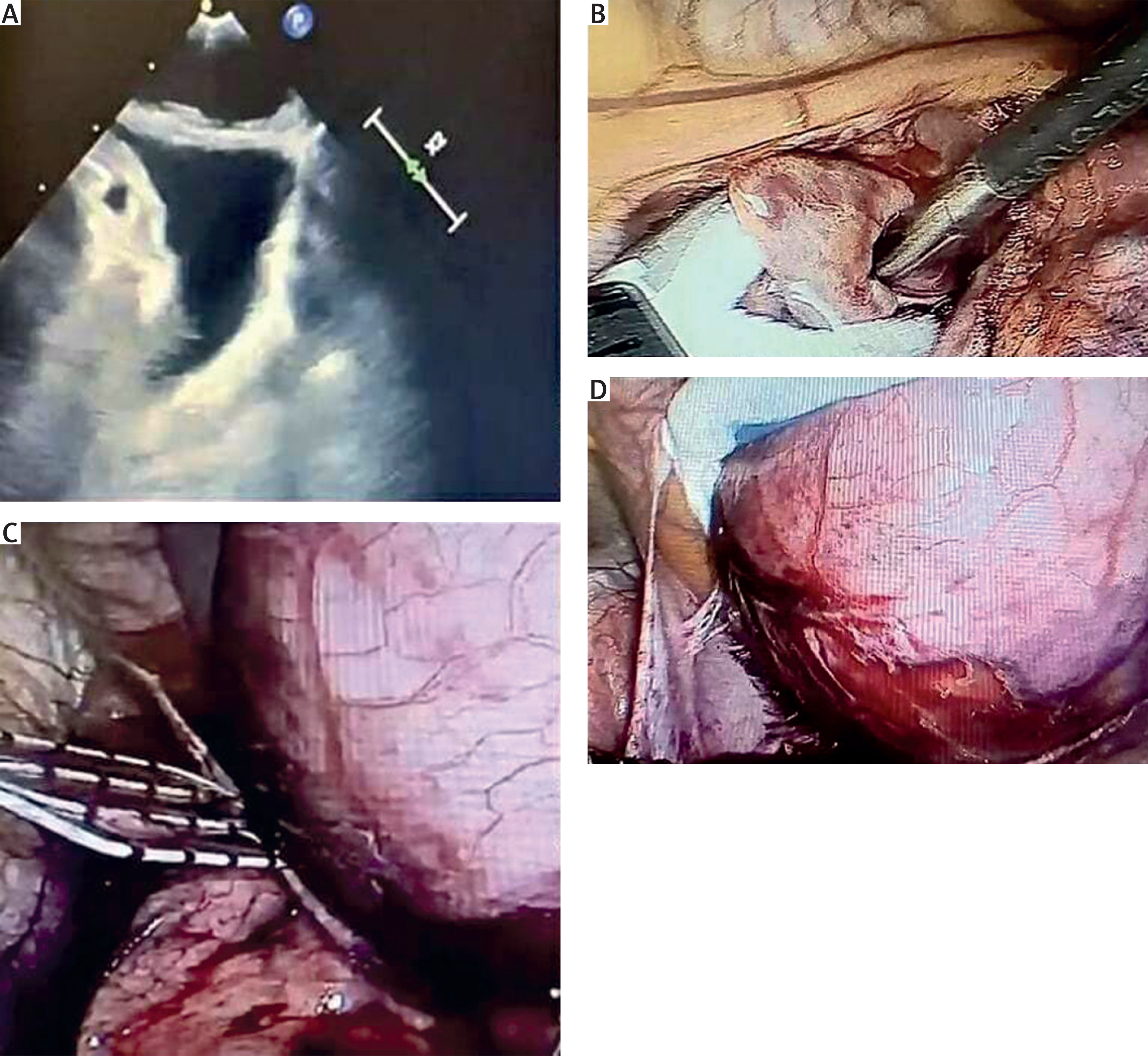
Firstly, modified 12-lead ECG settings and patch positions were used for three-dimensional electroanatomical mapping and navigation. A decapolar catheter was placed in the right ventricle, and a steerable quadripolar catheter was advanced into the coronary sinus, but it failed to reach the tachycardia’s site of origin. Then, in the second stage of the hybrid procedure, the peripheral V-A ECLS was implanted under transesophageal echocardiography (TEE) guidance. TEE confirmed normal MV function and no interatrial septal flow, but revealed a wide-open LAA orifice and an inferobasal left ventricle aneurysm.
Then, with 3 thoracoscopic ports, epicardial left ventricle mapping was performed. Programmed ventricular stimulation resulted in repetitive induction of clinical VTs (Figure 1). Epicardial mapping revealed a wide area of late potentials, decremental conduction, and local abnormal ventricular activity in the infero-basal region. Then, epicardial HD Grid-guided cryoablation with the CoolCryo system (Medinice S.A., Warsaw, Poland) was performed by creating lesion lines around the left ventricle base, encircling the aneurysmal area, and targeting sites of abnormal signals. Epicardial re-mapping showed complete scar homogenization. The unsuccessful PSGB led the team to abandon or postpone CSD. Subsequently, excision of the ligament of Marshall (LOM) up to a vestigial fold and left atrial appendage occlusion (LAAO) with AtriClip ProV 40 mm (Atricure, Mason, Ohio, USA) were performed (Figure 2). Finally, several programmed ventricular stimulations (epicardial) up to 3 trains and 3 extrastimuli did not induce any VTs. After the hybrid procedure, all anti-arrhythmic drugs were stopped, and the patient began structured cardiac rehabilitation on day 4. Rehabilitation triggered a brief recurrence of PAF, which resolved with colchicine and propafenone. During a 6-month follow-up, including over 4 weeks of in-hospital telemonitoring, multiple Holter recordings, and device checks, no VT/VF recurrences were observed (0 vs. 96 pre-procedure), and peri-procedural PAF resolved. The patient returned to her full-time job as an open-air folk museum guide.
Figure 1
Monomorphic ventricular tachycardia, likely originating from the apical/inferolateral region of the left ventricle
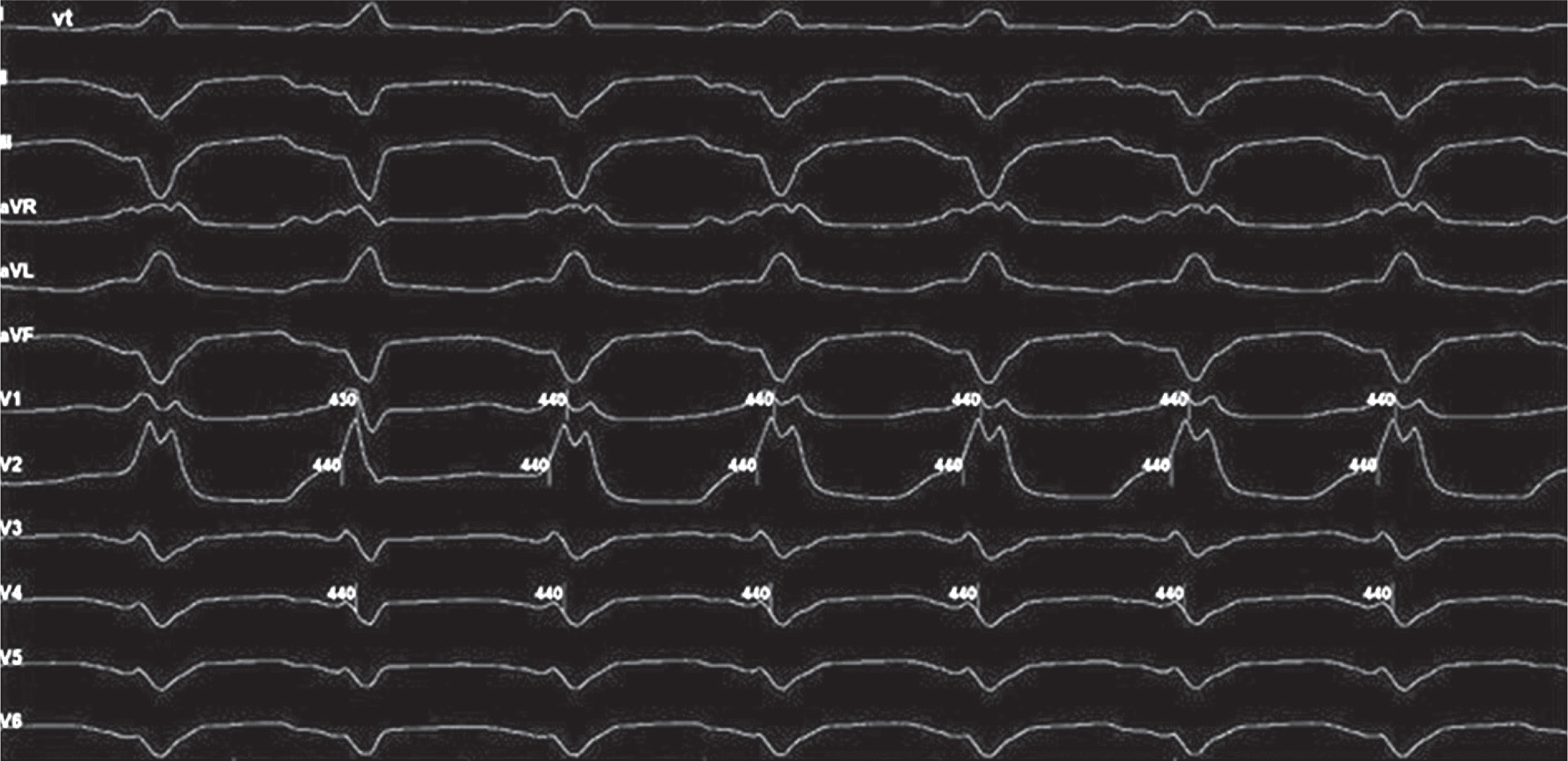
Figure 2
A – Intraoperative transesophageal echocardiography revealed left atrial appendage recanalization. B – Left atrial appendage occlusion. C – Epicardial left ventricle mapping. D – Cryoablation
PSGB should be validated not only for management of VT/VF/ES, but also as a predictor of the need and efficacy of CSD in preventing VT recurrences. Despite the reported > 92% efficacy of PSGB in ES (≥ 50% reduction of arrhythmic episodes), its ineffectiveness in our patient guided an individualized MDHT-based approach and modification of strategy, ultimately leading to CSD abandonment, and presumed local denervation was achieved by excision of the LOM up to the vestigial fold [4]. LOM and vestigial fold excision have potential for intrinsic cardiac autonomic nervous system modulation and local sympathectomy for AF, ventricular arrhythmias, and heart failure [2, 5]. This approach requires only an additional 30-90 seconds and no additional equipment if LAAO is planned.
Although LAAO can be managed through various approaches, direct suturing poses a long-term risk of recanalization, whereas the external LAA clipping offers a more durable occlusion and reduces the likelihood of late recanalization. In our case, the TEE revealed ineffective prior LAA suturing, prompting a successful LAAO with thoracoscopic clipping [6]. Although this was a redo procedure, the surgical team’s expertise facilitated its execution, and thoracoscopic access was further eased by the minimally invasive nature of the prior MVR; following a full sternotomy, such access would have been considerably more challenging due to adhesions and anatomical alterations. HD Grid-guided cryoablation proved highly effective, completely suppressing VT/VF in follow-up and representing a promising therapeutic option for refractory ES. As strategies for acute care and further management for VT/VFs continue to evolve, hybrid MDHT approaches may play an increasingly important role in optimizing care for patients with refractory ES/VT/VFs.