Introduction
Dysmenorrhea, commonly referred to as painful menstruation, is a highly prevalent gynaecological disorder affecting a significant proportion of individuals of reproductive age [1–3]. It is clinically categorised into primary dysmenorrhea, which occurs in the absence of underlying pelvic pathology, and secondary dysmenorrhea, which is typically associated with identifiable conditions such as endometriosis, adenomyosis, or uterine fibroids [1–3]. Despite its widespread occurrence, dysmenorrhea remains underrecognised in clinical practice, often dismissed as a normal aspect of menstruation, contributing to inadequate management and diminished quality of life among sufferers [1, 3–5].
Epidemiological studies indicate that up to 90% of adolescent and young adult women experience dysmenorrhea, with approximately 10–20% reporting pain severe enough to interfere with daily functioning, educational engagement, and workplace attendance [2, 6–8].
The pathophysiology of primary dysmenorrhea involves increased synthesis and release of endometrial prostaglandins – primarily prostaglandin F2α and prostaglandin E2 – during menstruation, leading to myometrial hypercontractility, uterine ischemia, and subsequent nociceptive pain [1, 8, 9]. Other implicated mediators include vasopressin and leukotrienes, which may potentiate uterine activity and pain signalling [1, 8, 9].
Multiple risk factors have been identified, including early menarche, long menstrual duration, heavy menstrual bleeding, a positive family history, and behavioural factors such as sedentary lifestyle, poor sleep quality, and psychological distress [2, 10–12]. These factors often intersect with broader sociocultural determinants, such as limited menstrual health education and stigma surrounding menstruation [8, 13].
The burden of dysmenorrhea extends beyond physical discomfort. Studies consistently demonstrate its detrimental impact on various domains of quality of life, including emotional well-being, cognitive function, and social engagement. Patients often report elevated levels of anxiety, irritability, fatigue, and depressive symptoms, contributing to a complex biopsychosocial experience of illness [8, 14].
Management strategies are typically centred on the use of non-steroidal anti-inflammatory drugs (NSAIDs), which inhibit cyclooxygenase-mediated prostaglandin synthesis, and hormonal contraceptives that suppress ovulation and stabilise endometrial proliferation [1, 15]. While these therapies are effective for many, access remains uneven, and side effect profiles or sociocultural barriers may compromise patient adherence. Complementary and alternative interventions – such as acupuncture, dietary adjustments, and cognitive-behavioural therapy – are gaining traction, yet require further validation in well-designed clinical trials [9, 16].
Given the high global prevalence, multifactorial pathogenesis, and substantial quality-of-life implications associated with dysmenorrhea, there is a pressing need to advance understanding and optimise management strategies. The present study aimed to assess the prevalence of dysmenorrhea, as well as the effectiveness of its diagnosis and treatment, among Polish women in order to identify unmet needs and areas requiring additional support.
Material and methods
A cross-sectional study was conducted from June 2024 to September 2025 among Polish women, using a questionnaire comprising 65 items divided into eight sections.
The questionnaire used in this study was developed by the authors based on a review of the existing literature on dysmenorrhea, as well as clinical experience. It included questions addressing demographic characteristics, medical history, menstrual patterns, symptom severity, diagnostic pathways, and treatment approaches. Prior to the main study, the questionnaire was pilot- tested on a small group of participants to evaluate clarity, relevance, and comprehensibility. Based on the feedback obtained, minor modifications were introduced to improve the final version of the survey.
The questionnaires were collected online and at various Polish clinics nationwide. The questionnaires were distributed via QR codes at clinical centres, outpatient clinics, and public healthcare facilities, where patients presented for routine check-ups or were referred for surgical treatment for various reasons. The selection of centres provided nationwide coverage, as reflected in the reported places of residence across administrative regions (voivodeships in Poland). The questionnaires were offered to all female patients regardless of age, socioeconomic or occupational status, race, disabilities, or level of education. Women who were unable to scan the QR code were provided with a paper version or assisted by a staff member who read the questions aloud. After scanning the QR code, the patient was directed to the first page containing informed consent and information about the purpose of the study. After giving consent, the patient was able to complete the questionnaire.
Statistical analysis was performed using appropriate descriptive and inferential methods. Continuous variables were summarised as means with standard deviations (SD), medians, interquartile ranges (Q1–Q3), and minimum–maximum values, depending on data distribution. Categorical variables were presented as absolute frequencies and percentages. The normality of continuous data distribution was assessed using the Shapiro-Wilk test. For comparisons between groups, parametric tests (Student’s t-test) were applied for normally distributed variables, while non-parametric equivalents (Mann-Whitney U test or Kruskal-Wallis test) were used when distributional assumptions were not met. Associations between categorical variables were evaluated using the χ2 test or Fisher’s exact test, as appropriate. The comparison of pain intensity before and after treatment was conducted using paired statistical tests, and statistical significance was set at p < 0.05. All analyses were performed using Statistica 13.3 Programme. All participants provided written informed consent prior to participation, and data were collected anonymously.
The study is reported in accordance with the Strengthening the Reporting of Observational Studies in Epidemiology guidelines.
According to Polish law, the study did not require approval from a bioethics committee because it did not constitute a medical experiment or clinical study and involved no interventions or procedures beyond standard practice.
Results
General characteristics of the studied population
Demographic characteristics
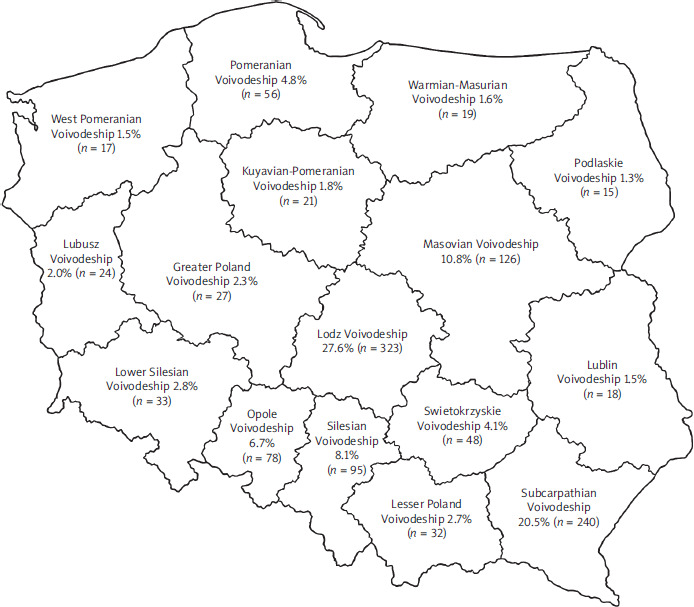
The study included 1,172 female participants with an average age of approximately 29.4 years (SD = 8.7; min = 17; max = 66 years). The proportion of females resided in cities with populations of up to 500,000 (24.3%), followed by rural areas (21.1%) and cities with populations up to 1 million (18.5%). Only 9% of participants reported living in small towns (≤ 50,000), and 12% in large metropolitan areas, indicating that the sample included a diverse but predominantly urban population. The distribution of respondents by their region of origin (voivodeship) is presented in Figure 1.
Regarding employment status, office workers (42.7%) and students (39.4%) constituted the majority of respondents, whereas workers accounted for 13.8%. A small percentage were unemployed (3.9%) or retired (0.3%), suggesting a mostly young, active population.
Comorbidities
Participants’ mean body weight was 64.2 kg (SD = 13.0), spanning a broad range of 35.6–157 kg, indi-cating a heterogeneous sample. The mean age of menarche was reported as 14.7 years (SD = 1.47; min = 8; max = 18). The mean age of menopause was 47.5 years (SD = 9.1), with most values distributed between 45 and 54 years. The average menstrual cycle length was 29.3 days (SD = 4.5), consistent with the expected physiological range for a regular menstrual cycle.
In terms of menstrual cycle regularity, 77.8% of respondents reported having regular cycles, 21.4% indicated irregularity, and a small fraction (0.8%) stated they do not monitor their cycle.
32.1% (n = 376) of respondents reported chronic diseases. The most commonly reported conditions were hypothyroidism (21.6%) and Hashimoto’s disease (18%), showing a significant prevalence of endocrine disorders in the sample. Endometriosis and polycystic ovary syndrome (PCOS) were also relatively common, reported by 9.7% and 11% of respondents, respectively. A moderate proportion of participants reported depression (6.8%), while metabolic disorders such as insulin resistance (3.9%) and diabetes (3.2%) occurred less frequently. Conditions like asthma (8.1%) and allergies (2.3%) reflected a modest but significant burden of chronic immune- related diseases. Neurological disorders (2.6%) and celiac disease (1.3%) were less common indicating a relatively low prevalence in this group. Cardiovascular diseases were reported by 7.4% of respondents, dermato- logical diseases by 6.7%, and other conditions by 7.1%.
The data are presented in Table 1; these results demonstrate a high incidence of endocrine and reproductive health issues, accompanied by moderate representation of metabolic and psychosomatic disorders. These findings may indicate that the study population is particularly affected by hormonal and autoimmune imbalances, warranting further clinical investigation.
Table 1
Prevalence of reported chronic conditions among respondents per age group
Reproductive history
Among all surveyed participants, 29.7% (n = 348) reported having given birth. Within this subgroup, the majority had experienced one childbirth (52.3%), while 36.2% reported having two children. A smaller proportion of respondents had three births (8.5%), and only 3.4% reported four or more births. On the other hand, 35.1% (n = 411) of respondents reported having experienced at least one pregnancy. Within this group, the majority had been pregnant once (48.9%), followed by participants who who had two pregnancies (34.8%). Smaller proportions of respondents reported three pregnancies (10.7%) or four or more pregnancies (5.6%). Data regarding the pregnancy and the parity of the study group are presented in Table 2.
Family anamnesis
41.4% (n = 484) of all females reported that first- degree female relatives also suffered from painful menstruation. Among these females, the most frequently reported familial disorders were uterine fibroids (37.1%), followed by ovarian cysts (20%) and endometriosis (17.6%). Malignant conditions were reported less frequently but remained notable including endometrial cancer (9.3%), breast cancer (7.4%), ovarian cancer (6.4%), and cervical cancer (6.9%). These findings indicate that benign gynaecological conditions, particularly those associated with hormonal or structural abnormalities of the uterus and ovaries, were highly prevalent within the respondents’ families.
Painful menstruation
1,121 (95.8%) of all females reported painful menstruation throughout their lifetime with primary dysmenorrhea reported by 59.3% of the respondents. However, 69.7% reported that they currently and regularly experience painful menstruation. Only 30.2% stated that they no longer experience menstrual pain, which may suggest symptom improvement over time, potentially due to factors such as hormonal changes, medical treatment, or childbirth.
Most participants indicated that painful menstruation started 2–3 years after menarche (37.3%), while nearly one-third reported that painful menstruation had been present since their earliest cycles (22%), making it difficult to identify a specific onset period. An additional 19.3% of women experienced the onset of dysmenorrhea between the ages of 20 and 25, indicating that late-onset menstrual pain, though less common, remains significant in the population. Smaller percentages reported the beginning from their very first period (3.4%) or after the age of 30 (3.4%), with only isolated cases occurring after the age of 35 (1.6%), following childbirth (0.5%), or after gynaecological surgery (0.2%).
When analysing the frequency of painful menstruation, most participants (53.9%, n = 630) reported that every menstrual cycle is associated with pain, indicating a high prevalence of persistent dysmenorrhea in the study population. An additional 17.9% (n = 209) experienced pain during every second menstruation, while 16.1% (n = 188) reported pain occurring during two to five menstrual cycles per year. Only a small group of patients experience dysmenorrhea rarely, either once per year (3.9% n = 46) or less than once annually (3.2%; n = 37).
Notably, 2.9% (n = 34) of respondents declared that painful menstruation stopped after childbirth, suggesting a possible hormonal or physiological change in symptoms after pregnancy.
Moreover, the obtained results show that the vast majority of respondents (91.2%) experience menstrual pain lasting between one and three days, which aligns with the typical duration of primary dysmenorrhea symptoms. 6.05% of females reported pain lasting four to five days, while 1.7% experience discomfort for five to seven days. Only 0.8% indicated that their pain persists for longer than a week, suggesting that prolonged menstrual pain is relatively rare within the surveyed group.
Pain in the abdomen and its impact on everyday life
The mean pain intensity reported by respondents was 7.77 (SD = 1.65) on the visual analogue scale (VAS), indicating a relatively high and consistent level of pain among participants. The median score of 8 and the interquartile range (7.0–9.0) confirm that most respondents rated their pain as severe. The minimum reported value of 1.0 suggests that a small number of individuals experience mild pain, while the maximum score of 10.0 reflects extreme pain in some cases.
78.4% of respondents reported that menstrual pain interferes with their daily activities, indicating that menstrual discomfort significantly affects daily functioning for the majority of women surveyed. 18.5% of women marked “no impairment”, suggesting that their menstrual pain is either mild or well-managed. Meanwhile, 2.94% of respondents were unsure, possibly reflecting variability in symptom severity across menstrual cycles or difficulty in assessing the precise impact.
Females were also asked if the menstrual pain impacted their quality of sleep. The data indicate that 42.8% of respondents are not awakened by menstrual pain, suggesting that for nearly half of the participants, pain does not significantly interfere with sleep quality.
However, the remaining 57.1% reported being awakened at least occasionally due to pain, with a relatively even distribution across the frequency categories. Specifically, 14.3% of respondents are awakened up to 2 times, 14.3% experience 2–5 awakenings, another 14.3% report 5–10 awakenings, and 14.3% experience more than 10 awakenings during menstruation. These results highlight that for more than half of respondents, menstrual pain disrupts nighttime rest, potentially contributing to sleep deprivation, fatigue, and reduced overall well-being during the menstrual period.
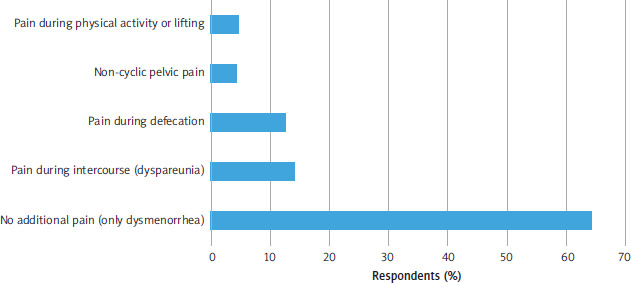
Participants were also asked whether they experienced any additional pain in lower abdomen beyond menstrual pain, the results are presented in Figure 2. Moreover, participants also indicated that other pain- related symptoms occur on average 5 times per menstrual cycle (min = 1, max = 32). These findings suggest that although most individuals experience isolated menstrual pain, a significant subset may suffer from broader pelvic pain syndromes.
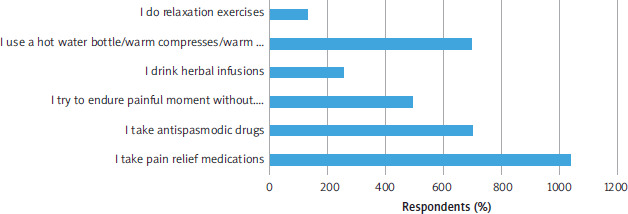
To alleviate menstrual pain, most respondents reported using pharmacological methods. Over 1,000 women (n = 1039) reported taking pain relief medications, and 698 used antispasmodics. Non-pharmacological strategies were less common but still notable: 695 participants used heat therapy (such as heating pads or warm baths), 254 drank herbal infusions, and 128 engaged in relaxation exercises, as shown in Figure 3. These results highlight a preference for medication while also demonstrating interest in complementary and passive coping methods.
In this study, the impact of menstrual pain on the ability to perform daily activities was assessed. The majority of respondents (79.1%) reported that menstrual pain significantly impaired their capacity to carry out every- day tasks, while only 20.9% indicated that menstrual pain did not interfere with their routine functioning.
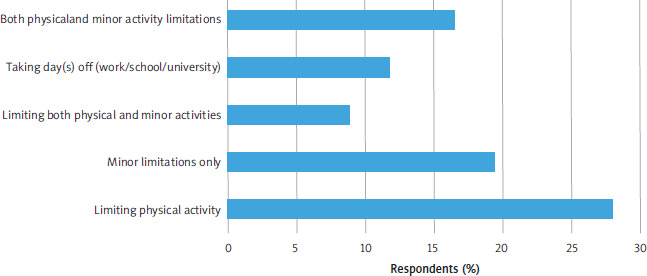
Moreover, painful menstruation impacts respondents’ professional or academic functioning in various ways, mainly by requiring them to limit physical activity or take days off. The impact was presented in Figure 4.
Patients were also asked how many days of sick leave they need to take due to painful menstruation. The average number of days off taken per year due to painful menstruation is 8.92 (min = 0.0; max = 40.0; Q1 = 4.0; Q3 = 12.0), with a SD of 6.86.
Females were also asked how painful menstruation impacts their work performance. More than half of the participants (52.9%) reported that painful menstruation significantly interferes with their professional functioning, while an additional 34.1% acknowledged a minor but noticeable impact on the quality of their work. In contrast, only 12.8% of respondents indicated that painful menstruation does not affect their work performance, suggesting that the majority of women experience at least some degree of occupational impairment associated with menstrual pain.
Symptoms
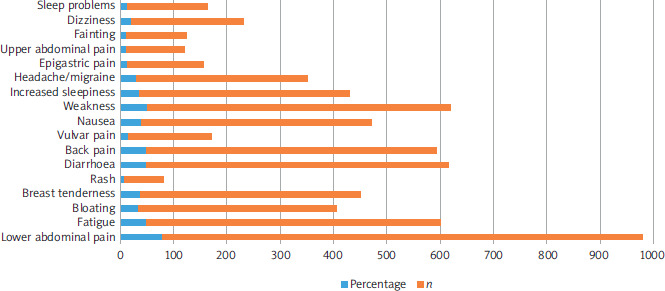
Various symptoms usually accompany menstruation. According to our study, the most common symptom was lower abdominal pain, reported by 77.3% of participants, confirming its defining role in dysmenor- rhea. Nearly half of the respondents experienced weakness (48.9%), diarrhoea (48.4%), and back pain (46.7%), suggesting that systemic prostaglandin- mediated symptoms are highly prevalent in this cohort.
General malaise and autonomic symptoms were also frequently observed, with fatigue (45.5%), nausea (37.1%), breast tenderness (35.5%), and bloating (32.1%) being commonly reported. Furthermore, increased sleepiness (34%) and headache or migraine (27.6%) indicate significant neurovegetative involvement associated with menstrual pain. These data are presented in Figure 5.
The study also assessed premenstrual symptoms. The findings indicate that the premenstrual phase is characterised by a high prevalence of systemic, gastrointestinal, musculoskeletal, and neurological symptoms. The reported symptoms may indicate the presence of premenstrual syndrome (PMS) to some degree in the majority of patients.
Diagnostics
Regarding the diagnosis of painful menstruation, half of the respondents (56.9) reported a lack of diagnostic testing despite experiencing symptoms. Conversely, 43% of participants indicated a need for a formal diagnosis, showing that a significant number of women seek and receive medical evaluation for menstrual pain.
The average time taken for respondents to receive a diagnosis was approximately 4.2 years (SD = 4.6 years), indicating considerable variability in diagnostic timelines. The shortest reported time to diagnosis was 0.08 years (about one month), while the longest was 30 years, suggesting that some individuals experience significant delays in recognition or diagnosis of their condition.
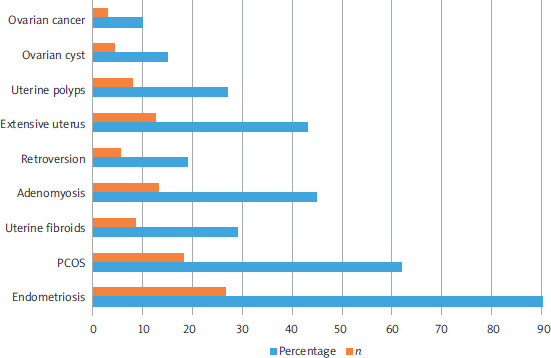
The analysis of diagnoses for painful menstruation showed that 29.1% (n = 341) of respondents received a formal diagnosis. The most commonly reported diagnosis was endometriosis (26.6%), followed by PCOS (18.2%), uterine fibroids (13.2%), and extensive uterine retroversion (12.6%). Other less common conditions included uterine defects (8.5%), uterine polyps (7.9%), adeno- myosis (5.6%), ovarian cysts (4.4%), and ovarian cancer (2.9%). Data are presented in Figure 6. These findings suggest that nearly one-third of respondents with dysmenorrhea had a confirmed gynaecological comorbidity.
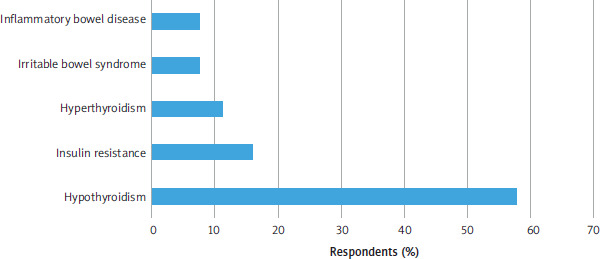
Moreover, our study indicates that during the assessment of painful menstruation, certain non-gynaecological conditions were identified. A group of respondents (21.4%) reported being diagnosed with some non-gynaecological disorder as presented in Figure 7. These findings suggest that although most individuals with dysmenorrhea do not have concurrent non- gynaecological conditions, there is a significant subset – particularly those with thyroid and gastrointestinal disorders – that may require further investigation into potential systemic links with menstrual pain.
Interesting results were obtained regarding the assessment of assistance in dysmenorrhea diagnosis. Among respondents who sought medical help, less than half (43.8%) considered the assistance satisfactory, while 34.2% reported dissatisfaction with the support received. This points to gaps in effective management and patient satisfaction in the treatment of dysmenorrhea. A further 22.2% were uncertain about the adequacy of care, possibly reflecting mixed or inconclusive experiences.
Treatment
In a further step, the study analysed possible ways of painful menstruation treatment.
The results clearly indicate that hormonal contraception is the most frequently used treatment method, reported by 42.8% of respondents. This reflects its common role as a first-line therapy for managing dysmenorrhea by regulating hormonal cycles and reducing menstrual pain. 21.4% of respondents reported using pain relief medications, including NSAIDs, which remain a standard symptomatic treatment. An equal percentage (21.4%) underwent surgical interventions, likely reflecting cases of underlying gynaecological conditions such as endometriosis, fibroids, or ovarian cysts.
Less common approaches included physiotherapy (7.1%), which may support pain management through pelvic floor relaxation or posture correction. The same proportion (7.14%) reported receiving no treatment, suggesting barriers to healthcare access, lack of diagnosis, or personal choice to avoid medical interventions. There was no statistical difference between patients from rural and urban areas.
When asked whether their current treatment was associated with any adverse effects, the majority of respondents (74.35%) reported experiencing side effects, indicating a substantial burden of treatment-related symptoms. In contrast, 25.7% of participants who were undergoing therapy at the time of the survey reported no adverse effects, suggesting a degree of variability in individual tolerance or response. Notably, only 8.9% of the total respondents indicated that they were unable to clearly determine whether an adverse event was related to hormonal treatment due to the concurrent use of other medications.
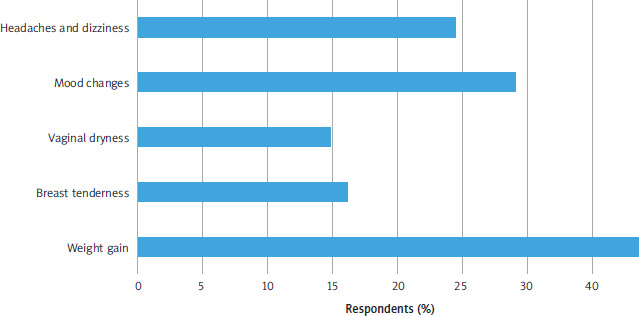
Among patients receiving hormonal therapy, 64.3% reported at least one treatment-related side effect. The most common adverse events included weight gain (38.5%), mood changes (29.1%), and headaches or dizziness (24.5%), followed by breast tenderness (16.2%) and vaginal dryness (14.8%). The distribution of the most frequently reported adverse events is presented in Figure 8.
When analysing the hormonal therapy, females were also asked whether they had ever considered the hormonal therapy. The majority (54.8%) reported that they had considered undergoing hormonal reported that they had. Conversely, 33.6% indicated that they had not considered such treatment, most frequently explaining their decision by expressing fear of hormonal therapy itself, concerns about potential weight gain during treatment, the perception of an excessive number of possible side effects, as well as a general unwillingness to pursue this therapeutic option. An additional 11.6% reported not remembering whether they had considered it, suggesting either low engagement with treatment decision-making or potential recall bias.
In the latter part, the treatment’s effectiveness was assessed. The majority of respondents (58.7%) reported that the treatment they received effectively reduced menstrual pain, suggesting that available therapeutic methods – such as hormonal contraception, analgesics, non-medical treatment or surgical interventions – can provide meaningful symptom relief for many individuals.
However, one in four respondents (25%) stated that the treatment did not alleviate their pain, indicating a significant subgroup for whom standard therapies may be insufficient or ineffective. An additional 16.3% of respondents were uncertain about the treatment’s impact, which may reflect inconsistent results, partial improvement, or difficulty in distinguishing treatment effects from natural variations in pain severity.
Moreover, the mean menstrual pain after treatment was 4.24 ±2.6 (median 4.0; IQR 2.0–6.0) on a 10-point scale, indicating that most participants experienced partial but noticeable pain relief relative to pre-treatment levels (previously reported mean VAS ≈ 7.77). Importantly, the reduction in pain intensity between pre- and post-treatment assessments was statistically significant (p = 0.03), confirming that the observed improvement is unlikely attributable to random variation.
Alternative treatment
Physiotherapy
Participants were asked about alternative methods for relieving menstrual pain, including urogynecological physiotherapy as a potential therapeutic approach.
Notably, only 13.5% of women receiving treatment for dysmenorrhea reported using physiotherapeutic interventions, showing that this modality remains a relatively underutilised part of menstrual pain management.
Among respondents who addressed the question of the use of physiotherapy interventions, 83.3% reported having undergone physiotherapy. Among those who reported physiotherapeutic treatment, the most commonly cited intervention was manual release of pelvic floor muscle tension, used by 27.8% of participants. Additionally, relaxation breathing techniques were employed by 22.2%. The same proportion that reported using kinesiotaping, a technique involving elastic therapeutic taping to support muscle function and reduce pain. Electrotherapy was the least commonly reported modality, used by 11.3%.
An evaluation of the effectiveness of physiotherapy in the management of dysmenorrhea revealed that in the majority of respondents, no significant therapeutic effect was observed.
Specifically, 66.7% of participants reported that menstruation remained painful despite undergoing physiotherapeutic interventions, suggesting limited efficacy or suboptimal response in a majority of cases. In contrast, 25.9% of respondents indicated a marked reduction in menstrual pain, reflecting partial therapeutic benefit. Notably, only 7.4% of individuals using non-pharmacological treatment reported complete resolution of menstrual pain.
The analysis also examined participants’ engagement in non-pharmacological relaxation techniques aimed at reducing menstrual pain.
The results show that nearly 60% of respondents reported using some form of non-pharmacological relaxation techniques to relieve menstrual pain. The most commonly practiced method was attending yoga classes (25.5%), followed by stretching exercises (23.4%), both of which are accessible, self-managed approaches to reducing muscle tension and improving pelvic blood flow. Only 10.4% used acupuncture, suggesting limited popularity or accessibility of this method. Meanwhile, 40.4% of participants reported not using any relaxation exercises, which may reflect limited awareness, time constraints, or a preference for pharmacological treatment.
Diet
In response to the question about dietary modifications to reduce menstrual pain, 51.1% of respondents reported making significant dietary changes. Among those who modified their diet, the most commonly reported strategies included the elimination of alcohol (50%) and sweets (47%), suggesting that many respondents targeted dietary components known to affect systemic inflammation and hormonal balance. Furthermore, 34% eliminated heavy, hard-to-digest foods, and 20% excluded coffee, both of which are frequently implicated in gastrointestinal and vascular symptoms that may exacerbate menstrual discomfort. A smaller part (8%) adopted a low-glycaemic, anti-inflammatory diet, reflecting a more structured and evidence-based approach to nutritional intervention.
Herbs
When asked about the use of herbal remedies during the menstrual cycle, 62.5% (n = 182) of respondents who treated dysmenorrhea reported that they do not use any herbs. Among those who incorporated herbal treatments, the most commonly used herbs were chamomile (Matricaria chamomilla; 27.2%) and lemon balm (Melissa officinalis; 20.6%). These herbs are traditionally associated with mild analgesic, anti-inflammatory, and calming properties, which may explain their popularity. Less frequently reported herbs were sage (Salvia officinalis) at 7.0%, ready-made herbal mixtures at 5.35%, yarrow (Achillea millefolium) at 3.7%, and calendula (Calendula officinalis) at 3.29%.
Participants were also asked to evaluate the perceived effectiveness of herbal remedies in alleviating menstrual pain. The majority of respondents (67%) indicated that despite the use of herbal treatments, their menstrual pain persisted, suggesting limited perceived efficacy for most individuals. Meanwhile, 31% of respondents using herbs reported that such interventions significantly reduced pain intensity, highlighting a noteworthy subset of users who experienced beneficial effects. Only 2% of respondents stated that menstrual pain had completely resolved as a result of using herbal therapies.
Discussion
The present study provides a comprehensive analysis of the prevalence, severity, and selected treatment modalities of dysmenorrhea among Polish women. The findings confirm that dysmenorrhea is a common and significant health problem that affects not only physical functioning but also the psychological and social dimensions of women’s lives. The prevalence of painful menstruation observed in this population is comparable to data from other European countries, where the reported rates range from 50% to 90%, depending on the study population and methodology used [17–19].
Despite its high prevalence, dysmenorrhea remains underdiagnosed and frequently underestimated – both by patients themselves and by healthcare professionals. In the present study, the mean duration from the onset of symptoms to diagnosis was approximately four years. For comparison, a cohort study conducted in France among 6,949 patients reported an average diagnostic delay for endometriosis of around ten years, with severe menstrual pain being one of the contributing factors [20]. Similar results were observed in a Dutch study, where the mean diagnostic delay was 5.4 years [21].
Our results indicate that more than half of the women had never consulted a physician about menstrual pain or undergone any related diagnostic evaluation. These data are consistent with international findings identifying nine major reasons for avoiding medical consultation – among them, the belief that menstrual pain is a physiological and self-manageable condition, as well as psychosocial factors such as embarrassment or lack of awareness regarding treatment options [22]. These findings emphasise the global nature of the problem, which stems from both low health literacy among patients and limited diagnostic vigilance among healthcare providers. They also highlight the need to develop more effective educational, screening, and diagnostic strategies within primary healthcare.
These results of our study demonstrate that dysmenorrhea exerts a substantial negative influence on daily life, affecting women’s capacity to engage in household, academic, and occupational responsibilities. The predominance of individuals reporting functional impairment underscores the pervasive and disabling nature of menstrual pain, which often extends beyond physical discomfort to influence psychological well-being and overall quality of life. From a clinical and public health perspective, these findings highlight the importance of recognising dysmenorrhea as a significant determinant of women’s functional health. The data support the need for comprehensive management strategies – including pain control, education, and workplace or academic accommodation – to alleviate its burden and improve everyday functioning among affected individuals. Quality of life assessment using the DysmenQol questionnaire demonstrated that dysmenorrhea significantly impairs quality of life, negatively affecting social and partner relationships as well as occupational functioning [23]. Evidence from the literature suggests that presenteeism – working or studying despite pain – may generate greater economic losses than absenteeism, as women often continue their activities with reduced productivity [24]. In the present study, Polish respondents reported taking an average of 8.92 days off work or school per year due to menstrual symptoms. Similarly, an Australian analysis found that women with dysmenorrhea had a 50% higher likelihood of reporting reduced work performance and a twofold higher risk of increased sick leave [25]. Among female students, dysmenorrhea is also a major factor contributing to frequent short-term absences and decreased academic performance [26].
The most commonly used symptom-relief methods were NSAIDs and hormonal contraceptives, consistent with international guidelines for the management of primary dysmenorrhea [16]. However, women using oral therapy frequently reported adverse effects. The high prevalence of reported side effects among respondents undergoing hormonal therapy (64.3%) reflects a substantial treatment burden consistent with the existing literature. Weight gain, identified by 38.5% of participants, is one of the most frequently cited concerns in hormonal contraceptive use and has been associated with fluid retention, increased appetite, and metabolic changes [27, 28]. Mood changes, reported by 29.1% of respondents, also align with prior findings suggesting that exogenous hormones can influence neurotransmitter systems, potentially affecting emotional regulation [27, 29]. Headaches and dizziness may be linked to oestrogen-induced vascular changes, particularly in migraine-prone individuals [30]. Symptoms such as breast tenderness (16.2%) and vaginal dryness (14.8%) are well-documented oestrogen-related side effects, indicating variability in tissue responsiveness or hormonal dosage [31, 32].
These findings underline the importance of individualised approaches to hormonal therapy, including careful monitoring for side effects and considering patient-specific risk profiles and tolerability. They also highlight the need for shared decision-making and informed consent, especially in young women who may experience significant quality-of-life impacts of such adverse effects.
Increasing attention is being paid to holistic therapeutic approaches aimed at restoring physical, psychological, and emotional balance, rather than solely reducing pain symptoms. Numerous studies have shown that non-pharmacological interventions – including lifestyle and dietary modifications, phytotherapy, acupressure and relaxation techniques – can significantly reduce the intensity and frequency of dysmenorrhea symptoms [33–35]. A systematic review and meta- analysis evaluating the efficacy of physiotherapeutic interventions in primary dysmenorrhea confirmed that therapeutic exercise, manual therapy, and electrotherapy effectively reduce menstrual pain severity [36]. Other studies demonstrated that combining exercise with kinesiotaping or electrotherapy further improves quality of life [34, 37, 38]. In the present study population, only 18.7% of Polish women had ever used urogynecological physiotherapy to alleviate menstrual discomfort.
Dietary patterns also appear to play an important role in modulating dysmenorrhea severity. Anti-inflammatory diets rich in vegetables, fruits, whole grains, legumes, and omega-3 fatty acids reduce prostaglandin levels responsible for uterine contractions and pain [39]. Conversely, high intake of saturated fats, simple sugars, red meat, and processed foods may exacerbate inflammatory processes and increase symptom severity. A study conducted among 293 female students at the Urmia University demonstrated that adherence to a “snack-type” diet – high in sweets, salty snacks, and coffee or tea additives – was associated with a 4.23-fold higher risk of moderate-to-severe dysmenorrhea compared to the control group [40, 41]. Our findings under- score a relatively high level of engagement with dietary self-management strategies among individuals experiencing dysmenorrhea. The diversity of reported approaches indicates a need for clearer, evidence-based dietary guidance tailored to menstrual health, as well as further research into the efficacy of specific nutritional interventions. Diet, therefore, represents a key component of holistic dysmenorrhea management, underscoring the need to consider nutritional habits as an integral part of therapeutic strategies.
Strengths and limitations of the current study
This study has several notable strengths. First, it was conducted on a nationwide scale, allowing for broad representation and generalisability of the findings. It successfully identified key aspects of the burden associated with menstrual pain and highlighted potential areas for improvement, particularly in terms of non-pharmacological management strategies. However, the study also has certain limitations. One important limitation of this study is the potential selection bias related to the recruitment strategy. Participants were primarily recruited through medical settings, which may have resulted in overrepresentation of women already seeking care for gynaecological or menstrual-related issues. Consequently, the study population may not be fully representative of the general population but rather reflects a subgroup of women more likely to experience or report dysmenorrhea. This could partially explain the very high prevalence observed in our study. Therefore, the results should be interpreted with caution, particularly when generalising findings to the broader population. Future studies should consider population-based sampling methods to improve representativeness and reduce selection bias. Another limitation of this study is the potential for recall bias, particularly among older participants. As the survey relied on self-reported data, some responses – especially those related to past menstrual experiences, age at symptom onset, or diagnostic history – may be subject to inaccuracies or incomplete recall. This concern is more pronounced in older respondents, whose recollections may span several decades. Therefore, findings related to long-term experiences and older subgroups should be interpreted with caution. Future studies should consider prospective designs or medical record verification to minimise re-call bias.
An additional limitation concerns the assessment of complementary therapies, particularly physiotherapy. The evaluation of their effectiveness was based on self-reported, subjective patient experiences and was not supported by standardised intervention protocols or objective outcome measures. Furthermore, the type, duration, and quality of physiotherapeutic interventions were not controlled or uniform across participants. Therefore, the findings related to the effectiveness of physiotherapy should be interpreted with caution, and no definitive conclusions regarding its efficacy can be drawn from this study. Future research should incorporate standardised treatment protocols and objective measures to more accurately assess the role of complementary therapies in dysmenorrhea management.
Another limitation of this study is that comorbid conditions, such as hypothyroidism and Hashimoto’s disease, were analysed only descriptively and treated as coexisting variables rather than potential confounders. As a result, their possible influence on the seve- rity of dysmenorrhea was not assessed in multivariate models. Given the known association between endocrine disorders and hormonal regulation, these conditions may have affected the intensity and presentation of menstrual pain. Therefore, the results should be interpreted with caution, and future studies should include adjusted analyses to better evaluate the role of comorbidities as potential confounding factors.
The findings of this study confirm that dysmenorrhea is a highly prevalent health condition among Polish women, significantly affecting quality of life and daily functioning. Despite its high prevalence, dysmenorrhea remains underdiagnosed and inadequately treated. This underscores the importance of improving health awareness not only among patients but also within the medical community. The adoption of a holistic approach to dysmenorrhea management – including pharmacological therapy, non-pharmacological methods such as physiotherapy and dietary supplementation, as well as lifestyle and dietary modifications – may substantially improve women’s functioning and reduce the need for analgesics or hormonal therapy, offering a promising strategy for effective dysmenorrhea management.
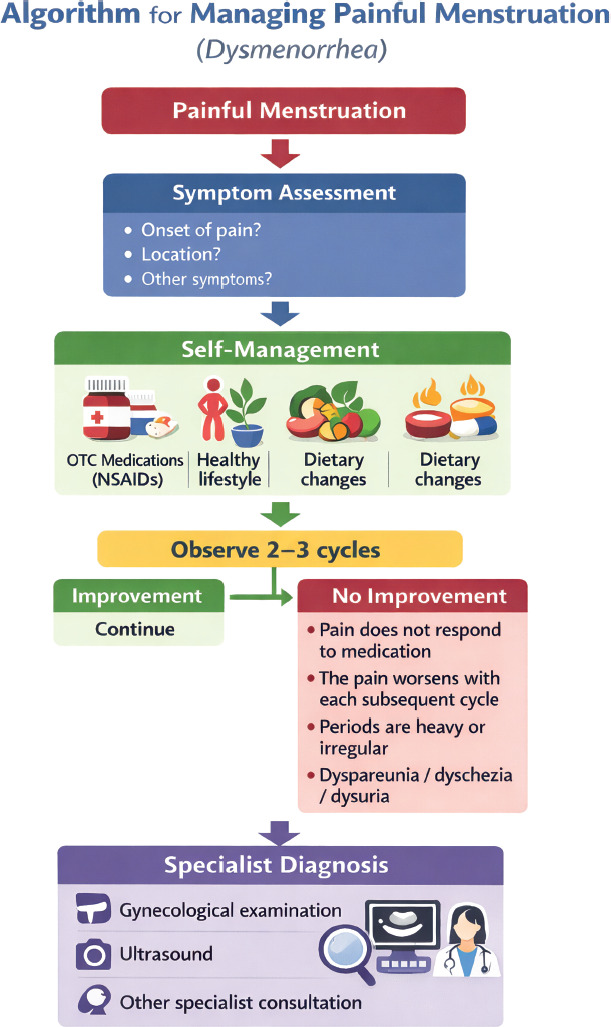
We propose a stepwise approach to managing dysmenorrhea. It begins with symptom assessment, followed by self-management using NSAIDs, lifestyle changes, and dietary adjustments. If symptoms persist after 2–3 cycles, medical evaluation is recommended – especially for late-onset pain, pain outside menstruation, or suspected endometriosis. Specialist diagnostics, including ultrasound and a gynaecological exam, are indicated, when necessary, as presented in Figure 9.
Conclusions
This study confirms that painful menstruation is a highly prevalent condition that significantly impairs women’s daily functioning, work or academic performance, sleep, and overall quality of life. Most respondents reported severe and recurrent menstrual pain, often beginning early after menarche and persisting for many years.
The findings reveal frequent coexistence of dysmenorrhea with gynaecological and endocrine disorders, particularly endometriosis, PCOS, and thyroid diseases, as well as substantial delays in diagnosis and limited satisfaction with medical care. Although hormonal and pharmacological treatments were associated with a significant reduction in pain intensity, their use is often limited by side effects and patient concerns. Complementary approaches showed variable effectiveness but may benefit selected individuals.
Overall, dysmenorrhea remains underdiagnosed and undertreated, highlighting the need for earlier diagnosis, improved clinical management, and a multidisciplinary, individualised approach.