
Introduction
Hepatitis B virus (HBV) infection can take various forms – from acute hepatitis B (AHB) through an inactive carrier state, in which the HBs antigen (HBsAg) is usually, but not always, detected, to chronic hepatitis B (CHB), which can lead to liver cirrhosis and hepatocellular carcinoma (HCC) [1, 2]. It is estimated that over one million new HBV infections occur worldwide each year, and the number of people living with chronic infection exceeds 250 million, of whom only 36 million have been diagnosed, and 6.8 million have started treatment [3, 4]. In Poland, since the beginning of this century, the number of registered HBV infections has not exceeded 4,000 annually, with a five-fold reduction in the first-time hospitalization rate and a three-fold reduction in mortality due to HBV infection observed between 2012 and 2023 [5, 6]. At the same time, the average age of patients increased from 41 to 52 years, indicating a predominance among the infected population of people not covered by the neonatal vaccination program initiated in 1996 [7]. HBV-related hepatitis D virus (HDV) infections are relatively rare in Poland, as evidenced by the results of recent studies, in which antibodies were detected in 1.5-3.4%, and HDV ribonucleic acid (RNA) in only 0.25% of HBV-infected individuals [8, 9].
The Polish HBV Expert Group was established by the Polish Society of Epidemiologists and Infectious Disease Physicians and the Polish Association for the Study of the Liver to develop recommendations for the management of HBV infections, the first edition of which was published in 2007 [10]. Subsequent versions were published every few years, reflecting advances in knowledge and changes in the healthcare system. Given that the last recommendations were published eight years ago, it was obvious that they needed updating [11]. The recommendations are addressed to both practicing physicians and health policy-making institutions, aiming to standardize the principles of hepatitis B diagnosis, therapy, and prevention, and to adapt the current state of knowledge to the realities of the Polish healthcare system.
To achieve a consensus among the expert group members, the Delphi method was used, which included five survey rounds, during which 36 key issues were addressed, and two discussion rounds to clarify any remaining questions.
Natural history of HBV infection
A typical feature of chronic HBV infection is its dynamic and multiphase nature, resulting from the variable relationship between the immune system and the virus. Outlined phases include those with active ongoing inflammation in the liver and with low activity (inflammation vs. infection) (Table 1) [2]. These periods do not always occur sequentially. Diagnosis of the phase usually determines the need for treatment initiation. In phases with active inflammation, treatment is necessary, while in phases with low activity, its need may depend on other factors (e.g., immunosuppression, risk of hepatocellular carcinoma, disease progression). The following phases can be distinguished:
Table 1
Terminology and criteria for phases of chronic HBV infection
| Parameter | HBeAg(+) | HBeAg(–) | HBsAg(–) | ||
|---|---|---|---|---|---|
| Infection | Inflammation | Infection | Inflammation | ||
| Phase 1 | Phase 2 | Phase 3 | Phase 4 | Phase 5 | |
| HBsAg concentration | High | High/ moderate | Low* | Moderate | Negative |
| HBV DNA | > 107 IU/ml | 104-107 IU/ml | < 2000 IU/ml** | > 2000 IU/ml | Low or undetectable |
| ALT | Normal | Elevated | Normal | Elevated | Normal |
| Disease progression (biopsy, noninvasive methods) | None/ minimal | Moderate/ large | None | Moderate/ large | None |
| Previous terminology | Immune tolerance | Immuno-reactive | Inactive carrier state | HBeAg(–) CHB | Occult HBV infection*** |
Phase 1, HBe antigen-positive infection (previously called the high-replication or immune tolerance phase). In addition to the HBe antigen (HBeAg), HBV deoxyribonucleic acid (DNA) reaches high serum levels (above 106 IU/ml), and serum alanine aminotransferase (ALT) activity usually remains normal. Inflammatory, necrotic, and fibrotic changes in liver biopsies are minimal or absent. In individuals infected in late childhood and in adults, this highly infectious phase may be short-lived. The chance of progression to the HBeAg-positive inflammatory phase increases with age, usually occurring by the age of 30-35. Progression to the next phase is indicated by elevated ALT activity, microscopic changes (inflammatory activity, fibrosis), or increased liver tissue stiffness assessed by elastography.
Phase 2, HBeAg-positive inflammation (previously called the immunoreactive phase). Serum HBV-DNA concentrations are variable but lower compared to the previous phase. Serum ALT activity is periodically, less frequently, persistently elevated, and necroinflammatory changes in liver tissue are mild or severe, with more or less marked fibrosis (which may progress). Deterioration in non-invasive tests assessing the severity of liver disease is observed. Changes in HBV antigen expression and an increased immune response to HBV, associated with the inflammatory reaction, are considered to be the causes of this phase [2]. This phase lasts for months or years and may end with HBeAg disappearance and its replacement by anti-HBe antibodies (2-15%/year), which is called seroconversion. Reseroconversion with the reappearance of HBeAg occurs in approximately 1-4% of patients. The more frequent the periods of exacerbations, the more severe the liver fibrosis becomes, and the risk of HCC also remains high.
Phase 3, HBeAg-negative infection (previously called inactive HBV carriage or immune control phase). Anti-HBe antibodies are present. HBV DNA levels are low (usually < 2000 IU/ml) but can fluctuate up to 20,000 IU/ml. ALT activity remains within normal limits; histologically, there are minimal inflammatory changes, and no or only slight progression of the disease assessed noninvasively. HBsAg levels are usually below 1000 IU/ml but may be higher in genotype A HBV infection [12, 13]. There is a small risk of developing cirrhosis and HCC. The incidence of spontaneous HBsAg disappearance and the appearance of anti-HBs (seroconversion) is estimated at 1-3% per year.
Phase 4, HBeAg-negative inflammation (previously HBeAg-negative chronic hepatitis). In approximately 10-30% of patients after seroconversion from HBeAg to anti-HBe, active inflammation persists in the liver. Anti-HBe antibodies are present, and HBV-DNA shows significant variability above 2000 IU/ml. ALT activity may be periodically elevated, and necroinflammatory changes are observed in the liver. Moderate to significant liver disease progression (assessed noninvasively) is usually observed. Periods of exacerbation are interspersed with periods of remission, which is the most important feature of this phase of infection. Most patients in this phase have mutations in the HBV precore/core promoter gene, which is associated with the inability to synthesize HBeAg. There is a high risk of HCC and progression to cirrhosis.
Phase 5, with undetectable HBsAg (occult hepatitis B infection, OBI, the period after HBsAg loss), is heterogeneous and most often occurs with undetectable or periodically low HBV DNA concentrations in serum, while present in the liver. Anti-HBc antibodies (total) are detectable in the serum, with or without anti-HBs antibodies. Patients in this phase are a heterogeneous group. This phase most often includes individuals after HBsAg loss (1-3%/year), in whom low or only periodically detectable HBV DNA concentrations may persist for many months or even years. HBsAg loss is associated with a reduced risk of developing cirrhosis and liver failure, although the risk of HCC remains elevated compared to the general population. Immunosuppression can lead to viral reactivation. Another group includes patients infected with viral variants capable of synthesizing structurally altered HBsAg particles unrecognized by commonly used tests (so-called S-escape, S-promoter, splice variants). In these patients, HBV replication continues, and the disease progresses. The final and least characterized group of patients comprises cases of so-called seronegative OBI (occult hepatitis B virus infection), where, in addition to detectable HBV DNA, there is no anti-HBc or anti-HBs antibody detection [14].
Detection of HBV infections
Poland is a country with a low incidence of HBV infection. In 2025, a total of 3,496 cases of hepatitis B were recorded, including 32 cases of acute hepatitis B, with an incidence of 0.09/100,000 population. This reflects the long-term effects of the mandatory newborn vaccination program, which was gradually implemented between 1994 and 1996, and in subsequent years included adolescents, medical personnel, and individuals scheduled for elective invasive medical procedures [15].
Detection of HBV infection, enabling the initiation of treatment, should be considered, alongside vaccination, as the primary method of eliminating the virus in the Polish population. Screening for HBsAg in serum should be performed among all individuals born before 1996 (in the period preceding mandatory newborn vaccinations) and among individuals born in 1996 or later, if:
there are medical indications (elevated aminotransferase activity or liver disease of unknown etiology),
there is an increased risk of exposure (family history of HBV infection, medical workers),
there is a diagnosis of hepatitis C virus (HCV) or human immunodeficiency virus (HIV) infection,
there is a history of drug or alcohol addiction,
there is a diagnosis of a disease associated with an immune deficiency,
there is a plan to start therapy with immunosuppressive drugs, including biologics [16, 17].
Immigrants should be screened for HBsAg under the same conditions as Polish citizens. Individuals with immunodeficiencies who are scheduled for immunosuppressive therapy, including biologics, should be tested for antibodies to the HBV core antigen (anti-HBc), regardless of HBsAg testing.
In the 1970s and 1980s, Poland was among the countries with a relatively high incidence of HBV infection (tens of thousands of HBV infections were diagnosed annually). This means that a large proportion of these infections remain undiagnosed, constituting a potential reservoir of HBV, justifying the continuation of the vaccination program in its current form. This is also supported by the detection of anti-HBc antibodies in serum in approximately 10% of asymptomatic adult primary care patients in Poland, which indicates past/latent HBV infection [18]. In the era of immunosuppressive therapies, including biological ones, the risk of iatrogenic reactivation of latent HBV infection should be considered [19]. Hence, screening for anti-HBc is recommended in patients eligible for immunomodulatory treatment with a high potential for HBV reactivation [20, 21].
Goals of treatment for HBV infection
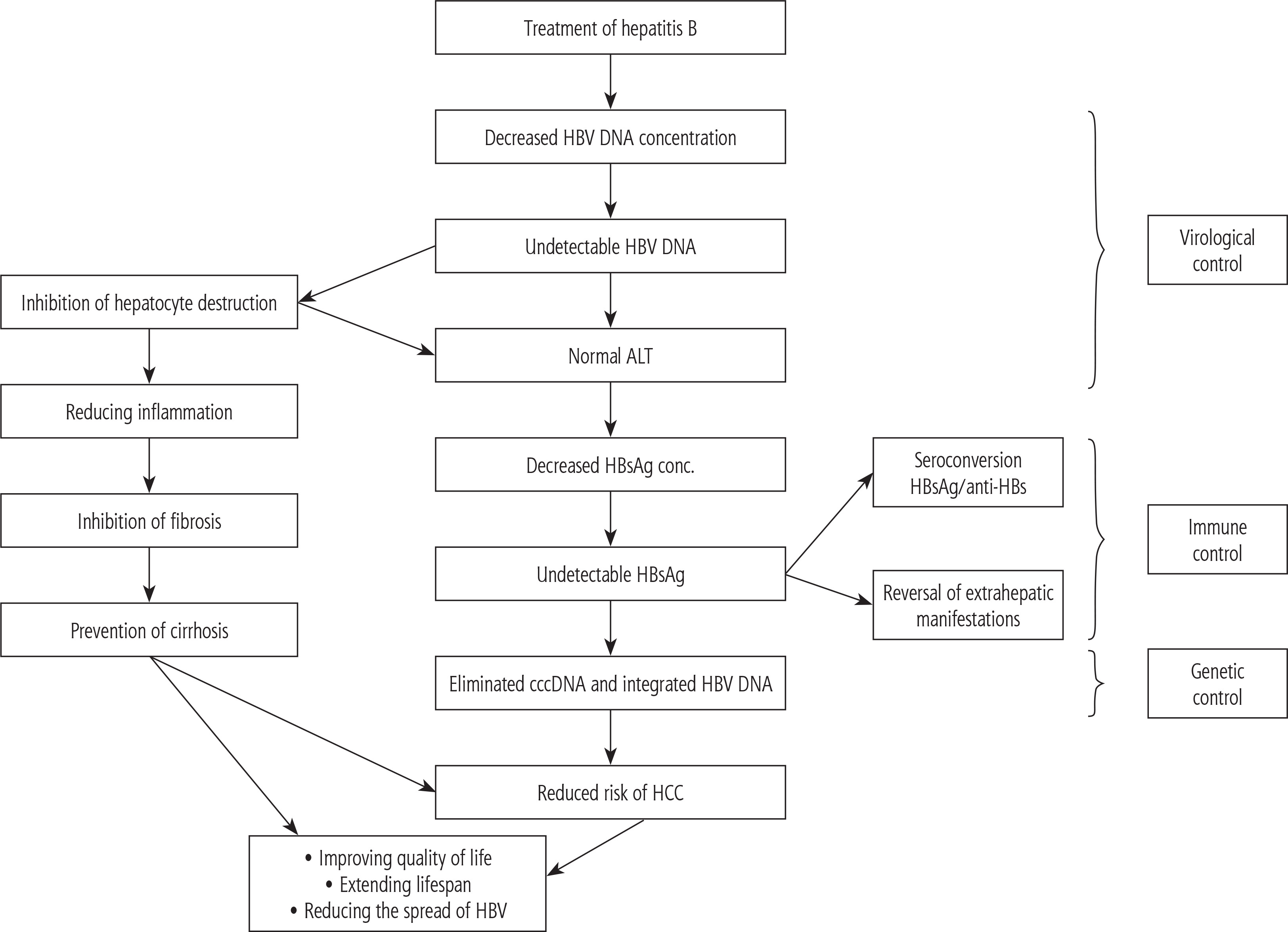
Effective treatment of hepatitis B is achieved when HBsAg and HBV-DNA levels are permanently undetectable without the need for continued therapy, and the clinical condition of the HBV-infected individual has stabilized. The next steps in therapy to achieve this goal involve attaining virological, immune, and genetic control (Fig. 1). During the viral life cycle, HBsAg is formed from covalently closed circular DNA (ccc-DNA) and integrated HBV DNA, meaning that the condition for complete, permanent HBsAg loss is the elimination of reservoirs of HBV replication, including cccDNA and integrated HBV DNA [22-24]. Achieving immune control usually allows for discontinuation of therapy, but only genetic control can ensure complete eradication of the infection from the body. Although modern therapeutic methods rarely achieve genetic control, achieving virological control alone can reduce the risk of death from cirrhosis, liver failure, or hepatocellular carcinoma, provided HBV is permanently suppressed. This allows for the achievement of key public health goals, such as extending the lifespan, improving the quality of life, and limiting the spread of HBV infection (Fig. 1).
Methods of assessing disease severity
Serum alanine aminotransferase (ALT) and aspartate aminotransferase (AST) activity are commonly used to assess the degree of liver damage in HBV-infected patients. Among the laboratory markers, serum α-fetoprotein (AFP) levels are useful in assessing disease progression. Simple and sensitive clinical scales have been developed for chronically infected patients with HBV to assess the risk of HCC and select candidates for oncological surveillance, including PAGE-B. Imaging methods such as ultrasonography (USG), computed tomography (CT), and magnetic resonance imaging (MRI) are used to assess the structure of liver tissue.
The severity of liver disease in HBV-infected patients should be assessed primarily using liver elastography, which allows for noninvasive liver stiffness measurement (LSM). Due to its ease of performance, increasing availability, and the ability to repeat the procedure at any frequency, it should be the primary method for assessing the severity of liver disease. The test can be performed using vibration-controlled transient elastography (VCTE), shear wave elastography (SWE), or acoustic radiation force impulse imaging (ARFI). LSM measurement results may vary depending on the technique used and the cause of the liver disease. However, for practical reasons, the European Association for the Study of the Liver (EASL) adopted standardized LSM cutoff values for assessing the severity of liver disease in HBV-infected patients, along with the corresponding fibrosis grades on the METAVIR scale for histological assessment of liver biopsy specimens (Table 2) [2]. It should be remembered, however, that despite high specificity and sensitivity, in approximately 10% of cases the LSM results may be equivocal or inconsistent with the clinical condition, which constitutes an indication for biopsy and histological assessment of liver tissue.
Table 2
LSM cut-off values of liver disease severity in HBV-infected patients with corresponding fibrosis grades on the METAVIR scale of histological assessment of liver biopsy; modified according to EASL [2]
| Liver disease | METAVIR | LSM |
|---|---|---|
| Significant | > F1 | > 7 kPa |
| Advanced | > F2 | > 8 kPa |
| Cirrhosis | F4 | > 11 kPa |
Histological evaluation of a liver biopsy specimen may still be used, especially for treatment eligibility assessment and when there are diagnostic doubts related to overlapping liver diseases [25]. However, the use of biopsy as an invasive method should be limited to situations where the histological result may influence further treatment decisions (e.g., in a patient with LSM ≤ 7 kPa).
The aspartate aminotransferase (AST) to platelet ratio index (APRI) and the fibrosis-4 index for liver fibrosis (FIB-4) can be used as an alternative to LSM [26, 27]. However, due to their significantly lower precision, they should be used only when LSM cannot be performed, or LSM results are unavailable, and only to exclude the population of patients with cirrhosis [28]. Due to their lower sensitivity, to ensure patient safety, the cut-off values for excluding cirrhosis should be lowered compared to the available literature data to the levels of APRI < 0.5 and FIB-4 < 0.7 [2]. In the case of children, even lower cut-off values should be considered.
Eligibility for treatment
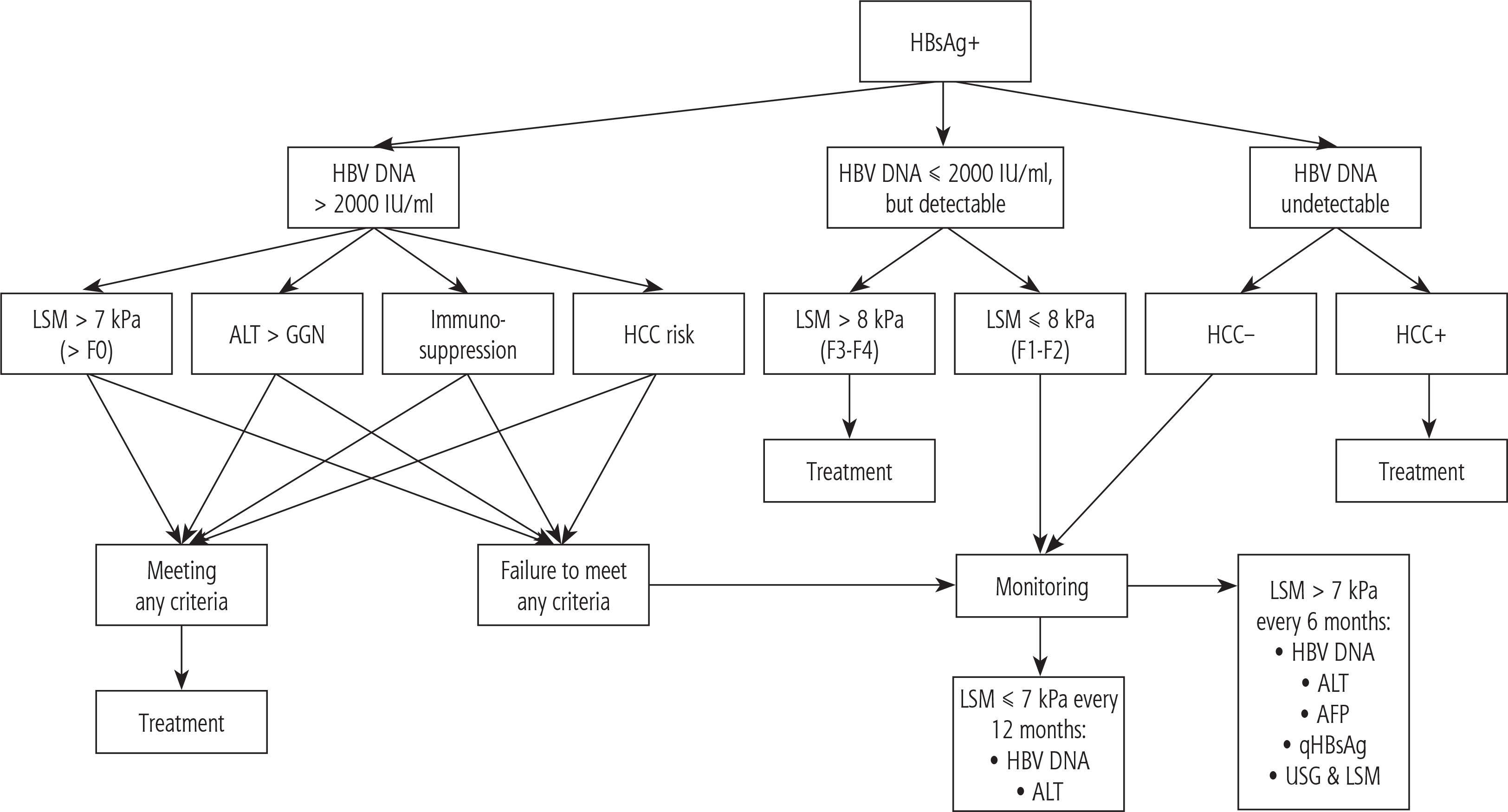
Hepatitis B treatment should be considered in any individual with HBsAg detected in their serum, regardless of the time since testing for this condition and regardless of HBeAg/anti-HBe status, in the following cases:
LSM measurements exceed 8 kPa (F3 or F4 on the METAVIR scale), provided they have detectable serum HBV DNA at any level.
HCC has been diagnosed even if HBV DNA is undetectable [29].
HBV DNA concentration above 2000 IU/ml, and one of the following criteria is met:
LSM above 7 kPa or histological findings suggestive of fibrosis at least F1 on the METAVIR scale (limited ability to differentiate F0 from F1 with LSM ≤ 7 kPa), or
ALT activity above the upper limit of normal (ULN) [30], or
at increased risk of HCC due to co-infection with HCV, HDV, or HIV, steatotic liver disease, or a family history of HCC [2, 33-35] (Fig. 2).
Patients who did not start treatment due to ineligibility or for any other reason with a low-stage liver disease (LSM ≤ 7 kPa) should have their HBV DNA and ALT levels measured every 12 months. In patients with advanced liver disease (LSM > 7 kPa), follow-up visits should be scheduled every 6 months and should additionally include ultrasound and LSM examinations, as well as serum AFP and HBsAg (qHBsAg) levels.
Recommended medications (drug selection)
Currently, two therapeutic options are available for first-line treatment of CHB:
The use of PegIFNα, especially in European countries, is currently marginal due to the manufacturer’s withdrawal of the drug and the predominance of patients with CHB with undetectable HBeAg in Europe, in whom the efficacy of interferon therapy is lower compared to patients with detectable HBeAg. However, certain features of this drug, such as the defined duration of therapy and a more durable response to treatment, mean that it may be considered after careful discussion with the patient about the pros and cons of interferon therapy, availability of which is currently very limited in [36]. It is also worth noting that most of the new drugs currently being studied for hepatitis B therapy are being tested in combination with PegIFNα, so a return to this drug as an adjunct to new therapeutic options cannot be ruled out. Table 3 presents a comparison of therapies using NAs and PegIFNα.
Table 3
Comparison of NA and PegIFNα therapies
Due to their strong antiviral effect and excellent safety profile, antiviral drugs (NAs) are currently the preferred therapeutic option. Selecting the optimal NA should take into account the drug’s characteristics, comorbidities, and patient preferences. Available NAs are divided into:
NAs with a high genetic barrier and low risk of resistance:
NAs with a low genetic barrier and high risk of resistance:
Due to their lower efficacy and/or the risk of developing drug resistance, NAs with a low genetic barrier are currently not recommended as first-line drugs. The choice is between ETV, TDF, and TAF. Patients previously treated with LAM should receive TDF or TAF, as the risk of cross-resistance to ETV is high and increases with duration of treatment [37]. To overcome this phenomenon, a double daily dose of ETV, i.e., 1 mg instead of the routine 0.5 mg, can be used.
Due to comparable efficacy and a very low risk of drug resistance, particularly with tenofovir [38], in patients receiving first-time treatment, the decision to choose a drug may be dictated by comorbidities and conditions [39]. In cases of chronic renal failure and/or metabolic bone disease, ETV is preferred. However, this drug is contraindicated in pregnancy due to the lack of sufficient data on the safety profile in pregnant women and the impact of ETV on mother-to-child transmission. If treatment is necessary for a pregnant woman and the benefit outweighs the risk to the fetus, TDF or TAF is the drug of choice.
The efficacy and safety profile of TDF and TAF are comparable, although TAF, if available, should be preferred in patients at high risk of osteoporosis. Currently, TAF in combination with emtricitabine and HIV protease inhibitors is indicated for antiretroviral therapy with or without co-infection with HBV. TDF remains the drug of choice for HBV monoinfection. The daily dose is one tablet containing 245 mg of tenofovir disoproxil.
The dosage of both ETV and TDF should be adjusted based on glomerular filtration rate (EGFR). For EGFR 30-49 ml/min, the tablet should be administered every other day, for EGFR 10-29 ml/min, every third day, and in dialysis patients, once a week immediately after dialysis. No dosage adjustments are necessary for patients with hepatic impairment.
Therapy monitoring
Monitoring the effectiveness of antiviral therapy
Therapy effectiveness is monitored in accordance with the treatment goals presented in section Goals of treatment for HBV infection, which includes assessment of ALT activity, HBV DNA, serological parameters – HBsAg/anti-HBs (or HBeAg/anti-HBe), as well as additional assessment of liver disease progression and surveillance for HCC.
Assessment of ALT activity and quantitative measurement of HBV DNA should be performed at the initiation of therapy and throughout the course of therapy, every 3-6 months until viral replication is suppressed below the level of detectable HBV DNA and normalization of ALT activity. Thereafter, depending on the severity of liver disease and treatment adherence, it should be performed every 6-12 months. In the case of increased ALT activity and/or detection of HBV DNA, more frequent monitoring is recommended.
HBsAg status should be monitored quantitatively (qHBsAg) before treatment, then every 12 months, and upon planned discontinuation of therapy. In patients whose HBsAg is undetectable, another qualitative test should be performed after at least three months, which allows for consideration of discontinuation of therapy. If the decision is to continue therapy, anti-HBs levels should be measured at least three months apart, which may provide a definitive argument for discontinuing antiviral treatment, according to the principles described in section Completion of effective therapy.
In the rare cases in the Polish population of patients with baseline HBeAg positivity, HBeAg/anti-HBe status can be monitored to document seroconversion. However, this does not impact therapeutic management or the decision to discontinue treatment.
Monitoring for HCC
Monitoring for HCC during NA treatment should include simultaneous measurement of serum AFP levels and ultrasound examination performed by an experienced sonographer. In the event of technical or interpretative difficulties with the ultrasound image, or in the case of elevated AFP levels, other imaging methods (four-phase CT or contrast-enhanced MRI) should be used instead of or in addition to ultrasound [40-42]. In patients with liver disease stage F3-F4 (LSM > 8 kPa) or lower, if they have risk factors for HCC (presented in section Eligibility for treatment), examinations should be performed every 6 months, and in other patients every 12 months. At the same time points, it is reasonable to assess the stage of liver disease by performing LSM. Reduction in LSM values indicates inhibition of disease progression and a reduced risk of developing cirrhosis, HCC, clinically significant portal hypertension, and high-risk esophageal varices [43, 44]. Knowledge of a reduction in LSM values may also be a strong motivator for patients to continue treatment. Preliminary research suggests that the use of new HCC markers (including PIVKA-II), particularly as components of diagnostic algorithms (e.g., GAAD), may increase the sensitivity of oncological surveillance, particularly for small lesions (up to 2 cm).
If a focal lesion is found to be less than 1 cm in diameter, an ultrasound examination should be performed every 3 months. If its size increases or its character changes, the patient should be referred for a four-phase CT or MRI with contrast, and the focal lesion assessed according to the LI-RADS scale [42]. If the focal lesion is stable in repeated ultrasound examinations after a year of follow-up, follow-up can be resumed at 6-month intervals. If the screening ultrasound examination reveals a focal lesion of at least 1 cm in diameter, a four-phase, dynamic CT or MRI with contrast and the LI-RADS scale should be performed [41, 42]. Increased vascularity of the tumor visualized in the arterial phase, followed by contrast washout in the venous or late phase, indicates the diagnosis of HCC (LI-RADS 4 and LI-RADS 5). If the radiological image does not meet these criteria (LI-RADS 3), MRI with hepatotropic contrast should be repeated (the most commonly used hepatotropic contrast is gadolinium-ethyl-benzyl-diethylenetriamine, Gd-EOB-DTPA) and possibly repeated after another 3 months [42]. A meta-analysis of studies of patients with chronic HBV infection treated with NAs documented that TDF treatment was associated with a significantly greater reduction in the risk of HCC than entecavir treatment [45].
Monitoring therapy safety
Monitoring the safety of NA therapy is based on product characteristics [46-48]. Recommended NAs have a good safety profile regardless of the severity of liver disease [49]. Nephrotoxicity is the most serious potential adverse effect of TDF, especially in patients with initially impaired renal function. Therefore, creatinine concentration and clearance, serum and urine phosphate concentrations, and urinary protein excretion should be regularly monitored every 3-6 months during treatment [50]. Long-term TDF use, by impairing phosphate reabsorption and leading to hypophosphatemia, may result in decreased bone mineral density and an increased risk of osteopenia. This is particularly true for older patients and postmenopausal women; therefore, periodic osteodensitometry is recommended in these patient groups [51]. Patients using TAF, especially those with hypertension and diabetes, are at risk of dyslipidemia and related cardiovascular events; therefore, monitoring of lipid profile during treatment is recommended [52]. It should also be remembered that rare cases of lactic acidosis have been reported in patients with liver failure during NA therapy [49].
Discontinuation of therapy
After unplanned discontinuation of therapy due to lack of adherence, resumption of therapy may be considered by reassessment of patient eligibility according to the described principles and criteria. If the reason for discontinuation was a drug shortage beyond the patient’s control, it should be replaced with an alternative drug (TDF for ETV, or ETV for TDF) as soon as possible. If not feasible, treatment without reassessment (without the need to meet the inclusion criteria) may be resumed regardless of the duration of the therapy interruption if HBV DNA was undetectable in the last test, as the probability of substitution leading to drug resistance is very low [53].
Therapeutic failure
If serum HBV DNA levels have not decreased by at least 10-fold (1 decimal logarithm) after 6 months of treatment, and nonadherence has been ruled out, the therapy should be considered ineffective. In such a situation, the currently used drug should be switched to another available, highly effective analogue (e.g., TDF or TAF to ETV and ETV to TDF or TAF). If HBV DNA remains detectable after a further 6 months, and after excluding nonadherence, combination therapy with TDF or TAF and ETV should be considered.
Completion of effective therapy
Full success of antiviral therapy requires the elimination of cccDNA, which occurs rarely and is difficult to monitor in clinical practice [22-24]. Therefore, we consider HBV treatment effective when HBsAg is no longer detectable in serum, especially if this is accompanied by rising anti-HBs antibody concentrations.
Taking the above into account, discontinuation of treatment may be considered after HBsAg is demonstrated to be undetectable in two tests performed at least three months apart. Treatment should be discontinued, especially if there is a rising anti-HBs concentration assessed in at least two quantitative or qualitative tests (anti-HBs undetectable in the first test and detectable in the second) performed at least three months apart.
Due to the risk of life-threatening decompensation, discontinuation of treatment is contraindicated in patients with current decompensated cirrhosis or with a history of decompensation [54]. Due to insufficient data, discontinuation of therapy is also contraindicated in patients with immunosuppression resulting from the disease (including those living with HIV) or therapy. Treatment in these patients should be continued regardless of HBsAg/anti-HBs status.
In patients with detectable HBsAg, treatment termination is possible no earlier than 3 years after HBV DNA becomes undetectable during treatment, but only in those who were not diagnosed with cirrhosis at the time of treatment initiation (LSM did not exceed 11 kPa, and in the absence of LSM results, APRI < 0.5 and FIB-4 < 0.7) [2, 26, 27]. In this group, the best prognosis is for patients with HBsAg concentration below 1000 IU/ml [55].
Post-therapy monitoring
Long-term follow-up data on patients with HBsAg loss due to antiviral therapy are limited. However, it has been documented that HBV replication may recur after discontinuation of antiviral therapy in patients with detectable HBsAg, justifying retreatment. This usually occurs within the first year after therapy, but earlier and with higher frequency after TDF therapy than after ETV. Regardless, liver disease progression should be monitored, taking into account the risk of HCC [2, 56, 57].
To monitor for recurrence of infection, serum ALT activity and HBV DNA levels should be assessed one month, and then 3, 6, and 12 months after completing therapy. If no recurrence has occurred within this timeframe, ALT activity should be monitored at 3-6 monthly intervals. Patients with risk factors for HCC (presented in section Eligibility for treatment) should be monitored in a specialist setting, while other patients should be monitored in primary care. If ALT activity increases, the presence of HBV DNA should be assessed; if detectable, reassessment for treatment should be considered, and if undetectable, diagnostics for other liver diseases should be initiated.
In parallel with monitoring for recurrent infection, it is necessary to monitor for HCC by simultaneously conducting assessment of serum AFP levels and ultrasound examinations performed by an experienced sonographer. In the event of technical or interpretational difficulties, or in cases of elevated AFP levels, other imaging methods (four-phase CT or contrast-enhanced MRI with focal lesion assessment according to the LI-RADS scale) should be performed instead of or in addition to ultrasound. In patients with liver disease stage F3-F4 (LSM > 8 kPa) or lower, if they have risk factors for HCC (presented in section Eligibility for treatment), examinations should be performed every 6 months, and in other patients, every 12 months. At the same time points, it is reasonable to assess the progression of liver disease by performing LSM, as higher values increase the risk of HCC.
If a focal lesion < 1 cm in diameter is detected during monitoring, ultrasound examination should be performed every 3 months. If the lesion increases in size or changes in character, the patient should be referred for four-phase contrast-enhanced computed tomography (CT) or magnetic resonance imaging (MRI), the results of which should be assessed on the five-point LI-RADS scale [41, 42, 58, 59]. If the focal lesion is stable in repeated ultrasound examinations, follow-up can be resumed at 6-month intervals after an initial year of observation.
If a screening ultrasound scan reveals a tumor ≥ 1 cm in size, a four-phase, dynamic CT scan or MRI with contrast and LI-RADS grading should be performed [58, 59]. Increased tumor vascularity visualized in the arterial phase, followed by contrast washout in the venous or late phase, indicates the diagnosis of HCC (LI-RADS 4 and LI-RADS 5). If the radiological image does not meet these criteria (LI-RADS 3), an MRI scan with hepatotropic contrast (most often gadolinium-ethyl-benzyl-diethylenetriamine, Gd-EOB-DTPA) should be performed and, if necessary, repeated after another 3 months [41, 42, 58-60].
Management of acute hepatitis B
Acute hepatitis B (AHB) can be clinically apparent or asymptomatic. Currently, AHB is very rarely observed in Poland, primarily in adults over 30 years of age who have not been vaccinated against hepatitis B. The disease is practically non-existent in children and adults vaccinated according to the vaccination schedule. In the case of clinical manifestations (weakness, loss of appetite, jaundice, significant increase in ALT and AST activity) in adults, HBsAg loss and spontaneous recovery are observed in over 95% of cases [2]. For this reason, in typically uncomplicated cases of acute hepatitis B, antiviral treatment is not recommended, as it does not affect the rate of clinical remission or HBsAg elimination [61, 62].
However, treatment with NAs is justified in patients with a fulminant or severe course of AHB (0.1-0.5% of hepatitis B cases) with symptoms of liver failure, especially coagulation disorders (INR > 1.5), as well as in patients with chronic liver disease, when its progression poses a risk of decompensation. In these patient groups, treatment with NAs accelerates clinical improvement and reduces mortality, as well as the need for liver transplantation, provided it is initiated when symptoms of liver failure are detected (INR > 1.5) [62, 63]. Initiating therapy in patients with advanced liver failure does not reduce the risk of liver transplantation and death [64, 65].
NA therapy should be continued at least until HBsAg elimination, following the same principles as in patients with CHB. Although the most important studies on the efficacy of antiviral therapy in acute hepatitis B were conducted with LAM, more recent studies indicate that ETV and TDF are at least equally effective and safe [65, 66]. Regardless of the use of NAs, urgent liver transplantation should be considered in every case of fulminant or severe AHB, especially if liver failure worsens [67, 68].
Management of HDV-infected patients
Hepatitis D virus is the smallest known human pathogenic virus, which, due to its unique structure (the lack of its own enzymes, including polymerase and coat protein), causes the most aggressive viral hepatitis. Globally, it is estimated that 12 to 60 million people are infected, which translates to approximately 3-6% of HBsAg-positive patients [69]. In Poland, the number of infected individuals is unknown. Current epidemiological data suggest that infection is less common than in other countries, affecting 0.25% to 3% of HBsAg(+) patients, depending on the region and testing methods [9, 12, 70]. Compared to HBV monoinfection, HBV/HDV coinfection has an approximately four-fold higher risk of developing cirrhosis, a three-fold higher risk of HCC, and a 1.5-3.3-fold higher risk of death [71, 72]. The clinical course depends on host-related and environmental factors (alcohol, tobacco, metabolic syndrome), as well as the sequence of infection. Concurrent HBV and HDV coinfection leads to chronic disease in less than 5% of patients, whereas HDV superinfection in a previously HBV-infected individual increases the risk of chronicity to over 90% [73].
Due to the more rapid progression of the disease and a higher risk of complications, all individuals with detectable HBsAg should be tested for HDV infection. This test should be performed at the time of entry into care, i.e., at the time of diagnosis of HBV infection or as part of eligibility assessment for hepatitis B treatment, as well as in each case of hepatitis B exacerbation and after parenteral or sexual exposure. In patients with chronic hepatitis B, screening should consist of detecting anti-HDV antibodies in serum. If detected, viral replication should be confirmed by HDV RNA testing with a clinically validated and sensitive reverse transcription polymerase chain reaction (RT-PCR) test. In patients with features of acute hepatitis, the simultaneous presence of anti-HBc-IgM antibodies will suggest concurrent infection (coinfection), whereas the absence of these antibodies in the presence of detectable HDV RNA will indicate HDV superinfection in a previously HBV-infected individual. In both situations, HBV DNA concentration, HBeAg presence, and liver disease progression should be additionally assessed. The reference method for determining disease progression is still histological evaluation of liver biopsy specimens, which should be performed when clinical signs of cirrhosis are not observed, and its results may determine the initiation of treatment [33]. Non-invasive methods for assessing liver disease progression, such as LSM, can be used in HBV/HDV infections, provided that specific cut-off points are taken into account, which are less precisely defined than in HBV monoinfection, meaning a potentially lower diagnostic value. According to the latest data, significant liver disease progression is likely with LSM values greater than or equal to 10 kPa, and values below 6 kPa practically exclude advanced fibrosis [74].
Treatment should be considered in all HDV-infected patients. Parenteral medications are used: PegIFNα (s.c., once weekly for 48 weeks; treatment can be extended) or bulevirtide (BLV, s.c., every 24 hours; treatment duration not specified). BLV is a first-in-class drug that blocks HDV entry into hepatocytes by binding to sodium taurocholate co-transporting polypeptide (NTCP). After 72 weeks of BLV treatment, a virological response was observed in approximately 70% of patients, and HDV-RNA was undetectable in approximately 30%. Similar efficacy is observed in patients with and without cirrhosis; however, there is a significant risk of HDV replication recurrence after BLV discontinuation [75].
In experienced clinical centers, BLV treatment may also be considered in patients with decompensated cirrhosis, and in selected populations without decompensation, PegIFNα + BLV combination therapy may be considered. Regardless, patients meeting the eligibility criteria for HBV monoinfection should receive NAs, and patients with cirrhosis, especially decompensated cirrhosis, should be considered for liver transplantation.
Management of HCV-infected patients
In regions with a high prevalence of HBV and HCV infections, the frequency of co-infections with these viruses may be significant. HCV co-infection in an HBV-infected patient worsens the course of liver disease and significantly increases the risk of developing advanced fibrosis, HCC, and liver-related death, when compared to uninfected individuals and to HBV or HCV monoinfection [14, 76]. The common routes of transmission of both viruses and the risk of liver disease progression are the basis for recommending HCV screening in HBV-infected individuals and HBsAg plus anti-HBc testing in patients with HCV infection. In immunocompromised patients (immunosuppression, biological therapy, HIV infection, etc.) eligible for DAA therapy, testing for total anti-HBc should be performed. However, immunocompetent individuals with anti-HBc antibodies but without HBsAg do not require special monitoring before and during HCV infection therapy [77-79].
Antiviral treatment in HBV/HCV coinfection should be carried out according to the principles defined for monoinfection, taking into account the mutual suppressive effects of viruses, primarily HCV on HBV, and the potential risk of HBV replication or exacerbation following HCV eradication with direct-acting antivirals (DAAs) [80]. According to the eligibility criteria in section Eligibility for treatment, patients with advanced liver fibrosis (F3 or F4) should be treated with NAs at any HBV DNA level, including in the case of HBV/HCV coinfection. According to case reports, DAA therapy in individuals coinfected with HCV and HBV may induce reactivation of HBV infection, which, especially in patients with cirrhosis, may be life-threatening, especially if HBV infection is insufficiently monitored [81]. For this reason, despite the lack of clear results from studies on larger groups of patients, if the criteria for HBV treatment (section Eligibility for treatment) are met in an HCV-infected individual, NAs should be initiated at least one month before initiating DAAs. If the patient was already treated for HBV infection before initiating DAAs, the treatment should be continued concurrently with DAA therapy [2, 82].
In all patients with HBsAg in whom a decision has been made not to use NAs, as well as in immunocompromised individuals with isolated total anti-HBc, HBV DNA testing is necessary before starting HCV therapy, and ALT activity should be monitored at 2-4-week intervals during treatment according to the following principles:
If HBV DNA is not detected before treatment of HCV infection and ALT activity is normal, then if ALT activity increases during DAA therapy above the upper limit of normal, an HBV-DNA test should be ordered immediately and, without waiting for the result, treatment with nucleoside or nucleotide NAs should be started in parallel with DAA therapy;
If HBV-DNA is not detected before HCV therapy and ALT levels exceed the upper limit of normal and do not decrease within the first 4 weeks of DAA therapy, HBV-DNA testing should be carried out and repeated until the end of therapy. If HBV viremia develops, NA treatment should be initiated concurrently with DAA therapy.
Management of HIV-infected patients
Due to similar transmission routes of HBV and HIV, all people living with HIV should be screened for HBsAg and anti-HBc. Similarly, patients with diagnosed HBV infection should be tested for HIV1/2 infection [17]. Due to the activity of TDF and TAF against both viruses, planned antiretroviral therapy (ART) in individuals with HBV co-infection should include these drugs [83]. A possible change of ART regimen to one without TDF or TAF would effectively mean discontinuation of HBV treatment with the risk of increased replication.
Due to the increased risk of fibrosis progression and HCC development, all individuals with HBV/HIV co-infection should receive ART [35, 84]. According to the criteria in section Eligibility for treatment, individuals living with HIV are eligible for NA treatment if their HBV DNA concentration exceeds 2000 IU/ml, regardless of ALT activity and the severity of liver disease.
After initiating antiviral therapy, patients with low CD4 cell counts may experience immune reconstitution inflammatory syndrome, which increases the risk of liver disease progression [84, 85]. In such situations, careful clinical and laboratory monitoring of therapy is necessary. Furthermore, the assessment of the efficacy and safety of NA treatment in patients with HBV/HIV coinfection does not differ from that in patients with HBV monoinfection. In patients with HBV/HIV coinfection, discontinuation of NA therapy is not recommended, even if HBsAg/anti-HBs seroconversion occurred (section Completion of effective therapy).
Management of advanced liver disease in HBV-infected individuals
As mentioned in section Eligibility for treatment, patients with HBsAg present and advanced liver disease (LSM > 8 kPa or F3/F4), as well as those with diagnosed HCC, are eligible for treatment regardless of the HBV DNA level and ALT activity, and in the case of HCC diagnosis, even when HBV DNA is undetectable.
During treatment, patients with advanced liver disease (LSM > 8 kPa or F3/F4), or even at a lower stage if they have risk factors for HCC (presented in section Eligibility for treatment), should have their serum AFP levels assessed and ultrasound examinations performed every 6 months. In Child-Pugh class C patients, such monitoring informs decisions about further treatment options for liver failure, which are limited if HCC is diagnosed. Ultrasound examinations should be performed by an experienced sonographer [2, 41, 42, 58, 60, 86].
The procedure for detecting a focal lesion, taking into account its size, is described in section Post-therapy monitoring.
Management of HBV infection in children
Due to the introduction of mandatory vaccinations against hepatitis B for all newborns in Poland in 1996, currently in age groups up to 18 years of age, single cases of HBV infections are recorded [87].
Hepatitis B therapy in children aged 2-18 years is recommended when HBV DNA is detectable, and ALT activity is elevated [88]. Situations justifying the initiation of treatment in a child infected with HBV, regardless of ALT activity, include:
deterioration of liver function,
advanced liver disease,
cirrhosis,
HBV-related glomerulonephritis,
prevention of recurrent HBV infection in the transplanted liver,
recipients of transplants from anti-HBc(+) donors,
immunosuppression, chemotherapy, biological therapy [89],
co-occurrence of HBV/HIV, HBV/HCV, HBV/HDV infections,
family history of HCC.
Antiviral drugs recommended for the treatment of children and adolescents are:
ETV, aged 2 years and older,
TDF, aged 2 years and older,
TAF, aged 6 years and older, and weighing at least 25 kg.
Children and adolescents with CHB should be managed by specialists experienced in pediatric care to optimize therapy based on the patient’s age and health status [2]. If therapy is discontinued, HBV DNA and ALT activity should be monitored at least every 6 months [90].
Management of children infected with HBV includes:
HBV viral load and qHBsAg to identify inactive carriers,
systematic monitoring of ALT activity, HBV DNA and AFP concentrations, liver disease progression (LSM, biochemical tests), and liver ultrasound every 6 months for early HCC diagnosis.
Elevated ALT activity, AFP concentration >10 ng/ml, HBV DNA concentration >2000 IU/ml, presence of histological changes in the liver or signs of disease progression in non-invasive tests (LSM, biochemical tests), and a family history of liver disease should determine the eligibility for treatment [91].
In children with chronic hepatitis B treated with antiviral therapy, HBeAg and HBsAg elimination have been frequently observed [92]. Few reports have been published on the use of antiviral therapy in children with chronic hepatitis B with a high viral load and normal or slightly elevated ALT levels. Recently, much attention has been paid to functional cure, which is defined as elimination of HBV DNA, elimination of HBeAg, or seroconversion to anti-HBe, and elimination of HBsAg with or without seroconversion [93]. Antiviral therapy has enabled a functional cure in a large percentage of children with a high viral load and normal or slightly elevated ALT levels, especially in younger children and those with high peripheral lymphocyte counts [94].
Management in women of reproductive age
Choice of therapy
Among the drugs used in the treatment of CHB, the drug of choice for pregnant women is tenofovir (both TDF and TAF, classified as category B), for which no adverse effects on pregnancy or fetal development have been demonstrated [95, 96]. ETV is classified as category C in pregnancy, because adverse effects have been observed in animal models, and therefore should not be used in pregnant women. Data on PegIFNα treatment in pregnancy are equivocal; hence, interferon use in pregnant women is not recommended, especially due to the availability of safe NAs [97].
Antiviral treatment in pregnant women and those planning a pregnancy
Eligibility for NA treatment in women of reproductive age and planning a pregnancy should be based on general principles, with TDF being the preferred drug due to its availability and likely continuation of treatment during pregnancy.
According to the Polish Standard of Perinatal Care, HBsAg testing should be performed twice in every pregnant woman: by the 10th week of pregnancy (or at the time of the first medical consultation) and between the 33rd and 37th weeks of pregnancy [98]. A woman with confirmed HBV infection should be under the care of an infectious disease specialist with regular HBV viral load monitoring. If the infection was diagnosed before pregnancy and the woman becomes pregnant during NA treatment, treatment should be continued if TDF was used, and if ETV was used, it should be replaced with TDF.
If a pregnant woman is diagnosed with HBV infection or has been previously diagnosed but antiviral treatment has not been initiated for any reason, the patient should be offered TDF – preferably before the third trimester of pregnancy – especially in the case of a high HBV viral load (> 200,000 IU/ml). The decision to initiate therapy should be made by the woman after discussing all the advantages and disadvantages. Therapy should be continued after delivery on general principles, and the mother may then breastfeed [99].
Prevention of maternal HBV infection
The risk of maternal HBV infection depends primarily on the level of HBV viral load in the pregnant woman and ranges from 5% to 15%, and in the case of a high viral load (> 6 to 8 log10 IU/ml), it can reach 30% [100]. Most vertical infections occur perinatally; therefore, reducing the viral load in the pregnant woman during this period with TDF significantly reduces the risk of transmission from mother to child [96]. To date, no data demonstrate the risk of transmission of the infection to the child with a viral load < 200,000 IU/ml, provided the newborn receives active-passive prophylaxis [95, 100]. TDF treatment can be initiated at any time during pregnancy, including the first trimester [95, 101]. It is important to start it no later than the third trimester, which will reduce the viral load in the perinatal period. Regardless of the decision to start or stop therapy in a pregnant woman, she should be reminded of the need for active and passive prophylaxis in the newborn.
Data regarding the effect of cesarean section (CC) on the risk of vertical HBV infection are inconclusive [102]. Chinese studies suggest that CC may reduce the risk of HBV infection transmission to the child compared to vaginal delivery in antiviral-naive women with a viral load of ≥ 200,000 IU/ml [103, 104]. If the viral load before the planned delivery date exceeds 200,000 IU/ml, elective CC should be considered [102]. A key element in preventing vertical HBV infection is early active and passive prophylaxis in the newborn (section Newborn vaccinations).
Prevention of HBV infection
The introduction of hepatitis B vaccinations was a milestone in the prevention of HBV infection. In recent years, the European Medicines Agency (EMA) and the Food and Drug Administration (FDA) have approved third-generation hepatitis B vaccines for adults, which demonstrate higher efficacy – especially in non-responders to current vaccines. These include:
Heplisav-B, containing an adjuvant (CpG 1018) that activates Toll-like receptor 9,
PreHevbrio/PreHevbri, containing HBsAg proteins: Pre-S1, Pre-S2, and S (European Commission withdrew the marketing authorization in the EU).
Newborn vaccinations
In Poland, hepatitis B vaccination has been mandatory for all newborns since 1996. Vaccinations are administered according to a schedule of 0-1-6 months. The first dose is administered within 24 hours of birth (ideally within 12 hours). For infants weighing less than 2000 g, vaccination is administered according to a schedule of 0-1-2-12 months. Newborns born to HBsAg(+) mothers or whose HBsAg status is unknown are recommended to receive one dose of anti-HBV immunoglobulin (HBIG) and one dose of vaccine within the first 12 hours of life. Vaccination is then administered according to a four-dose schedule. Tests to assess the response to vaccination (HBsAg, quantitative anti-HBs) should be performed at 9-12 months of age. Infants with anti-HBs concentrations below 10 IU/l should receive an additional single dose (booster), and if the anti-HBs concentration remains below 10 IU/l, the second series of vaccinations should be completed. Vaccinations for children unvaccinated in their first year of life should be administered as early as possible.
Adult vaccinations
According to the Polish National Immunization Program for 2026, vaccination against hepatitis B is recommended for previously unvaccinated adults:
exposed to infections associated with tissue damage or through sexual contact,
chronically ill individuals at high risk of infection,
with immunodeficiency, receiving immunosuppressive therapy, and with diabetes or renal failure,
being prepared for surgical procedures (although vaccination cannot be required for tissue-disrupting procedures),
elderly individuals,
patients with cancer or other chronic diseases who are planning immunosuppressive treatment,
women planning pregnancy,
close contacts of hepatitis B patients and HBV carriers.
Vaccinations should be administered according to a 0-1-6 month schedule [2].
Vaccination of immunocompromised people
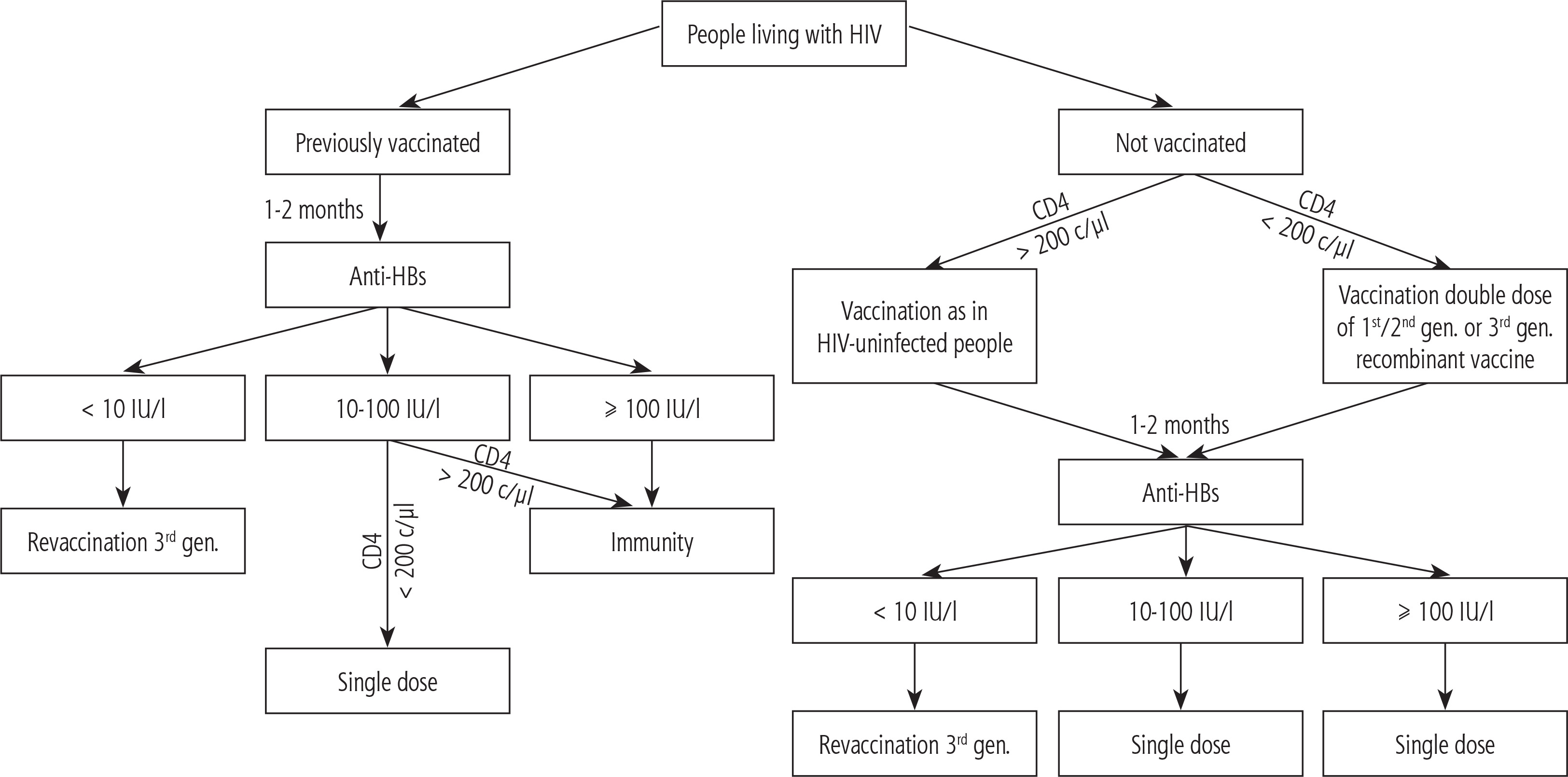
For immunocompromised individuals, increased doses of standard or third-generation vaccines should be administered. The CHB vaccination schedule for individuals living with HIV is shown in Figure 3.
Assessment of vaccination effectiveness
It is recommended to measure serum anti-HBs concentration 1-2 months after completing the primary hepatitis B vaccination course in individuals at risk. Revaccination after primary vaccination is indicated in:
Immunodeficiency patients and patients with diabetes – if the anti-HBs antibody concentration is < 10 IU/l after primary vaccination, then 1-3 further doses of the vaccine are recommended. If the antibody concentration is still < 10 IU/l, no further vaccinations are given;
Cancer patients undergoing immunosuppressive therapy and organ transplant patients – it is recommended to maintain antibody levels ≥ 100 IU/l, with antibody monitoring every 6 months. If the concentration drops to < 100 IU/l, a double dose of the vaccine should be administered;
People with advanced renal failure with a glomerular filtration rate below 30 ml/min and those on dialysis are recommended to have antibody levels tested every 6 months. Booster doses should be administered if the anti-HBs antibody concentration is < 10 IU/l.
In cases of revaccination, it is recommended to measure anti-HBs levels 1-2 months after vaccination [105]. Non-responders should receive up to three additional doses of standard vaccine or third-generation vaccine if available. Active HBV infection should be ruled out in these individuals before revaccination [2].
Prevention of HBV reactivation
HBV reactivation is a sudden increase in viral replication in individuals with inactive or previous HBV infection, resulting from iatrogenic or natural loss of immune control. Reactivation is defined as: the appearance of serum HBV DNA levels above 100 IU/ml or HBsAg (HBsAg seroreversion) in an individual in whom these markers were previously undetectable, or an increase in HBV DNA concentration of at least 10-fold from baseline [2].
HBV reactivation is a potentially life-threatening event and primarily affects patients receiving chemotherapy or immunosuppressive therapy. The risk of reactivation depends on factors related to the virus, the host, and the treatment, and increases with the presence of HBsAg or HBV-DNA and high concentrations of core-associated antigen (HBcrAg) or anti-HBc antibodies. The risk of reactivation is reduced in individuals with high anti-HBs antibody concentrations (> 100 IU/l). Among HBsAg(+) patients treated with chemotherapy or immunosuppressive drugs, the risk of reactivation ranges from 15% to 50% (> 75% after stem cell transplantation), while among HBsAg(–)/anti-HBc(+) patients, it is much less common and usually does not exceed 10%. The risk of reactivation is traditionally divided into high (> 10%), moderate (1-10%), and low (< 1%). However, it should be emphasized that the estimated risk for individual therapies may be subject to methodological errors, as it is often based on case reports or retrospective studies.
Recent studies indicate that, especially in patients with undetectable HBsAg, the risk has been overestimated in the past, and that many TNF-α inhibitors, immune checkpoint inhibitors, and anticytokine drugs [20] – especially those used in non-cancer patients – are associated with a lower risk than previously thought. The current list of therapies associated with high, moderate, and low risk is presented separately for HBsAg(+) patients (Table 4) and HBsAg(–)/anti-HBc(+) patients (Table 5). In the case of new molecules with an uncertain but mechanistically increased risk of reactivation, the initiation of pharmacoprophylaxis is recommended, with possible de-escalation following updated evidence.
Table 4
Risk of HBV reactivation depending on the immunosuppressive treatment used in patients with detectable HBsAg and/or HBV DNA, based on EASL guidelines [2]
Table 5
Risk of HBV reactivation depending on the immunosuppressive treatment used in patients with detectable total anti-HBc antibodies and undetectable HBsAg and HBV DNA, based on EASL guidelines [2]
Assessment of the risk of reactivation and indications for pharmacoprophylaxis is recommended for all patients eligible for immunosuppressive therapy. As part of the eligibility assessment process, the presence of HBsAg, total anti-HBc antibodies, and HBV DNA in serum should be assessed. Furthermore, for some regimens, assessment of anti-HBs antibody levels may help decide whether to initiate prophylaxis. Consultation with a specialist experienced in the treatment of HBV infection is recommended. In HBV-infected patients with the presence of HBsAg or HBV-DNA, NAs should be used therapeutically rather than prophylactically.
Pharmacological prophylaxis of HBV reactivation using tenofovir derivatives (TDF, TAF) or ETV is recommended in individuals with detectable HBsAg and/or HBV-DNA when using therapies from the high- or moderate-risk group, as well as in individuals without HBsAg but with total anti-HBc antibodies from the high-risk group, and finally in individuals in whom monitoring for reactivation may be difficult.
In patients with the presence of anti-HBc antibodies but undetectable HBsAg and HBV-DNA, treated with drugs with low or intermediate reactivation potential (Table 4), monitoring is recommended at least every 3 months. If HBsAg or HBV-DNA is detected, treatment with nucleos(t)ide analogues should be initiated as soon as possible.
Prophylactic use of NAs should begin before initiating immunosuppressive therapy. The dosage is the same as for the treatment of HBV infection (according to the Summary of Product Characteristics). NA medications should be administered throughout the duration of immunosuppressive therapy and for up to 6-12 months after its completion, and for drugs targeting B lymphocytes, even up to 18 months. In individuals with detectable baseline HBsAg or HBV-DNA, the need to continue treatment should be assessed according to general guidelines. If pharmacoprophylaxis is discontinued, due to known cases of late reactivation, patients should remain under monitoring for at least another 12 months.
Post-exposure prophylaxis
The nature of post-exposure prophylaxis depends on the serological status of the source of exposure and the immunization status of the exposed person [2, 106, 107]. As part of the eligibility assessment for post-exposure prophylaxis of HBV infection, HBsAg and total anti-HBc should be determined in the serum of the presumed source of infection (after obtaining consent). In the exposed person, serum should be tested for HBsAg and total anti-HBc; if previously vaccinated, the serum anti-HBs concentration should also be determined. Depending on the results, further treatment should be carried out in the case of:
negative HBsAg and total anti-HBc test results at the source; further prophylactic treatment should be discontinued;
detection of total anti-HBc antibodies at the source; despite the minimal risk of HBV infection, post-exposure prophylaxis should be implemented if the exposed individual is undergoing immunosuppressive therapy;
detection of active HBV infection (HBsAg detected) or unknown serological status of the source of infection; after ruling out HBV infection in the exposed individual, post-exposure prophylaxis should be implemented.
Post-exposure prophylactic treatment depends on the vaccination history and anti-HBs antibody concentration and should be carried out according to the following principles:
in individuals previously unvaccinated against HBV, active-passive prophylaxis should be initiated, preferably no later than 24 hours after exposure (maximum 7 days after exposure), which includes the full vaccination course and administration of one dose of HBV immunoglobulin (HBIG) in accordance with the product characteristics;
in vaccinated individuals with anti-HBs levels < 10 mIU/ml, one dose of the vaccine should be administered, and consideration should be given to administering one dose of HBIG;
in vaccinated individuals with anti-HBs levels > 10 mIU/ml, post-exposure prophylaxis is not required, but if this is due to an incomplete vaccination course, the course should be completed;
neither pregnancy nor breastfeeding is a contraindication to active-passive prophylaxis against HBV infection [2, 106].
Prevention of HBV infection after organ transplantation
Prevention in liver transplant recipients
Liver transplantation from a donor actively replicating HBV to an uninfected recipient should be avoided. However, if this rare situation occurs:
in the case of elective procedures, the recipient should be vaccinated against HBV before the transplant, if time permits;
in HBsAg(–)/anti-HBc(–)/anti-HBs(–) recipients who received a liver transplant from an HBsAg(+) individual or an HBsAg(–) but anti-HBc(+) individual, long-term prophylaxis with ETV or TDF should be initiated (HBIG administration is not required in this situation);
in HBsAg(–)/anti-HBc(–)/anti-HBs(+) recipients who received a liver transplant from an HBsAg(–)/anti-HBc(+) individual, long-term prophylaxis with ETV or TDF should be considered despite the low risk of HBV reactivation [2, 107].
Recipients infected with HBV should be treated with high-barrier NAs (ETV, TDF) before the planned procedure, as lowering HBV DNA concentration below the preoperative detection level reduces the risk of reinfection. Further management includes intravenous HBIG at a dose of 10,000 IU during the ahepatic phase, which should be continued for the next 7 days at the same daily dose. Long-term use of high-barrier NAs (ETV, TDF) should be continued after the procedure [2, 107].
Recipients with latent HBV infection, without HBsAg but with detectable anti-HBc antibodies, who received a liver transplant from an HBsAg(–)/anti-HBc(+) individual, do not require NAs due to the low risk of reactivation, but monitoring of HBsAg and HBV DNA is necessary. Patients co-infected with HDV should not receive a liver from an HBV-infected individual [107].
Prophylaxis in recipients of other organs
Before a planned organ transplant, the recipient should be vaccinated against hepatitis B. Patients who received organs from an HBsAg(+) donor should be started on long-term NA prophylaxis with a high resistance barrier (ETV, TDF). If the anti-HBs concentration was below 100 IU/ml immediately before transplantation, HBIG should be administered for at least 3 months. In patients who received organs from an HBs(–)/anti-HBc(+) donor, regardless of the anti-HBs concentration, NA prophylaxis is not necessary due to the very low risk of infection, but it may be considered [107].







