Purpose
Immunotherapy has profoundly re-shaped the therapeutic landscape of oncology over the past decade. In particular, immune checkpoint inhibitors (ICIs), targeting cytotoxic T-lymphocyte-associated protein 4 (CTLA-4) and the programmed death 1 (PD-1)/programmed death ligand 1 (PD-L1) axis, have significantly improved survival outcomes in several solid tumors, including melanoma and non-small cell lung cancer [1-3]. Despite these advances, primary and acquired resistance to ICIs remains common, prompting extensive investigation into combination strategies involving chemotherapy, radiotherapy, oncolytic viruses, and multiple immunotherapeutic agents [4-6].
The immunomodulatory effects of radiotherapy (RT) are now well recognized. Radiation can exert both immunostimulatory and immunosuppressive effects, depending on dose, fractionation, irradiated volume, and timing relative to systemic therapy [7-9]. Ionizing radiation can enhance tumor antigen presentation, promote dendritic cell activation, and induce immunogenic cell death, thereby acting as an in situ vaccine, providing a strong biological rationale for radio-immunotherapy combinations [10-12] supporting the concept of radiation immuno-boosting (RIB). At the same time, radiation can impair immune function through lymphocyte depletion and adverse effects in tumor micro-environment, underscoring the complexity of these interactions. This evolving understanding has led to a paradigm shift in radiation oncology: from a purely technical focus on geometric precision and dose delivery to a concept of biological precision. In this framework, radiotherapy is increasingly viewed as a tool for immune modulation, capable of influencing tumor micro-environment and its vasculature as well as host immune response to enhance therapeutic efficacy [13, 14]. Key variables influencing immunomodulation include radiation dose and fractionation, irradiated volume, tumor-specific characteristics, and temporal sequencing of RT and immunotherapy [15, 16]. Pre-clinical studies suggest that immune activation may occur across a broad range of radiation doses, although the optimal dose for immune stimulation remains unclear. Experimental data indicate that doses between 2 and 20 Gy per fraction can induce immunogenic effects, with distinct biological responses observed at different dose levels [17-19]. Moderate hypofractionated doses appear to favor cytokine release and immune cell infiltration, whereas very low doses may transiently deplete tumor-infiltrating lymphocytes without durable immunologic consequences [20].
Interventional radiotherapy (IRT; modern brachytherapy) represents a unique form of radiotherapy characterized by highly heterogeneous dose distributions, limited irradiated volumes, and ability to deliver high doses per fraction with steep dose gradients. IRT plays a well-established role in the treatment of several malignancies, both as definitive therapy and as part of multimodal strategies, and has been further refined by advances in imaging guidance and delivery techniques [21, 22]. High-dose-rate (HDR) IRT is particularly attractive in the context of radio-immunotherapy due to its capacity to expose tumor sub-volumes to a wide range of doses while minimizing irradiation of surrounding normal tissues and regional lymphatic structures. Pre-clinical evidence indicate that tumor regions exposed to high single-fraction doses (approximately, 8-12 Gy), as commonly achieved near IRT sources, may undergo highly immunogenic cell death with activation of the cGAS-STING interferon pathway, resulting in enhanced antigen release and immune priming [12, 17, 23]. In melanoma models, IRT delivered at doses around 10 Gy per fraction has been associated with maximal lymphocyte infiltration, with no further increase in anti-tumor activity at higher doses [12, 18, 24]. At the same time, lower-dose regions within the same implant may promote cytokine release and immune cell recruitment, supporting the concept of IRT as an in situ vaccination strategy capable of engaging multiple immune mechanisms simultaneously [18, 23]. Additional theoretical factors that may favor IRT-immunotherapy combinations include reduced irradiation of draining lymph nodes and circulating lymphocytes [25-27], preservation of gut microbiota in abdominopelvic treatments [28], and potential induction of bystander and systemic immune-mediated effects [18, 23, 29, 30]. However, these proposed advantages are currently supported primarily by pre-clinical and translational evidence, and have not yet been conclusively assessed in clinical studies [29, 30]. HDR-IRT-induced bystander effects have been demonstrated in vitro, involving inflammatory cytokine release, oxidative stress, and micro-environmental modulation [18, 23]. Furthermore, pre-clinical models have shown abscopal tumor regression following combined radiotherapy and immunotherapy, an immune-mediated phenomenon that has gained increasing clinical relevance in the era of ICIs [29, 30]. Hypoxia represents another critical and incompletely understood factor influencing both radiotherapy and immunotherapy efficacy. While tumor hypoxia is known to confer radioresistance and immunosuppression, very high doses delivered by HDR-IRT may partially overcome hypoxia-related resistance. Conversely, the IRT implantation procedure itself and anesthesia may transiently affect tissue oxygenation, adding further complexity to the biological interplay [31].
Despite the strong biological rationale, clinical data on the combination of IRT and immunotherapy remain scarce. While several studies have reported the feasibility and safety of combining ICIs with EBRT or stereotactic radiotherapy, results are inconsistent, and optimal treatment schedules and techniques remain undefined [25, 29, 30]. Also, evidences specifically addressing IRT-immunotherapy combinations are limited, and the potential immunological advantages of IRT over other radiotherapy techniques have not yet been clearly shown in clinical settings [18].
We performed a hypothesis-generating systematic review of published clinical experiences combining IRT and immunotherapy, with the aim of summarizing available evidence on efficacy and toxicity as well as identifying gaps to guide future research.
Material and methods
Study design and reporting standards
This systematic review was designed and conducted according to the preferred reporting items for systematic reviews and meta-analyses (PRISMA) 2020 guidelines [32]. The clinical question was formulated according to the PICO criteria as follows:
Population (P): Adult patients (≥ 18 years) with solid malignancies,
Intervention (I): Any form of interventional radiotherapy administered in combination with immunotherapy,
Comparison (C): No mandatory comparator was required for study inclusion,
Outcomes (O): The primary outcome was radiological response of irradiated lesions. Secondary outcomes included local control (LC), progression-free survival (PFS), response of non-irradiated lesions, and treatment-related toxicity, if available. A summary table was created, including study type, sample size, median age, and endpoints (Tables 1 and 2).
Table 1
Study characteristics
| Authors [Ref.] | Year | Study | No. of patients | Median age (years) | Primary cancer | Metastases site | FU (months) |
|---|---|---|---|---|---|---|---|
| Munker et al. [33] | 2016-2021 | Retro | 4 | Range, 42-80 | HCC | Patient 1: Liver Patient 2: Brain; liver, retro- peritoneal lymph node Patient 3: Liver Patient 4: Liver | |
| Schwarzlmueller et al. [34] | 2023 | Retro | 3 | 27 (20-53) | AT | Patient 1: Liver, pararenal, subphrenic, intraperitoneal Patient 2: Liver, pararenal, lungs, mediastinal nodes Patient 3: Liver, lung, and brain | 30 30 84 |
| Tao et al. [35] | 2018-2023 | Retro | IRT: 33 EBRT: 62 | IRT group: 60.18 ±8.39 EBRT group: 60.77 ±8.47 | Lung | IRT: 23.6 EBRT: 28.6 | |
| Chyrek et al. [36] | 2025 | Retro | IRT: 4 | 66 (49-81) | Melanoma | Skin | |
| Suzuki et al. [37] | 2019 | Retro | IRT: 1 | 30 | RCC | Iliac crest tumor | |
| Appalanaido et al. [38] | 2022 | Retro | IRT: 1 | 60 | Pancreas | Right liver | 18 |
| Yuan et al. [39] | 2023 | Retro | IRT: 2 | 57 72 | Lung | Patient 1: Right upper lobe and 2R and 4R lymph nodes Patient 2: Left upper bronchus, left hilum, anterior mediastinum, and left lower lobe | |
| Yang et al. [40] | 2023 | Retro | IRT: 1 | 57 | Lung | Right upper lung | 9 |
| Ouyang et al. [41] | 2026 | Retro | IRT: 1 | 72 | Lung | Right lower lobe | 40 |
| Sui et al. [42] | 2020 | Retro | IRT: 3 | 64 (62-71) | Lung | Patient 1: Right supraclavicular lymph node Patient 2: Retroperitoneal lymph node Patient 3: Upper lobe of right lung | 12 8 6 |
| Tang et al. [43] | 2025 | Retro | IRT: 43 | 55 (49-66) | HCC | Lung: 23 pts. Bone: 20 pts. | 11 (range, 4-52) |
| Deng et al. [44] | 2024 | Retro | IRT: 1 | 51 | Melanoma | Lung | 8 |
| Li et al. [45] | 2023 | Retro | IRT: 1 | 60 | HCC | Gluteus medius | 4 |
[i] AT – adrenal tumors, EBRT – external beam radiotherapy, FU – follow-up, HCC – hepatocellular carcinoma, IRT –interventional radiotherapy, N.A. – not available, No. – number, NSCLC – non-small cell lung cancer, Pros – prospective, pts. – patients, RCC – renal cell carcinoma, Retro – retrospective, SBRT – stereotactic body irradiation
Table 2
Treatment regimens, outcomes, and toxicity
| Authors [Ref.] | IRT | EBRT | Immunotherapy | LC/PFS | Toxicity | Main results |
|---|---|---|---|---|---|---|
| Munker et al. [33] | Patient 1: 3D HDR-IRT 1 × 15 Gy, liver Patient 2: 3D HDR-IRT 1 × 15 Gy, liver Patient 3: 3D HDR-IRT 1 × 15 Gy, liver Patient 4: 3D HDR-IRT 1 × 15 Gy, liver | Patient 1: SBRT 5 × 5 Gy Patient 2: SBRT 5 × 5 Gy, retroperitoneal lymph node, brain Patient 4: 3D-EBRT 10 × 3 Gy, bone | Patient 1: Nivolumab 1 mg/kg + ipilimumab 3 mg/kg every 3 weeks for 4 doses, followed by 240 mg nivolumab monotherapy maintenance 2-weekly (1 pt.) Patients 2 and 4: 240 mg nivolumab monotherapy 2-weekly (3 pts.) Patient 3: Pembrolizumab (1 pt.) | Patient 1: CR Patient 2: CR Patient 3: PR Patient 4: CR | – Radiotherapy after initiated checkpoint inhibition and continuation of ICI therapy for at least 8 weeks – CR duration was 15 months (patient 1), 12 months (patient 2), and 20 months (patient 4) – PR duration was 11 months (patient 3) | |
| Schwarzlmueller et al. [34] | Patient 1: 3D-HDR-IRT 1 × 25 Gy, liver metastases Patient 2: 1 × 20 Gy, liver; 1 × 16 Gy, left renal pelvis Patient 3: 1 × 20 Gy, liver | Patient 1: SBRT 5 × 6 Gy Peritoneal metastasis Patient 2: IMRT 14 × 42 Gy, lung and mediastinal nodes Patient 3: SBRT 5 × 5 Gy, brain; 3 × 13.5 Gy, lung | Patient 1: Pembrolizumab 200 mg (23 cycles) Patient 2: Pembrolizumab 200 mg (15 cycles) Patient 3: Pembrolizumab 200 mg (10 cycles) | Patient 1: IRT: CR SBRT: CR Patient 2: N.A. (deceased due to COVID) Patient 3: Liver CR Brain CR Lung CR | Patient 1: Thyroiditis G1 Hyperkalemia G2 Hypoaldosteronism G2 Gastroduodenitis G3 Patient 2: Cushing’s syndrome Patient 3: Pneumonitis G2 Colitis G3 | – Pembrolizumab was initiated 7 or 23 months after IRT in two cases and prior to IRT in one patient – IRT before pembrolizumab initiation (patients 1 and 3) demonstrated mark-ed therapy response, but also suffered from grade 3 immune-related adverse events – Third patient (patient 2) was started on pembrolizumab prior to IRT, and developed uncontrolled glucocorticoid excess and did not respond to pembrolizumab treatment |
| Tao et al. [35] | LDR-IRT | N.A. | N.A. | IRT group: 1 y.: 77.3% 2 y.: 46.0% EBRT group: 1 y.: 46.7% 1 y.: 10.4% | IRT group: Pneumothorax G1-G2 (13 pts.) Pneumothorax G3 (1 pt.) Hemorrhage G1-G2 (32 pts.) Hemorrhage G3 (1 pt.) Immune-associated pneumonia G1-G2 (6 pts.) Myelosuppression G1-G2 (6 pts.) EBRT group: Radiation pneumonitis/esophagitis G1-G2 (17 pts.) Radiation pneumonitis/esophagitis G3 (16 pts.) Immune-associated pneumonia G1-G2 (5 pts.) Myelosuppression G1-G2 (29 pts.) | – IRT group (125I seed implantation combined with CT and ICIs (ICIs + CT + 125I) demonstrated superior outcomes com- pared with EBRT group (ICIs + CT + RT), with 1- and 2-year PFS rates of 77.3% vs. 46.7% and 46.0% vs. 10.4%, respectively (p < 0.001) – EBRT group reported a greater prevalence of grade 3 adverse events (chi-squared test: p = 0.02); – 16 patients received seed implantation during maintenance phase (after 4-6 cycles of CT plus immunotherapy), and seven during initial phase (before starting CT plus immunotherapy). Patients with maintenance phase implantation exhibited higher 1- and 2-year PFS rates compared with those with initial phase implantation |
| Chyrek et al. [36] | 3D HDR IRT 1 × 5 Gy 1 × 5 Gy 1 × 6 Gy 1 × 7 Gy | Patient 1: Nivolumab and after 3 months HDR-IRT Patient 2: Pembrolizumab and after 10 days HDR-IRT Patient 3: Pembrolizumab and after 11 days HDR-IRT Patient 4: Pembrolizumab and after 6 days HDR-IRT | Patient 1: PR Patient 2: PR Patient 3: CR Patient 4: CR | Grade 1 erythema Grade 1 erythema Grade 1 erythema Grade 1 erythema | 8.5 months 9.75 months 14 months 22 months These results suggest that HDR-IRT delivered soon after immunotherapy can provide effective local control of subcutaneous melanoma metastases | |
| Suzuki et al. [37] | 3D-HDR-IRT 5 × 7 Gy | Nivolumab 240 mg and after 10 days HDR-IRT | CR | Mild dermatitis | Simultaneously, the metastatic lesion in the lumbar vertebrae (L4), which was the non-irradiated site, showed evidence of disappearance. There was no apparent increase in size of the remaining non-irradiated metastatic lesions | |
| Appalanaido et al. [38] | 3D-HDR-IRT 1 × 20 Gy | Pembrolizumab (3-weekly pembrolizumab was continued during and after liver HDR-IRT for a total of seven cycles) | CR | Left lobe hypertrophied Alkaline phosphatase 2.5-times upper normal range | ||
| Yuan et al. [39] | LDR-IRT 140 Gy | Patient 1: Pembrolizumab 100 mg and after 2 days 125I seeds Patient 2: Pembrolizumab 10 mg and after 2 days 125I seeds | CR: right upper lobe PR: 2R and 4R lymph nodes PR | Mild pneumothorax Rash G1 Hypothyroidism G2 | 125I seeds caused no long-term adverse events and effectively amplify anti-tumor immune response induced by immunotherapy | |
| Yang et al. [40] | LDR-IRT | Pembrolizumab 200 mg in combination with 125I seeds | PR | Pneumonia | The authors identified lncRNA AL654754.1 as a potential biomarker of radiosensitivity and hypothesized that its effect may be mediated through key biological pathways, including the p53 signaling pathway, which regulates DNA damage response and apoptosis, and the Wnt signaling pathway, which is involved in cellular proliferation and survival | |
| Ouyang et al. [41] | LDR-IRT 90 Gy | 125I seeds and after 7 days, camrelizumab 200 mg | PD after 40 months | Hemoptysis | The available evidence suggests that the combination of 125I seed and PD-1 inhibitor may offer clinical benefits in elderly patients with advanced NSCLC, providing effective local control and a favorable safety profile, with no reported treatment-related adverse events | |
| Sui et al. [42] | LDR-IRT 125 Gy | Patient 1: 125I seeds and after 2 months, nivolumab 100 mg Patients 2 and 3: 125I seeds and after 2 months, pembrolizumab 200 mg | Patient 1: CR Patient 2: CR Patient 3: PR | Patient 1: Skin injury G2, fever Patient 2: Myelosuppression G2, leukopenia G2 Patient 3: Gastrointestinal side effects | ||
| Tang et al. [43] | LDR-IRT | Group A: Sintilimab or tevimbra or camrelizumab alone Group B: Sintilimab or tevimbra or camrelizumab in combination with 125I seeds | Group A: LC of 28% Group B: LC of 56% p = 0.035 | Fatigue, fever, rash, pruritus, transient liver enzyme elevation, hypothyroidism, mild leukopenia, and anemia | – A marked reduction in tumor volume was observed in group B after treatment (p = 0.002) in contrast to group A, where tumors showed continued growth throughout the same timeframe (p = 0.041) – Patients treated in group B experienced significantly superior local progression-free survival, with a median LPFS of 32.96 months (95% CI: 28.69-37.24%) compared with 9.0 months (95% CI: 6.09-11.91%) in group A (p < 0.001). This advantage extended to PFS, which was more than doubled in group B (22.06 vs. 9.0 months), with the survival curves showing sustained divergence favoring combination treatment – Multivariate analysis demonstrated that combination therapy was independently associated with a favorable prognosis, acting as a protective factor for liver cancer patients with extra- hepatic metastases – There were no statistically significant differences in toxicity between the two groups | |
| Deng et al. [44] | 3D-HDR-IRT 1 × 49 Gy 1 × 52 Gy | Pembrolizumab 200 mg | PD after 8 months | Radiation doses in the range of 0.9-1.8 Gy may induce immunomodulatory changes within the tumor micro-environment, potentially improving the efficacy of local immune-mediated tumor control | ||
| Li et al. [45] | 3D-HDR-IRT 1 × 16 Gy | Lenvatinib mesylate 8 mg + sintilimab 200 mg, and after 4 days HDR-IRT | PR | Interstitial HDR-IRT may improve local tumor control and provide greater relief of symptoms |
[i] CHI – immune checkpoint inhibitors, CT – chemotherapy, CR – complete remission, ICIs – immune checkpoint inhibitors, HDR-IRT – high-dose-rate interventional radiotherapy, LC – local control, N.A. – not available, NSCLC – non-small cell lung cancer, PD – progression disease, PFS – progression-free survival, PR – partial response, OS – overall survival, SD – stable disease
Eligibility criteria
Inclusion criteria were: 1. Adult patients (≥ 18 years) with solid malignancies treated with any form of interventional radiotherapy in combination with immunotherapy; 2. Studies involving human subjects; 3. Availability of the full text in English; and 4. At least one outcome of interest reported. Eligible study designs included randomized controlled trials, prospective or retrospective observational studies, case series, and case reports. No timeframe restrictions were applied.
Information sources and search strategy
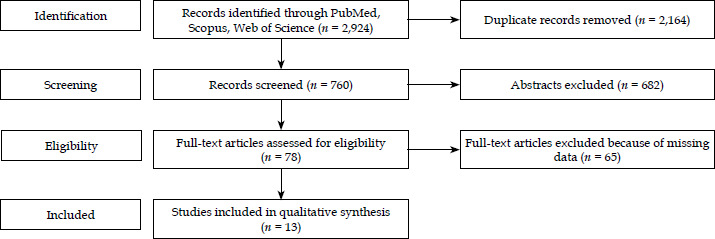
A systematic literature search was performed in PubMed/MEDLINE, Scopus, and Web of Science databases (Figure 1). Search strategy combined controlled vocabulary, where applicable, and free-text terms related to immunotherapy and interventional radiotherapy. Synonymous and related terms within each conceptual block were combined using the Boolean operator OR, and the two main conceptual blocks were combined using AND. The last search was conducted on June 4, 2026. The full reproducible database-specific search strategies for PubMed/MEDLINE, Scopus, and Web of Science are provided in Supplementary Table 6.
Study selection
Titles and abstracts were independently screened by two reviewers (V.L. and R.M.), both with expertise in gynecologic oncology and radiotherapy. Full-text articles were subsequently retrieved and assessed for eligibility. Discrepancies were resolved by consensus, with the involvement of a third reviewer when required.
Data collection and data item
Data extraction was performed independently by two investigators using a pre-defined standardized data collection form. Extracted variables were as follow: 1. Study characteristics (year of publication, study design, and sample size); 2. Patient demographics and disease characteristics; 3. All forms of interventional radiotherapy were considered eligible, including HDR, low-dose-rate (LDR), permanent seed implantation, intracavitary, interstitial, and image-guided IRT techniques; 4. Site treated; 5. Prescribed dose and fractionation schedule; 6. Immunotherapy agents included immune checkpoint inhibitors (ICIs; PD-1, PD-L1, and CTLA-4 inhibitors); 7. Timing and sequencing between interventional radiotherapy and immunotherapy, when reported; 8. Follow-up duration; 9. Radiological response of irradiated lesions; 10. Response of non-irradiated lesions, when available; 11. Progression pattern; 12. Studies involving solid malignancies were eligible for inclusion; and 13. Treatment-related toxicity.
Papers including comparator EBRT or SBRT cohorts were eligible if outcomes for patients treated with interventional radiotherapy combined with immunotherapy could be extracted separately. When comparative EBRT/SBRT data were reported, these were described narratively but not included in descriptive synthesis of IRT-immunotherapy outcomes.
Risk of bias assessment
Methodological quality and risk of bias were assessed after study selection and data extraction. The choice of quality assessment tool was based on study design. Randomized controlled trials were assessed using the Cochrane risk of bias 2 tool, whereas case reports and case series were evaluated using the Joanna Briggs Institute (JBI) critical appraisal checklists for case reports and case series, respectively. Retrospective observational cohort studies were measured with the risk of bias in non-randomized studies of interventions (ROBINS)-I tool. The assessment addressed key domains, such as patient selection, comparability of study groups, clarity of intervention reporting, outcome assessment, adequacy of follow-up, and completeness of reporting. Quality assessment findings were considered when interpreting both qualitative and quantitative results.
Effect measures
Effect measures involved absolute outcome measures reported in original studies, including radiological response of irradiated lesions, local control, PFS, response of non-irradiated lesions, and treatment-related toxicity. For dichotomous outcomes, observed proportions were extracted. When available, corresponding 95% confidence intervals reported in original studies were recorded. No comparative effect measures (e.g., risk ratios, odds ratios, or hazard ratios) were calculated because of the absence of sufficient comparative data and predominance of non-comparative study designs.
Data synthesis and statistical analysis
No formal meta-analysis was performed. Given the non-randomized design, small sample sizes, limited comparative evidence, and substantial clinical and methodological heterogeneity across the included studies, statistical pooling of effect estimates was considered inappropriate. A qualitative descriptive synthesis was therefore conducted. Study characteristics, treatment modalities, follow-up duration, and outcome definitions were summarized narratively. Key outcomes of interest were radiological tumor response, local control, PFS, and treatment-related toxicity. Corresponding 95% confidence intervals were recorded when reported in original papers. Outcome ranges across studies were summarized to provide an overview of observed effects without implying comparative efficacy. The certainty of evidence for each outcome was assessed using a GRADE-based approach, considering risk of bias, inconsistency, indirectness, imprecision, and potential publication bias. Summary of findings tables were generated separately for efficacy and safety outcomes. All analyses were descriptive in nature, and were intended to support transparent interpretation of the available evidence rather than to generate pooled effect estimates.
Assessment of reporting bias
Reporting bias was assessed qualitatively. Potential reporting bias was evaluated by examining the completeness, consistency, and selectivity of outcome reporting across studies. Reporting bias could not be excluded and was considered a potential limitation of the evidence base, which was considered when assessing the certainty of evidence.
Certainty of evidence
The certainty of evidence was measured using a GRADE-based approach. Certainty ratings were determined separately for efficacy and safety outcomes, considering risk of bias, inconsistency, indirectness, imprecision, and potential publication bias. Given the predominance of non-randomized and non-comparative studies, the certainty of evidence was assessed with consideration of methodological limitations and precision of the available outcome data. Summary of findings tables were generated for efficacy and safety outcomes.
Results
Study selection
The database search identified a total of 2,924 records. After removal of 2,164 duplicates, 760 records were screened based on titles and abstracts. Of these, 682 records were excluded because they were not relevant to the research question. The full texts of 78 articles were assessed for eligibility. Following full-text review, 65 studies were excluded. At the end of this process, 13 non-randomized studies fulfilled the inclusion criteria [33-45] and comprised 98 patients treated with interventional radiotherapy plus immunotherapy. Comparison of EBRT/SBRT cohorts was not included in the descriptive synthesis of IRT-immunotherapy outcomes; however, comparative findings reported by the original studies were summarized narratively to provide clinical context.
Study characteristics and results of individual studies
All included studies (n = 13) were published between 2019 and 2026 and were non-randomized, with eight case reports, three case series, and two retrospective cohort studies [33-45]. Sample sizes were small, ranging from 1 to 43 patients, with substantial heterogeneity in tumor histology and disease stage [33-45]. The included populations encompassed patients with hepatocellular carcinoma [33, 43, 45], adrenocortical carcinoma [34], lung cancer [35, 39-42], melanoma [36, 44], renal cell carcinoma [37], and pancreatic cancer [38]. Most patients had received prior systemic treatments, and IRT was generally delivered in the setting of limited disease progression during or after ICI therapy [33-45].
Interventional radiotherapy techniques varied across studies. High-dose-rate (HDR) IRT was employed in seven studies, using image-guided percutaneous catheter placement under CT or fluoroscopic guidance [33, 34, 36-38, 44, 45]. Six studies evaluated low-dose-rate (LDR) iodine-125 (125I) seed implantation [35, 39-43]. HDR-IRT was typically delivered as a single fraction, with prescription doses ranging from 5 to 52 Gy to the target lesion, while the LDR study used permanent seed implantation, with a prescribed dose consistent with standard 125I protocols (range, 90-140 Gy). All patients received ICIs, most commonly anti-PD-1 or anti-PD-L1 agents, either alone or in combination with anti-CTLA-4 therapy [33-45]. Across the 13 included studies, IRT was delivered before, concurrently, or in close temporal proximity to ICI therapy. No study directly compared different sequencing strategies. The median follow-up duration ranged from approximately 11 months to over 30 months [33-45].
Hepatocellular carcinoma
Three studies evaluated interventional radiotherapy in combination with immunotherapy in advanced hepatocellular carcinoma (HCC) [33, 43, 45]. IRT was delivered to progressive hepatic lesions, extra-hepatic metastases, predominantly involving the lung and bone, or a gluteus medius muscle metastasis. In a case series by Munker et al., four of six patients received concomitant interventional radiotherapy and checkpoint inhibition. Among these patients, the best in-field responses were three complete responses and one partial response [33]. In a retrospective comparative study by Tang et al., 43 patients received 125I seed IRT within 1 week after PD-1 inhibitor administration before propensity score matching. Compared with PD-1 inhibitor monotherapy, the combination significantly improved local tumor control and PFS (median PFS, 22.06 vs. 9.0 months; p = 0.03). Multivariate analysis identified the addition of 125I seed implantation as an independent protective factor for disease progression [43]. In a case report by Li et al., interstitial HDR-IRT was delivered 4 days after a single administration of sintilimab to a gluteus medius metastasis that had previously been treated with external beam radiotherapy, resulting in substantial tumor shrinkage and symptom relief as part of the combined local treatment approach [45]. None of the studies provided a formal quantitative assessment of responses in non-irradiated lesions. However, Tang et al. reported regression of some non-irradiated metastatic lesions, suggesting a possible systemic or abscopal effect, while acknowledging that the study was not designed to formally demonstrate an abscopal response [43].
Melanoma
Two studies reported the combination of ICIs and HDR-IRT in patients with advanced metastatic melanoma. Overall, five patients were included (four in a case series and one in a case report). Interventional radiotherapy was delivered to symptomatic metastatic lesions involving subcutaneous tissues (chest wall, scapular, subcostal, and thigh regions) or lung metastases. In the case series, HDR-IRT was administered shortly after initiation of immunotherapy (6-21 days after nivolumab or pembrolizumab) [36], whereas in the case report, lung HDR-IRT was delivered during ongoing pembrolizumab treatment approximately 2 months after treatment initiation [44]. Radiological responses of irradiated lesions were reported in all treated lesions. Among the four subcutaneous lesions treated with HDR-IRT, two achieved complete remission and two partial remission [36]. In the case report, the irradiated lung metastases remained locally controlled for approximately 8 months, although complete remission was not reported [44]. Regression or disease stabilization of some non-irradiated lesions was also described; however, these observations were not systematically assessed and cannot be attributed to a synergistic or abscopal effect. Systemic progression, particularly in the central nervous system, remained a reported pattern of failure.
Lung
Non-small cell lung cancer was investigated in five studies, including one retrospective cohort study and four case reports/series, for a total of 40 patients who received interventional radiotherapy combined with PD-1 blockade [35, 39-42]. Tao et al. included 33 patients with driver gene-negative NSCLC treated with 125I seed implantation combined with chemotherapy and ICIs. The exact target lesion sites and timing between 125I seed implantation and ICI administration were not reported at individual-patient level, and lesion-level CR/PR of the implanted lesions was not separately described. The IRT group (ICIs + CT + 125I) had better outcomes than the EBRT group (ICIs + CT + RT), with 1- and 2-year PFS rates of 77.3% vs. 46.7% and 46.0% vs. 10.4%, respectively (p < 0.001) [35]. Yuan, Yang, Ouyang, and Sui reported seven additional patients with NSCLC [39-42]. IRT targeted pulmonary lesions in the right upper or lower lobe, an anterior mediastinal lesion, a right supraclavicular lymph-node metastasis, and a retroperitoneal lymph-node metastasis. Treatment sequencing varied: in Yuan et al., 125I seed implantation was performed 2 days after pembrolizumab in case 1, whereas pembrolizumab was administered 2 days after 125I seed implantation in case 2 [39]; 125I seed IRT was delivered during pembrolizumab maintenance therapy in Yang et al. [40]; camrelizumab was initiated 7 days after 125I seed implantation in Ouyang study [41]; and anti-PD-1 therapy was initiated 2-3 months after 125I seed IRT in Sui et al. [42]. Treated lesions showed partial or marked regression, while overall responses after combined treatment included CR and PR. Regression of non-irradiated lesions was also observed. In the two cases reported by Yuan et al., responses occurred outside the 125I-implanted target volume, which the authors interpreted as an abscopal effect, although this observation was based on case reports and was not formally assessed using pre-defined abscopal-response criteria [39]. Durable disease control was seen in several cases, including PFS > 25 months in Yuan case 1 [39] and 40 months in Ouyang [41], although one patient in the Sui series developed progressive disease with multiple metastases at 6 months [42].
Adrenocortical carcinoma
In the metastatic adrenocortical carcinoma case series, HDR-IRT was administered before pembrolizumab initiation in two patients and after pembrolizumab initiation in one patient. The two patients treated with HDR-IRT before ICI initiation achieved complete and partial systemic responses, respectively, with regression also observed in non-irradiated pulmonary and abdominal metastases, which the authors considered suggestive of an abscopal effect. In contrast, the patient who initiated pembrolizumab before HDR-IRT indicated only a limited systemic response and subsequently developed progressive disease [34].
Renal cell carcinoma
In a case report of metastatic clear-cell renal cell carcinoma, a bulky left iliac bone metastasis was treated with HDR-IRT [37]. Nivolumab had been initiated approximately 6 months before IRT and was discontinued 10 days before treatment, then resumed 9 days after completion of HDR-IRT (35 Gy in 5 fractions). Three months post-treatment, the irradiated iliac lesion showed marked shrinkage. Simultaneously, complete regression of a non-irradiated L4 vertebral metastasis and shrinkage of a left internal iliac lymph node were observed. The authors interpreted the regression of lesions outside the irradiated target as an abscopal effect. No apparent progression of the remaining non-irradiated metastatic lesions was reported during follow-up [37].
Pancreatic cancer
A patient with pancreatic adenocarcinoma and 15 liver metastases underwent seven sessions of HDR-IRT [38]. After the first four HDR-IRT sessions treating eight lesions, pembrolizumab was initiated following the development of new hepatic metastases. Pembrolizumab was subsequently continued during the remaining three HDR-IRT sessions and thereafter, for a total of seven cycles. The HDR-IRT-treated lesions showed complete metabolic response on serial PET-CT, although two previously treated sites later showed FDG uptake associated with necrotic and post-treatment changes. Subsequent right hemi-hepatectomy confirmed a pathological complete response, with no viable tumor cells identified in the resected liver containing all 15 treated lesions. No extra-hepatic disease was detected, and the patient remained free of local and distant recurrence for at least 18 months after surgery [38].
Toxicity
The combination of IRT and immunotherapy was generally well tolerated. Only five of the 13 included studies reported a grading system used to assess toxicity: four studies used the common terminology criteria for adverse events (CTCAE) version 5.0 [34, 35, 39, 43], whereas one study used RTOG/ EORTC toxicity criteria [36]. No grade 4 or 5 toxicities were reported in any study. Grade ≥ 3 toxicities were rare, and included isolated immune-related adverse events or procedure-related complications. Importantly, no consistent increase in immune-mediated toxicity attributable to the addition of IRT was noted. Tao et al. showed a greater prevalence of grade 3 adverse events in EBRT group compared with IRT group (p = 0.02) [35]. The study characteristics are presented in Tables 1 and 2.
Risk of bias in studies and reporting bias
Risk of bias was assessed using the Joanna Briggs Institute critical appraisal checklists for case reports and case series and the ROBINS-I tool for retrospective observational studies. Overall, the included studies were judged to be at high-risk of bias. Most studies were case reports or small case series, which were inherently subject to selection bias, lack of control groups, limited generalizability, and incomplete control of confounding factors. In addition, considerable clinical heterogeneity was observed across studies in terms of tumor type, disease burden, radiotherapy technique and dose, timing of immunotherapy administration, and outcome assessment. Evaluation of publication bias was not formally performed because of the small number of studies and the predominance of case reports and case series. Nevertheless, reporting bias could not be excluded, as positive clinical outcomes, exceptional responses, and potential abscopal effects were more likely to be published than negative or inconclusive experiences. Selective outcome reporting may also have occurred, since several studies primarily focused on local tumor control and did not systematically report responses of non-irradiated lesions, progression patterns, or long-term toxicity outcomes. Consequently, the overall body of evidence may overestimate the therapeutic benefit of combining interventional radiotherapy with immunotherapy.
Results of syntheses
Due to substantial heterogeneity in study design, tumor type, interventional radiotherapy technique, immunotherapy regimen, and outcome reporting, a meta-analysis was not considered appropriate, and the results were synthesized narratively. Overall, the included studies reported encouraging radiological responses of irradiated lesions and an acceptable safety profile in selected patients across multiple tumor types, including NSCLC, hepatocellular carcinoma, melanoma, adrenocortical carcinoma, renal cell carcinoma, and pancreatic adenocarcinoma. Comparative evidence was limited to two retrospective cohort studies. Nevertheless, these findings should be interpreted with caution because of substantial methodological heterogeneity, imprecision, small sample sizes, potential reporting bias, and predominance of non-comparative study designs. According to GRADE criteria, the certainty of evidence for most efficacy outcomes was judged to be very low.
Certainty of evidence
The certainty of evidence was considered very low. Confidence in the findings was limited by the predominance of case reports and small retrospective studies, high-risk of bias, imprecision, clinical heterogeneity, inconsistent outcome reporting, potential publication bias, and scarcity of comparative data. Consequently, the observed benefits of combining interventional radiotherapy and immunotherapy should be interpreted with considerable caution.
Discussion
The combination of radiotherapy and immunotherapy has emerged as a promising strategy to enhance anti-tumor immune responses across a wide range of solid tumors. Among radiotherapy modalities, IRT offers unique radiobiological and dosimetric characteristics, providing a strong theoretical rationale for immune modulation. IRT delivers high doses per fraction with steep dose gradients and marked intratumoral dose heterogeneity, allowing effective tumor ablation while limiting irradiation of surrounding normal tissues. From a radiobiological perspective, these characteristics could theoretically reduce exposure of lymphatic structures and circulating lymphocytes, and potentially favor immune preservation compared with EBRT [15, 46-48]. However, these hypotheses were not directly demonstrated by the clinical studies included in this review, and require prospective validation.
Pre-clinical and translational studies consistently demonstrated that radiation could induce immunogenic cell death, enhance tumor antigen release, promote dendritic cell activation, and stimulate type I interferon signaling, thereby supporting anti-tumor immunity and providing a strong biological rationale for combining radiotherapy with ICIs [6-9, 13, 46]. In this context, the heterogeneous dose distribution characteristic of IRT may be particularly relevant, as different dose regions within the same implant can engage distinct immune mechanisms, including antigen release in high-dose areas and cytokine-mediated immune cell recruitment in lower-dose regions [17, 18]. However, it should also be acknowledged that part of the observed clinical efficacy may be attributable to the intrinsic ablative effect of IRT itself, particularly at higher doses, rather than to a true synergistic interaction with immunotherapy. In this regard, dose and fractionation are likely to play a critical role in determining the relative contribution of direct tumor cytotoxicity versus immune-mediated mechanisms. Nevertheless, despite this compelling biological rationale, direct clinical evidence demonstrating a superior immunomodulatory effect of IRT combined with immunotherapy and compared with other radiotherapy techniques remains limited. Therefore, the biological likelihood of these mechanisms should not be interpreted as evidence of clinical superiority over EBRT-based approaches.
The present hypothesis-generating systematic review highlights that clinical evidence on IRT-immunotherapy combinations is still scarce and largely exploratory. All the included studies were non-randomized and involved small patient cohorts, with case reports, retrospective case series, or single-center observational studies. No randomized controlled trials or adequately powered comparative studies have been published to date. As a result, the certainty of evidence remains very low, and conclusions regarding efficacy and optimal treatment strategies must be interpreted with caution. Nevertheless, across heterogeneous tumor types and treatment settings, the included reports described – in selected patients – favorable local outcomes of irradiated lesions and an acceptable safety profile, even in heavily pre-treated patients [33-45].
An important and clinically relevant aspect emerging from the reviewed studies is the timing of IRT relative to immunotherapy. Across the included reports, IRT was delivered before ICI initiation, during ongoing ICI therapy, or in close temporal proximity to immunotherapy administration, indicating the feasibility of multiple sequencing strategies. However, no study directly compared different timing approaches, and none was specifically designed to prospectively evaluate the impact of treatment sequencing on clinical outcomes. Consequently, any interpretation regarding optimal sequencing remains exploratory. Considerable heterogeneity was observed across tumor types. In metastatic adrenocortical carcinoma, systemic responses involving both irradiated and non-irradiated lesions were reported in two patients who received HDR-IRT before pembrolizumab, whereas disease progression occurred in a patient treated with pembrolizumab before IRT [34]. However, these observations were derived from only three patients and cannot establish a causal relationship between treatment sequence and outcome. In hepatocellular carcinoma, IRT was generally integrated with ongoing immunotherapy or delivered shortly after PD-1 inhibitor administration. Responses of irradiated lesions were reported in individual studies, while a retrospective comparative study demonstrated improved local tumor control and PFS with combined PD-1 inhibition and IRT [33, 43, 45]. Similarly, in melanoma and NSCLC, IRT was administered shortly after initiation of immunotherapy, during maintenance treatment, or followed by PD-1 blockade within days, with reports consistently describing local tumor control and acceptable toxicity profiles [35, 36, 39-42, 44]. Taken together, the available evidence suggests that combining IRT with ICIs is feasible across a broad range of sequencing schedules. However, current data do not support the superiority of delivering IRT before, during, or shortly after immunotherapy, and any apparent association between timing and treatment response should be interpreted descriptively rather than causally. From a biological perspective, pre-clinical studies support the concept that radiation-induced immune priming may interact with immune checkpoint blockade within a potentially favorable therapeutic window [6, 8, 15, 16]. Nevertheless, prospective studies specifically designed to evaluate treatment sequencing are required before clinical recommendations can be made.
Another notable observation across several reports was the occurrence of responses in lesions outside the directly irradiated target following combined IRT and immunotherapy. Notably, regression of distant non-irradiated metastases, consistent with a possible abscopal effect, has been described in selected patients treated with interventional radiotherapy and ICIs [34, 36, 37, 39, 43], although the contribution of concomitant immunotherapy precludes definitive attribution of these responses to radiation-induced abscopal effects. However, these findings should be interpreted with considerable caution. The available evidence derives primarily from case reports, small case series, and exploratory studies, none of which systematically assessed abscopal responses using pre-defined criteria. Moreover, most patients received concurrent ICIs, making it difficult to distinguish potential radiation-induced systemic immune effects from delayed or ongoing immunotherapy activity. Consequently, regression or stabilization of lesions outside the irradiated field cannot be reliably attributed to true abscopal responses, and may also reflect natural disease variability, patient selection, or reporting bias. While these observations support the biological rationale for combining IRT with immunotherapy, they should be considered hypothesis-generating rather than confirmatory. Abscopal responses have been previously described in the context of EBRT combined with ICIs [27, 31], but their incidence, predictive factors, and reproducibility remain poorly defined.
When compared with the broader literature on EBRT combined with immunotherapy, the body of evidence for IRT-based combinations is substantially smaller. Several studies of EBRT or stereotactic body radiotherapy combined with ICIs, particularly in lung cancer, melanoma, and cervical cancer, have reported improved response rates and survival outcomes, although concerns remain in terms of potentially increased or overlapping toxicities, such as pneumonitis in thoracic irradiation [49-53]. In contrast, the highly localized nature of IRT may offer a more favorable therapeutic ratio by limiting irradiation of normal tissues and immune-sensitive structures. However, in the absence of direct comparative studies, no definitive conclusions can be drawn regarding the relative advantages of IRT over EBRT in the immunotherapy era.
The main strengths of this review include its systematic methodology, transparent reporting according to PRISMA guidelines, and structured assessment of certainty of evidence using GRADE-based approach. By focusing specifically on IRT combined with immunotherapy, this work addresses a niche but increasingly relevant area in radiation oncology.
Several limitations must be acknowledged. First, the overall certainty of evidence is very low due to non-randomized study designs, small sample sizes, and imprecision of effect estimates. Second, substantial clinical heterogeneity exists with respect to tumor histology, disease stage, IRT technique, radiation dose, fractionation, immunotherapeutic agents, and follow-up duration. Third, outcome reporting was inconsistent, particularly for local control and toxicity, and time-specific endpoints were frequently unavailable. Moreover, responses observed in non-irradiated lesions were not systematically assessed using pre-defined criteria, limiting the ability to distinguish potential radiation-induced systemic effects from delayed immunotherapy responses or other sources of bias. An additional limitation relates to the inclusion of studies reporting both IRT and EBRT/ SBRT cohorts. Although only studies, in which outcomes for IRT-treated patients could be identified separately were included, comparative findings were not always reported at the patient level. Therefore, some degree of indirectness and potential selection bias cannot be ruled out when interpreting these comparative results. Finally, publication and reporting bias cannot be excluded, as positive or unusual outcomes, such as abscopal effects are more likely to be reported. The absence of comparative timing cohorts and the reliance on small, non-randomized studies preclude any definitive conclusions regarding the optimal sequencing of interventional radiotherapy and immunotherapy.
Conclusions
Current evidence suggests that combining interventional radiotherapy with immunotherapy is feasible and appears safe. However, the available evidence remains limited, and clinical relevance of potential immunomodulatory interactions has not yet been established. Prospective studies are needed to better define the role of IRT within modern immunotherapy-based treatment strategies.