Introduction
Histamine intolerance (HIT) has attracted increasing interest in pediatrics and allergology among both patients and clinicians; however, its status as a distinct clinical disorder remains uncertain. Despite the growing number of publications, there is still no consistent operational definition of HIT and no validated diagnostic or therapeutic algorithm.
In clinical practice, HIT is often diagnosed on the basis of nonspecific symptoms and patient-reported improvement after a low-histamine diet or supplementation with diamine oxidase (DAO), without confirmation by objective testing [1]. This approach carries a risk of overdiagnosis and of attributing symptoms to HIT when they may be due to other conditions with a similar clinical presentation [1].
HIT has been described as a “disproportion between accumulated histamine and the body’s capacity for its degradation” [1]. This non-immunological concept is typically linked to reduced DAO activity. In pediatrics, the absence of distinctive clinical features and the lack of standardized assessment methods substantially limit the ability to confirm the diagnosis.
The available studies on HIT in children are limited by several methodological constraints, including small patient cohorts, frequent lack of control groups, reliance on self-reported symptoms, and the use of a single measurement of DAO activity, the diagnostic validity of which in children remains uncertain [2]. Symptoms commonly attributed to HIT (e.g., abdominal pain, altered bowel habits, and diarrhea) are nonspecific and overlap with the typical presentation of functional gastrointestinal disorders in this developmental period [1, 2]. Moreover, patient-reported improvement on an elimination diet is rarely verified through a standardized oral food challenge (OFC). The retrospective design of most reports and the lack of assessment of dietary adherence further limit the strength of any conclusions [2].
Consequently, it has been increasingly questioned whether the criteria currently applied, based on the available evidence, allow reliable identification of HIT in children. The most controversial issues include [3]:
the lack of a clear relationship between the histamine content of ingested foods and clinical symptoms;
the limited diagnostic utility of serum DAO activity measurements and the lack of evidence from well-designed clinical trials supporting the efficacy of DAO supplementation in children;
the poor reproducibility of reactions during OFC — double-blind studies have shown that many symptoms also occur after placebo administration, indicating a significant nocebo effect [4].
The aim of this paper is to provide a reliable, evidence-based analysis of HIT in children and adolescents, with particular emphasis on its etiology, diagnostic limitations, and therapeutic options. This document was developed in response to the growing concern regarding HIT overdiagnosis and the frequent use of tests with limited clinical relevance, particularly serum DAO activity assays.
Histamine metabolism
Histamine is an endogenous biogenic amine formed from L-histidine through the enzymatic activity of histidine decarboxylase, and it is a key mediator within the neuro–immuno–endocrine system [5]. It is stored primarily in the granules of mast cells and basophils, but it can also be synthesized by histaminergic neurons, enterochromaffin cells in the gastrointestinal tract, and, to a lesser extent, by platelets. Histamine exerts its effects via four subtypes of G protein–coupled receptors (H1–H4), whose expression and functions are tissue-specific [5, 6]. H1 and H2 receptors are widely distributed, with H2 receptors predominating in the gastrointestinal tract. H3 receptors are found mainly in the central nervous system, whereas H4 receptors are expressed primarily on immune cells, including mast cells, and are involved in the regulation of inflammatory responses and leukocyte migration [6]. Activation of histamine receptors produces a broad range of physiological and clinical effects, including vasodilation and increased vascular permeability, smooth muscle contraction, gastric acid secretion, regulation of bronchial reactivity, and modulation of thermoregulation, the sleep–wake cycle, appetite, and cognitive functions [5, 6].
Systemic histamine levels reflect the balance between synthesis and release on the one hand, and the body’s capacity for degradation on the other hand [3]. Diamine oxidase (DAO) is a key enzyme involved in histamine metabolism, particularly for dietary histamine degradation in the small intestine. It is synthesized predominantly in the small intestine, where it serves as a metabolic barrier that limits intestinal absorption of dietary histamine into the circulation [5]. In contrast, intracellular histamine is inactivated by histamine N-methyltransferase (HNMT) [5]. The activity of both enzymes may be influenced by genetic polymorphisms, gut microbiota composition, inflammation, and multiple environmental factors, including medications that inhibit DAO activity [5]. Additional sources of histamine include the gut microbiota and histamine-rich foods, particularly fermented and cured products. When histamine degradation capacity is insufficient relative to dietary intake or endogenous release, histamine may accumulate and potentially contribute to symptoms attributed to HIT [3, 5, 6].
It is worth emphasizing that the physiological serum concentration of DAO in healthy individuals is low, with a mean value of 0.5–1.5 ng/ml and enzymatic activity ranging from 10 to 30 U/ml [7]. DAO levels tend to increase with age, as shown in pediatric studies in which children had significantly higher DAO values than adults [7].
Symptoms of histamine intolerance
The clinical presentation of HIT is highly heterogeneous, reflecting the widespread distribution of histamine receptors across multiple tissues and, to some extent, the subjective nature of certain symptoms (Table 1). Symptoms occurring after ingestion of histamine-rich foods often resemble reactions associated with endogenous histamine release. Commonly reported manifestations include sudden facial flushing, a subjective sensation of warmth, generalized pruritus, and urticaria [1–3].
TABLE 1
Gastrointestinal complaints also represent a major component of the clinical picture [1, 3]. In the study by Schnedl et al., bloating was reported by 90% of patients, while postprandial fullness, diarrhea, abdominal pain, and constipation were reported in approximately 55–73% of cases [8].
Other frequently described manifestations involve the nervous and cardiovascular systems, such as headache, dizziness, and palpitations, as well as respiratory symptoms and additional cutaneous findings [3]. In 97% of patients, at least three gastrointestinal symptoms co-occurred with manifestations affecting other organ systems, with a mean of 11 symptoms per individual [8].
Symptoms typically occur and/or worsen after meals. They may present as transient, isolated episodes of varying severity, but can also follow a chronic, recurrent course with periodic exacerbations [9]. In the study by Tamasi et al., the mean time from food ingestion to the onset of the first symptoms was 1.1 h [10]. Some symptoms, such as watery rhinorrhea, sneezing, or throat irritation, were reported within a few minutes [10].
Overall, the clinical presentation of histamine intolerance shows substantial interindividual variability, both in the number and severity of symptoms and in responses to the same food under different circumstances [1–3]. This heterogeneity complicates the establishment of clear diagnostic criteria, therefore, given the broad spectrum of potential manifestations, a thorough differential diagnosis is essential.
Differential diagnosis of symptoms attributed to HIT
Given the heterogeneous and nonspecific nature of symptoms attributed to HIT, the differential diagnosis should encompass a broad spectrum of allergic, immunological, gastroenterological, systemic, and psychosomatic conditions [3]. Table 2 summarizes the most commonly reported symptoms, potential underlying disorders, and recommended investigations to support differential diagnosis [9].
TABLE 2
Symptoms and differential diagnosis in patients with suspected histamine intolerance [9]
[i] NET – neuroendocrine tumors, MCAS – mast cell activation syndrome, IgE – immunoglobulin E, CRP – C-reactive protein, tTG-IgA – tissue transglutaminase IgA antibodies, EMA – endomysial antibodies, ECG – electrocardiogram, TSH – thyroid-stimulating hormone, fT4 – free thyroxine, C4 – complement component C4, C1-INH – C1 esterase inhibitor, PGD2 – prostaglandin D2, 5-HIAA – 5-hydroxyindoleacetic acid.
In clinical practice, particular emphasis should be placed on distinguishing HIT from other conditions with a similar clinical phenotype, especially because many of these disorders are far more prevalent, better studied, and have established diagnostic criteria.
Conditions whose omission may have significant clinical consequences include inflammatory bowel diseases and mast cell activation disorders, such as mastocytosis and mast cell activation syndrome (MCAS). These may present with symptoms that overlap with those attributed to HIT, including diarrhea, abdominal pain, cutaneous reactions, flushing, and circulatory disturbances.
In the context of mastocytosis and anaphylactic reactions, an interesting relationship has been observed between DAO and tryptase. Under baseline conditions, in patients with mastocytosis without symptoms of anaphylaxis, no correlation was found between DAO and tryptase concentrations [11]. However, during severe anaphylaxis in patients with clonal mast cell disorders, massive DAO release occurs together with a fourfold increase in tryptase, suggesting a shared mechanism involving mast cell degranulation and the release of DAO from heparin-sensitive storage sites in the gastrointestinal tract [11].
Hereditary angioedema should also be considered, as it typically presents with episodic swelling without urticaria and recurrent abdominal pain – symptoms that are often misinterpreted as food-related. The differential diagnosis should further include IgE-mediated and non–IgE-mediated food allergy, functional gastrointestinal disorders (including irritable bowel syndrome), malabsorption of fermentable carbohydrates (fermentable oligosaccharides, disaccharides, monosaccharides, and polyols; FODMAPs), and celiac disease. These conditions represent some of the most common causes of chronic or recurrent gastrointestinal complaints in the pediatric population.
Finally, given the high prevalence of anxiety and mood disorders in children and adolescents, psychiatric comorbidities should also be considered. These conditions may manifest with chronic fatigue, abdominal pain, headache, sleep disturbances, and increased emotional tension – symptoms that are frequently and incorrectly attributed to food intolerance. If symptoms persist despite exclusion of significant somatic disease, referral for psychological or psychiatric assessment may be warranted to identify contributing factors and implement appropriate management.
In the differential diagnosis of symptoms suggestive of histamine intolerance in children and adolescents, neuroendocrine neoplasms (NENs) may also be considered, although they are extremely rare in the pediatric population [12]. NENs may present with symptoms that overlap with those of histamine intolerance, such as flushing, abdominal pain, diarrhea, and cutaneous manifestations [12]. A key element of the differential diagnosis is the measurement of 5-hydroxyindoleacetic acid (5-HIAA) in a 24-hour urine collection and chromogranin A (CgA), both of which are elevated in NENs, whereas they remain within the normal range in histamine intolerance.
Histamine content in foods. Principles of a low-histamine diet
A low-histamine diet is based on the temporary elimination – typically for no longer than 10–14 days – of foods considered to be high in histamine. One of the main practical challenges is the lack of standardized, reliable food composition tables specifying histamine levels, ideally developed with consideration of products available on the domestic market. The literature shows substantial variability in reported histamine content across individual food items, as well as marked differences in recommendations regarding which products should be excluded in a low-histamine diet. This heterogeneity makes it difficult to implement the diet in a standardized manner in clinical practice [3, 13, 14].
Most available data on histamine-rich foods concern fish and fermented products, such as aged cheeses, cured meats, sauerkraut, wine, and beer. In fermented foods, high histamine content is linked to microbial fermentation, during which histidine is decarboxylated by bacterial amino acid decarboxylases [15]. In a 2011 risk assessment of biogenic amines in fermented foods, the European Food Safety Authority (EFSA) reported that the highest mean histamine concentrations were found, in descending order, in dried anchovies, fish sauce, fermented vegetables, cheese, other fish and fish products, and long-ripened sausages [16].
Low-histamine diet – foods with high histamine content
The limited availability of reliable data on histamine content in foods, together with substantial discrepancies across existing food lists used in low-histamine diets, may result in an inappropriate degree of restriction – either unnecessarily extensive or insufficient [14]. Moreover, no threshold dose for dietary histamine has been established, further complicating decisions about the appropriate scope of elimination.
At the same time, it is emphasized that assessing tolerance to histamine-containing foods solely on the basis of their histamine content is not justified, because:
histamine concentrations vary considerably within the same product category and even within a single product;
there are no data confirming a correlation between a product’s histamine content and the severity of clinical symptoms;
it remains uncertain whether histamine constitutes the sole or primary trigger of symptoms [3].
For these reasons, this paper classifies foods into two categories (Table 3): (1) products that, based on available data, are highly likely to contain elevated histamine levels; and (2) products for which the evidence is inconsistent but which are frequently reported as potentially high in histamine.
TABLE 3
| Food group | Foods highly likely to have a high histamine content | Inconsistent data, but often reported as histamine-rich foods |
|---|---|---|
| Fish | • All – the highest histamine content in dried anchovies, species from the Scombridae family (mackerel, tuna, canned sardines) | • White and fresh fish – inconsistent data, may contain histamine, especially frozen, smoked and canned • Seafood (np. shellfish, prawns, mussels) – inconsistent data, may contain histamine |
| Meat | • Dried and cured sausages, other cured meat products, ham, salami, smoked meat | – |
| Dairy | • Cheese – all, the highest histamine content in hard, mold-ripened cheese, quark | – |
| Vegetables | • Fermented vegetables (e.g. sour cabbage), eggplants, spinach, tomatoes | |
| Fruits | • Rather do not contain | • Grapefruit, lemon, orange, avocado – inconsistent data, histamine identified in individual studies • Histamine content in juice may be a result of inadequate storage and processing [14]. |
| Legumes | • Fermented soybean products (eg. tofu, tempeh, soy sauce, miso) | – |
| Alcohol | • All – the highest histamine content in wine and beer | – |
| Sauces | • Fish sauce | – |
At the initial stage of dietary management, it is reasonable to restrict elimination to the products listed in Table 3 to avoid an overly restrictive diet. The scope of exclusions should always be individualized, based on a detailed medical history and analysis of a food and symptom diary (see section: Diagnostic and therapeutic management in suspected HIT). If an association between consumption of histamine-rich foods and symptoms reported by the patient or caregiver appears unlikely, elimination is not justified.
Excessive dietary restrictions in children – particularly those involving milk and dairy products as well as fruits and vegetables – may reduce dietary diversity and increase the risk of nutritional deficiencies, reinforcement of maladaptive eating patterns, and the development of feeding and eating disorders, including food-related anxiety (see section: Dietary treatment and the risk of nutritional deficiencies, reduced dietary diversity, ARFID, and effects on the microbiota) [14].
Fish and fish products are commonly excluded in low-histamine diets. However, their actual histamine content depends largely on storage time, handling conditions, and processing methods. In a study conducted in Spain, Sánchez-Pérez et al. showed that fresh, locally available fish species were characterized by low histamine concentrations [17]. Nevertheless, clinical caution is warranted, particularly for species from the Scombridae family (including mackerel, tuna, sardines, and anchovies), which – due to their high content of free histidine – are especially prone to histamine accumulation.
Among vegetables, substantially elevated histamine levels have been reported mainly for eggplants, spinach, and tomatoes; however, published studies show considerable variability in measured values [18]. Vegetables and fruits should therefore be consumed as fresh as possible, as histamine and other biogenic amines may form even during refrigerated storage.
Fresh milk is generally considered a low-histamine product, with typical concentrations of approximately 0.3–0.7 mg/kg; levels may increase to around 1.2 mg/kg in condensed milk [19]. Differences between cow’s, goat’s, and sheep’s milk are minimal and not clinically relevant. In fresh raw milk, limited bacterial activity and short storage time restrict histamine production. Heating does not appear to meaningfully change histamine content. A marked increase in histamine may occur during cheese ripening – particularly when cheese is produced from milk stored for prolonged periods under refrigeration – because microbial activity promotes the formation of biogenic amines. Therefore, during a low-histamine diet, milk should not be excluded; rather, restriction should primarily apply to cheese, especially aged and mold-ripened varieties (Table 3).
Factors influencing histamine content in foods
Histamine content in foods shows substantial variability. It is influenced by the quality of the raw material, processing methods, storage conditions and duration, and the presence of specific bacterial strains that produce amino acid decarboxylases [20].
Factors promoting histamine accumulation:
Storage conditions
Histamine concentrations increase in foods that are not fresh, are stored for prolonged periods, or are kept under improper or unhygienic conditions [15, 16].
Immediate placement of fresh fish on ice markedly slows histamine formation.
High histamine levels in canned fish products result mainly from improper storage temperatures of the raw material prior to the canning process [21].
Grilling, frying, and drying of fish, meat, and vegetables may increase histamine concentrations, likely due to moisture loss and consequent concentration of biogenic amines [15, 22].
Fermentation, marination, and smoking of fish can promote the activity of histidine-decarboxylating bacteria, thereby increasing histamine levels in the final product [15].
Freezing of vegetables – some studies suggest that freezing may increase histamine levels in selected vegetable species [17].
Factors limiting histamine formation or reducing its concentration:
Packaging conditions.
Modified atmosphere packaging and the use of preservative additives may inhibit the growth of bacteria responsible for histamine production [22].
Boiling in water.
Boiling meat and vegetables may reduce histamine content through partial transfer into the cooking water and by inactivating histamine-producing microorganisms [21]. Biogenic amines are thermostable; therefore, observed changes in their levels result primarily from physicochemical processes rather than thermal degradation.
It is estimated that boiling reduces histamine concentrations by up to 83% in spinach and by approximately 11–14% in eggplants [17].
For some vegetables, boiling, grilling, or frying may increase amine concentrations, likely due to water loss and the consequent concentration of these compounds.
Boiling fish does not reduce histamine content [21].
Storage in oil.
Storing fish (e.g., tuna) in oil may slow the rate of histamine formation [22].
Cofactors
Alcohol consumption and tobacco smoking may increase the body’s sensitivity to biogenic amines by impairing their metabolism and degradation [16].
At present, there are no reliable data confirming the clinical relevance of so-called “histamine liberators,” i.e., pharmacologically active substances purported to enhance the release of histamine, as well as other biogenic amines such as tyramine, putrescine, or cadaverine, in the context of the development of adverse reactions to food or its individual components [3, 16]. Accordingly, routine extension of dietary restrictions in children to include products that are sources of these biogenic amines is not recommended.
Drugs
Numerous pharmacological agents may affect histamine metabolism, release, or distribution, and in clinical practice these effects may be misinterpreted as histamine intolerance.
Particular attention should be given to medications that reduce DAO activity, as well as agents that may increase histamine release from mast cells or interfere with histamine inactivation (Table 4). These effects may be dose-dependent and influenced by treatment duration and individual susceptibility. Therefore, a thorough review of pharmacotherapy – including prescription drugs as well as over-the-counter (OTC) preparations – is an essential component of the differential diagnostic work-up in patients with suspected histamine intolerance [3].
TABLE 4
Medications potentially affecting histamine metabolism and distribution, including those reducing DAO activity
In pediatric practice, particular attention is paid to mucolytics, nonsteroidal anti-inflammatory drugs, selected antibiotics, psychotropic agents, cardiovascular medications, opioids, as well as H1/H2 receptor antagonists, which may significantly reduce DAO activity or modulate the histamine response [1–3].
Diagnostic and therapeutic management in suspected HIT
Medical history
Given the nonspecific nature of the symptoms and the absence of reliable tests that allow unequivocal confirmation of histamine intolerance, a detailed medical and dietary history remains the cornerstone of the diagnostic approach. Particular emphasis should be placed on identifying gastrointestinal, cutaneous, respiratory, or neurological complaints that occur in temporal association with the consumption of foods that may be rich in histamine [1, 3, 23, 24]. At the same time, other conditions that can present with chronic or multisystem symptoms and a similar clinical phenotype should be systematically considered and, where appropriate, excluded.
In every child presenting with gastrointestinal complaints in the context of suspected histamine intolerance, a careful assessment of current dietary patterns is essential, including any elimination diets already implemented, as these may modify the clinical presentation and affect interpretation of subsequent diagnostic steps.
Assessment of the relationship between food intake and symptoms
In children with suspected symptoms triggered by histamine-rich foods, dietary consultation to evaluate the relationship between food intake and clinical complaints is recommended. The primary assessment tool is a prospective food diary (e.g., 24-hour or 3-day record).
Some experts recommend a 4-week observation period using a food diary. However, prolonged recording may reduce data quality and undermine motivation for systematic documentation.
Long-term monitoring may also reinforce excessive attention by the child and/or caregiver to potential food-related reactions [14]. In routine practice, a 3–7-day food diary (including at least 2 weekdays and 1 weekend day) is usually sufficient to assess whether symptoms are likely to be associated with consumption of histamine-rich foods.
Symptoms attributed to HIT are typically expected to occur about 1 hour after ingestion of a histamine-rich product and no later than 4 h. Upper respiratory symptoms often appear first, followed by gastrointestinal complaints, whereas systemic and neurological manifestations (e.g., migraine) tend to occur later (Table 1) [10]. The timing may also depend on the food matrix and the amount of histamine ingested. Reactions are usually self-limiting.
When interpreting food diary records, potential cofactors that may augment histamine-related reactions, such as alcohol intake or medication use, should also be considered.
Three-stage protocol of a low-histamine diet
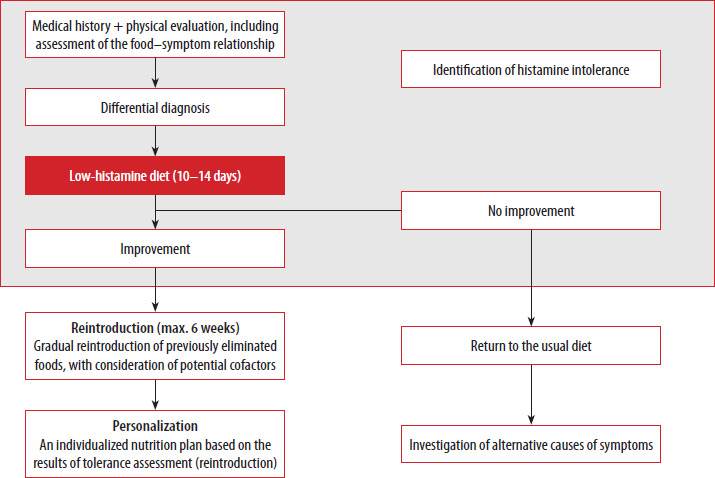
In situations where other potential causes of the reported complaints have been excluded and the history suggests a likely association between consumption of histamine-rich foods and symptom occurrence, a short-term (10–14 days) elimination diet excluding high-histamine foods may be considered in children without risk factors for feeding or eating disorders (Figure 1, Table 5). Resolution of symptoms or a clinically significant reduction in symptom severity during this period is considered supportive of a diagnosis of HIT [1, 3, 23].
TABLE 5
Reintroduction
In children in whom HIT has been supported by a short-term elimination diet, gradual reintroduction of previously excluded foods is recommended in order to determine individual tolerance [3, 6]. No structured, validated reintroduction protocol is currently available. In practice, gradual reintroduction of histamine-rich foods, with careful monitoring for symptom recurrence or worsening, is advised. The purpose of this phase is to individualize the diet. In the long term, restriction should be limited to foods that consistently provoke symptoms, thereby minimizing unnecessary dietary limitations.
Maintaining a food diary may be useful both for monitoring symptoms during a low-histamine diet and for identifying recurrences related to inadvertent dietary exposures or errors [25].
Tolerance to histamine-rich foods should be reassessed periodically, as it may vary and is influenced by multiple factors, including gut microbiota composition, concomitant medications, comorbidities, alcohol consumption, and the menstrual cycle. Available evidence suggests that histamine tolerance may fluctuate substantially over time [6, 14].
Differentiation between histamine intolerance and FODMAP-related symptoms
In patients presenting with gastrointestinal complaints, it is advisable to assess whether symptoms are more likely to be associated with intake of foods rich in fermentable carbohydrates (FODMAPs) (Table 6). FODMAPs are poorly absorbed, readily fermentable carbohydrates, including oligosaccharides, disaccharides, monosaccharides, and polyols. High intake of these compounds may exacerbate symptoms of irritable bowel syndrome [26]. Suspicion of FODMAP-related intolerance should be considered particularly when consumption of histamine-rich foods is low (e.g., fish, aged cheeses, wine; Table 3) and when the medical history and food diary do not indicate a temporal association between ingestion of histamine-rich foods and symptom occurrence.
TABLE 6
Differentiation between histamine intolerance and FODMAP-related symptoms
Tests supporting the diagnosis of histamine intolerance
Measurement of diamine oxidase (DAO) concentration
Measurement of serum DAO activity remains the most controversial test. Currently, there are no robust pediatric data demonstrating a correlation between low serum DAO activity and the severity of clinical symptoms [6]. DAO activity may also show marked diurnal/daily and monthly variability, which further limits interpretability. Available analyses indicate low diagnostic sensitivity and specificity of serum-based assays, and proposed cut-off values (< 3 U/ml, > 10 U/ml) do not reliably differentiate symptomatic individuals from healthy controls [23, 24, 27]. Moreover, serum DAO activity does not reflect enzyme function in the small intestine – the primary site of dietary histamine degradation – substantially limiting its clinical utility.
It has been suggested that measuring DAO activity in intestinal mucosa could be more informative; however, this approach is invasive and has not been validated for routine clinical use [6]. As it requires biopsy material obtained during endoscopy, it is performed only exceptionally rarely in practice.
Despite these limitations, serum DAO testing is widely available commercially, which may contribute to its overuse [3, 22, 23, 26]. In addition, reported changes in serum DAO activity in response to dietary interventions are inconsistent and do not correlate with clinical improvement, further underscoring the limitations of this test in HIT. In light of current evidence, DAO measurement may be considered only an adjunctive investigation. It should not be used as the basis for diagnosing histamine intolerance and cannot replace the three-stage dietary protocol.
Oral food challenge with histamine
The definitive method for confirming or excluding an adverse reaction to histamine is a graded oral food challenge (OFC), ideally conducted under double-blind, placebo-controlled conditions. In routine clinical practice, this procedure is rarely performed and remains largely limited to specialized centers and research settings [1, 2, 24].
In an adult study of patients with suspected HIT, a single-blind, placebo-controlled histamine challenge excluded histamine hypersensitivity in most participants (87.6%), while 5% developed symptoms after placebo administration [28]. These findings highlight the need for cautious interpretation of OFC results and for integrating them with the patient’s overall clinical history and medical context.
It is recommended that patients with suspected HIT remain under the care of a clinical dietitian. An OFC should be considered only after a clinically meaningful improvement has been observed following a short-term (10–14 days) low-histamine diet [28].
Dietary treatment and the risk of nutritional deficiencies, reduced dietary diversity, ARFID, and effects on the microbiota
Any elimination diet introduced in a child during a period of rapid growth carries a risk of nutritional deficiencies, impaired growth, and adverse changes in eating behaviors. Therefore, its potential benefits must clearly outweigh the associated risks. The principles of the short-term elimination diet and gradual reintroduction of histamine-rich foods in children and adolescents with suspected HIT have been discussed above (see sections: Three-stage protocol of a low-histamine diet and Reintroduction). This section addresses key considerations related to the long-term safety of dietary management [13].
Low-histamine diets may entail substantial risks due to their restrictive nature. Eliminating multiple food groups – including nutritionally valuable items such as fermented dairy products, fish, tomatoes, fermented vegetables, and fermented soy products – may lead to micronutrient deficiencies (e.g., calcium, iron, vitamin D, omega-3 fatty acids, and B vitamins), reduced protein intake, and lower dietary fiber consumption [6]. Reduced dietary diversity, particularly through exclusion of fermented products, may also decrease gut microbiota diversity and alter its composition. However, the long-term clinical consequences of these changes remain incompletely understood [29–31].
Diet planning is further complicated by the lack of a uniform definition of “low-histamine” foods. Threshold values proposed in the literature range from 5 to 50 mg/kg, and some authors advocate much lower cut-offs (< 1 mg/kg) [18]. At the same time, individual histamine tolerance varies widely, resulting in heterogeneous clinical responses even at similar levels of exposure [13]. Together these factors increase the risk of unjustified and overly restrictive diets.
A major clinical concern is the potential development of feeding and eating disorders, including avoidant/restrictive food intake disorder (ARFID). Prolonged use of elimination diets – particularly when based on uncertain diagnostic premises – may reinforce avoidant behaviors, increase food-related anxiety, and strengthen the belief that long-term dietary restriction is necessary [32]. Limited dietary diversity may, in turn, contribute to persistence of maladaptive eating habits [6, 14].
For these reasons, low-histamine diets should be used only when clearly justified and should be applied cautiously, for a limited duration, under close supervision by a dietitian and a physician.
The priority is to maintain the greatest possible dietary diversity while ensuring adequate symptom control. After the elimination phase, gradual liberalization of the diet, tailored to individual tolerance, is recommended. Follow-up should include evaluation of nutritional status, growth, and the child’s psychological well-being to minimize complications associated with dietary restriction.
Diamine oxidase (DAO) supplementation
Supplementation with DAO may theoretically enhance histamine degradation in the small intestine and thereby reduce symptom severity in patients with histamine intolerance [9]. However, clinical evidence supporting this approach is very limited. Available data come from only a small number of randomized studies in adults, including populations with migraine, presumed DAO deficiency, and chronic spontaneous urticaria [33, 34]. No studies have evaluated the safety or efficacy of DAO supplementation in children, which precludes evidence-based recommendations for use in the pediatric population [1]. An additional limitation is the high cost of these products, which is typically borne by the patient. In light of the current evidence, the expert panel does not recommend routine DAO supplementation in children with suspected histamine intolerance.
Pharmacotherapy
There are no data confirming the efficacy of antihistamines for the treatment of HIT in children. Second- and third-generation antihistamines may be considered on an as-needed basis for symptomatic relief in patients for whom a low-histamine diet is not feasible or is difficult to maintain [6, 14]. Their use should be short-term and guided by an assessment of clinical response. If a therapeutic trial does not result in improvement, the medication should be discontinued.
Practical conclusions derived from the position statement
Key facts
HIT remains a clinical concept rather than a fully established diagnosis. However, patients reporting HIT require support and careful assessment rather than dismissal of their symptoms.
There is no evidence demonstrating a clear relationship between dietary histamine and clinical symptoms, and serum DAO activity has questionable diagnostic utility.
There is no evidence supporting the efficacy of DAO supplementation in children.
Reactions observed during OFC are not consistently reproducible, and placebo responses are common, indicating a relevant nocebo effect.
What we do not know
Clinical implications
Diagnosis of HIT in children should not be based on serum DAO measurements.
OFC should be carefully planned and performed under the supervision of an experienced dietitian or physician.
Through differential diagnosis of conditions that may mimic HIT is essential.
Restrictive low-histamine diets should not be a first-line intervention, given the risks of nutritional deficiencies and ARFID.
Patient and family education is crucial to prevent unnecessary dietary restrictions.
High-quality, placebo-controlled studies using standardized histamine doses, as well as tools to assess psychological and neurobiological mechanisms of hypersensitivity (including the nocebo effect), are needed.