Introduction
The prevalence of allergic diseases, including asthma, atopic dermatitis, and food allergy, has increased substantially over recent decades, particularly in industrialised societies. This trend cannot be explained by genetic factors alone and has therefore directed considerable attention toward environmental determinants of immune dysregulation. Early theoretical frameworks, such as the hygiene hypothesis, proposed that reduced microbial exposure during childhood may impair immune maturation and increase susceptibility to allergic disorders [1, 2]. More recently, these concepts have evolved into a broader microbiota-centred model, emphasising the central role of host–microbial interactions in immune development.
The gut microbiota is now recognised as an essential component of host physiology, influencing immune maturation, metabolic regulation, and epithelial barrier integrity [3, 4]. Increasing evidence suggests that disturbances in microbial composition and function (dysbiosis) contribute to the development and progression of allergic diseases. However, the biological effects of the microbiota are not solely dependent on taxonomic composition. Rather, many of these effects are mediated through microbial metabolites, which function as key signalling molecules at the interface between intestinal microorganisms and the host immune system.
Among the most extensively studied metabolites are short-chain fatty acids (SCFAs) generated through bacterial fermentation of dietary fibre, tryptophan catabolites derived from microbial amino acid metabolism, and secondary bile acids produced through bacterial transformation of host bile salts [5–7]. SCFAs, including acetate, propionate, and butyrate, promote the differentiation of regulatory T cells and suppress Th2-type immune responses through activation of GPR41/43 receptors and inhibition of histone deacetylase (HDAC) activity [5, 8, 9]. Tryptophan metabolites acting via the aryl hydrocarbon receptor (AhR), as well as secondary bile acids regulating inflammatory signalling pathways, also play important roles in maintaining immune homeostasis [6, 7].
Disruptions in the production of these metabolites may lead to immune imbalance, impaired barrier function, and enhanced susceptibility to allergic inflammation [10]. Consequently, microbiota-derived metabolites constitute a critical component of the microbiota–immune system axis and represent promising therapeutic targets.
This present review aims to systematise the information that gut microbiota metabolites are key regulators of immune responses and may substantially influence the development, progression, and potential treatment of allergic diseases.
Microbiota and the immune system
The gut microbiota plays a crucial role in the development and maturation of the immune system, particularly during early life. Studies conducted in germ-free animal models have demonstrated that the absence of microbiota leads to underdevelopment of immune structures and impaired immune responses, confirming its essential importance for proper immune function [3, 11, 12]. Interactions between the microbiota and the immune system occur primarily within the gut-associated lymphoid tissue (GALT), where antigen presentation and regulation of immune responses take place [3, 4].
Commensal microorganisms contribute to immune tolerance through induction of regulatory T cells (Treg), promotion of IL-10 and TGF-β signalling, and maintenance of balanced Th1/Th2 responses. Disruption of these processes through dysbiosis may favour Th2-dominant inflammation characteristic of allergic disease [13, 14]. Consequently, the gut microbiota functions as a key regulator of immune homeostasis, and disturbances in its composition constitute an important risk factor for allergy.
Host–microbiota metabolic interactions are bidirectional. Nutrients, bile acids, and host secretions shape microbial metabolism, while microbial products influence systemic physiology and immunity [15].
Microbiota metabolites – classification
Gut microbiota metabolites constitute an important component of communication between microorganisms and the host organism, functioning as signalling molecules that regulate numerous physiological processes, including immune responses. Their diversity and biological activity depend both on microbiota composition and on the availability of dietary substrates, particularly fibre and amino acids. The relationship between host metabolism and the gut microbiota is bidirectional, forming an integrated metabolic network in which microbial metabolites influence host physiology, while host-derived nutrients and bile acids shape microbial activity [15]. The most important groups of microbiota metabolites include SCFAs, tryptophan metabolites, secondary bile acids, and bacterial cell wall components such as lipopolysaccharides (LPS).
Short-chain fatty acids
SCFAs, primarily acetate, propionate, and butyrate, are produced through bacterial fermentation of non-digestible carbohydrates. These metabolites serve as energy substrates for colonocytes and exhibit broad immunomodulatory activity [5, 16].
Beyond immunoregulation, SCFAs influence glucose metabolism, appetite regulation, and epithelial energy homeostasis, illustrating their pleiotropic biological role [16].
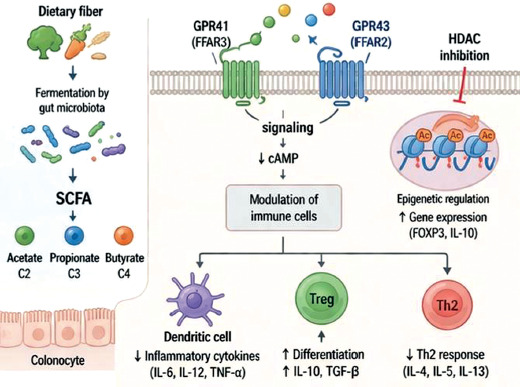
The mechanisms of action of SCFAs include activation of G protein-coupled receptors (GPR41, GPR43) and inhibition of histone deacetylase (HDAC) activity, leading to epigenetic changes that affect the expression of genes involved in immune responses [5, 8, 9, 16]. Particularly important is their ability to promote the differentiation of regulatory T cells (Treg) and suppress Th2-mediated inflammatory responses characteristic of allergic diseases. Experimental studies further demonstrate (Figure 1) that increased SCFA availability attenuates allergic airway inflammation [17, 18].
FIGURE 1
Immunomodulatory mechanisms of short-chain fatty acids produced by the gut microbiota. Dietary fibre is fermented by the gut microbiota, resulting in the production of short-chain fatty acids (SCFAs), primarily acetate, propionate, and butyrate. SCFAs exert immunoregulatory effects through activation of G protein-coupled receptors GPR41 (FFAR3) and GPR43 (FFAR2), as well as through inhibition of histone deacetylases (HDACs). These signalling pathways modulate immune cell function, suppress the production of pro-inflammatory cytokines by dendritic cells, promote differentiation and activity of regulatory T cells (Treg) with increased IL-10 and TGF-β expression, and inhibit Th2-mediated responses associated with IL-4, IL-5, and IL-13 production. Collectively, SCFAs contribute to immune homeostasis and protection against allergic inflammation [5, 16]
Tryptophan metabolites
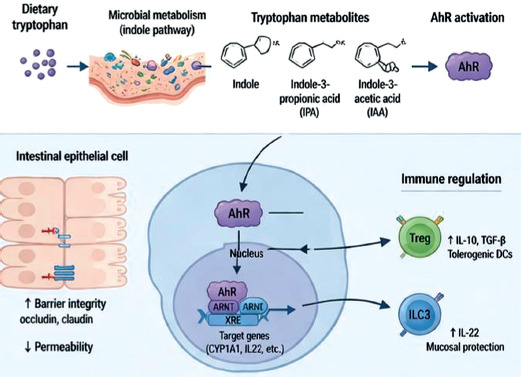
Tryptophan, an amino acid, is metabolised by both host cells and the gut microbiota into multiple indole derivatives, including indole-3-acetic acid and indole-3-propionic acid [6, 19, 20]. A key mechanism of action of tryptophan metabolites is activation of the aryl hydrocarbon receptor (AhR), which plays an important role in maintaining intestinal barrier integrity and regulating immune cell function [6]. Activation of AhR promotes the production of interleukin-22 (IL-22), which supports intestinal epithelial regeneration and protection against pathogens. Disturbances in tryptophan metabolism may lead to immune dysregulation and increased susceptibility to allergic diseases [6, 19, 20]. Microbial tryptophan metabolism generates a wide spectrum of indole derivatives with distinct immunological effects, suggesting that not all AhR ligands exert equivalent biological activity [19, 20] (Figure 2).
FIGURE 2
Tryptophan-derived microbiota metabolites and AhR-mediated regulation of intestinal immunity. Dietary tryptophan is metabolised by the gut microbiota through the indole pathway, generating bioactive metabolites such as indole, indole-3-propionic acid (IPA), and indole-3-acetic acid (IAA). These compounds activate the aryl hydrocarbon receptor (AhR), leading to transcriptional regulation of target genes involved in epithelial homeostasis and immune responses. AhR signalling enhances intestinal barrier integrity through increased expression of tight junction proteins, including occludin and claudin, reduces epithelial permeability, promotes regulatory T-cell (Treg) responses associated with increased IL-10 and TGF-β production, and stimulates ILC3-dependent IL-22 secretion, thereby supporting mucosal protection and immune tolerance [6, 19]
Secondary bile acids
Secondary bile acids are formed through the transformation of primary bile acids by the gut microbiota, mainly via dehydroxylation reactions. These compounds (such as deoxycholic acid and lithocholic acid) are capable of interacting with nuclear receptors such as farnesoid X receptor (FXR) and TGR5, which play significant roles in the regulation of metabolism and immune responses [7, 21].
Secondary bile acids can modulate the activity of immune cells, including macrophages and T lymphocytes, influencing cytokine production and inflammatory processes. Some of these metabolites have been shown to promote the differentiation of regulatory T cells, indicating their potential role in maintaining immune tolerance [7, 22].
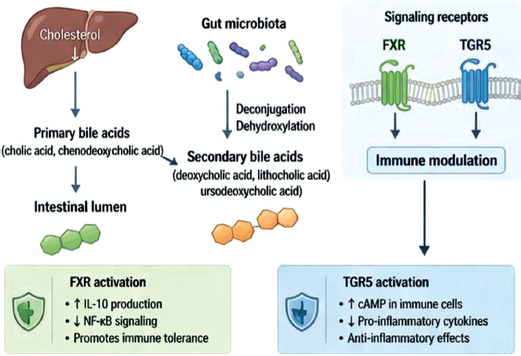
Recent evidence indicates that specific bile acid metabolites can directly suppress Th17 differentiation while promoting Treg development, reinforcing immune tolerance [22] (Figure 3).
FIGURE 3
Secondary bile acids derived from the gut microbiota modulate immune responses through FXR and TGR5 signalling. Primary bile acids synthesised from cholesterol in the liver are released into the intestinal lumen, where they undergo microbial transformation via deconjugation and dehydroxylation to generate secondary bile acids, including deoxycholic acid, lithocholic acid, and ursodeoxycholic acid. These microbiota-derived metabolites interact with signalling receptors such as farnesoid X receptor (FXR) and Takeda G protein-coupled receptor 5 (TGR5). Activation of FXR promotes IL-10 production, suppresses NF-κB signalling, and supports immune tolerance, whereas TGR5 activation increases intracellular cAMP levels in immune cells, reduces pro-inflammatory cytokine production, and exerts anti-inflammatory effects. Together, secondary bile acids contribute to the maintenance of immune homeostasis [7, 22]
Lipopolysaccharides (LPS)
Lipopolysaccharides (LPS) are components of the outer membrane of Gram-negative bacteria and function as potent immunostimulatory molecules. LPS are recognised by Toll-like receptor 4 (TLR4) expressed on immune cells, leading to activation of pro-inflammatory signalling pathways and cytokine production [23].
Under physiological conditions, low concentrations of LPS may contribute to proper stimulation of the immune system and maintenance of immune readiness. However, increased intestinal permeability and excessive exposure to LPS, as observed during dysbiosis, may lead to chronic inflammation and exacerbation of allergic reactions [13].
Immunological mechanisms
Gut microbiota metabolites play a crucial role in the regulation of immune responses through direct effects on immune cells, as well as through modulation of signalling and epigenetic pathways. Their activity includes both the maintenance of immune homeostasis and the prevention of excessive inflammatory responses characteristic of allergic diseases [5–9, 16].
Regulation of immune responses
The regulation of immune responses by gut microbiota metabolites is based on modulation of the function of effector and tolerogenic cells, as well as shaping of the cytokine environment. Of particular importance is their ability to promote mechanisms of immune tolerance, thereby limiting the hyperreactivity characteristic of allergic diseases.
Microbiota metabolites influence the differentiation and activity of T lymphocytes, promoting populations with anti-inflammatory properties while suppressing pro-allergic responses. This effect is associated with alterations in the cytokine profile, including increased production of anti-inflammatory mediators such as interleukin-10 (IL-10), and inhibition of pro-allergic cytokines including IL-4, IL-5, and IL-13 [5, 8, 9, 17]. As a result, chronic inflammation is reduced and immune responses become more stable.
An important aspect of microbiota metabolite activity is also the modulation of dendritic cell function, because these cells play a key role in the initiation and direction of immune responses. Metabolites may affect dendritic cell maturation and promote a tolerogenic phenotype, thereby supporting the induction of immune tolerance [8, 9, 24].
Additionally, microbiota metabolites support intestinal barrier integrity, limiting the translocation of antigens and pathogens into systemic circulation. Maintenance of epithelial barrier tightness represents an important mechanism controlling immune activation and preventing excessive inflammatory responses [8].
Disturbances in metabolite production, as observed during dysbiosis, lead to deregulation of these processes, thereby promoting pro-allergic immune responses and loss of immune tolerance. These regulatory mechanisms are also reflected at the molecular level, where microbiota metabolites modulate gene expression and signalling pathways involved in immune responses.
Treg vs. Th2 balance
One of the key mechanisms of action of microbiota metabolites is the regulation of balance between regulatory T cells (Treg) and type 2 helper T lymphocytes (Th2). Under physiological conditions, metabolites – particularly SCFAs – promote the differentiation and expansion of Treg cells, which play a fundamental role in maintaining immune tolerance.
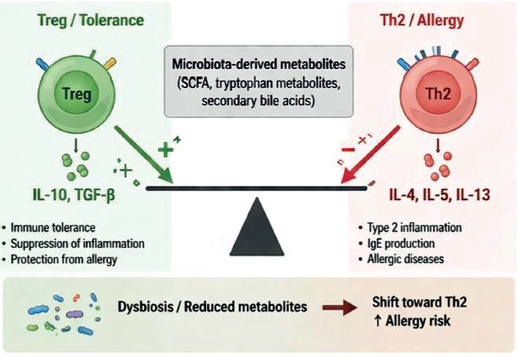
Through the secretion of anti-inflammatory cytokines such as IL-10 and transforming growth factor β (TGF-β), Treg cells suppress excessive immune activation and limit the development of allergic responses. In contrast, dominance of the Th2 response is associated with increased production of pro-allergic cytokines such as IL-4, IL-5, and IL-13, thereby promoting allergic disease development [5, 8, 9, 16]. Disturbances in microbiota metabolite production lead to a shift in balance toward Th2-dominant responses, representing one of the key pathogenic mechanisms in allergy (Figure 4).
FIGURE 4
Microbiota-derived metabolites regulate the balance between immune tolerance and allergic Th2 responses. Microbiota-derived metabolites, including short-chain fatty acids (SCFAs), tryptophan metabolites, and secondary bile acids, promote immune homeostasis by enhancing regulatory T-cell (Treg) responses and suppressing Th2-mediated inflammation. Increased Treg activity is associated with elevated IL-10 and TGF-β production, leading to immune tolerance, suppression of inflammation, and protection against allergic disease. In contrast, Th2 dominance promotes the release of IL-4, IL-5, and IL-13, resulting in type 2 inflammation, IgE production, and allergy development. Dysbiosis and reduced metabolite availability shift this balance toward Th2 responses, thereby increasing the risk of allergic diseases [3–5]
Regulation of cytokine production
Gut microbiota metabolites influence the cytokine secretion profile through their effects on antigen-presenting cells and T lymphocytes. In particular, SCFAs increase the production of anti-inflammatory cytokines such as interleukin-10 (IL-10), while simultaneously inhibiting the synthesis of pro-inflammatory cytokines.
This regulation results in reduction of chronic inflammation and decreased hyperreactivity of the immune system. Consequently, microbiota metabolites play an important role in maintaining the balance between inflammatory responses and immune tolerance, which is of key importance in allergic diseases [8].
Intestinal barrier integrity
Gut microbiota metabolites play an important role in maintaining intestinal barrier integrity, which constitutes the first line of defence against environmental antigens and pathogens. Short-chain fatty acids, especially butyrate, serve as the main energy source for enterocytes and support the expression of tight junction proteins such as occludin and claudin [9].
Disturbances in metabolite production may lead to increased intestinal permeability (“leaky gut”), enabling antigen translocation into systemic circulation and amplification of immune responses. This process promotes chronic inflammation and the development of allergic diseases [6, 25].
Molecular mechanisms of action
Gut microbiota metabolites are key regulators of immune responses at the molecular level, integrating metabolic signals with transcriptional and epigenetic mechanisms in immune cells. Their activity is not limited to direct effects on effector cells but also includes long-term programming of immune responses through modulation of gene expression.
Mechanisms of particular importance include activation of G protein-coupled receptors, inhibition of histone deacetylases, and activation of the aryl hydrocarbon receptor. These pathways form an integrated regulatory network that influences both T-cell differentiation, antigen-presenting cell function, and intestinal barrier integrity.
In the context of allergic diseases, these mechanisms play a crucial role in maintaining the balance between tolerogenic and pro-allergic responses. Disturbances in signalling dependent on microbiota metabolites lead to dysregulation of this balance, promoting Th2-dominant responses and exacerbation of inflammatory processes [5–9, 17, 21].
G protein-coupled receptors (GPR41, GPR43)
SCFAs affect immune cells through activation of G protein-coupled receptors such as GPR41 and GPR43 (also known as FFAR3 and FFAR2). These receptors are expressed on neutrophils, macrophages, and dendritic cells, among others [5, 16, 17].
Activation of GPR41/43 leads to modulation of inflammatory responses, including inhibition of pro-inflammatory cytokine production and regulation of immune cell migration. This mechanism plays an important role in limiting excessive inflammation and maintaining immune homeostasis [5, 16, 17].
Histone deacetylase (HDAC) inhibition
One of the key mechanisms of SCFA activity is their ability to inhibit histone deacetylase (HDAC) activity, leading to epigenetic changes regulating gene expression. HDAC inhibition promotes the expression of genes associated with regulatory T-cell function, including the transcription factor Foxp3, which is essential for their differentiation and activity [5, 8, 9, 24].
This mechanism represents an important link between microbiota metabolism and immune regulation at the epigenetic level.
Activation of the aryl hydrocarbon receptor (AhR)
Tryptophan metabolites produced by the gut microbiota, including indoles and their derivatives, activate the aryl hydrocarbon receptor (AhR), which plays a key role in regulating immune responses and maintaining intestinal barrier integrity.
Activation of AhR increases the production of interleukin-22 (IL-22), which supports intestinal epithelial regeneration and strengthens host defence mechanisms. Moreover, AhR influences lymphocyte differentiation and modulation of inflammatory responses, which plays an important role in the pathogenesis of allergic diseases [6, 19, 20, 26].
Role in allergic diseases
Increasing evidence indicates that gut microbiota metabolites play an important role in the pathogenesis of allergic diseases through modulation of immune responses and effects on intestinal barrier integrity. Disturbances in their production resulting from dysbiosis may lead to loss of immune tolerance and enhancement of Th2-type responses characteristic of allergic diseases [5–10, 17, 21].
Asthma
According to GINA (Global Initiative of Asthma), asthma is a heterogeneous disease, usually characterised by chronic airway inflammation. It is defined by the history of respiratory symptoms, such as wheeze, shortness of breath, chest tightness, and cough, that vary over time and in intensity, together with variable expiratory airflow [27]. Bronchial asthma is a chronic inflammatory disease of the airways in which excessive Th2-type immune responses play a central role. A growing number of studies indicate a significant association between gut microbiota composition and the risk of asthma development, particularly during early life [3, 10, 28].
Reduced concentrations of SCFAs, especially butyrate and propionate, have been associated with an increased risk of asthma. SCFAs exert anti-inflammatory effects by promoting the differentiation of regulatory T cells and suppressing Th2 responses [5, 8, 9, 16–18, 24]. Experimental studies have demonstrated that supplementation with a fibre-rich diet, leading to increased SCFA production, may reduce the severity of airway inflammation [5, 8, 17, 18, 24, 29].
Food allergies
Over the past two decades, food allergies have become an increasingly significant public health issue, with their prevalence steadily rising. These disorders result from a loss of immune tolerance to dietary antigens.
Currently, it is believed that the pathogenesis of food allergies is predominantly associated with immunoglobulin E (IgE)-mediated reactions. Clinical symptoms usually develop shortly after exposure to the allergen and may include skin manifestations, erythema, gastrointestinal complaints such as diarrhoea or vomiting, as well as tissue swelling. In severe cases, allergic reactions may progress to anaphylaxis, which is a life-threatening condition. The development of these symptoms is primarily related to the degranulation of mast cells and basophils, leading to the release of inflammatory mediators [30].
Food allergies result from a loss of immune tolerance toward dietary antigens. The gut microbiota plays a key role in the development of tolerance through its influence on regulatory T-cell development and intestinal barrier function [9].
Dysbiosis, particularly during early life, leads to disruption of immune balance and reduced production of immunomodulatory metabolites such as SCFAs. Consequently, tolerance mechanisms become impaired and immune reactivity to food antigens increases [6].
It has also been shown that specific gut microbiota profiles may predispose individuals to the development of food allergies, highlighting the importance of the microbiota–immune system axis in the pathogenesis of these disorders [7].
Atopic dermatitis
Atopic dermatitis (AD) is a chronic inflammatory skin disease characterised by recurrent periods of remission and relapse. It has a complex and multifactorial aetiology involving genetic predisposition, environmental influences, epidermal barrier dysfunction, and immune system dysregulation [31].
A hallmark of AD pathogenesis is the activation of multiple inflammatory pathways, particularly those associated with T helper (Th) cell subsets and cytokines, including Th2, Th22, interleukin (IL)-4, IL-13, IL-31, Th17, and, in some cases, Th1 responses. Increased transepidermal water loss (TEWL) also plays a central role in disease development by contributing to skin barrier impairment. Clinically, the acute phase of AD is characterised by erythematous, inflammatory, eczematous lesions, whereas the chronic phase is associated with lichenification, skin thickening, and desquamation [31].
In recent years, growing attention has been directed toward the gut–skin axis, which describes the bidirectional relationship between intestinal microbiota and skin health [21]. Alterations in gut microbiota composition, together with reduced production of metabolites such as SCFAs, may exacerbate inflammatory processes and further compromise epidermal barrier function. Microbial metabolites can modulate cutaneous immune responses by influencing T-cell activity and cytokine production, which may be of considerable importance in the pathogenesis of AD [11, 31–34]. Moreover, intestinal dysbiosis has been associated with greater disease severity, highlighting the potential therapeutic relevance of microbiota-targeted interventions [12].
Experimental and clinical evidence
A growing number of experimental and clinical studies confirm the important role of the gut microbiota and its metabolites in the regulation of immune responses and in the pathogenesis of allergic diseases. This evidence includes animal models, observational studies in humans, as well as interventions aimed at microbiota modulation.
Animal studies
Experimental animal models, particularly germ-free and gnotobiotic mice, have provided important mechanistic insights into the role of the microbiota in immune system development and susceptibility to allergic diseases. Animals raised in the absence of microbiota exhibit impaired immune maturation, reduced numbers of regulatory T cells (Tregs), and increased susceptibility to exaggerated allergic responses [3, 11, 12]. These findings indicate that commensal microorganisms are essential for the establishment of immune tolerance and maintenance of immune homeostasis.
Animal studies have also shown that microbiota-derived metabolites may protect against allergic disease through several complementary mechanisms, including suppression of Th2-driven responses, limitation of IgE-associated pathways, modulation of innate lymphoid cells type 2 (ILC2s), promotion of regulatory T-cell responses, strengthening of epithelial barrier integrity, and epigenetic regulation of immune cell function [24, 26, 34–37]. Experimental studies demonstrated that intestinal colonisation with specific bacterial strains or supplementation with microbiota-derived metabolites, particularly SCFAs, can restore immune balance and attenuate allergic inflammation [8, 9, 17, 18, 24, 26, 36, 37]. Among SCFAs, butyrate appears to exert particularly strong immunoregulatory effects. In murine models, butyrate administration has been associated with increased numbers and enhanced function of Treg cells, modulation of dendritic cell activity, reduced eosinophilic inflammation, and attenuation of airway inflammation in asthma models [8, 9, 17, 18, 26, 34]. These effects are thought to be mediated, at least in part, through inhibition of histone deacetylases and induction of tolerogenic immune pathways.
Recent murine data have additionally highlighted the relevance of ILC2 cells, which contribute to early allergic inflammation through rapid secretion of IL-5 and IL-13. In dietary fibre-based models, increased production of microbiota-derived metabolites was associated with reduced ILC2 activation and attenuated airway inflammation. These findings suggest that microbial metabolites may influence both innate and adaptive components of allergic immune responses. Although translation of these observations into human disease requires further investigation, preclinical evidence strongly supports microbiota-targeted preventive and therapeutic strategies in allergic disorders [37].
Interventions (probiotics, diet, postbiotics)
Interventions aimed at modulating the gut microbiota represent a promising approach in the prevention and treatment of allergic diseases. Clinical studies have evaluated the effectiveness of probiotics, prebiotics, dietary modifications, and direct administration of microbiota metabolites (postbiotics). Probiotic supplementation has shown heterogeneous results; however, some studies indicate a potential role in reducing the risk of atopic dermatitis and alleviating allergic symptoms [32].
A fibre-rich diet, leading to increased production of SCFAs, has been associated with beneficial effects on immune responses and reduction of inflammation [5, 16–18, 29].
Increasing attention is being paid to postbiotics, defined as microbiota-derived metabolites that may exert direct immunomodulatory effects without the need to alter microbiota composition. Preliminary studies suggest that they may represent a safe and effective therapeutic strategy in allergic diseases [38, 39].
Therapeutic implications
The growing understanding of the role of the gut microbiota and its metabolites in the regulation of immune responses opens new therapeutic opportunities for the prevention and treatment of allergic diseases. These strategies focus both on modulation of microbiota composition and on direct influence over its metabolic activity. Despite the increasing number of studies, causal relationships between specific microbiota-derived metabolites and the development of allergic diseases remain incompletely understood, which limits the direct translation of current findings into clinical practice.
Probiotics and prebiotics
Probiotics, defined as live microorganisms that confer health benefits to the host, represent one of the most extensively studied strategies for microbiota modulation. Their effects involve restoration of microbial balance, strengthening of the intestinal barrier, and modulation of immune responses [32]. Clinical studies have demonstrated that certain bacterial strains, particularly those belonging to the genera Lactobacillus and Bifidobacterium, may reduce the risk of atopic dermatitis and alleviate allergic symptoms, although the results remain inconclusive [32, 33]. Prebiotics, which are non-digestible dietary components (e.g. inulin and fructooligosaccharides), stimulate the growth of beneficial intestinal bacteria and indirectly increase the production of microbiota metabolites, including SCFAs [5, 16]. Their use has been shown to support the development of immune tolerance and reduce inflammation [33].
Postbiotics (microbiota metabolites)
Increasing attention has been directed toward postbiotics, defined as bioactive products of microbiota metabolism such as SCFAs, indoles, and secondary bile acids. Unlike probiotics, postbiotics may exert direct immunomodulatory effects without requiring colonisation of the gastrointestinal tract.
Studies indicate that postbiotics may regulate the function of regulatory T cells, influence cytokine production, and strengthen the intestinal barrier. Their potential advantages include greater stability and more predictable effects compared with live microorganisms [38, 39]. Despite promising findings, the clinical application of postbiotics requires further investigation.
Fibre-rich diet
Diet is one of the most important factors influencing the composition and function of the gut microbiota. Dietary fibre intake increases the production of SCFAs, which exhibit anti-inflammatory and immunomodulatory properties.
Epidemiological and interventional studies suggest that a fibre-rich diet may reduce the risk of allergic disease development and alleviate disease severity. In particular, a high-fibre diet may affect the gut–lung axis and gut–skin axis, which are highly relevant to the pathogenesis of asthma and atopic dermatitis [5, 16–18, 29].
Personalised therapy
Due to substantial interindividual variability in microbiota composition, increasing importance is being placed on personalised approaches. Individual microbiota profiles and metabolomic signatures may in the future enable the selection of optimal therapeutic strategies tailored to specific patients [6].
Responses to microbiota-targeted interventions such as probiotics are highly individualised and may depend on baseline microbiota composition. Therefore, future therapeutic strategies are expected to shift toward personalised microbiome-based medicine rather than universal supplementation approaches.
The development of omics technologies, such as metagenomics and metabolomics, creates opportunities for identifying biomarkers associated with the risk of allergic diseases and treatment responses. Personalisation of interventions – including diet, probiotics, or postbiotics – may improve therapeutic efficacy and reduce adverse effects [40].
Study limitations
Despite the rapid progress in research on the gut microbiota and its metabolites, significant limitations remain that hinder interpretation of findings and their clinical application. A major challenge is the lack of standardisation of research methodologies, including both microbiota analysis (e.g. 16S rRNA sequencing vs. metagenomics) and metabolite quantification, which makes comparisons between studies difficult [41].
Additional challenges arise from population differences related to genetic, environmental, and dietary factors that influence microbiota composition and metabolite profiles. Furthermore, interpretation of available data is complicated by the complexity of metabolomic analyses and the pleiotropic effects of many metabolites [42, 43].
An important limitation is also the insufficient number of causal and mechanistic studies, which restricts the ability to clearly define the role of microbiota metabolites in the pathogenesis of allergic diseases [44].
An important methodological challenge in microbiome research is the lack of standardisation in sample collection, sequencing pipelines, bioinformatic processing, and statistical interpretation. Differences in DNA extraction methods, sequencing depth, and taxonomic databases may substantially influence study outcomes, limiting reproducibility and comparability between studies [41].
Future perspectives
Technological advances in microbiota and microbial metabolism research are opening new directions for investigation and clinical applications. Of particular importance is the development of metabolomics, which enables comprehensive analysis of microbiota-derived metabolic products and their effects on the host organism [42]. Integration of metabolomic data with metagenomic and transcriptomic analyses allows a more precise understanding of the functional role of the microbiota.
Another important direction is personalised medicine based on individual microbiota composition and metabolic activity. Such an approach may enable the development of therapies tailored to specific patients, including targeted supplementation with probiotics, prebiotics, or postbiotics [40]. Personalised interventions may improve therapeutic efficacy while reducing the risk of adverse effects.
Large population studies indicate that environmental factors such as diet, lifestyle, antibiotic exposure, and geography may exert a stronger influence on gut microbiota composition than host genetics. This finding highlights the modifiable nature of microbiota-associated risk factors in allergic diseases [43].
Advances in metabolomics may facilitate the identification of novel therapeutic targets and bioactive compounds derived from the microbiota. High-throughput metabolic profiling is increasingly recognised as a valuable tool in precision medicine and drug discovery [42].
Integration of metagenomics, transcriptomics, proteomics, and metabolomics enables a systems-level understanding of microbiota function and host interaction. Multi-omics approaches may improve biomarker discovery and therapeutic stratification in allergic diseases [44].
In the future, the gut microbiota and its metabolites may also serve as diagnostic and prognostic biomarkers in allergic diseases. Identification of specific microbial and metabolomic signatures may enable early disease detection, risk assessment, and monitoring of treatment responses [42–44]. However, this will require further studies, particularly large-scale prospective and interventional trials.
Conclusions
Gut microbiota metabolites constitute a key element in the regulation of immune responses, acting as a molecular link between the intestinal environment and the host immune system. Through their effects on the balance between regulatory T cells and Th2-type responses, modulation of cytokine production, and maintenance of intestinal barrier integrity, they play an important role in the pathogenesis of allergic diseases.
Accumulated experimental and clinical evidence indicates that microbiota metabolites, particularly short-chain fatty acids and tryptophan metabolites, demonstrate substantial therapeutic potential. Strategies aimed at microbiota modulation – such as probiotics, prebiotics, postbiotics, and dietary interventions – may represent promising approaches in the prevention and treatment of allergic diseases.
At the same time, the complexity of interactions between the microbiota, its metabolites, and the immune system requires further well-designed studies, particularly interventional trials and large-scale omics-based analyses. Better understanding of these mechanisms may contribute to the development of personalised therapeutic strategies and the identification of novel diagnostic and prognostic biomarkers in allergic diseases.