Ichthyosis represents a heterogeneous group of rare genetic disorders characterized by impaired keratinization and defective epidermal barrier formation, resulting from mutations in genes essential for skin barrier integrity. We report a unique case of self-healing collodion baby syndrome, a rare and distinctive phenotype of congenital ichthyosis, accounting for approximately 10% of all cases.
A female neonate, delivered via caesarean section at 39 weeks of gestation (third pregnancy, third delivery), with a birth weight of 3,480 g and an Apgar score of 10, was admitted to the Neonatal Unit of the Provincial Hospital in Elbląg. The family history was unremarkable, and the mother’s prenatal screening tests revealed no abnormalities. The newborn presented with marked skin edema; the epidermis was thickened, fissured, and displayed a rhomboid to polygonal pattern. Additional clinical findings included dysmorphic auricles, eversion and edema of the lips and eyelids, and subtle flattening of the nasal bridge. According to the mother’s medical history, the patient’s older siblings (from a different father) are healthy. Based on the initial presentation, harlequin ichthyosis was suspected.
The newborn was placed in an incubator with 80% air humidity. Laboratory tests revealed leukocytosis (38,000/μl), prompting the initiation of empirical antibiotic therapy (ampicillin and gentamicin), fluid therapy, and intravenous administration of paracetamol. The skin was lubricated with paraffin. Consultations with an ENT specialist and an ophthalmologist were recommended. The patient was subsequently transferred to the Department of Neonatal and Infant Pathology at the University Clinical Center (UCK) in Gdańsk for comprehensive diagnostic evaluation and escalation of therapy.
At the referral center, samples were collected for molecular testing for congenital ichthyosis, and ultrasound examinations of the abdomen and brain were performed, revealing no significant abnormalities. Genetic testing revealed the presence of the p.Ser698Arg variant in one allele of the ALOX12B gene and the p.Tyr687SerfsTer9 variant in the other allele of the same gene. Additionally, the p.Ala833Val variant was detected in one allele of the ABCA12 gene. These findings confirmed the diagnosis of autosomal recessive ichthyosis. Carrier testing was recommended for both parents.
The hospital course was uneventful. The infant was exclusively breastfed, demonstrated appropriate weight gain, and responded well to intensive emollient therapy, resulting in a marked improvement of the skin condition. On the 10th day of life, the patient was discharged home in good general condition.
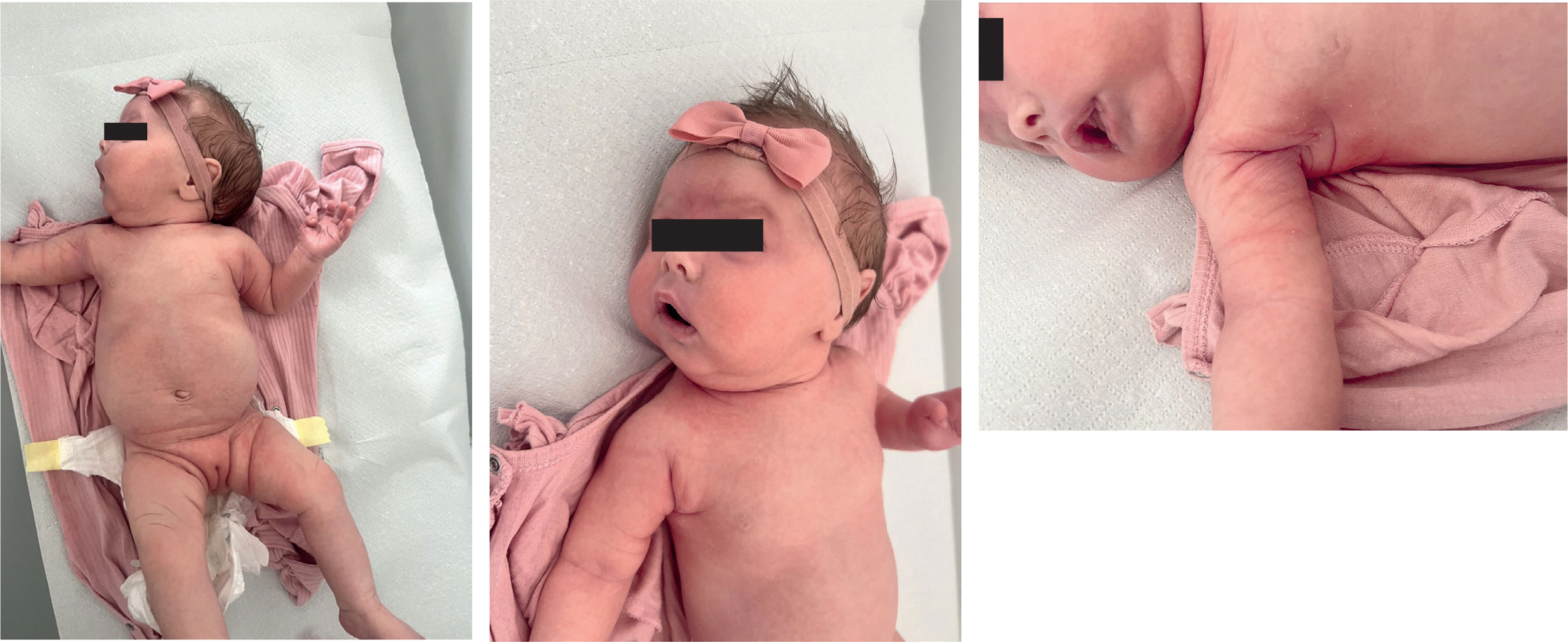
At approximately 2 months of age, the patient was evaluated at the outpatient dermatology clinic. No clinical signs of ichthyosis were observed. Only mild desquamation persisted in the flexural regions. The infant appeared healthy and continues to be followed in outpatient dermatologic care.
The term “collodion baby” (CB) refers to a rare clinical condition, with an estimated incidence of 1 in 50,000 to 100,000 live births [1, 2]. The diagnosis requires genetic testing of both the affected child and the parents to confirm the mode of inheritance and identify carrier status. The self-healing form of CB is thought to be associated with mutations in the ALOX12B and ALOXE3 genes [3].
Treatment in the neonatal period is challenging, as complications may occur in nearly half of patients, and mortality during the first weeks of life reaches 11% [4]. Preventing hospital-acquired infections is crucial, including the use of topical antiseptics at puncture sites and on erosive skin lesions. Affected newborns should be placed in incubators with adequately high humidity and require close monitoring, along with maintenance of fluid and electrolyte balance due to the risk of hypernatremic dehydration. Specialist ophthalmologic and otorhinolaryngologic care is also essential for comprehensive management and early detection of potential complications.
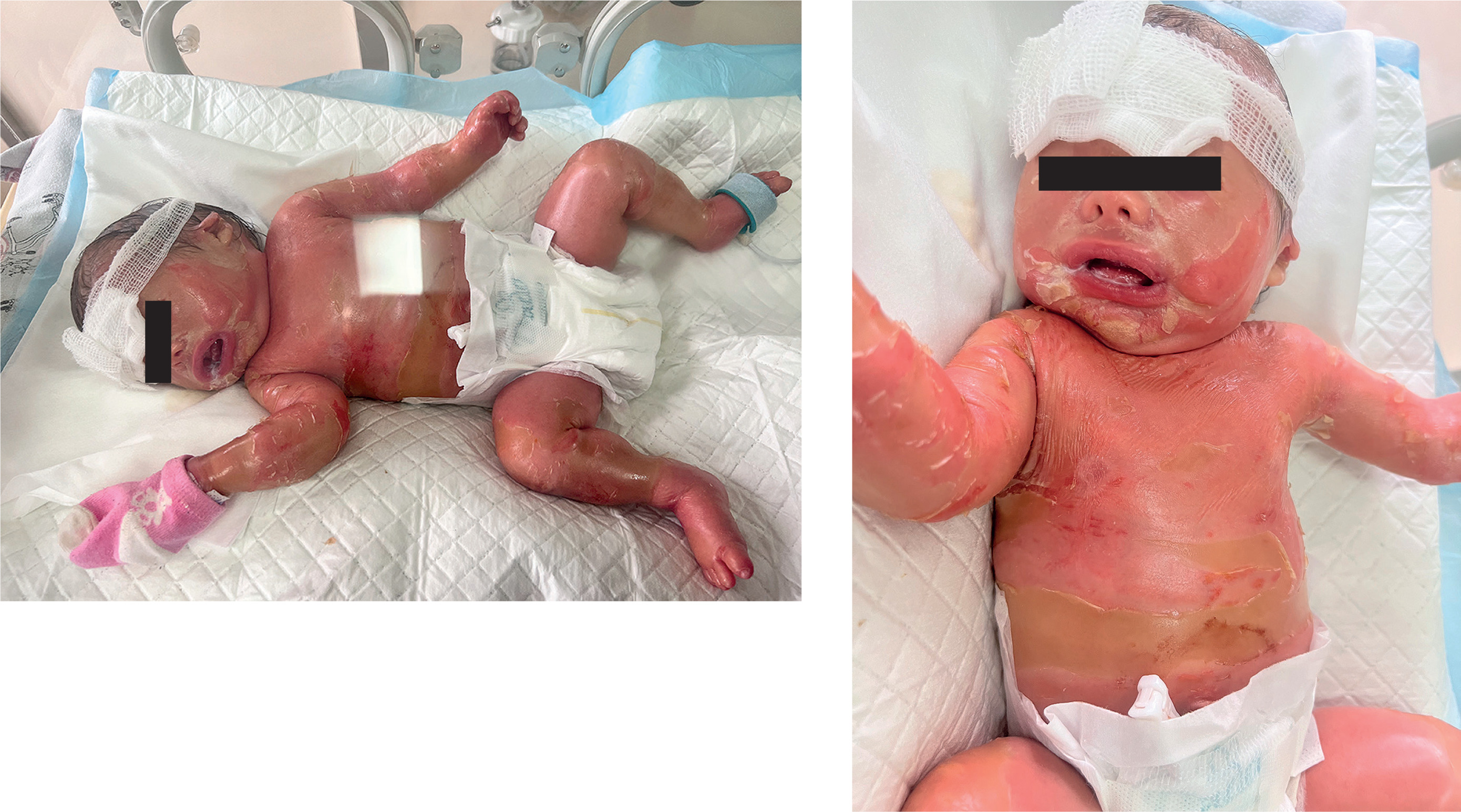
Figure 2
The same patient during a follow-up visit at the dermatology outpatient clinic after 2 months
Skin care should focus on the regular use of gentle, fragrance-free emollients, while avoiding active or potentially irritating agents during the first years of life. Effective pain management is an essential component of care. In more severe cases, treatment may include topical therapy with tazarotene (0.05–0.1%) or systemic retinoid therapy with acitretin at a dose of 0.5–0.75 mg/kg body weight per day [5, 6].
Advances in neonatal intensive care have markedly improved the prognosis for infants affected by harlequin-type of ichthyosis. Favorable treatment outcomes rely on early diagnosis, comprehensive supportive care, and a multidisciplinary therapeutic approach. Genetic counseling should be offered to the parents, as there is a 25% risk of recurrence in subsequent pregnancies.