
Introduction
Social media (SM) have become the platform of choice for people seeking immediate access to information [1]. Nearly 60% or 4.7 billion people worldwide use SM [2] and this number is expected to continue growing [3]. SM have become so ubiquitous and pervasive that many people are using them to search for health care providers and communicate with them about their issues [1]. In the realm of healthcare and dermatology, SM usage is extremely popular, creating opportunities for research, outreach, and tracking trends in public health [4]. With regards to dermatology, attention has been devoted to the role of SM for both practitioners and patients, as well as identifying patterns on specific platforms such as Facebook, YouTube, Twitter, and Instagram [3].
Aim
The objective of this study was to evaluate if Polish adults aged 18–35 follow dermatological news on SM, identify the platforms and contents they find the most interesting and to assess if the SM content can encourage them to visit a healthcare professional.
Material and methods
We conducted an anonymous, author-designed, open online questionnaire using Google Forms. The survey consisted of 26 questions and was distributed to young adults (aged 18–35) in Poland from January to March 2024. Participants received the questionnaire via SM platforms on the Internet.
Epidemiological data concerning sex, age, place of residence (city grouped according to size and rural area) and education level were collected as well as data on users’ SM habits concerning skincare and dermatology, requesting skin care advice on SM, preferred applications, websites and contents, opinion on influencer competencies etc. The questionnaire also investigated if SM content could encourage visiting a dermatologist and have an impact on choosing a particular doctor. The consistency of healthcare professional diagnosis with the one suggested on the Internet was also assessed.
Results
A total of 356 respondents participated in this study. The majority of respondents were women (78%), while men constituted 21%, and 1% chose the option “other”.
The minimum age was 18 years old (yo) and the maximum age was 35 yo. The median age was 23 yo and the mean age was 22.8 yo. Regarding residency, most respondents lived in big cities (31% in cities with 100–500 k inhabitants, 22% in cities with > 500 k inhabitants and 14% in cities with 50–100 k inhabitants). Fifty-eight percent were university students, with 23% had a higher educational level. 65% of respondents had an educational background related to medicine.
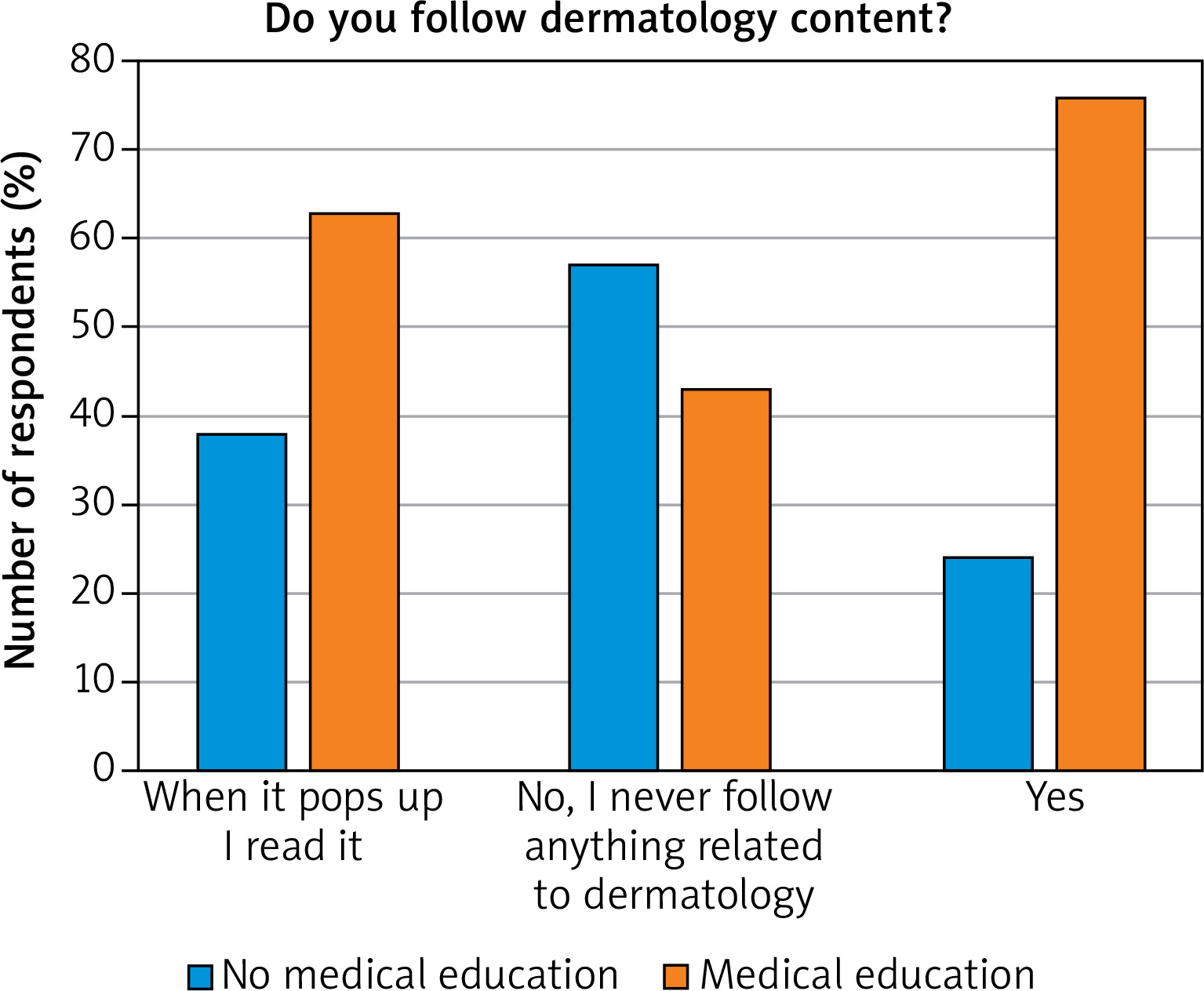
The majority of respondents (43%) do not actively follow dermatology content, but declare “when it pops up, they read it”. 38% actively follow dermatology content and only 19% of people do not follow dermatology content on SM.
People in college (45%) and with higher education (52%) usually follow dermatology content, whereas people with primary (67%) and secondary (76%) education most often never follow anything related to dermatology or they read it when something pops up. Women tend to follow content related to dermatology more than men (n = 139, (50%) vs. n = 11, (15%)) and the majority of men were not interested in anything related to dermatology (n = 39 (53%)).
There was no statistically significant connection between the place of residence and the tracking of dermatological content. People with medical education follow dermatology content more often than the others (Figure 1).
Fifty-seven respondents who do not follow dermatology content on SM declared lack of interest in this topic. 14 respondents stated that they do not have any skin problems. Others declared reasons including time constraints, different prioritization or preferring to visit a dermatologist when they need help rather than seeking advice on SM.
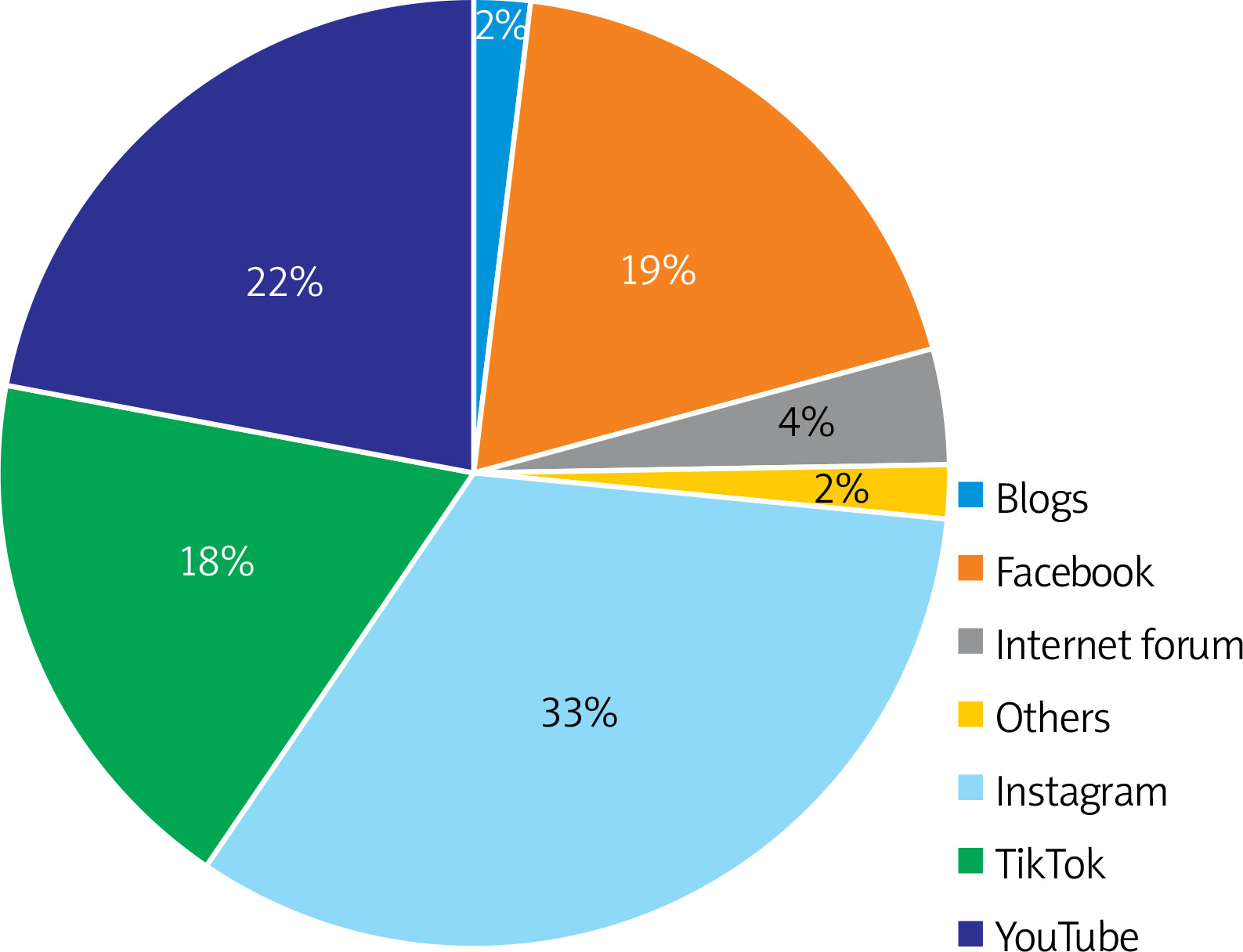
The most commonly used platform was Instagram (33%) with the second most popular being YouTube (22%), followed by Facebook (19%) and TikTok (18%). Rarely used platforms were Internet forums (4%), blogs (2%) and others (2%), like Twitter (n = 4), Pinterest (n = 3), Reddit (n = 1), Tumblr (n = 1), PubMed (n = 1), OLX (n = 1), Snapchat (n = 1) and “Practical medicine” journal (n = 1) (Figure 2).
Analysing the results concerning sex, women most often use Instagram (n = 210, 76%, p < 0.001) and TikTok (n = 120, 43%, p < 0.001). People with medical education most often use Instagram (n = 180, p < 0.001).
Only 27% of respondents have ever asked for skincare advice on SM, women are much more likely to ask for advice on skincare on SM (n = 84) in comparison to men (n = 10). No correlation was observed between educational background and asking for advice on skincare.
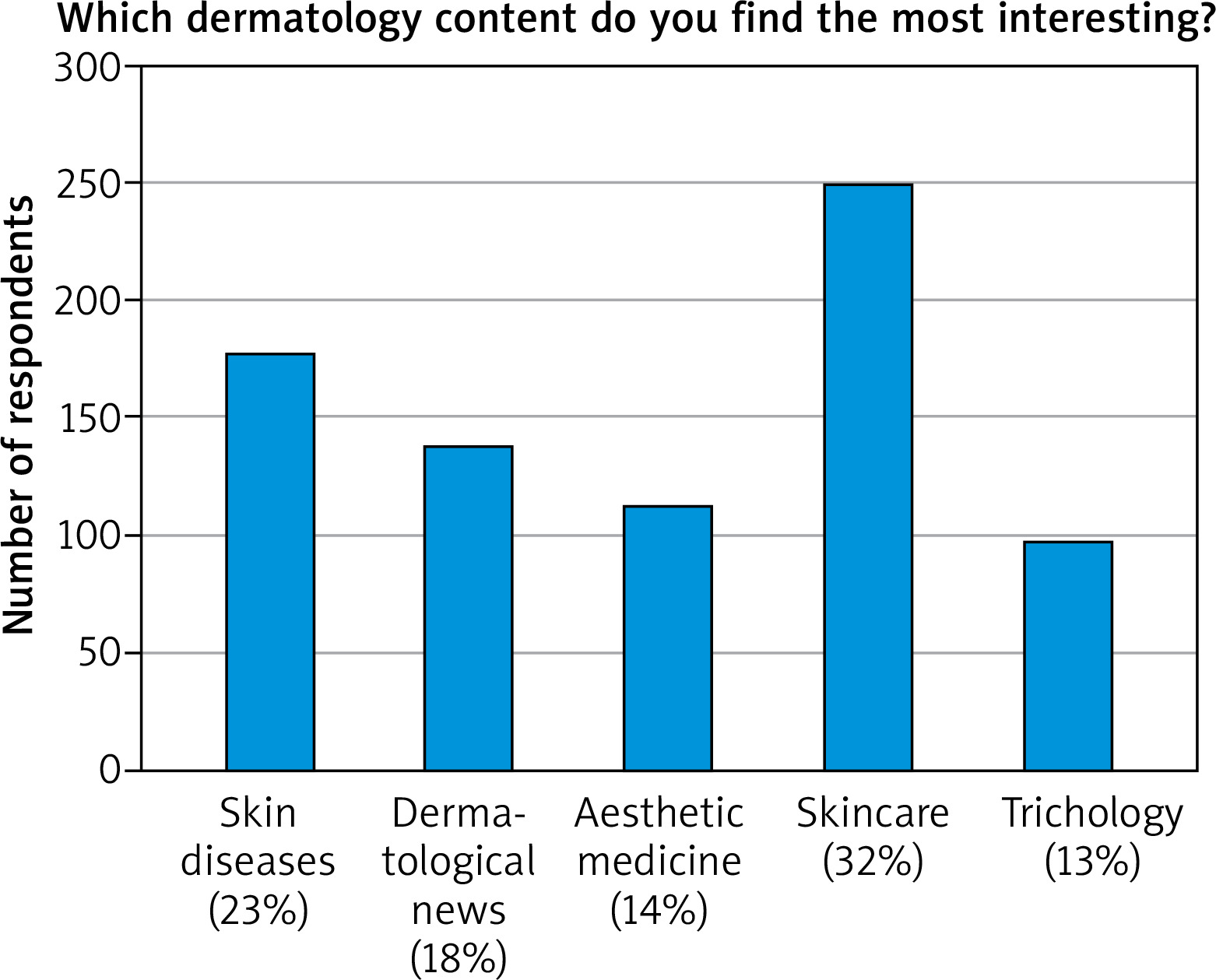
Seventy-seven percent of respondents pay attention to the education and competencies of people publishing content related to dermatology or aesthetic medicine whose profiles they follow on SM. The most interesting topics were skincare (32%), skin diseases (23%), dermatological news (18%), aesthetic medicine (14%) and trichology (13%). Less popular contents were cancer prophylaxis, atopic dermatitis, treatment of scars, cosmetology, natural cosmetics, autoimmune diseases, androgenic alopecia, nails and supplementation in skin diseases (Figure 3).
When comparing interesting contents between men and women, there was a statistically significant difference for skin diseases, others, dermatological news, aesthetic medicine, skin care and trichology (Table 1).
Table 1
The most interesting dermatology contents among men and women
Dermatology content encouraged 44% of respondents to visit a dermatologist with women more prompted to arrange the visit (n = 129, p = 0.006) than men (n = 18). Analysing the place of residence, content related to dermatology most often prompts people living in cities with 100–500 k inhabitants to visit a dermatologist (n = 50, p = 0.024).
No significant statistical difference was observed between education and reporting to a dermatologist or between medical education and reporting to a dermatologist.
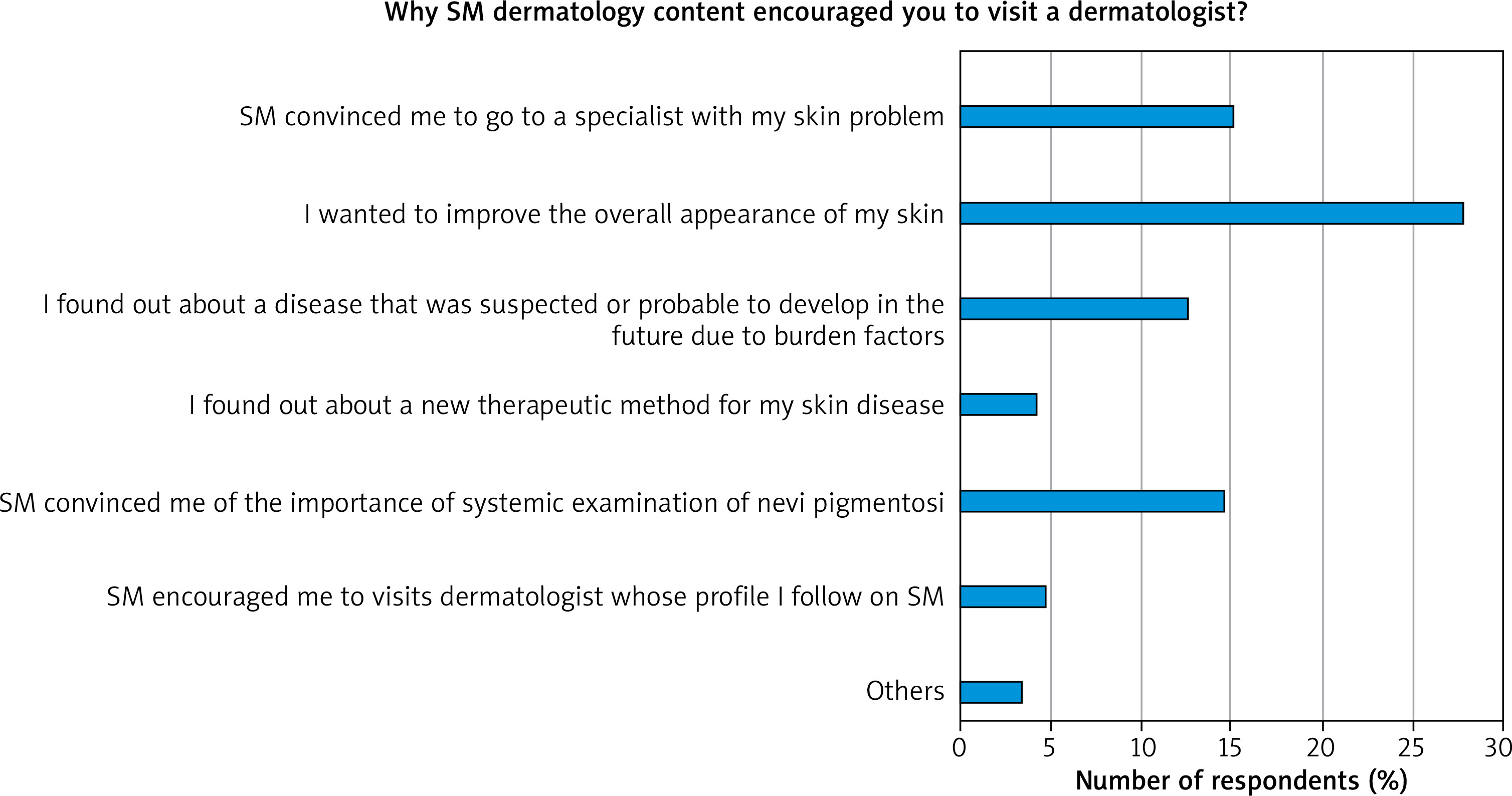
The most popular reasons to visit a dermatologist were to improve the overall appearance of one’s skin (27.81%), being convinced to go to a specialist with a specific skin problem (15.17%), being convinced of the importance of systemic examination of naevi pigmentosi (14.61%), finding out about a disease that was suspected or probable to develop in the future due to burden/aggravating factors (12.64%), being encouraged to visit a dermatologist whose profile someone follows on SM (4.78%) and finding out about a new therapeutic method for skin disease (4.21%) (Figure 4).
Dermatological examination revealed skin diseases in 34% of respondents with 56% consistency of diagnosis made by a healthcare professional and SM user.
The most frequently diagnosed diseases were acne (n = 14), atopic dermatitis (n = 7) and psoriasis (n = 7). Other diagnosed diseases were keratosis pilaris (n = 3), rosacea (n = 2), seborrheic dermatitis (n = 2), fungal nail infection (n = 2), atypical nevi (n = 2), milia (n = 1), allergic contact dermatitis (n = 1), folliculitis (n = 1), vitiligo (n = 1), viral warts (n = 1), eczema (n = 1), lichen planus (n = 1) and androgenetic alopecia (n = 1).
Among the people who visited the dermatologist who provided diagnosis not complying with SM suggestions, most of the respondents were found to be healthy (n = 36), diagnosed with acne (n = 24) or atopic dermatitis (n = 4). The other diagnosed diseases were seborrhoeic dermatitis, vitiligo, alopecia, fungal infection, nummular eczema, psoriasis and dandruff.
SM usually does not have a significant impact on the choice of a particular dermatologist as only 19% of respondents admitted they chose the dermatologist recommended by SM. However, 34% of respondents said that SM made them encourage their family members to visit a dermatologist. Most of the respondents (92%) believe that SM has a positive impact on visiting a dermatologist.
Discussion
Asking on skincare advice on SM
SM is frequently used by patients to solicit advice related to cutaneous concerns [4]. In the study by AlGhamdi et al., 69% respondents believed that the Internet is a beneficial resource for obtaining medical information [5], while another study showed that 45% of respondents consulted SM for acne treatment advice [6].
Of the top 300 posts in the community of interest in skincare on Reddit forum, four major themes emerged: advice on routines and products (33%), general discussions of skin health and wellbeing (39%), impact of skin ailments and their treatment options (14%) and social concerns in relation to self-image, media representations and the skincare community (14%) [7].
In our study 27% of respondents ever asked for skincare advice on SM, most of them were women (n = 84, 88%). Concerning given studies, we can conclude that people tend to ask for skincare advice on SM, especially when they are interested in particular problems like acne (which was the most frequently diagnosed disease among respondents) and appearance of one’s skin (which was the most popular declared reason to visit a dermatologist).
Competencies of influencers
The educational background of people creating content on SM seems to be important as influencers are able to spread misinformation to a large population of users that may believe in the accuracy of the content displayed due to the creator’s increased following, which can have unfortunate consequences [4]. A study of dermatology-related hashtags revealed that only 5% of 146 unique influencers identified were dermatologists and a similar analysis of top Instagram dermatology posts indicated that only 35% of Instagram content authors were healthcare workers [8].
In our study, 77% (n = 248) of respondents paid attention to the competencies of influencers. Most of them were people with educational background related to medicine (n = 178, 72%) and people with higher education (n = 65, 26%) or at universities (n = 151, 61%). We can conclude that the educational level and medical knowledge facilitate identifying competent influencers.
Popular reasons to visit a dermatologist
In this study, the most popular reasons to visit a dermatologist were to improve the overall appearance of one’s skin (27.81%), being convinced to go to a specialist with a specific skin problem (15.17%) and being convinced of the importance of systemic examination of naevi pigmentosi (14.61%). We find these results contrary to previous studies, e.g. Peck et al. claim that among white patients, skin cancer screening (8.2%) was the most common reason for visits followed by skin lesions (7.8%) and discoloration/abnormal pigmentation (7.4%) [9]. To compare, in the United States the most common reasons for visits were skin examination (7.8%), skin lesion (7.5%), and discoloration/abnormal pigmentation (7.3%). For patients ≤ 18 yo, the most common reasons for visits were acne (28%), warts (7.7%) and skin rash (6.4%). For patients aged 19–65 yo and ≥ 66 yo, skin examinations (7.7%) and skin lesions (10%) were the most common reasons for visits to dermatologists [10].
The fact that in our study the most popular reason to visit a dermatologist was to improve the overall appearance may be related to the studied group i.e. relatively young SM users who attach importance for whom physical appearance is important.
The most frequently diagnosed diseases
In this survey, the most frequently diagnosed diseases in people who went to a dermatologist due to SM suggestion were acne (n = 14), atopic dermatitis (n = 7) and psoriasis (n = 7).
Our results remain inconsistent with other studies, suggesting that in Caucasian patients, the top five diagnoses were actinic keratosis, acne, benign neoplasm of skin, unspecified dermatitis or eczema and nonmelanoma skin cancer [11], whereas in the US population, atopic dermatitis, acne and actinic keratosis were at the top [12].
The difference between results is because of the young age (18–35 yo) of respondents. Skin cancers are more popular in elderly people, whereas acne, atopic dermatitis and psoriasis are most frequently diagnosed in younger people [13].
Impact on the choice of a particular dermatologist
Our study showed that only 19% of respondents believe that SM has an impact on the choice of a particular dermatologist. We can find similar results in other papers, e. g. study by Murphy et al. reported that for 57% of respondents SM is only slightly important or not at all important when selecting a dermatologist [14]. In recently published survey results, only 21% of participants knew their dermatologist from SM, but still preferred to visit a dermatologist based on their friend’s recommendation [1]. In this study, 34% of respondents said that SM made them encourage their family members to visit a dermatologist, so we can conclude that a friend or family member recommendation plays an important role in choosing a dermatologist.
The most commonly used SM platforms
Social media provides an accessible and increasingly popular avenue for sharing healthcare information, networking, and outreach in dermatology [4]. Currently, the top 5 platforms are Twitter, Instagram, TikTok, YouTube, and Facebook [15] that vary in originators of material, messaging strategies, and reliability of information with regards to certain dermatologic conditions and behaviours [3].
Instagram has been used as a means for acquiring and disseminating health-related information, as well as a tool for physicians to connect with patients and other physicians or colleagues. Given the visual nature of Instagram, it is unsurprising that dermatology has a substantial presence on the platform; topics range from educational to promotional while using hashtags to connect ideas. Concerning common skin diseases worldwide, the most popular dermatology hashtags in one recent study included #acne, #alopecia, and #eczema [16]. Dermatology content on Instagram is most prevalent among private offices, cosmetic brands, and to a lesser extent patient advocacy groups, with a notable lack of top dermatology journals and professional organisations maintaining accounts [17]. There is a major opportunity to deliver skin cancer prevention strategies on this platform as there is a high correlation between young adult females who use Instagram or Twitter with indoor tanning behaviours [18]. A recent survey says that patients who visit dermatology clinics for cosmetic reasons preferred Instagram to follow their doctors, underlining the importance of aesthetic dermatology as a visual field [1].
In our study Instagram was the most commonly used platform. 245 respondents declared that they follow dermatological content on Instagram, most of them (86%) were women. We also observed that people who were interested in aesthetic medicine (n = 112) use Instagram (n = 93, 83%). Moreover, people who were interested in cancer prophylaxis (n = 96) also followed dermatology content on Instagram (n = 67, 70%). So our results remain consistent with the above studies.
YouTube
YouTube (YT) is a popular resource for patients and the general public seeking information about their health and medical advice. It is estimated that 80% of Internet users search for health information online and YT ranks as the second most accessed website worldwide. In particular, patients with chronic illness depend on Internet-based health resources such as YT [19]. In dermatology, YT videos were uploaded by or featured by a healthcare professional (many were board-certified dermatologists) and that educational videos were the most prevalent. Content type has shifted towards more educational and personal videos, with decreases in advertising and promotional content [20].
In our study, 159 respondents declared using YouTube, and most of them were women (n = 121, 76%) and it was the second most commonly used platform, right after Instagram. We observed that 178 respondents were interested in skin diseases and 86 of them (48%) used YT. Moreover, 139 respondents were interested in dermatological news and 78 (56%) of them follow YT, thus we can conclude that people use YT as a source of medical information.
TikTok
Dermatology topics are a growing presence within TikTok, totalling 4.5 billion views for the hashtag #acne and 633.8 million for #acnetreatment [21]. Content creators have been identified as patients, board-certified dermatologists, and aestheticians, discussing everything from medically accurate educational videos to natural remedies used at home [22]. Several board-certified dermatologists now use TikTok in an effort to spread medically accurate information and dispel misinformation being shared by other users [21].
In our study, 133 respondents followed dermatology content on TikTok, and most of them (n = 120, 90%) were women. Acne seems to be an interesting topic as in our study 14 respondents were diagnosed with acne after SM suggestion and 7 of them (a half of them) declared that they followed TikTok.
Most of the respondents (n = 104, 78%) who followed dermatological content on TikTok consider the competencies of influencers.
We can conclude that people bring awareness to the educational state of content creators and TikTok may constitute a field for dermatologists to educate people, especially about diseases which affect a lot of people, like acne.
Facebook is a dominant player among SM, with over 2 billion daily active users worldwide and the highest monthly minutes spent per visitor among all platforms [22]. Influential academic journals, such as the Journal of American Academy of Dermatology (JAAD), have a high engagement rate on Facebook, owing to the large amount of likes and comments from users interested in newly published research [23]. There is evidence that Facebook is used more among patients in comparison with other social media platforms; in one study examining the effects of SM on melanoma screening clinic attendance, over 60% of the patient cohort reported using Facebook, as compared to only 28% and 12% reporting Instagram and Twitter use, respectively [24].
Our results remain inconsistent with other studies as Facebook is not the most popular platform; as Instagram and YT were more frequently used. 137 respondents declared that they use Facebook, and most of them were women (75%).
Among 91 respondents who were interested in cancer prophylaxis, 39 (43%) used Facebook, whereas 67 (74%) of them used Instagram and 48 (53%) used YT, this it shows that Facebook is not the most popular platform even in the context of cancer screening.
The difference between results might be caused by the fact that our survey was shared on Instagram, so we can suspect that more respondents prefer Instagram to Facebook. Also a lot of respondents were medical students who search for medical material, which they can easily find on YouTube.
Can SM encourage people to visit a dermatologist?
There is promising optimism for SM use among dermatologists. The total optimism score calculated from our survey reflects the perceived benefits of SM, which include increased healthcare access, improved education and improved public health [25]. The sprawling nature of SM makes it so that even those with the most isolating diseases can find advice and support from online peers. Sharing images of skin disease has the theoretical advantage of educating the public, improving understanding, and combating stigma [3]. Integrating SM as a component of private practices, programs and academic research journals can help combat misinformation, promote health literacy, and allow patients to make more informed decisions about their care [26]. Many of the studies agree that dermatologists should increase their presence on SM apps to counteract misleading information with evidence-based knowledge [4].
In this study, almost half of the respondents declared that SM encouraged them to visit a dermatologist, with 56% consistency of diagnosis made by a healthcare professional and SM user. 92% of users believed that SM has a positive impact on visiting a dermatologist. These results seem to be consistent with other findings, suggesting that 68% of respondents who used SM for acne treatment advice were more likely to consult a medical professional [6].
Conclusions
Eighty-one percent of young Polish adults read dermatology-related content on social media. The main area of interest is skincare. In almost half of the respondents, SM encouraged them to visit a dermatologist, with 56% consistency of diagnosis made by a healthcare professional and social media user. Dermatological content is most often viewed by women and people with higher education (or during studies) and medical education. The most popular platform is Instagram. Most people believe that social media has a positive impact on visiting a dermatologist.










