
Introduction
Skin aging is an inevitable biological process characterized by cellular changes and diminished regenerative capabilities over time [1, 2]. Endogenous factors such as chronological aging and hormonal imbalances, alongside exogenous influences from the environment, collectively contribute to this process [3]. Various theories, including genetic mechanisms, Hayflick, mitochondrial dysfunction, membrane alterations, and protein degradation, attempt to elucidate the mechanisms underlying skin aging. The genetic theory posits that DNA harbours the information responsible for aging processes. As cells undergo multiple aging stages, the decline in healthy cells and the accumulation of intracellular mutations, exacerbated by free radicals, lead to irreversible cellular damage [4].
Oxidative stress, induced by environmental pollutants, UV radiation, and other factors, significantly contributes to skin aging and pigmentation [5]. Studies suggest that enhancing antioxidant defences and activating the Nrf2 pathway may mitigate oxidative damage and ameliorate skin aging and pigmentation [6]. Notable antioxidant molecules such as glutathione, α-tocopherol, ascorbic acid, and various enzymes play crucial roles in combating oxidative stress [7]. Ferulic acid, a phenolic compound abundant in plant-based foods, has gained attention for its potent antioxidant and anti-inflammatory properties. Its inclusion in cosmetic formulations, particularly as a stabilizer for vitamins C and E, highlights its protective effects on key skin components, including keratinocytes, fibroblasts, collagen, and elastin [8].
This study evaluates the efficacy of a novel combined therapy for skin rejuvenation, leveraging the antioxidant and peptide-promoting properties of ferulic acid and TGF-β2. This advanced chemical peel not only stimulates anti-aging effects but also combats signs of exogenous aging. The treatment involves a two-step process of chemical peeling and microinjection, shielding skin cells from DNA damage caused by external and internal factors while neutralizing cytotoxic radicals. In vitro studies have confirmed the formulation’s potent antioxidant capabilities [8].
The focus of our investigation was to assess the effectiveness of the proposed therapy in improving skin conditions in individuals experiencing aging. We analysed its impact based on factors such as concentration, solution pH, and application duration [9–11].
Material and methods
A total of 20 healthy female subjects meeting the predefined inclusion and exclusion criteria were recruited.
Inclusion criteria
Female participants with Fitzpatrick skin types II–IV exhibiting initial signs of aging, mature skin characteristics, superficial discoloration, post-inflammatory pigmentation, and enlarged sebaceous glands.
Age range:
Exclusion criteria
Pregnancy or breastfeeding.
Known hypersensitivity to any component of the investigated product.
Fever, active inflammation, or active viral/bacterial infections.
Current oral administration of isotretinoin or other retinoids.
Autoimmune disorders.
Ongoing inflammatory skin conditions.
Chronic internal organ dysfunction or dermatological conditions.
Irritated, damaged, tanned, or sunburned skin, or open wounds.
Predisposition to keloid formation.
The participants, all Caucasian women aged 25 to 50 years (mean age: 36.73 ±6.43 years), were categorized according to the Fitzpatrick classification into skin phototypes II (n = 6), III (n = 12), and IV (n = 2).
Each participant underwent three treatments at 2-week intervals, resulting in a 6-week treatment period. During the intervention, participants applied an antioxidative serum with vitamin C and ferulic acid twice daily after facial cleansing and used a photoprotective cream with SPF 50+.
Study visits and assessments
Four study visits were conducted, during which the following assessments were performed:
Photographic documentation using Photofinder.
Videodermoscopic examination of facial skin at 20× magnification using Photofinder.
Measurement of skin pH, transepidermal water loss (TEWL), hydration levels, and sebaceous gland activity using equipment from Courage+Khazaka electronic GmbH.
At the fourth visit, treatment efficacy was evaluated based on improvements in redness, skin tone, pigmentation, dryness, wrinkles, skin texture, and sebaceous gland activity.
Procedures
The treatment protocol involved the application of two products. First, an antioxidant solution containing ferulic acid, peptides, and TGF-β2 was applied to the facial skin as a peel. Then, an antioxidative cocktail with peptides and ferulic acid was administered during mesotherapy. Following the procedure, patients were instructed to apply antioxidative serum with vitamin C and ferulic acid and sunscreen SPF30 with vitamin C, ferulic acid and vitamin E twice daily as part of their daily skincare routine.
The treatment area was adequately ventilated, and patients’ eyes were shielded during the peeling process to prevent irritation. Initially, makeup removal was performed, followed by the application of peel with ferulic acid, peptides and TGF-β2 (two layers for 5 min each). Ten minutes after the initiation of the first peel layer, neutralization was carried out. Following this, one ampoule of antioxidative cocktail with peptides and ferulic acid was evenly distributed over the face, and the product was administered via micro-needle mesotherapy (with puncture depth set at 0.5 mm). Upon complete absorption of the antioxidative cocktail with peptides and ferulic acid, sunscreen SPF30 with vitamin C, ferulic acid and vitamin E was applied to the treated skin.
Results
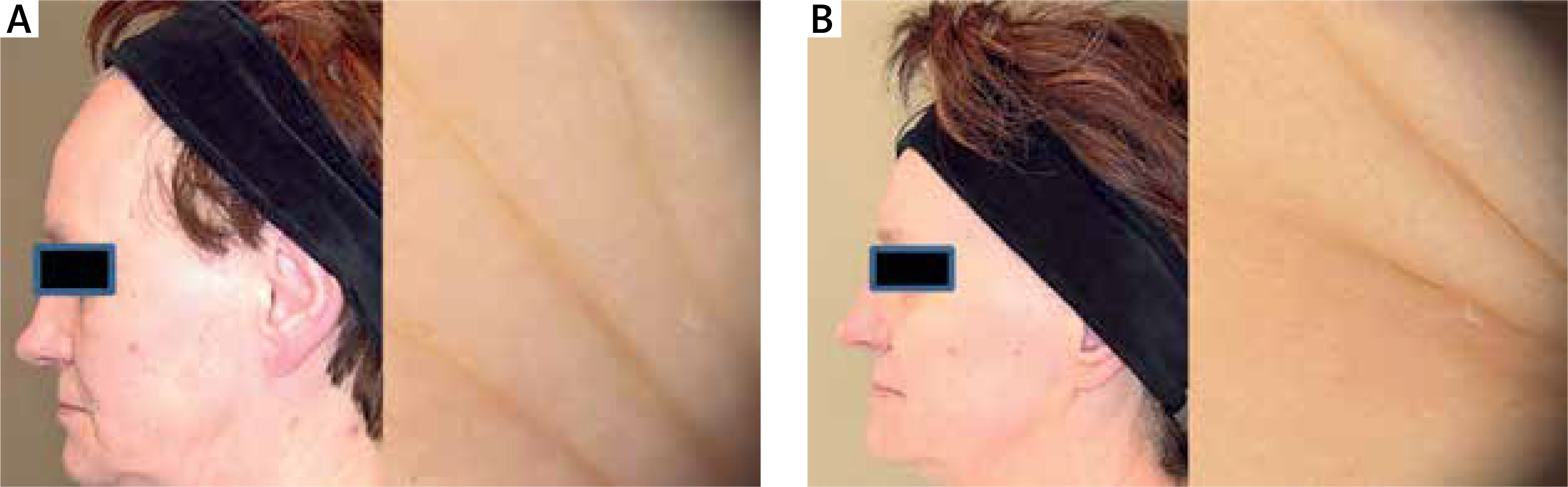
A total of 20 female participants, aged between 25 and 50 years, successfully completed the study. Following the therapy, noticeable improvements were observed in all patients. Physical examinations revealed reductions in erythema, wrinkles, skin flaccidity, and the number of sebaceous glands. Photographic documentation further confirmed reductions in hyperpigmentation and enhancements in skin tone (Figures 1–4).
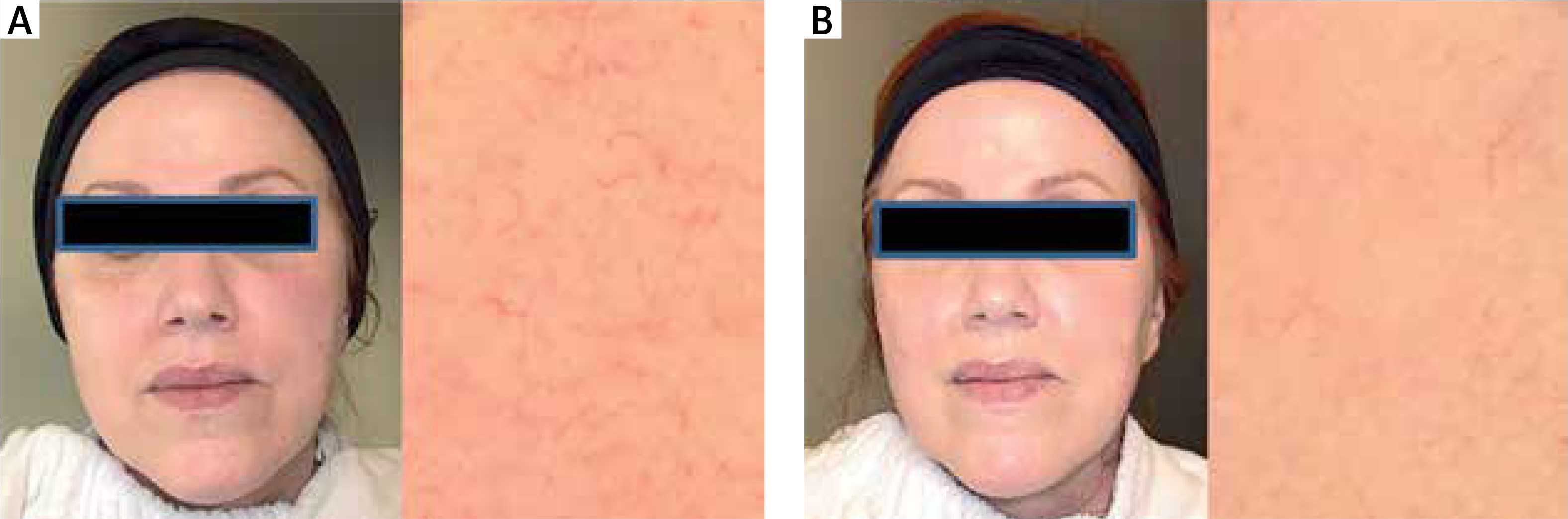
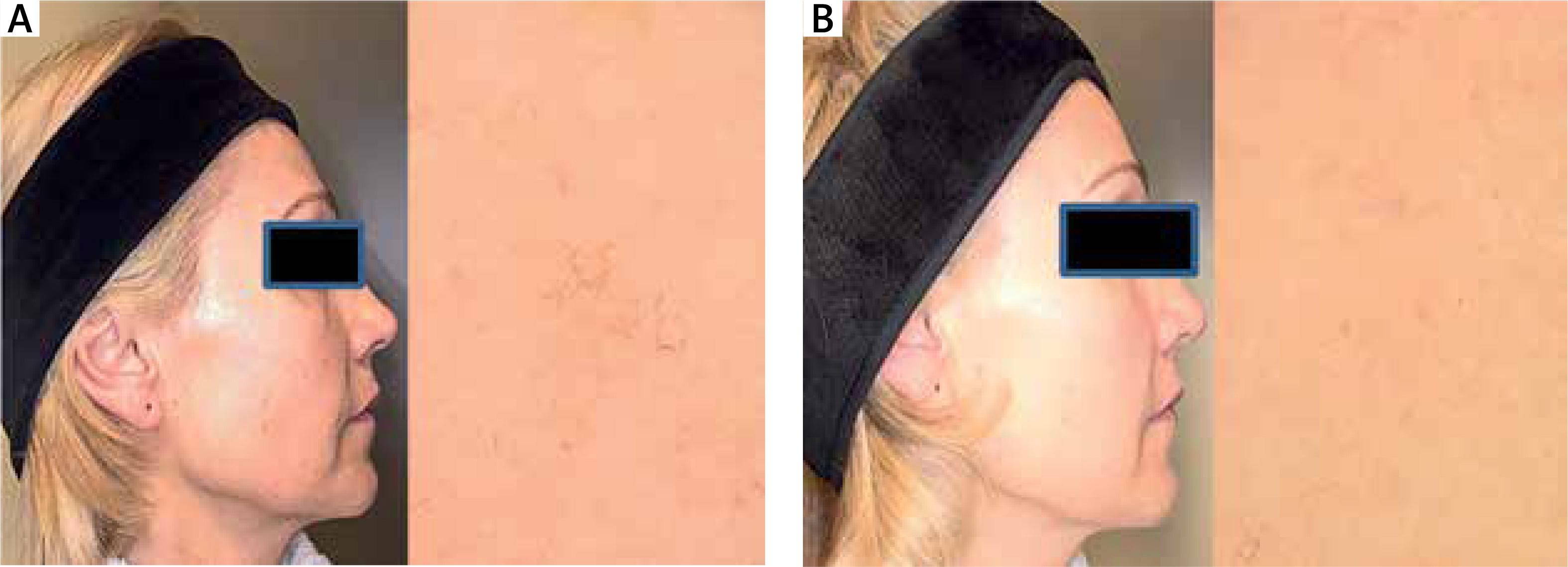
Figure 3
Photo of the patient, reduction in flaccidity and number of sebaceous glands, before (A) and after (B) the therapy
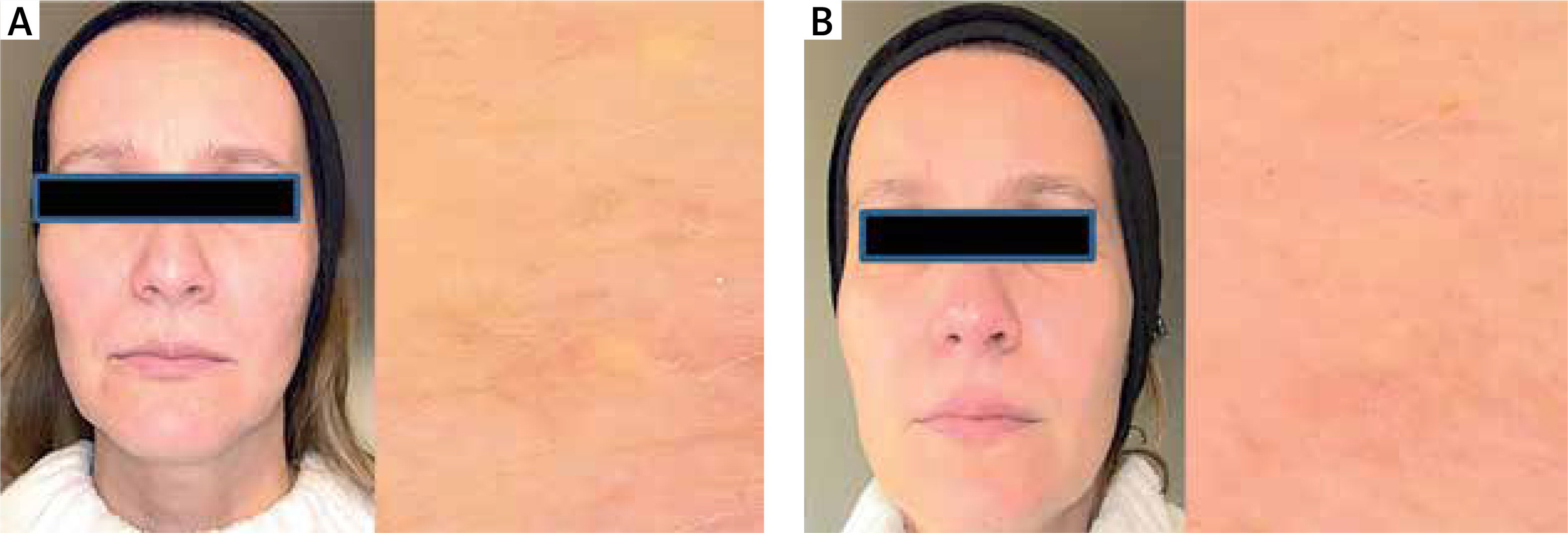
Figure 4
Photo of the patient, lifting effect, reduction of wrinkles and improvement of skin tone, before (A) and after (B) the therapy
Our investigation showed a significant reduction in pH levels. The mean buccal pH decreased from 6.18 ±0.41 before treatment to 5.48 ±0.49 after 6 weeks (p < 0.05) (Table 1). Similarly, transepidermal water loss (TEWL) measurements demonstrated a significant improvement; the mean buccal TEWL decreased from 12.91 ±0.63 g/h/m² before treatment to 9.46 ±0.66 g/h/m² after 6 weeks (p < 0.05) (Table 1).
Table 1
The difference in pH, TEWL and sebum levels in individual visits
Although changes in sebum levels were observed, they did not reach statistical significance (p > 0.05). The mean sebum level on the cheek decreased from 87.55 ±17.64 μg/cm² before treatment to 75.38 ±15.55 μg/cm² after 6 weeks (Table 1).
Discussion
The present study demonstrated that this novel therapy was well tolerated by all patients, with no reported cases of irritation. Clinical examinations revealed notable improvements, including reductions in discoloration, erythema, and superficial wrinkles, as well as enhancements in skin firmness and overall tone [12, 13]. Our research employed an innovative treatment method – a combination that, to our knowledge, has not been previously reported in the literature. For example, similar research by Sołdacka et al. evaluated the efficacy of chemical peels in reducing uneven skin tone, pigmentation, dehydration, dryness, textural irregularities, and sebaceous gland activity. The results achieved with a 4% retinol solution containing novel TGF-β activators and antioxidants were quite similar to ours in terms of overall skin rejuvenation [6].
Our findings corroborate previous research on the therapeutic efficacy of ferulic acid in combating oxidative stress-related skin pathologies, such as aging. Ferulic acid, often used in combination with other active ingredients, has shown promise in various formulations. Studies have reported its synergistic effects with oral vitamins C and E, azelaic acid, mandelic acid, phytic acid, and 4 N-butyl resorcinol. Notably, combination therapies incorporating ferulic acid have demonstrated significant reductions in pigmentation, as evidenced by Mazurek and Pierzchała [14]. Consistent with these findings, our study also observed reductions in hyperpigmentation, as confirmed by photographic documentation.
Moreover, the mechanisms underlying ferulic acid’s therapeutic effects have been elucidated in the literature. It is reported to reduce reactive oxygen species levels in fibroblasts, thereby protecting cellular DNA and mitigating UV-induced cell cycle arrest and DNA damage [15]. Additionally, the inclusion of TGF-β2 in the peel formulation activates pathways associated with type I collagen production and epidermal lipid synthesis – mechanisms similar to those induced by retinoids. These actions contribute to improvements in skin integrity and protection, as reported by Sołdacka et al. [6] and observed in our study.
The multifaceted nature of this therapy was further evidenced by significant improvements in skin hydration, pH normalization, and sebum regulation. The reduction in wrinkles is particularly noteworthy, given that an acidic skin pH has been associated with decreased wrinkle formation, as reported by Jung et al. [16]. Furthermore, the reduction in transepidermal water loss (TEWL) observed in our study is crucial for addressing cutaneous aging, as highlighted by Wilhelm et al. These findings suggest that the therapy effectively alleviates skin dryness, thereby supporting its anti-aging properties.
Despite the promising results, our study has several limitations. The relatively short duration and treatment period may have limited the full extent of the observed effects. Additionally, the absence of a control group and the short assessment period (limited to 2 weeks post-treatment) warrant further investigation over longer durations. Nonetheless, the satisfactory outcomes observed in this study underscore the potential benefits of this therapy in skin rejuvenation and repair. Its high tolerability and minimal side effects support its year-round use across various skin types [17, 18].










