INTRODUCTION
Disorders of sex development (DSD) are a group of medical conditions involving the abnormal development of the sex chromosomes, gonads (testes or ovaries), or genital anatomy [1]. In the past, DSD was called hermaphroditism or intersex, but patients found these terms stigmatizing and they caused mental suffering among them [2]. DSDs are classified as rare diseases with an estimated prevalence of 1 in 4,500 [3]. Abnormal genital structure, an incompatibility between the phenotype at birth and the prenatally assessed karyotype, and aggravating family and pregnancy history may suggest DSD. According to the 2006 medical consensus classification of gender development disorders (Chicago Consensus), DSDs can be divided into three groups: chromosomal DSD; DSD with a 46XX karyotype; and DSD with a 46XY karyotype [2]. This classification is shown in Table 1 [2, 4].
Table 1
The classification of sexual development disorders (DSDs) according to the 2006 Chicago Consensus [2, 4]
People with DSD are subject to a variety of psycholo-gical problems, stemming from both the biological aspects of their condition and their social and medical expe-riences. Among the difficulties often described are discrimination, social stigma, feelings of shame and an-xiety, and mood disorders. Some people may experience gender dysphoria, especially if the gender assigned to them at birth does not match their gender identity [5]. It has been noted that sexual problems are more common in patients with DSD than in groups of patients without it. During adolescence, some patients feel increasingly insecure about their masculinity or femininity, sexual ade-quacy or sexual orientation [6]. Therefore, support for individuals with DSD should not only include specialized medical treatment, but also psychological support [7].
According to a study by Dessens et al. [8], psychological support was received by only 11% of adults, 37% of adolescents, and 39% of children with DSD. According to the study by Bennecke et al. [9], the majority of people with DSD did not receive psychological support in childhood and/or adolescence (70.6%, n = 692), or in adulthood (67.9%, n = 661). The need for psychological support in childhood and/or adolescence was reported by 51.3% of patients with DSD, and the need for psychological support in adulthood was reported by 49.5%.
DSDs with the XY karyotype account for 20-22% of all DSD cases, and an example of a disorder in this group is androgen insensitivity syndrome (AIS), the incidence of which ranges from 1 : 20,000 to 1 : 64,200 live births of male newborns [4, 10].
Bajszczak et al. [11] found that patients with DSD involving a Y chromosome have an increased risk of developing mental health problems when compared to the general Polish population. Particularly vulnerable groups include individuals with complete androgen insensitivity syndrome (CAIS), partial androgen insensitivity syndrome (PAIS), and gonadal dysgenesis (GD). A study by Engberg et al. [12] revealed a higher prevalence of psychiatric disorders among women with complete gonadal dysgenesis (CGD) or CAIS compared to a control group. According to the Mini International Neuropsychiatric Interview (MINI+), 85% of women with CAIS or CGD met the criteria for at least one psychiatric disorder, with depression and anxiety disorders being the most common. In comparison, 52% of the control group met the criteria for at least one psychiatric disorder.
The objective of the review is to present AIS as a multidimensional disorder, with a special focus on psychological problems, gender identity and the sexual functioning of patients. The review also addresses therapeutic options, including psychological and psychiatric support.
Methodology
For this narrative review we used the following data-bases: PubMed, Scopus, and Web of Science. The following keywords were used: “androgen insensitivity syndrome,” “complete androgen insensitivity syndrome,” “partial androgen insensitivity syndrome,” and “mild androgen insensitivity syndrome,” in combination with the following terms: “characteristics,” “sexuality,” “gender identity,” “mental health,” “psychology,” “psychopathology,” “psychosexual,” “psychiatry,” “psychological support,” “therapy,” and “treatment.” We also translated these keywords into Polish and conducted searches in both languages (Polish and English). Year of publication was not used as an exclusion criterion. Additional sources were identified through manual searches of the reference lists of original and review articles. The review included case reports, original research articles, systematic reviews, narrative reviews, and meta-analyses.
Inclusion criteria:
publications in peer-reviewed English or Polish journals;
articles that discuss the characteristics of AIS, as well as issues related to sexuality, gender identity, and mental health in AIS patients;
articles describing treatment options for AIS patients were also included.
Exclusion criteria:
Results
AIS: from androgen receptor gene mutation to differentiated phenotype
AIS is a disease resulting from the resistance of androgen receptors to hormones [13]. The disorder is the result of mutations in the X-linked androgen receptor gene [14]. The receptor gene is located on the long arm of the X chromosome (Xq11-12) [15]. This receptor belongs to the nuclear receptor group. It has a structure that is typical of this group of receptors. It consists of three domains: a variable N-terminal domain (NTD), a highly conserved DNA- binding domain (DBD) and a conserved ligand-binding domain (LBD) [16]. Reception mutations mostly impact the DBD and LBD regions [17]. The phenotype of AIS is expressed depending on where the mutation occurs. Mutations are found in the NTD domain in the CAIS and MAIS phenotypes, whereas in PAIS patients defects are found in the LBD domain [13]. The androgen receptors have three main impacts: the development of the male phenotype, sexual maturation and prostate development [13, 16]. The binding of 5α-dihydrotestosterone (DHT) and testosterone to the receptor plays an important role in these processes. DHT, due to differences in chemical structure (lack of a single double bond in the A ring), has a higher affinity for the androgen receptor. Furthermore, DHT has a five times lower dissociation rate than testoste- rone [17]. As a result of a defect in androgen receptor function, androgen feedback is dysfunctional. This leads to increased levels of testosterone and LH (luteinizing hormone) [18].
There are three phenotypes of this disorder depending on the intensity of androgen receptor sensitivity: PAIS, mild androgen insensitivity syndrome (MAIS), and CAIS. Patients with an XY karyotype exhibit a phenotype that depends on the severity of the disease [19]. The diagnosis of CAIS and PAIS involves measuring hormone levels during the first year of life. Patients with PAIS typi-cally show an expected increase in gonadotropins and testosterone levels. However, hormone increases may not occur in people with CAIS. This is probably due to the effect of androgens on the hypothalamic-pituitary axis in fetal life, which influences LH production after birth. Levels of inhibin B and anti-Müllerian hormone levels are at suggestive of normal Sertoli cell function [20]. The test used for diagnosis is the chorionic gona-dotropin stimulation test. Testosterone levels remain in the normal range for patients with CAIS. This is different for PAIS, where the response of testosterone and LH is marked [14]. Table 2 shows and compares the three types of AIS in terms of phenotypic characteristics [13, 19-22].
Table 2
Androgen insensitivity syndrome – comparison of characteristics and etiology [13, 19-22] (comparison is based on Quigley’s seven-step classification for assessing the phenotype of patients)
Sexuality – from normal to sexual dysfunction in AIS individuals
Hormones released during parenteral growth influence the formation of psychological traits attributed to a particular sex [23]. There is further evidence that genes associated with the X and Y chromosomes interact directly with the brain, causing sex differences. Differences in brain dimorphism can be observed before the sexual gonads differentiate [24]. These gender differences are related to gender identity, sexual orientation, interests and cognitive abilities [23]. A study was carried out to investigate responses to sexual stimuli. It compared brain activation in response to images of naked women and men shown to women with CAIS and to women and men in the control group. Neuroimaging results indicated that the response to both types of images was lower in women with CAIS than women in the control group. A significant interaction between group and stimulus type (F(2,35) = 17.20, p < 0.001, η2 = 0.41) suggests that the patterns of sexual response differed between the study groups. At the same time, the absence of a main effect of group (F(2,35) = 0.46, p = 0.63) suggests that the general level of stimulation was similar among participants. Men in the control group showed stronger differential arousal ratings according to gender than women in the control group (F(1, 24) = 26.36, p < 0.001, η2 = 0.53), as well as women with CAIS (F(1, 25) = 30.68, p < 0.001, η2 = 0.56). These results suggest a more specific (i.e., heterosexual) pattern of sexual arousal in these groups. This may be due to a reduced or complete lack of response to androgens in women with CAIS. Another possible explanation is the feminizing effect of estrogen, which is converted from testosterone. In women with CAIS, estrogen levels should be higher than in phenotypic women. However, the Hamann [25] study suggests that the lack of masculinization in CAIS subjects is due to reduced androgen sensitivity and a lack of aromatized estrogen influences. The results of the study are inconclusive, due to differences in the ways in which people with CAIS had been raised and socialized as females. This does not solve the question of whether hormones have an organizing or activating effect on the brain. The Y chromosome alone does not produce the same reactions in women as it does in men. MRI has been used to assess the brain’s response. A stronger activation of brain structures was observed in males, including bilateral activation of the amygdala, putamen, and precentral gyrus. When comparing amygdala activity in CAIS women with those in control groups, no significant differences were observed. The intensity of the response to the stimulus of the image of naked women and men in each study group was determined. The results show that women with CAIS achieved a response in the ventral prefrontal regions and the left amygdala region following the presentation of images with naked men (similarly to the female control group). The reaction was less intense than in men exposed to images according to their sexual preference. The areas of the brain with increased reactivity are responsible for emotions and sexual responses. In addition, women with CAIS are almost always of heterosexual orientation [26] and marry men, as women in the control group do [27]. However, people with CAIS tend to have low self-confidence and low levels of sexual satisfaction [28]. A study by Minto et al. [29] found that women with CAIS often report difficulties with coitus and dissatisfaction with their vaginal structure. In particular, they indicated a subjective feeling of organ length being too short, which significantly correlated with avoidance of sexual activity (r = 0.46, p < 0.001 and r = 0.40, p = 0.002, respectively). Women with CAIS report low libido and problems achieving sexual excitement and orgasm. Women with PAIS reported fear of sexual contact, fear of injury during intercourse and dyspareunia. It was observed that men with PAIS formed relationships with people with whom they did not have sexual relations. In contrast, all PAIS men reported that they masturbate [30]. Around 90% of men with PAIS identified as heterosexual, whereas half of women with PAIS identified as homosexual. The survey results were compiled using the Kinsey sexual orientation scale (which was developed to describe sexual orientation as a continuum, rather than as a binary division between heterosexuality and homosexuality) [31].
Gender identity in patients with AIS
According to the World Health Organization (WHO), gender identity is a deeply felt internal and individual experience, which might or might not correspond with the sex assigned at birth [32]. Psychosexual identification is still a considerable challenge in the management of AIS [33].
Although patients with CAIS have a Y chromosome, they exhibit a female phenotype [20]. In the case of newborns with CAIS, the sex assigned is female [33]. Studies on psychosexual evolution in women with CAIS showed that their gender identity was described as typically female. In childhood, they showed behaviors and interests typical of the female population. The similarity in behaviour between CAIS and control women of the same gender suggests that the development of feminine traits does not depend on the presence of ovaries [27]. CAIS is most often identified in girls who have primary amenorrhea or are found to have testes [20]. After receiving a diagnosis of CAIS, patients may experience various problems, such as depression or feeling stigmatized. This is because it is difficult for them to understand the mismatch between their female phenotype while having testicles and a male karyotype [33]. Patients with CAIS usually have a female gender identity [34]. According to a study by Engberg et al. [12], all patients with CAIS (n = 20) identified themselves as women. A study by D’Alberton et al. [35] also reported that women with CAIS felt comfortable with their female identity. In a study by Kristesashvili et al. [33], none of the 32 patients with CAIS experienced problems with gender identification, and all exhibited typical female psychosexual disposition and orientation. Also, none of these women had considered changing their gender. According to the studies referenced in Mazur’s review [36], there were no documented cases of gender reassignment among the 156 individuals with CAIS. According to a study by Brunner et al. [37], 6 out of 11 women with CAIS self-identified as female, while the rest selected the “other” category. Of these, 1 of 5 people specified being “hermaphrodite,” 3 described a form of femininity with constraints (“externally female,” “predominantly female,” “externally rather female”), and 1 referred to an individual gender-sex (“mine”). Most patients with CAIS reported living as women. However, one reported living “externally as a woman, otherwise rather neutral,” and another reported living in an undecided role. The German Gender Identity Questionnaire revealed that many patients with CAIS perceive themselves as unfeminine. Bermúdez De La Vega et al. [38] described a case of a person with CAIS who identified as male. Gender reassignment in CAIS is rare [13]. T’Sjoen et al. [34] described the first case of a person with CAIS identifying as male and transitioning accordingly, despite having been raised as female. A meta-analysis revealed that all patients with CAIS were raised as girls, and the prevalence of gender identity disorder among them was 1.7% [39]. A low score on the femininity scales was observed in patients with CAIS [13].
Unlike those with CAIS, infants with PAIS are born with ambiguous genitalia. Therefore, a decision must be made regarding the child’s male or female gender after a comprehensive discussion with the family and caregivers [20]. Depending on the degree of masculinization of external genitalia, newborns are classified as boys or girls [33]. Nearly 25% of those with PAIS have an identity crisis or are dissatisfied with their chosen gender. Sometimes, gender reassignment is necessary [40]. In contrast to CAIS patients, gender reassignment in PAIS patients is common [33]. Of the 99 patients with PAIS participating in the studies included in Mazur’s review [36], 9 underwent gender reassignment. In the study by Kristesashvili et al. [33], of the 8 patients with PAIS none were considering transitioning; however, approximately one-third were dissatisfied with their assigned sex. Compared to boys with PAIS, girls with the syndrome experience gender-related problems less frequently throughout their lifetime. According to a meta-analysis, the prevalence of gender identity disorder was 25% among patients with PAIS who were raised as boys, and 12% who were raised as girls [39]. Because of the lack or deficiency of facial and body hair in PAIS patients, as well as their high-pitched voices, their self-esteem as men is weakened [13].
Patients with MAIS usually have a normal male phenotype and isolated micropenis [20]. They are raised as males and have male gender and psychosexual predispositions. Among all AIS patients in the study by Kristesashvili et al. [33], one individual was diagnosed with MAIS. Although this patient presented with a male phenotype, his psychosexual predispositions were clearly female. The result may be somatic mosaicism of the androgen receptor gene.
Psychiatric disorders in people with AIS
According to the study by Bajszczak et al. [11], an increased risk of developing mental health problems is observed in patients with DSD involving an XY chromosome. Among this group of patients, excluding those with CGD, individuals with CAIS and PAIS were particularly prone to mental health issues. Of all the people studied with DSD (n = 59), CAIS was diagnosed in 2, and PAIS was diagnosed in 19. Patients with CAIS and PAIS scored higher on the General Health Questionnaire (GHQ-28; a higher score indicates more disturbing symptoms) than patients with other Y chromosome-related DSDs, indicating a poorer overall mental health status. Specifically, patients with CAIS scored an average of 39.5 ± 14.9 on the GHQ-28, while those with PAIS scored an average of 24.3 ± 10.7. The high score observed in patients with CAIS may result from the small sample size, which limits our ability to draw reliable conclusions. According to the GHQ-28, patients with CAIS scored higher than those with PAIS for anxiety and insomnia, with mean values of M = 7.5 and M = 6.5, respectively. For symptoms of depression, patients with CAIS had a mean score of M = 10.5, while those with PAIS had a mean score of M = 2.9. D’Alberton et al. [35] studied CAIS patients using the World Health Organization Quality of Life Questionnaire (WHOQOL). In the psychological area, there were no significant differences in scores between patients with CAIS (WHOQOL = 50) and those with other XY chromosome-related DSD (WHOQOL = 56.2), p = 0.338. Krupp et al. [41] used the German version of the World Health Organization Quality of Life Questionnaire (WHOQOL-Bref) to assess patients with CAIS and others with Mayer-Rokitansky-Küster-Hauser syndrome (MRKHS). Patients with CAIS scored lower in the mental health domain than those with MRKHS. The average scores in the mental health domain were: CAIS = 54.24 and MRKHS = 69.81 (t = −2.38, df = 58, p = 0.021), indicating a statistically significant difference between the groups. According to the Brief Symptom Inventory (BSI), patients with CAIS scored 54.5%, which indicates elevated psychological distress. In this study, participants were asked about the most stressful aspect of their life at the time. The most frequently cited responses in both groups were career, work, or school- related problems (CAIS: 3 participants; MRKHS: 14 participants). Of the individuals in the CAIS group, 2 reported having attempted suicide. Patients were also evaluated using the German version of the Patient Health Questionnaire (PHQ-D). The CAIS group exhibited elevated indicators of major depressive episodes and suicidal ideation, as measured by the PHQ-D, providing further evidence that these patients experience significant mental health difficulties. In the Engberg et al. study [12], women with CAIS, CGD, premature ovarian failure, and women in the control group were examined. The subgroup of women with CAIS (n = 20) were more likely to have a psychiatric disorder (OR = 3.5, 95% CI: 1.1-11.7), specifically obsessive-compulsive disorder (OR = 15.3, 95% CI: 1.6-146.1), and episodes of major depression (OR = 3.1, 95% CI: 1.1-9.3). In the Johannsen et al. [42] study, women with DSD were assessed using the Qua-lity of Life-Assessment of Growth Hormone Deficiency in Adults (QoL-AGHDA) questionnaire and three symptom scales from the Hopkins Symptom Checklist (SCL-90-R), which assesses anxiety, depression, and somatization. Patients with CAIS had higher quality of life scores than women with other DSDs or those in the control group without DSDs. Patients with CAIS scored lower on all three symptoms in the SCL-90-R test than those with other DSDs, meaning better scores: for somatization SCL-90-R = 2.7 (1-4), for anxiety SCL-90-R = 1.9 (0-4), and for depression SCL-90-R = 5.2 (0-22).
People with PAIS are more likely to have mental disorders than those with CAIS, regardless of whether they were raised male or female [20]. PAIS patients are more prone to developing anxiety, depression, and other psychiatric disorders than CAIS patients [43].
A study by Khorashad et al. [44] examined patients between the ages of 5 and 28 and found that 11 out of 19 patients with CAIS (57.9%) presented with at least one Axis I disorder. Of these patients, seven had affective disorders and three had anxiety disorders. According to a study by Şentürk Pilan et al. [45] from a group of patients with PAIS (n = 5), one patient had depressive disorders and 1 of 6 women with CAIS had anxiety disorders. Another study found that four out of 12 women with CAIS showed signs of moderate-to-severe symptoms of depression [46]. In a study by Wisniewski et al. [47], 1 of 14 female patients with CAIS was diagnosed with bulimia, and another was diagnosed with depression and drug addiction. A case was also described of a patient with CAIS who developed an eating disorder [19].
In a study by Schützmann et al. [48] all of the female participants with CAIS (n = 5), all of the women with PAIS who lived as women (n = 3), and one of the 3 patients with PAIS who lived as men reported having suicidal thoughts. One woman with CAIS reported a suicide attempt. Two PAIS participants (one who lives as a wo- man and one who lives as a man) exhibited self-harming behavior. In the Krupp et al. [41] study, 2 of 11 CAIS patients reported suicide attempts.
Psychological problems can result from infertility in women because they may feel inferior to other women [11]. Also, individuals with AIS may experience psychological distress due to the ambiguity of their sexual anatomy. Chikkanayakanahally [49] described the case of a woman with AIS who developed sadness, anxiety, and suicidal thoughts after being informed that she would be unable to have children due to the absence of a uterus. She feared that she could become a hijda (according to her, hijda was a person whose anatomy was neither male nor female). She started to worry that her hair and voice were changing like a hijda’s. She also experienced disturbances in her appetite and sleep, as well as recurrent suicidal thoughts, crying spells, and an inability to experience pleasure from activities that had previously brought her joy; she also stopped going to work. She was diagnosed with a depressive episode and began pharmacological treatment; after receiving the XY karyotype information, her symptoms intensified.
In the study by Fagerholm et al. [50], the quality of life of patients with AIS (n = 8) was assessed using the Life Situation Survey (LSS). According to this study, people with AIS had a good quality of life (LSS = 116.4). Hines et al. [27] assessed quality of life and general psychological well-being in a group of 22 women with CAIS, using the Psychological General Well-Being Scale (PGWBS). The mean PGWBS score for this group was 72.0, showing no statistically significant differences compared to a matched control group with a mean PGWBS score of 78.36 (p = 0.18).
Parents can sometimes transfer their fears onto their children. For example, the parents of a 3-year-old boy with PAIS were so stressed by his insufficient masculinization that they subconsciously transferred their fears onto their child [40].
The study by Khorashad et al. [44], conducted on a group of 63 patients with CAIS, found that 54% of these patients had at least one documented mental health dia-gnosis. In this group, anxiety and related disorders were the most common, occurring in 27 individuals (43%), followed by depressive disorders (n = 17, 27%), and neurodevelopmental disorders, which occurred in 5 individuals (5%). None of the patients were diagnosed with schizophrenia spectrum disorders, gender dysphoria, or other psychotic disorders, and there were no documented incidents of self-harm or suicidal ideation in this group. CAIS patients were compared with both male and female control groups. The rate of depression among individuals with CAIS was significantly higher than in the male reference group (PR = 2.54; 95% CI: 1.59-4.04), whereas no significant difference was observed when compared with the female reference group (PR = 1.13; 95% CI: 0.74-1.74). A similar pattern was noted for anxiety disorders, with prevalence ratios of 1.80 (95% CI: 1.31-2.47) in comparison to men and 1.15 (95% CI: 0.85-1.55) in comparison to women [44].
According to a study by Diamond and Watson [51], secrecy, stigma, and shame cause most difficulties for patients with AIS. Following their diagnosis, patients experienced shock or denial. Most of them felt depressed. After receiving their diagnosis, patients wanted to know if their parents were aware of their illness. Secrecy can be considered a breach of trust and is harmful. Patients with AISA should be informed about their condition. According to most of the respondents, it is not appropriate to hide the truth about the diagnoses. However, only 6 respondents considered it appropriate, though only if the person had suicidal thoughts or clearly expressed a desire to hide the truth.
Coping difficulties with AIS may be exacerbated by inappropriate actions within the medical system, such as a lack of knowledge about the condition, violations of privacy, and insensitive treatment of patients. These factors can lead to feelings of shame, embarrassment, and stigmatization [51].
Methods of therapeutic management for people with AIS
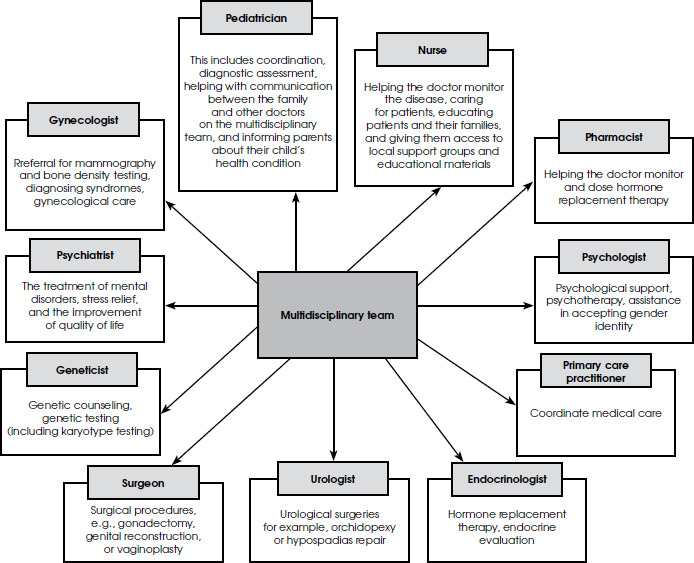
Because AIS is rare, there are no established therapeutic approaches [40]. This disorder, as we have seen, is a serious problem for patients and their families. The treatment of AIS takes a holistic approach to the psychological, physiological, and social well-being of suffe-rers [20]. Treatment involves a long-term strategy led by a multidisciplinary team of experienced specialists. Such a team should include an endocrinologist, surgeon, uro-logist, gynecologist, neonatologist, and clinical geneticist. Depending on the patient’s needs, the team may also include a psychologist and/or psychiatrist [40]. Figure I shows medical specialties and describes their roles in diagnosing and treating patients with AIS [20, 43, 49, 51-60]. Correctly dia-gnosing them is challenging for many doctors because most patients with PAIS do not exhibit specific phenotypic patterns. Furthermore, sex determination is a complex process that requires detailed justification. Various factors must be considered, such as the appearance of the sex organs, available surgical options, and the patient’s and their family’s beliefs related to cultural, social, and religious aspects [40].
Figure I
Medical specialties and descriptions of their roles in diagnosing and treating patients with AIS [20, 43, 49, 51-60]
A group of experts identified ethical principles relevant to therapeutic decision-making in DSD: promoting the welfare of the child, respecting the rights of children and adolescents to participate in therapeutic decision- making, and respecting the parent-child relationship, as well as the rights and obligations of parents to represent their child in the decision-making process and their right to receive professional assistance and support [10].
Psychiatric-psychological therapeutic interventions
While pharmacological and surgical treatment is important, quality of life largely depends on psychosocial factors [62]. Patients and their parents or guardians must, as already noted, make difficult and important decisions about diagnosis, gender assignment, and treatment [14]. If left untreated or improperly treated, AIS can cause serious mental health issues in patients during adolescence and adulthood, as well as in their families [20]. Early medical and psychological intervention can minimize the risk of gender dissonance [11]. With genetic and psychological support, patients can gain a better understanding of their condition [60]. While treatment outcomes are often satisfactory, many medical and psychosocial factors can negatively impact a child’s psychological development [61]. Psychosocial support is an integral part of a holistic approach to treating patients with AIS and their families. A sensitive and open approach is essential when discussing the postoperative care plan, taking into account the patient’s views as well as the family’s expectations [20]. Psychosocial aspects of treatment include communication and the provision of information on gender assignment, the timing of medical interventions, the consequences of surgery, and sexuality [61].
Patients with PAIS and CAIS have an increased risk of developing mental health disorders [11]; therefore, psychological support is also essential for these individuals [13]. According to the study by Wisniewski et al. [47], most women with CAIS received psychological support.
To promote positive adaptation, psychological care should be an integral part of the management of patients with DSD. Specialized psychological support can help them make decisions regarding gender reassignment, gender assignment, the timing of surgery, and sex hormone therapy [53]. Discussions about sexuality, fertility, and karyotype are sensitive issues that need to be addressed with patients with AIS [13]. In addition to psychological support, support groups can be helpful [53]. Contact with other AIS patients provides significant emotional and psychological support [62].
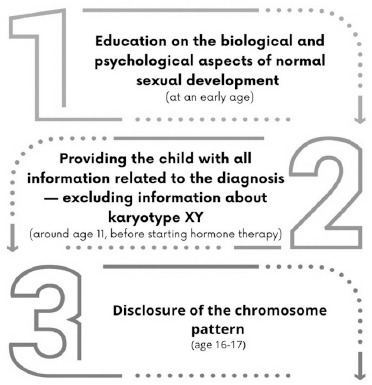
From the psychological and ethical perspectives, it is worth considering whether disclosing information about a patient’s underlying condition is appropriate. In cases of CAIS or severe PAIS, a patient who has been raised as a girl must come to terms with the fact that she is gene-tically male and infertile [40]. It is important to disclose the diagnosis to patients with CAIS [14]. The family should be informed of the diagnosis. The issue of whet-her to disclose the diagnosis to the patient depends on the child’s level of maturity and the family’s social charac-teristics [40]. This process should be planned in coope-ration with the patient’s parents. Providing information about gonadal status, karyotype, and future fertility prospects is an ongoing process that requires a flexible, individualized approach [53]. Figure II presents a 3-step process for informing children with AIS about their health condition [63]. The early transmission of information about the condition of their health may affect a patient’s acceptance of their body and gender roles [27]. Informing individuals of their diagnosis involves effective communication, a strong therapeutic relationship, and persona-lized care based on their individual needs [40]. In the past, information regarding the diagnosis was withheld from families and children to protect them from shock and distress. However, this approach has largely been abandoned in favor of partial or complete disclosure [14]. According to the study by Liao et al. [64] on DSD, adults with CAIS represented the largest diagnostic group. The study indicated that younger women with AIS were better informed than older women with the condition. Nearly half of the younger patients received information about their diagnosis by age 15. Many older patients expressed regret about not being informed earlier about the various aspects of the diagnosis.
The medical decisions made by doctors and the choices made by parents during the patient’s childhood significantly influence the psychological problems these individuals experience later in life. Inadequately tailored interventions may increase the risk of mental health disorders and further deterioration. Psychological support helps patients cope with the emotional consequences of the diagnoses [33]. The family and social environments play an extremely important role in the process of helping them accept their gender, facilitating the development of a sense of security and psychological stability [11].
Parents who have received appropriate instruction on how to cope with this situation demonstrate better discernment when making choices regarding their children [33]. Additionally, parents of patients with AIS should be provided with psychological support [13]. This support helps parents reduce their fears of stigmatization and enables them to provide their children with good support [65]. Parents should be informed that a child diagnosed with a DSD is a fully valued human being, and that their DSD should be regarded in the same way as any other developmental defect [10].
Educating the families of newborns with AIS is essential to long-term care planning, and this goal is best achieved through a multidisciplinary approach. Nurses also help educate patients with AIS and their families, ensuring that they have access to community support groups and educational materials [20]. Parents should receive reliable information about their child’s sexual development, including access to verified online sources, provided that their content is factual and based on current knowledge [53].
CAIS patients should be raised as girls due to their brain’s lack of response to androgens and the development of their external genitalia. These patients require psychological counseling regarding the necessity of orchiectomy and acceptance of infertility after diagnosis. In contrast, patients with PAIS are raised as males, though a female gender assignment may be preferred in severe cases. The decision regarding gender assignment is made by the family and the medical team [43]. Many factors must be considered when determining gender, such as the appearance of the sex organs, surgical options, and family views related to social, religious, and cultural beliefs. Determining the optimal time for assigning gender is disputed. While some specialists suggest waiting until age three, when gender identity is believed to begin developing, others recommend determining the child’s gender as soon as possible [40].
It is important to create conditions for regular conversations, ensuring sufficient time and space during which it will be possible to both explore the topic in greater depth and return to previously provided information for better understanding [53]. During the support process it may be useful to use drawings, other materials, and also websites [10]. A sensitive and appropriate pace of communication regarding diagnosis allows for realistic adaptation to living with AIS and informed decision-making about treatment [66].
The most common difficulties reported by patients are sexual aversion and lack of arousal, which are often misinterpreted as low libido. To help patients, medical staff should provide the opportunity for young people to talk in confidence without their parents’ present. Psychologists and/or gynecologists should give adolescents diagnosed with CAIS the chance to talk about their concerns in a confidential setting as many times as they need to [67]. Additionally, they should encourage participation in dedicated support groups. Some patients avoid intimate relationships, so it is important to discuss their fear of rejection and provide support in building relationships. The focus should not be solely on sexual function and activity, but on interpersonal relationships. In some cases, referral to sex therapy may be appropriate [53].
Multiple genital examinations and photographic documentation may be a source of discomfort and shame for patients. This should be performed whenever possible during procedures under anesthesia with the patient’s consent. Negative treatment experiences can lead to psychological difficulties, which can require consultation with a mental health professional [53].
Some patients are so impacted by their diagnosis that they may, as discussed above, develop depression, as in the case of a 25-year-old patient with CAIS who was referred for psychiatric evaluation due to multiple suicide attempts. The patient had educational therapy, was offered psychological counseling, and started antidepressant and anti-anxiety treatment. She received 10 mg of escitalopram and 0.5 mg of clonazepam. The dose was adjusted on the basis of the patient’s clinical response. During therapy sessions, it was explained to her that she is geneti-cally male; however, because her body does not respond to male hormones, she did not develop male characteristics. It does not fully possess the physical characteristics of a woman because it is not genetically female. During the session, she had the opportunity to express her feelings, and the therapist helped her come to terms with her conflict between her genetic and physical gender and her psychological sexual orientation. Her fear of potential future anatomical changes was allayed. She expressed her sexual desires and interest in marriage. Thanks to these interventions, her depression improved, her transient delusions subsided, and she felt better. During her next visit, she said that she was considering marrying a man with whom she had a non-physical relationship [49].
Further research is needed to fully understand the needs of patients with AIS in order to develop support and treatment methods that take into account their phenotypic characteristics and psychological needs [40]. Each type of AIS comes with its specific challenges. Further research and the development of personalized therapeutic interventions are essential to improving the quality of life for those with this syndrome.
Discussion
AIS occurs in individuals with a 46,XY karyotype who exhibit complete or incomplete resistance to androgens despite having a Y chromosome. Depending on the degree of androgen receptor sensitivity, this results in a female, male, or intermediate phenotype, making it possible to distinguish three types of AIS: CAIS, PAIS, and MAIS.
Patients with CAIS have a female phenotype but no uterus or menstruation. Their gonads are located in the abdominal cavity or the inguinal canal. PAIS is characterized by ambiguous external genitalia and may present with spodiectasia, micropenis, or clitoral hypertrophy. In MAIS, individuals usually have a male phenotype but may experience gynecomastia or infertility.
AIS presents not only as a medical problem, but also as a psychological and psychosexual one. Patients with AIS are at an increased risk of developing mood disorders, depression, anxiety, and suicidal thoughts. Patients with PAIS whose phenotype is unclear are particularly likely to struggle with gender dysphoria and an identity crisis. Conversely, people with CAIS who were raised as girls from birth tend to identify as female, consistent with their female phenotype and social experience.
The sexual sphere remains problematic as well. Despite maintaining a heterosexual orientation and being able to form relationships, women with CAIS report problems with penetration, low libido, and difficulty achieving orgasm. These difficulties can stem from anatomical factors, such as a short vagina, or psychological ones, such as a lack of acceptance of one’s body. Men with PAIS report a lack of sexual satisfaction or intercourse, yet they still have sexual needs. On the other hand, MAIS is mainly associated with infertility and problems with the self-acceptance of masculinity. We should take these issues into conside-ration, particularly among young people; therefore, it is essential to ensure that they receive adequate support.
Patients with PAIS and CAIS have been found to experience depression, anxiety, somatization disorder, obsessive-compulsive disorder, and suicidal behavior. Providing psychological support, educating medical personnel, and properly communicating the AIS diagnosis can reduce psychological stress.
Although studies indicate that patients with AIS experience psychological and psychosexual problems, these studies have been conducted on small populations. For this reason, we should be cautious when drawing far-reaching conclusions. Therefore, a study of larger populations of AIS patients is needed, especially in pedia-tric and young adult populations.
Caring for people with AIS requires a multidisciplinary approach. Treatment should include medical care and psychological and psychiatric support. Educating and providing psychological care to the family is extremely important, including assisting with decisions regarding gender assignment, initiating hormone treatment, and undergoing surgical interventions. Support must be tailored to the patient’s age and individual needs, as well as the needs of their family. Disclosing information about the diagnosis gradually and responsibly, in a manner consistent with the patient’s age, emotional maturity, and readiness to receive the diagnosis, is advisable. The development of a standard therapeutic approach tailored to these patients is essential.
Conclusions
Patients with AIS experience problems related to sexuality, gender identity, and mental health. Each case should be treated individually, and patients should receive comprehensive support, including medical and psychological assistance. The diagnosis and treatment of AIS should not be limited to medical interventions alone. A long-term care model is necessary that considers the patient’s spheres of life, such as identity, sexuality, and mental health. This approach can improve quality of life and minimize the risk of future psychological and psychosexual problems.