
Contemporary Oncology
eISSN: 1897-4309
ISSN: 1428-2526
Contemporary Oncology/Współczesna Onkologia
Current issue Archive Manuscripts accepted About the journal Supplements Addendum Special Issues Editorial board Reviewers Abstracting and indexing Subscription Contact Instructions for authors Publication charge Ethical standards and procedures
Editorial System
Submit your Manuscript
SCImago Journal & Country Rank
3/2025
vol. 29
 
Share:
Share:
Case report

A case series of immune checkpoint inhibitor-induced gastritis

Athanasia Karavasili
1
,
Melina Yerolatsite
1
,
George Zarkavelis
1, 2
,
Vaia Karafousia
1
,
Nanteznta Torounidou
1
,
Anna-Lea Amylidi
1
,
Eleftherios Kampletsas
1, 2

  1. Department of Medical Oncology, University Hospital of Ioannina, Ioannina, Greece
  2. Society for Study of Clonal Heterogeneity of Neoplasia (EMEKEN), Ioannina, Greece
Contemp Oncol (Pozn) 2025; 29 (3): 316–319
Online publish date: 2025/09/16
Article file
- A case series.pdf  [0.06 MB]
Get citation
 
PlumX metrics:
 

Introduction

Immune checkpoint inhibitors (ICIs), such as anti-PD1 and anti-PD-L1 anti-bodies, are novel antineoplastic agents that have been widely used in the treatment of multiple malignancies. ICIs are fully humanized IgG monoclonal antibodies that target the human programmed death receptor-1 (PD1), leading to upregulated T-cell destruction of malignant cells. ICIs play an important role in the management of different types of cancer and are included in the guidelines for various malignancies. The increased use of these agents has significantly improved the prognosis of many cancers. However, their mechanism of action has also led to a rise in immune-related adverse events. For this reason, it is important for clinicians to keep in mind the possibility of rarer side effects presenting with common symptoms, such as gastrointestinal disorders.

Specifically, there is only a limited number of reported cases involving upper gastrointestinal tract disorders induced by ICIs. Immune-related gastritis is identified by widespread inflammation of the gastric mucosa, which appears erythematous and edematous. On histologic examination, the it shows signs of surface layer loss (epithelial denudation) along with a heavy presence of inflammatory cells [1].

There are only a few reported cases of immune-related gastritis in the literature, despite the widespread use of this immunotherapy over the past decade. Here, we present three cases from our hospital involving immune-mediated gastritis, along with a review of the literature on other published cases.

Case presentation

A 61-year-old female patient was diagnosed with stage IIIA lung adenocarcinoma. She underwent surgery – lobectomy – and received adjuvant chemotherapy. After completing chemotherapy, she was treated with pembrolizumab. She was admitted to the hospital due to gradually worsening gastric discomfort, pain, nausea, and vomiting. The symptoms had started two weeks prior to admission. Her clinical examination on admission revealed mild epigastric tenderness. An initial workup showed elevated levels of amylase in both blood and urine. An abdominal X-ray ruled out obstruction. A computed tomography (CT) scan of the chest and abdomen was performed soon after, revealing diffuse gastric wall edema and a halo sign (mucosal enhancement surrounded by submucosal and gastric wall edema). Upper endoscopy showed erythematous gastric mucosa and hemorrhagic gastritis involving the entire gastric mucosa. Histologically, findings of the gastric mucosa showed significant alterations consistent with chronic active gastritis and mucosal ulcerations. Within the inflammatory infiltrate, cell aggregates were observed without notable cytological atypia and strongly positive for the pancytokeratin marker. These findings suggested an autoimmune process. Methylprednisolone (1 mg/kg) was initiated, along with a proton pump inhibitor (PPI; esomeprazole 40 mg four times a day). Symptoms improved within a few days. The patient was discharged from the hospital and conti-nues oral methylprednisolone and PPI at lower doses.

In the second case, a 76-year-old male patient with metastatic gallbladder cancer was treated with cisplatin, gemcitabine, and durvalumab. He was admitted to the hospital due to persistent nausea and vomiting, especially after meals, following 6 cycles of immunotherapy. Gastro-scopy performed a few days later revealed erythematous gastric mucosa with sectional erosions. Histologic exami-nation revealed chronic inactive gastritis and inflammatory cell infiltration within the gastric tissue, predominantly composed of lymphocytes and plasma cells, accompanied by thickening of the muscularis mucosae. He was prescribed a PPI twice daily, with subsequent symptom improvement.

In the last case of this series, a 71-year-old female patient with metastatic microsatellite instability (MSI)-high endometrial carcinoma was treated with dostarlimab. After receiving 10 cycles of immunotherapy, she was hospitalized due to persistent epigastric pain lasting for weeks. During the clinical examination, no abnormal findings were detected. She underwent an upper endoscopy, which revealed duodenitis along with edematous and erythema-tous gastric mucosa. A histological examination showed epithelial denudation with severe lymphocytic inflammation. She started on PPI therapy, resulting in clinical improvement. Immunotherapy was discontinued.

Review of the literature

A review of the literature was performed, and three different databases (PubMed, Cochrane and Scopus) were searched to obtain a thorough understanding of the subject. A flowchart was created to describe the procedure of our search (Figure 1).
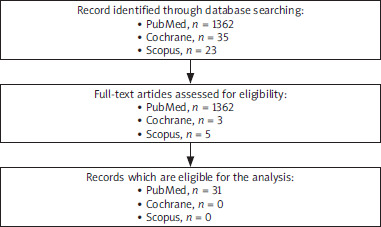
Figure 1

Flowchart depicting the search strategy followed in our analysis

/f/fulltexts/WO/56599/WO-29-56599-g001_min.jpg

A total of 31 cases were found in which gastritis following immunotherapy was described. Although it is a side effect noted by the manufacturers, it is not as common as other side effects. For this reason, it is important to consider gastritis as a potential cause when a patient presents with gastrointestinal symptoms [636].

The most common immunotherapies were nivolumab and pembrolizumab, with 14 and 16 cases respectively. The most common clinical signs and symptoms are nausea, vomiting and gastric pain. Anorexia and bloating have also been described [636].

The main histological observations comprised chronic active gastritis, which featured an elevation in intraepi-thelial lymphocytes and apoptotic cells, along with a focal- enhancing injury pattern. This injury pattern was distinguished by localized areas of periglandular lymphohistiocytic inflammation and the presence of neutrophils infiltrating the glandular epithelium, all occurring without extensive chronic inflammatory alterations [636].

Finally, treatment for ICI gastritis typically depends on the severity of any accompanying ICI-related adverse events. In some cases, patients with only ICI gastritis can be managed with just a PPI and may continue their ICI therapy. However, the majority of patients need glucocorticoids to alleviate symptoms that do not respond to PPIs alone [636].

Discussion

Immunotherapy is an important treatment for various types of cancer. However, like other therapies, it is asso-ciated with side effects that every oncologist must be aware of. As immunotherapy continues to play a larger role in the management of oncology patients, irAEs will become more frequent. With this new reality, rarer side effects will also emerge. To our knowledge, only 31 cases of gastritis due to immunotherapy have been described. In addition, we have observed three cases in our department [2, 636].

In patients undergoing ICI therapy, a typical histological sign of mucosal damage is chronic active gastritis charac-terized by lymphoplasmacytic infiltration. This pattern is often associated with Helicobacter pylori infection. To rule out H. pylori as the cause in suspected cases of ICI gastritis, it is essential to perform a thorough evaluation of all biopsy samples. Although the histological features of both conditions may appear similar, H. pylori gastritis typically shows a neutrophilic or mixed infiltrate, while ICI therapy-associated gastritis predominantly exhibits a lymphocytic infiltrate [35].

Treatment for ICI gastritis typically depends on the severity of irAEs. The most common initial therapeutic approach is the use of PPIs, but in most cases, the use of glucocorticoids or PPIs may be necessary. Additionally, it is not always required to stop immunotherapy after diagnosing the side effect. Patients can continue their immunotherapy once their symptoms are managed [2, 636]. In our case series, only one of the patients required glucocorticoids, while the other two were managed with PPI therapy, leading to symptom relief. None of them has received ICIs again yet.

Conclusions

Gastritis associated with immune ICI therapy can occur in patients receiving these antineoplastic agents. Steroid treatment often alleviates symptoms and allows for the continuation of ICI therapy. Early identification of this complication is crucial, relying on clinical assessment, endoscopy, and histological analysis. Future research is needed to identify methods to prevent this therapy- related complication and explore more effective treatment options.


Disclosures

  1. Institutional review board statement: Not applicable.

  2. Assistance with the article: None.

  3. Financial support and sponsorship: None.

  4. Conflicts of interest: None.

References

1 

Farha N, Faisal MS, Allende DS, Sleiman J, Shah R, et al. Characte-ristics of immune checkpoint inhibitor-associated gastritis: report from a major Tertiary Care Center. Oncologist 2023; 28: 706-713.

2 

Haanen J, Obeid M, Spain L, Carbonnel F, Wang Y, Robert C, et al. Management of toxicities from immunotherapy: ESMO Clinical Practice Guideline for diagnosis, treatment and follow-up. Ann Oncol 2022; 33: 1217-1238.

3 

Cui I, Chen Z, Panarelli N, Yantiss RK (eds.). Patterns of lymphocytic gastritis may reflect the underlying etiology. Laboratory Investigation. 2016, New York, NY, USA: Nature Publishing Group; p. 10013-11917.

4 

Zhang ML, Neyaz A, Patil D, Chen J, Dougan M, Deshpande V. Immune-related adverse events in the gastrointestinal tract: diagnostic utility of upper gastrointestinal biopsies. Histopathology 2020; 76: 233-243.

5 

Irshaid L, Robert ME, Zhang X. Immune checkpoint inhibitor-induced upper gastrointestinal tract inflammation shows morphologic similarities to, but is immunologically distinct from, Helicobacter pylori gastritis and celiac disease. Arch Pathol Lab Med 2021; 145: 191-200.

6 

Tsukaguchi A, Yamaguchi N, Ogawa H, Ikeda T. Concurrent nivolumab-induced gastritis and cholangitis accompanied by bilia-ry tract hemorrhage in a patient with stage IV lung adenocarcinoma. Cureus 2023; 15: e46392. DOI: 10.7759/cureus.46392.

7 

Nishimura Y, Yasuda M, Ocho K, Iwamuro M, Yamasaki O, Tanaka T, Otsuka F. Severe gastritis after administration of nivolumab and ipilimumab. Case Rep Oncol 2018; 11: 549-556. DOI: 10.1159/000491862.

8 

Boike J, Dejulio T. Severe esophagitis and gastritis from nivolumab therapy. ACG Case Rep J 2017; 4: e57. DOI: 10.14309/crj.2017.57.

9 

Cijauskaite E, Kazenaite E, Strainiene S, Sadauskaite G, Kurlinkus B. Nivolumab-induced tumour-like gastritis: a case report. World J Clin Cases 2023; 11: 4350-4359.

10 

Rovedatti L, Lenti MV, Vanoli A, Feltri M, De Grazia F, Di Sabatino A. Nivolumab-associated active neutrophilic gastritis. J Clin Pathol 2020; 73: 605-606.

11 

Ebisutani N, Tozawa K, Matsuda I, Nakamura K, Tamura A, Hara K, et al. A case of severe acute gastritis as an immune-related adverse event after nivolumab treatment: endoscopic and pathological findings in nivolumab-related gastritis. Dig Dis Sci 2020; 66: 2461-2465.

12 

Samonis G, Bousmpoukea A, Molfeta A, Kalkinis AD, Petraki K, Koutserimpas C, Bafaloukos D. Severe gastritis due to nivolumab treatment of a metastatic melanoma patient. Diagnostics (Basel) 2022; 12: 2864. DOI: 10.3390/diagnostics12112864.

13 

Tsuji A, Hiramatsu K, Namikawa S, Yamamoto A, Midori Y, Murata Y, et al. A rare case of eosinophilic gastritis induced by nivolumab therapy for metastatic melanoma. Clin J Gastroenterol 2022; 15: 876-880.

14 

Kobayashi M, Yamaguchi O, Nagata K, Nonaka K, Ryozawa S. Acute hemorrhagic gastritis after nivolumab treatment. Gastrointest Endosc 2017; 86: 915-916.

15 

Vindum HH, Agnholt JS, Nielsen AWM, Nielsen MB, Schmidt H. Severe steroid refractory gastritis induced by nivolumab: a case report. World J Gastroenterol 2020; 26: 1971-1978.

16 

De La Mata DM, Busto-Bea V, Cerezo-Aguirre C. Gastritis inducida por nivolumab en un paciente con melanoma metastásico. Rev Gastroenterol Mex (Engl Ed) 2021; 86: 90-91.

17 

Ojeda Gómez A, Jiménez García N, Barragán Martínez J, García Soria A, Sáez Fuster J, Cabezas Macián M, García Sepulcre MF. Acute neutrophilic gastritis induced by nivolumab used as a treatment of non-metastatic malignant melanoma. Rev Esp Enferm Dig 2021; 113: 853-854.

18 

Călugăreanu A, Rompteaux P, Bohelay G, Goldfarb L, Barrau V, Cucherousset N, et al. Late onset of nivolumab-induced severe gastroduodenitis and cholangitis in a patient with stage IV melanoma. Immunotherapy 2019; 11: 1005-1013.

19 

Gómez AO, Ramón MIP, Brotons AB, García NJ, Sala MDP, Ma-cian MC, et al. Nivolumab-induced acute neutrophilic gastritis: case report in a tertiary hospital. Gastroenterol Hepatol 2024; 47: 74-75.

20 

Liu W, Li Y, Hsieh T. Unusual severe gastritis and gastric ulcers caused by pembrolizumab. J Postgrad Med 2021; 68: 38-40.

21 

Ecker ME, Weckauf H, Tebbe S, Schuppert F. Immune-mediated gastritis in a patient with metastatic lung cancer due to therapy with the immune checkpoint inhibitor pembrolizumab–differences and similarities in comparison to “endogenous” autoimmune type a gastritis and a review of literature. Z Gastroenterol 2023; 61: 1385-1393.

22 

Gaffuri P, Espeli V, Fulciniti F, Paone G, Bergmann M. Immune-related acute and lymphocytic gastritis in a patient with metastatic melanoma treated with pembrolizumab immunotherapy. Pathologica 2019; 111: 92-97.

23 

Santamaría CP, Castillo-López G, García IC, Iglesias PG, Cabrera ML, Guillán LC. Severe pembrolizumab-induced gastritis in a patient with lung adenocarcinoma. Rev Esp Enferm Dig 2022; 114: 127-128.

24 

Rao BB, Robertson S, Philpott J. Checkpoint inhibitor-induced hemorrhagic gastritis with pembrolizumab. Am J Gastroenterol 2019; 114: 196. DOI: 10.1038/s41395-018-0366-3.

25 

Vandepapelière J, Siplet J, Libbrecht L, Dano H, Baurain JF, Mo-reels T. Auto-immune gastritis induced by pembrolizumab, an anti-PD-1, in a melanoma patient. Acta Gastroenterol Belg 2020; 83: 482-484.

26 

Mathialagan K, Tai C, Sethi S, Thomas S, Loeser C. Immune checkpoint inhibitor-induced hemorrhagic gastritis. ACG Case Rep J 2023; 10: e01128. DOI: 10.14309/crj.0000000000001128

27 

Hayama N, Ihara H, Honma Y, Itoigawa Y, Kaira K, Fujii M. Severe gastritis due to pembrolizumab treatment in a lung cancer patient. Respirol Case Rep 2020; 8: e00636. DOI: 10.1002/rcr2.636.

28 

Saito K, Ozono D, Nagumo H, Yoshimura M, Masuzawa Y. Temporal observation of endoscopic and histological findings of gastritis after administration of an immune checkpoint inhibitor: a case report. Clin J Gastroenterol 2022; 15: 368-373.

29 

Lu J, Firpi-Morell RJ, Dang LH, Lai J, Liu X. An unusual case of gastritis in one patient receiving PD-1 blocking therapy: coexisting Immune-Related gastritis and cytomegaloviral infection. Gastroenterol Res 2018; 11: 383-387.

30 

Otsuka T, Hashii Y, Murayama S, Ishizuka Y, Kojitani Y, Nishio M, Kudo T. Checkpoint inhibitor-induced gastritis followed by delayed severe hepatitis in a patient with lung metastases of head and neck squamous cell carcinoma: a case report. Front Oncol 2023; 13: 1164236. DOI: 10.3389/fonc.2023.1164236.

31 

Yip RH, Lee LH, Schaeffer DF, Horst BA, Yang H. Lymphocytic gastritis induced by pembrolizumab in a patient with metastatic melanoma. Melanoma Res 2018; 28: 645-647.

32 

Fukiishi Y, Fukuhara H, Kurano Y, Shugimoto H, Yamashita E, Karasima T, Inoue K. A case of acute lymphocytic gastritis related to treatment with pembrolizumab for metastatic urothelial carcinoma. IJU Case Rep 2022; 6: 128-132.

33 

Elmasry M, Dong B, Rios C, Breaux A, Miller D. Delayed hemorrhagic gastritis caused by immunotherapy in a patient With metastatic melanoma. Am J Med Sci 2022; 364: 343-346.

34 

Goel N, Levine MD, Chambers LM, Nagel CI. Gastritis as an immunotherapy-related toxicity in the treatment of endometrial cancer: a case report. Gynecol Oncol Rep 2023; 47: 101174. DOI: 10.1016/j.gore.2023.101174..

35 

Oka Y, Hamano Y, Nakamura R, Mabuchi K, Ochi M, Yamaguchi Y, Okawara H, et al. A case of immune-related gastroesophagitis with laryngopharyngitis caused by immune checkpoint inhibitors in nonsmall cell lung cancer. Nihon Shokakibyo Gakkai Zasshi 2024; 121: 221-229 [Article in Japanese].

36 

Sugiyama Y, Tanabe H, Fujiya M. Immune checkpoint inhibitor-related gastritis in a patient with metastatic melanoma. JGH Open 2021; 5: 1218-1219.

Copyright: © 2025 Termedia Sp. z o. o. This is an Open Access article distributed under the terms of the Creative Commons Attribution-NonCommercial-ShareAlike 4.0 International (CC BY-NC-SA 4.0) License (http://creativecommons.org/licenses/by-nc-sa/4.0/), allowing third parties to copy and redistribute the material in any medium or format and to remix, transform, and build upon the material, provided the original work is properly cited and states its license.
 
Quick links
© 2025 Termedia Sp. z o.o.
Developed by Bentus.








