

Introduction
Chronic liver diseases (CLDs) represent a growing global health burden, driven primarily by the rapid rise of metabolic dysfunction-associated steatotic liver disease (MASLD) and its progressive inflammatory form, metabolic dysfunction-associated steatohepatitis (MASH). MASLD currently affects an estimated 20-40% of adults worldwide, with prevalence varying across age groups, geographic regions, and ethnicities, and its incidence continues to increase in parallel with the global epidemics of obesity, insulin resistance, and type 2 diabetes mellitus (T2DM) [1]. The condition is strongly linked to cardiometabolic morbidity and remains a major driver of hepatic complications, including progressive fibrosis, cirrhosis, and hepatocellular carcinoma. Among individuals with T2DM, MASLD is particularly prevalent, affecting more than half of this population [2, 3]. CLDs arise from diverse etiologies, including metabolic disorders (MASLD/MASH), viral hepatitis – most notably hepatitis C virus (HCV) infection – alcohol-associated liver disease, and various autoimmune or cholestatic conditions [2, 4].
Despite the rising burden of CLDs, treatment options remain limited, especially for MASH – a progressive form of MASLD characterized by hepatic inflammation and fibrosis [4, 5]. Until recently, no pharmacologic therapy had been approved by major regulatory agencies such as the U.S. Food and Drug Administration (FDA) or the European Medicines Agency (EMA) specifically for MASLD/MASH [2, 5]. Lifestyle modification, including dietary intervention and increased physical activity, remains the cornerstone of management and can improve steatosis, metabolic parameters, and – in some cases – fibrosis. However, sustained weight loss is difficult to achieve in real-world practice, and lifestyle interventions alone rarely lead to full histological remission of MASH. Therefore, the need for effective, targeted therapies capable of halting disease progression and reversing fibrosis remains substantial [5].
A new generation of metabolic therapies has emerged to address this gap [6]. Among them, glucagon-like peptide-1 receptor agonists (GLP-1 RAs) – including liraglutide, semaglutide, exenatide, tirzepatide, and dulaglutide – have gained particular attention. Increasing evidence from preclinical and clinical studies demonstrates that GLP-1 RAs can significantly reduce liver fat content, lower aminotransferase levels (alanine aminotransferase [ALT], aspartate aminotransferase [AST], γ-glutamyl transferase [GGT]), attenuate hepatic inflammation, and exert broader hepatoprotective and cardiometabolic effects [2, 3, 5, 7, 8]. Their ability to induce robust weight loss and substantially improve insulin sensitivity positions them as highly promising agents for treating conditions driven by metabolic dysfunction, such as MASLD and MASH [1, 3, 6, 7]. Early studies also suggest their potential to improve liver histology and possibly reverse fibrosis progression [2, 8].
The purpose of this review is to provide a comprehensive overview of recent therapeutic advances in CLDs, with a particular emphasis on emerging therapies for MASLD/MASH and the evolving role of GLP-1 RAs across different CLD fibrosis etiologies. We will examine mechanisms of action, summarize key clinical trial evidence, and outline future perspectives on how these agents may transform the therapeutic landscape of CLD.
Metabolic dysfunction-associated steatotic liver disease and metabolic dysfunction-associated steatohepatitis: significant global health concerns with complex pathophysiology and high unmet clinical need for effective treatments
Non-alcoholic fatty liver disease (NAFLD), now correctly termed metabolic dysfunction-associated steatotic liver disease (MASLD), is the most common CLD worldwide, with a prevalence of ~25% of the general population and up to 55.5-75% in patients with T2DM [9]. MASLD is defined by excessive hepatic, mainly triglyceride, accumulation and arises from multiple factors, including insulin resistance [9]. The disease ranges from simple steatosis to steatohepatitis (MASH), characterized by steatosis, inflammation, hepatocyte ballooning, and sometimes fibrosis [2, 9-11]. MASH may progress more rapidly to advanced fibrosis, cirrhosis, liver failure, and hepatocellular carcinoma, and is bidirectionally associated with metabolic syndrome [10, 11].
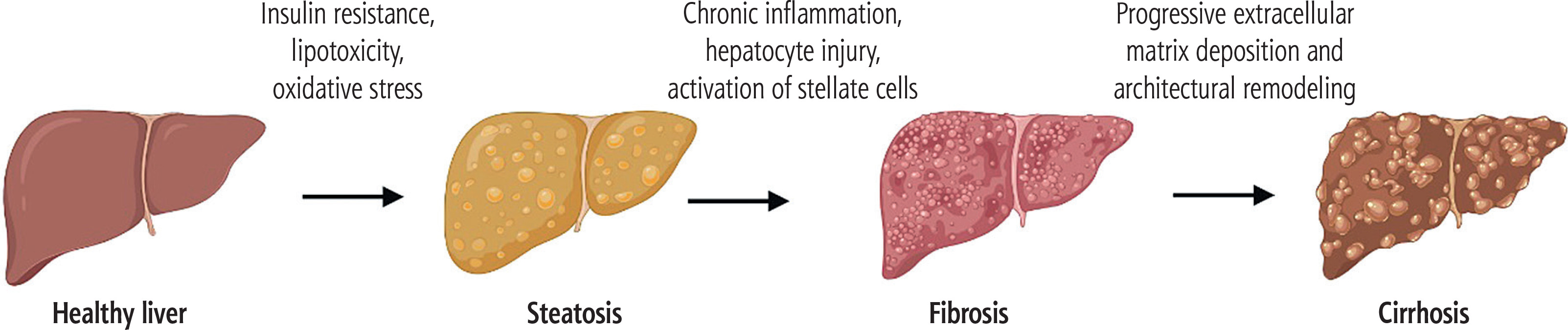
There are no approved pharmacotherapies for MASLD and MASH [2, 9, 10, 12]. Lifestyle modification, including Mediterranean diet and exercise with the aim of at least 5-10% weight loss, remains the main treatment but is hard to sustain [9]. The serious consequences of MASLD/MASH, including liver cirrhosis and hepatocellular carcinoma, highlight the need for therapies targeting metabolism, inflammation, and fibrosis [9, 10, 13]. Figure 1 shows the disease progression.
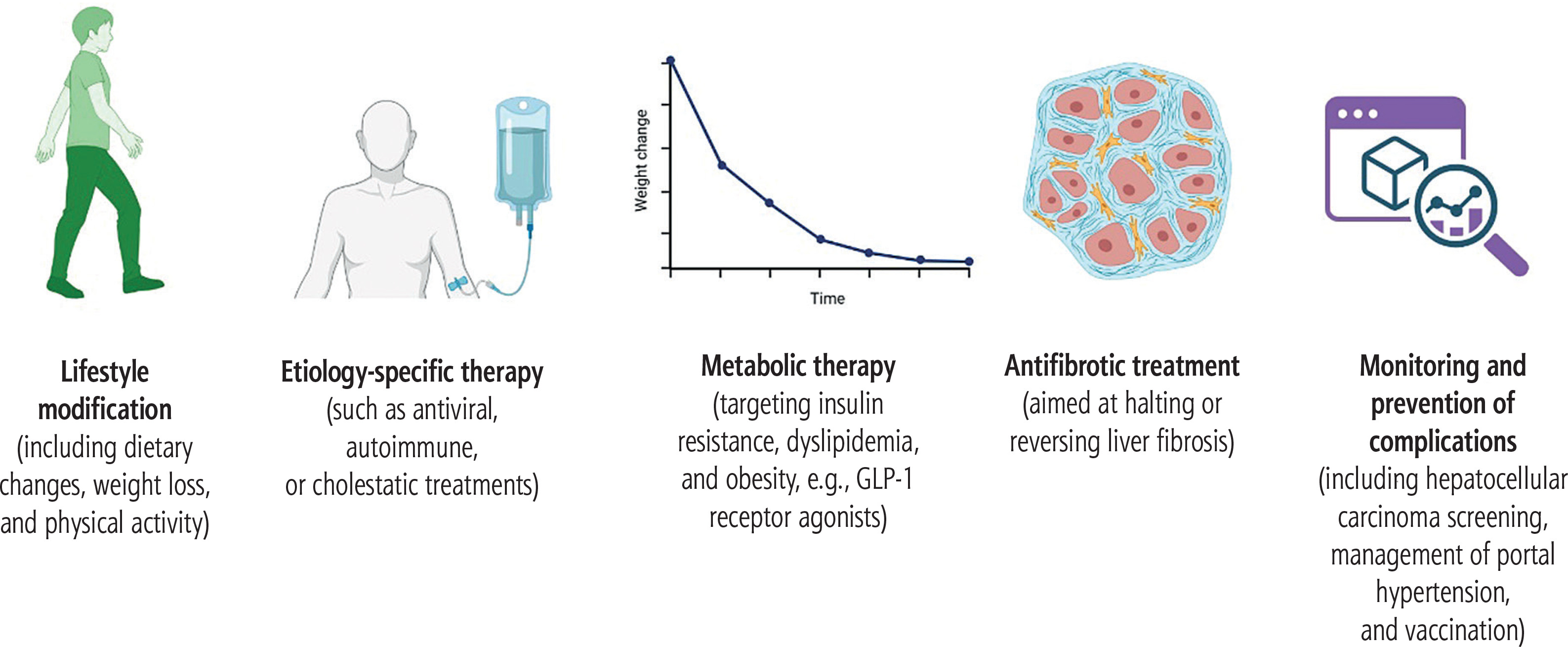
Therapeutic pillars in the management of CLDs are illustrated in Figure 2 and reflect a multidimensional, stage-adapted approach to care. These pillars integrate lifestyle modification as the foundation of therapy, etiology-specific pharmacologic interventions (including metabolic modulators, antiviral agents, and emerging anti-fibrotic strategies), and structured monitoring using validated biomarkers and imaging modalities. Together, this framework emphasizes that optimal CLD management requires both upstream correction of metabolic and inflammatory drivers and downstream prevention of fibrosis progression and liver-related complications. Therapeutic pillars in the management of CLD are summarized in Figure 2.
Therapies in CLDs
Farnesoid X receptor (FXR) agonists are promising for regulating bile acids, metabolism, oxidative stress, and inflammation [9, 12, 13]. Obeticholic acid (OCA) improves MASH and fibrosis but can cause pruritus and increased low-density lipoprotein cholesterol (LDL-C) [9, 10, 13]. Non-steroidal FXR agonists, including vonafexor, cilofexor, and tropifexor, aim to retain benefits with fewer side effects; vonafexor also reduces liver fat and improves enzymes and eGFR [12].
Farnesoid X receptor agonists have been widely investigated in metabolic liver disease due to their role in regulating bile acid homeostasis, lipid and glucose metabolism, oxidative stress, and inflammation. FXR activation modulates hepatic steatosis, insulin sensitivity, and fibrogenic pathways, making it a biologically attractive target in MASH [9, 12, 13].
Obeticholic acid, a steroidal FXR agonist, demonstrated fibrosis improvement in the phase III REGENERATE trial, with a higher proportion of patients achieving ≥ 1-stage fibrosis improvement without worsening of NASH compared to placebo. However, pruritus and LDL-C elevation were common adverse events. In 2023, the FDA declined approval of OCA for NASH due to an unfavorable benefit-risk assessment, and its development in MASH was subsequently discontinued [9, 10, 13].
Non-steroidal FXR agonists were developed to retain efficacy while improving tolerability. Cilofexor showed biochemical and imaging improvements in phase II studies, but phase IIb trials failed to meet key histologic endpoints, leading to discontinuation of its NASH program. Similarly, tropifexor reduced liver fat and improved enzymes in early studies, yet the phase IIb FLIGHT-FXR trial did not meet its primary histologic endpoint, and development was terminated. Vonafexor demonstrated reductions in liver fat and improvements in liver enzymes and eGFR in early trials, but its development in metabolic liver disease has not progressed to late-phase confirmation.
PPAR modulators target metabolic processes, lipid transport, and gluconeogenesis [9, 14]. Pioglitazone (PPARγ) reduces steatosis and inflammation but may cause weight gain, fluid retention, and fracture risk [9, 10, 13]. Pemafibrate (PPARα) improves liver stiffness, enzymes, and lipids without reducing fat [10, 13, 15]. The pan-PPAR agonist lanifibranor shows MASH resolution and fibrosis improvement, with side effects including diarrhea, edema, anemia, and weight gain [15].
GLP-1 RAs promote weight loss and improve insulin sensitivity in T2DM and obesity [9-11, 13]. Liraglutide and semaglutide achieve MASH resolution, while tirzepatide improves MASH biomarkers and reduces weight [13, 16].
The FGF21 analog efruxifermin enhances liver fat reduction, fibrosis markers, and metabolism alongside GLP-1 RAs [16].
Emerging therapies offer new options beyond lifestyle interventions. Mechanisms and outcomes are shown in Tables 1 and 2.
Table 1
MASLD/MASH: current status, treatment landscape, unmet needs, and emerging pharmacotherapies
Table 2
Mechanisms and clinical outcomes of emerging therapies for MASLD/MASH
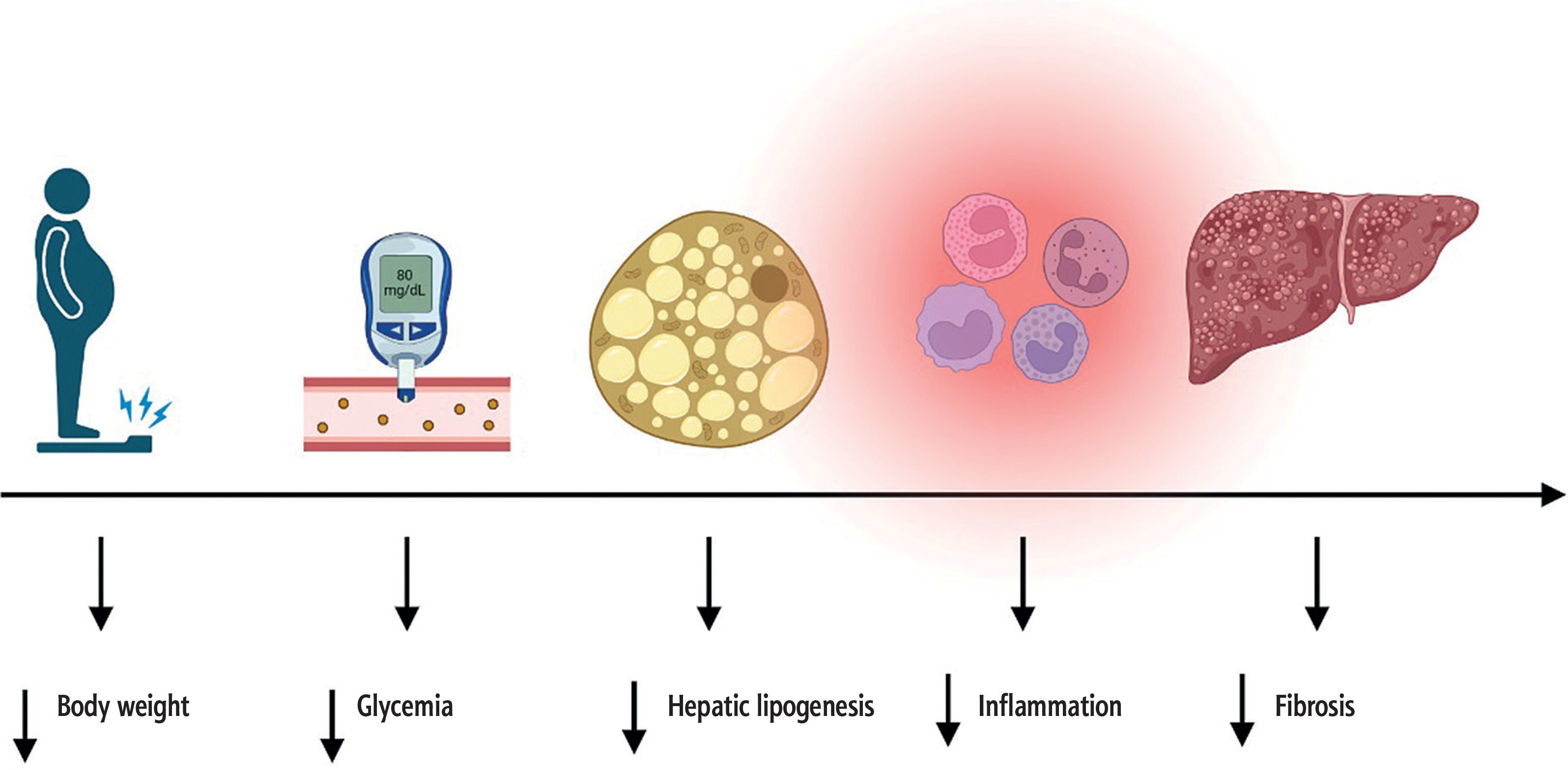
Overall effects of GLP-1 Ras are presented in Figure 3.
Liver fibrosis: advances in liver protection
Incretin-based therapies have recently emerged as promising agents not only for metabolic control but also for liver protection in metabolic dysfunction-associated steatohepatitis (MASH/NASH).
GLP-1 RAs, such as liraglutide, are approved for type 2 diabetes and obesity and provide significant weight loss and metabolic improvement. Importantly, they also demonstrate histological benefits in NASH. In the LEAN trial, steatohepatitis resolved in 39% of patients treated with liraglutide vs. 9% with placebo, while fibrosis progression occurred in 9% vs. 36%, respectively, which may suggest a protective effect against fibrogenesis [11, 16, 17].
Newer agents further expand this therapeutic potential; e.g., tirzepatide reduces NASH biomarkers and ALT levels, indicating decreased hepatocellular injury. Efruxifermin, an Fc-FGF21 analog, is safe in combination with GLP-1 RAs and reduces the hepatic fat fraction by approximately 65%, compared with 10% with GLP-1 RA therapy alone. It also improves non-invasive fibrosis markers while maintaining weight loss [17].
Together, these advances signal a shift toward mechanism-based therapies that target both metabolic dysfunction and pathways driving hepatic inflammation and fibrosis progression.
Mechanisms of action of GLP-1 receptor agonists in liver disease
GLP-1 RAs are widely used in T2DM and obesity due to their glucose-lowering and weight-reducing effects [2, 3, 7, 18]. Increasing evidence shows that they also exert anti-inflammatory and antifibrotic actions relevant to MASLD and MASH [7, 18-20].
Their hepatic effects result from combined systemic metabolic improvements and potential direct actions on liver cells [7, 18, 20]. Firstly, GLP-1 RAs reduce de novo lipogenesis (DNL) and improve hepatic insulin sensitivity [18, 21]. Liraglutide decreases DNL in MASH patients, while in vitro exendin-4 lowers DNL via reduced incorporation of 14C-acetate into lipids, suggesting direct anti-lipogenic activity. Preclinical studies show that GLP-1 RAs reduce hepatic triglycerides by modulating insulin receptor pathways and suppressing lipogenic genes such as PPARγ [18, 20]. They may also enhance fatty acid oxidation through FAM3A overexpression or AMPK activation [18, 20, 21]. Although hepatocyte GLP-1R expression remains debated, reductions in liver fat are consistently observed.
Secondly, GLP-1 RAs also decrease oxidative stress and modulate immune pathways [20, 21]. By relieving ER-stress-induced apoptosis, promoting autophagy, and enhancing lysosomal lipid degradation, they mitigate hepatocyte injury [18, 20, 21]. Exenatide inhibits pyroptosis by suppressing NLRP3, caspase-1, and interleukin (IL)-1β, while liraglutide modulates Kupffer cells toward an M2-like anti-inflammatory phenotype and reduces IL-1β and tumor necrosis factor α (TNF-α) [20]. Systemically, GLP-1 RAs lower C-reactive protein (CRP), IL-6, and TNF-α levels [18, 20].
Clinically, GLP-1 RAs reduce ALT, AST, and GGT [2, 3, 18, 21]. Meta-analyses confirm reductions in liver fat content. In LEAN, liraglutide achieved NASH/MASH resolution in 39% of participants vs. 9% with placebo [2, 22]. Semaglutide induced NASH/MASH resolution in 59% of patients without fibrosis worsening. While long-term data on fibrosis improvement are still limited, GLP-1 RAs slow fibrosis progression [2, 7, 18]. Preclinical evidence suggests potential reduction of NASH-related HCC through improved steatohepatitis and reduced oxidative stress [18]. These mechanisms are summarized in Table 3 [1, 2, 23-31].
Table 3
Liver fibrosis – persistent fibrosis, and therapeutic needs
| Fibrosis stage | Dominant pathophysiology | Current therapeutic impact | Key biomarkers | Remaining gaps/therapeutic needs |
|---|---|---|---|---|
| Early fibrosis (F0-F1) | Hepatocyte lipotoxicity, oxidative stress, Kupffer cell activation, early stellate cell priming [23] | GLP-1 RAs reduce steatosis and promote NASH resolution; limited consistent fibrosis regression in early trials [24, 25] | ALT/AST; MRI-PDFF; CK-18; miR-122 [26] | Early identification of highrisk progressors; prevention of transition to active fibrogenesis |
| Moderate fibrosis (F2-F3) | Activated hepatic stellate cells; extracellular matrix deposition; TGF-β signaling; ongoing inflammation [23] | Semaglutide improves NASH resolution but shows modest and inconsistent fibrosis regression [1, 2]; FXR agonists showed partial antifibrotic signals but failed to achieve regulatory approval [27-29] | Pro-C3; ELF (HA, TIMP-1, PIIINP); FIB-4; transient elastography [26, 30] | Effective anti-fibrotic agents; combination metabolic + matrix-targeted strategies |
| Advanced fibrosis/compensated cirrhosis (F4) | Fibrotic septa formation; architectural distortion; portal hypertension; vascular remodeling [23] | Observational data suggest reduced decompensation and mortality risk with GLP-1 RAs in T2D populations; no definitive RCT evidence of fibrosis reversal [31] | Liver stiffness; ELF; Pro-C3; clinical markers (platelets, albumin) [26, 30] | True fibrosis regression; validated surrogate endpoints for regulatory approval; longterm outcome trials |
Biomarkers of steatosis and fibrosis for monitoring therapy
Non-invasive biomarkers of steatosis and fibrosis are increasingly central to evaluating emerging liver therapies, including GLP-1 RAs, as biopsy is invasive, costly, and prone to sampling error [25]. Imaging- and serum-based markers enable safer, repeatable monitoring and are now widely recommended in clinical research [32, 33].
Liver enzymes (ALT/AST)
GLP-1 RA studies consistently show reductions in ALT and AST levels, indicating decreased hepatocellular injury. A meta-analysis of eight trials reported mean decreases of ~14 U/l (ALT level) and 6.9 U/l (AST level) after 24 weeks of semaglutide [34].
A separate retrospective analysis of 420 patients with MASH showed clinically significant and sustained improvements in transaminases after ≥ 12 months of semaglutide treatment, independent of weight loss, suggesting direct anti-inflammatory hepatic effects. However, assessments of ALT/AST levels have limitations: they fluctuate, correlate imperfectly with liver fat, and do not reliably reflect fibrosis. A meta-analysis of 27 RCTs confirmed biochemical benefits but emphasized that transaminases alone cannot capture MASLD histology [35]. In a phase-2 semaglutide trial, enzyme improvements occurred without fibrosis regression [36].
Proton density fat fraction (MRI-PDFF)
MRI-PDFF is the most accurate and reproducible quantitative measure of hepatic fat. A meta-analysis of early-phase MASH trials showed that ≥ 30% MRI-PDFF reduction strongly predicts histologic improvement, including lower NAS and higher likelihood of MASH resolution [37]. MRI-PDFF consistently outperforms CAP and ultrasound in detecting ≥ S2-S3 steatosis and is now the preferred endpoint in early trials of metabolic and anti-steatotic agents, including GLP-1 Ras [38].
Controlled attenuation parameter via FibroScan
Controlled attenuation parameter (CAP) is accessible and widely used, with prospective data demonstrating a measurable correlation of steatosis degree with MRI-PDFF [39]. However, its longitudinal sensitivity is limited; CAP correlates only moderately with MRI-PDFF changes and performs less accurately in detecting moderate-to-severe steatosis [40]. Thus, while practical, slight CAP changes should be interpreted cautiously, especially in therapeutic trials.
Indirect steatosis indices (FLI, MASLD Liver Fat Score)
The Fatty Liver Index (FLI) predicts MASLD with an AUROC of ~0.776 and is useful in epidemiology and primary care [41]. However, indirect scores lack precision for monitoring treatment effects. Dietary interventions show that changes in FLI and Liver Fat Score depend on metabolic context and correlate inconsistently with MRI-based fat reduction [42]. Glycemic improvement can lower FLI independent of weight change [43]. Overall, these indices are suitable for screening but inferior to MRI-PDFF for therapeutic monitoring.
Elastography, serum fibrosis scores, and advanced biomarkers
Elastography via FibroScan is widely used for serial, non-invasive fibrosis assessment, with stiffness reductions observed during GLP-1 RA therapy. However, values may be influenced by inflammation or congestion, requiring cautious interpretation. Serum fibrosis scores such as FIB-4, NFS, and APRI are inexpensive and validated but have limited sensitivity for early fibrosis and show modest short-term responsiveness. Matrix-remodeling markers (hyaluronic acid, TIMP-1, PIIINP), as in the ELF test, correlate well with histologic fibrosis and reflect active fibrogenesis, making them valuable for monitoring therapeutic effects. Additional biomarkers provide mechanistic insight: CK-18 (M30/M65) indicates hepatocyte apoptosis, while Pro-C3 directly reflects collagen III formation. Emerging metabolic markers (FABP-1, ANGPTL-5) link systemic metabolic dysfunction to hepatic lipid handling and may quantify responses to metabolic therapies. Circulating micro-RNAs, particularly miR-122, correlate with liver fat, inflammation, and fibrosis, and may capture treatment benefit beyond conventional assessments [23].
Combining established and novel biomarkers offers an increasingly precise approach to tracking fibrosis dynamics in chronic liver disease. These aspects are summarized in Tables 4 and 5.
Table 4
Non-invasive biomarkers of hepatic steatosis
Table 5
Non-invasive fibrosis biomarkers
Application of biomarkers in monitoring response to GLP-1 receptor agonists
GLP-1 RAs, such as semaglutide and liraglutide, exert broad metabolic and hepatoprotective effects relevant to MASLD, MetALD, and MASH. Beyond weight loss and glycemic control, they modulate lipid flux, reduce lipotoxicity, attenuate inflammation, and suppress stellate-cell activation. Clinical studies show improvements in hepatocyte injury markers and steatosis, with more variable effects on fibrosis biomarkers, supporting the need for structured biomarker-based monitoring [25, 32, 33]. Because GLP-1 RAs act on multiple pathways, biomarker-guided assessment allows evaluation of therapeutic effects at molecular and tissue levels.
Baseline stratification: identifying active disease and high-risk phenotypes
Non-invasive imaging and serum biomarkers help identify patients with active steatohepatitis or accelerated fibrogenesis before therapy. MRI-PDFF quantitatively assesses liver fat and predicts treatment response, as higher baseline PDFF correlates with ≥ 30% reduction – an indicator of histologic improvement [37]. CAP offers a more accessible estimate of steatosis, though with lower responsiveness, but can identify ≥ S2 steatosis [39, 44]. Serum markers of fibrogenesis and apoptosis, including Pro-C3, CK-18 (M30/M65), and miR-122, provide insight into active disease processes. Elevated Pro-C3 and CK-18 reflect higher fibrosis burden and increased progression risk [23]. These biomarkers also help identify patients most likely to exhibit early biochemical improvement with GLP-1 RA therapy, making them valuable for baseline risk stratification.
Early treatment response (weeks to months): capturing metabolic, inflammatory, and fibrogenic change
Early in GLP-1 RA therapy, biochemical markers provide the fastest indication of a therapeutic effect. ALT and AST decline within 12 to 24 weeks, reflecting reduced hepatocellular injury, with meta-analyses showing average reductions of ≈14 U/l and ≈7 U/l [33, 34]. Decreases in CK-18 (M30/M65) indicate reduced hepatocyte apoptosis and may precede histologic improvement. Lower circulating miR-122 closely tracks improved metabolic control and reduced inflammation, functioning as a sensitive marker of hepatocyte recovery [23]. Declines in Pro-C3 reflect suppressed active fibrogenesis and may predict later fibrosis regression before elastography changes occur. Collectively, these early signals help determine whether GLP-1 RA therapy is effectively targeting hepatocellular and extracellular matrix pathways.
Intermediate treatment response (6-12 months): imaging and elastography assessment
After several months of therapy, changes in hepatic fat and stiffness become evident. MRI-PDFF is preferred for assessing steatosis and predicts a histologic response; ≥ 30% reduction is linked to steatohepatitis resolution [37]. CAP is a practical alternative but less reliable [40]. Elastography (VCTE/SWE) detects stiffness reduction, often after ≥ 6 months of GLP-1 RA therapy, reflecting inflammation or congestion improvement. Serum panels such as FIB-4 and ELF add information on fibrosis risk and biological response, helping identify biochemical, steatosis, and combined responders for therapy decisions.
Long-term monitoring (beyond 12 months): evaluating fibrosis regression and durability of response
For patients on long-term GLP-1 RA therapy, key goals include sustained suppression of fibrogenesis and potential fibrosis reversal. Serial Pro-C3 measurements reflect ongoing fibrogenic activity; persistent reductions indicate stellate-cell quiescence and lower risk of liver complications. The ELF panel (HA, PIIINP, TIMP-1) is well validated for long-term monitoring, correlating with outcomes such as hepatic decompensation. Repeated elastography detects fibrosis regression but must be interpreted alongside inflammation, hemodynamics, and metabolic status. Emerging biomarkers, such as miR-122 or lipid mediators (FABP-1, ANGPTL-5), may provide sensitive markers of cellular benefit. Longitudinal use aids therapy optimization, identifies waning effects, and stratifies risk, especially in MASLD/MetALD, where fibrosis drives outcomes [34].
A structured biomarker strategy in practice and trials offers key advantages: early responder identification, mechanistic insight into GLP-1 RA pathways supporting combination therapies, improved risk stratification, and reduced trial duration and sample size. Non-invasive biomarkers enhance patient acceptability by limiting biopsies. As GLP-1 RAs and next-generation incretin therapies advance, biomarker-guided monitoring will be central to precision phenotyping, tailored therapy, and adaptive trial design.
Clinical evidence and trials involving GLP-1 analogs
Clinical evidence for GLP-1 RAs in MASLD/MASH has grown substantially. A phase 2 trial of semaglutide in 320 patients with biopsy-proven MASH (F1-F3) showed 59% histologic resolution at the highest dose (0.4 mg daily) vs. 17% with placebo, though fibrosis improvement without worsening MASH was not statistically significant. Patients also experienced dose-dependent weight loss (−5% to −13%) and reduced aminotransferases, with mostly mild gastrointestinal side effects [24].
The phase 3 ESSENCE trial (NCT02970942, interim analysis) confirmed benefits: 62.9% of semaglutide-treated patients achieved steatohepatitis resolution without fibrosis worsening at week 72, with notable improvements in fibrosis and combined endpoints [31]. In a prospective cohort of 213 T2D patients on weekly semaglutide, significant reductions in HSI and FIB-4 were observed at 24 weeks, correlating with improvements in weight, triglycerides, insulin resistance, and liver enzymes [45-47].
In a 12-month study of 75 T2D patients with MASLD, semaglutide 1 mg reduced CAP, FIB-4, MASLD fibrosis score, and liver stiffness, with vascular improvements paralleling liver changes [46]. Semaglutide also improved quality of life, with 72-week increases in SF-36 physical scores and greater gains in patients achieving MASH resolution [48-52].
Population-level studies show consistent long-term benefits. In over 31,000 matched pairs, GLP-1 RA use lowered all-cause, cardiovascular, and liver-related mortality, though without reducing cirrhosis, hepatic failure, or HCC incidence [50].
Compared to SGLT2 inhibitors, GLP-1 RAs reduced major adverse liver outcomes and all-cause mortality in MASLD with T2D [51]. In compensated cirrhosis with T2D, GLP-1 RAs were linked to lower risks of death, cardiovascular events, and hepatic decompensation [49]. Another MASLD cohort showed reduced cirrhosis incidence vs. DPP-4 inhibitors, with trends toward fewer complications and lower mortality [53]. Meta-analyses confirm reduced risks of HCC and cirrhosis decompensation, and TriNetX data similarly show lower HCC incidence and all-cause mortality among GLP-1 RA users [54]. Collectively, evidence from cohort studies and meta-analyses indicates meaningful hepatic and survival benefits of GLP-1 RAs in metabolic liver disease.
Limitations and future trial directions
GLP-1 RAs show promise in liver disease, but key limitations remain. In the phase-2 semaglutide trial [24], MASH resolution occurred in most patients at the highest dose, yet fibrosis regression was modest and not statistically significant, suggesting that longer therapy, earlier intervention, or patient enrichment may be needed. Large real-world studies, while informative, are subject to confounding; in Taiwan, GLP-1 RA users had lower liver-related mortality but no reduction in de novo cirrhosis or HCC [50].
Benefits in advanced liver disease are unclear. Compensated cirrhosis patients had lower risk of decompensation and death [49], but established cirrhosis showed limited protection vs. DPP-4 inhibitors [52].
Safety and tolerability are important, with gastrointestinal side effects common and long-term risks in liver disease, including gallbladder complications, requiring further study. Future trials should explore combination therapies targeting multiple pathophysiological axes, e.g., GLP-1 RAs with FXR agonists, fibrosis-directed agents, or next-generation co-agonists (GLP-1/GIP, GLP-1/glucagon), and consider biomarker-guided enrichment (e.g., elevated Pro-C3). Long-term prospective studies assessing clinical outcomes, quality of life, safety in advanced fibrosis, and cost-effectiveness are urgently needed. Since 2020, the trial landscape has expanded from proof-of-concept to large phase-3 programs. RCTs and imaging studies, together with real-world cohorts, consistently show that GLP-1 RAs and co-agonists reduce hepatic steatosis and improve liver injury markers, though fibrosis effects are more modest and variable. In Newsome’s phase-2 semaglutide trial (320 patients, F1-F3), 72-week treatment significantly increased MASH resolution (59% with the highest dose vs. 17% with placebo), but ≥ 1-stage fibrosis improvement was not statistically significant; gastrointestinal events were common [24]. The phase-3 ESSENCE trial (semaglutide 2.4 mg weekly) confirmed improved histology and MASH resolution with signals of fibrosis reduction [31]. The liraglutide LEAN trial demonstrated MASH resolution in 39% of patients versus 9% with placebo [17]. Tirzepatide (dual GLP-1/GIP) produced higher MASH resolution without fibrosis worsening in the SYNERGY-MASH phase-2 trial [55].
Other co-agonists, including efinopegdutide and cotadutide, reduced liver fat and improved metabolic parameters compared with baseline or semaglutide [47, 56].
Collectively, trials show consistent liver fat reduction and improved biochemical markers. Histologic outcomes indicate robust MASH resolution for semaglutide and tirzepatide, but consistent, statistically significant fibrosis regression remains limited, especially in shorter studies.
Observational and electronic health record (EHR)-based studies associate GLP-1 RA use with reduced mortality and liver-related adverse outcomes, but confounding limits causal inference. Longer follow-up and dedicated outcome trials are required to demonstrate reductions in cirrhosis incidence, decompensation, or HCC. Adverse events are class-specific: gastrointestinal complaints predominate, and safety in advanced fibrosis or decompensated cirrhosis warrants further evaluation.
Table 6 summarizes major high-impact trials of GLP-1 RAs and next-generation incretin therapies in MASLD/MASH, detailing study design, population, duration, endpoints, and current status, focusing on programs with robust methodology and accessible outcomes. Readers should verify trial status in registries before use.
Table 6
Major, high-impact clinical trials evaluating GLP-1 receptor agonists and next-generation incretin-based therapies in metabolic dysfunction-associated steatotic liver disease (MASLD/MASH) and related metabolic liver conditions
| Agent (class) | Registry/trial ID | Phase | Population (registered) | Primary endpoint (registered) | Key published result (source) | Registry status/dates |
|---|---|---|---|---|---|---|
| Semaglutide (GLP-1 RA) | NCT02970942 (Phase 2) | Phase 2 | Adults with biopsy-confirmed MASH, F1-F3 | Histologic endpoints: MASH resolution without worsening fibrosis | Semaglutide (72 wk) produced higher MASH resolution (59% at highest dose vs. 17% placebo); no significant between-group difference in ≥ 1-stage fibrosis improvement [31] | Registered 2016; completed; results published 2021 (ClinicalTrials.gov) |
| Semaglutide (ESSENCE) (GLP-1 RA) | NCT04822181 (and related registries) | Phase 3 | MASH with F2-F3 fibrosis (metabolic dysfunction-associated steatohepatitis) | Histologic endpoints (MASH resolution, fibrosis improvement) | Phase-3 NEJM publication (Apr 2025) reported improved histologic results with semaglutide 2.4 mg weekly (higher MASH resolution rates and signals of fibrosis reduction vs. placebo) [31] | Registered; interim analyses reported; ongoing/updated registry entries (ClinicalTrials.gov) |
| Liraglutide (LEAN) (GLP-1 RA) | NCT01237119 | Phase 2 | Adults with MASH | Histologic MASH resolution at 48 weeks | LEAN trial: liraglutide induced MASH resolution in 39% vs. 9% placebo; demonstrated proof of concept [17] | Registered; completed; published 2016 (ClinicalTrials.gov) |
| Tirzepatide (SYNERGY-MASH) (GLP-1/GIP dual agonist) | NCT04166773 | Phase 2 | Adults with MASH and moderate/severe fibrosis | Histologic endpoints: resolution of MASH without worsening of fibrosis | Phase-2 (52 wk): tirzepatide more effective than placebo for resolution of MASH without worsening fibrosis; authors call for larger/longer trials [56] | Registered; results published 2024 (ClinicalTrials.gov) |
| Efinopegdutide (MK-6024) (GLP-1/glucagon co-agonist) | NCT04944992 (EudraCT 2020-005136-30) | Phase 2a | Adults with MASLD | Imaging endpoint: change in liver fat content (LFC) and fibrosis biomarkers | Phase-2a active-comparator trial: efinopegdutide 10 mg weekly produced greater reduction in liver fat than semaglutide 1 mg weekly in MASLD patients [48] | Registered; protocol and results published; completed phase 2a (ClinicalTrials.gov) |
| Cotadutide (MEDI0382/AZD2693) (GLP-1/glucagon co-agonist) | NCT04019561 (protocol pdf) | Phase 2 | Obese/T2D patients with MASLD/MASH (various cohorts) | Safety and pharmacodynamic efficacy including hepatic PDFF and metabolic endpoints | Phase-2 programs reported robust improvements in weight, glycemia and hepatic fat fraction in obesity and T2D cohorts; cotadutide trials included MASLD endpoints [57] | Registered; phase-2 completed/ongoing programs per sponsor; protocol available (ClinicalTrials.gov) |
| Retatrutide (triple agonist; GLP-1/GIP/GCGR) | NCT06383390 / other master protocols | Early phase (master protocols) | Obesity / metabolic disease; some master protocols include liver outcomes | Varied (cardiometabolic outcomes, imaging endpoints in substudies) | Large master-protocol programs are ongoing to evaluate retatrutide (and tirzepatide) for major adverse liver outcomes and metabolic endpoints; hepatic-specific outcomes are being incorporated in newer trials (registries) [58] | Registered; ongoing master protocols; liver-specific substudies in planning/early execution. (ClinicalTrials.gov) |
Summary and transition to future perspectives
Chronic liver diseases represent a rapidly growing global health burden driven by diverse etiologies, including metabolic dysfunction, viral hepatitis, alcohol-related injury, and immune-mediated disorders. Among these, MASLD and its progressive form MASH have emerged as the most prevalent chronic liver disease entity worldwide and are strongly associated with obesity, insulin resistance, and type 2 diabetes. Their pathophysiology spans metabolic, inflammatory, and fibrotic pathways, contributing to substantial morbidity and an urgent unmet need for effective pharmacotherapies [57].
Despite broad clinical and translational interest in agents targeting bile acid receptors (FXR agonists), PPAR pathways, and FGF21-related biology, regulatory success in MASH had been limited for years [58]. A major breakthrough occurred in March 2024, when the U.S. Food and Drug Administration granted accelerated approval to resmetirom (Rezdiffra) for adults with noncirrhotic NASH/MASH and moderate-to-advanced fibrosis, to be used along with diet and exercise [59]. Resmetirom is a selective thyroid hormone receptor-β (THR-β) agonist, and its pivotal phase 3 trial (MAESTRO-NASH) reported that both the 80 mg and 100 mg doses were superior to placebo for MASH/NASH resolution and for ≥ 1-stage fibrosis improvement at 52 weeks. This provides clinical proof that liver-directed metabolic modulation can translate into histologic benefit [60].
More recently, the therapeutic landscape further evolved: in August 2025, the FDA granted accelerated approval to semaglutide (Wegovy) for adults with noncirrhotic MASH and moderate-to-advanced fibrosis, based on interim phase 3 evidence (according to FDA data in 2024 and 2025). This regulatory progress is expected to expand access to pharmacologic options, but the economic burden of long-term therapy, reimbursement constraints, and the need for confirmatory long-term outcome data remain important challenges. It must also be firmly emphasized that lifestyle intervention – including weight reduction strategies, dietary modification, and physical activity – remains the cornerstone of durable disease modification and is recommended alongside pharmacotherapy [61].
GLP-1 RAs have gained attention for their dual systemic and hepatic benefits. By promoting substantial weight loss, improving insulin sensitivity, reducing hepatic lipogenesis, attenuating inflammation, modulating immune pathways, and lowering liver fat content, GLP-1-based therapies are increasingly viewed as potential disease-modifying agents across multiple CLD phenotypes. Their complementary effects in MASLD/MASH, metabolic syndrome, and post-HCV liver injury position them as candidates for broader hepatometabolic applications. These collective insights from epidemiology, unmet therapeutic needs, emerging pharmacological strategies, and mechanistic data set the stage for a deeper evaluation of incretin-based therapies as a transformative pillar in chronic liver disease management.
Collectively, the current body of clinical evidence demonstrates that GLP-1 RAs – and more recently, dual and triple incretin agonists – have emerged as some of the most promising therapeutic candidates in the management of MASLD/MASH. Across phase II and III trials, real-world cohorts, and mechanistic studies in diverse liver-disease populations, these agents consistently reduce hepatic steatosis, improve metabolic and inflammatory parameters, and, in select settings, promote histologic resolution of steatohepatitis. While fibrosis regression remains modest and variable, the reproducible beneficial effects on weight, insulin resistance, lipotoxicity, and systemic vascular health highlight the pleiotropic nature of incretin-based therapies and their relevance across multiple stages and phenotypes of chronic liver disease.
At the same time, key limitations – such as incomplete effects on fibrosis, the need for longer-term outcome data, and heterogeneity in patient responses – underscore that GLP-1 analogs are unlikely to serve as a single solution for all patients or all etiologies. Instead, they appear best positioned as foundational metabolic modulators within a broader therapeutic framework, complementing emerging anti-fibrotic agents and pathway-specific interventions.
These insights naturally lead into a discussion of future directions. The next phase of research will focus on precision medicine approaches that leverage biomarkers to stratify risk, predict treatment response, and guide combination strategies. Furthermore, an expanding pipeline of incretin-based dual and triple agonists (GLP-1/GIP, GLP-1/GCGR, or GLP-1/GIP/GCGR) is expected to redefine therapeutic boundaries, offering deeper metabolic and hepatic effects than single-agonist therapies. Together, these evolving concepts set the stage for the integration of GLP-1 analogs into a comprehensive, personalized, and mechanistically targeted treatment paradigm for chronic liver diseases.
Future perspectives
GLP-1 RAs are poised to become a backbone therapy in metabolic liver disease due to their dual action: systemic metabolic improvement (weight loss, insulin sensitization) and direct hepatic benefits (steatosis reduction, anti-inflammatory, anti-apoptotic effects). As their safety and efficacy profile grows, GLP-1 RAs may be combined with other agents (anti-fibrotics, anti-inflammatory drugs, or novel agonists) to create multi-modal regimens tailored to disease stage and patient phenotype.
The future of CLD treatment is likely to be biomarker-driven by leveraging emerging biomarkers such as Pro-C3, CK-18, miR-122, and advanced imaging can stratify patients based on their active disease biology. This supports a personalized medicine approach in which:
Patients with high fibrogenic activity receive intensive therapy (e.g., GLP-1 RA + anti-fibrotic agent);
Patients with predominantly steatosis/lipotoxicity receive metabolic modulation (GLP-1 RA ± lifestyle);
Response-guided therapy allows de-escalation or intensification based on serial biomarker trajectories.
Next-generation therapies: dual and triple agonists
Newer peptides that act on multiple receptors (e.g., GLP-1/GIP, GLP-1/GIP/glucagon co-agonists) are under development or in early clinical trials. These agents may confer greater weight loss, more potent metabolic effects, and enhanced liver benefits compared to GLP-1 monotherapy. Frontiers in pharmacology highlight this evolution of GLP-1 biology from pure glucose-lowering to multi-organ therapy [62].
Ongoing and future clinical trials
The ESSENCE Phase 3 trial of semaglutide (2.4 mg/week) in MASH (fibrosis stage 2-3) is ongoing, with a 240-week duration; beyond histologic endpoints, the second part will assess clinical outcomes (time to liver-related events). Additional trials evaluating dual/triple agonists in MASH/MASH are anticipated, with integrated biomarker endpoints (Pro-C3, miRNAs, imaging). Long-term safety studies, real-world cohorts (e.g., in HIV, post-viral liver disease), and health economics assessments will be critical further steps.
GLP-1-based therapies are entering a transformative era in hepatology, evolving from glucose-lowering agents into multifaceted modulators of metabolic, inflammatory, and fibrogenic pathways. As next-generation incretin agonists and biomarker-guided strategies converge, the field is moving toward a precision framework in which therapy is tailored not only to disease stage but also to the underlying biology driving each patient’s liver injury. In this emerging landscape, GLP-1 analogs are poised to form the therapeutic backbone of a new, multi-modal and personalized approach to chronic liver disease.







