Purpose
Over the past decades, clinical trials have played a pivotal role in refining brachytherapy techniques, optimizing treatment protocols, and expanding their applications across different cancer types. A comprehensive analysis of ClinicalTrials.gov data from 1980 to 2023 identified 446 brachytherapy-related trials, with a significant increase in registrations post-2010. These studies predominantly focused on prostate, cervical, liver, endometrial, and breast cancers, underscoring the versatility of brachytherapy in oncologic treatments [1].
Bibliometric analyses serve as valuable tools to assess the evolution and impact of research within a specific domain [2]. In the context of brachytherapy, such analyses have highlighted trends in publication outputs, citation metrics, and collaborative networks. For instance, a review of the top 100 most cited articles in prostate cancer brachytherapy revealed a dominance of publications from the United States, with majority focusing on permanent interstitial brachytherapy techniques [3]. Similarly, an analysis of cervical cancer brachytherapy literature emphasized the significance of disease control, side effects, and quality of life as primary research topics [3].
Despite the proven efficacy of brachytherapy, its utilization has experienced fluctuations, potentially due to factors, such as limited training opportunities, resource constraints, and the advent of alternative therapies. A bibliometric evaluation of clinical trials from 2000 to 2015 indicated a stagnation in the number of new brachytherapy trials, contrasting with an overall increase in radiotherapy studies. This underscores the need for renewed focus and investment in brachytherapy research to harness its therapeutic potential [4].
In this paper, we aimed to conduct a bibliometric analysis of prospective clinical trials on brachytherapy, elucidating publication trends, research focus areas, and collaborative patterns. By mapping the trajectory of brachytherapy research, we seek to identify gaps and opportunities that can inform future clinical practices and research endeavors.
Material and methods
The Web of Science database was employed to identify eligible studies, with key words “brachytherapy” and “prospective” used in the search. Clinical trials tab was selected as the document type. With no time limit set, 84 articles were identified and analyzed. All studies were checked for duplicate reporting before statistical evaluation, and no duplicate reporting was found. The PRISMA diagram showing the selection phase of the studies is provided in Figure 1.

We evaluated bibliometric parameters, such as journal, year of publication, authors, department of the first author, country of correspondence, total citation number, and average citation per year (CPY). All analyses were performed with Statistical Package for the Social Sciences (SPSS) v. 20.0 for Windows. Variables were tested using visual (bar charts) and analytic methods (Kolmogorov-Smirnov/Shapiro-Wilk’s tests) to determine whether or not they were normally distributed. Descriptive analyses were done using frequencies for each bibliometric parameter extracted. Characteristics of the selected articles were described by using frequencies and proportions for dichotomous and categorical variables. As the average CPY was not normally distributed, Kruskal-Wallis and Mann-Whitney U tests were conducted to analyze the impact of factors on CPY. Values of p of less than 0.05 were considered statistically significant.
Results
The whole data of 84 clinical trials listed historically from newest to oldest are presented in Supplementary material. All studies were published between 1982 and 2024 (Figure 2). Ninety clinical trials with brachytherapy results were published as articles in 40 journals, and journal publishing the largest number of studies was the International Journal of Radiation Oncology, Biology, Physics Journal (n = 16). The list of the journals that published articles of clinical trials on brachytherapy is shown in Table 1. Authors from 34 countries contributed to clinical trials on brachytherapy, and the United States (n = 37, 44.0%) was the most contributing country (Figure 3). A total of 412 authors took part in these studies. As a result of the map-based bibliometric analysis, the largest set of connected items involved 31 authors (Figure 4).
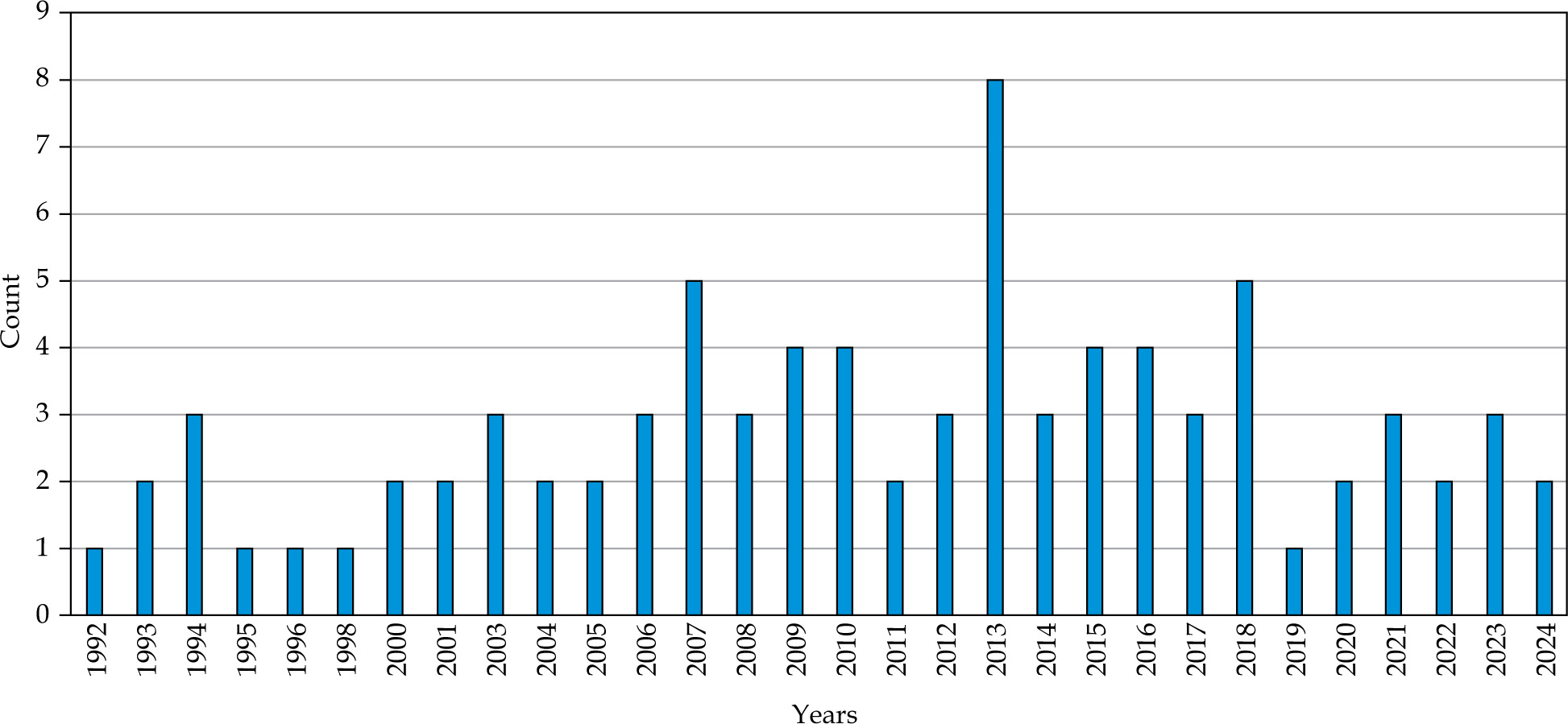
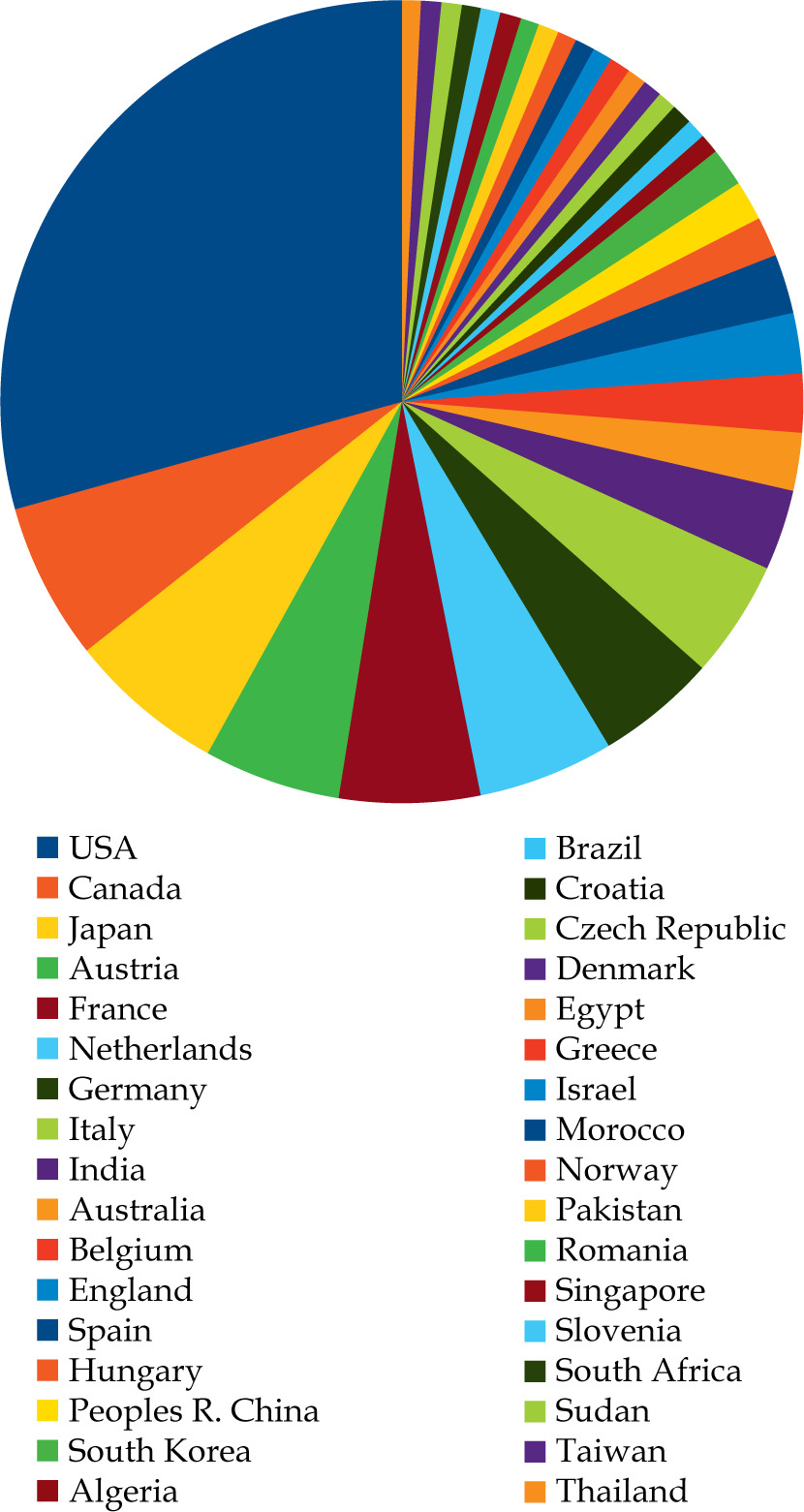
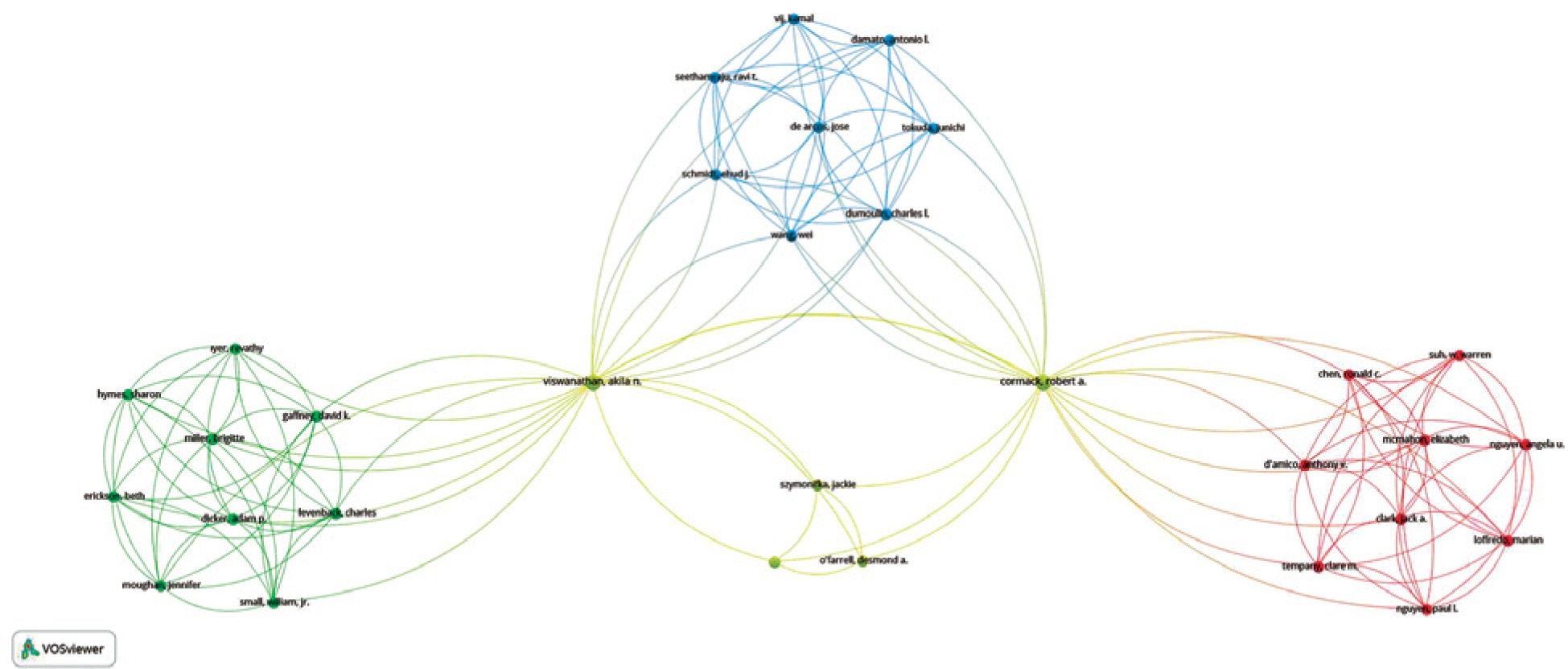
Table 1
Journal distributions
For the whole cohort, the median total citation value and average citation count per year were 29.5 (range, 0-748) and 2.04 (range, 0-24.83), respectively. The main subject of brachytherapy location in these clinical prospective trials is shown in Table 2. The most frequently evaluated primary application area was the prostate (30 trials, 35.7%). When we compared the value of total citations between diagnostic groups, a statistically significant difference was found between the soft tissue sarcoma (STS) group and all other diagnosis groups, except for the brain group (Table 3). However, the average CPY values were not statistically different between the groups.
Table 2
Total citation counts and average citation per year according to diagnostic groups
Discussion
This bibliometric analysis of prospective clinical trials on brachytherapy provides valuable insights into research activity, publication trends, and citation impact. The predominance of studies on prostate, cervical, and breast cancers highlights their central role in brachytherapy research. Strong contribution of the United States reflects the country’s leadership in radiation oncology [1, 3].
A noticeable rise in trial activity after 2010 may be attributed to technological innovations, such as image-guided brachytherapy (IGBT) and advanced radionuclide sources [4]. Nevertheless, our analysis also reveals disparities across disease sites. Prostate cancer remains the most commonly studied, while other sites, such as lung cancer and STS, are underrepresented. This may reflect clinical demand, resource allocation, or variations in expertise and infrastructure [5].
Interestingly, soft tissue sarcoma and brain tumor studies exhibited the higher median citation counts, indicating an increased academic interest. The statistically significant citation difference between STS and other malignancies (except for brain tumors) may stem from the novelty or clinical challenges of brachytherapy in these settings [6]. While our study focused on bibliometric parameters, factors, such as novelty, disease rarity, sample size, and study design, are likely to influence citation impact. When the evaluated studies were examined in detail, no remarkable feature was detected, except for the evaluation of the effectiveness of a routine non-standard treatment application.
Despite the demonstrated benefits of brachytherapy, its overall representation in clinical trials is limited compared with other radiotherapy modalities. Contributing factors may include declining training programs, logistical barriers, and increased adoption of alternatives, such as stereotactic body radiotherapy (SBRT) and proton therapy [7, 8]. Funding limitations and systemic infrastructure challenges continue to hamper large-scale prospective trials in radiotherapy and brachytherapy [9]. Addressing these issues will require systemic efforts involving education, funding, and collaborative research.
Our study is not without limitations. It includes only articles indexed in the Web of Science database, potentially omitting relevant studies. Additionally, citation metrics may not always reflect clinical relevance. Future research should include multiple databases and integrated qualitative assessments of clinical outcomes to provide a more holistic view.
In our study, while the prospective studies on brachytherapy were evaluated from the Web of Science database with the title tab, future studies using similar topics under different tabs, such as topic and abstract, will provide a more detailed evaluation.
Conclusions
This bibliometric analysis underscores key patterns in prospective brachytherapy research, including dominant cancer types, geographic contributors, and citation trends. While prostate cancer continues to lead research activity, a broader focus on underrepresented malignancies is warranted. Given brachytherapy’s unique clinical value, future efforts should support its advancement through cross-disciplinary collaboration, targeted funding, and educational initiatives, to sustain its role in modern oncologic care.