Introduction
Worldwide incidence rates of chronic pancreatitis (CP) range from 2 to 200 per 100,000 person-years [1–3]. It is associated with the reduction in multiple quality of life measures resulting from a fibroinflammatory response to injury in the exocrine pancreas; therefore, it shortens life expectancy by as much as 10–20 years [4]. The most common risk factors for CP can be categorised by the acronym TIGAR-O, which stands for toxic/metabolic, idiopathic, genetic, autoimmune, recurrent, or obstructive; or vy using a clinical multiple risk factor classification system M-ANNHEIM [5, 6]. The mechanism of chronic inflammation and pancreatic tissue fibrosis remains unclear. One of the potential CP development models is the Sentinel Acute Pancreatitis Event (SAPE) mechanism proposed by Whitcomb, described as a sentinel event, such as alcohol intake, leading to an inflammatory response. Repeated pancreatic parenchymal injury and chronic inflammation result in fibrosis, involving the pancreatic ducts, and lead to focal duct strictures with dilatation of the duct proximal to the obstruction [7, 8]. Another hypothesis is the obstructive mechanism, where hypersecretion and protein precipitation result in protein-plug formation in the pancreatic ducts, which calcify, leading to obstruction. The consequences are the acinar cell dysfunction and atrophy [9].
The most common symptom in chronic pancreatitis is pain, present in up to 85% of cases, and several mechanisms have been proposed [3, 10]. Pain assessment remains crucial for the treatment qualification. Several scales have been developed, including the Brief Pain Inventory, the Izbicki pain questionnaire, and the COMPAT-SF questionnaire [11, 12]. Because there are no guidelines regarding the choice, use, and dose of analgesics, the 1986 World Health Organisation analgesic ladder for pain management is commonly used by clinicians for treating CP pain [13]. The other symptoms are related to exocrine and endocrine insufficiency, which may be treated conservatively, with lifestyle and dietary advice, and alcohol and smoking cessation. Some patients with exocrine pancreatic insufficiency require pancreatic enzyme replacement therapy (PERT) [3].
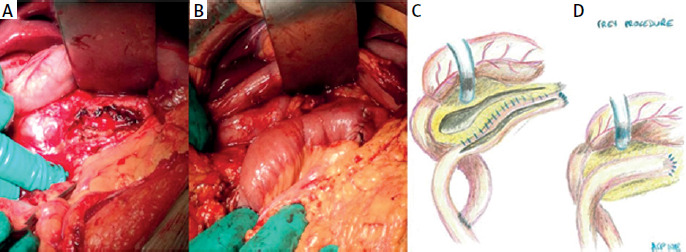
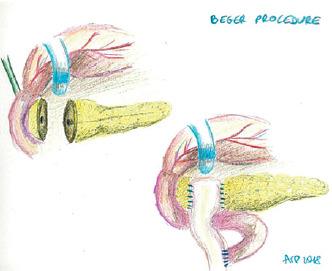
Current guidelines provided by the American College of Gastroenterology show that surgical approaches to pancreatic duct decompression are rarely first-line therapies, even though they have been shown to provide better long-term pain relief than endoscopic approaches. However, it seems reasonable to perform endoscopic drainage procedures through endoscopic retrograde cholangio-pancreatography (ERCP) and/or endoscopic ultrasound (EUS) in patients with a symptomatic, obstructed pancreatic duct as the primary approach, with surgery reserved for treatment failures or those unwilling to undergo multiple endoscopic treatments if ductal decompression is potentially successful [14]. The HaPanEU/United European Gastroenterology guidelines, based on several European randomised trials in patients with symptomatic chronic pancreatitis, advise surgery in cases with intractable pain from symptomatic chronic pancreatitis, suspected pancreatic cancer, and complications of adjacent organs [15]. Polish Society of Gastroenterology and Polish Pancreatic Club guidelines emphasise that endoscopic therapy is a first-line treatment in the case of contraindications or lack of conditions for surgery, and as a temporary treatment before surgery [16]. There are two main surgery types performed in CP patients: resections and pancreatic drainage. Some procedures are a combination of pancreatic tissue resection with pancreatic main duct decompression. The resections are typical oncological procedures during which the tumours/pseudotumours are resected. The types of resections are as follows: Whipple pancreaticoduodenectomy (PD) or pylorus-preserving variant (ppPD) by Traverso and Longmire, distal pancreatectomy (DP), or total pancreatectomy (TP), which can be followed by islet cell autotransplantation (IAT). The first drainage procedure was the Puestow procedure, which is a longitudinal pancreaticojejunostomy (LPJ). The Frey procedure is a modification of the LPJ and is a local resection, i.e. longitudinal pancreaticojejunostomy (LR-LPJ) (Figure 1). Duodenal-preserving pancreatic head resections (DPPHRs) are hybrid methods involving small proximal resection and distal pancreatic duct drainage. Hans Beger introduced a method that consists of head resection with transection of the head of the pancreas and two anastomoses, and end-to-end and end-to-side Roux-en-Y pancreatojejunostomy (Figure 2) [17, 18].
Aim
The study aimed to evaluate the early and long-term outcomes of surgical management of chronic pancreatitis in a high-volume centre, as well as to compare the incidence of complications associated with different surgical treatment methods.
Material and methods
Study design
We performed a retrospective analysis of 388 patients who underwent surgical treatment between 2004 and 2024 due to chronic pancreatitis at the Department of Gastroenterological Surgery and Transplantation at the National Medical Institute of the Ministry of the Interior in Warsaw. As a high-volume centre, four senior surgeons perform approximately 400 pancreatic surgeries annually. We excluded patients treated for chronic pancreatitis, who were finally diagnosed with pancreatic cancer in postoperative histopathological examination. The analysed parameters included: age, sex, type of surgery, length of surgery, hospital and ICU stay, long-term survival and surgical complications (blood loss, glycaemic control, hypovolaemia, enteral fistulas, perforations). Complications were assessed using the Clavien-Dindo classification [19]. Also, we compared the surgery results and the complication risk between the groups of patients who underwent the respective procedures. It was not a randomised controlled trial because the patients received the intervention adjusted to their current disease status, morphological changes, and symptoms. The treatment choice was selected by a multidisciplinary team including experienced gastroenterologists, endoscopists, radiologists, and surgeons.
Diagnosis
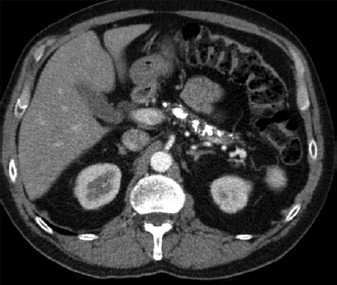
All included patients were symptomatic. The primary imaging examination was contrast-enhanced, two-phase computed tomography of the abdomen and pelvis. For legitimate cases, magnetic resonance of the abdominal cavity or magnetic resonance cholangiopancreatography (MRCP) was also performed. Also, some patients underwent EUS examination. All tests were used to assess the degree of dilatation of the pancreatic duct, the presence of calcifications within the pancreatic parenchyma, pancreatic atrophy, and pathological masses (Figure 3). Imaging examinations of patients in our group were performed mainly in external centres. The test results were preoperatively assessed by the radiological team at our centre.
Indications for the surgery
The main indications for surgery at our centre were as follows: not responding to dietary treatment or oral analgesics, chronic pain, suspicion of pancreatic cancer, jaundice without the possibility of endoscopic intervention, cachexia due to restrained food intake, and significantly reduced quality of life. Oncological procedures, including Whipple surgery or distal pancreatic resection, were dedicated to patients with chronic pancreatitis accompanied by severe pain or suspected malignant lesions within the pancreatic parenchyma. For the drainage surgery, we qualified patients with dilatation of the main pancreatic duct, without the presence of an inflammatory mass in the proximal part of the pancreas, or lesions suspected of malignancy. The surgeries were performed as classical, laparoscopic, or robotic-assisted procedures. Before the surgery, patients were provided with information regarding prehabilitation, including dietary recommendations.
Postoperative treatment
During the postoperative period, patients were fed entirely parenterally for 5 days, starting on the second postoperative day. Antibiotic and antithrombotic prophylaxis were routinely used. Since the second postoperative day, patients underwent physical rehabilitation. Oral watering began on the fourth postoperative day. In the case of patients undergoing distal pancreatic resection, oral fluid intake started from the second postoperative day, and patients did not receive total parenteral nutrition.
Results
The mean age of the examined group was 52 ±12.8 years (minimum = 22, maximum = 83). 65% of the group were males. The mean hospital stay was 10.9 ±9.2 days (minimum = 1, maximum = 84), and the mean ICU stay was 0.6 ±2.8 days (minimum = 0, maximum = 23). The most frequent surgical procedures were: pancreatoduodenectomy (Whipple’s procedure; 39%), distal pancreatectomy (17%), and Frey’s procedure (12%) (Table I). In 10% of cases, total pancreatectomy was performed. Ten surgeries were robotic-assisted procedures.
Table I
Summary of the group
Portal vein or superior mesenteric vein infiltration was diagnosed in 3% of cases. Eleven percent patients required a secondary procedure. Resections comprised 66% of all surgeries. The mean operative time was estimated at 114 ±45 min (minimum = 14, maximum = 310). Blood usage in the perioperative period (first 12 h) averaged at 0.4 ±1 units (minimum = 0, maximum = 6).
Nineteen patients required catecholamines due to hypovolaemia on the first day after surgery. Almost half of our patients (43%) required insulin intake after surgery. Serious complications (grade III and IV in Clavien-Dindo) were diagnosed in 51 cases. Some patients had more than one complication (Table II).
Table II
Classification of the complications for various types of surgeries, using Clavien-Dindo classification
The rate of early mortality, defined as up to 30 days after surgery, was 4%. Early mortality was significantly associated with the type of surgery performed (p < 0.005) – no case of early mortality was observed in the drainage group. Pancreas resection had higher mortality rates than drainage procedures. Also, the amount of transfused blood units and hyperglycaemia had a significant impact on perioperative deaths (p < 0.005 and p < 0.001, respectively). The occurrence of large bowel fistula influenced fatality (p < 0.005).
The mean long-term survival was 39 months, with 59% of the cohort still under observation at the time of this study. The factors that had an impact on late mortality were as follows: age, pancreas fistula, enteric fistula and ICU stay (p < 0.005).
Early mortality was higher in the resection group (p < 0.05). There was no significant difference between complications, but the Pareto analyses revealed that asystole, stroke, massive bleeding to the abdomen or to the upper gastrointestinal tract, intestinal fistula, and gastric perforation predisposed to early death.
Another difference between drainage and resection procedures was longer surgery time, higher blood loss and worse glycaemic control after pancreatectomies (p < 0.05). In 3% of cases, the portal vein (PV) or superior mesenteric vein (SMV) required reconstruction with GoreTex (75%) or with autologous femoral vein. Vein reconstruction was related to poorer overall survival (5-year observation), longer surgery, and higher blood loss (p < 0.05) (Table III).
Table III
Most common surgical complications
Discussion
The history of surgical treatment of CP dates back to the 19th century, when in 1882 Karl Gussenbauer was the first to perform pancreatic cyst marsupialisation. Since then, multiple procedures have been developed to optimise the surgical approach. Nowadays, minimally invasive surgery is also being developed, which is associated with better cosmetic outcomes, lower rates of hernias, rapid return of gastrointestinal function, and shorter hospital stays [17, 20]. The outcomes of minimally invasive procedures are very promising. In a report of 39 robotic-assisted pancreatic resections in CP, performed at the University of Pittsburgh, there were no conversions to laparotomy and no mortality. The median operative time was 324 min, with mean blood loss of 250 ml. Clavien-Dindo complication grades III and IV were present in 13% of cases, and pancreatic fistulas occurred in 7% of cases [21]. Our preliminary results in robotic-assisted procedures are also promising, providing similar effectiveness as the classical surgeries.
The timing of the surgical treatment introduction is not univocally stated. Currently, it is considered as the consecution of ineffective conservative treatment. However, the ESCOPA study revealed low morbidity and mortality rates, good pain relief, and improved quality of life after surgery for chronic pancreatitis, and confirmed the need for earlier patient referral [17]. In the ESCAPE trial, among patients with chronic pancreatitis, early surgery compared with an endoscopy-first approach resulted in lower pain scores when integrated over 18 months [22]. Also, the latest American Society for Gastrointestinal Endoscopy guidelines recommend that in patients who have contraindications to surgery or who prefer a less-invasive approach, an endoscopic approach should be the initial treatment over surgery, if complete ductal clearance is likely [23]. Therefore, it is worth considering earlier qualification of susceptible patients for the surgery, prior to endoscopic treatment. Surgery provides good to excellent pain relief and quality of life elevation [24]. In the ESCOPA study, during the 6-month follow-up, 72.6% of patients reported pain relief (38.1% of patients reported complete pain relief and 34.5% reported partial pain relief) [17].
It is worth remembering that CP remains a risk factor for pancreatic cancer, and the probability increases with duration of the disease, with the risk of malignancy being 1.8% after 10 years, rising to 4% after 20 years, and the evidence shows that surgery has a protective impact on developing pancreatic cancer [10]. In our analysis, we excluded cases with histopathological confirmation of pancreatic cancer. However, the number of patients who underwent surgical treatment for CP and were diagnosed with pancreatic cancer at our department is growing.
Drainage procedures are reserved for patients with main pancreatic duct dilatation without an enlarged pancreatic head. They are performed in situations where the pancreatic duct is widened in the course of chronic inflammation and the presence of deposits. There are no unambiguous recommendations regarding the diameter of the pancreatic duct, above which these procedures should be performed. A successful decompression of the main pancreatic duct reduces the serum level of SPINK1, which is elevated during inflammation. The protease inhibitor Kazal type 1 (SPINK1) binds the prematurely activated trypsinogen, allowing even up to 20% of trypsin inactivation [25]. Mortality in the Frey procedure is approximately 2% and the complication rates range from 7% to 42%. The most common complications include haemorrhage, pancreatic fistula and intra-abdominal abscess, and arterial bleeding. Exocrine insufficiency is described in 79% of cases, and diabetes in 8–34%. In 20% of patients, the Frey procedure is not sufficient to relieve pain. The risk factors for poor outcomes might be chronic necrosis, multiple abdominal interventions, preoperative exocrine insufficiency and surgical complications [10]. In comparison to our experience, reported early mortality for all surgeries varies between 0 and 6%. Early mortality was associated with the type of surgery (p < 0.005) and was higher for resections. Also, the amount of transfused blood units and hyperglycaemia were related to perioperative deaths (p < 00.005 and p < 00.001, respectively). Surgery appears to be more effective than endoscopy in pain relief [2, 10, 17, 22].
Resections should be considered in patients with incidentalomas, cystic lesions over 4 cm in diameter, as well as all lesions that are growing in size. Solid lesions occur more frequently than cystic lesions. In 80% of the cases, solid lesions over 2 cm are adenocarcinomas or pNETs and should be resected. When technically possible, small lesions below 2 cm should be enucleated. Cystic lesions > 4 cm or symptomatic lesions should be resected [26]. Bachmann conducted a study on 74 patients who underwent DPPHRs due to CP, showing that preserving techniques were superior to resections. In the comparison of outcomes of Beger and Frey’s procedures, there was no statistical difference in mortality, long-term survival, quality of life, orendocrine or exocrine insufficiency [4]. Cardiovascular complications secondary to diabetes were the main cause of death. These data are in line with our outcomes.
In comparison to pancreatoduodenectomy, Frey’s procedure is shorter, the blood loss is lower, and better glycaemic control is achieved (p < 00.05). However, Chiang et al. and van Veldhuisen et al. did not find significant differences in mortality between these two procedures [17, 27]. Also, there were fewer complications after Frey’s than Beger’s procedure, but the long-term results were comparable [10]. In our cohort, early mortality was higher in the resection group (p < 00.05). It is worth mentioning that the main factor determining the surgical approach is disease localisation and neoplasm suspicion [28].
Diabetes is a common complication after pancreatic resections. Drainage procedures spare the pancreatic tissue; however, fibrosis and chronic inflammation lead to exocrine and endocrine insufficiency. In a one-centre study, 66.7% of CP patients who underwent Frey’s procedure had diabetes, and 33.3% had exocrine insufficiency [29]. In our cohort, 43% of patients required insulin intake after the surgery. Moreover, indications for TP-IAT remain controversial. The National Institutes of Health provides criteria stating that the diagnosis of CP should be confirmed with CT and endoscopy, there should be daily narcotic dependence, complete evaluation of the CP causes, failure to respond to conservative treatment, and adequate islet cell function [30, 31]. However, there are limited data to assess the usefulness of the method because it is not widely available.
PV, MSV, or splenic vein (SV) infiltration and mass compression are often related to thrombosis, which requires more careful management [31,32]. In our data, PV or SMV infiltration was diagnosed in 4% of cases, mainly with the use of GoreTex (75%) or autologous femoral vein. Vein reconstruction was associated with poorer overall survival during a 5-year observation, longer surgery time, and higher blood loss (p < 0.05).
Postoperative nutritional status is improved after Frey’s procedure and does not change after pancreatic resection. The reasons might be pain relief, better exocrine function, and removal of pancreatic duct obstruction [33].
The main limitation of our study is the lack of randomisation to clearly compare the possible interventions. However, every case of CP should be considered separately, so that every patient receives the treatment matching the course of the disease. Therefore, it is worth noting that surgical management of CP should be selected carefully, and patients’ qualification and treatment should be performed in high-volume centres. Moreover, we did not use objective pain assessment, so we could not report and compare our results in terms of pain management, which is a crucial aspect of CP therapy.
Conclusions
Surgical procedures due to chronic pancreatitis are relatively safe in a high-volume centre. Mortality does not exceed 4% and is associated only with pancreatic resections; however, long-term survival is similar in drainage and resection procedures. Surgical drainage of the pancreatic duct also provides better glycaemic control than pancreatectomy. Blood loss and early mortality stand in favour of drainage methods, although these are more technically demanding. Randomised controlled trials assessing the various surgical management choices are required to standardise the CP treatment.