
INTRODUCTION
COVID-19 was first detected in Wuhan, China, in December 2019. The virus spread rapidly worldwide, threatening millions of individuals’ lives and health [1]. The measures undertaken to prevent the spread of the disease, such as social distancing, isolation, and quarantines, changed the lives of individuals, many of whom experienced a loss of control over their daily activities and lifestyle [1]. As confirmed in numerous studies, growing fear and unpredictability, combined with social isolation, affected the mental health of many people globally [2-6]. When experiencing distress, people seek ways to manage difficult or unpleasant situations in order to regain their psychic equilibrium. Research indicates that during stressful times, strategies such as finding social support, thinking positively, and being kind to oneself can be beneficial [7, 8]. However, on the contrary, people may rely on other strategies like substance use, excessive eating, gaming or internet use as a way of coping [9-11]. These strategies can in the short-term help to regulate emotional states and bring comfort; however, long-term engagement with such strategies can have a detrimental effect on the lives of individuals who use them [12, 13].
During COVID-19 pandemic, many individuals resorted to substance use, gaming, gambling, etc. as a way to manage the immense stress and anxiety brought on by the pandemic. As reported in multiple studies, some of these behaviors significantly increased during this period [14, 15]. Most U.S. adults (53%) stated that the COVID-19 crisis had a negative effect on their mental well-being, leading to an increase in substance abuse and gambling as means of coping [14, 16]. Data from 38 countries revealed that 20% of respondents increased their alcohol consumption during the pandemic, 17% decreased their drinking, and the majority reported no change [17]. According to a review study, opiate and cannabis use increased, and nicotine use either increased or decreased during or after the lockdown [18]. Furthermore, substance abuse rose among those already addicted [19]. The occurrence of other types of addictive behaviours, such as Internet use (especially pornography and video gaming) increased during this period [20, 21]. In the UK, research found a substantial increase in online gambling among males and females [22]. The same research also revealed that individuals who gambled on a regular basis were more likely to consume large quantities of alcohol [22]. Apart from the use of alcohol and drugs or other behaviours, many people turned to food as a way of coping. Research conducted in France in 2020 showed an increase of 14% in energy intake and more regular consumption of sweets, leading to weight gain for 35% of the participants interviewed [23, 24].
The COVID-19 pandemic caused many individuals to experience intense fear due to the perception that the virus is personally threatening; this fear had a significant negative impact on mental health [25]. A recent meta-analysis revealed that fear of COVID-19 was strongly linked to anxiety and traumatic stress and moderately associated with stress and depression [26]. These results are similar to what was observed in other pandemics, illustrating that fear is a common reaction when facing a global health emergency like COVID-19 [25]. Interestingly, in one study both worry and fear were recognized as potential risk factors for the initiation and maintenance of substance use during the pandemic [27]. These findings add to the existing research linking disasters with coping-oriented substance use, which is believed to increase in response to heightened levels of psychological distress [28]. In such circumstances, people may experience a loss of sense of control over their lives and resort to harmful behaviors as a way of coping. Generally, a sense of control can be understood as one’s perception of being able to manage or prevent particular circumstances from arising [29]. A sense of control is a significant individual resource which can be used to cope with adversity, as it is characterized by the perception that the circumstances in one’s life are controllable through one’s own actions [30]. Studies suggest that a sense of control can enhance one’s ability to cope with life’s challenges, reduce stress, and promote overall well-being [31-34]. However, the loss of control can be deeply unsettling, often prompting individuals to seek ways to regain it. Over time, if a person consistently feels that they have little to no control over the key areas in their life, it can lead to a deep-seated sense of fear and anxiety. In order to cope with these negative emotional states, some people may resort to substance use or engage in other detrimental behaviors [12, 35, 36]. Initially, such practices can bring comfort, provide a substitute sense of control and create an avenue for the management of difficult situations. However, if done frequently, they could become habit-forming and eventually develop into addictions. Research conducted in the pandemic period has indicated that people who experienced a loss of sense of control during COVID-19 were susceptible to depression, anxiety, and were more likely to engage in addictive behaviours [12, 37]. These findings align with the previous studies, suggesting that when individuals experience a prolonged lack of control, they may turn to self-harm or substance-abuse as a way to cope [35, 38].
Based on the existing data, firstly we could assume that the COVID-19 pandemic as an extraordinary situation, characterized by many uncertainties [39], likely intensified the risk of developing substance abuse and engaging in addictive behaviors. Secondly, this period was especially difficult for those with already existing substance use disorder or behavioural addictions, as they have been turning to those behaviours to cope with the stress and uncertainty of this period [19]. Thirdly, individuals in recovery were at a higher risk of relapse due to not only emotional challenges but also restricted access to appropriate treatments and services at that time [18, 21, 40]. In this case, a sense of control can be essential, since many individuals may rely on maladaptive strategies to compensate for the reduced sense of control, e.g., by engaging in substance use or other behaviors that are addictive in nature [13, 41]. As such, it is important to identify psychological mechanisms among individuals engaging in such behaviours during the pandemic, including the potential risk and protective factors of substance use and behavioural addictions. Moreover, the COVID-19 pandemic serves as a valuable case study and opportunity to explore its implications and propose measures to prevent or mitigate the mental health impact of current and future pandemic threats.
Therefore, considering the results of the studies conducted in the wake of the COVID-19 outbreak, we can say that evidence has been provided that the use of psychoactive substances among some individuals, particularly alcohol, increased [17, 42-44], along with gambling, internet use and porn consumption [45, 46]. In addition, the data reported on the potential direct effect of fear of COVID-19 on individuals engaging in addictive behaviors, and the potential protective role of the sense of control during such challenging times such as the COVID-19 pandemic [12, 47-49]. We aimed to investigate the relationship between the fear of COVID-19 and addictive behaviors and the role of potentially protective factors such as a general and COVID-19-specific sense of control (belief in preventing infection or mitigating its effects), attitude to vaccination, vaccination status, and earlier recovery from COVID-19. We chose these particular factors, as previous research provided data that these variables are linked to responses to the pandemic [50-52].
We hypothesized that fear of COVID-19 might be a potential predictor of engagement in addictive behaviors. Moreover, a low general sense of control and low sense of control over COVID-19 could mediate the relationship between fear of COVID-19 and addictive behaviors. Furthermore, attitude to vaccination, vaccination status, and earlier recovery from COVID-19 could potentially moderate the relationship between fear of COVID-19 and a sense of control over it.
METHODS
The research was approved by the Bioethics Committee of the Institute of Psychology of the Polish Academy of Sciences. All the study participants provided informed consent to be involved in the study.
Participants
511 people (ages 18-79, M = 41.98, SD = 12.32) participated in an online survey. Women comprised 71.29% (n = 365) of the sample, men 27.93% (n = 143), and 0.79% (n = 3) declined to state their gender. The vast majority, 95.10% (n = 486), were Polish residents. Most participants were in stable relationships (76.71%, n = 392), had children (60.46%, n = 309), and had attained a higher education (77.30%, n = 395). See Table 1 for further demographic details.
Participants also provided information on their mental health and engagement in addictive behaviors over the past year (Table 2). Most (66.34%) did not report any current or past mental health disorders. Among those with mental health conditions, depression was most prevalent (19%), while eating disorders were least common (7.43%). Alcohol was the most frequently abused substance (62%), while other drug use (excluding marijuana) was minimal (2.7%). Internet use was the most common non-substance related addictive behavior (92.2%), and pornography use was the least (25.5%). Data on willingness to be vaccinated, vaccination status, and COVID-19 recovery history were also collected (Table 3). More than half of the participants (59.02 %) expressed their willingness to be vaccinated. In contrast 14.09 % were unwilling, and 26% remained uncertain. At the time of the survey, 20.09% of participants had been vaccinated. 25% of those surveyed had recovered from COVID-19.
Procedure
An online survey of Polish Facebook users was conducted from February 9th to March 15th, 2021, coinciding with the start of mass vaccination in Poland. The survey gathered data on addictive behaviors (substance use, pornography, social media, gaming, internet use), severity of addiction, changes in activities since the beginning of pandemic, sense of control, fear of COVID-19, vaccination status, and other related factors. Participation was voluntary and anonymous.
Measures
Addictive behaviors were assessed using the short version of the Problematic Pornography Consumption Scale (PPCS) [53], adapted for various behaviors (pornography, internet, social media, gaming, alcohol, marijuana, other drugs, nicotine); for example, “Playing video games was an important part of my life”, “I neglected other activities because of my alcohol use” or “When I promised myself, I would no longer use marijuana, I could only keep my word for a short time”. This six-item scale uses a 7-point Likert scale (1 = “strongly disagree” to 7 = “strongly agree”), with a maximum score of 42, a minimum of 7, and a cut-off of 20. Cronbach’s α for each behavior ranged from 0.57 (other drugs with item-total correlations ranged from –0.09 to 0.66,), 0.72 (marijuana with item-total correlations ranged from 0.37 to 0.61), 0.81 (pornography with item-total correlations ranged from 0.38 to 0.71), 0.82 (internet with item-total correlations ranged from 0.42 to 0.67), 0.86 (alcohol with item-total correlations ranged from 0.5 to 0.76), 0.87 (nicotine with item-total correlations ranged from 0.51 to 0.75) and (gaming with item-total correlations ranged from 0.57 to 0.72) to 0.88 (social media with item-total correlations ranged from 0.6 to 0.74). In the case of the scale for other drugs, one item had a negative coefficient. After its removal, Cronbach’s α increased to 0.72.
Table 1
Group characteristics-sociodemographic variables (N = 511)
Table 2
History of mental health disorders and addictive behaviors over the past year (N = 511)
Table 3
Willingness to vaccinate, vaccination status, COVID-19 recovery (N = 511)
| Variables | n (%) |
|---|---|
| Willingness to be vaccinated | |
| No | 60 (14.09) |
| Yes | 239 (59.02) |
| Uncertain | 105 (26) |
| Vaccination status | |
| No | 404 (79.06) |
| Yes | 107 (20.09) |
| COVID-19 recovery | |
| No | 383 (75) |
| Yes | 128 (25) |
Change in the frequency of addictive behaviors was measured with a single question: “Compared to your pre-pandemic engagement in (addictive behavior)” with answers on 5-point scale (1 = “definitely decreased” to 5 = “definitely increased”).
General sense of control was assessed using the Sense of Control Scale [54]. The scale comprises five inverse items: “I have little control over the things that happen to me”, “There is really no way for me to solve some of the problems I have”, “Sometimes I feel that I’m being pushed around in life”, “There is little that I can do to change many of the important things in my life”, and “I often feel helpless in dealing with life problems”. This seven-item scale uses a 7-point Likert scale (1 = “strongly disagree” to 7 = “strongly agree”). The scale demonstrated good internal consistency (Cronbach’s α = 0.87). The items of that scale are reversed, therefore the higher the score is the lower the general sense of control.
Sense of control over COVID-19 was measured using an adapted version of the Perceived Control Over Withdrawal Symptoms scale (e.g., “I believe that I have control over my feelings about the risk of contracting coronavirus” or “I think I can adequately manage the risk of contracting coronavirus”) [55]. This four-item scale uses a 5-point Likert scale (1 = “strongly disagree” to 5 = “strongly agree”). The scale demonstrated good internal consistency (Cronbach’s α = 0.88). Item-total correlations ranged from 0.7 to 0.79, indicating that all items were significantly correlated with the total scale score.
Fear of COVID-19 was assessed with the Fear of COVID-19 Scale (FCV-19S) [56]. This seven-item scale uses a 5-point Likert scale (1 = “strongly disagree” to 5 = “strongly agree”). Cronbach’s α was 0.80.
Willingness to be vaccinated was assessed with a single question “Are you planning to get vaccinated against coronavirus?” with three answer options – “Yes”, “No” or “Hard to Say”.
Vaccination status was assessed with a single question “Have you been vaccinated against coronavirus?” with two answer options – “Yes” or “No”.
COVID-19 recovery was assessed with a single question “Have you had coronavirus?” with two answer options – “Yes” or “No”.
Statistical analysis
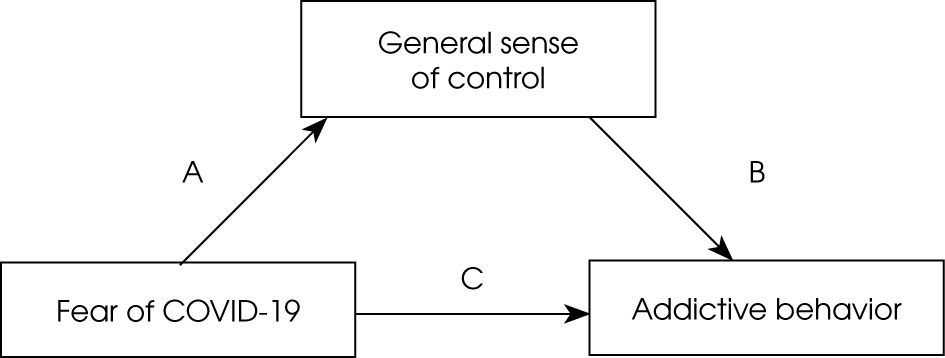
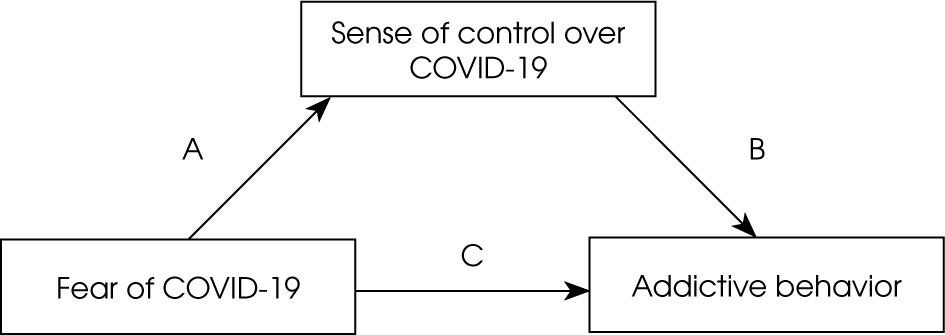
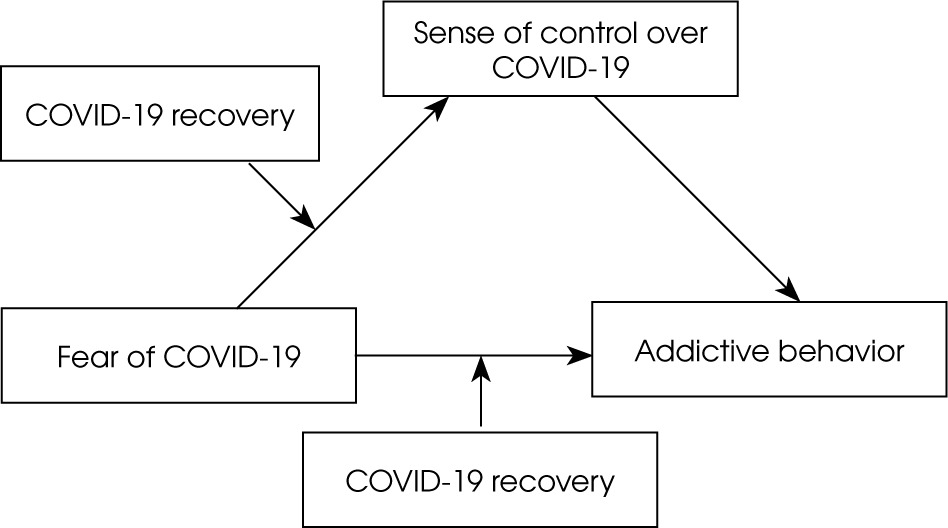
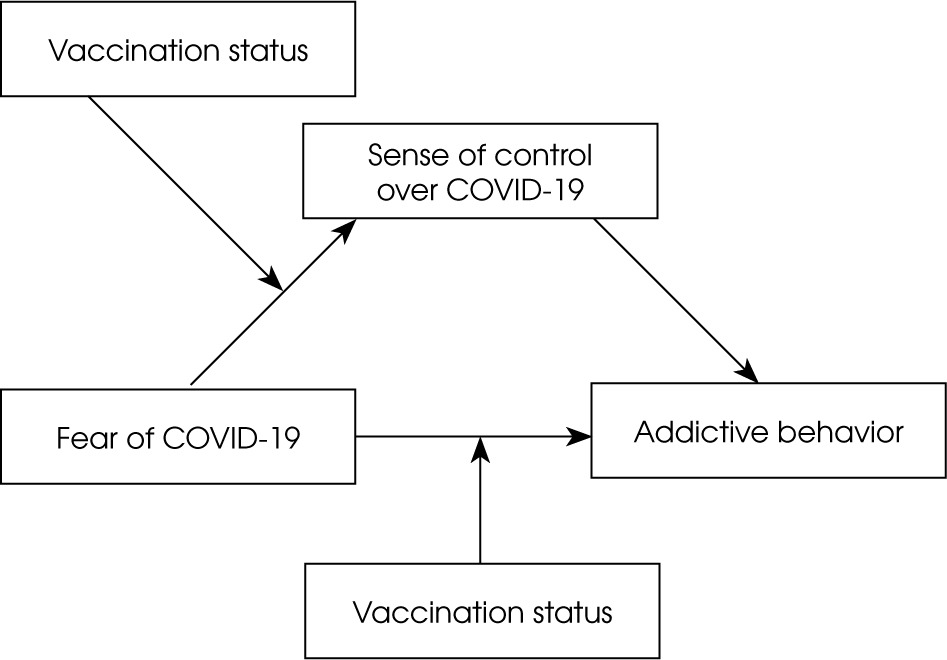
All collected data was analyzed with SPSS-26 (IBM SPSS Statistics for Windows, Version 26.0) and the PROCESS macro for SPSS [57] for moderation (model 1), mediation (model 4), and moderated mediation models (model 8).
Internet use (92.38%) and social media (85.91%) were the most frequent behaviors reported, while marijuana (9.0%) and other drugs (2.74%) were the least. The frequency of internet and social media use also showed the greatest increase during the pandemic (over 40% of participants). Within our study sample, based on meeting the defined cut-off scores, a significant proportion of participants reported behaviors indicative of a risk for developing addiction to nicotine (50%) and internet use (more than 40%) (Table 4).
RESULTS
Correlation analysis
Fear of COVID-19 showed a weak positive correlation with changes in the use patterns of internet, social media, and marijuana. Lowered general sense of control correlated positively with most addictive behaviors, except gaming, marijuana, and other drug use. Sense of control over COVID-19 correlated negatively with gaming, social media, nicotine, and marijuana use. Fear of COVID-19 was weakly and positively correlated with lowered general sense of control, and moderately and negatively correlated with a sense of control over COVID-19. The two types of sense of control correlated weakly and negatively (Table 5). Across all addictive behaviors, fear of COVID-19 correlated moderately and negatively with a sense of control over COVID-19, but not with general sense of control. Lowered general sense of control was weakly and negatively correlated with a sense of control over COVID-19 only for internet, social media, and nicotine use (Table 6).
Table 4
Descriptive statistics of addictive behaviors, the PPCS scores, and the number of participants who met the cut-off point and were at high risk of developing addiction
Table 5
The correlation analysis between addictive behaviors (PPCS) and fear of COVID-19, general and COVID-19-specific sense of control
Table 6
The correlation analysis between fear of COVID-19, general and COVID-19-specific sense of control divided into addictive behaviors
Table 7
The values of mediation analysis coefficients of models (1a) and (1b) divided into all addictive behaviors
Mediation analysis
Moderation, mediation, and moderated mediation models were conducted for addictive behaviors with sample sizes exceeding 50 participants (excluding marijuana and other drugs).
Mediation analysis with general sense of control
General sense of control did not significantly mediate the relationship between fear of COVID-19 and any addictive behavior (Figure I; Table 7). However, lowered general sense of control was associated with increased severity of pornography, internet use, social media, alcohol, and nicotine addiction. Increased fear of COVID-19 was directly associated with increased severity of internet and social media addiction.
Mediation analysis with sense of control over COVID-19
Increased fear of COVID-19 was associated with decreased sense of control over COVID-19 across all addictive behaviors (Figure II, Table 7). Greater sense of control over COVID-19 was associated with increased severity of pornography and gaming addiction but decreased severity of nicotine addiction. Sense of control over COVID-19 significantly mediated the relationship between fear of COVID-19 and pornography [IE = –0.17; LLCI = –0.32, ULCI = –0.05], gaming [IE = –0.25; LLCI = –0.47, ULCI = –0.06], and nicotine [LLCI = 0.02, ULCI = 0.6] addiction. The relationship between fear of COVID-19 and these behaviors became insignificant after adding sense of control over COVID-19 into the model. Thus, fear of COVID-19 indirectly affected these addictions through its impact on sense of control over COVID-19 (see Table 7).
Mediation analysis by sex
Among women, sense of control over COVID-19 significantly mediated the relationship between fear of COVID-19 and both pornography [IE = –0.1; LLCI = –0.24, ULCI = –0.01] and gaming [IE = –0.23; LLCI = –0.52, ULCI = –0.02] addiction. This mediation effect was not significant among men. For both men and women, there was no significant mediation effect for nicotine use. In the female group, fear of COVID-19 indirectly affected pornography and gaming addiction through its impact on sense of control over COVID-19.
Moderated mediation
A series of moderated mediation analyses were performed, with COVID-19 recovery added as a moderator to the paths between fear of COVID-19 and sense of control over COVID-19, and fear of COVID-19 and addictive behavior (Figure III). A significant moderated mediation effect was observed only for pornography use [β = –0.16, LLCI= –0.35, ULCI= –0.02]. At low levels of fear, those who had recovered from COVID-19 had a higher sense of control over COVID-19 and reported less severe pornography use than those who had not contracted the virus. However, at high levels of fear, those who had recovered from COVID-19 had a lower sense of control over COVID-19 and engaged in more problematic pornography use. Moderated mediation analyses were also conducted with vaccination status as a moderator (Figure IV). A significant moderated mediation effect was observed only for nicotine use [β = 0.23, LLCI = 0.05, ULCI = 0.52]. At low levels of fear, vaccinated participants had a greater sense of control over COVID-19. However, at moderate and high levels of fear, vaccinated participants reported a lower sense of control over COVID-19. Among vaccinated participants, reduced nicotine use was associated with higher fear of COVID-19, while the opposite trend was observed in non-vaccinated participants.
Moderation analysis
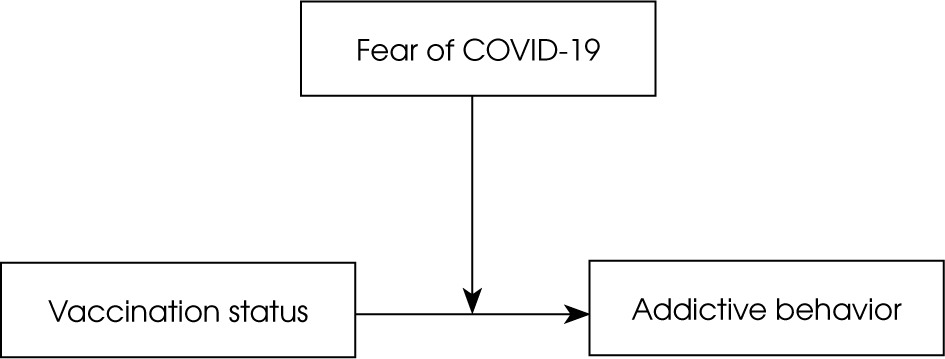
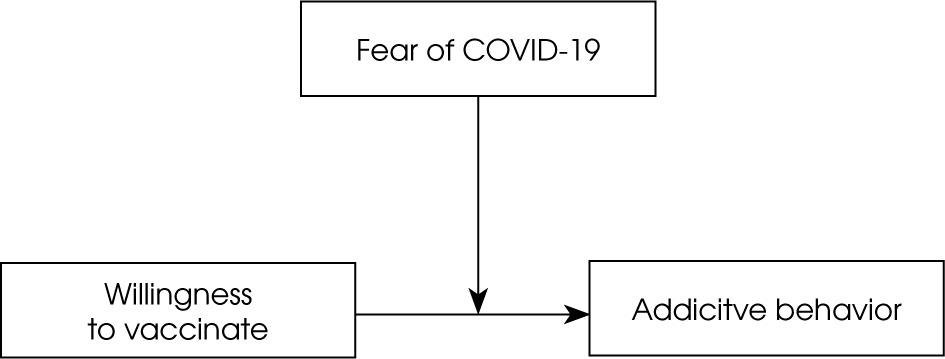
Two moderation analyses were conducted, including all addictive behaviors. In the first model, fear of COVID-19 was the independent variable, vaccination status was the moderator, and addictive behavior was the dependent variable (see Figure V). In the second model, fear of COVID-19 was again the independent variable, addictive behavior was the dependent variable, and willingness to be vaccinated was the moderator (see Figure VI). For all addictive behaviors in both models, moderation effects were insignificant (p > 0.05).
DISCUSSION
Our research confirmed increased use of the Internet and social media, which supported the general trend observed during the pandemic [21]. The results from our study sample suggest, with caution, that a significant proportion of participants reported behaviors indicative of risk for developing nicotine and Internet addiction, based on meeting the defined cut-off scores. This is likely due to the accessibility of both during the COVID-19 pandemic, their perceived effectiveness for coping with stress, and general societal acceptance of these activities, in comparison to others like alcohol or pornography use. Fear of COVID-19 was associated with increased Internet, social media, and marijuana use, consistent with previous studies [13, 58, 59]. Lowered general sense of control was positively correlated with most addictive behaviors, except for gaming, marijuana, and other drug use, while a sense of control over COVID-19 was negatively correlated with gaming, social media, nicotine, and marijuana use. Fear of COVID-19 was negatively correlated with sense of control over COVID-19, but positively correlated with lowered general sense of control. As predicted, lower sense of control (both general and COVID-19-specific) was associated with an increased intensity of internet, social media, and pornography use. Lowered general sense of control was also associated with increased alcohol and nicotine use. Interestingly, lower COVID-19-specific sense of control was associated with lower nicotine use, potentially due to increased awareness of health risks [60]. The pandemic may have led to increased smoking due to heightened anxiety, stress, and loneliness. However, the lack of COVID-19-related control, including health risks and the idea that the virus is more dangerous for smokers, may have caused people to smoke less [60]. Additionally, a lower COVID-19-specific sense of control was also related to the higher severity of gaming, and these results are in line with a similar study focused on social media use [12]. These findings are consistent with previous research linking perceived uncontrollability to increased substance and Internet use [12, 35, 61]. While general sense of control did not mediate the relationship between fear of COVID-19 and addictive behaviors, COVID-19-specific sense of control showed a significant mediating effect for pornography, gaming, and nicotine use. This suggests a protective role for COVID-19-specific sense of control. Interestingly, this mediation effect was significant for both men and women for nicotine, but only for women for pornography and gaming. This may reflect gender differences in engagement with these behaviors [62-65]. Generally, men are more likely to watch pornography [62, 63] and engage in gaming more often than women [64, 65]. Therefore, there might be significant gender differences in how a sense of control related to COVID-19 can act as a protective factor against addictive behaviors. As males tend to engage in those behaviors more often than females, a subtle protective factor such as COVID-19-specific sense of control may not be as effective for males as it is for females. Nonetheless, the gender differences regarding a general and specific sense of control and addictive behaviors require further research. Regarding other less subjective protective factors, such as vaccination status and history of COVID-19 recovery, the latter played a role only in the case of pornography use by increasing a sense of control over COVID-19 among individuals who recovered from it. In contrast, vaccination status played a role only among nicotine users with a similar impact on the COVID-19 sense of control among those vaccinated but only with lower levels of fear of COVID-19. At the high level of fear of COVID-19, participants who recovered from COVID-19 engaged more in pornography use compared to participants without a COVID-19 history. Thus, it is important to emphasize that addictive behaviors can be affected not only by the severity of use but also by the accompanying level of fear. Taken together, these findings demonstrate the significant impact that the COVID-19 pandemic has had on addictive behaviors and provide a basis for further research into the psychological effects of such global events. Overall, we conclude that the sense of control may serve as a protective factor against the development of some addictive behaviors. Equally, fear of the virus can be a major contributor to the risk of developing an addiction, and therefore both psychological factors should be examined in further research and better monitored or fostered in therapeutic settings during challenging times like COVID-19. Finally, we cannot omit the role of disseminating credible information that is essential to enable the general public to distinguish between evidence-based information and a broad range of unreliable sources. During the pandemic, we saw how general misinformation caused a great deal of confusion and led to risky behaviors. Therefore, to prevent this from happening again, it is important that governments, healthcare organizations, and media outlets continue to provide reliable and trustworthy information to ensure that the public is well-informed and able to make better decisions in challenging times. Despite the practical importance of these findings, some limitations should be considered. The cross-sectional design limits causal inferences. The results are specific to the COVID-19 situation in Poland one year into the pandemic, coinciding with the start of vaccination. Further research is needed to assess generalizability across different samples and time points. Due to the low psychometric reliability of the questionnaire used, the interpretation of the results was limited. Full instrument validation is recommended in future research. Finally, the predominantly female sample limits generalizability, and future studies should include balanced gender samples.
CONCLUSIONS
This study confirmed increased internet and social media use during the COVID-19 pandemic. Our findings suggest that fear of COVID-19 significantly contributed to the risk of developing addictive behaviors, while a lower general sense of control exacerbated these behaviors. Conversely, a COVID-19-specific sense of control emerged as a protective factor, reducing the risk for certain addictions. These results emphasize the pandemic’s substantial impact on addictive behaviors, underscoring the importance of fostering a sense of control and managing fear. The study also highlights the critical role of reliable information dissemination during crises to prevent risky behaviors. While limited by its cross-sectional design and sample demographics, this research provides a valuable foundation for understanding the psychological consequences of global events such as pandemics.








