

It is time to put an end to unnecessary amputations of diabetic feet
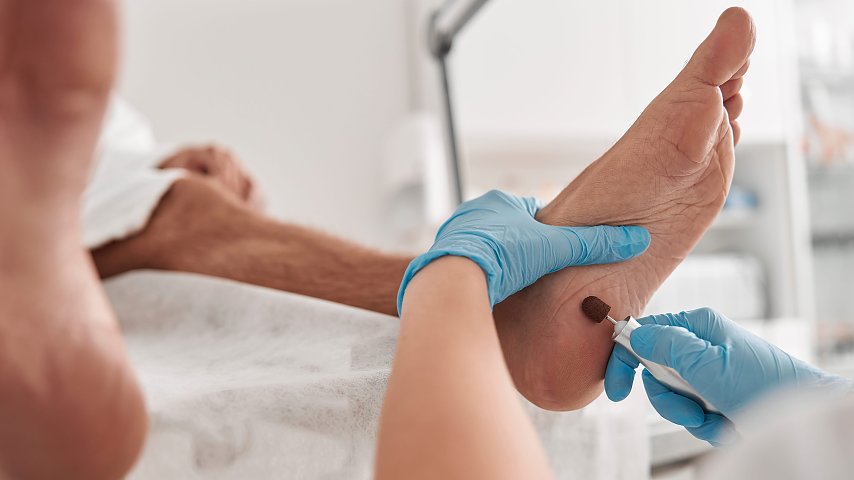
The calculations are very simple – the equipment needed to diagnose conditions that could lead to the development of diabetic foot costs next to nothing. The price of a prosthesis reimbursed by the National Health Fund following an amputation exceeds the costs of treatment, and the mortality rate among patients within five years of amputation is close to that seen in cancer.
The President of the Polish Wound Care Society, Dr Przemysław Lipiński, MD, and Dr Adam Węgrzynowski, MD, PhD, a specialist in internal medicine and angiology, are calling for a coordinated approach to the treatment of so-called diabetic foot disease. In their view, the system does have procedures and appropriate pricing for services, but there is still a lack of coordination between diagnosis and treatment.
In this situation, the patient hits a brick wall within the system, and the outcome of their treatment is often limb amputation. The reason? The condition is not properly managed or diagnosed in time, and this reduces the chances of conservative treatment .
11,000 lower limb amputations a year
Around 4 million Poles are already struggling with diabetes. According to global data, as many as 6 per cent of people with diabetes suffer from foot ulcers, and a quarter of patients will experience them at some point in their lives. In Poland, this means at least 200,000 people with active wounds, though the actual number may be as much as twice as high. Every year nearly 11,000 lower limb amputations are carried out in Poland, the majority of which are the result of complications from diabetes. Around 30 per cent of patients with foot ulcers die within five years, and following lower limb amputation, the five-year mortality rate exceeds 60 per cent. These rates are higher than for many types of cancer. a lower-limb amputation, the five-year mortality rate exceeds 60 per cent. These figures are higher than for many types of cancer.
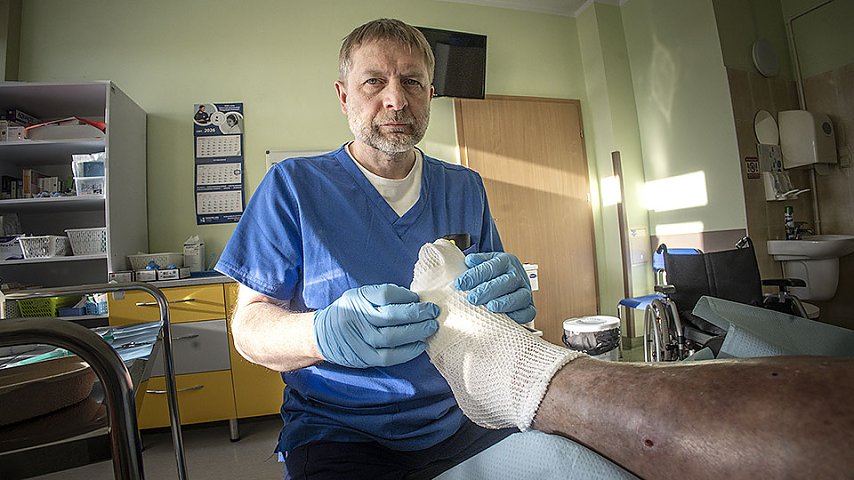
Dr Węgrzynowski adds that even if a GP notices changes to the foot, they are not entirely sure where to refer the patient. Meanwhile, many worrying changes can be detected as early as during screening, at the preventative stage.
Przemysław Lipiński emphasises that examining a diabetic’s foot is nothing complicated for a well-trained medical professional. It involves a physical examination plus a test using a medical device called a monofilament.
– Our ‘pocket mammograph’ costs just over a dozen zlotys. It is used to diagnose neuropathy, which is one of the more serious complications of diabetes. The test detects impaired tactile sensation. We also check the heart rate and assess the appearance of the foot. We train nurses so that they can carry this out independently, and they cope with it. Only when such a simple test reveals abnormalities is the patient referred for a full diagnostic work-up, but – most importantly – immediately placed on a course of preventative care and education,” explains Dr Przemysław Lipiński.
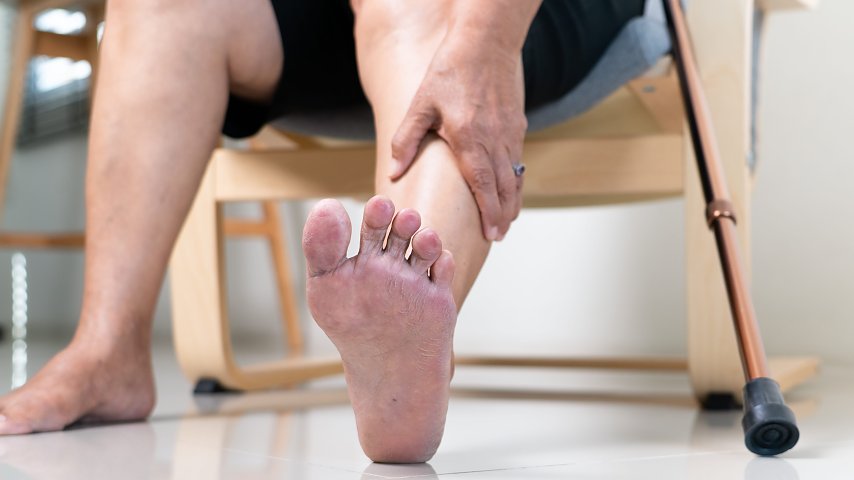
– We do not yet have any such centres here. We have many doctors who are excellent at treating patients, and very well-trained nurses, but the system fails to make use of them. As a surgeon working in a ward within the public healthcare system, I would have no opportunity to deal with diabetic foot in a specialised manner. There is no such ward in my region,” explains Przemysław Lipiński.
The patient loses control of their condition
– Today, the economic paradox is that if a patient is admitted to a where the team treats them properly, operates on them, fights to save their limb and ultimately does so, the remuneration the hospital receives will be lower than it would have been had the limb been amputated. In other words, they are penalised for success – a penalty for success – the specialist explains.
Adam Węgrzynowski adds that diabetes does not cause pain at first, which is why many people do not pay attention to their blood glucose levels. They inject themselves with insulin and take medication, but at a certain stage, for various reasons, they lose control of the condition.
– In these patients, the development of so-called neuropathy – characterised by a loss of pain sensation in the feet – atherosclerosis of all arteries, proliferative retinopathy at the back of the eye, which carries a risk of blindness, as well as kidney damage, which makes their treatment even more difficult. These are the pieces of the puzzle that make up a severe systemic disease,” explains Adam Węgrzynowski.
Read also: ‘Higher education has ruined the nursing profession’.
